Homemade English Muffins
Homemade English Muffins
Ingredients
For the Dough
- 2 1/4 teaspoons active dry yeast
- 2 tablespoons granulated sugar, divided
- 1 1/4 cups warm milk, 105-115°F
- 3 1/2 cups all-purpose flour
- 1 teaspoon salt
- 1/4 cup unsalted butter, melted
For Dusting
- 1/2 cup cornmeal
Instructions
- 1
In a large mixing bowl, combine the warm milk, 1 tablespoon of granulated sugar, and the active dry yeast. Stir gently and let stand for 5 to 10 minutes, or until the mixture becomes foamy, indicating the yeast is active.
⏱️ 10 min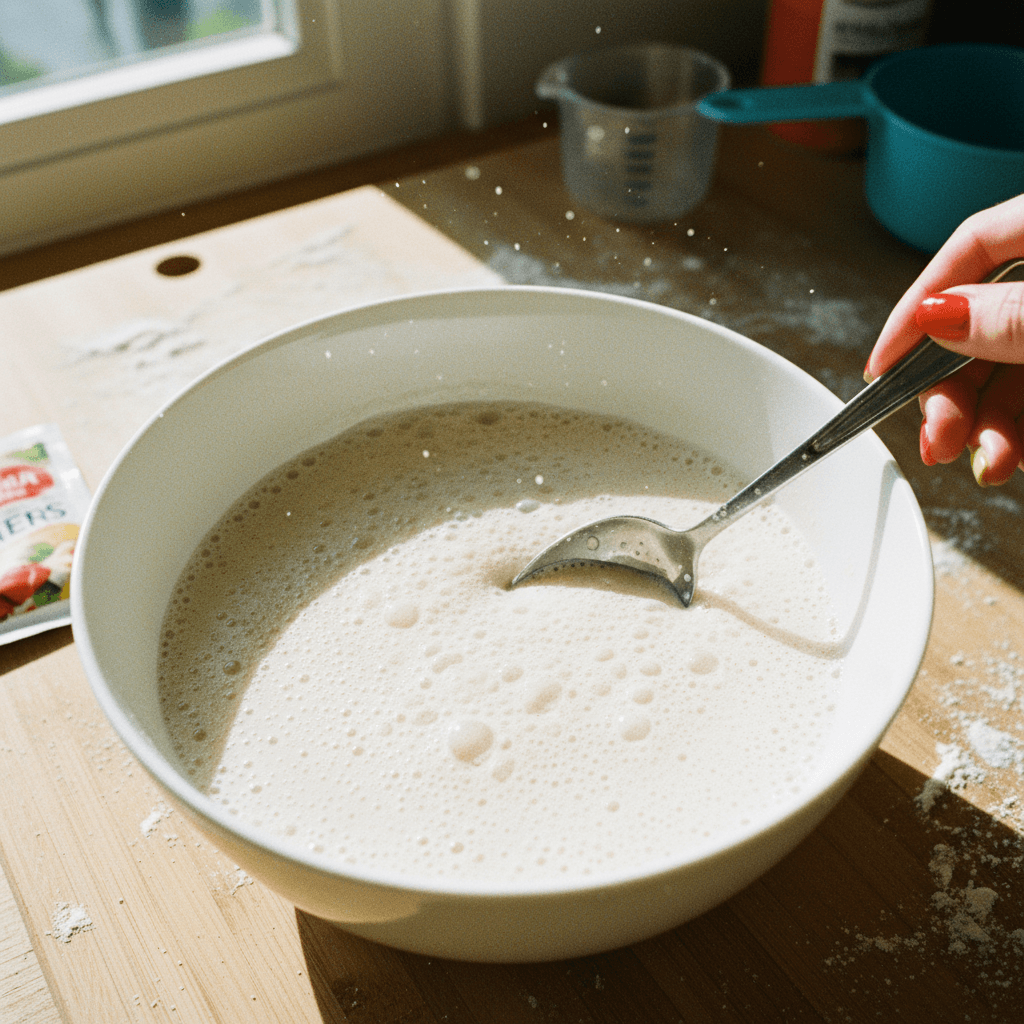
- 2
Add 1 1/2 cups of the all-purpose flour, the remaining 1 tablespoon of granulated sugar, and the salt to the yeast mixture. Stir with a wooden spoon until just combined. Pour in the melted unsalted butter and gradually add the remaining 2 cups of flour, mixing until a shaggy dough forms.
⏱️ 10 min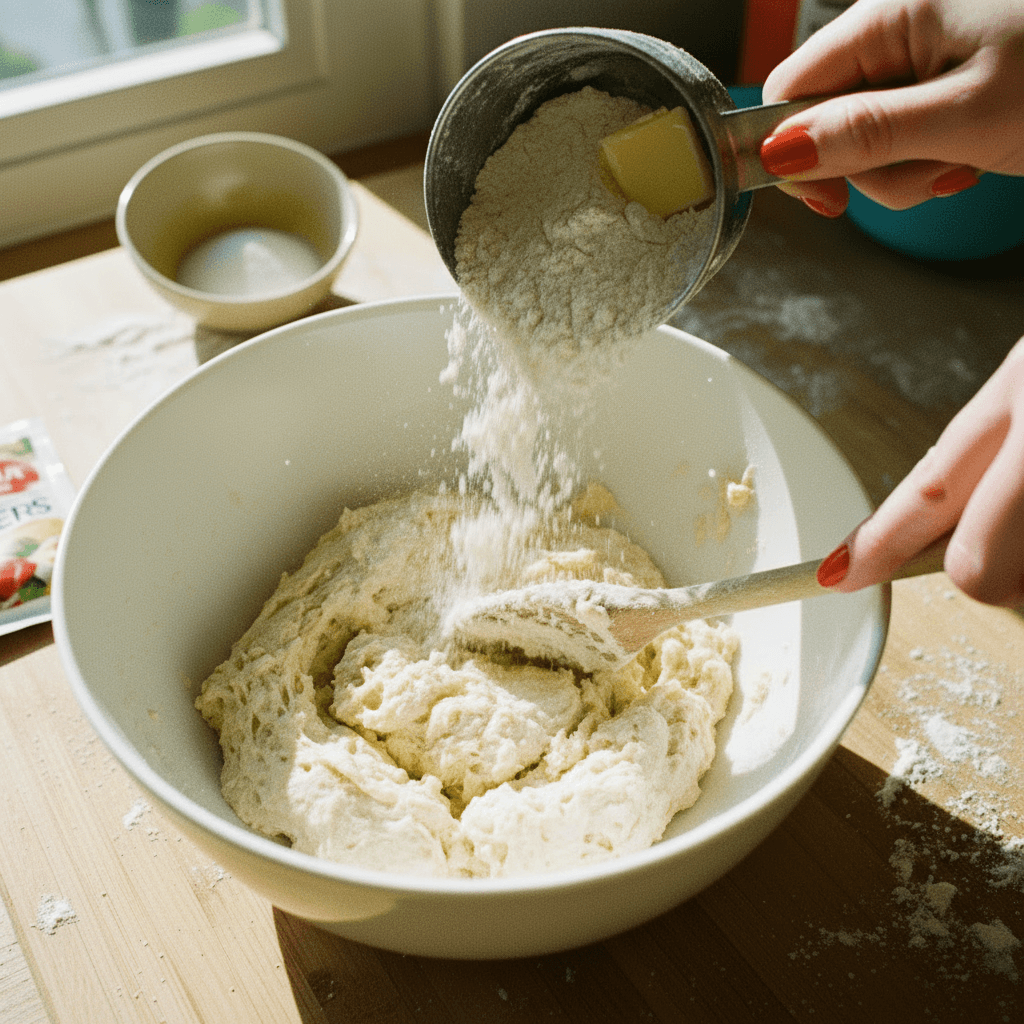
- 3
Turn the dough out onto a lightly floured surface. Knead the dough for 8 to 10 minutes until it is smooth, elastic, and no longer sticky. Alternatively, use a stand mixer fitted with a dough hook and knead on medium-low speed for 6 to 8 minutes.
⏱️ 10 min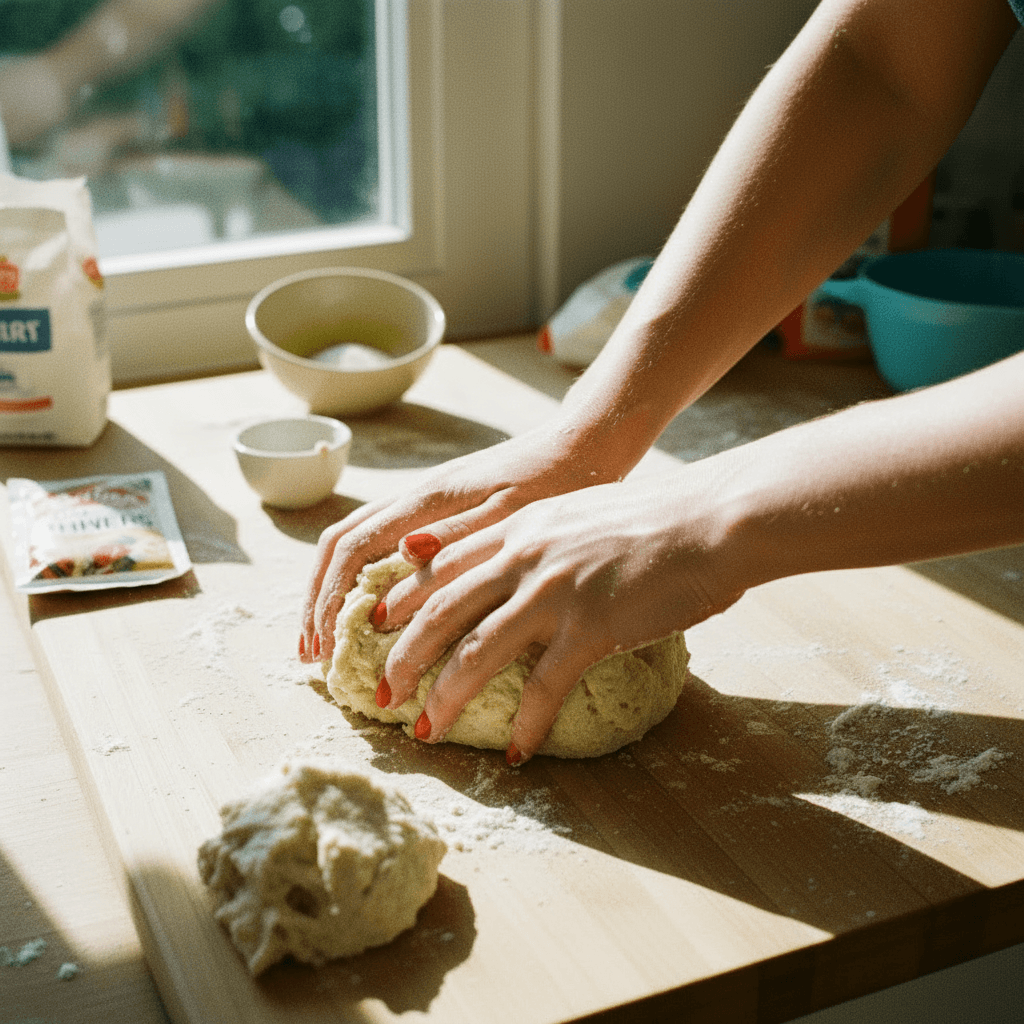
- 4
Lightly grease the large mixing bowl. Place the kneaded dough in the bowl, turning it once to coat all sides with oil. Cover the bowl tightly with plastic wrap or a clean kitchen towel and let the dough rise in a warm place for 1 to 1 1/2 hours, or until it has doubled in size.
⏱️ 90 min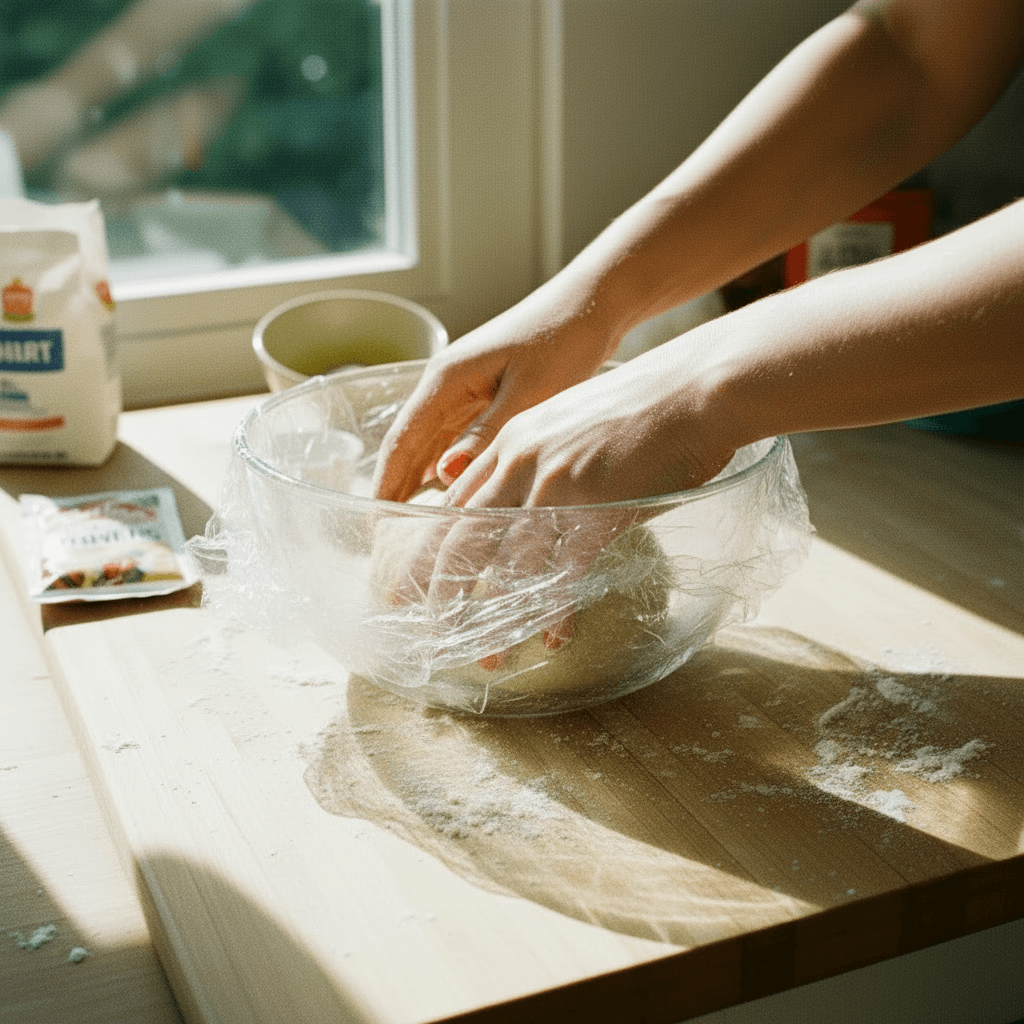
- 5
Once the dough has risen, gently punch it down to release the air. Turn the dough out onto a lightly floured surface and roll it evenly with a rolling pin to a thickness of about 1/2 inch.
⏱️ 5 min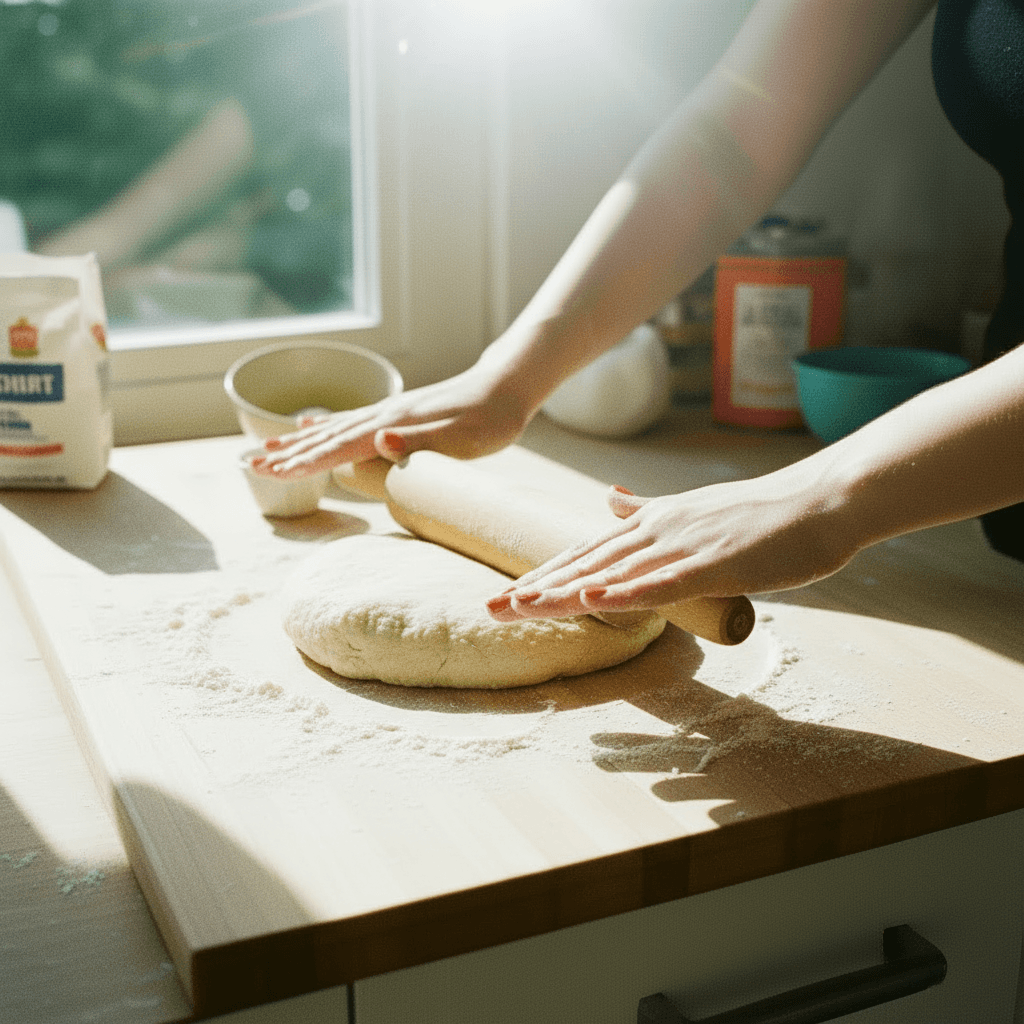
- 6
Using a 3-inch round metal cutter (or the rim of a glass), cut out English muffin rounds. Gather any dough scraps, gently knead them together a few times, and re-roll to cut additional muffins. You should yield approximately 8 muffins.
⏱️ 5 min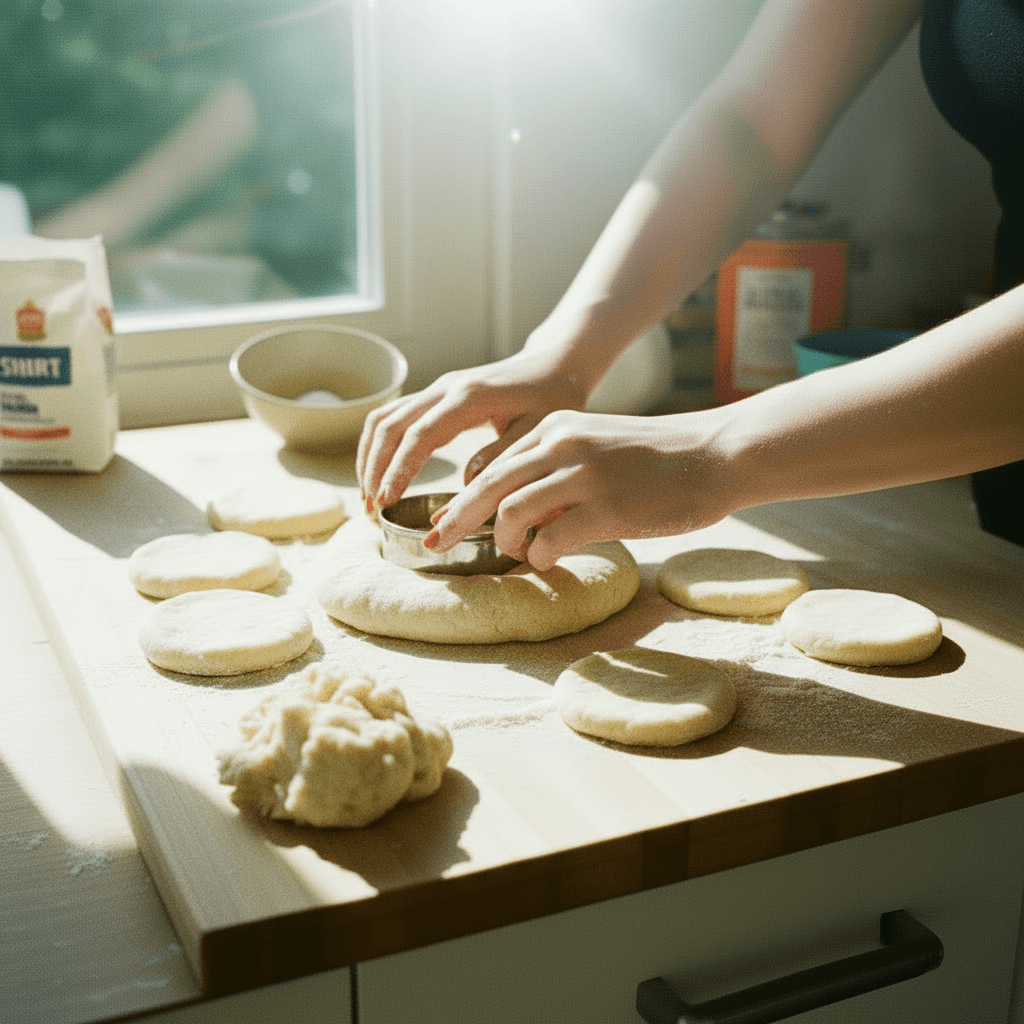
- 7
Generously sprinkle a baking sheet lined with parchment paper with about 1/4 cup of the cornmeal. Carefully place the cut dough rounds on the cornmeal-dusted paper, leaving some space between each muffin. Sprinkle the tops of the muffins with the remaining 1/4 cup of cornmeal.
⏱️ 5 min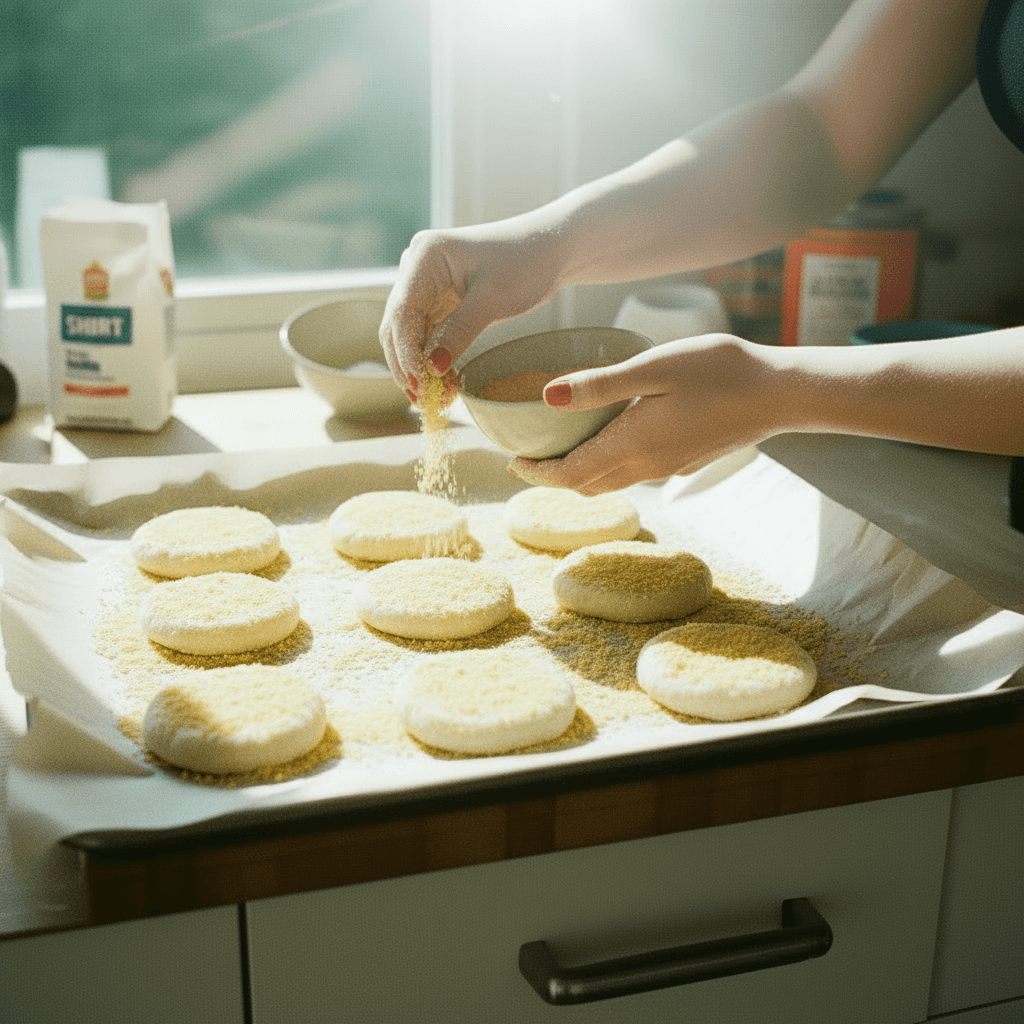
- 8
Loosely cover the muffins with plastic wrap or a clean kitchen towel and let them rise in a warm place for another 30 to 45 minutes, or until they appear puffy and slightly increased in size.
⏱️ 45 min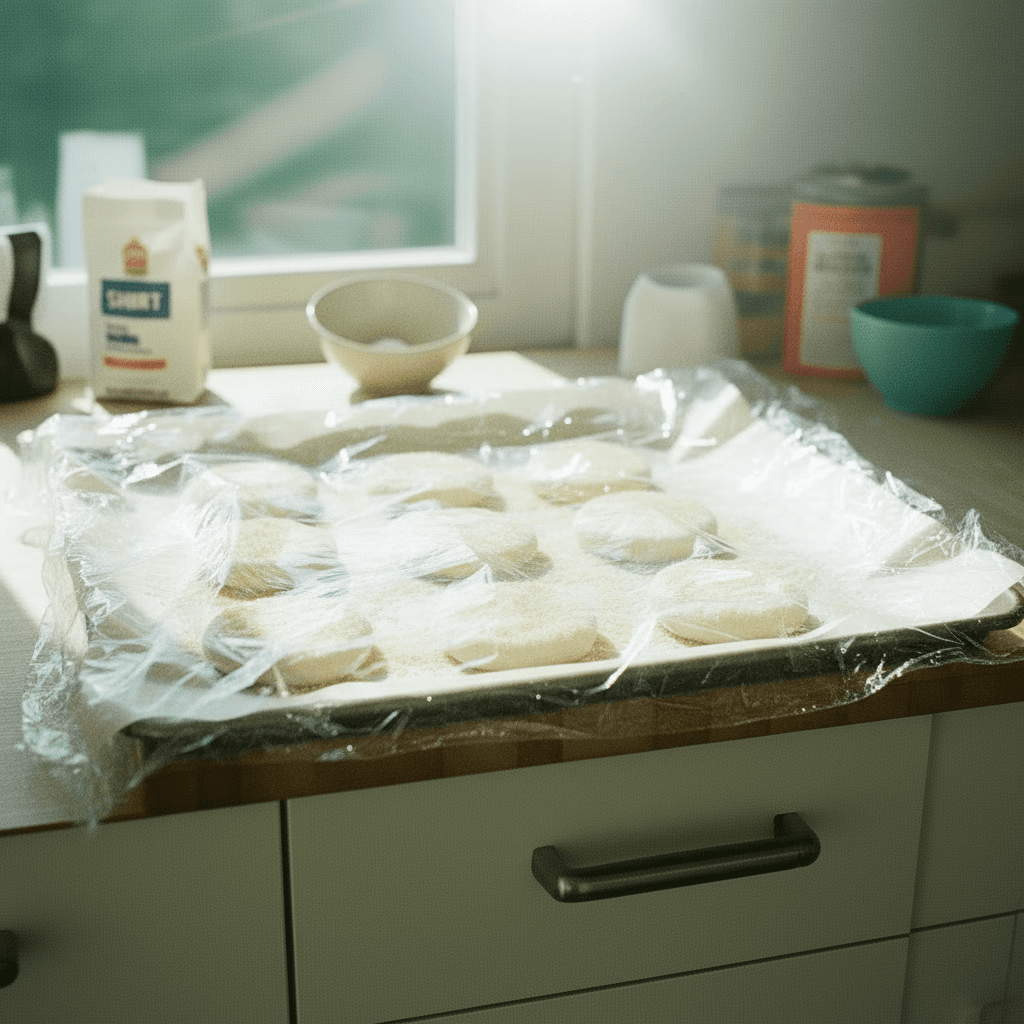
- 9
Heat a cast iron skillet or heavy-bottomed pan over medium-low heat. Do not add any oil to the pan. Once hot, carefully place 3 to 4 muffins into the dry skillet, ensuring they are not crowded.
⏱️ 2 min
- 10
Cook the muffins for 6 to 8 minutes per side, or until they are golden brown and cooked through. The internal temperature should reach about 200°F. Adjust the heat as needed to prevent burning while ensuring they cook evenly.
⏱️ 16 min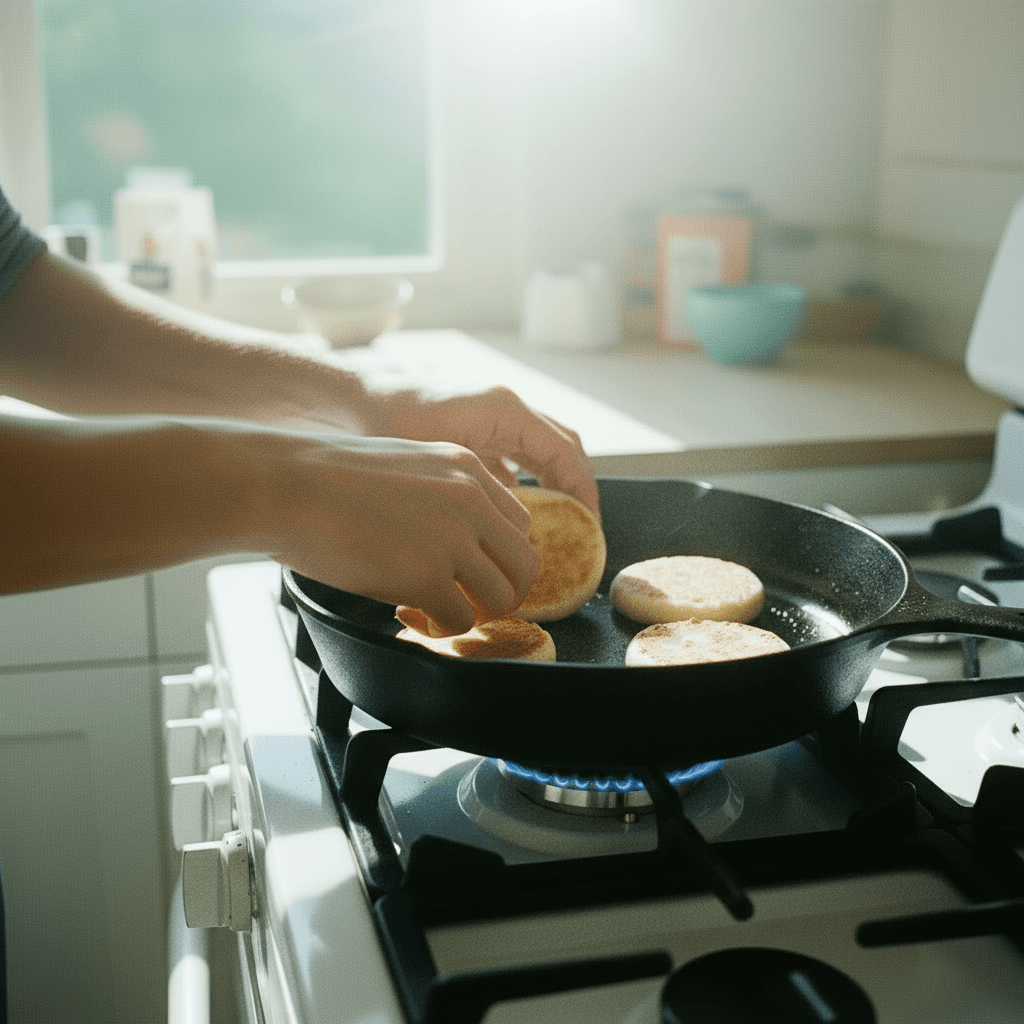
- 11
Transfer the cooked English muffins to a wire rack to cool completely. Repeat the cooking process with the remaining uncooked muffins.
⏱️ 5 min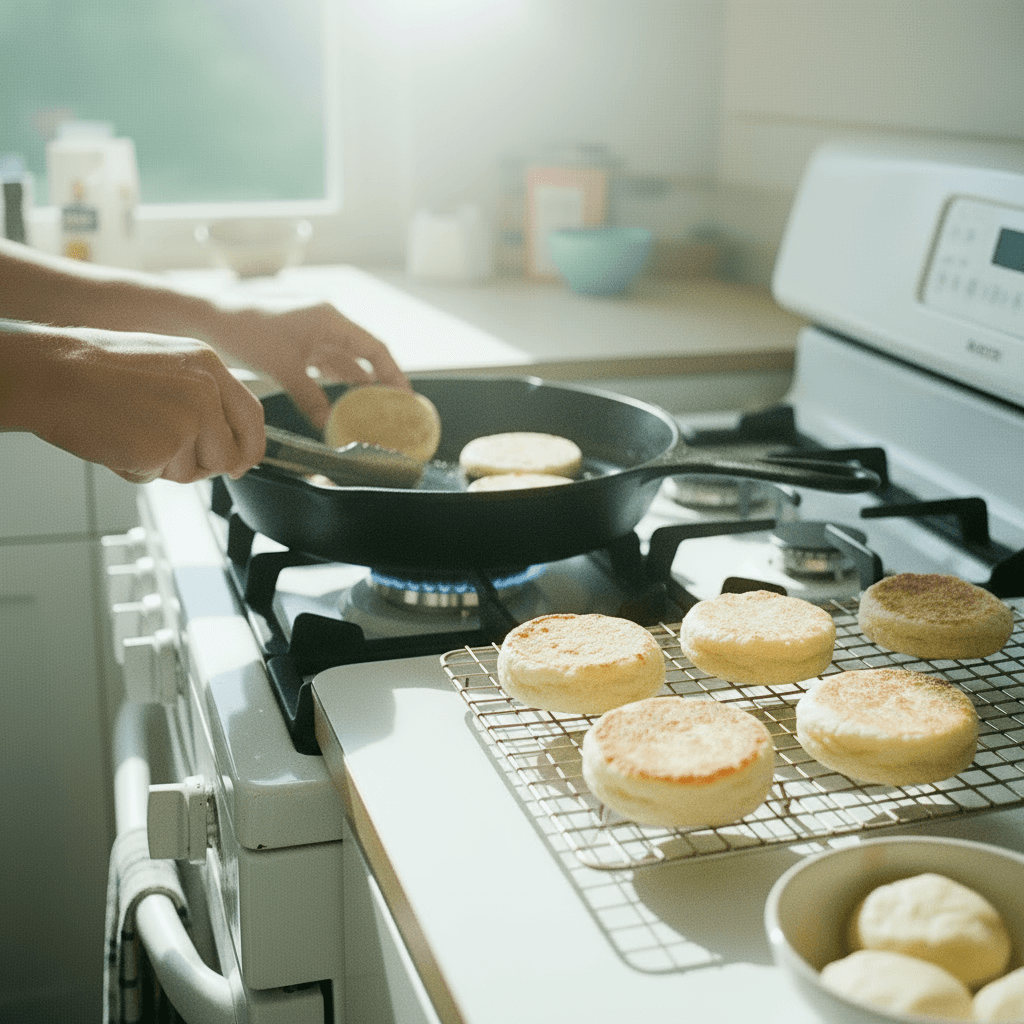
- 12
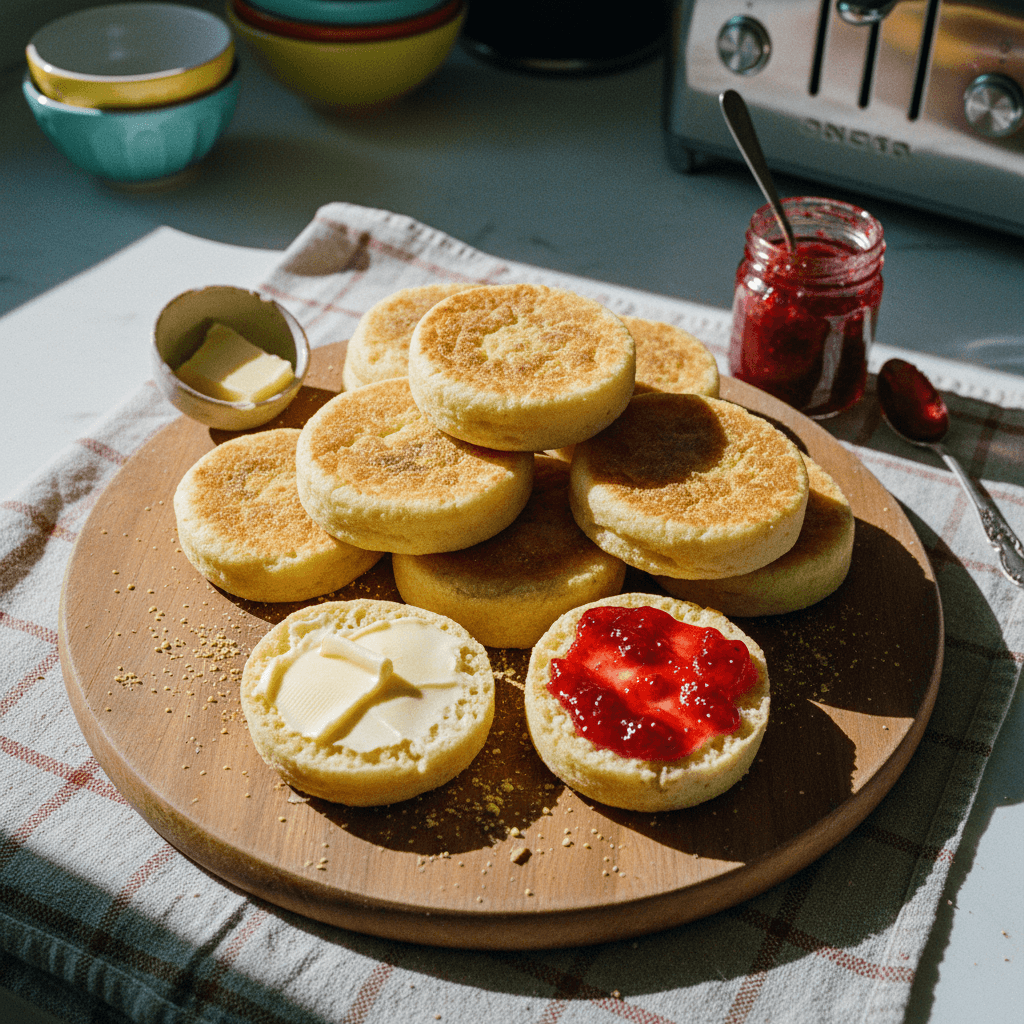
Once cooled, use a fork to split the English muffins open, revealing their signature 'nooks and crannies.' Serve warm with butter, jam, honey, or your favorite breakfast toppings.
⏱️ 1 min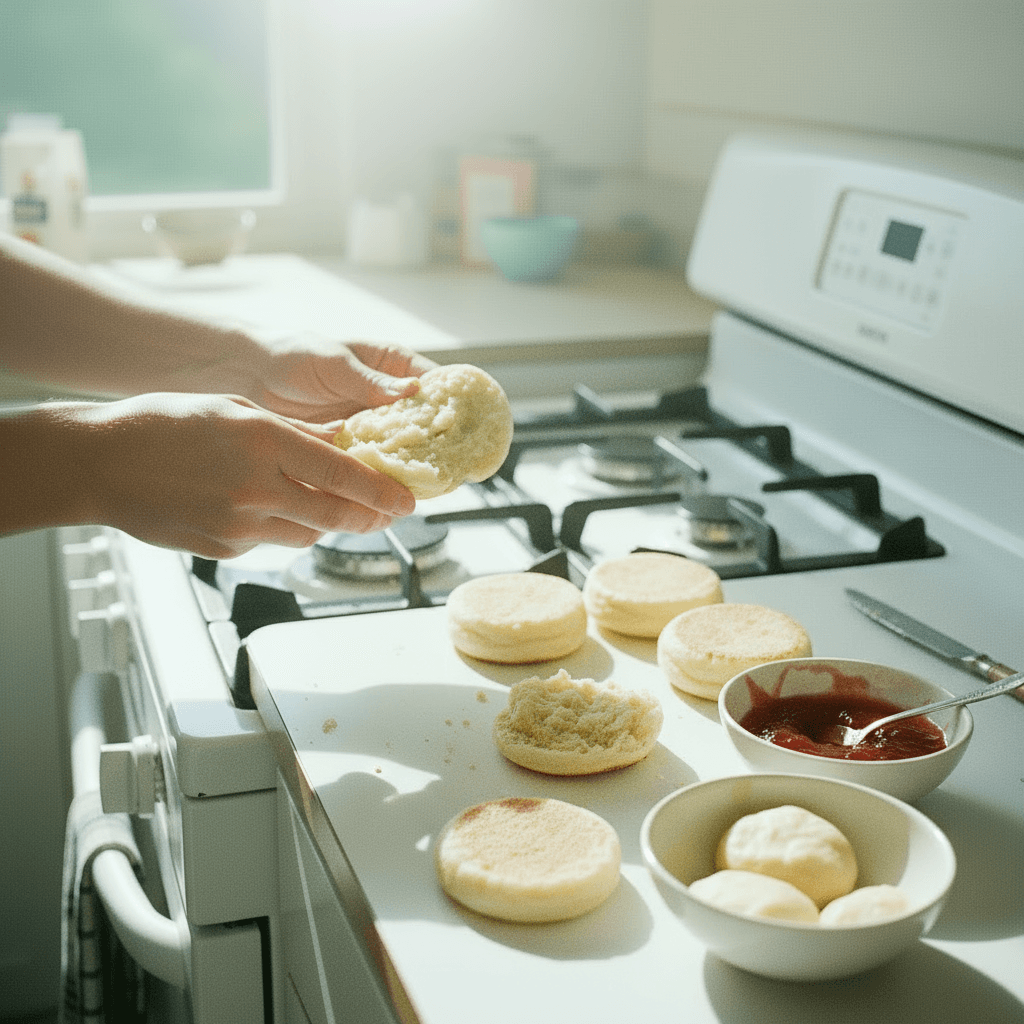
Kitchen Tools
Nutrition Facts (per serving)
Homemade English Muffins
Ingredients
For the Dough
- 2 1/4 teaspoons active dry yeast
- 2 tablespoons granulated sugar, divided
- 1 1/4 cups warm milk, 105-115°F
- 3 1/2 cups all-purpose flour
- 1 teaspoon salt
- 1/4 cup unsalted butter, melted
For Dusting
- 1/2 cup cornmeal
Instructions
- 1
In a large mixing bowl, combine the warm milk, 1 tablespoon of granulated sugar, and the active dry yeast. Stir gently and let stand for 5 to 10 minutes, or until the mixture becomes foamy, indicating the yeast is active.
⏱️ 10 min - 2
Add 1 1/2 cups of the all-purpose flour, the remaining 1 tablespoon of granulated sugar, and the salt to the yeast mixture. Stir with a wooden spoon until just combined. Pour in the melted unsalted butter and gradually add the remaining 2 cups of flour, mixing until a shaggy dough forms.
⏱️ 10 min - 3
Turn the dough out onto a lightly floured surface. Knead the dough for 8 to 10 minutes until it is smooth, elastic, and no longer sticky. Alternatively, use a stand mixer fitted with a dough hook and knead on medium-low speed for 6 to 8 minutes.
⏱️ 10 min - 4
Lightly grease the large mixing bowl. Place the kneaded dough in the bowl, turning it once to coat all sides with oil. Cover the bowl tightly with plastic wrap or a clean kitchen towel and let the dough rise in a warm place for 1 to 1 1/2 hours, or until it has doubled in size.
⏱️ 90 min - 5
Once the dough has risen, gently punch it down to release the air. Turn the dough out onto a lightly floured surface and roll it evenly with a rolling pin to a thickness of about 1/2 inch.
⏱️ 5 min - 6
Using a 3-inch round metal cutter (or the rim of a glass), cut out English muffin rounds. Gather any dough scraps, gently knead them together a few times, and re-roll to cut additional muffins. You should yield approximately 8 muffins.
⏱️ 5 min - 7
Generously sprinkle a baking sheet lined with parchment paper with about 1/4 cup of the cornmeal. Carefully place the cut dough rounds on the cornmeal-dusted paper, leaving some space between each muffin. Sprinkle the tops of the muffins with the remaining 1/4 cup of cornmeal.
⏱️ 5 min - 8
Loosely cover the muffins with plastic wrap or a clean kitchen towel and let them rise in a warm place for another 30 to 45 minutes, or until they appear puffy and slightly increased in size.
⏱️ 45 min - 9
Heat a cast iron skillet or heavy-bottomed pan over medium-low heat. Do not add any oil to the pan. Once hot, carefully place 3 to 4 muffins into the dry skillet, ensuring they are not crowded.
⏱️ 2 min - 10
Cook the muffins for 6 to 8 minutes per side, or until they are golden brown and cooked through. The internal temperature should reach about 200°F. Adjust the heat as needed to prevent burning while ensuring they cook evenly.
⏱️ 16 min - 11
Transfer the cooked English muffins to a wire rack to cool completely. Repeat the cooking process with the remaining uncooked muffins.
⏱️ 5 min - 12
Once cooled, use a fork to split the English muffins open, revealing their signature 'nooks and crannies.' Serve warm with butter, jam, honey, or your favorite breakfast toppings.
⏱️ 1 min