Sambal Tumis
Sambal Tumis

Ingredients
For the Sambal
- 50 g dried Kashmiri chillies, for color and fragrance, plus small dried chillies for heat, snipped into smaller pieces with scissors, seeds removed, soaked in warm water
- as needed warm tap water, for soaking chillies
- 1 piece Thai shrimp paste, small, grilled until toasty and dry
- 100 g dried anchovies
- 200 g shallots, roughly chopped
- 6 garlic cloves, peeled
- 50 g tamarind, from a block
- 125 ml hot water, for tamarind
- 125 ml oil, for cooking
- 30 g palm sugar
- 1/2 teaspoon salt, or to taste
- as needed water, for adjusting consistency
Instructions
- 1
Snip the dried chillies into smaller pieces with scissors. Place the snipped chillies into a coarse strainer and shake them to remove a large portion of the seeds. Soak the chillies in warm tap water while preparing the remaining ingredients. Allow to soak for at least 15 minutes.
⏱️ 5 min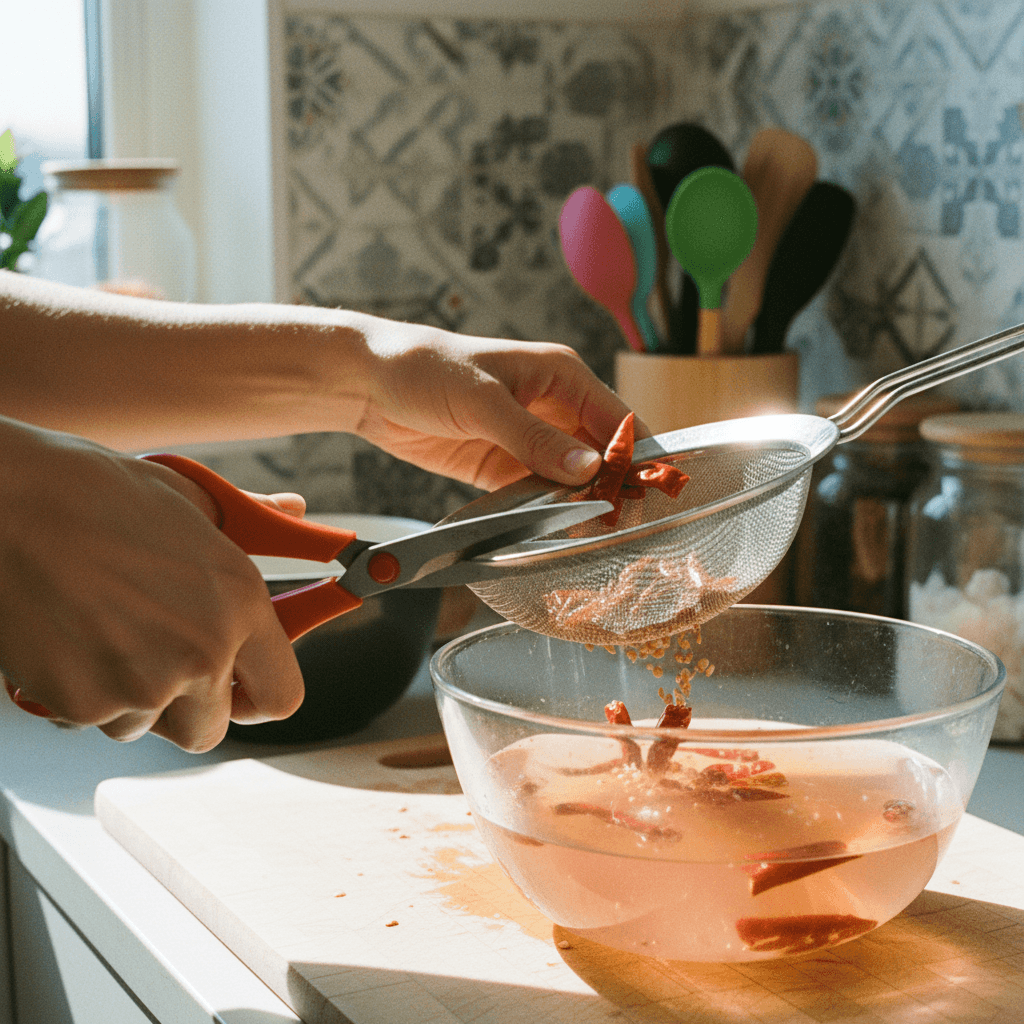
- 2
Take a small piece of Thai shrimp paste. Skewer it up and grill it directly over a gas flame until it is toasty and dry. Set aside.
⏱️ 3 min - 3
Grind the 100g of dried anchovies to a coarse powder using an immersion blender with a chopper attachment or a food processor.
⏱️ 2 min
- 4
Roughly chop the shallots and peel the garlic cloves. Blend them together using an immersion blender with a chopper attachment or a food processor until they form a coarse paste.
⏱️ 3 min
- 5
Place the tamarind in a bowl and pour 125 ml of hot water over it. Mash and stir the tamarind until it dissolves into a viscous texture. Strain the tamarind liquid through a small sieve to remove any unwanted woody bits. Discard the solids.
⏱️ 5 min
- 6
Transfer the softened, soaked chillies into a food processor along with some of their soaking water (about 60 ml). Grind them up to a thick paste.
⏱️ 3 min
- 7
Heat 125 ml of oil in a pan over medium heat. Add the shallot and garlic paste to the hot oil. Fry it off, stirring frequently, until it dries out and begins to brown, about 5-7 minutes.
⏱️ 7 min
- 8
Add the 100g ground anchovies to the pan. Continue frying, stirring constantly, until the anchovies are toasted and fragrant, about 3-5 minutes.
⏱️ 5 min
- 9
Add the chilli paste to the pan. Stir to combine all ingredients.
⏱️ 1 min
- 10
Crumble the grilled shrimp paste into the pan and mix it in thoroughly.
⏱️ 1 min
- 11
Gently fry off the entire paste over medium-low heat for approximately 20 minutes, stirring occasionally. Continue cooking until a gentle sizzle is heard and the oil starts to split out from the paste, indicating it is well cooked.
⏱️ 20 min
- 12
Add 30g of palm sugar to the pan and continue to sizzle for a few more moments, stirring until dissolved.
⏱️ 2 min
- 13
Pour in all the prepared tamarind liquid. Stir well to combine.
⏱️ 1 min
- 14
Add enough water, a little at a time, to achieve a perfect viscous texture for the sambal. Start with 60 ml and add more if needed.
⏱️ 2 min
- 15
Finish seasoning with about 1/2 teaspoon of salt, or to taste. Stir well and cook for another minute.
⏱️ 1 min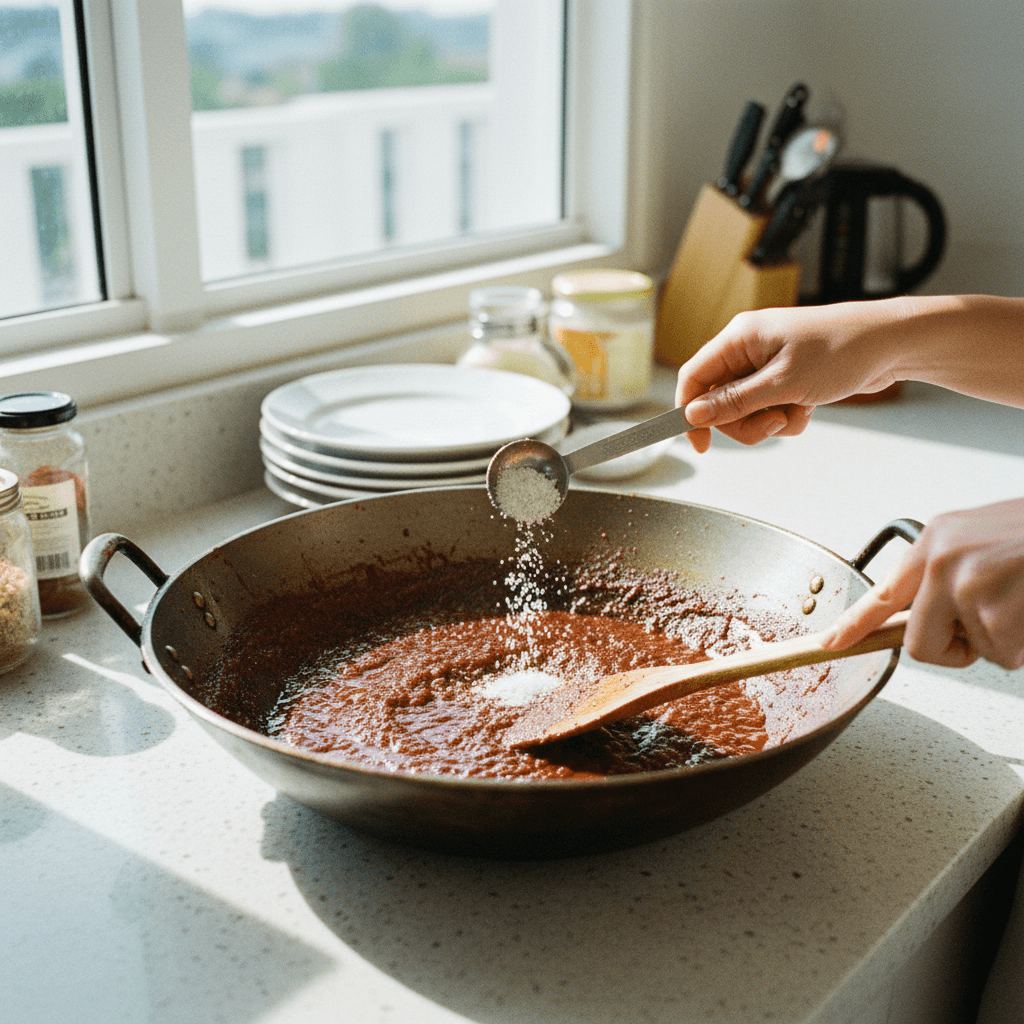
- 16
While the sambal is still hot, carefully fill it into clean, sterilized glass jars. It can be kept in the fridge for a few weeks.
⏱️ 2 min
Kitchen Tools
Nutrition Facts (per serving)
Sambal Tumis
For the Sambal
- 50 g dried Kashmiri chillies, for color and fragrance, plus small dried chillies for heat, snipped into smaller pieces with scissors, seeds removed, soaked in warm water
- as needed warm tap water, for soaking chillies
- 1 piece Thai shrimp paste, small, grilled until toasty and dry
- 100 g dried anchovies
- 200 g shallots, roughly chopped
- 6 garlic cloves, peeled
- 50 g tamarind, from a block
- 125 ml hot water, for tamarind
- 125 ml oil, for cooking
- 30 g palm sugar
- 1/2 teaspoon salt, or to taste
- as needed water, for adjusting consistency
Instructions
- 1
Snip the dried chillies into smaller pieces with scissors. Place the snipped chillies into a coarse strainer and shake them to remove a large portion of the seeds. Soak the chillies in warm tap water while preparing the remaining ingredients. Allow to soak for at least 15 minutes.
⏱️ 5 min - 2
Take a small piece of Thai shrimp paste. Skewer it up and grill it directly over a gas flame until it is toasty and dry. Set aside.
⏱️ 3 min - 3
Grind the 100g of dried anchovies to a coarse powder using an immersion blender with a chopper attachment or a food processor.
⏱️ 2 min - 4
Roughly chop the shallots and peel the garlic cloves. Blend them together using an immersion blender with a chopper attachment or a food processor until they form a coarse paste.
⏱️ 3 min - 5
Place the tamarind in a bowl and pour 125 ml of hot water over it. Mash and stir the tamarind until it dissolves into a viscous texture. Strain the tamarind liquid through a small sieve to remove any unwanted woody bits. Discard the solids.
⏱️ 5 min - 6
Transfer the softened, soaked chillies into a food processor along with some of their soaking water (about 60 ml). Grind them up to a thick paste.
⏱️ 3 min - 7
Heat 125 ml of oil in a pan over medium heat. Add the shallot and garlic paste to the hot oil. Fry it off, stirring frequently, until it dries out and begins to brown, about 5-7 minutes.
⏱️ 7 min - 8
Add the 100g ground anchovies to the pan. Continue frying, stirring constantly, until the anchovies are toasted and fragrant, about 3-5 minutes.
⏱️ 5 min - 9
Add the chilli paste to the pan. Stir to combine all ingredients.
⏱️ 1 min - 10
Crumble the grilled shrimp paste into the pan and mix it in thoroughly.
⏱️ 1 min - 11
Gently fry off the entire paste over medium-low heat for approximately 20 minutes, stirring occasionally. Continue cooking until a gentle sizzle is heard and the oil starts to split out from the paste, indicating it is well cooked.
⏱️ 20 min - 12
Add 30g of palm sugar to the pan and continue to sizzle for a few more moments, stirring until dissolved.
⏱️ 2 min - 13
Pour in all the prepared tamarind liquid. Stir well to combine.
⏱️ 1 min - 14
Add enough water, a little at a time, to achieve a perfect viscous texture for the sambal. Start with 60 ml and add more if needed.
⏱️ 2 min - 15
Finish seasoning with about 1/2 teaspoon of salt, or to taste. Stir well and cook for another minute.
⏱️ 1 min - 16
While the sambal is still hot, carefully fill it into clean, sterilized glass jars. It can be kept in the fridge for a few weeks.
⏱️ 2 min