Braised Lamb Shanks with Gremolata
Braised Lamb Shanks with Gremolata
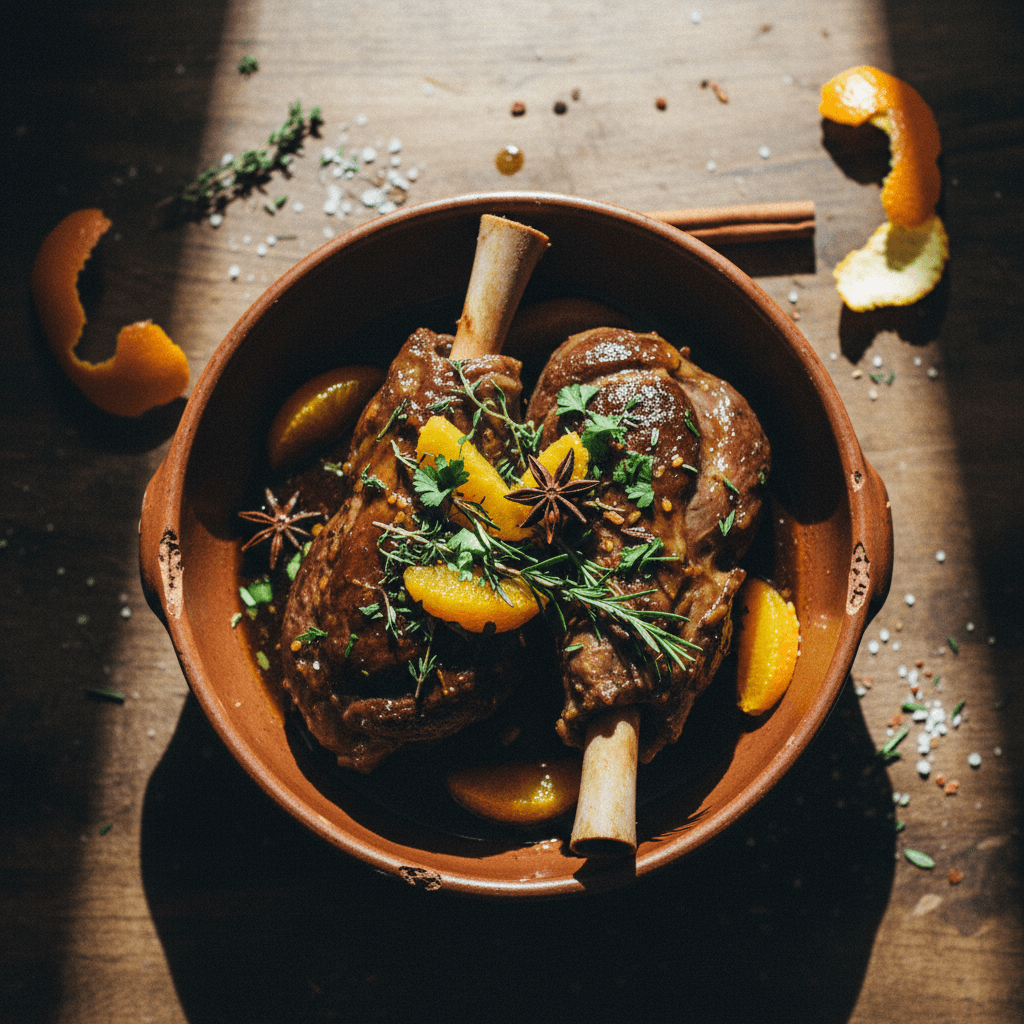
Ingredients
For the Lamb Shanks
- 4 lamb hind shanks
- 2 tablespoons vegetable oil, for searing
- 1 yellow onion, large, roughly chopped
- 2 carrot, medium, roughly chopped
- 1 leek, large, white and light green parts only, roughly chopped
- 2 tablespoons tomato paste
- 1 1/2 cups dry red wine
- 4 cups beef stock, or lamb stock
- 1 fresh orange, halved
- 2 star anise, whole
- 4 garlic cloves, whole, unpeeled
- 1 cinnamon stick, optional
- 1 sheet parchment paper, for cartouche
- 1 sheet aluminum foil, for warming
For the Herb Salt
- 1/4 cup kosher salt
- 1 tablespoon fresh rosemary, chopped
- 1 tablespoon fresh thyme, chopped
- 1 tablespoon fresh parsley, chopped
- 1 teaspoon black pepper, freshly ground
For the Gremolata
- 1/4 cup pistachios, toasted and roughly chopped
- 2 tablespoons fresh mint, finely chopped
- 2 tablespoons fresh parsley, finely chopped
- 1 tablespoon fresh chives, finely chopped
- 1 teaspoon lemon zest
- 1 teaspoon orange zest
For Serving
- 1 serving carbohydrate of choice, such as mashed potatoes, polenta, or risotto
Instructions
- 1
Prepare the Herb Salt: In a food processor, combine kosher salt, fresh rosemary, fresh thyme, fresh parsley, and freshly ground black pepper. Process until the herbs are finely minced and well combined with the salt.
⏱️ 5 min
- 2
Cure the Lamb Shanks: Evenly rub the prepared herb salt mixture all over the lamb hind shanks. Place the shanks in a non-reactive dish, cover, and refrigerate to cure for 12 hours. This step can be done overnight.
⏱️ 10 min
- 3
Sear the Shanks: Preheat the oven to 275°F. In a large, heavy-bottomed Dutch oven or oven-safe pot, heat the vegetable oil over high heat until smoking hot. Carefully add the cured lamb shanks and sear on all sides until deeply browned, about 3-4 minutes per side. Remove the seared shanks from the pot and set aside.
⏱️ 20 min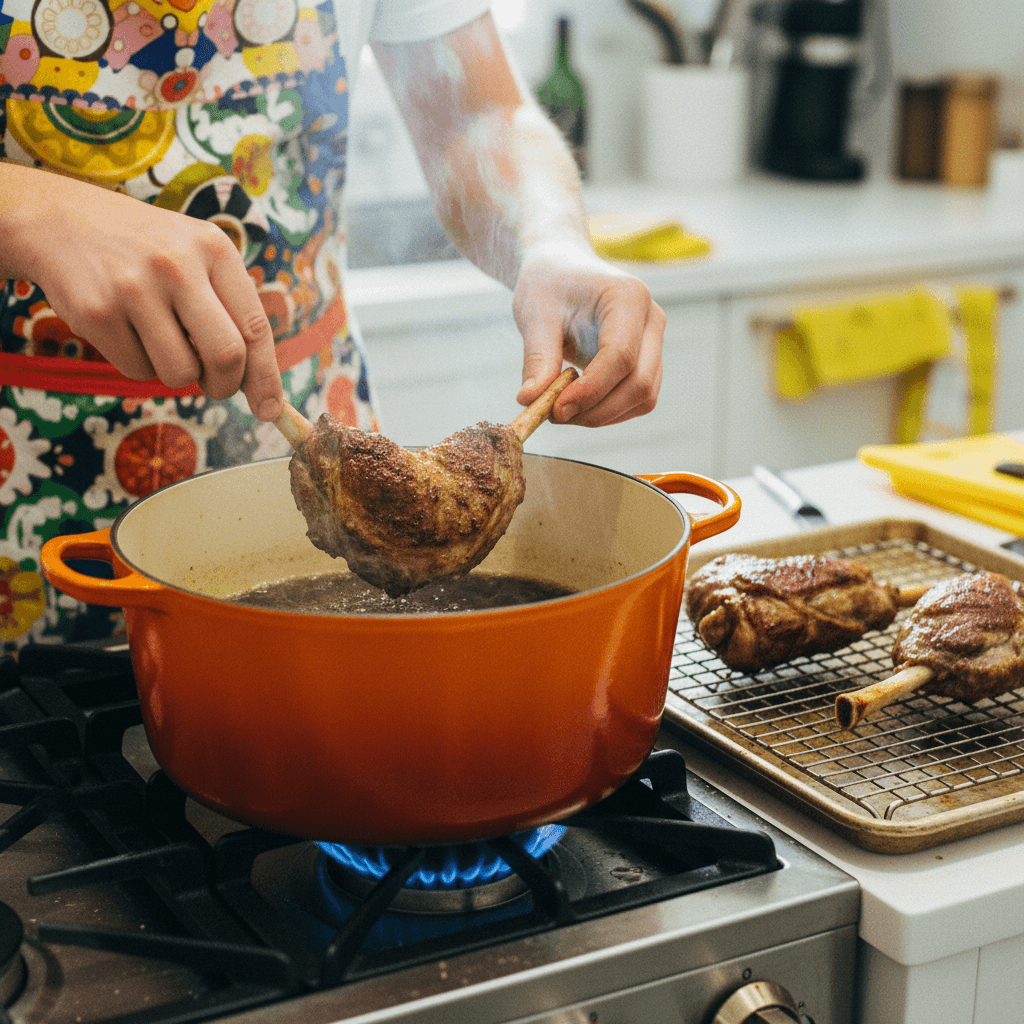
- 4
Sauté Aromatics: Reduce the heat to medium. Add the chopped yellow onion, carrot, and leek to the same pot. Cook, stirring occasionally, until softened and lightly caramelized, about 8-10 minutes.
⏱️ 10 min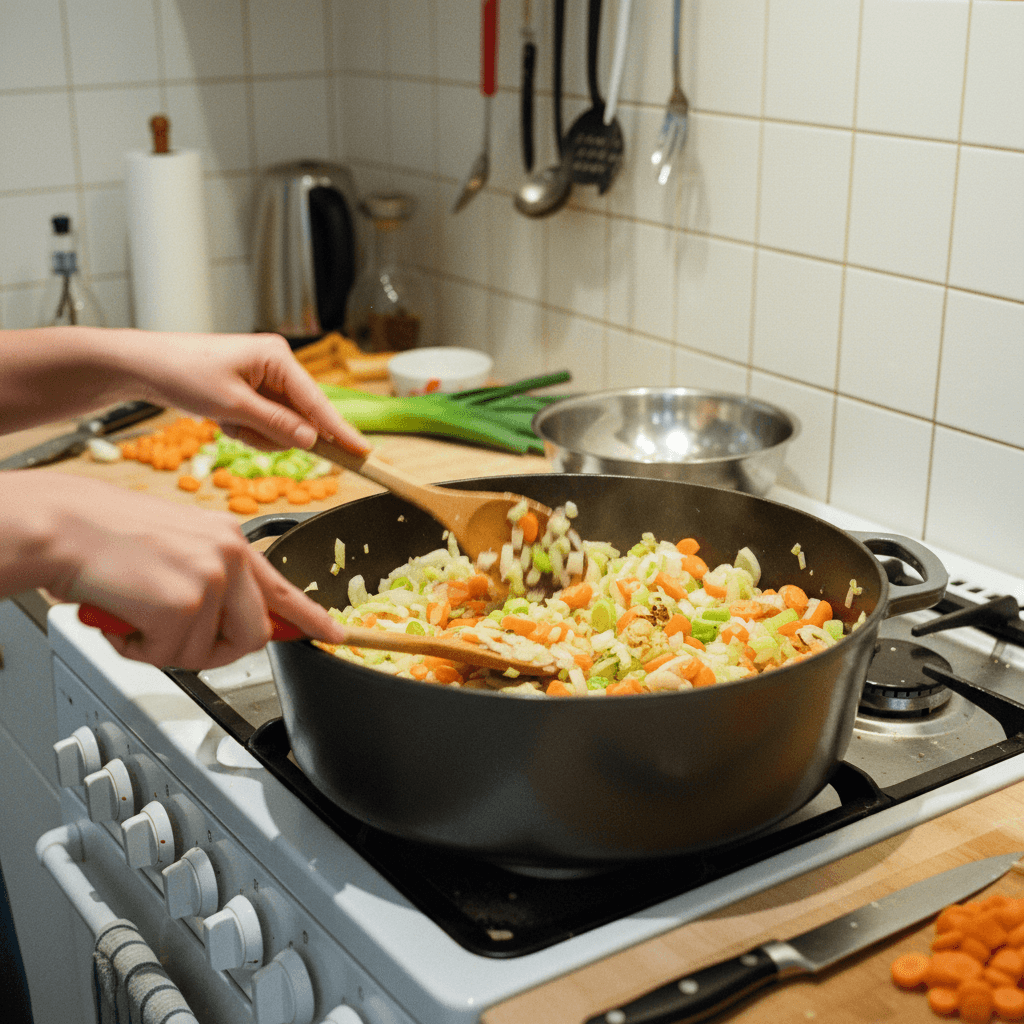
- 5
Build the Braising Base: Stir in the tomato paste and cook for 2-3 minutes, stirring constantly, until it darkens slightly. Deglaze the pot by pouring in the dry red wine, scraping up any browned bits from the bottom of the pot. Bring to a simmer and cook until the wine has reduced by about half, about 5-7 minutes.
⏱️ 10 min
- 6
Add Braising Liquids and Spices: Return the seared lamb shanks to the pot. Pour in the beef stock (or lamb stock) until the shanks are mostly submerged. Add the halved fresh orange, whole star anise, whole garlic cloves, and the optional cinnamon stick. Bring the liquid to a gentle simmer.
⏱️ 5 min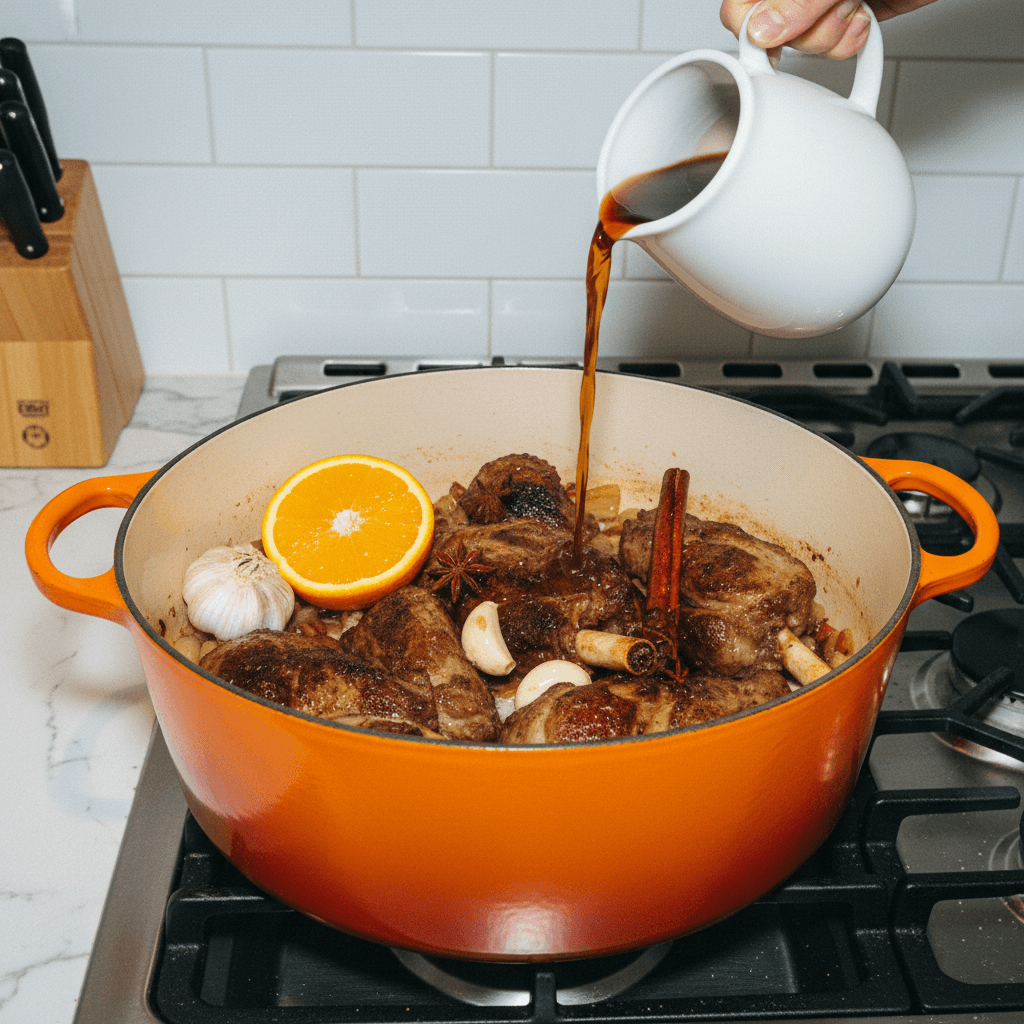
- 7
Cover with Cartouche: Cut a piece of parchment paper to fit snugly inside the pot, just touching the surface of the liquid. This is your cartouche. Place it directly on top of the braising liquid and shanks. This helps prevent the meat from drying out while allowing for some reduction.
⏱️ 5 min
- 8
Braise in the Oven: Cover the pot tightly with its lid (over the cartouche) and transfer it to the preheated oven. Braise for 8 hours, or until the lamb is incredibly tender and falling off the bone.
⏱️ 480 min•🌡️ 275
- 9
Cool and Rest (Crucial Step): Carefully remove the pot from the oven. DO NOT poke or disturb the shanks at this stage, as they will be extremely delicate. Immediately place the entire hot pot into a large ice bath (a sink filled with ice and water) to rapidly cool. Once the pot has cooled significantly, transfer it to the refrigerator and allow it to cool completely overnight (at least 12 hours). This crucial step allows the juices to redistribute back into the meat, resulting in unparalleled tenderness and juiciness.
⏱️ 120 min
- 10
Prepare the Sauce: The next day, carefully remove the cooled lamb shanks from the solidified braising liquid (cuisson) and set them aside. Skim off any solidified fat from the surface of the cuisson. Gently warm the cuisson over low heat just enough to liquefy it, then strain it through a fine-mesh sieve into a clean saucepan. Discard the solids. Strain the liquid a second time for an even smoother sauce.
⏱️ 15 min
- 11
Reduce the Sauce: Bring the strained sauce to a simmer over medium-low heat. Reduce the sauce, stirring occasionally and skimming any impurities that rise to the surface, until it reaches a thick, syrupy consistency. Remember, the sauce should be slightly thicker than you desire for serving, as the shanks will release more liquid when reheated, thinning it slightly.
⏱️ 60 min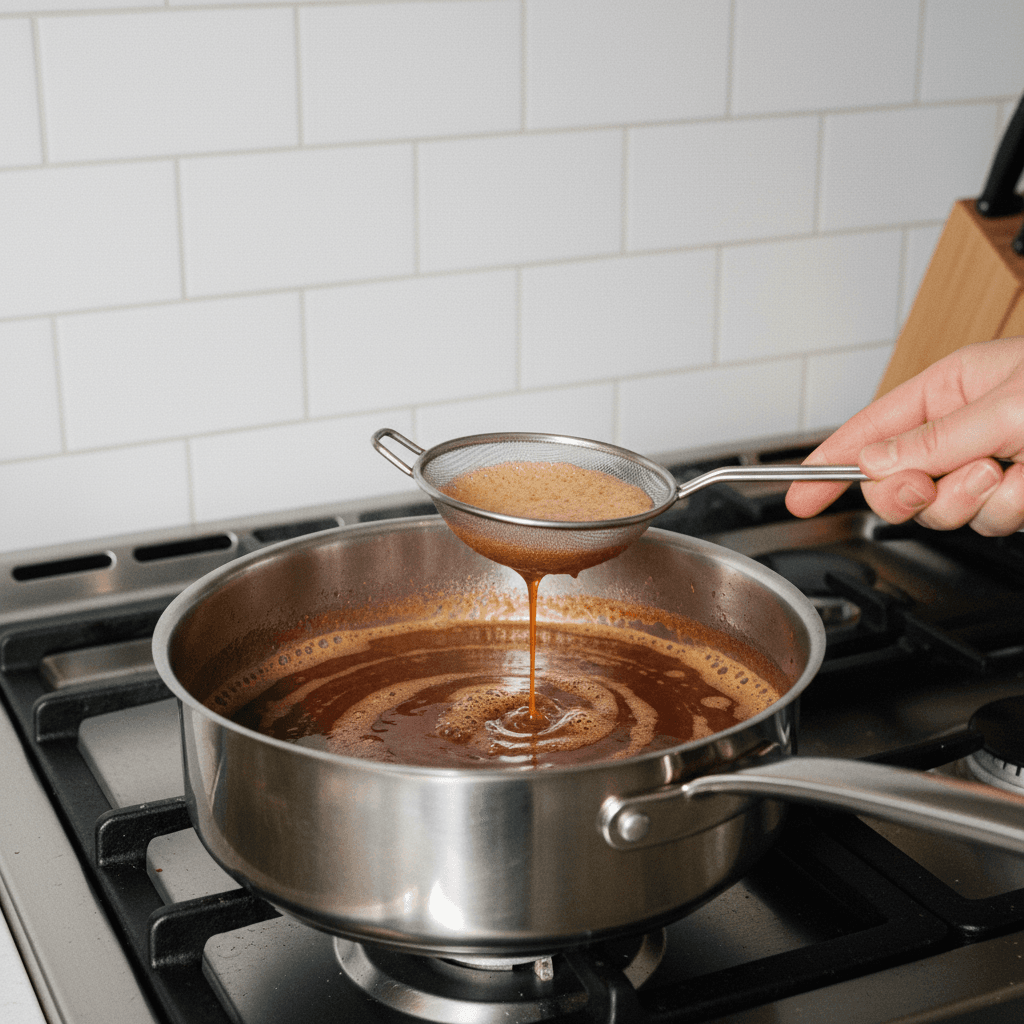
- 12
Warm and Serve: Preheat the oven to 325°F. Place the cooled lamb shanks in an oven-safe dish. Pour the hot, reduced sauce over the shanks. Cover the dish with a piece of parchment paper, then tightly cover with aluminum foil. Warm in the oven for 20-30 minutes, or until heated through.
⏱️ 30 min•🌡️ 325
- 13
Make Gremolata: While the shanks are warming, combine the toasted and chopped pistachios, finely chopped fresh mint, fresh parsley, fresh chives, lemon zest, and orange zest in a small bowl. Mix well.
⏱️ 5 min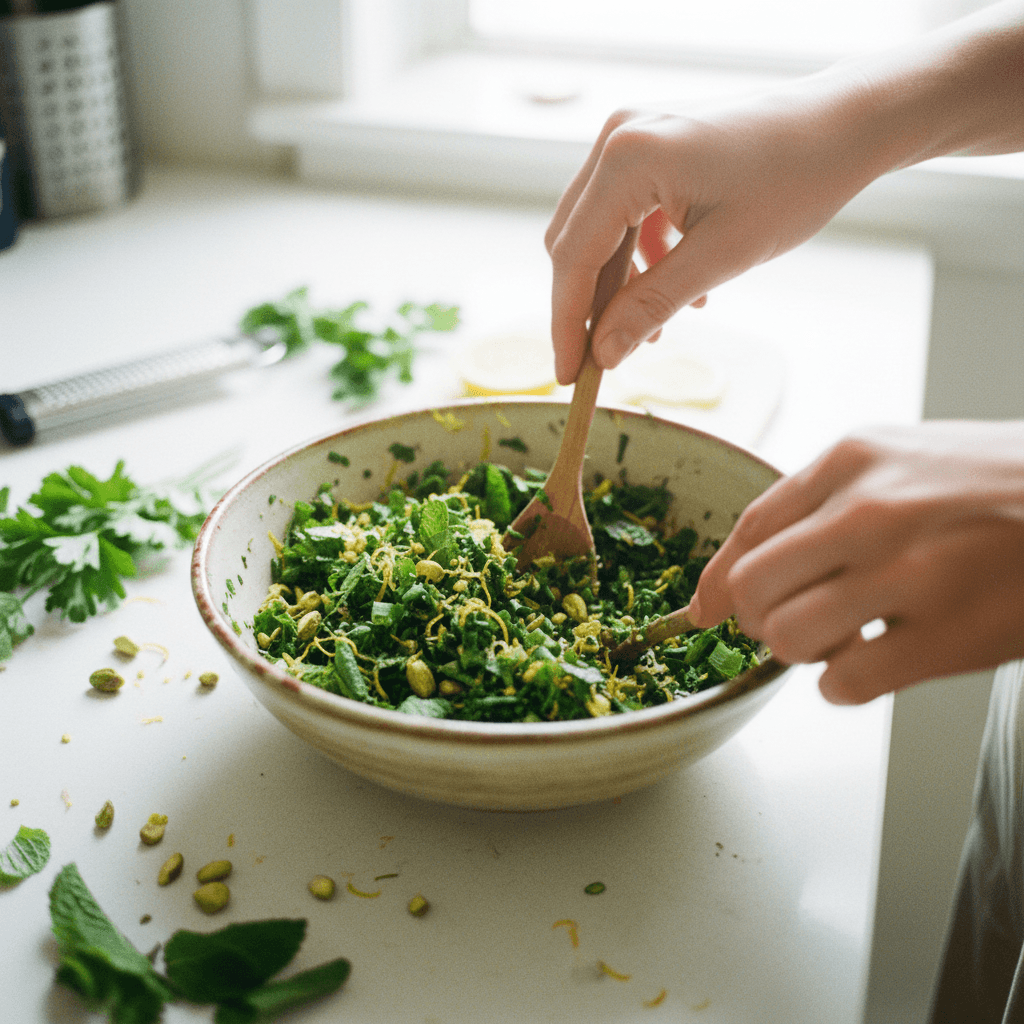
- 14
Plate: Serve the warmed lamb shanks with a generous amount of the rich braising sauce, topped with a sprinkle of the fresh gremolata. Serve alongside your favorite carbohydrate, such as mashed potatoes, polenta, or risotto.
⏱️ 5 min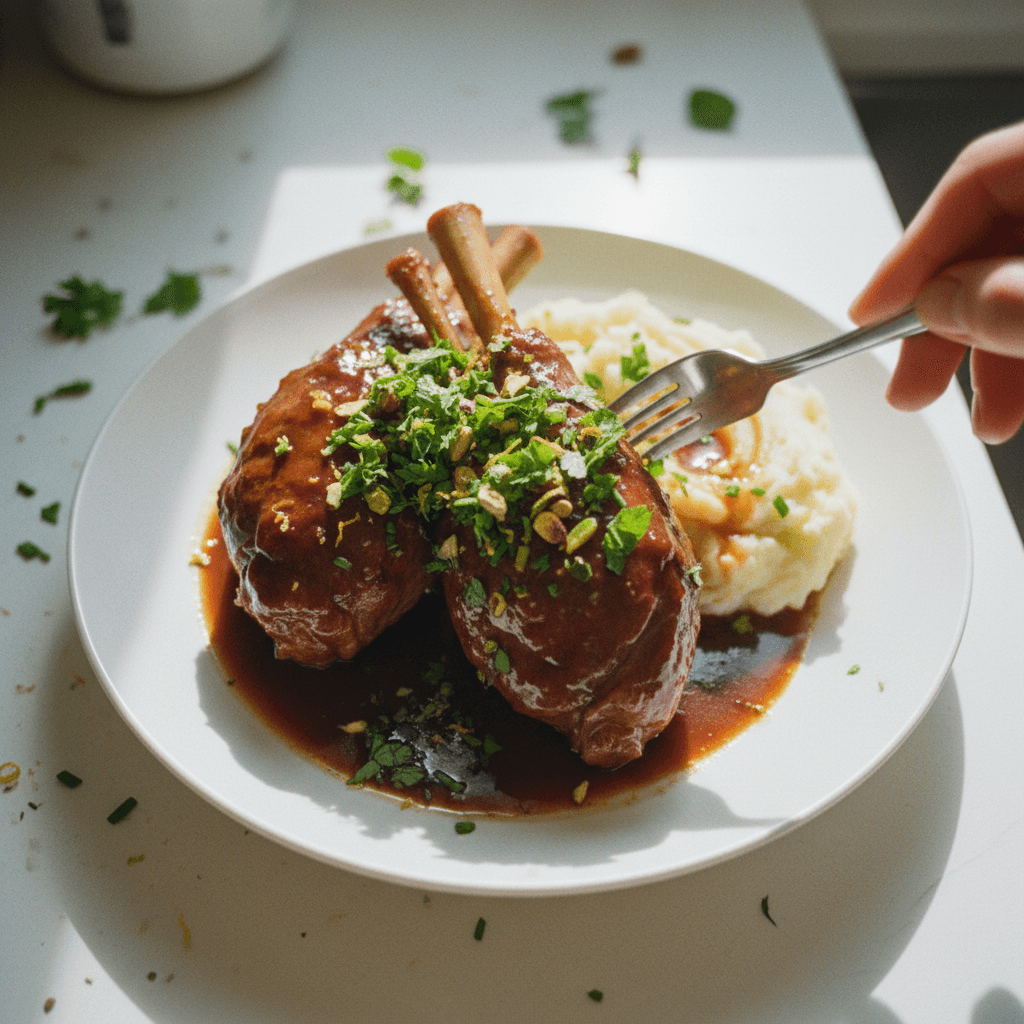
Kitchen Tools
Braised Lamb Shanks with Gremolata
For the Lamb Shanks
- 4 lamb hind shanks
- 2 tablespoons vegetable oil, for searing
- 1 yellow onion, large, roughly chopped
- 2 carrot, medium, roughly chopped
- 1 leek, large, white and light green parts only, roughly chopped
- 2 tablespoons tomato paste
- 1 1/2 cups dry red wine
- 4 cups beef stock, or lamb stock
- 1 fresh orange, halved
- 2 star anise, whole
- 4 garlic cloves, whole, unpeeled
- 1 cinnamon stick, optional
- 1 sheet parchment paper, for cartouche
- 1 sheet aluminum foil, for warming
For the Herb Salt
- 1/4 cup kosher salt
- 1 tablespoon fresh rosemary, chopped
- 1 tablespoon fresh thyme, chopped
- 1 tablespoon fresh parsley, chopped
- 1 teaspoon black pepper, freshly ground
For the Gremolata
- 1/4 cup pistachios, toasted and roughly chopped
- 2 tablespoons fresh mint, finely chopped
- 2 tablespoons fresh parsley, finely chopped
- 1 tablespoon fresh chives, finely chopped
- 1 teaspoon lemon zest
- 1 teaspoon orange zest
For Serving
- 1 serving carbohydrate of choice, such as mashed potatoes, polenta, or risotto
Instructions
- 1
Prepare the Herb Salt: In a food processor, combine kosher salt, fresh rosemary, fresh thyme, fresh parsley, and freshly ground black pepper. Process until the herbs are finely minced and well combined with the salt.
⏱️ 5 min - 2
Cure the Lamb Shanks: Evenly rub the prepared herb salt mixture all over the lamb hind shanks. Place the shanks in a non-reactive dish, cover, and refrigerate to cure for 12 hours. This step can be done overnight.
⏱️ 10 min - 3
Sear the Shanks: Preheat the oven to 275°F. In a large, heavy-bottomed Dutch oven or oven-safe pot, heat the vegetable oil over high heat until smoking hot. Carefully add the cured lamb shanks and sear on all sides until deeply browned, about 3-4 minutes per side. Remove the seared shanks from the pot and set aside.
⏱️ 20 min - 4
Sauté Aromatics: Reduce the heat to medium. Add the chopped yellow onion, carrot, and leek to the same pot. Cook, stirring occasionally, until softened and lightly caramelized, about 8-10 minutes.
⏱️ 10 min - 5
Build the Braising Base: Stir in the tomato paste and cook for 2-3 minutes, stirring constantly, until it darkens slightly. Deglaze the pot by pouring in the dry red wine, scraping up any browned bits from the bottom of the pot. Bring to a simmer and cook until the wine has reduced by about half, about 5-7 minutes.
⏱️ 10 min - 6
Add Braising Liquids and Spices: Return the seared lamb shanks to the pot. Pour in the beef stock (or lamb stock) until the shanks are mostly submerged. Add the halved fresh orange, whole star anise, whole garlic cloves, and the optional cinnamon stick. Bring the liquid to a gentle simmer.
⏱️ 5 min - 7
Cover with Cartouche: Cut a piece of parchment paper to fit snugly inside the pot, just touching the surface of the liquid. This is your cartouche. Place it directly on top of the braising liquid and shanks. This helps prevent the meat from drying out while allowing for some reduction.
⏱️ 5 min - 8
Braise in the Oven: Cover the pot tightly with its lid (over the cartouche) and transfer it to the preheated oven. Braise for 8 hours, or until the lamb is incredibly tender and falling off the bone.
⏱️ 480 min•🌡️ 275 - 9
Cool and Rest (Crucial Step): Carefully remove the pot from the oven. DO NOT poke or disturb the shanks at this stage, as they will be extremely delicate. Immediately place the entire hot pot into a large ice bath (a sink filled with ice and water) to rapidly cool. Once the pot has cooled significantly, transfer it to the refrigerator and allow it to cool completely overnight (at least 12 hours). This crucial step allows the juices to redistribute back into the meat, resulting in unparalleled tenderness and juiciness.
⏱️ 120 min - 10
Prepare the Sauce: The next day, carefully remove the cooled lamb shanks from the solidified braising liquid (cuisson) and set them aside. Skim off any solidified fat from the surface of the cuisson. Gently warm the cuisson over low heat just enough to liquefy it, then strain it through a fine-mesh sieve into a clean saucepan. Discard the solids. Strain the liquid a second time for an even smoother sauce.
⏱️ 15 min - 11
Reduce the Sauce: Bring the strained sauce to a simmer over medium-low heat. Reduce the sauce, stirring occasionally and skimming any impurities that rise to the surface, until it reaches a thick, syrupy consistency. Remember, the sauce should be slightly thicker than you desire for serving, as the shanks will release more liquid when reheated, thinning it slightly.
⏱️ 60 min - 12
Warm and Serve: Preheat the oven to 325°F. Place the cooled lamb shanks in an oven-safe dish. Pour the hot, reduced sauce over the shanks. Cover the dish with a piece of parchment paper, then tightly cover with aluminum foil. Warm in the oven for 20-30 minutes, or until heated through.
⏱️ 30 min•🌡️ 325 - 13
Make Gremolata: While the shanks are warming, combine the toasted and chopped pistachios, finely chopped fresh mint, fresh parsley, fresh chives, lemon zest, and orange zest in a small bowl. Mix well.
⏱️ 5 min - 14
Plate: Serve the warmed lamb shanks with a generous amount of the rich braising sauce, topped with a sprinkle of the fresh gremolata. Serve alongside your favorite carbohydrate, such as mashed potatoes, polenta, or risotto.
⏱️ 5 min