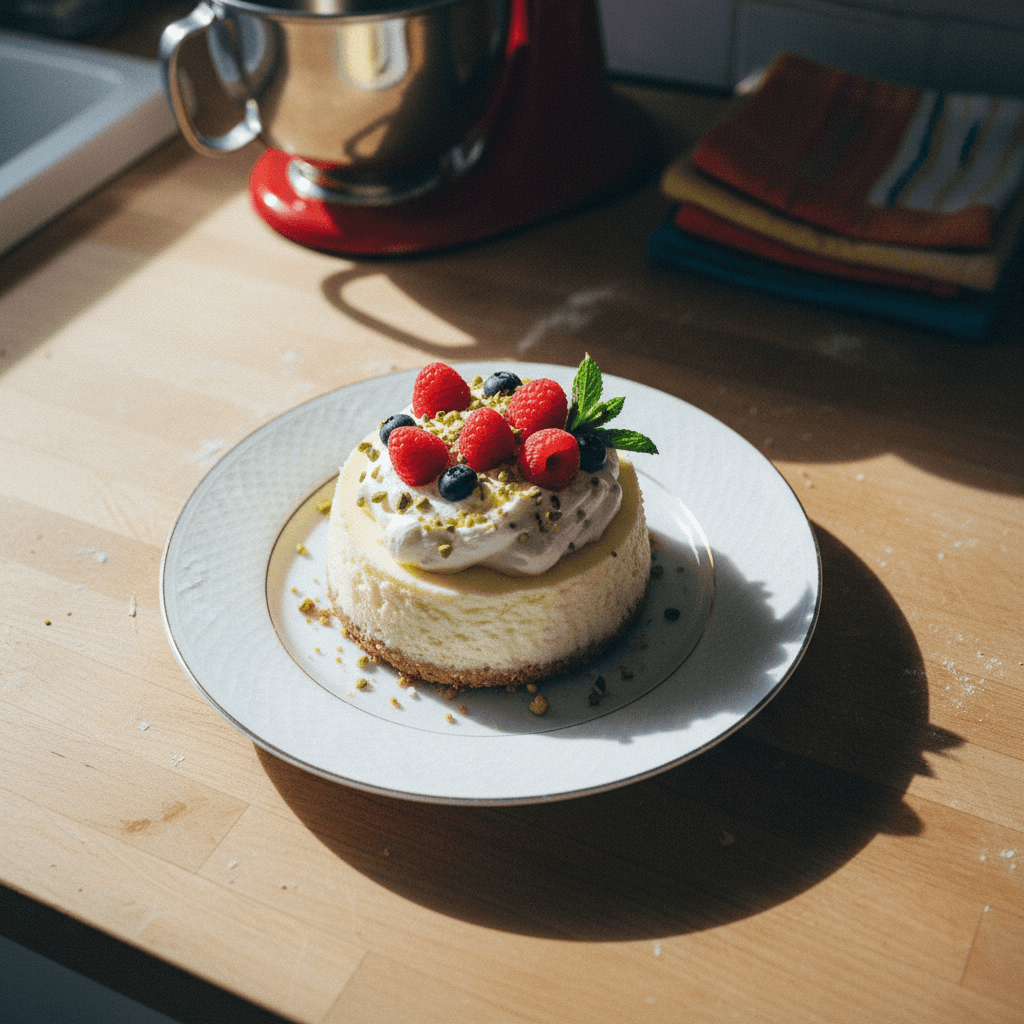
Classic New York Cheesecake
Classic New York Cheesecake
Ingredients
For the Graham Cracker Crust
- 1 1/2 cups graham cracker crumbs
- 1/4 cup granulated sugar
- 6 tablespoons unsalted butter, melted
For the Cheesecake Filling
- 32 ounces cream cheese, softened, 4 blocks
- 1 1/4 cups granulated sugar
- 2 tablespoons all-purpose flour
- 1/2 cup sour cream
- 1/4 cup heavy cream
- 4 large eggs
- 1 teaspoon vanilla extract
- 1 teaspoon lemon zest, finely grated
Instructions
- 1
Preheat your oven to 350°F (175°C). Lightly grease a 9-inch springform pan. Wrap the bottom and sides of the springform pan tightly with heavy-duty aluminum foil to prevent water from seeping in during the water bath.
⏱️ 5 min•🌡️ 350
- 2
In a medium bowl, combine the graham cracker crumbs, 1/4 cup granulated sugar, and melted butter. Mix until well combined and the crumbs are moistened.
⏱️ 5 min
- 3
Press the crumb mixture evenly into the bottom of the prepared springform pan. Bake for 10 minutes, then remove from the oven and set aside to cool slightly.
⏱️ 10 min•🌡️ 350
- 4
Reduce the oven temperature to 325°F (160°C).
⏱️ 1 min•🌡️ 325
- 5
In a large bowl, using an electric mixer on medium speed, beat the softened cream cheese until smooth and creamy, about 2-3 minutes. Scrape down the sides of the bowl as needed.
⏱️ 3 min
- 6
Gradually add the 1 1/4 cups granulated sugar to the cream cheese, beating until just combined and smooth. Do not overmix.
⏱️ 2 min
- 7
Beat in the all-purpose flour until just incorporated.
⏱️ 1 min
- 8
Stir in the sour cream, heavy cream, vanilla extract, and lemon zest until combined.
⏱️ 2 min
- 9
Add the eggs one at a time, beating on low speed after each addition just until combined. Be careful not to overmix, as this can introduce too much air and cause cracks in the cheesecake.
⏱️ 3 min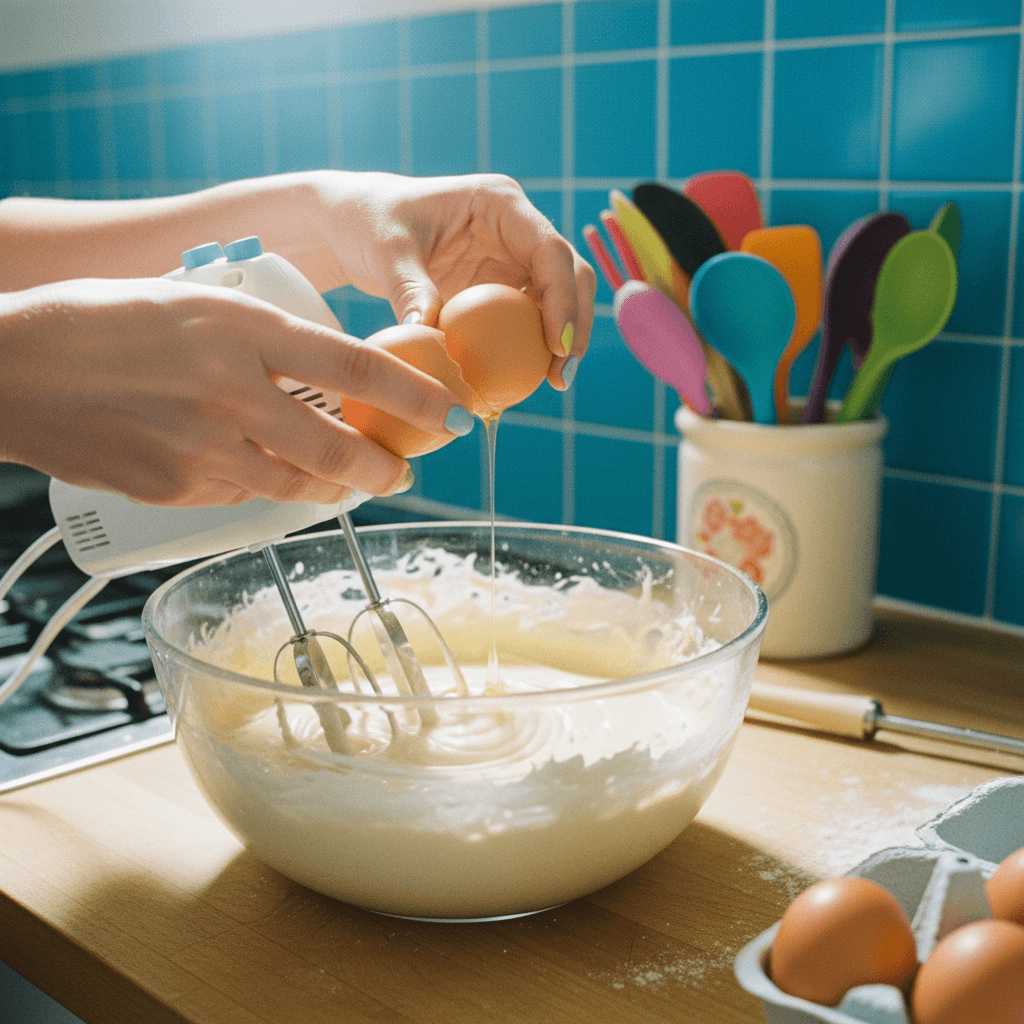
- 10
Pour the cheesecake filling over the cooled crust in the springform pan. Place the springform pan into a larger roasting pan. Carefully pour hot water into the roasting pan, reaching about halfway up the sides of the springform pan, creating a water bath.
⏱️ 5 min
- 11
Bake for 60-75 minutes, or until the edges are set and the center still jiggles slightly when gently shaken. The internal temperature should reach 150°F (65°C).
⏱️ 75 min•🌡️ 325
- 12
Turn off the oven and leave the cheesecake in the oven with the door ajar for 1 hour. This slow cooling prevents cracking.
⏱️ 60 min
- 13
Remove the cheesecake from the oven and the water bath. Carefully remove the foil. Let it cool completely on a wire rack at room temperature.
⏱️ 60 min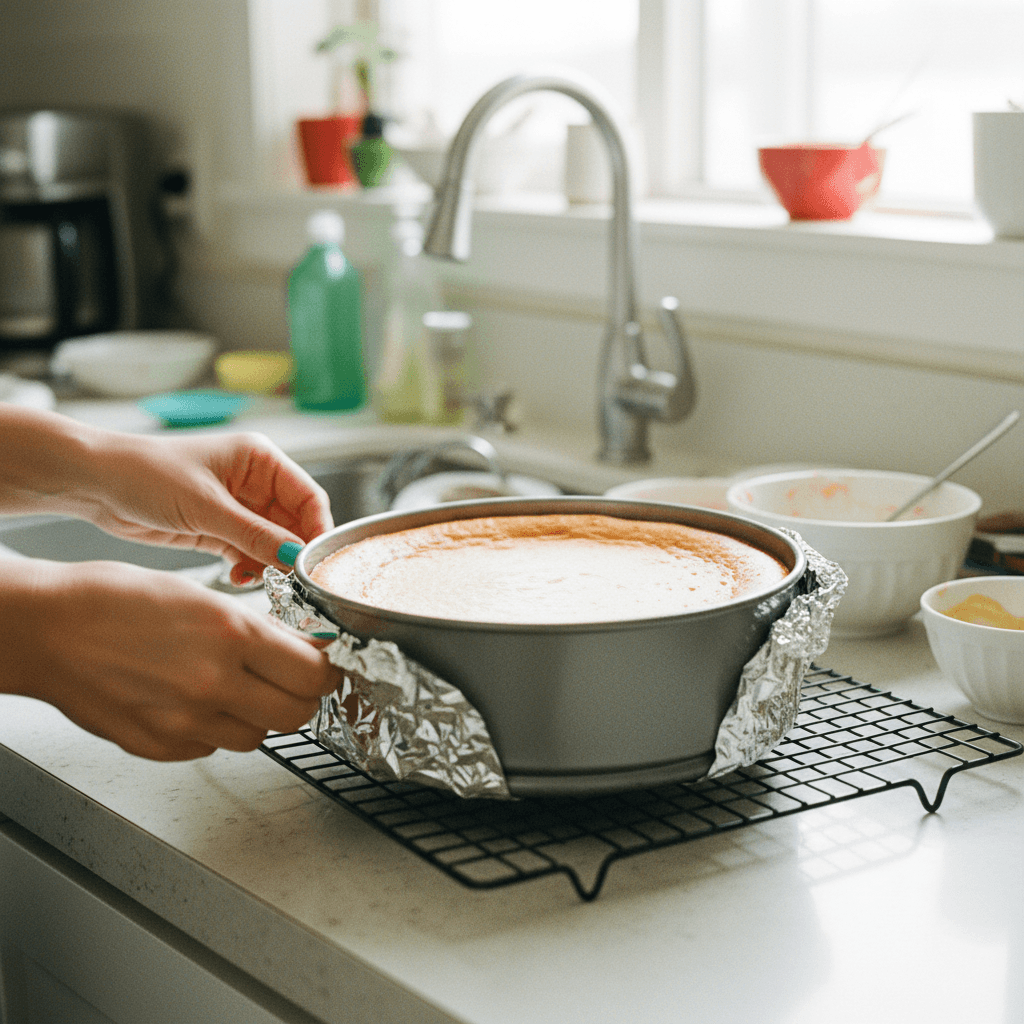
- 14
Once cooled, cover the cheesecake with plastic wrap and refrigerate for at least 4 hours, or preferably overnight, before serving. This allows the cheesecake to firm up and develop its full flavor.
⏱️ 180 min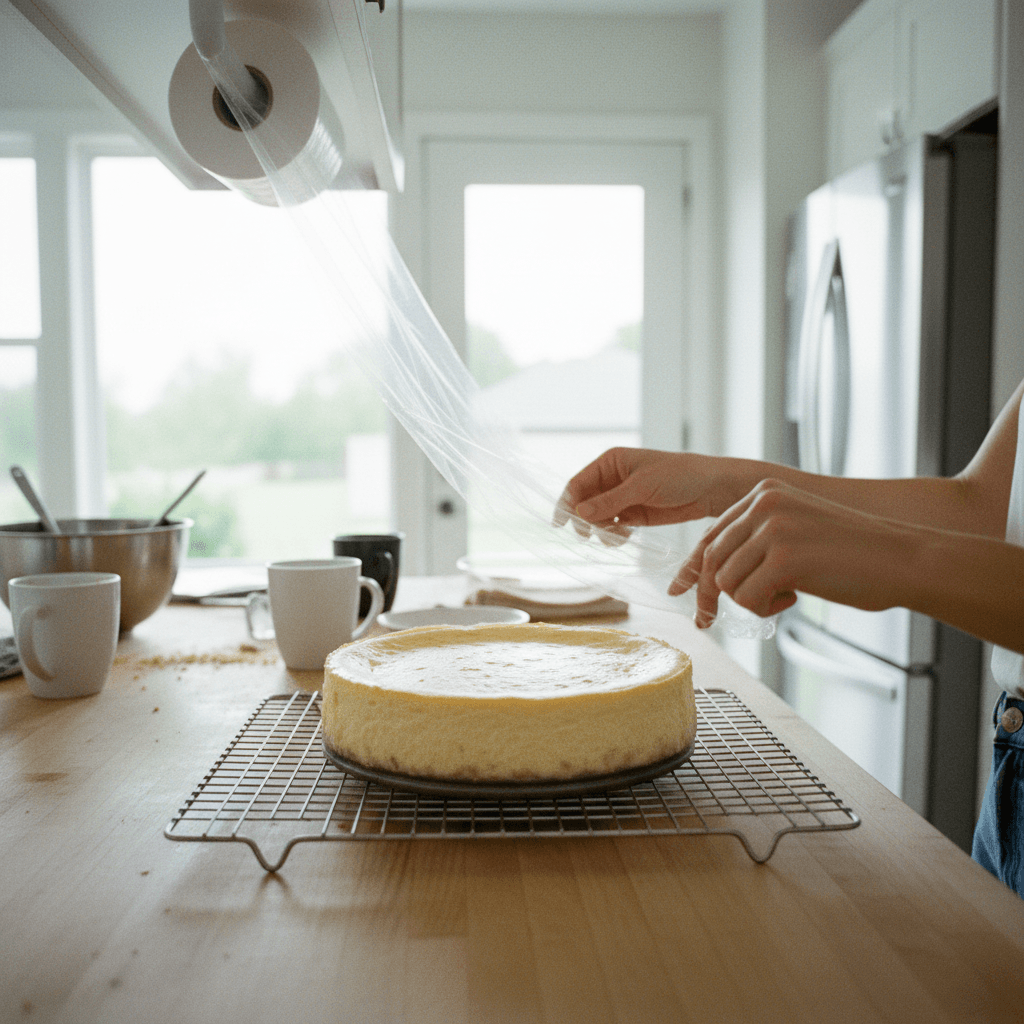
Kitchen Tools
Nutrition Facts (per serving)
Classic New York Cheesecake
For the Graham Cracker Crust
- 1 1/2 cups graham cracker crumbs
- 1/4 cup granulated sugar
- 6 tablespoons unsalted butter, melted
For the Cheesecake Filling
- 32 ounces cream cheese, softened, 4 blocks
- 1 1/4 cups granulated sugar
- 2 tablespoons all-purpose flour
- 1/2 cup sour cream
- 1/4 cup heavy cream
- 4 large eggs
- 1 teaspoon vanilla extract
- 1 teaspoon lemon zest, finely grated
Instructions
- 1
Preheat your oven to 350°F (175°C). Lightly grease a 9-inch springform pan. Wrap the bottom and sides of the springform pan tightly with heavy-duty aluminum foil to prevent water from seeping in during the water bath.
⏱️ 5 min•🌡️ 350 - 2
In a medium bowl, combine the graham cracker crumbs, 1/4 cup granulated sugar, and melted butter. Mix until well combined and the crumbs are moistened.
⏱️ 5 min - 3
Press the crumb mixture evenly into the bottom of the prepared springform pan. Bake for 10 minutes, then remove from the oven and set aside to cool slightly.
⏱️ 10 min•🌡️ 350 - 4
Reduce the oven temperature to 325°F (160°C).
⏱️ 1 min•🌡️ 325 - 5
In a large bowl, using an electric mixer on medium speed, beat the softened cream cheese until smooth and creamy, about 2-3 minutes. Scrape down the sides of the bowl as needed.
⏱️ 3 min - 6
Gradually add the 1 1/4 cups granulated sugar to the cream cheese, beating until just combined and smooth. Do not overmix.
⏱️ 2 min - 7
Beat in the all-purpose flour until just incorporated.
⏱️ 1 min - 8
Stir in the sour cream, heavy cream, vanilla extract, and lemon zest until combined.
⏱️ 2 min - 9
Add the eggs one at a time, beating on low speed after each addition just until combined. Be careful not to overmix, as this can introduce too much air and cause cracks in the cheesecake.
⏱️ 3 min - 10
Pour the cheesecake filling over the cooled crust in the springform pan. Place the springform pan into a larger roasting pan. Carefully pour hot water into the roasting pan, reaching about halfway up the sides of the springform pan, creating a water bath.
⏱️ 5 min - 11
Bake for 60-75 minutes, or until the edges are set and the center still jiggles slightly when gently shaken. The internal temperature should reach 150°F (65°C).
⏱️ 75 min•🌡️ 325 - 12
Turn off the oven and leave the cheesecake in the oven with the door ajar for 1 hour. This slow cooling prevents cracking.
⏱️ 60 min - 13
Remove the cheesecake from the oven and the water bath. Carefully remove the foil. Let it cool completely on a wire rack at room temperature.
⏱️ 60 min - 14
Once cooled, cover the cheesecake with plastic wrap and refrigerate for at least 4 hours, or preferably overnight, before serving. This allows the cheesecake to firm up and develop its full flavor.
⏱️ 180 min