Soft and Pliable Roti
Soft and Pliable Roti

Ingredients
- 2 cups plain flour
- 1 cup wholemeal flour
- 1 tablespoon butter, softened
- 2 cups boiling hot water, as needed
- 1/4 cup flour, for dusting, as needed
Instructions
- 1
In a stand mixer bowl (or a large mixing bowl if kneading by hand), combine the 2 cups of plain flour and 1 cup of wholemeal flour.
⏱️ 2 min
- 2
Add the 1 tablespoon of softened butter to the flour mixture.
⏱️ 1 min
- 3
If using a stand mixer, attach the dough hook and begin mixing the flour and butter on low speed. Slowly and gradually pour in the 2 cups of boiling hot water while the mixer is running. Continue adding water until the dough comes together and reaches a soft, pliable consistency. If kneading by hand, carefully mix the flour, butter, and hot water with a spoon until cool enough to handle, then knead until smooth and pliable. Adjust the water quantity as needed, as different flours absorb liquids differently.
⏱️ 8 min
- 4
Once the dough is mixed, leave it in the bowl for a couple of minutes to cool down slightly, making it easier to handle.
⏱️ 2 min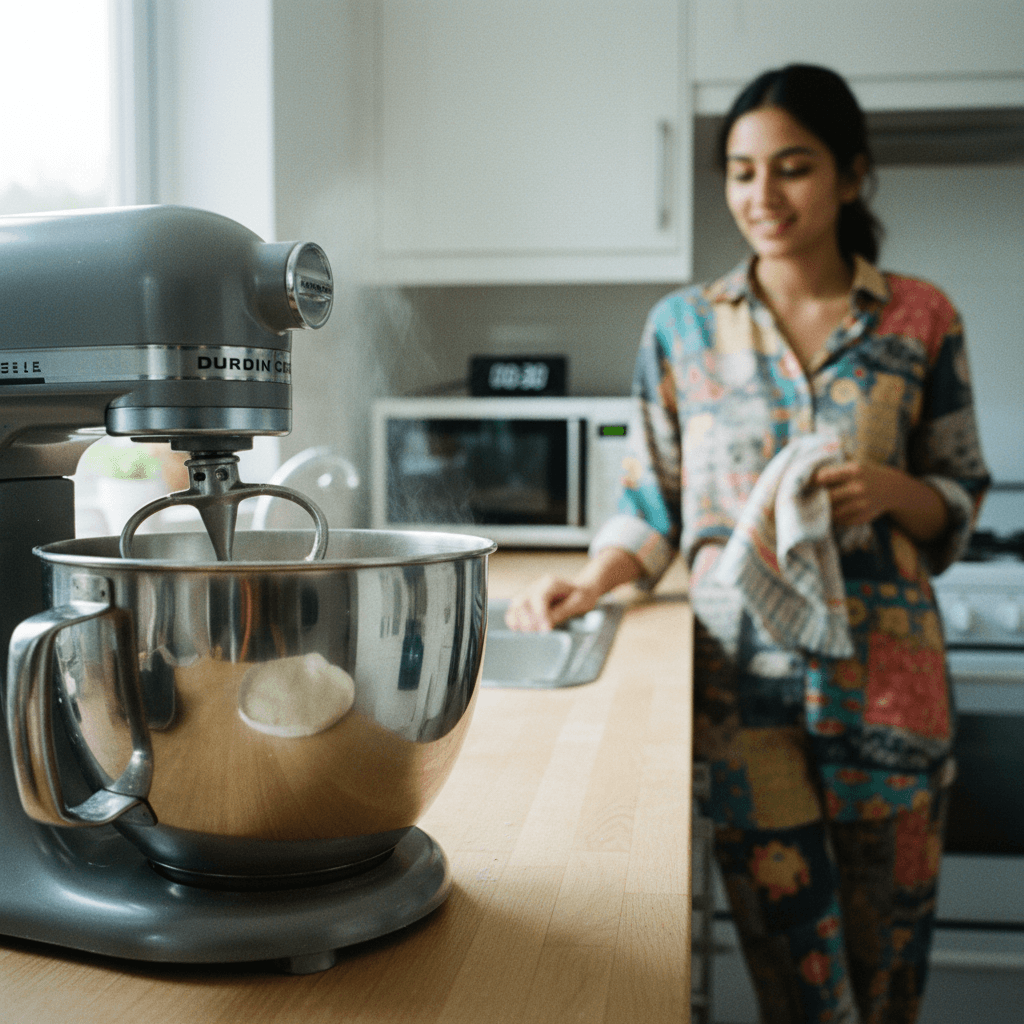
- 5
Remove the cooled dough from the bowl and briefly knead it on a clean, lightly floured surface or wooden board. Roll the dough into a log shape.
⏱️ 3 min
- 6
Using a knife or dough scraper, cut the dough log into approximately 10 equal portions.
⏱️ 2 min
- 7
Take each portion of dough and roll it into a smooth ball between your palms, then gently flatten it into a disc.
⏱️ 3 min
- 8
Lightly press each flattened dough disc into a plate of flour to coat both sides. Using a rolling pin, roll out each disc into a thin, even circle. Focus on achieving even thickness rather than a perfect round shape.
⏱️ 10 min
- 9
Heat a flat pan (tava) over medium-high heat. Once hot, place a rolled-out roti onto the pan. Cook on one side until small bubbles appear on the surface and the edges start to lift slightly.
⏱️ 1 min
- 10
Flip the roti to the other side and continue cooking. Gently press the roti with a clean cloth, especially around the edges, to encourage it to puff up.
⏱️ 1 min
- 11
For a traditional finish, carefully transfer the partially cooked roti from the pan directly onto an open flame on a gas hob. The roti will puff up completely and develop a slight char. If using an electric or induction hob, continue cooking the roti on the hot pan, pressing it gently with a cloth; it will still puff and remain soft.
⏱️ 1 min
- 12
Once cooked, stack the rotis on a plate or in a clean towel to keep them warm and soft until serving.
⏱️ 1 min
Kitchen Tools
Nutrition Facts (per serving)
Soft and Pliable Roti
- 2 cups plain flour
- 1 cup wholemeal flour
- 1 tablespoon butter, softened
- 2 cups boiling hot water, as needed
- 1/4 cup flour, for dusting, as needed
Instructions
- 1
In a stand mixer bowl (or a large mixing bowl if kneading by hand), combine the 2 cups of plain flour and 1 cup of wholemeal flour.
⏱️ 2 min - 2
Add the 1 tablespoon of softened butter to the flour mixture.
⏱️ 1 min - 3
If using a stand mixer, attach the dough hook and begin mixing the flour and butter on low speed. Slowly and gradually pour in the 2 cups of boiling hot water while the mixer is running. Continue adding water until the dough comes together and reaches a soft, pliable consistency. If kneading by hand, carefully mix the flour, butter, and hot water with a spoon until cool enough to handle, then knead until smooth and pliable. Adjust the water quantity as needed, as different flours absorb liquids differently.
⏱️ 8 min - 4
Once the dough is mixed, leave it in the bowl for a couple of minutes to cool down slightly, making it easier to handle.
⏱️ 2 min - 5
Remove the cooled dough from the bowl and briefly knead it on a clean, lightly floured surface or wooden board. Roll the dough into a log shape.
⏱️ 3 min - 6
Using a knife or dough scraper, cut the dough log into approximately 10 equal portions.
⏱️ 2 min - 7
Take each portion of dough and roll it into a smooth ball between your palms, then gently flatten it into a disc.
⏱️ 3 min - 8
Lightly press each flattened dough disc into a plate of flour to coat both sides. Using a rolling pin, roll out each disc into a thin, even circle. Focus on achieving even thickness rather than a perfect round shape.
⏱️ 10 min - 9
Heat a flat pan (tava) over medium-high heat. Once hot, place a rolled-out roti onto the pan. Cook on one side until small bubbles appear on the surface and the edges start to lift slightly.
⏱️ 1 min - 10
Flip the roti to the other side and continue cooking. Gently press the roti with a clean cloth, especially around the edges, to encourage it to puff up.
⏱️ 1 min - 11
For a traditional finish, carefully transfer the partially cooked roti from the pan directly onto an open flame on a gas hob. The roti will puff up completely and develop a slight char. If using an electric or induction hob, continue cooking the roti on the hot pan, pressing it gently with a cloth; it will still puff and remain soft.
⏱️ 1 min - 12
Once cooked, stack the rotis on a plate or in a clean towel to keep them warm and soft until serving.
⏱️ 1 min