Whole Wheat Sourdough Boule
Whole Wheat Sourdough Boule

Ingredients
- 100 grams active sourdough starter, (fed 4-12 hours prior)
- 350 grams warm water, (90-95°F)
- 100 grams whole wheat flour
- 350 grams bread flour
- 10 grams fine sea salt
- 2 tablespoons rice flour, for dusting
Instructions
- 1
In a large mixing bowl, combine the active sourdough starter and warm water. Stir gently with a spatula or your hand until the starter is mostly dissolved.
⏱️ 2 min
- 2
Add the whole wheat flour and bread flour to the bowl. Mix with your hand until no dry flour remains and a shaggy dough forms. Cover the bowl with a damp kitchen towel or plastic wrap and let it rest for 30 minutes (autolyse).
⏱️ 33 min - 3
After the autolyse, sprinkle the fine sea salt over the dough. Wet your hand and gently work the salt into the dough by squeezing and folding for about 2-3 minutes until it's fully incorporated. The dough will become more cohesive.
⏱️ 5 min
- 4
Perform the first set of stretch and folds. With wet hands, grab a portion of the dough from one side, stretch it upwards, and fold it over to the opposite side. Rotate the bowl a quarter turn and repeat this process 3-4 more times until you've gone all the way around. Cover and rest for 30 minutes.
⏱️ 32 min
- 5
Repeat the stretch and fold process (as in Step 4) three more times, with 30-minute rest periods between each set. This means a total of 4 sets of stretch and folds over 2 hours.
⏱️ 126 min
- 6
After the final set of stretch and folds, cover the bowl and let the dough bulk ferment at room temperature (around 70-75°F) for 4-8 hours, or until it has increased in volume by about 50-75% and appears bubbly and alive. The exact time will depend on your kitchen temperature and starter activity.
⏱️ 480 min
- 7
Lightly flour your work surface. Gently turn the dough out onto the floured surface. Divide the dough if making multiple loaves (for one boule, keep it as one piece). Gently pre-shape the dough into a loose round by folding the edges towards the center to create tension on the surface. Let it rest, uncovered, for 20 minutes.
⏱️ 25 min
- 8
Lightly dust a banneton (proofing basket) or a bowl lined with a floured kitchen towel with rice flour. Shape the dough into a tight boule. For a round boule, gently pull the top of the dough towards you, then push it away, rotating slightly, to create surface tension. Place the shaped dough seam-side up into the prepared banneton.
⏱️ 10 min
- 9
Cover the banneton with plastic wrap or a plastic bag and refrigerate for 8-16 hours for the cold proof. This develops flavor and makes the dough easier to handle.
⏱️ 960 min
- 10
About 1 hour before baking, place a Dutch oven with its lid into your oven and preheat to 500°F (260°C).
⏱️ 60 min•🌡️ 500
- 11
Once the oven and Dutch oven are fully preheated, carefully remove the hot Dutch oven. Invert the cold dough from the banneton directly into the hot Dutch oven. Score the top of the dough with a sharp razor blade or lame (a cross, a square, or a simple slash).
⏱️ 2 min
- 12
Place the lid back on the Dutch oven and bake for 20 minutes.
⏱️ 20 min•🌡️ 500
- 13
Remove the lid from the Dutch oven, reduce the oven temperature to 450°F (230°C), and continue baking for another 25-30 minutes, or until the crust is deeply golden brown and the internal temperature reaches 200-210°F.
⏱️ 30 min•🌡️ 450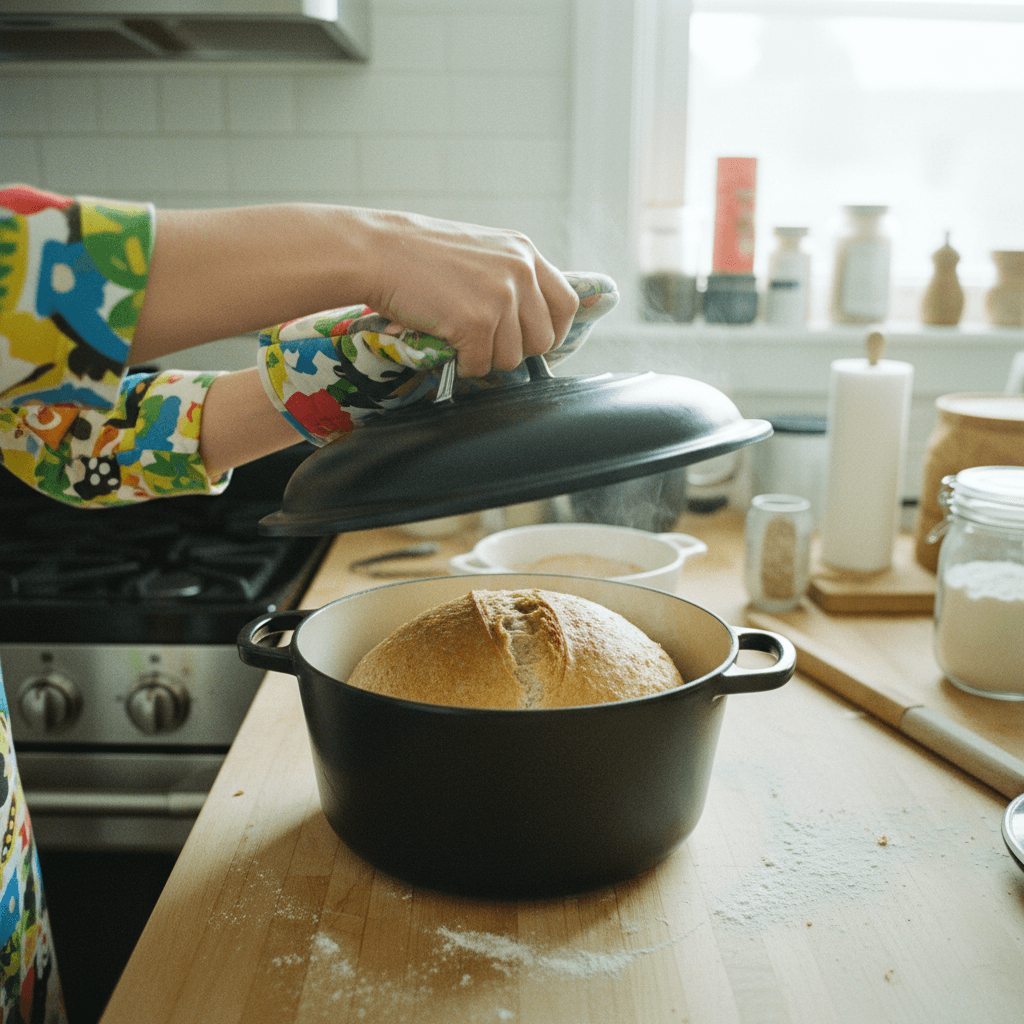
- 14
Carefully remove the bread from the Dutch oven and transfer it to a wire rack to cool completely for at least 1-2 hours before slicing. This is crucial for the crumb structure and flavor.
⏱️ 120 min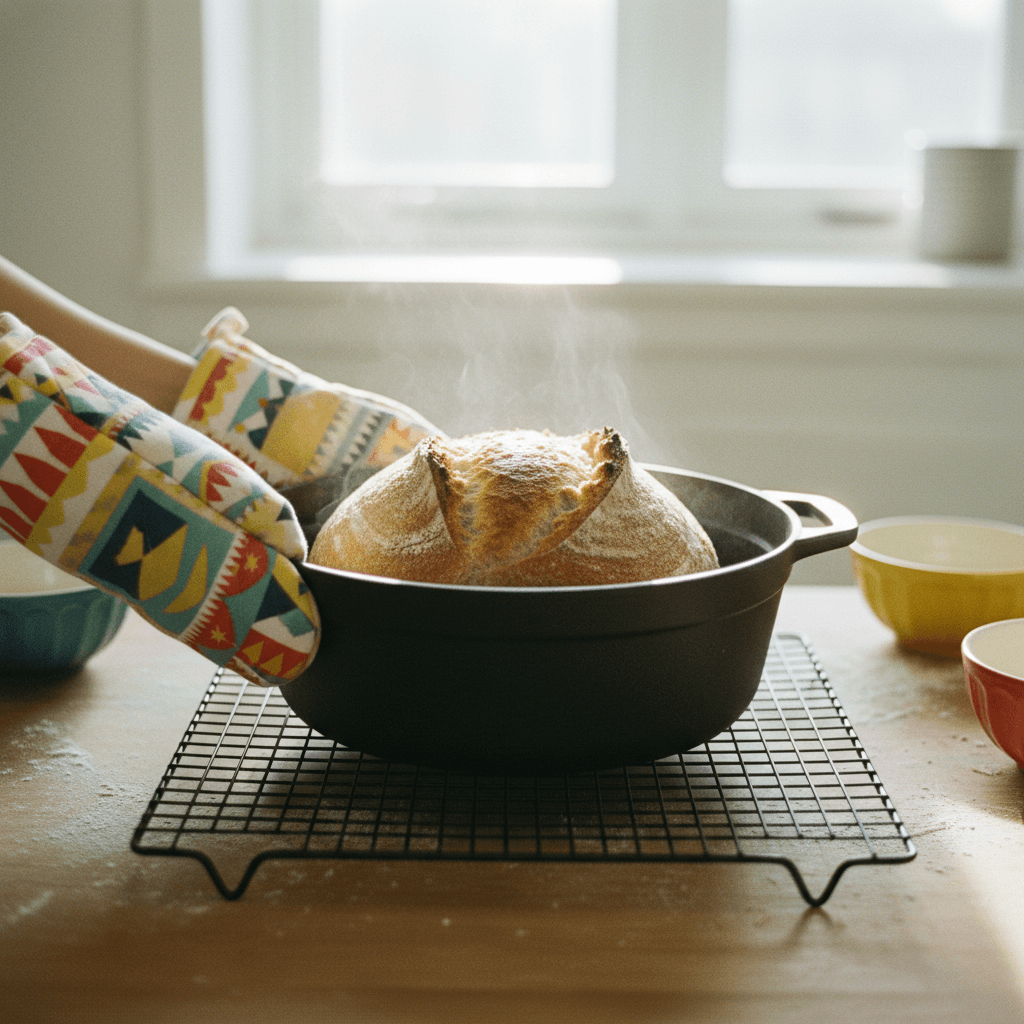
Kitchen Tools
Nutrition Facts (per serving)
Whole Wheat Sourdough Boule
- 100 grams active sourdough starter, (fed 4-12 hours prior)
- 350 grams warm water, (90-95°F)
- 100 grams whole wheat flour
- 350 grams bread flour
- 10 grams fine sea salt
- 2 tablespoons rice flour, for dusting
Instructions
- 1
In a large mixing bowl, combine the active sourdough starter and warm water. Stir gently with a spatula or your hand until the starter is mostly dissolved.
⏱️ 2 min - 2
Add the whole wheat flour and bread flour to the bowl. Mix with your hand until no dry flour remains and a shaggy dough forms. Cover the bowl with a damp kitchen towel or plastic wrap and let it rest for 30 minutes (autolyse).
⏱️ 33 min - 3
After the autolyse, sprinkle the fine sea salt over the dough. Wet your hand and gently work the salt into the dough by squeezing and folding for about 2-3 minutes until it's fully incorporated. The dough will become more cohesive.
⏱️ 5 min - 4
Perform the first set of stretch and folds. With wet hands, grab a portion of the dough from one side, stretch it upwards, and fold it over to the opposite side. Rotate the bowl a quarter turn and repeat this process 3-4 more times until you've gone all the way around. Cover and rest for 30 minutes.
⏱️ 32 min - 5
Repeat the stretch and fold process (as in Step 4) three more times, with 30-minute rest periods between each set. This means a total of 4 sets of stretch and folds over 2 hours.
⏱️ 126 min - 6
After the final set of stretch and folds, cover the bowl and let the dough bulk ferment at room temperature (around 70-75°F) for 4-8 hours, or until it has increased in volume by about 50-75% and appears bubbly and alive. The exact time will depend on your kitchen temperature and starter activity.
⏱️ 480 min - 7
Lightly flour your work surface. Gently turn the dough out onto the floured surface. Divide the dough if making multiple loaves (for one boule, keep it as one piece). Gently pre-shape the dough into a loose round by folding the edges towards the center to create tension on the surface. Let it rest, uncovered, for 20 minutes.
⏱️ 25 min - 8
Lightly dust a banneton (proofing basket) or a bowl lined with a floured kitchen towel with rice flour. Shape the dough into a tight boule. For a round boule, gently pull the top of the dough towards you, then push it away, rotating slightly, to create surface tension. Place the shaped dough seam-side up into the prepared banneton.
⏱️ 10 min - 9
Cover the banneton with plastic wrap or a plastic bag and refrigerate for 8-16 hours for the cold proof. This develops flavor and makes the dough easier to handle.
⏱️ 960 min - 10
About 1 hour before baking, place a Dutch oven with its lid into your oven and preheat to 500°F (260°C).
⏱️ 60 min•🌡️ 500 - 11
Once the oven and Dutch oven are fully preheated, carefully remove the hot Dutch oven. Invert the cold dough from the banneton directly into the hot Dutch oven. Score the top of the dough with a sharp razor blade or lame (a cross, a square, or a simple slash).
⏱️ 2 min - 12
Place the lid back on the Dutch oven and bake for 20 minutes.
⏱️ 20 min•🌡️ 500 - 13
Remove the lid from the Dutch oven, reduce the oven temperature to 450°F (230°C), and continue baking for another 25-30 minutes, or until the crust is deeply golden brown and the internal temperature reaches 200-210°F.
⏱️ 30 min•🌡️ 450 - 14
Carefully remove the bread from the Dutch oven and transfer it to a wire rack to cool completely for at least 1-2 hours before slicing. This is crucial for the crumb structure and flavor.
⏱️ 120 min