Our Bread Recipe
Our Bread Recipe

Ingredients
For the Day 1 Dough
- 430 g strong bread flour
- 150 g plain flour
- 375 g cold water
- 30 g fresh yeast, or 10g dried yeast
For the Day 2 Dough
- 845 g strong bread flour
- 34 g salt
- 28 g sugar
- 480 g cold water
- 12 g fresh yeast, or 4g dried yeast
- 30 g olive oil
Instructions
- 1
In a large bowl, combine the strong bread flour, plain flour, cold water, and fresh yeast (or dried yeast) for the Day 1 Dough. Mix by hand with a spatula until roughly combined, then transfer to a stand mixer.
⏱️ 5 min
- 2
Mix the Day 1 Dough on low speed for 4 minutes using a stand mixer with a dough hook.
⏱️ 4 min
- 3
Cover the Day 1 Dough and chill it overnight in the refrigerator (for at least 8 hours, up to 12 hours).
⏱️ 480 min
- 4
The next day, in a stand mixer, combine the strong bread flour, salt, sugar, cold water, and fresh yeast (or dried yeast) for the Day 2 Dough.
⏱️ 5 min
- 5
Mix the Day 2 Dough on low speed for 3 minutes.
⏱️ 3 min
- 6
Rest the dough in the mixer for 10 minutes.
⏱️ 10 min
- 7
Mix on low speed for 2 minutes.
⏱️ 2 min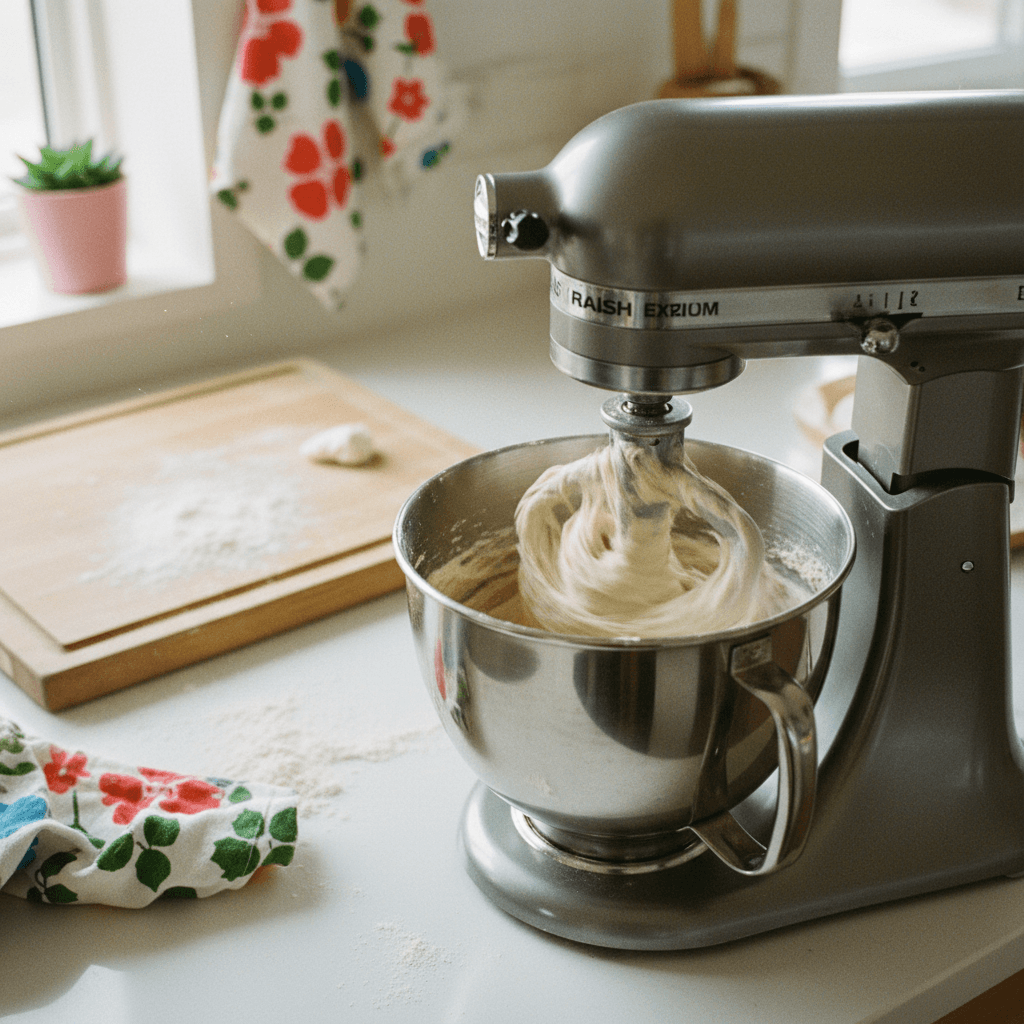
- 8
Add the chilled Day 1 Dough to the mixer with the Day 2 Dough.
⏱️ 1 min
- 9
Mix on low speed for 3 minutes until the two doughs are well combined.
⏱️ 3 min
- 10
Rest the dough in the mixer, covered with plastic wrap, for 10 minutes.
⏱️ 10 min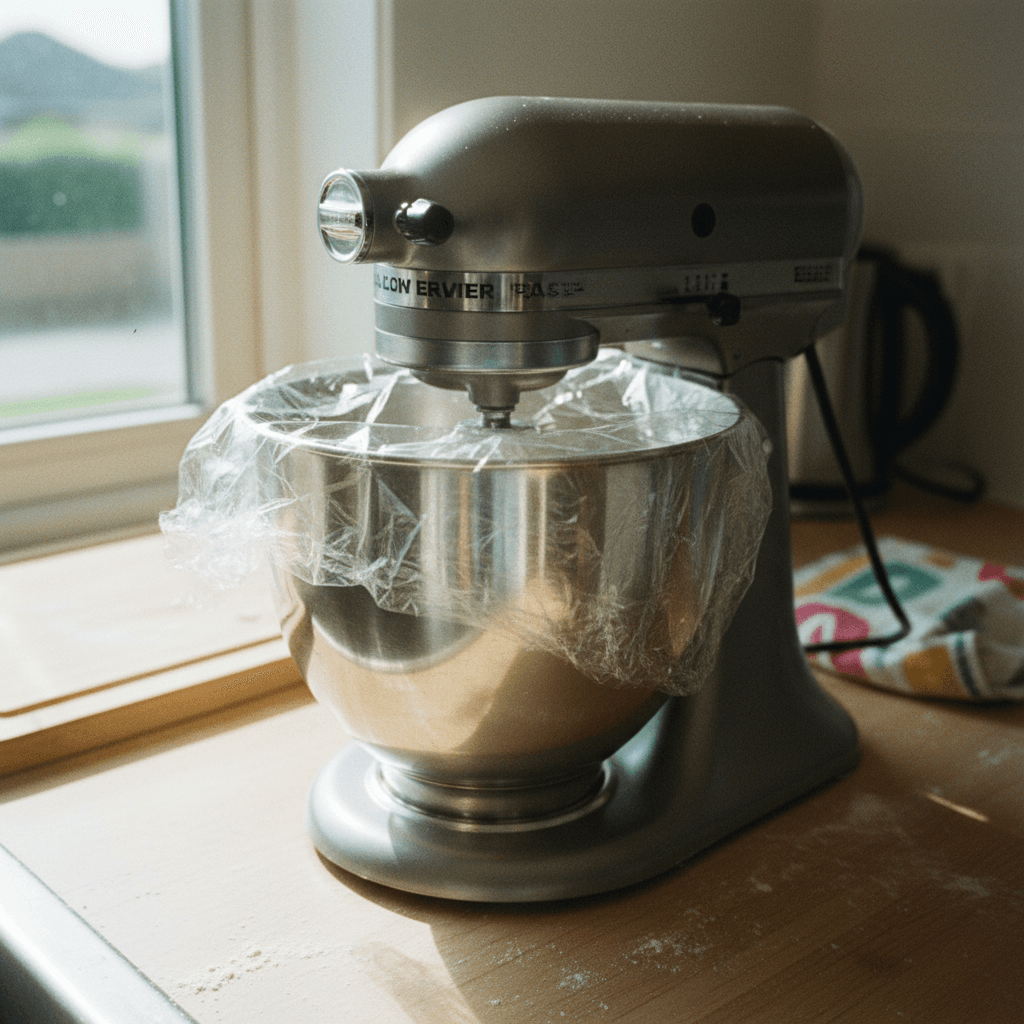
- 11
Add the olive oil to the dough.
⏱️ 1 min
- 12
Mix on low speed for 1 minute until the olive oil is incorporated.
⏱️ 1 min
- 13
Rest the dough, covered with plastic wrap, for 20 minutes.
⏱️ 20 min
- 14
Divide the total 2.4kg dough into desired portions. For 600g loaves, divide into 4 equal pieces. For baguettes, use 250g - 300g per baguette. Shape the bread as desired (e.g., for a round loaf, fold the edges towards the center to create tension, then gently round it on the counter).
⏱️ 10 min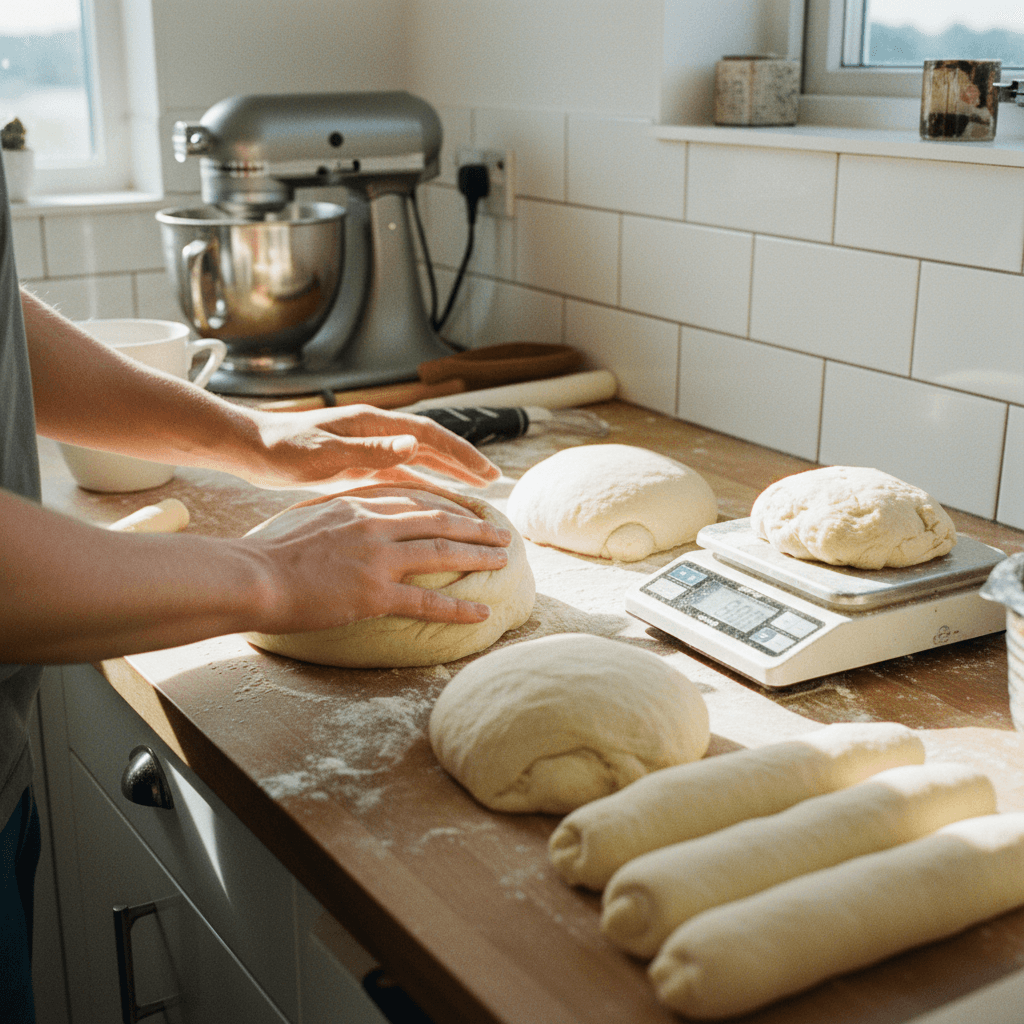
- 15
For best results, prove the shaped bread overnight in the fridge (for at least 8 hours, up to 12 hours). Alternatively, prove at room temperature until it passes the 'finger test'.
⏱️ 480 min
- 16
To check if the dough is ready to bake, gently press your finger into the dough; it should bounce back halfway. If it springs back completely, it's under-proved. If it stays indented, it's over-proved.
⏱️ 1 min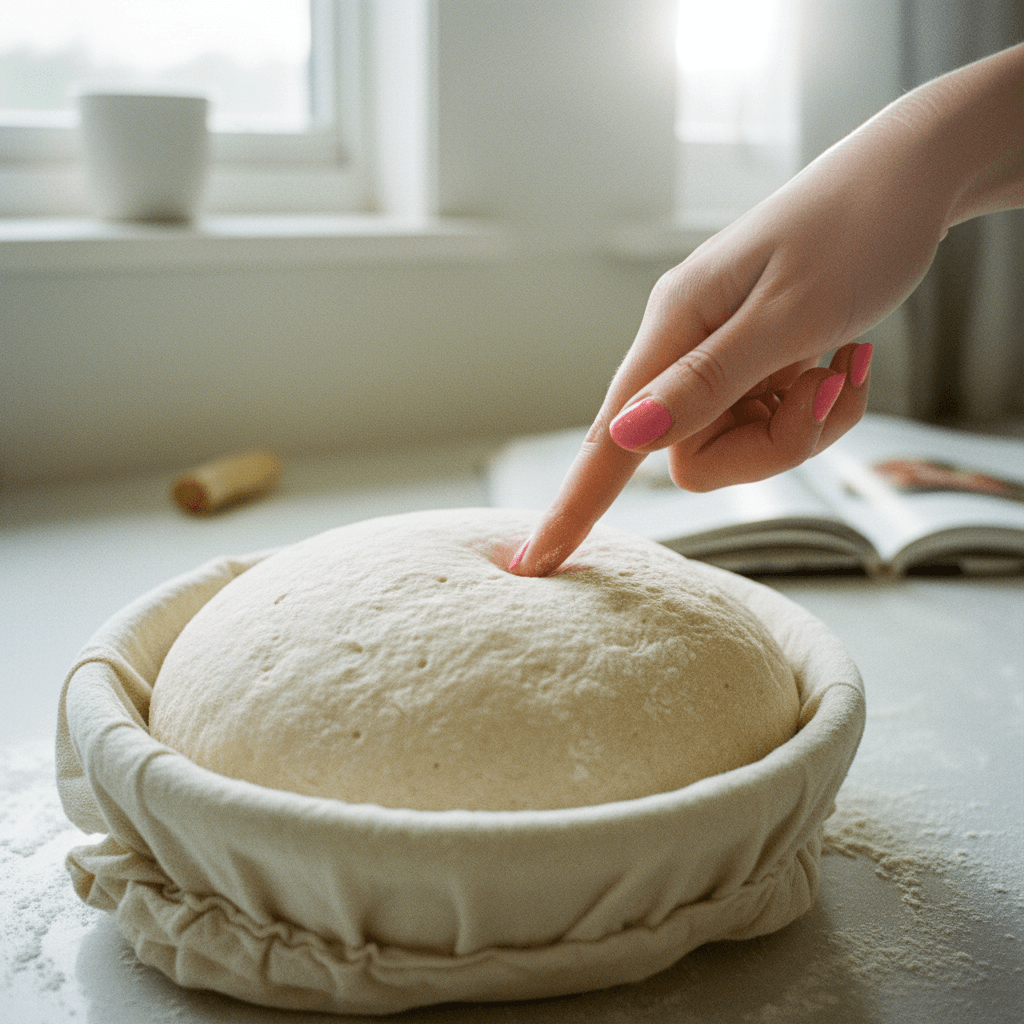
- 17
Preheat your oven to 220°C. If using a Dutch oven, place it in the oven during preheating.
⏱️ 20 min•🌡️ 220
- 18
Score the top of the dough with a sharp razor blade or knife in your desired pattern (e.g., a cross).
⏱️ 1 min
- 19
Carefully place the scored dough into the preheated Dutch oven and cover with the lid. If using a regular oven, place the dough on a baking sheet and add a little ice or a metal tray of water to the oven at the start of baking to create steam.
⏱️ 1 min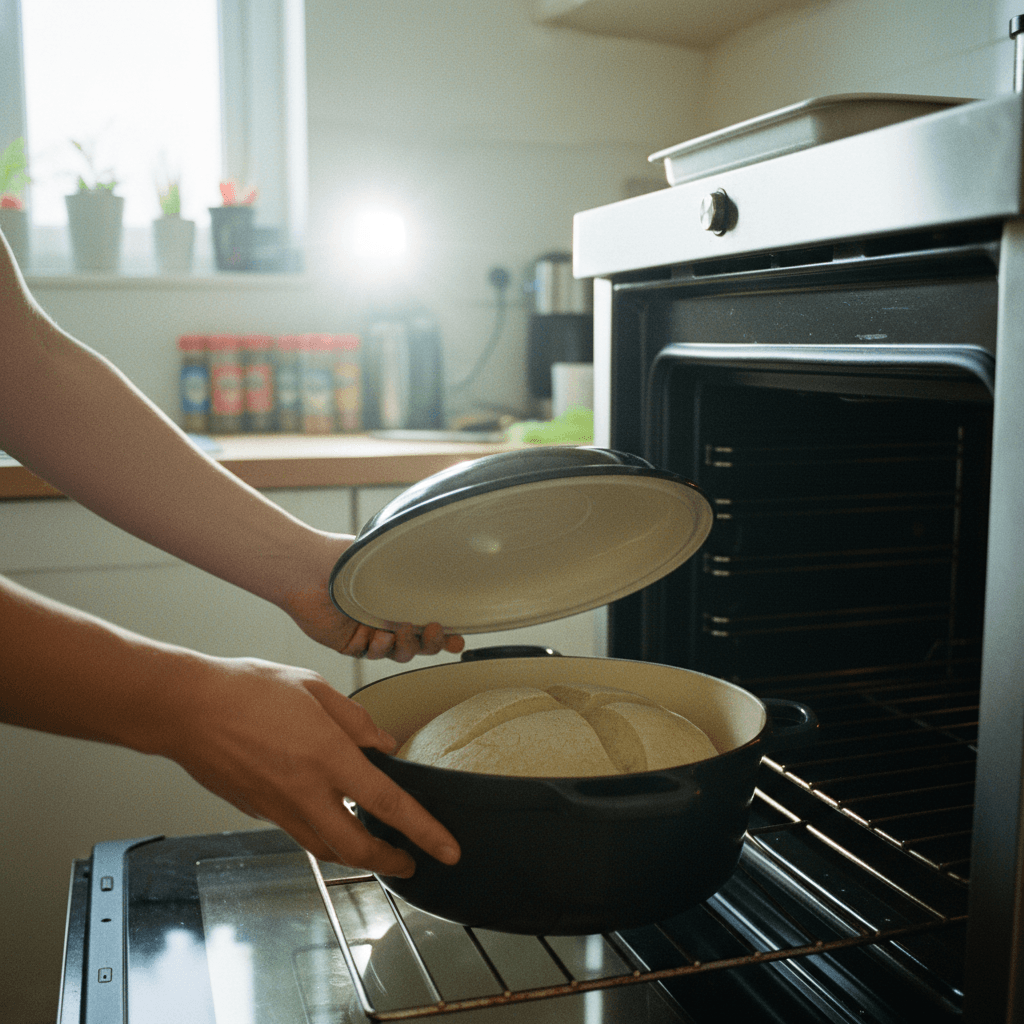
- 20
Bake for 30-40 minutes at 220°C. If using a Dutch oven, remove the lid partway through baking (e.g., after 20-25 minutes) to allow the crust to brown.
⏱️ 40 min•🌡️ 220
- 21
Remove the fully baked golden-brown loaf from the oven and let it cool on a wire rack before slicing and serving.
⏱️ 1 min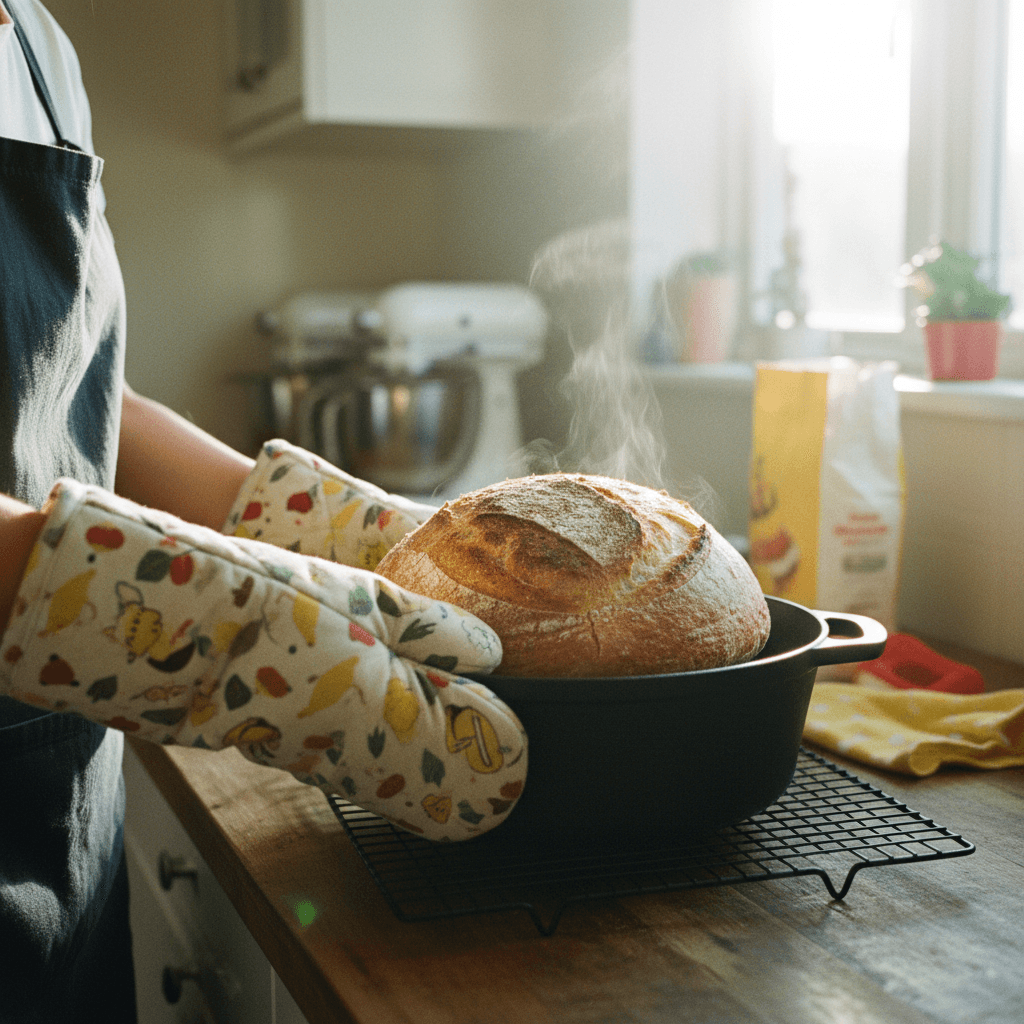
Kitchen Tools
Our Bread Recipe
For the Day 1 Dough
- 430 g strong bread flour
- 150 g plain flour
- 375 g cold water
- 30 g fresh yeast, or 10g dried yeast
For the Day 2 Dough
- 845 g strong bread flour
- 34 g salt
- 28 g sugar
- 480 g cold water
- 12 g fresh yeast, or 4g dried yeast
- 30 g olive oil
Instructions
- 1
In a large bowl, combine the strong bread flour, plain flour, cold water, and fresh yeast (or dried yeast) for the Day 1 Dough. Mix by hand with a spatula until roughly combined, then transfer to a stand mixer.
⏱️ 5 min - 2
Mix the Day 1 Dough on low speed for 4 minutes using a stand mixer with a dough hook.
⏱️ 4 min - 3
Cover the Day 1 Dough and chill it overnight in the refrigerator (for at least 8 hours, up to 12 hours).
⏱️ 480 min - 4
The next day, in a stand mixer, combine the strong bread flour, salt, sugar, cold water, and fresh yeast (or dried yeast) for the Day 2 Dough.
⏱️ 5 min - 5
Mix the Day 2 Dough on low speed for 3 minutes.
⏱️ 3 min - 6
Rest the dough in the mixer for 10 minutes.
⏱️ 10 min - 7
Mix on low speed for 2 minutes.
⏱️ 2 min - 8
Add the chilled Day 1 Dough to the mixer with the Day 2 Dough.
⏱️ 1 min - 9
Mix on low speed for 3 minutes until the two doughs are well combined.
⏱️ 3 min - 10
Rest the dough in the mixer, covered with plastic wrap, for 10 minutes.
⏱️ 10 min - 11
Add the olive oil to the dough.
⏱️ 1 min - 12
Mix on low speed for 1 minute until the olive oil is incorporated.
⏱️ 1 min - 13
Rest the dough, covered with plastic wrap, for 20 minutes.
⏱️ 20 min - 14
Divide the total 2.4kg dough into desired portions. For 600g loaves, divide into 4 equal pieces. For baguettes, use 250g - 300g per baguette. Shape the bread as desired (e.g., for a round loaf, fold the edges towards the center to create tension, then gently round it on the counter).
⏱️ 10 min - 15
For best results, prove the shaped bread overnight in the fridge (for at least 8 hours, up to 12 hours). Alternatively, prove at room temperature until it passes the 'finger test'.
⏱️ 480 min - 16
To check if the dough is ready to bake, gently press your finger into the dough; it should bounce back halfway. If it springs back completely, it's under-proved. If it stays indented, it's over-proved.
⏱️ 1 min - 17
Preheat your oven to 220°C. If using a Dutch oven, place it in the oven during preheating.
⏱️ 20 min•🌡️ 220 - 18
Score the top of the dough with a sharp razor blade or knife in your desired pattern (e.g., a cross).
⏱️ 1 min - 19
Carefully place the scored dough into the preheated Dutch oven and cover with the lid. If using a regular oven, place the dough on a baking sheet and add a little ice or a metal tray of water to the oven at the start of baking to create steam.
⏱️ 1 min - 20
Bake for 30-40 minutes at 220°C. If using a Dutch oven, remove the lid partway through baking (e.g., after 20-25 minutes) to allow the crust to brown.
⏱️ 40 min•🌡️ 220 - 21
Remove the fully baked golden-brown loaf from the oven and let it cool on a wire rack before slicing and serving.
⏱️ 1 min