24-Hour Pizza Dough
24-Hour Pizza Dough

Ingredients
- 350 grams bread flour
- 150 grams all purpose flour
- 13 grams salt
- 0.3 grams instant dry yeast
- 310 grams cold water, around 50°F, use crushed ice if needed
- 10 grams olive oil
- 10 grams sugar
Instructions
- 1
In a large bowl, combine the bread flour, all-purpose flour, instant dry yeast, salt, and sugar.
⏱️ 2 min
- 2
Whisk the dry ingredients together thoroughly to ensure even distribution.
⏱️ 1 min
- 3
Pour the cold water (ensuring it's around 50°F, using crushed ice if necessary) and olive oil into the bowl with the dry ingredients.
⏱️ 1 min
- 4
Begin mixing the ingredients with your hands or a spatula. Continue mixing until all the water is fully incorporated into the flour and a shaggy dough forms.
⏱️ 3 min
- 5
Pour the dough out onto a clean countertop and start kneading it. Knead the dough for 5 to 7 minutes until it starts to become smoother.
⏱️ 7 min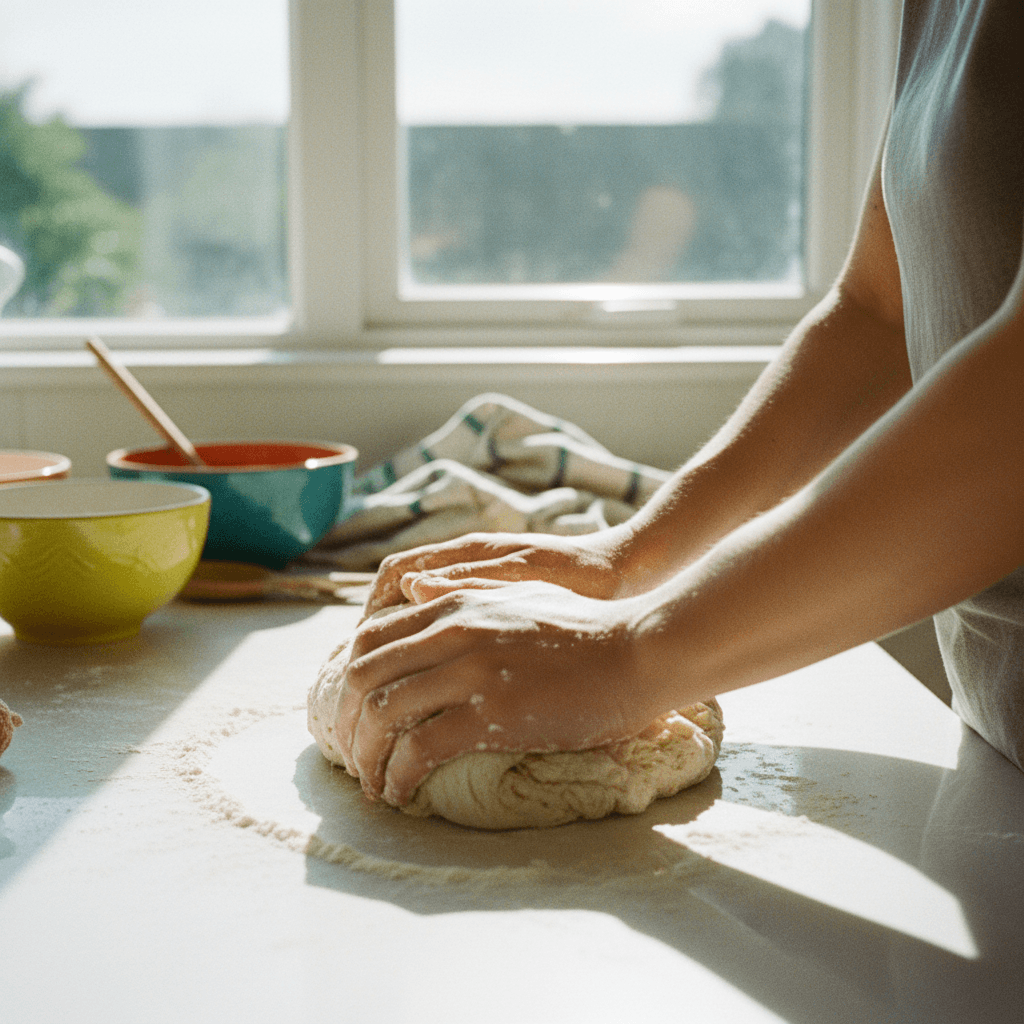
- 6
If the dough is too sticky during kneading, let it rest for 15 minutes. After resting, the dough should become less sticky and stop adhering to your hands. Resume kneading if needed.
⏱️ 15 min
- 7
Lightly oil a container large enough to hold the dough as it expands significantly during fermentation.
⏱️ 1 min
- 8
Place the kneaded dough into the oiled container. Cover the container with a lid (or plastic wrap) and let the dough sit for 30 minutes for its first rest.
⏱️ 30 min
- 9
After 30 minutes, the dough should have increased slightly in volume. Perform stretch and folds: gently stretch a portion of the dough from the edge, pull it up, and fold it over itself towards the center. Repeat this process four times, rotating the container each time, to fold the dough in every direction. This process helps to build gluten structure.
⏱️ 3 min
- 10
Replace the lid on the container and let the dough rest for another 30 minutes. Then, repeat the stretch and fold process at least one more time. (You can repeat this process a few more times if desired, but it's usually sufficient after the second time).
⏱️ 33 min
- 11
The dough is ready when it passes the window pane test after the second 30-minute rest. This test involves gently stretching a small piece of dough until it's thin enough to see light through without tearing, indicating good gluten development.
⏱️ 1 min
- 12
Leave the covered dough on the countertop overnight for approximately 20 hours for bulk fermentation. During this period, it should double or triple in size, and you should observe serious gluten strands when you lift the dough.
⏱️ 1200 min
- 13
At least 3 hours before you plan to make pizza, gently divide the dough and ball it into individual portions for your desired pizza size (2-16 inch pizzas or 3-12 inch pizzas). Place the balls in lightly oiled containers, cover, and let them rest at room temperature until ready to use.
⏱️ 180 min
Kitchen Tools
24-Hour Pizza Dough
- 350 grams bread flour
- 150 grams all purpose flour
- 13 grams salt
- 0.3 grams instant dry yeast
- 310 grams cold water, around 50°F, use crushed ice if needed
- 10 grams olive oil
- 10 grams sugar
Instructions
- 1
In a large bowl, combine the bread flour, all-purpose flour, instant dry yeast, salt, and sugar.
⏱️ 2 min - 2
Whisk the dry ingredients together thoroughly to ensure even distribution.
⏱️ 1 min - 3
Pour the cold water (ensuring it's around 50°F, using crushed ice if necessary) and olive oil into the bowl with the dry ingredients.
⏱️ 1 min - 4
Begin mixing the ingredients with your hands or a spatula. Continue mixing until all the water is fully incorporated into the flour and a shaggy dough forms.
⏱️ 3 min - 5
Pour the dough out onto a clean countertop and start kneading it. Knead the dough for 5 to 7 minutes until it starts to become smoother.
⏱️ 7 min - 6
If the dough is too sticky during kneading, let it rest for 15 minutes. After resting, the dough should become less sticky and stop adhering to your hands. Resume kneading if needed.
⏱️ 15 min - 7
Lightly oil a container large enough to hold the dough as it expands significantly during fermentation.
⏱️ 1 min - 8
Place the kneaded dough into the oiled container. Cover the container with a lid (or plastic wrap) and let the dough sit for 30 minutes for its first rest.
⏱️ 30 min - 9
After 30 minutes, the dough should have increased slightly in volume. Perform stretch and folds: gently stretch a portion of the dough from the edge, pull it up, and fold it over itself towards the center. Repeat this process four times, rotating the container each time, to fold the dough in every direction. This process helps to build gluten structure.
⏱️ 3 min - 10
Replace the lid on the container and let the dough rest for another 30 minutes. Then, repeat the stretch and fold process at least one more time. (You can repeat this process a few more times if desired, but it's usually sufficient after the second time).
⏱️ 33 min - 11
The dough is ready when it passes the window pane test after the second 30-minute rest. This test involves gently stretching a small piece of dough until it's thin enough to see light through without tearing, indicating good gluten development.
⏱️ 1 min - 12
Leave the covered dough on the countertop overnight for approximately 20 hours for bulk fermentation. During this period, it should double or triple in size, and you should observe serious gluten strands when you lift the dough.
⏱️ 1200 min - 13
At least 3 hours before you plan to make pizza, gently divide the dough and ball it into individual portions for your desired pizza size (2-16 inch pizzas or 3-12 inch pizzas). Place the balls in lightly oiled containers, cover, and let them rest at room temperature until ready to use.
⏱️ 180 min