Sandwich Bread
Sandwich Bread

Ingredients
- 1/4 cup milk
- 1 1/3 cups water, warm
- 1 tablespoon yeast
- 1 tablespoon granulated sugar
- 2 teaspoons salt
- 1 egg
- 1/4 cup butter, softened
- 4 1/4 cups all-purpose flour
Instructions
- 1
In a large bowl, combine the milk, warm water, yeast, and granulated sugar. Stir gently to combine.
⏱️ 2 min
- 2
Let the mixture rest for 10 minutes. During this time, the yeast should activate, creating bubbles and foam on the surface. If no activity is observed, your yeast may be inactive.
⏱️ 10 min
- 3
To the activated yeast mixture, add the salt, egg, softened butter, and all-purpose flour. Mix with a sturdy spoon or a stand mixer with a dough hook until a soft dough forms.
⏱️ 5 min
- 4
Turn the dough out onto a lightly floured surface and knead for 10 minutes, or until the dough is soft, smooth, and elastic. Alternatively, continue kneading with a stand mixer for 8-10 minutes.
⏱️ 10 min
- 5
Place the kneaded dough into a lightly oiled bowl, turning once to coat. Cover the bowl with plastic wrap or a clean kitchen towel and let it rise in a warm place for 1 hour, or until doubled in size.
⏱️ 60 min
- 6
Once the dough has risen, gently punch it down to release the air. Transfer the dough to a lightly floured surface and divide it into 2 equal portions.
⏱️ 3 min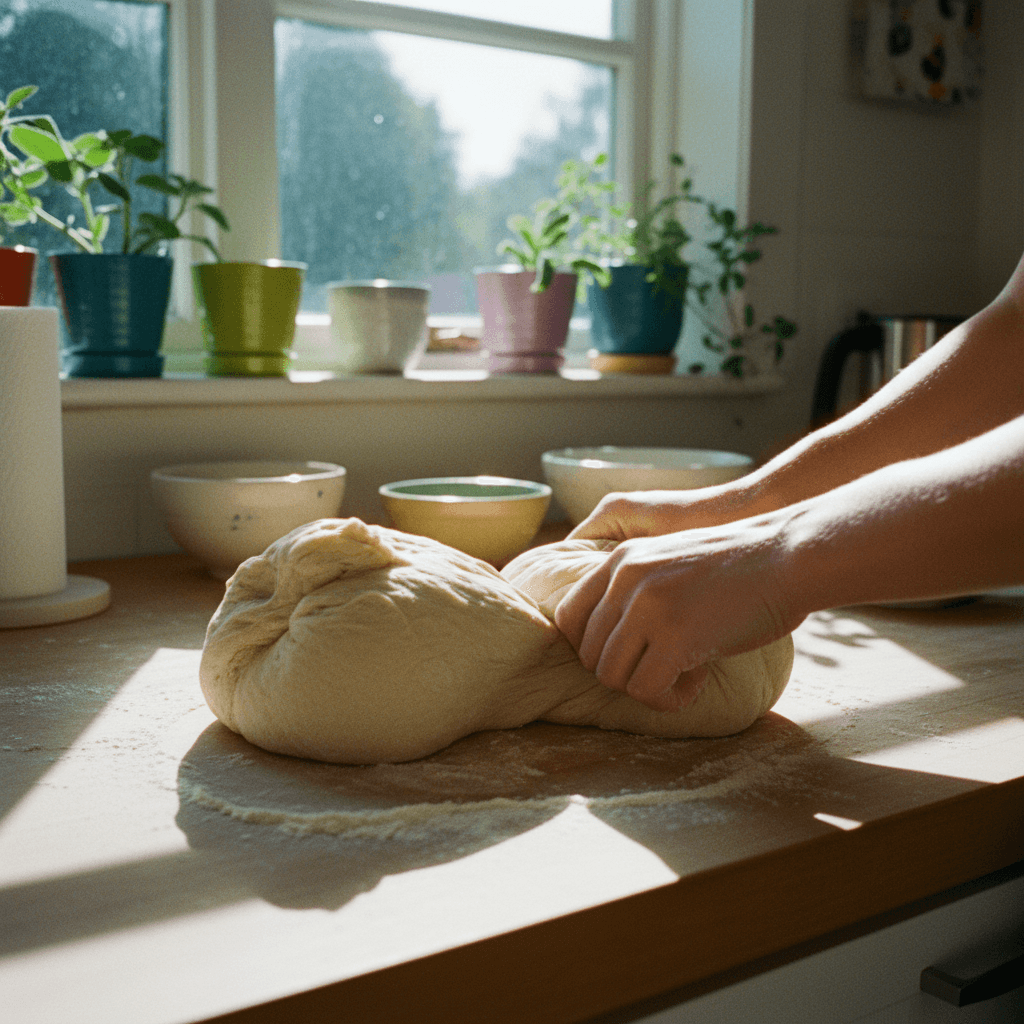
- 7
Shape each portion into a rectangle, approximately the width of your loaf pan. Roll the dough tightly from one end to the other, sealing the seam and tucking the ends as you go. Pulling the dough towards you can help create a tight roll.
⏱️ 5 min
- 8
Grease two standard loaf pans. Place each shaped dough into a prepared loaf pan. Cover the pans with plastic wrap or a clean kitchen towel and let them rise again in a warm place for 1 hour, or until the dough has risen above the rim of the pans.
⏱️ 60 min
- 9
Preheat your oven to 425°F (220°C).
⏱️ 10 min•🌡️ 425
- 10
Bake the loaves in the preheated oven for 20 minutes, or until the internal temperature of the bread reaches between 190°F to 200°F (88°C to 93°C). The crust should be golden brown.
⏱️ 20 min•🌡️ 425
- 11
Remove the loaves from the oven and immediately transfer them from the pans to a wire rack to cool completely. This is crucial to prevent the bread from becoming dense or squished when sliced.

Kitchen Tools
Nutrition Facts (per serving)
Sandwich Bread
- 1/4 cup milk
- 1 1/3 cups water, warm
- 1 tablespoon yeast
- 1 tablespoon granulated sugar
- 2 teaspoons salt
- 1 egg
- 1/4 cup butter, softened
- 4 1/4 cups all-purpose flour
Instructions
- 1
In a large bowl, combine the milk, warm water, yeast, and granulated sugar. Stir gently to combine.
⏱️ 2 min - 2
Let the mixture rest for 10 minutes. During this time, the yeast should activate, creating bubbles and foam on the surface. If no activity is observed, your yeast may be inactive.
⏱️ 10 min - 3
To the activated yeast mixture, add the salt, egg, softened butter, and all-purpose flour. Mix with a sturdy spoon or a stand mixer with a dough hook until a soft dough forms.
⏱️ 5 min - 4
Turn the dough out onto a lightly floured surface and knead for 10 minutes, or until the dough is soft, smooth, and elastic. Alternatively, continue kneading with a stand mixer for 8-10 minutes.
⏱️ 10 min - 5
Place the kneaded dough into a lightly oiled bowl, turning once to coat. Cover the bowl with plastic wrap or a clean kitchen towel and let it rise in a warm place for 1 hour, or until doubled in size.
⏱️ 60 min - 6
Once the dough has risen, gently punch it down to release the air. Transfer the dough to a lightly floured surface and divide it into 2 equal portions.
⏱️ 3 min - 7
Shape each portion into a rectangle, approximately the width of your loaf pan. Roll the dough tightly from one end to the other, sealing the seam and tucking the ends as you go. Pulling the dough towards you can help create a tight roll.
⏱️ 5 min - 8
Grease two standard loaf pans. Place each shaped dough into a prepared loaf pan. Cover the pans with plastic wrap or a clean kitchen towel and let them rise again in a warm place for 1 hour, or until the dough has risen above the rim of the pans.
⏱️ 60 min - 9
Preheat your oven to 425°F (220°C).
⏱️ 10 min•🌡️ 425 - 10
Bake the loaves in the preheated oven for 20 minutes, or until the internal temperature of the bread reaches between 190°F to 200°F (88°C to 93°C). The crust should be golden brown.
⏱️ 20 min•🌡️ 425 - 11
Remove the loaves from the oven and immediately transfer them from the pans to a wire rack to cool completely. This is crucial to prevent the bread from becoming dense or squished when sliced.