Gulab Jamun
Gulab Jamun

Ingredients
For the Instant Khoya
- 1 cup milk
- 2 cups skimmed milk powder
- 1 teaspoon fine semolina
- 1 teaspoon ghee
For the Dough
- 1/4 cup maida
- 1/4 teaspoon baking powder
- 2 teaspoons milk, as needed
For the Sugar Syrup
- 2 cups sugar
- 2 cups water
- 1/2 teaspoon cardamom powder, or to taste
- 1 pinch nutmeg powder
- 1 pinch saffron strands
For Frying
- 2 cups oil or ghee, for deep frying, as needed
Instructions
- 1
In a non-stick pan, combine 1 cup milk and 2 cups skimmed milk powder. Whisk thoroughly until there are no lumps and the mixture is smooth.
⏱️ 3 min
- 2
Add 1 teaspoon fine semolina and 1 teaspoon ghee to the milk mixture. Mix well to incorporate all ingredients.
⏱️ 2 min
- 3
Place the pan over low heat. Stir the mixture continuously without stopping. The mixture will begin to thicken.
⏱️ 5 min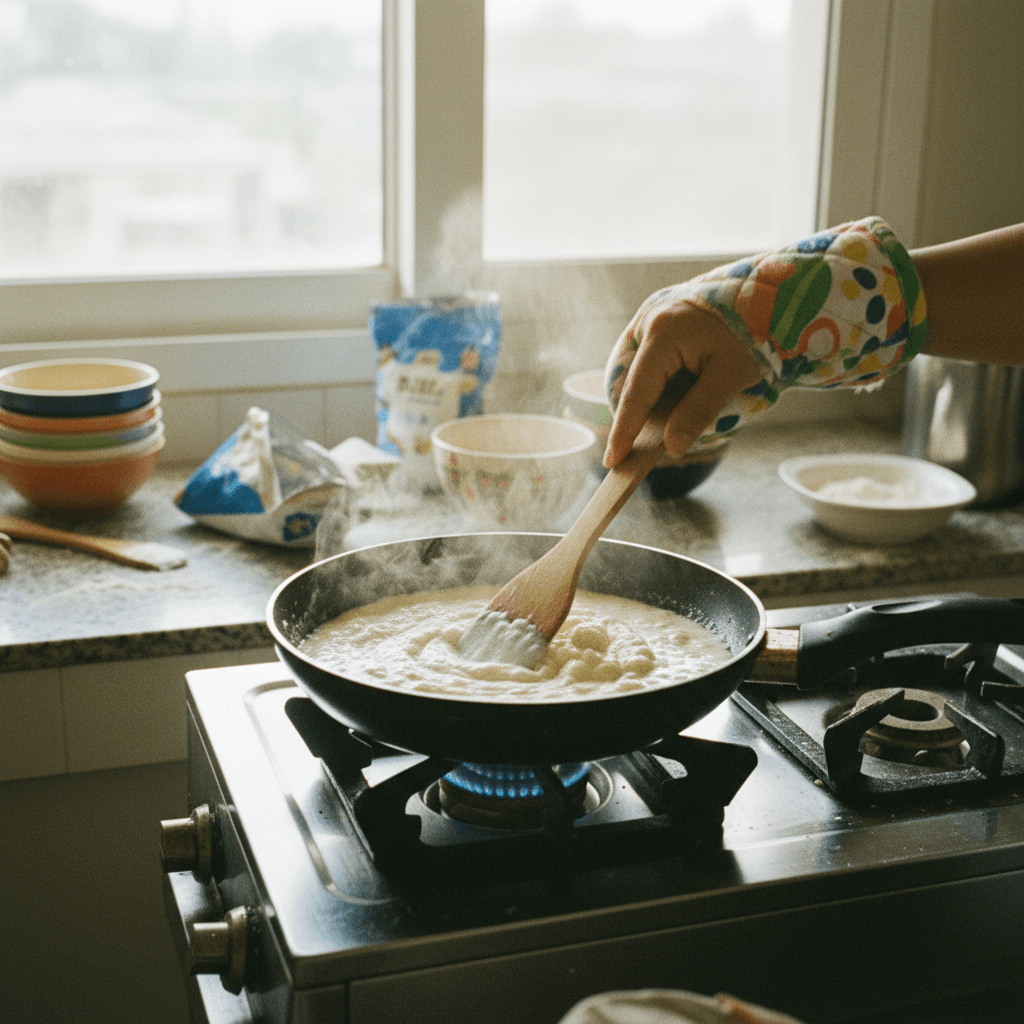
- 4
Continue stirring for 5-6 minutes until the mixture thickens significantly and forms an instant khoya. It should pull away from the sides of the pan.
⏱️ 6 min
- 5
Transfer the prepared khoya to a clean plate and spread it out slightly. Allow it to cool completely to room temperature. This will take about 15-20 minutes.
⏱️ 20 min
- 6
While the khoya cools, prepare the sugar syrup. In a separate saucepan, combine 2 cups sugar and 2 cups water. Add cardamom powder, a pinch of nutmeg powder, and a pinch of saffron strands.
⏱️ 3 min
- 7
Bring the sugar syrup to a boil over medium heat, stirring occasionally until the sugar dissolves. Reduce heat and simmer until the syrup becomes slightly sticky to the touch (it should not be a thick, one-string consistency). Keep the syrup warm over very low heat or in a warm place.
⏱️ 10 min
- 8
Once the khoya has cooled completely, transfer it to a mixing bowl. Add 1/4 cup maida and 1/4 teaspoon baking powder.
⏱️ 2 min
- 9
Gently mix the ingredients with your fingertips to form a soft dough. Avoid over-kneading. If the dough feels dry or hard, add 2-3 teaspoons of milk, one teaspoon at a time, and knead lightly until the dough is smooth and pliable.
⏱️ 5 min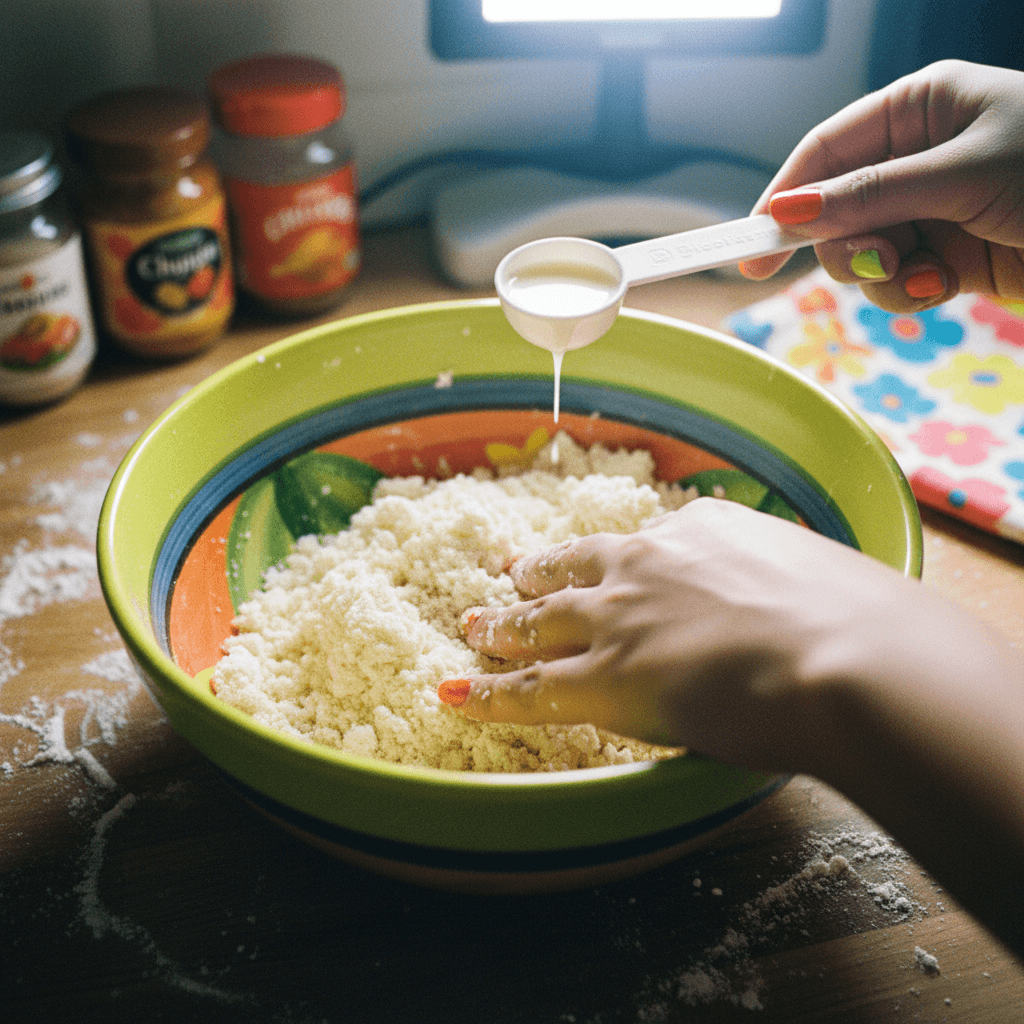
- 10
Divide the dough into small, equal portions. Roll each portion between your palms to form smooth, crack-free balls. Ensure there are no cracks, as this can cause them to break during frying.
⏱️ 10 min
- 11
Heat oil or ghee for deep frying in a heavy-bottomed pan or kadai over low to medium heat. The oil should be hot but not smoking. To test, drop a tiny piece of dough; it should sizzle gently and rise slowly.
⏱️ 5 min
- 12
Carefully place a few gulab jamun balls into the hot oil, ensuring not to overcrowd the pan. Fry them slowly, turning occasionally, until they turn an even golden brown color on all sides.
⏱️ 10 min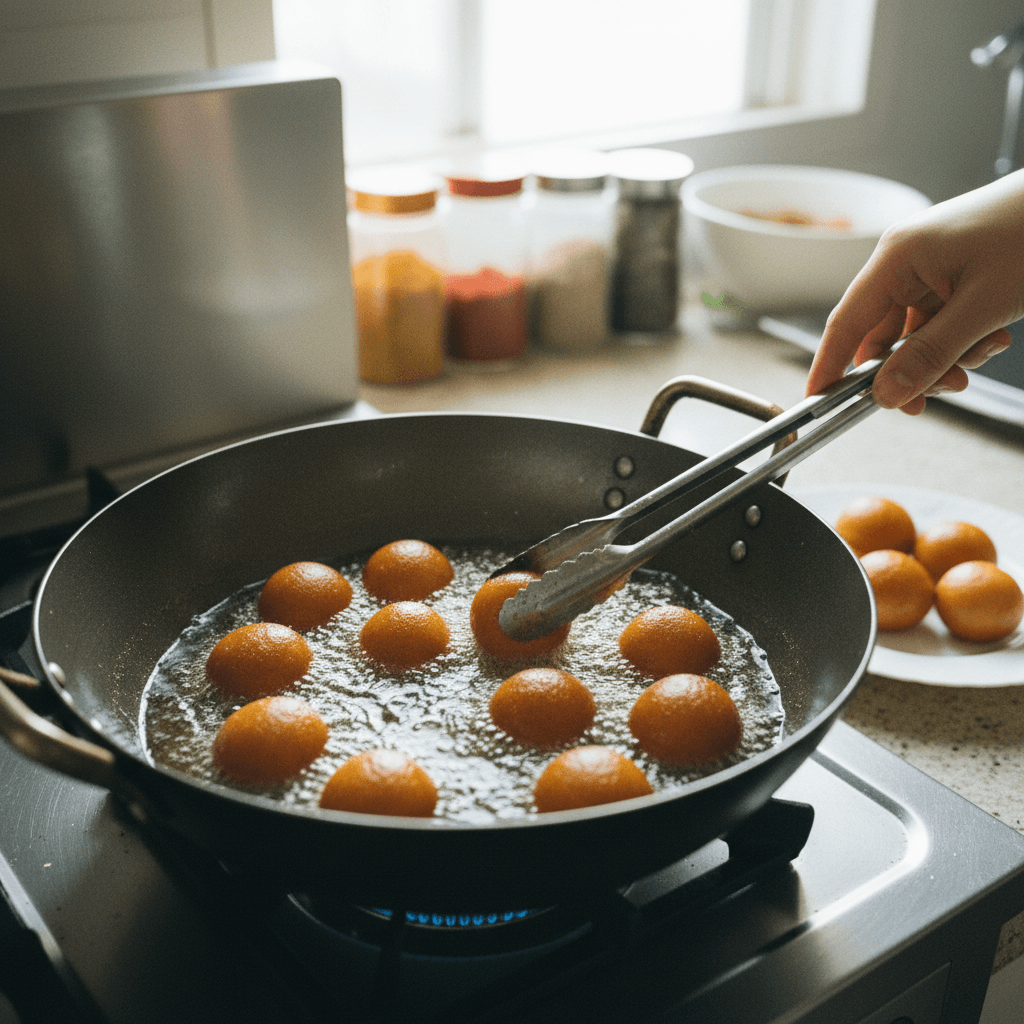
- 13
Using a slotted spoon, remove the hot gulab jamuns from the oil and immediately transfer them directly into the warm sugar syrup. Repeat with the remaining dough balls.
⏱️ 5 min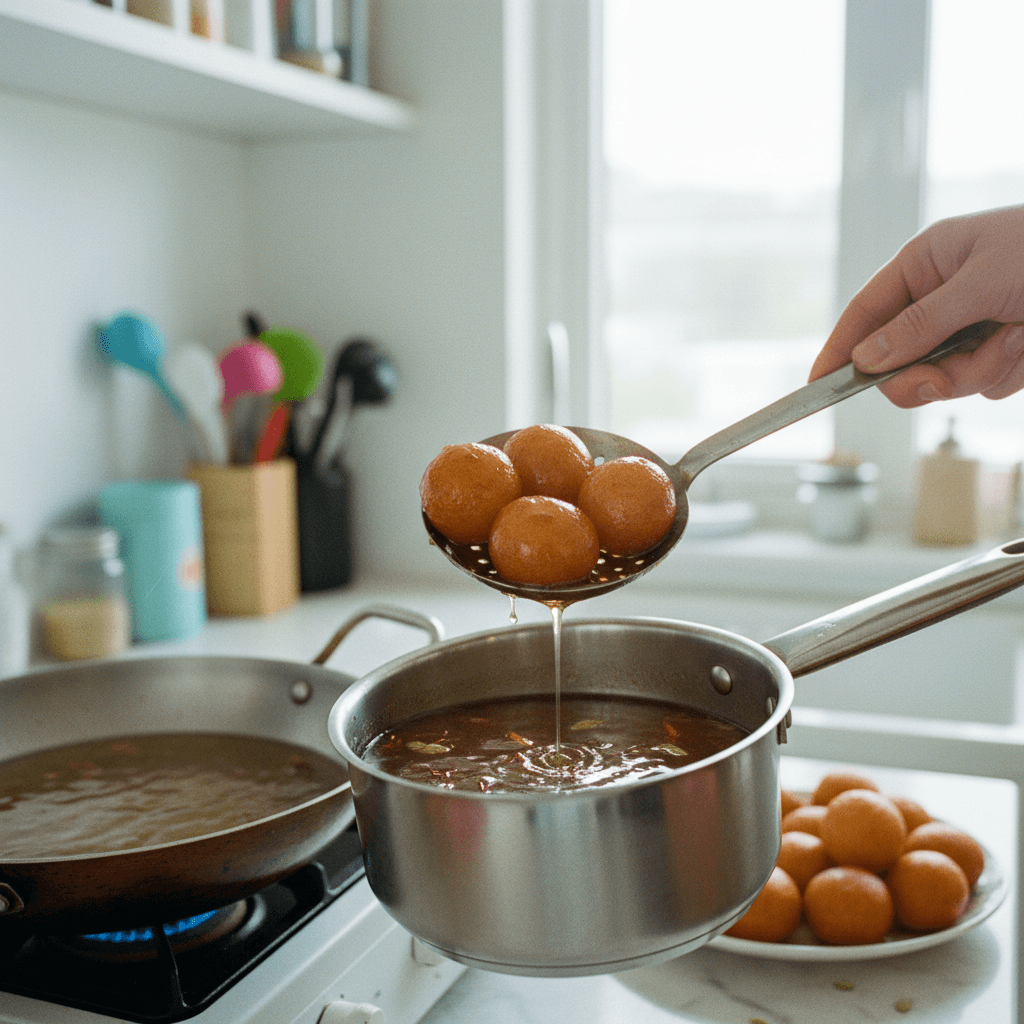
- 14
Allow the gulab jamuns to soak in the warm sugar syrup for at least 2 hours before serving. This allows them to absorb the syrup and become soft and juicy.
⏱️ 120 min
Kitchen Tools
Nutrition Facts (per serving)
Gulab Jamun
For the Instant Khoya
- 1 cup milk
- 2 cups skimmed milk powder
- 1 teaspoon fine semolina
- 1 teaspoon ghee
For the Dough
- 1/4 cup maida
- 1/4 teaspoon baking powder
- 2 teaspoons milk, as needed
For the Sugar Syrup
- 2 cups sugar
- 2 cups water
- 1/2 teaspoon cardamom powder, or to taste
- 1 pinch nutmeg powder
- 1 pinch saffron strands
For Frying
- 2 cups oil or ghee, for deep frying, as needed
Instructions
- 1
In a non-stick pan, combine 1 cup milk and 2 cups skimmed milk powder. Whisk thoroughly until there are no lumps and the mixture is smooth.
⏱️ 3 min - 2
Add 1 teaspoon fine semolina and 1 teaspoon ghee to the milk mixture. Mix well to incorporate all ingredients.
⏱️ 2 min - 3
Place the pan over low heat. Stir the mixture continuously without stopping. The mixture will begin to thicken.
⏱️ 5 min - 4
Continue stirring for 5-6 minutes until the mixture thickens significantly and forms an instant khoya. It should pull away from the sides of the pan.
⏱️ 6 min - 5
Transfer the prepared khoya to a clean plate and spread it out slightly. Allow it to cool completely to room temperature. This will take about 15-20 minutes.
⏱️ 20 min - 6
While the khoya cools, prepare the sugar syrup. In a separate saucepan, combine 2 cups sugar and 2 cups water. Add cardamom powder, a pinch of nutmeg powder, and a pinch of saffron strands.
⏱️ 3 min - 7
Bring the sugar syrup to a boil over medium heat, stirring occasionally until the sugar dissolves. Reduce heat and simmer until the syrup becomes slightly sticky to the touch (it should not be a thick, one-string consistency). Keep the syrup warm over very low heat or in a warm place.
⏱️ 10 min - 8
Once the khoya has cooled completely, transfer it to a mixing bowl. Add 1/4 cup maida and 1/4 teaspoon baking powder.
⏱️ 2 min - 9
Gently mix the ingredients with your fingertips to form a soft dough. Avoid over-kneading. If the dough feels dry or hard, add 2-3 teaspoons of milk, one teaspoon at a time, and knead lightly until the dough is smooth and pliable.
⏱️ 5 min - 10
Divide the dough into small, equal portions. Roll each portion between your palms to form smooth, crack-free balls. Ensure there are no cracks, as this can cause them to break during frying.
⏱️ 10 min - 11
Heat oil or ghee for deep frying in a heavy-bottomed pan or kadai over low to medium heat. The oil should be hot but not smoking. To test, drop a tiny piece of dough; it should sizzle gently and rise slowly.
⏱️ 5 min - 12
Carefully place a few gulab jamun balls into the hot oil, ensuring not to overcrowd the pan. Fry them slowly, turning occasionally, until they turn an even golden brown color on all sides.
⏱️ 10 min - 13
Using a slotted spoon, remove the hot gulab jamuns from the oil and immediately transfer them directly into the warm sugar syrup. Repeat with the remaining dough balls.
⏱️ 5 min - 14
Allow the gulab jamuns to soak in the warm sugar syrup for at least 2 hours before serving. This allows them to absorb the syrup and become soft and juicy.
⏱️ 120 min