Crispy Pork Belly with Thai Chili Dipping Sauce (Nam Jim Jaew)
Crispy Pork Belly with Thai Chili Dipping Sauce (Nam Jim Jaew)
Ingredients
For the Crispy Pork Belly
- 2 pounds pork belly, skin on, about 1 1/2 to 2 inches thick
- 2 teaspoons kosher salt
- 1/4 cup white vinegar
- 1 tablespoon vegetable oil, or other neutral oil
For the Thai Chili Dipping Sauce (Nam Jim Jaew)
- 3 tablespoons fish sauce
- 2 tablespoons lime juice, freshly squeezed
- 1 tablespoon granulated sugar
- 1 tablespoon toasted rice powder
- 1 shallot, small, thinly sliced or finely minced
- 2 tablespoons cilantro, fresh, chopped
- 1 tablespoon mint leaves, fresh, chopped (optional)
- 1 teaspoon dried chili flakes, or more, to taste
- 1 tablespoon water
For Serving
- 2 cups white rice, cooked
- 2 cups green vegetables, steamed or stir-fried (e.g., broccoli, bok choy)
Instructions
- 1
Prepare the pork belly: Pat the pork belly thoroughly dry with paper towels. Using a sharp knife or a scoring tool, score the skin of the pork belly in a crosshatch pattern, being careful not to cut into the meat. Score about 1/4 inch deep. Alternatively, use a meat tenderizer with spikes to prick the skin all over.
⏱️ 10 min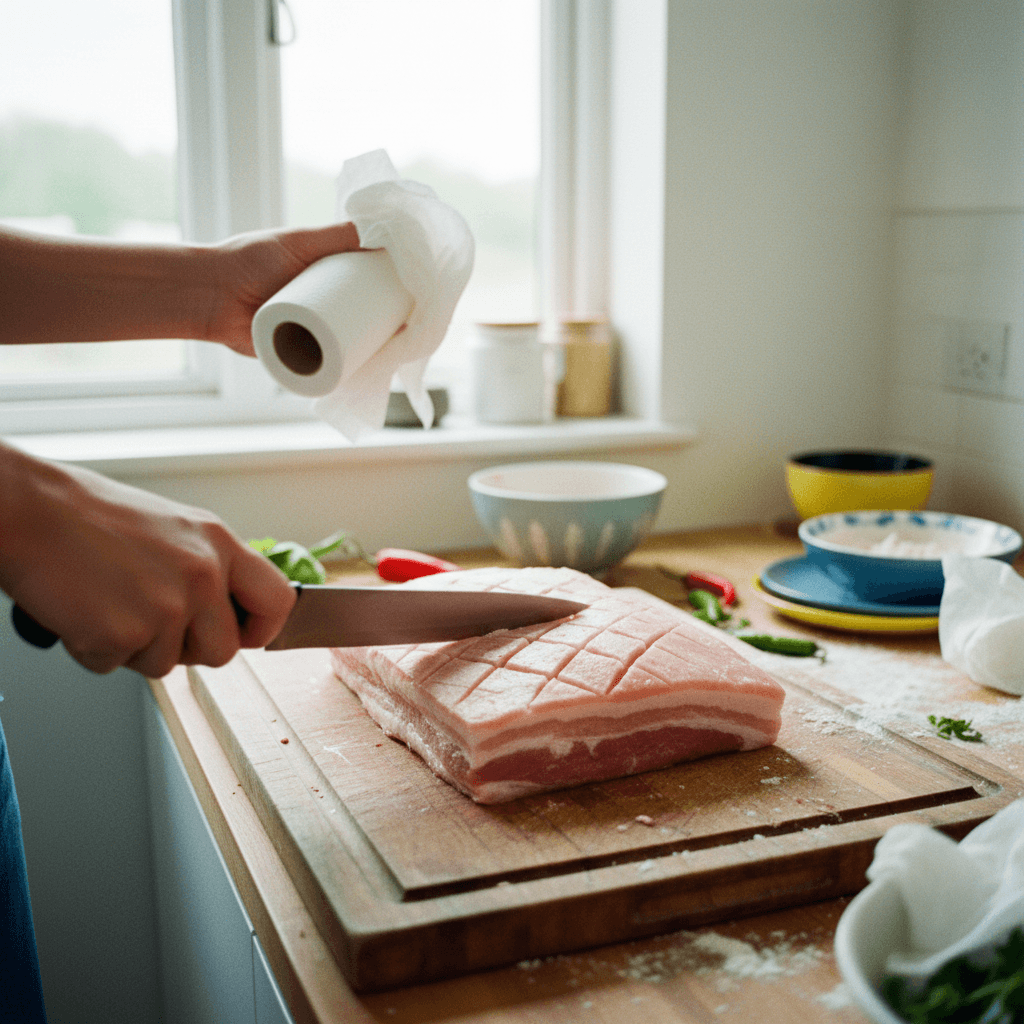
- 2
Rub the meat side of the pork belly with kosher salt. Flip the pork belly over, skin side up, and place it in a shallow dish. Pour white vinegar over the skin, ensuring it's evenly coated. Let it sit for 10 minutes.
⏱️ 10 min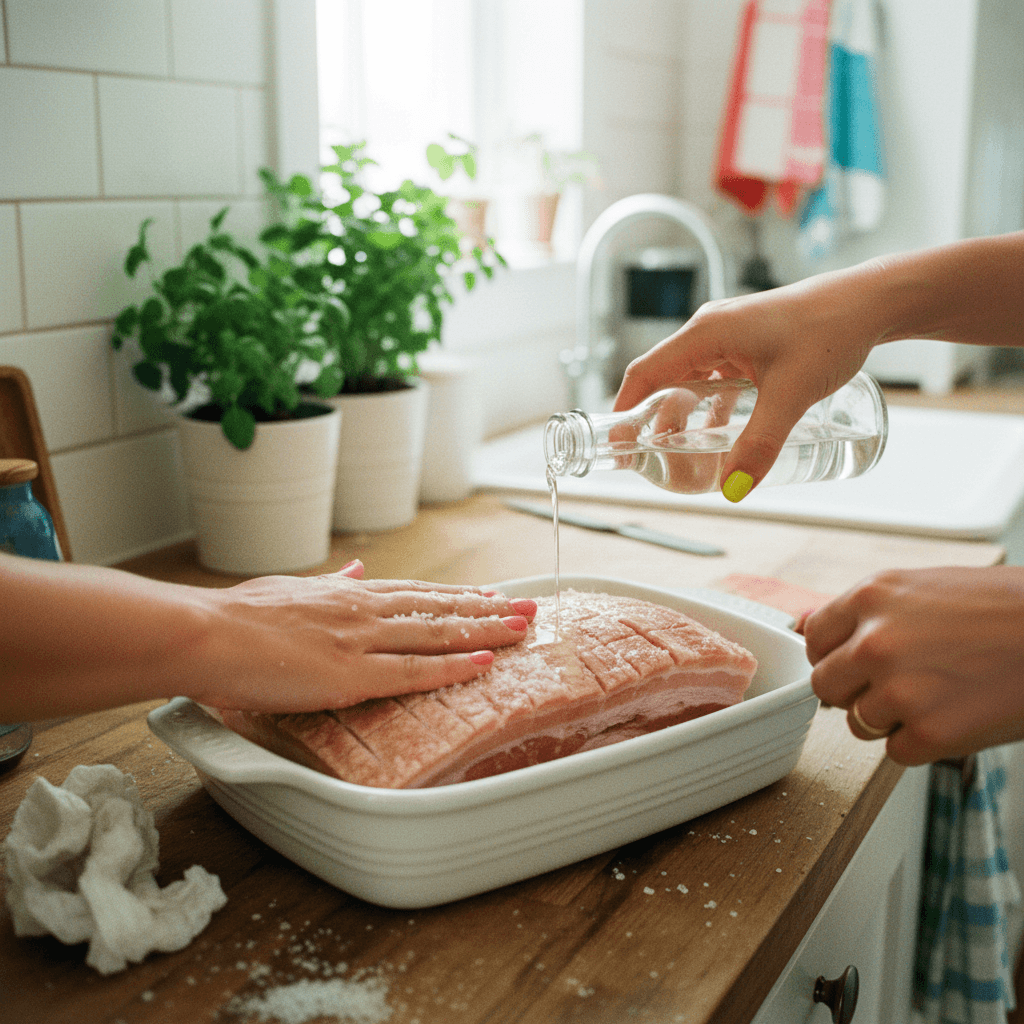
- 3
After 10 minutes, pat the skin completely dry again with paper towels. This step is crucial for crispiness. Place the pork belly, skin side up, uncovered, in the refrigerator for at least 6 hours, or preferably overnight (12 hours). This allows the skin to dry out completely.
⏱️ 720 min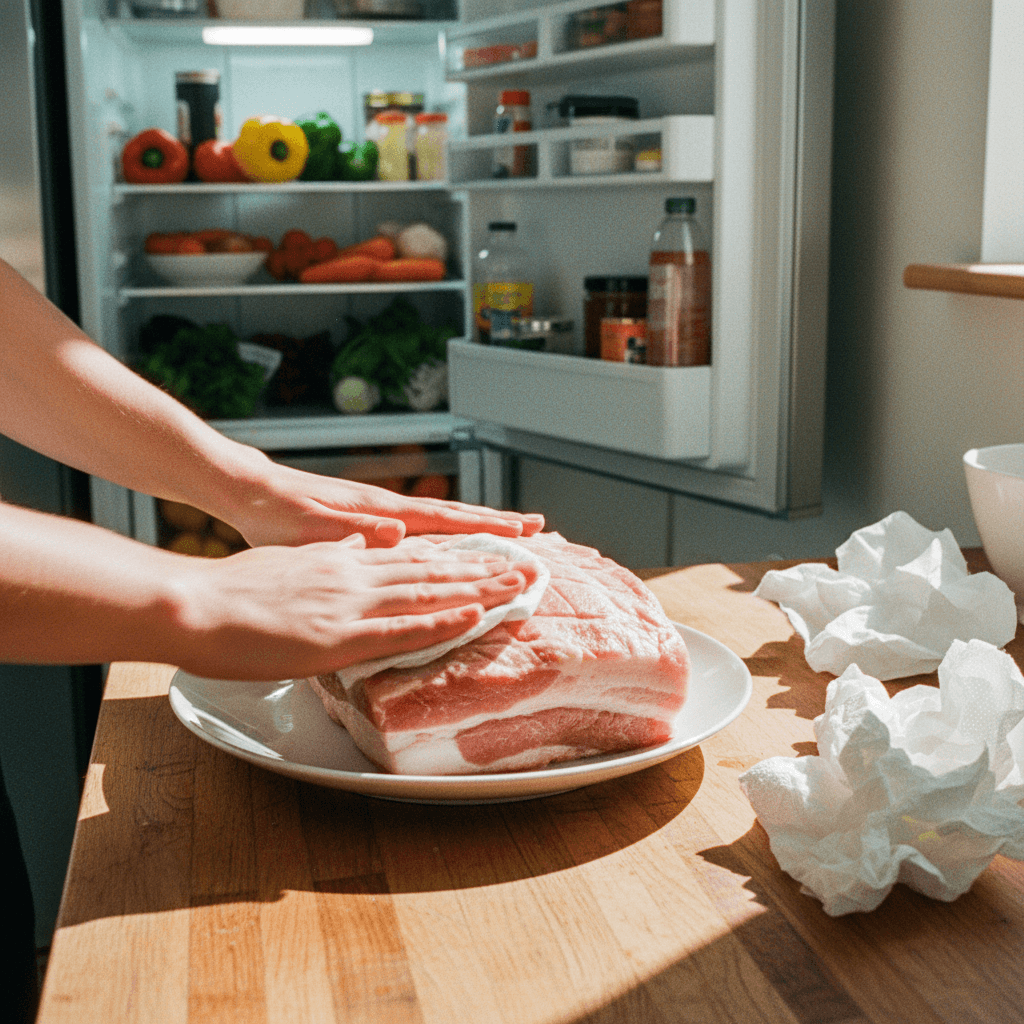
- 4
Preheat your oven to 300°F. Line a baking sheet with aluminum foil and place a wire rack on top. Place the dried pork belly, skin side up, on the wire rack.
⏱️ 5 min•🌡️ 300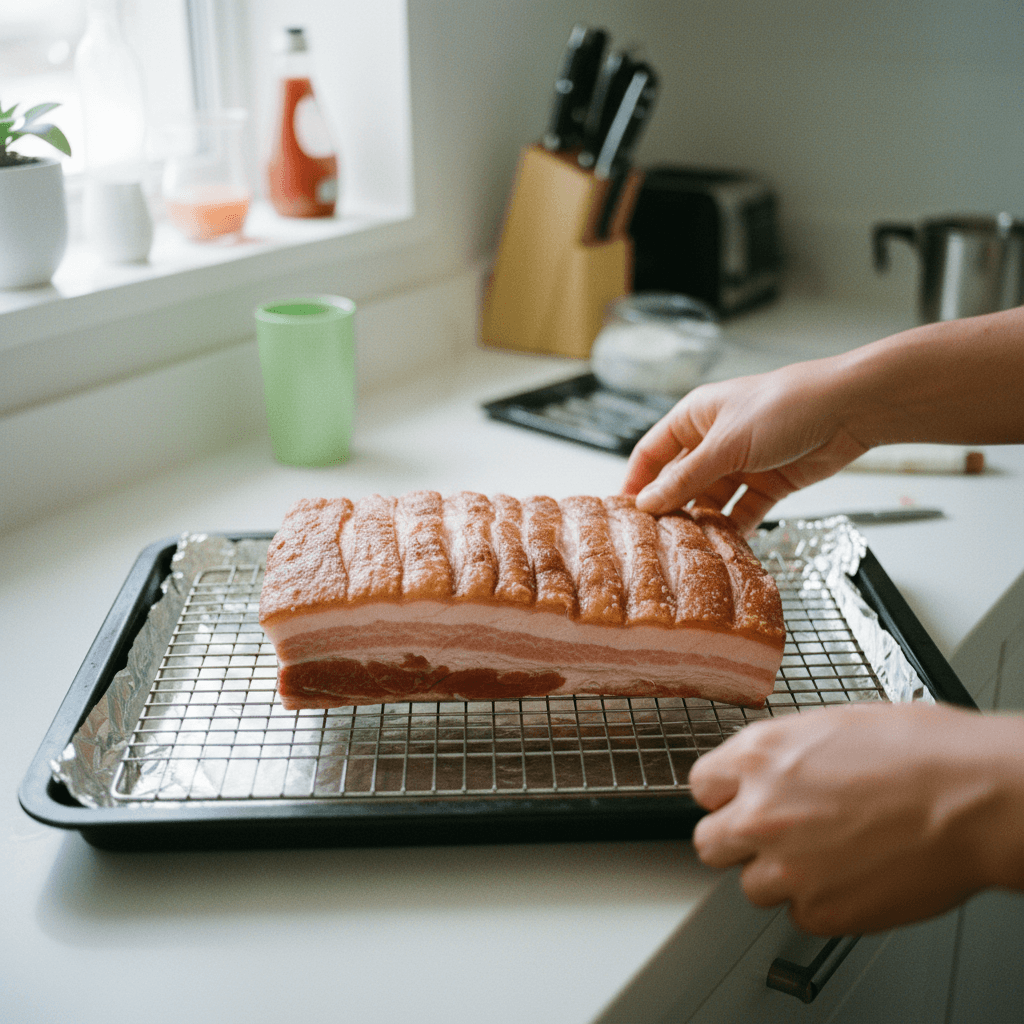
- 5
Roast the pork belly for 60 minutes. This slow roasting helps to render the fat and tenderize the meat.
⏱️ 60 min•🌡️ 300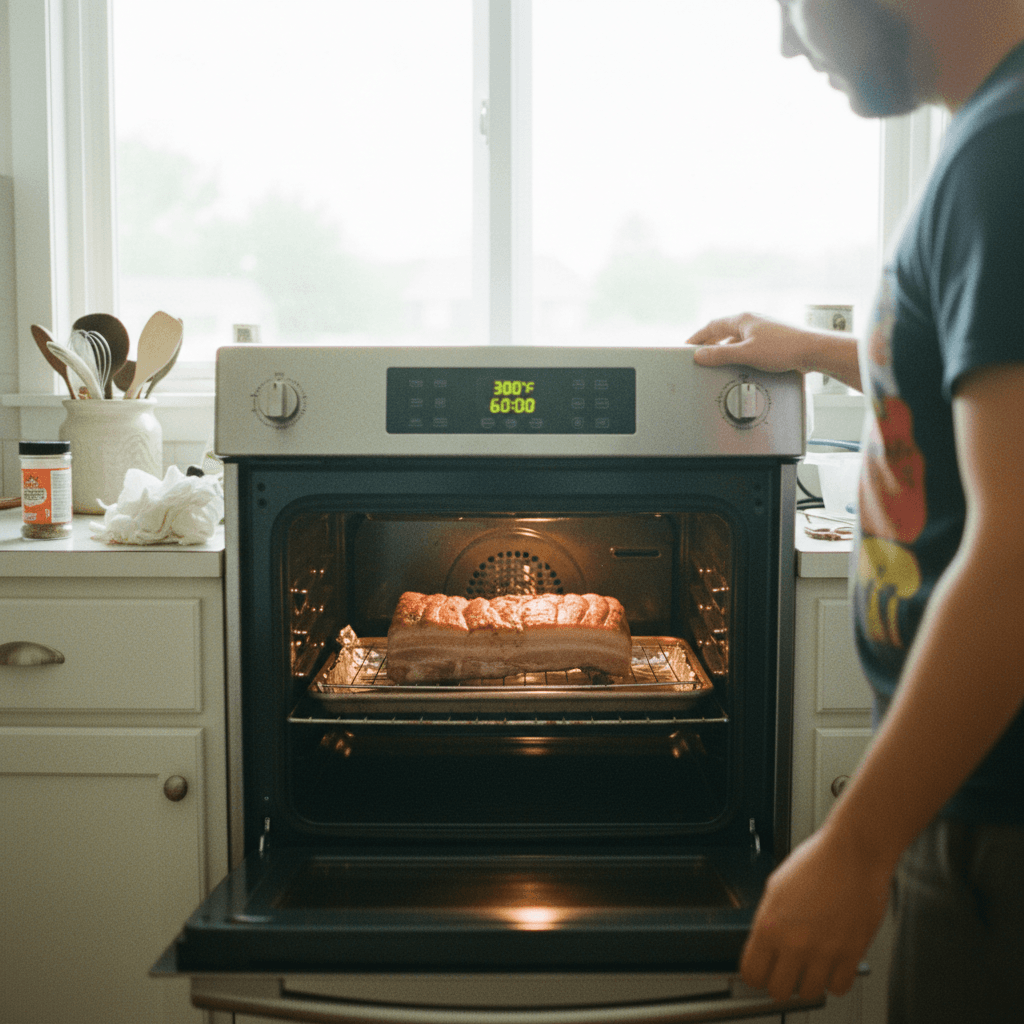
- 6
While the pork belly is roasting, prepare the Nam Jim Jaew. In a small bowl, combine fish sauce, lime juice, granulated sugar, toasted rice powder, shallot, cilantro, mint leaves (if using), dried chili flakes, and water. Stir until the sugar is dissolved. Taste and adjust seasonings as needed.
⏱️ 10 min - 7
After 60 minutes, remove the pork belly from the oven. Increase the oven temperature to 400°F. Brush the skin with vegetable oil.
⏱️ 5 min•🌡️ 400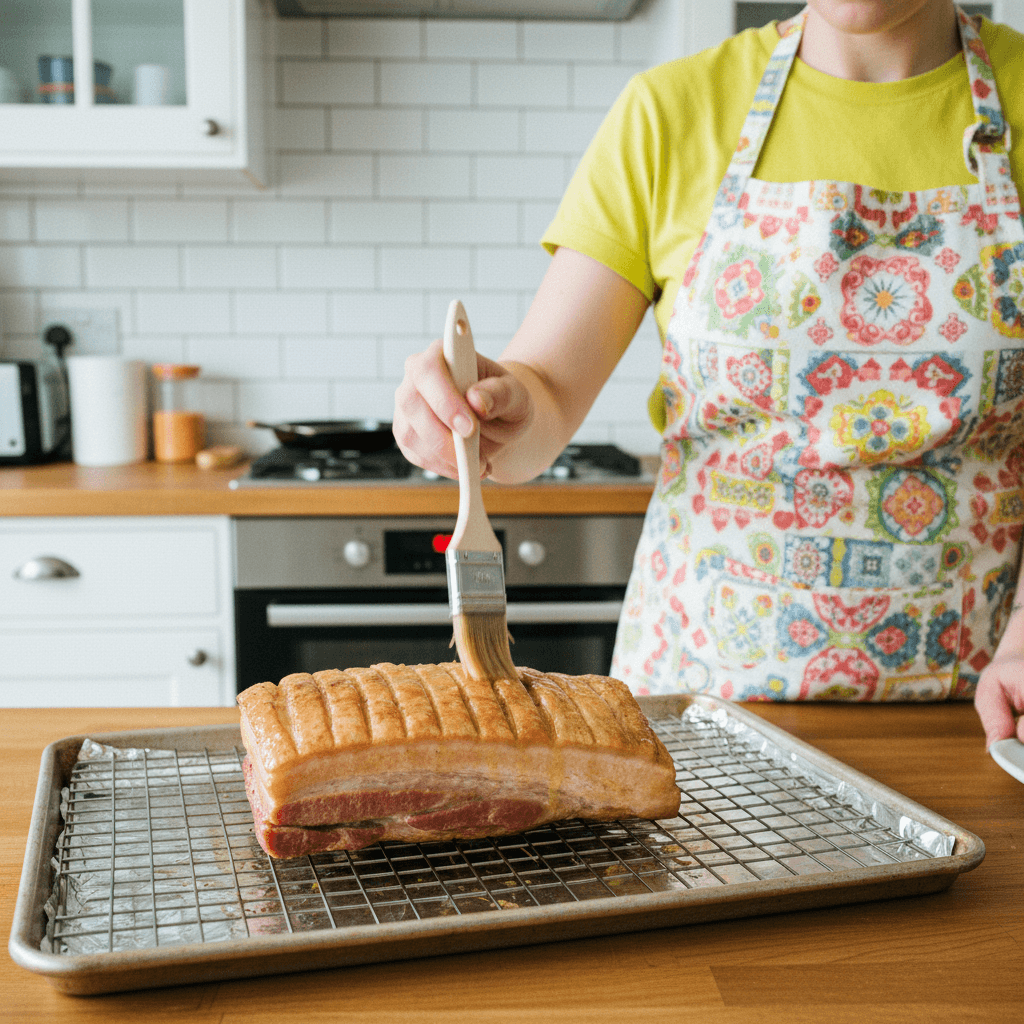
- 8
Return the pork belly to the oven and roast for another 30-45 minutes, or until the skin is puffed up, golden brown, and incredibly crispy. Keep a close eye on it to prevent burning. If certain spots are browning too quickly, you can cover them loosely with foil.
⏱️ 45 min•🌡️ 400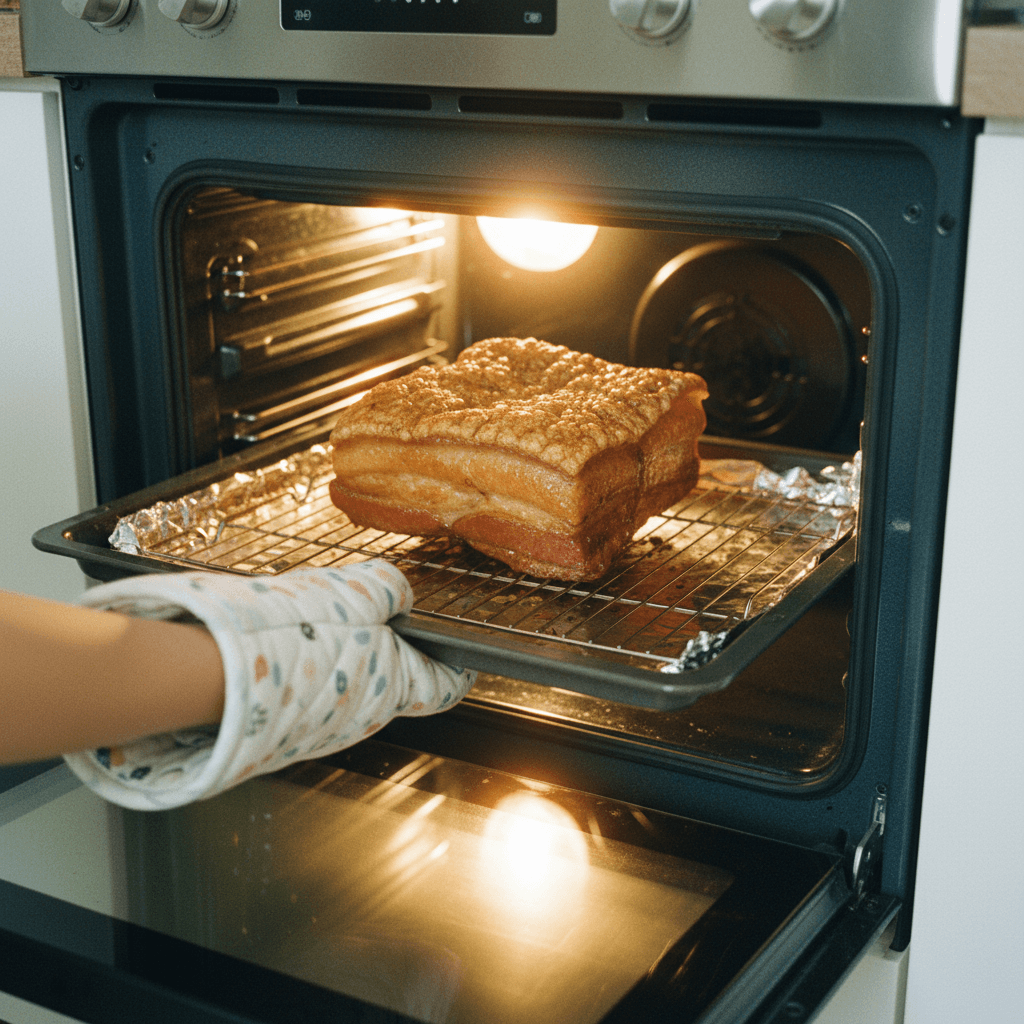
- 9
Once crispy, remove the pork belly from the oven and let it rest on the wire rack for 10-15 minutes before slicing. This allows the juices to redistribute.
⏱️ 15 min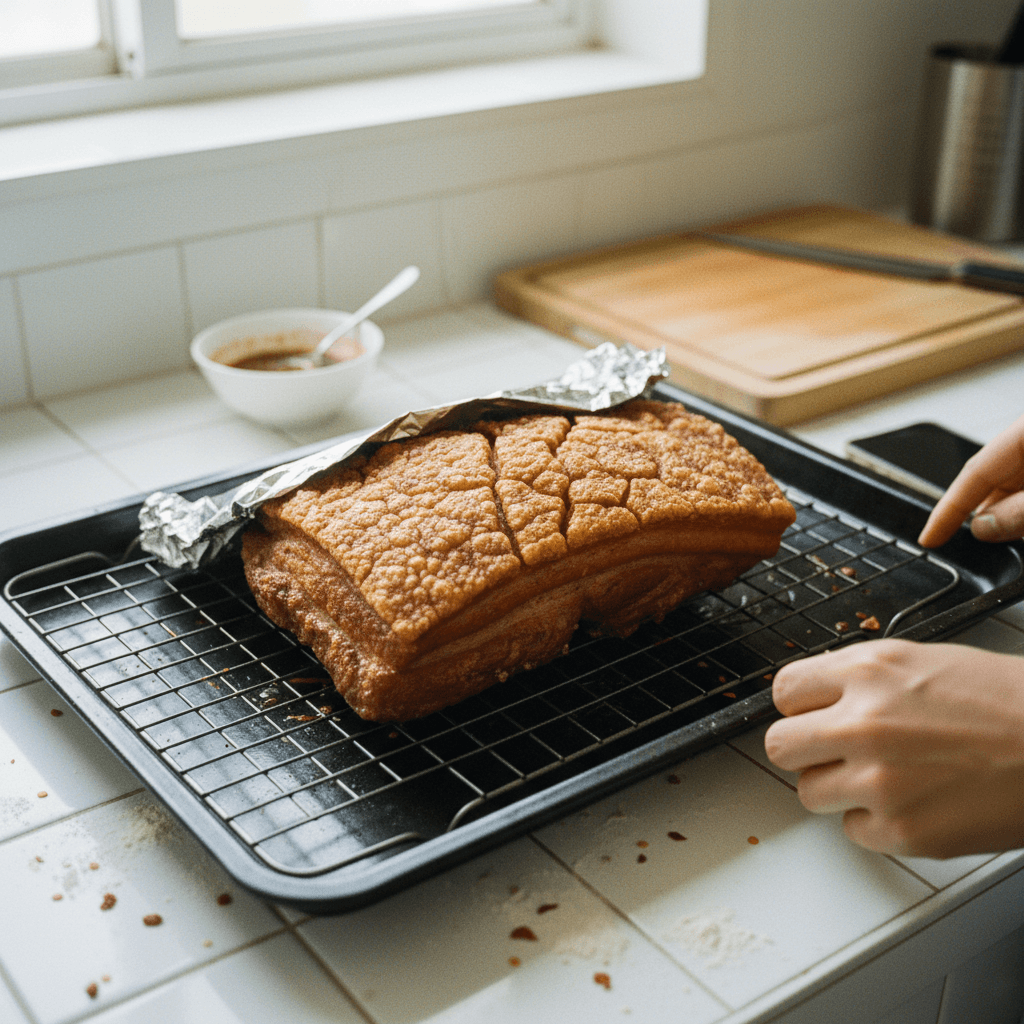
- 10
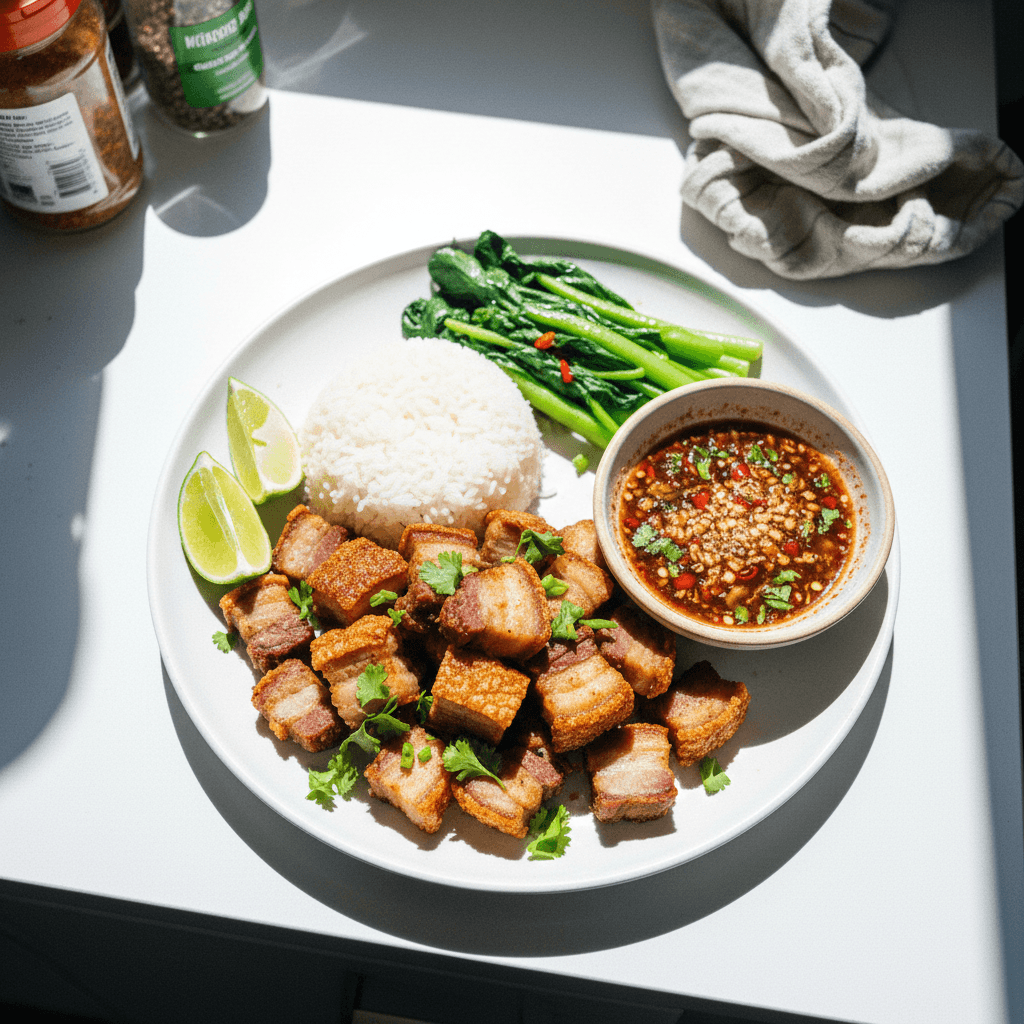
Slice the crispy pork belly into bite-sized pieces. Serve immediately with cooked white rice, steamed or stir-fried green vegetables, and the homemade Nam Jim Jaew dipping sauce.
⏱️ 5 min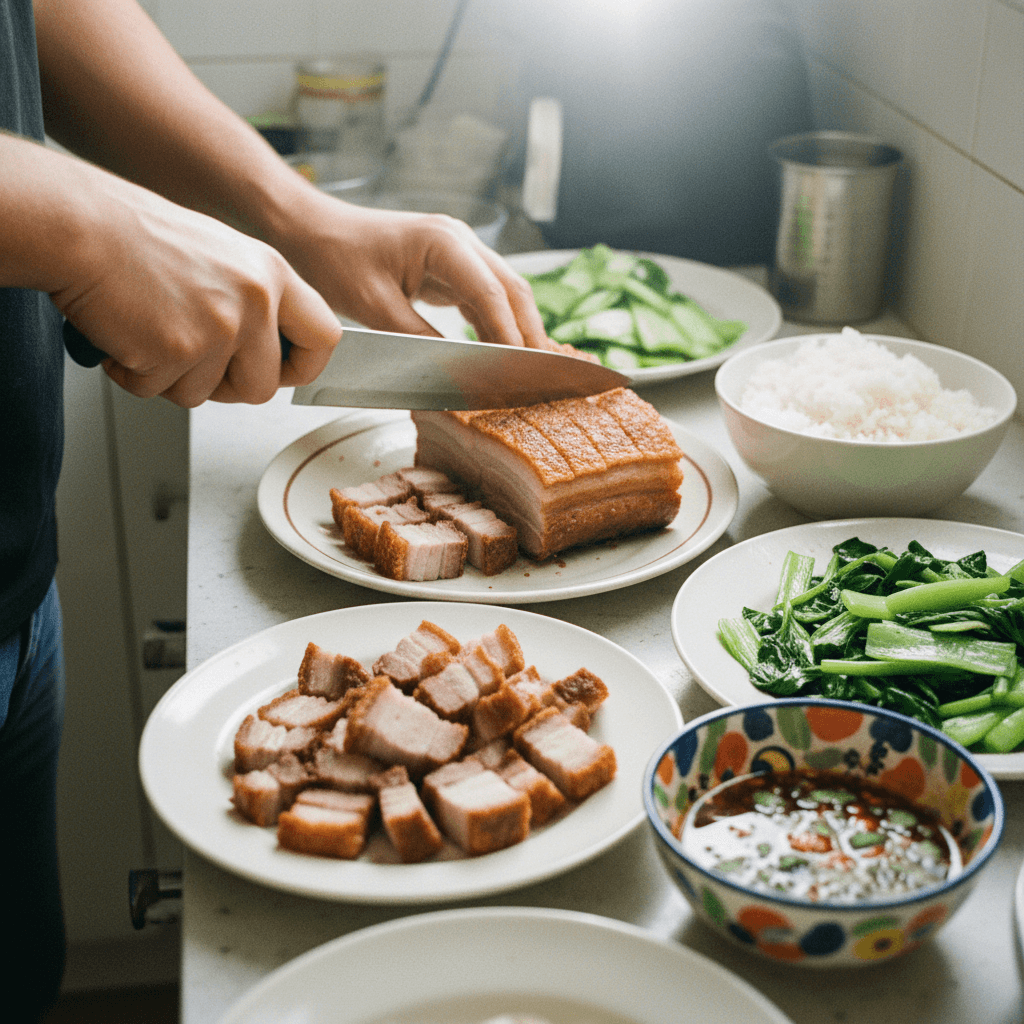
Kitchen Tools
Nutrition Facts (per serving)
Crispy Pork Belly with Thai Chili Dipping Sauce (Nam Jim Jaew)
For the Crispy Pork Belly
- 2 pounds pork belly, skin on, about 1 1/2 to 2 inches thick
- 2 teaspoons kosher salt
- 1/4 cup white vinegar
- 1 tablespoon vegetable oil, or other neutral oil
For the Thai Chili Dipping Sauce (Nam Jim Jaew)
- 3 tablespoons fish sauce
- 2 tablespoons lime juice, freshly squeezed
- 1 tablespoon granulated sugar
- 1 tablespoon toasted rice powder
- 1 shallot, small, thinly sliced or finely minced
- 2 tablespoons cilantro, fresh, chopped
- 1 tablespoon mint leaves, fresh, chopped (optional)
- 1 teaspoon dried chili flakes, or more, to taste
- 1 tablespoon water
For Serving
- 2 cups white rice, cooked
- 2 cups green vegetables, steamed or stir-fried (e.g., broccoli, bok choy)
Instructions
- 1
Prepare the pork belly: Pat the pork belly thoroughly dry with paper towels. Using a sharp knife or a scoring tool, score the skin of the pork belly in a crosshatch pattern, being careful not to cut into the meat. Score about 1/4 inch deep. Alternatively, use a meat tenderizer with spikes to prick the skin all over.
⏱️ 10 min - 2
Rub the meat side of the pork belly with kosher salt. Flip the pork belly over, skin side up, and place it in a shallow dish. Pour white vinegar over the skin, ensuring it's evenly coated. Let it sit for 10 minutes.
⏱️ 10 min - 3
After 10 minutes, pat the skin completely dry again with paper towels. This step is crucial for crispiness. Place the pork belly, skin side up, uncovered, in the refrigerator for at least 6 hours, or preferably overnight (12 hours). This allows the skin to dry out completely.
⏱️ 720 min - 4
Preheat your oven to 300°F. Line a baking sheet with aluminum foil and place a wire rack on top. Place the dried pork belly, skin side up, on the wire rack.
⏱️ 5 min•🌡️ 300 - 5
Roast the pork belly for 60 minutes. This slow roasting helps to render the fat and tenderize the meat.
⏱️ 60 min•🌡️ 300 - 6
While the pork belly is roasting, prepare the Nam Jim Jaew. In a small bowl, combine fish sauce, lime juice, granulated sugar, toasted rice powder, shallot, cilantro, mint leaves (if using), dried chili flakes, and water. Stir until the sugar is dissolved. Taste and adjust seasonings as needed.
⏱️ 10 min - 7
After 60 minutes, remove the pork belly from the oven. Increase the oven temperature to 400°F. Brush the skin with vegetable oil.
⏱️ 5 min•🌡️ 400 - 8
Return the pork belly to the oven and roast for another 30-45 minutes, or until the skin is puffed up, golden brown, and incredibly crispy. Keep a close eye on it to prevent burning. If certain spots are browning too quickly, you can cover them loosely with foil.
⏱️ 45 min•🌡️ 400 - 9
Once crispy, remove the pork belly from the oven and let it rest on the wire rack for 10-15 minutes before slicing. This allows the juices to redistribute.
⏱️ 15 min - 10
Slice the crispy pork belly into bite-sized pieces. Serve immediately with cooked white rice, steamed or stir-fried green vegetables, and the homemade Nam Jim Jaew dipping sauce.
⏱️ 5 min