Homemade Salted Caramel Chews
Homemade Salted Caramel Chews

Ingredients
For the Caramels
- 4 cups granulated sugar
- 1 cup unsalted butter
- 2 cups light corn syrup
- 1 teaspoon salt
- 2 evaporated milk, 12-ounce cans
For Finishing
- as needed flaky sea salt
- as needed parchment paper, for lining pan and wrapping
Instructions
- 1
Line a 9x13 inch baking pan with parchment paper, leaving an overhang on the sides to easily lift the caramel later. Lightly grease the parchment paper if desired, though it's often not necessary.
⏱️ 2 min
- 2
In a large, heavy-bottomed pot, combine the granulated sugar, unsalted butter, light corn syrup, and 1 teaspoon of salt. Place the pot over medium-high heat.
⏱️ 3 min
- 3
Bring the mixture to a rolling boil, stirring occasionally to ensure the sugar dissolves completely and the butter melts.
⏱️ 5 min
- 4
Once boiling, slowly begin to incorporate the evaporated milk, adding it a little at a time. Stir constantly during this process. Dedicate approximately 10 minutes per can of evaporated milk to ensure smooth integration and proper caramelization. The mixture will cool down slightly with each addition, so maintain consistent heat and stirring.
⏱️ 20 min
- 5
Attach a candy thermometer to the side of the pot, ensuring it does not touch the bottom. Continue to cook the caramel, stirring frequently to prevent scorching, until it reaches a temperature between 235-238 degrees Fahrenheit. At this point, the caramel should have developed a rich, dark amber color.
⏱️ 15 min•🌡️ 235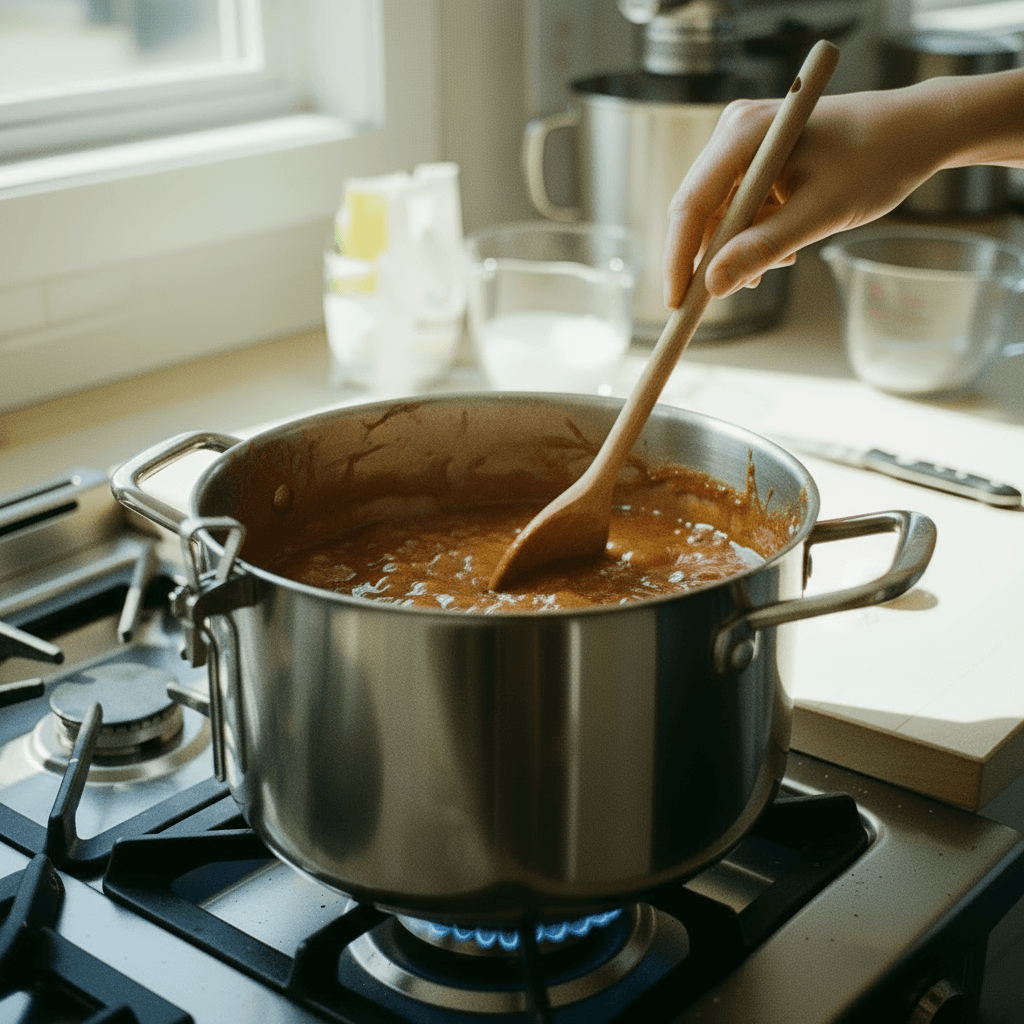
- 6
Immediately remove the pot from the heat. Carefully pour the hot caramel into the prepared 9x13 inch pan. Generously sprinkle flaky sea salt over the top of the warm caramel.
⏱️ 2 min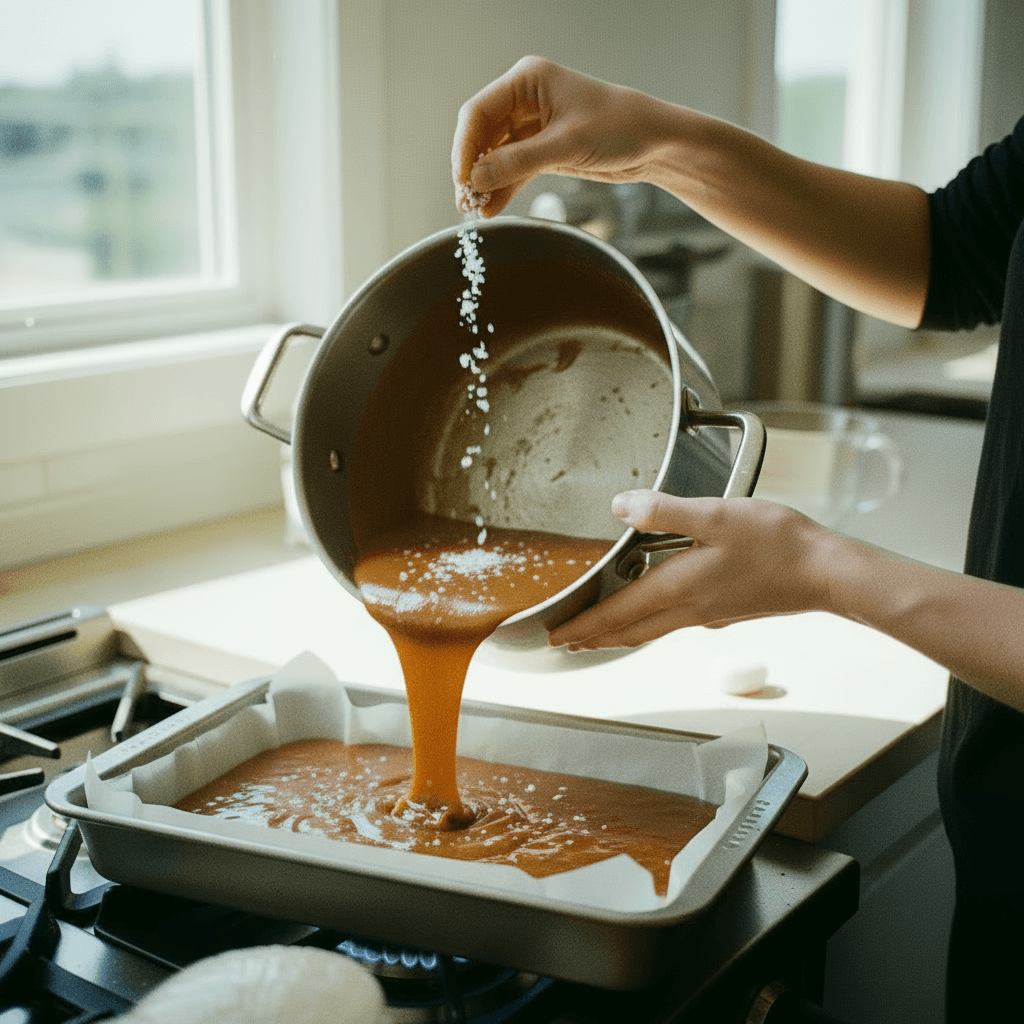
- 7
Allow the caramel to cool completely at room temperature. This can take several hours.
⏱️ 180 min
- 8
Once cooled, transfer the pan to the refrigerator and chill for at least 30 minutes to firm up the caramel, making it easier to cut.
⏱️ 30 min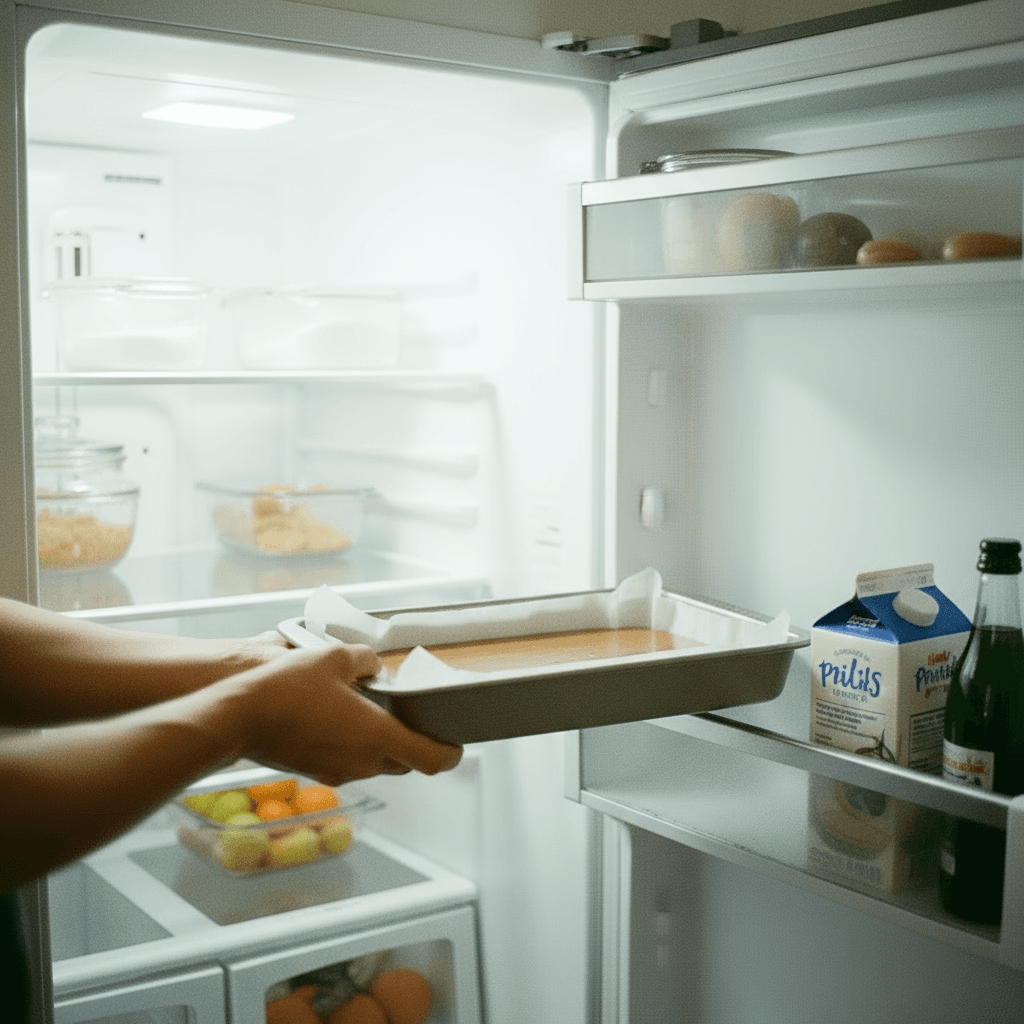
- 9
Using the parchment paper overhang, lift the slab of firm caramel from the pan and place it on a cutting board. Using a sharp, lightly greased knife, cut the caramel into individual, bite-sized pieces (approximately 1-inch squares).
⏱️ 15 min
- 10
Cut small squares of fresh parchment paper (about 4x4 inches). Individually wrap each caramel piece by placing it in the center of a parchment square and twisting the ends to seal.
⏱️ 15 min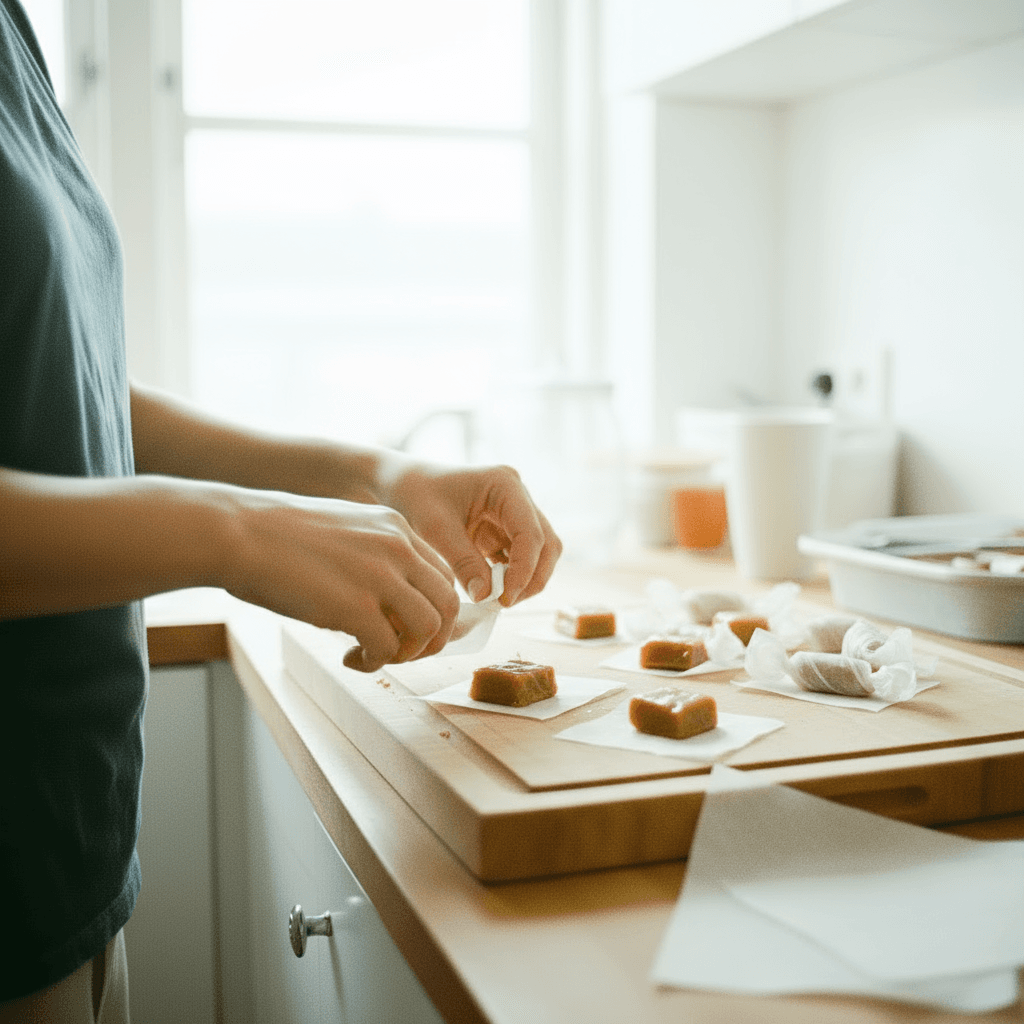
- 11
Store the wrapped caramels in an airtight container at room temperature for up to 2 weeks, or in the refrigerator for longer storage.
⏱️ 1 min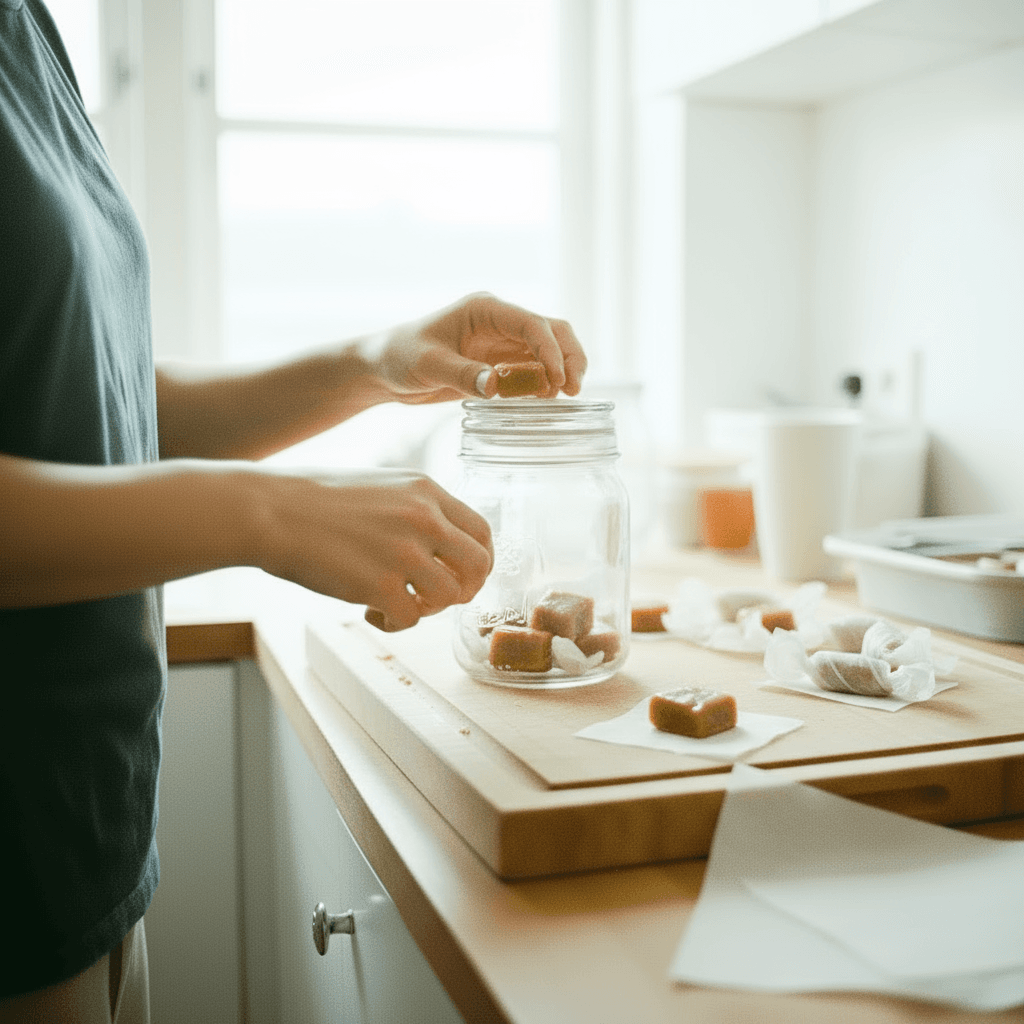
Kitchen Tools
Nutrition Facts (per serving)
Homemade Salted Caramel Chews
Ingredients
For the Caramels
- 4 cups granulated sugar
- 1 cup unsalted butter
- 2 cups light corn syrup
- 1 teaspoon salt
- 2 evaporated milk, 12-ounce cans
For Finishing
- as needed flaky sea salt
- as needed parchment paper, for lining pan and wrapping
Instructions
- 1
Line a 9x13 inch baking pan with parchment paper, leaving an overhang on the sides to easily lift the caramel later. Lightly grease the parchment paper if desired, though it's often not necessary.
⏱️ 2 min - 2
In a large, heavy-bottomed pot, combine the granulated sugar, unsalted butter, light corn syrup, and 1 teaspoon of salt. Place the pot over medium-high heat.
⏱️ 3 min - 3
Bring the mixture to a rolling boil, stirring occasionally to ensure the sugar dissolves completely and the butter melts.
⏱️ 5 min - 4
Once boiling, slowly begin to incorporate the evaporated milk, adding it a little at a time. Stir constantly during this process. Dedicate approximately 10 minutes per can of evaporated milk to ensure smooth integration and proper caramelization. The mixture will cool down slightly with each addition, so maintain consistent heat and stirring.
⏱️ 20 min - 5
Attach a candy thermometer to the side of the pot, ensuring it does not touch the bottom. Continue to cook the caramel, stirring frequently to prevent scorching, until it reaches a temperature between 235-238 degrees Fahrenheit. At this point, the caramel should have developed a rich, dark amber color.
⏱️ 15 min•🌡️ 235 - 6
Immediately remove the pot from the heat. Carefully pour the hot caramel into the prepared 9x13 inch pan. Generously sprinkle flaky sea salt over the top of the warm caramel.
⏱️ 2 min - 7
Allow the caramel to cool completely at room temperature. This can take several hours.
⏱️ 180 min - 8
Once cooled, transfer the pan to the refrigerator and chill for at least 30 minutes to firm up the caramel, making it easier to cut.
⏱️ 30 min - 9
Using the parchment paper overhang, lift the slab of firm caramel from the pan and place it on a cutting board. Using a sharp, lightly greased knife, cut the caramel into individual, bite-sized pieces (approximately 1-inch squares).
⏱️ 15 min - 10
Cut small squares of fresh parchment paper (about 4x4 inches). Individually wrap each caramel piece by placing it in the center of a parchment square and twisting the ends to seal.
⏱️ 15 min - 11
Store the wrapped caramels in an airtight container at room temperature for up to 2 weeks, or in the refrigerator for longer storage.
⏱️ 1 min