Jjajangmyeon (Korean Black Bean Noodles)
Jjajangmyeon (Korean Black Bean Noodles)

Ingredients
For the Jjajang Sauce
- 1/2 cup chunjang (Korean black bean paste)
- 1/2 pound pork belly, cut into 1/2-inch cubes
- 1 yellow onion, large, diced
- 1/2 zucchini, medium, diced
- 1 potato, medium, peeled and diced
- 1 cup cabbage, chopped
- 2 cloves garlic, minced
- 1/2 teaspoon ginger, grated
- 3 tablespoons vegetable oil
- 1 tablespoon sugar
- 1 tablespoon oyster sauce
- 1 tablespoon soy sauce
- 2 cups chicken broth
- 2 tablespoons cornstarch
- 2 tablespoons water, for cornstarch slurry
For the Noodles and Garnish
- 1 1/2 pounds fresh jjajangmyeon noodles, or thick udon noodles
- 1/2 cucumber, julienned, for garnish
- 2 stalks green onions, sliced, for garnish
- 1 teaspoon sesame oil, for finishing
Instructions
- 1
Prepare the chunjang: Heat 1 tablespoon of vegetable oil in a wok or large skillet over medium heat. Add the chunjang and stir-fry for 3-5 minutes, breaking up any clumps, until fragrant and slightly less bitter. Remove the roasted chunjang from the pan and set aside.
⏱️ 5 min
- 2
Cook the pork: In the same wok, add 2 tablespoons of vegetable oil. Add the cubed pork belly and cook over medium-high heat until browned and crispy, about 5-7 minutes. Drain off most of the rendered fat, leaving about 1-2 tablespoons in the pan.
⏱️ 7 min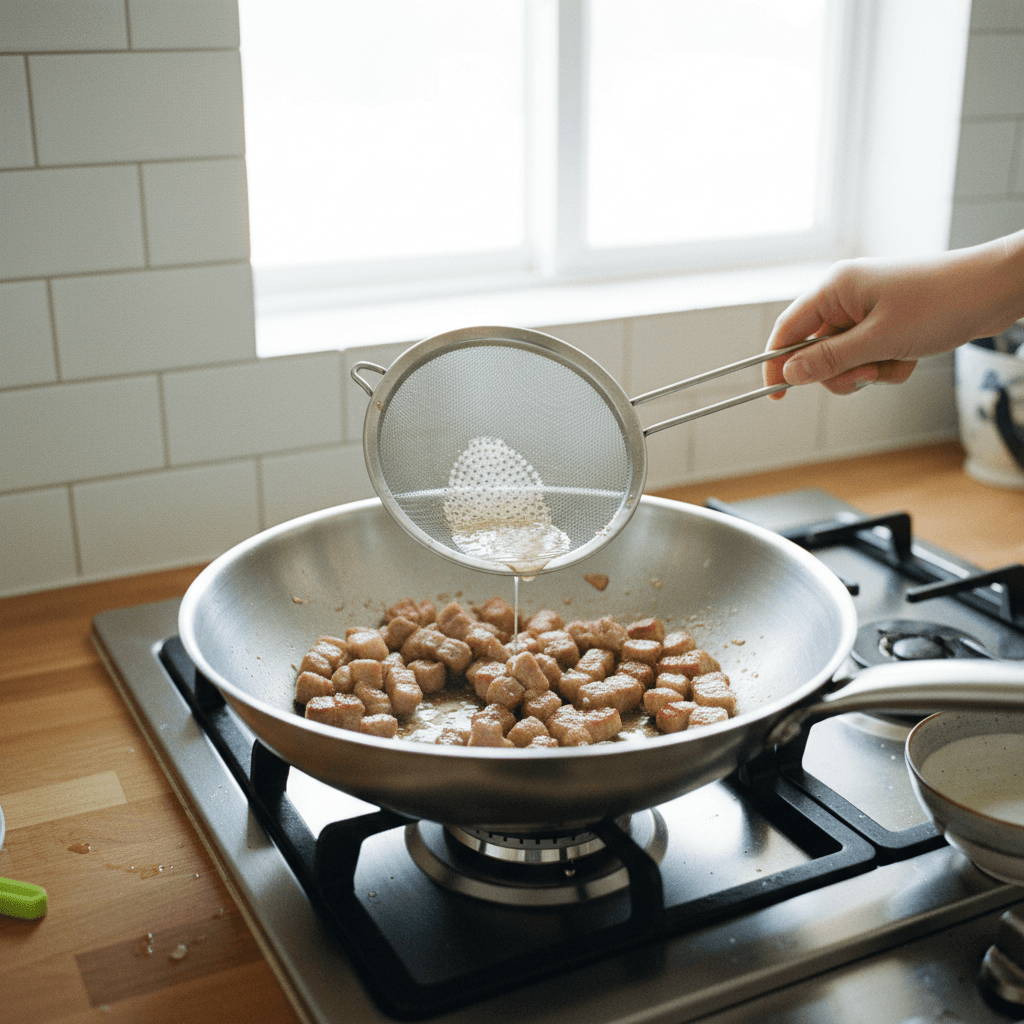
- 3
Sauté aromatics and vegetables: Add the minced garlic and grated ginger to the pan with the pork. Sauté for 1 minute until fragrant. Add the diced onion, zucchini, potato, and chopped cabbage. Stir-fry for 5-7 minutes until the vegetables start to soften.
⏱️ 7 min
- 4
Combine and simmer: Add the roasted chunjang back into the wok with the pork and vegetables. Stir well to coat all ingredients. Add the sugar, oyster sauce, soy sauce, and chicken broth. Bring the mixture to a simmer, then reduce heat to medium-low, cover, and cook for 10-15 minutes, or until the potatoes are tender.
⏱️ 15 min
- 5
Thicken the sauce: In a small bowl, whisk together the cornstarch and 2 tablespoons of water to create a slurry. Slowly pour the cornstarch slurry into the simmering sauce, stirring constantly, until the sauce thickens to your desired consistency. Remove from heat and stir in the sesame oil.
⏱️ 5 min
- 6
Cook the noodles: While the sauce is simmering, bring a large pot of water to a rolling boil. Add the jjajangmyeon noodles and cook according to package directions, typically 3-5 minutes for fresh noodles, until al dente. Drain well.
⏱️ 5 min
- 7
Assemble and serve: Divide the cooked noodles among four serving bowls. Ladle a generous amount of the hot jjajang sauce over the noodles. Garnish with julienned cucumber and sliced green onions. Serve immediately.
⏱️ 1 min
Kitchen Tools
Nutrition Facts (per serving)
Jjajangmyeon (Korean Black Bean Noodles)
For the Jjajang Sauce
- 1/2 cup chunjang (Korean black bean paste)
- 1/2 pound pork belly, cut into 1/2-inch cubes
- 1 yellow onion, large, diced
- 1/2 zucchini, medium, diced
- 1 potato, medium, peeled and diced
- 1 cup cabbage, chopped
- 2 cloves garlic, minced
- 1/2 teaspoon ginger, grated
- 3 tablespoons vegetable oil
- 1 tablespoon sugar
- 1 tablespoon oyster sauce
- 1 tablespoon soy sauce
- 2 cups chicken broth
- 2 tablespoons cornstarch
- 2 tablespoons water, for cornstarch slurry
For the Noodles and Garnish
- 1 1/2 pounds fresh jjajangmyeon noodles, or thick udon noodles
- 1/2 cucumber, julienned, for garnish
- 2 stalks green onions, sliced, for garnish
- 1 teaspoon sesame oil, for finishing
Instructions
- 1
Prepare the chunjang: Heat 1 tablespoon of vegetable oil in a wok or large skillet over medium heat. Add the chunjang and stir-fry for 3-5 minutes, breaking up any clumps, until fragrant and slightly less bitter. Remove the roasted chunjang from the pan and set aside.
⏱️ 5 min - 2
Cook the pork: In the same wok, add 2 tablespoons of vegetable oil. Add the cubed pork belly and cook over medium-high heat until browned and crispy, about 5-7 minutes. Drain off most of the rendered fat, leaving about 1-2 tablespoons in the pan.
⏱️ 7 min - 3
Sauté aromatics and vegetables: Add the minced garlic and grated ginger to the pan with the pork. Sauté for 1 minute until fragrant. Add the diced onion, zucchini, potato, and chopped cabbage. Stir-fry for 5-7 minutes until the vegetables start to soften.
⏱️ 7 min - 4
Combine and simmer: Add the roasted chunjang back into the wok with the pork and vegetables. Stir well to coat all ingredients. Add the sugar, oyster sauce, soy sauce, and chicken broth. Bring the mixture to a simmer, then reduce heat to medium-low, cover, and cook for 10-15 minutes, or until the potatoes are tender.
⏱️ 15 min - 5
Thicken the sauce: In a small bowl, whisk together the cornstarch and 2 tablespoons of water to create a slurry. Slowly pour the cornstarch slurry into the simmering sauce, stirring constantly, until the sauce thickens to your desired consistency. Remove from heat and stir in the sesame oil.
⏱️ 5 min - 6
Cook the noodles: While the sauce is simmering, bring a large pot of water to a rolling boil. Add the jjajangmyeon noodles and cook according to package directions, typically 3-5 minutes for fresh noodles, until al dente. Drain well.
⏱️ 5 min - 7
Assemble and serve: Divide the cooked noodles among four serving bowls. Ladle a generous amount of the hot jjajang sauce over the noodles. Garnish with julienned cucumber and sliced green onions. Serve immediately.
⏱️ 1 min