Homemade English Muffins
Homemade English Muffins

Ingredients
- 1 cup milk, warm (about 110°F)
- 2 teaspoons active dry yeast
- 1 tablespoon honey, or pure maple syrup
- 3 tablespoons butter, melted (or coconut oil)
- 1 large egg
- 1 teaspoon salt
- 3 1/2 cups all-purpose flour
- as needed cornmeal, for dusting
Instructions
- 1
In a large bowl, combine the warm milk, active dry yeast, and honey. Stir gently to combine. Let the mixture sit for 10 minutes until it becomes foamy, indicating the yeast is active.
⏱️ 10 min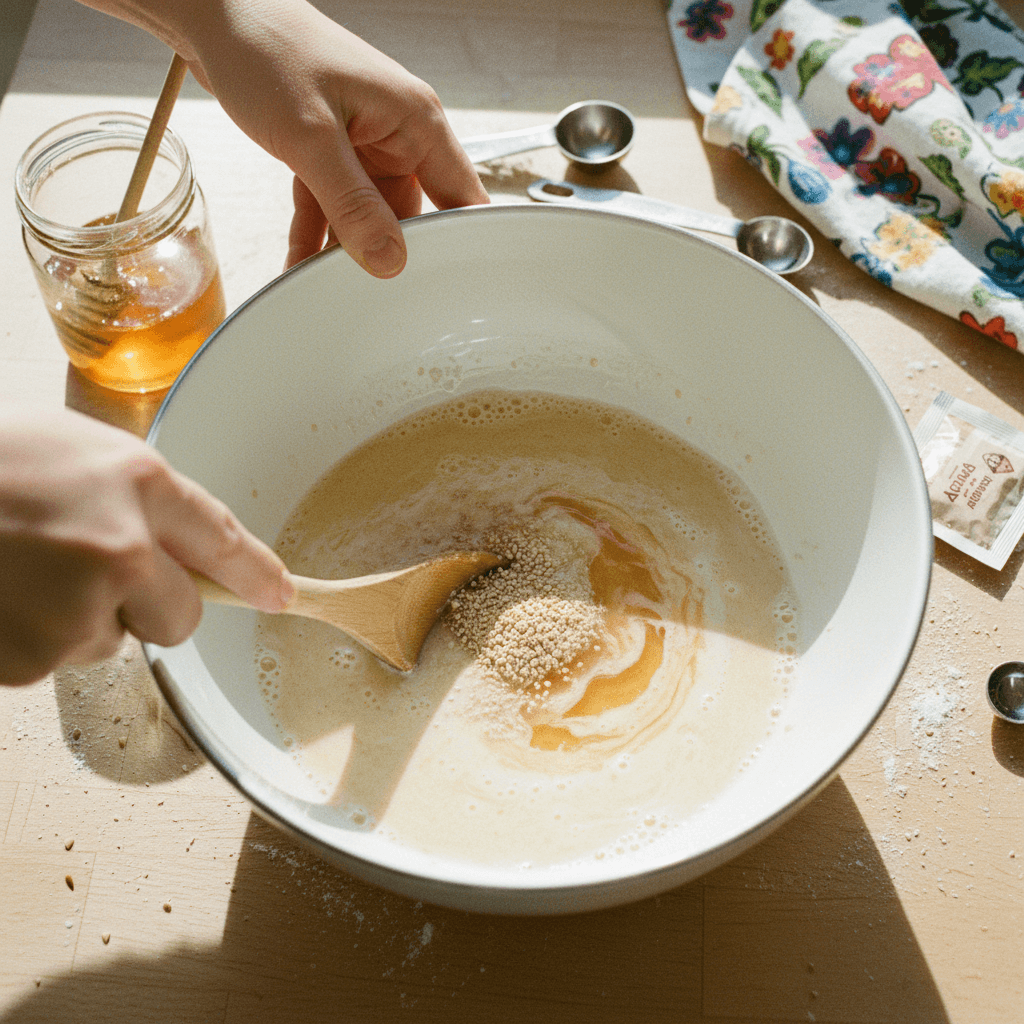
- 2
Once the yeast mixture is foamy, stir in the melted butter (or coconut oil), large egg, and salt.
⏱️ 2 min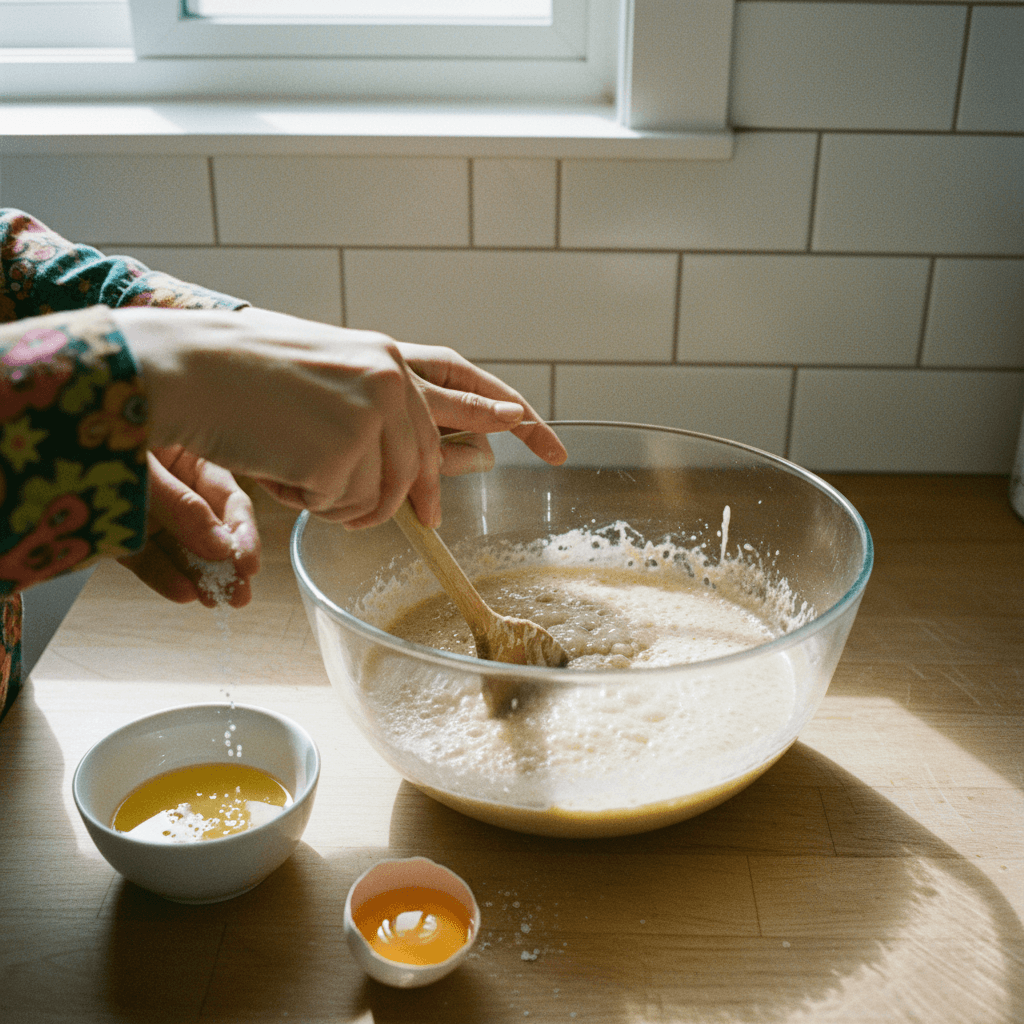
- 3
Gradually add the all-purpose flour, one cup at a time, mixing until a soft dough forms. The dough should be slightly tacky but not sticky to the touch. You may not need all 3 1/2 cups of flour; add just enough until the desired consistency is reached.
⏱️ 5 min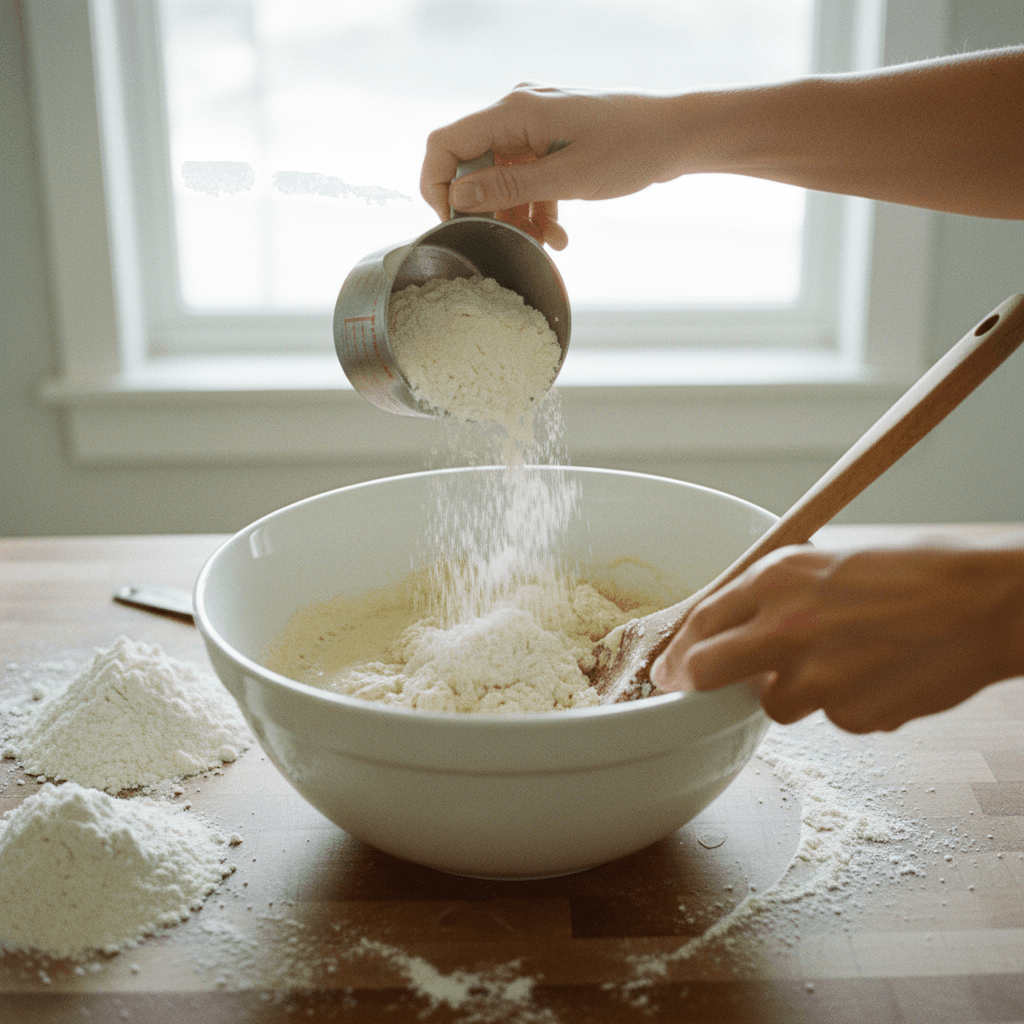
- 4
Turn the dough out onto a lightly floured surface and knead for 5-7 minutes until it is smooth and elastic.
⏱️ 7 min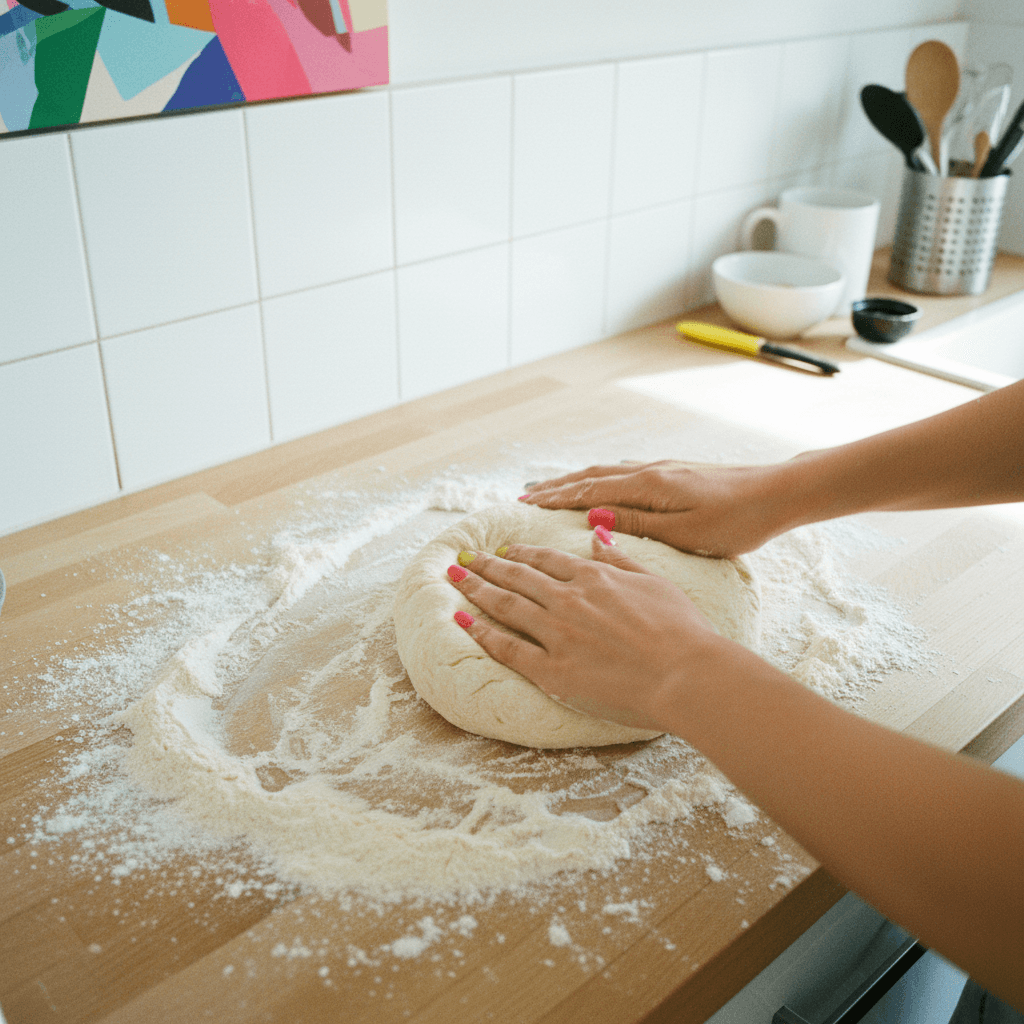
- 5
Lightly grease a clean bowl. Place the kneaded dough in the bowl, turning it once to coat the top. Cover the bowl with plastic wrap or a clean kitchen towel and let it rise in a warm place for 1 hour, or until the dough has doubled in size.
⏱️ 60 min
- 6
Once the dough has risen, gently punch it down. On a lightly floured surface, roll the dough out to a thickness of 1/2 inch.
⏱️ 3 min - 7
Using a round cutter (about 3-4 inches in diameter), cut the dough into individual English muffin rounds. Gather any scraps, gently re-roll, and cut additional muffins.
⏱️ 5 min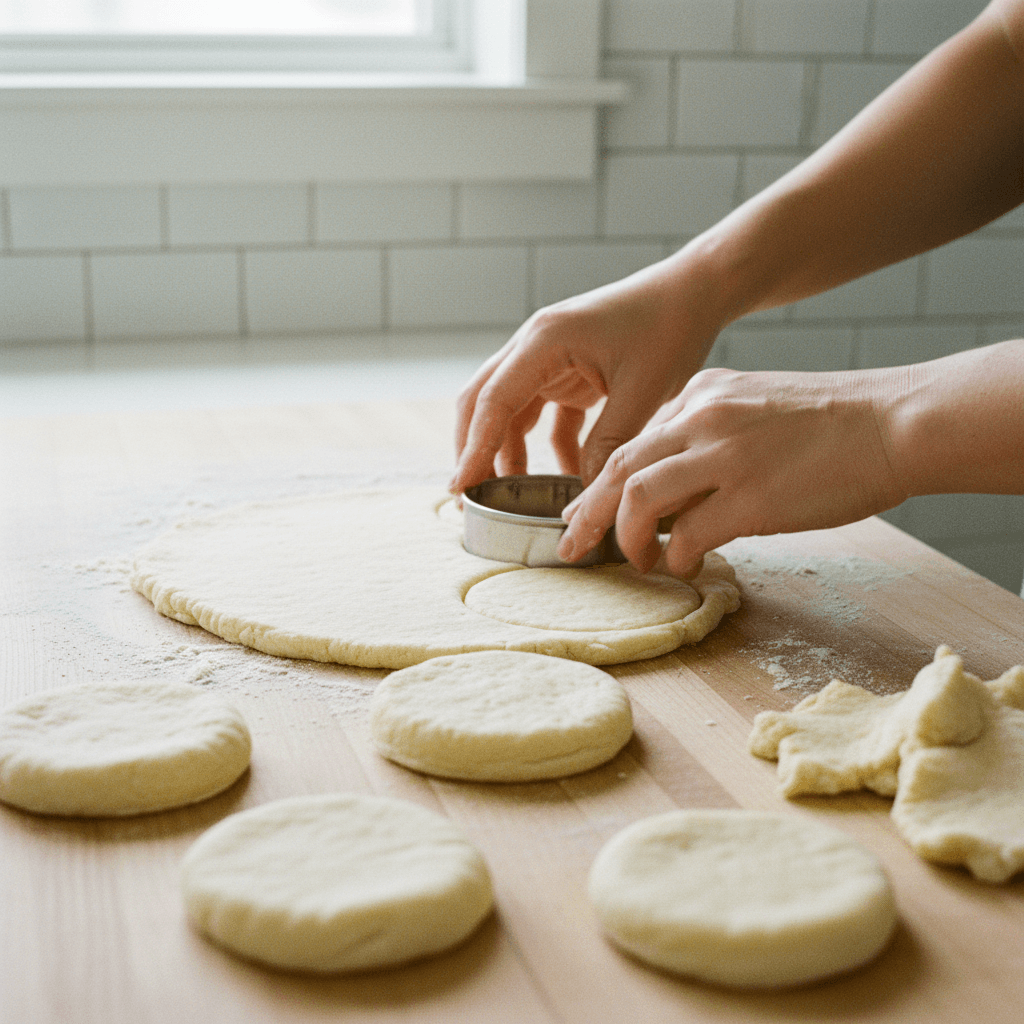
- 8
Lightly dust a baking sheet or large piece of parchment paper with cornmeal. Place the cut English muffin rounds on the cornmeal-dusted surface, leaving some space between each. Sprinkle the tops of the muffins with additional cornmeal.
⏱️ 3 min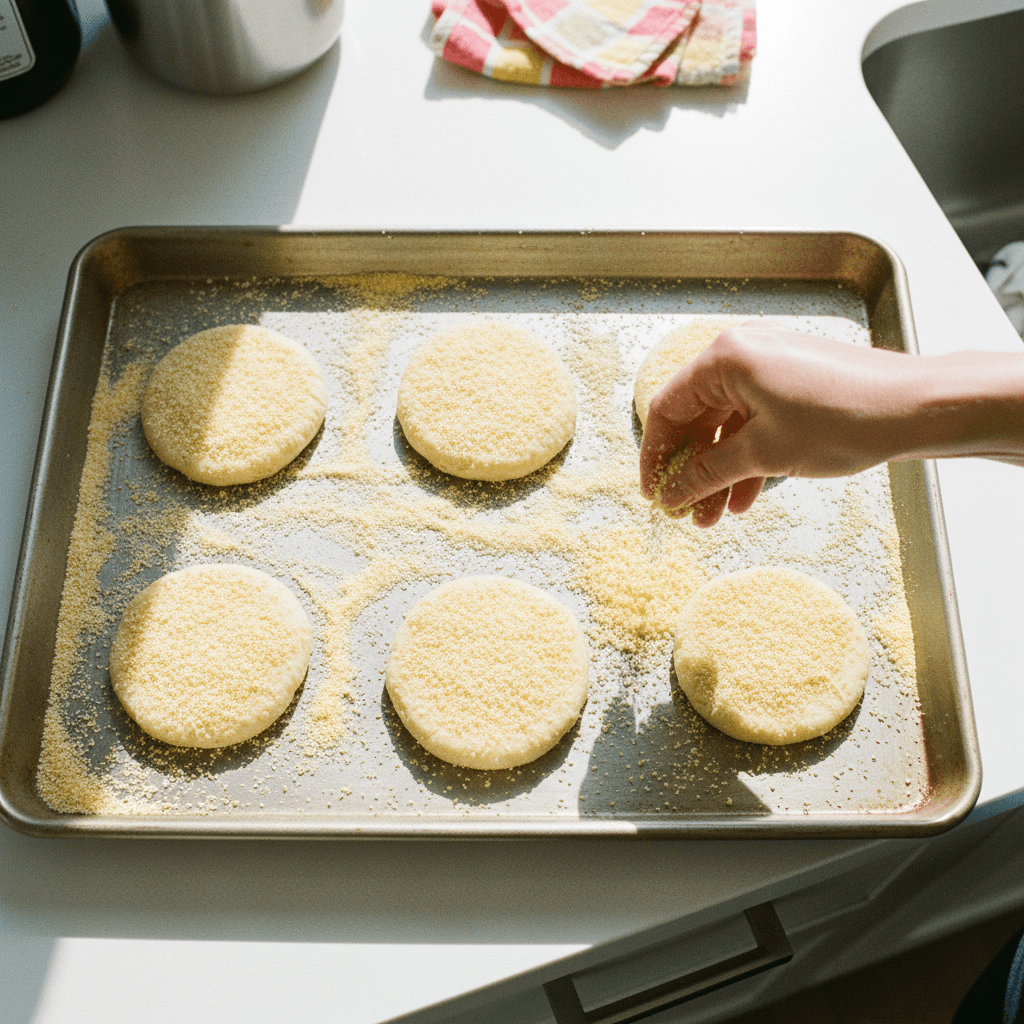
- 9
Cover the muffins loosely with plastic wrap or a clean kitchen towel and let them rest for 30-40 minutes, allowing them to puff up slightly.
⏱️ 40 min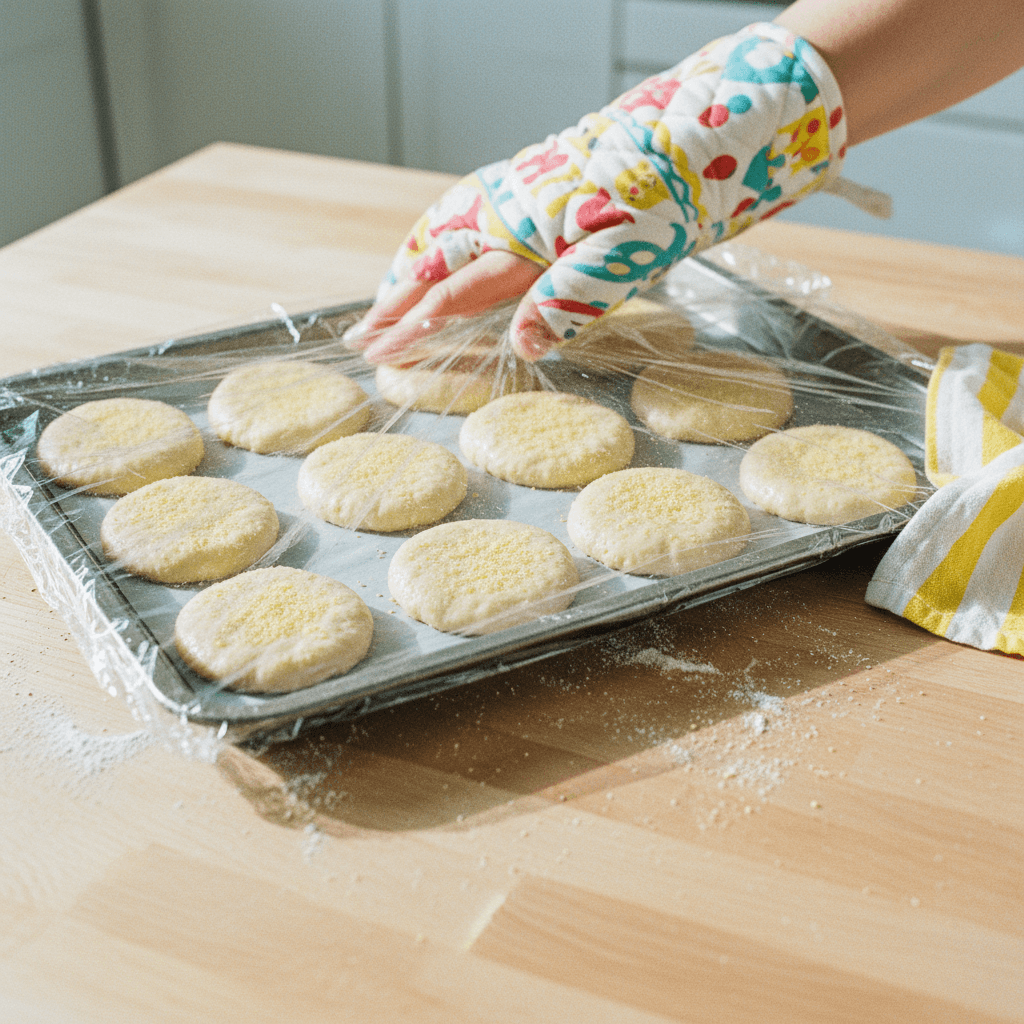
- 10
Heat a lightly greased skillet or griddle over medium-low heat. Cook the English muffins for 5-6 minutes per side, until they are golden brown and cooked through. Adjust heat as necessary to prevent burning.
⏱️ 12 min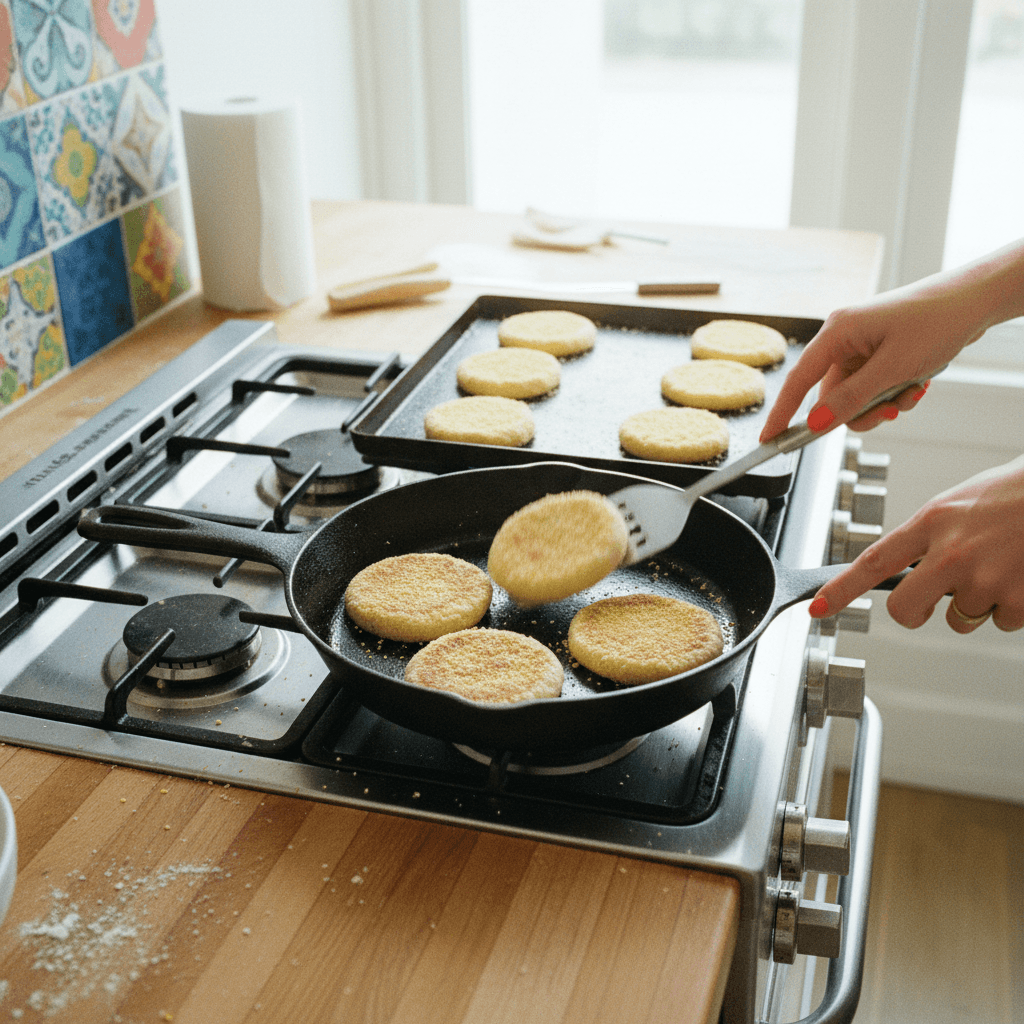
- 11
Transfer the cooked English muffins to a wire rack and let them cool for 10 minutes.
⏱️ 10 min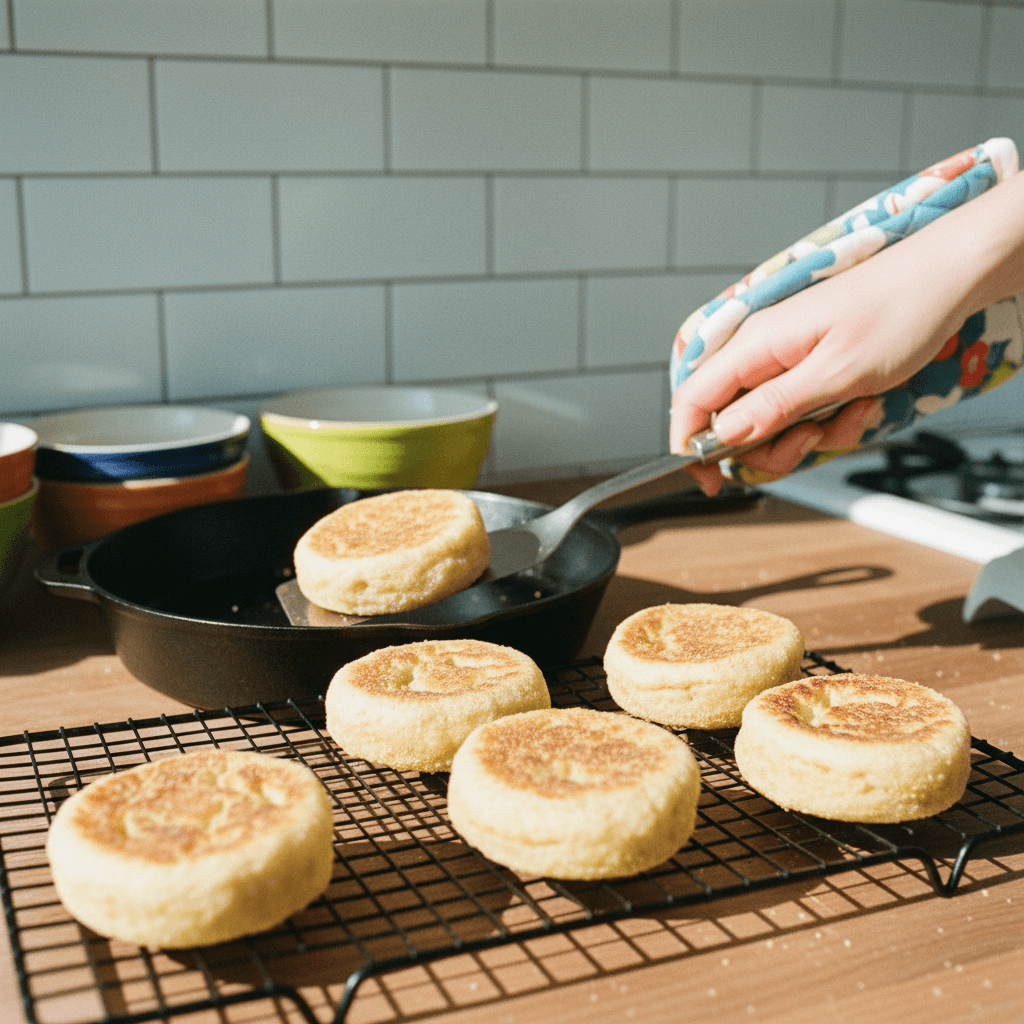
- 12
To serve, split the English muffins with a fork to create those characteristic nooks and crannies. Enjoy warm with butter and jam.
⏱️ 2 min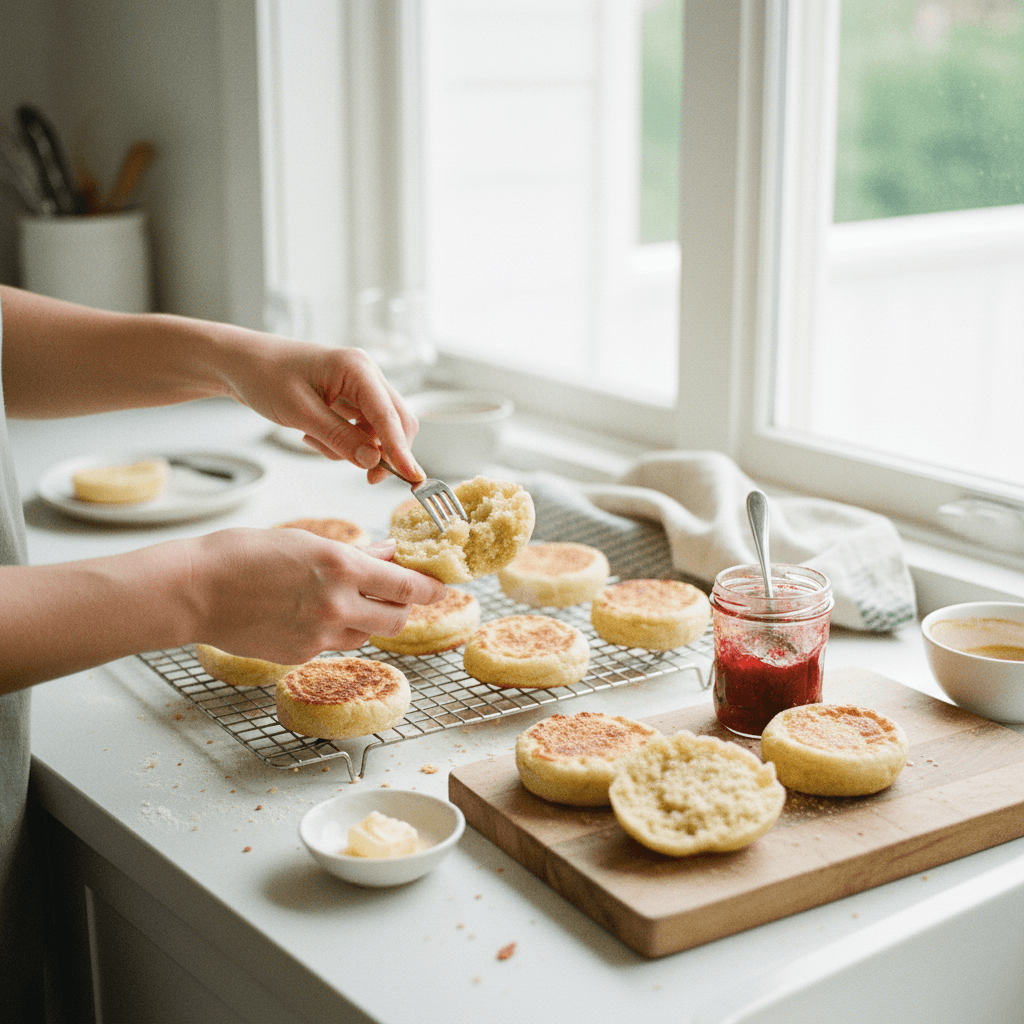
Kitchen Tools
Nutrition Facts (per serving)
Homemade English Muffins
- 1 cup milk, warm (about 110°F)
- 2 teaspoons active dry yeast
- 1 tablespoon honey, or pure maple syrup
- 3 tablespoons butter, melted (or coconut oil)
- 1 large egg
- 1 teaspoon salt
- 3 1/2 cups all-purpose flour
- as needed cornmeal, for dusting
Instructions
- 1
In a large bowl, combine the warm milk, active dry yeast, and honey. Stir gently to combine. Let the mixture sit for 10 minutes until it becomes foamy, indicating the yeast is active.
⏱️ 10 min - 2
Once the yeast mixture is foamy, stir in the melted butter (or coconut oil), large egg, and salt.
⏱️ 2 min - 3
Gradually add the all-purpose flour, one cup at a time, mixing until a soft dough forms. The dough should be slightly tacky but not sticky to the touch. You may not need all 3 1/2 cups of flour; add just enough until the desired consistency is reached.
⏱️ 5 min - 4
Turn the dough out onto a lightly floured surface and knead for 5-7 minutes until it is smooth and elastic.
⏱️ 7 min - 5
Lightly grease a clean bowl. Place the kneaded dough in the bowl, turning it once to coat the top. Cover the bowl with plastic wrap or a clean kitchen towel and let it rise in a warm place for 1 hour, or until the dough has doubled in size.
⏱️ 60 min - 6
Once the dough has risen, gently punch it down. On a lightly floured surface, roll the dough out to a thickness of 1/2 inch.
⏱️ 3 min - 7
Using a round cutter (about 3-4 inches in diameter), cut the dough into individual English muffin rounds. Gather any scraps, gently re-roll, and cut additional muffins.
⏱️ 5 min - 8
Lightly dust a baking sheet or large piece of parchment paper with cornmeal. Place the cut English muffin rounds on the cornmeal-dusted surface, leaving some space between each. Sprinkle the tops of the muffins with additional cornmeal.
⏱️ 3 min - 9
Cover the muffins loosely with plastic wrap or a clean kitchen towel and let them rest for 30-40 minutes, allowing them to puff up slightly.
⏱️ 40 min - 10
Heat a lightly greased skillet or griddle over medium-low heat. Cook the English muffins for 5-6 minutes per side, until they are golden brown and cooked through. Adjust heat as necessary to prevent burning.
⏱️ 12 min - 11
Transfer the cooked English muffins to a wire rack and let them cool for 10 minutes.
⏱️ 10 min - 12
To serve, split the English muffins with a fork to create those characteristic nooks and crannies. Enjoy warm with butter and jam.
⏱️ 2 min