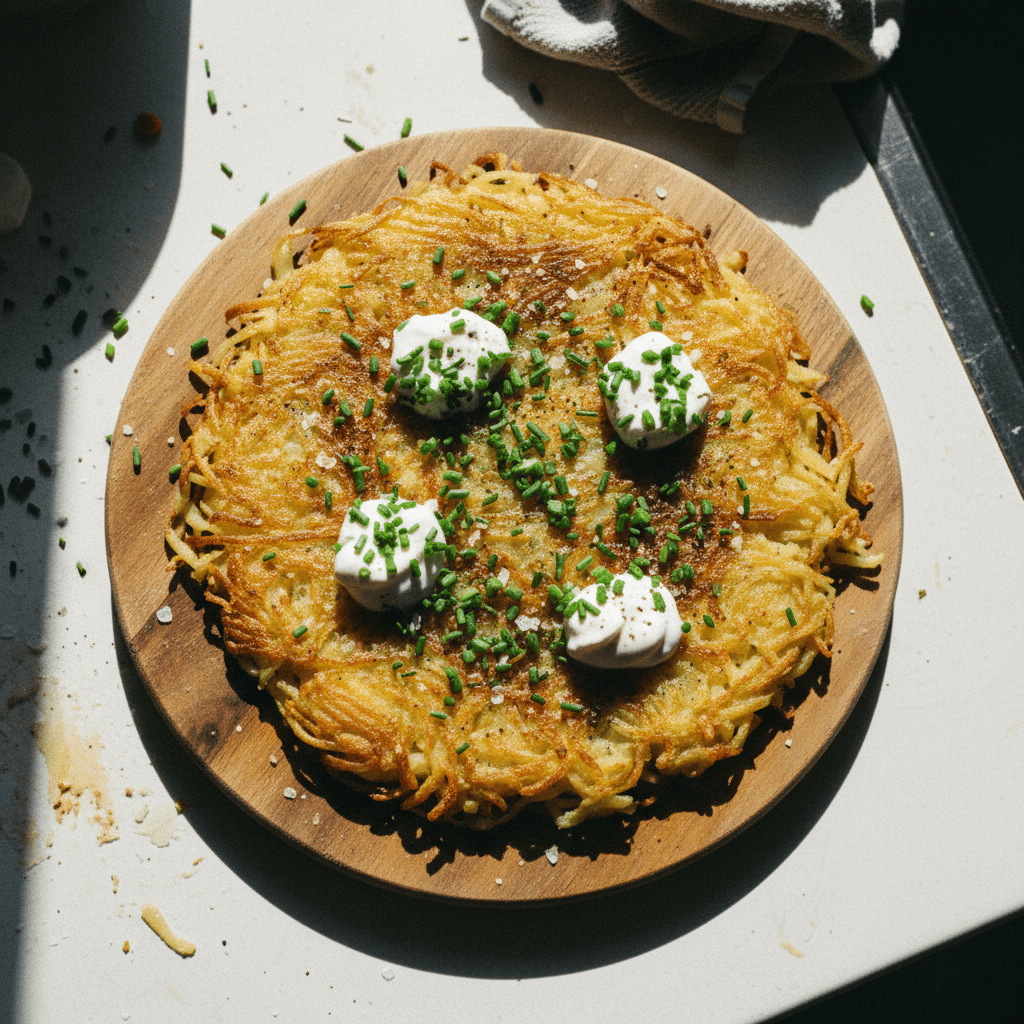
Potato Rosti
Potato Rosti
Ingredients
- 4 Agria potatoes, large
- 1 white onion, large, thinly sliced
- 3 fluid ounces clarified butter, approximately 1 1/2 ladles
- 1 tablespoon fine salt, or more, to taste
Instructions
- 1
Grate the Agria potatoes using a coarse grater directly into a bowl. Ensure no water touches the grated potatoes. Gather the grated potatoes onto a clean kitchen cloth, wrap them into a ball, and twist firmly to squeeze out all excess water. This step is crucial for crispiness. Return the squeezed potatoes to a clean bowl.
⏱️ 5 min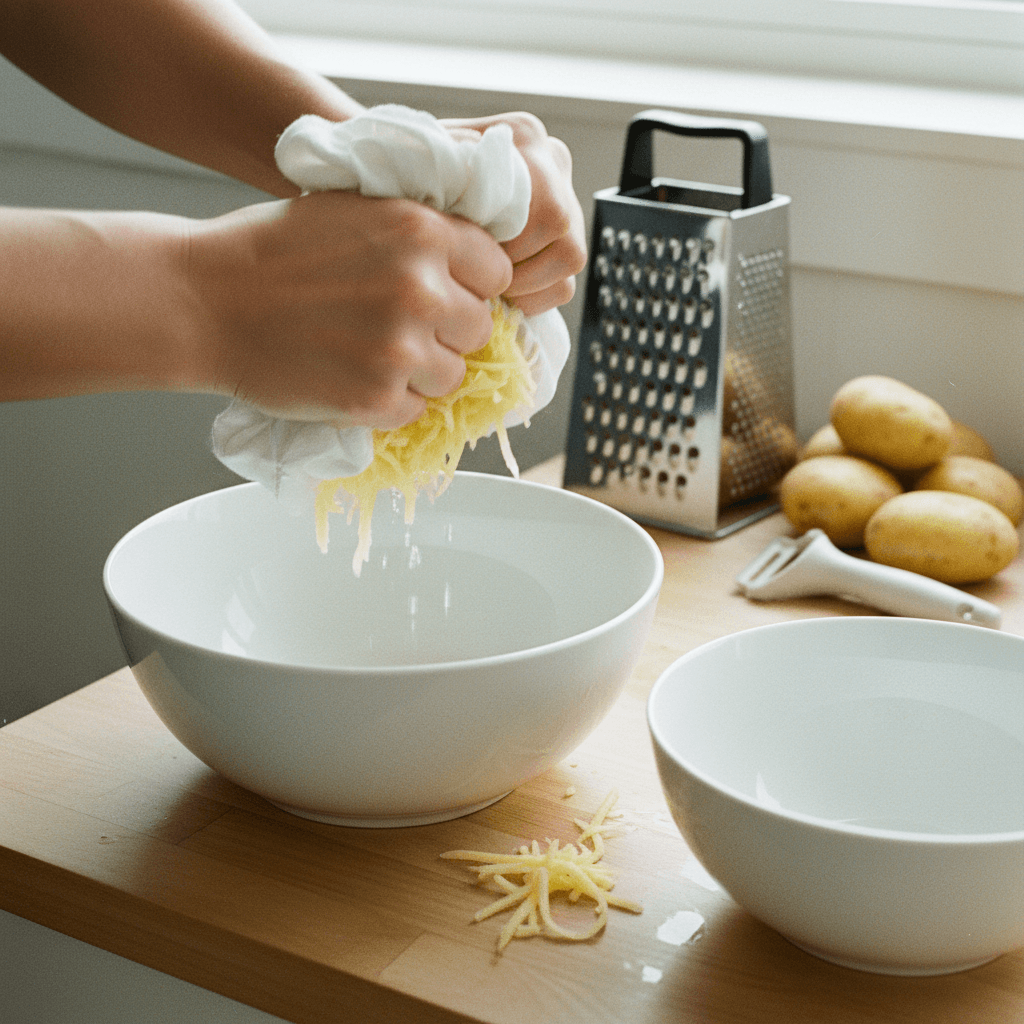
- 2
Season both the grated potatoes and the finely sliced white onions generously with fine salt. Potatoes generally require more salt than expected.
⏱️ 2 min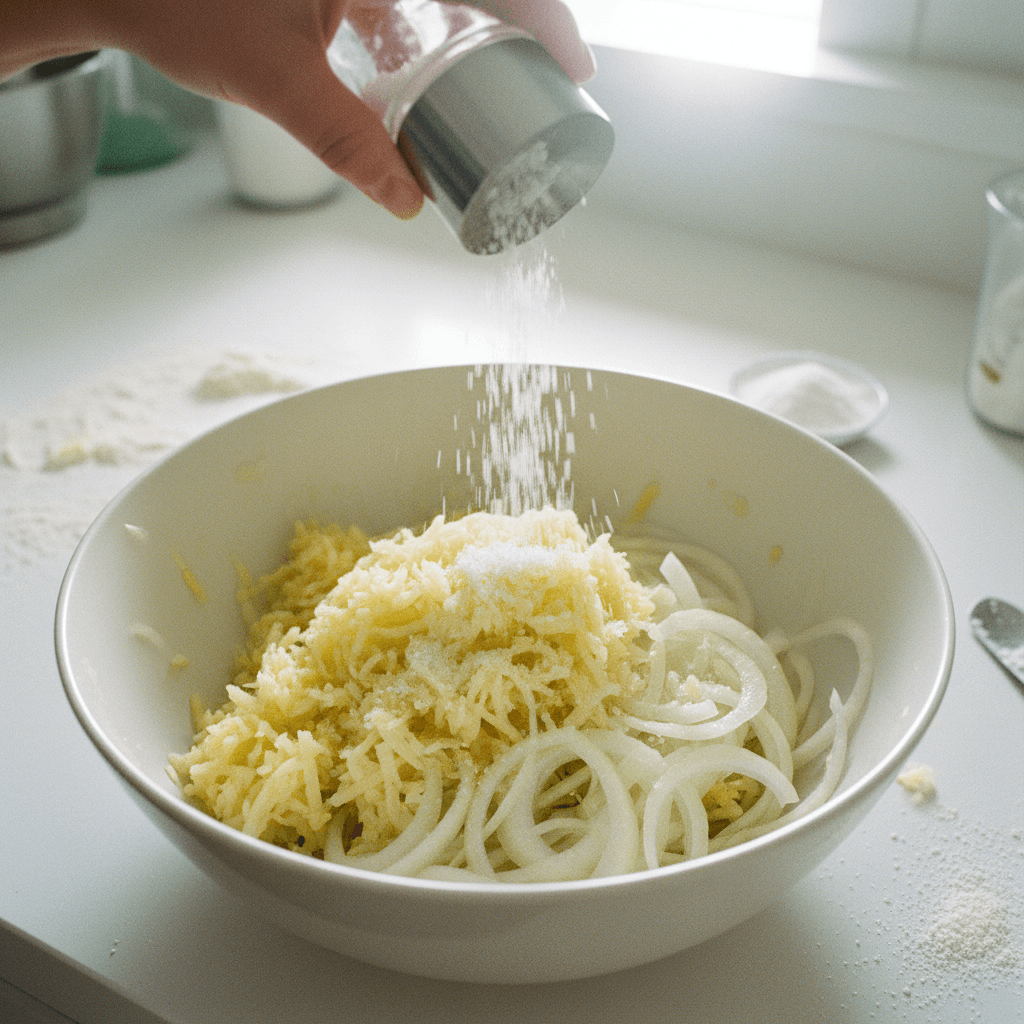
- 3
Place a cast iron pan on a low heat induction hob. Add approximately 1 1/2 ladles (about 3 fluid ounces) of clarified butter to the pan.
⏱️ 1 min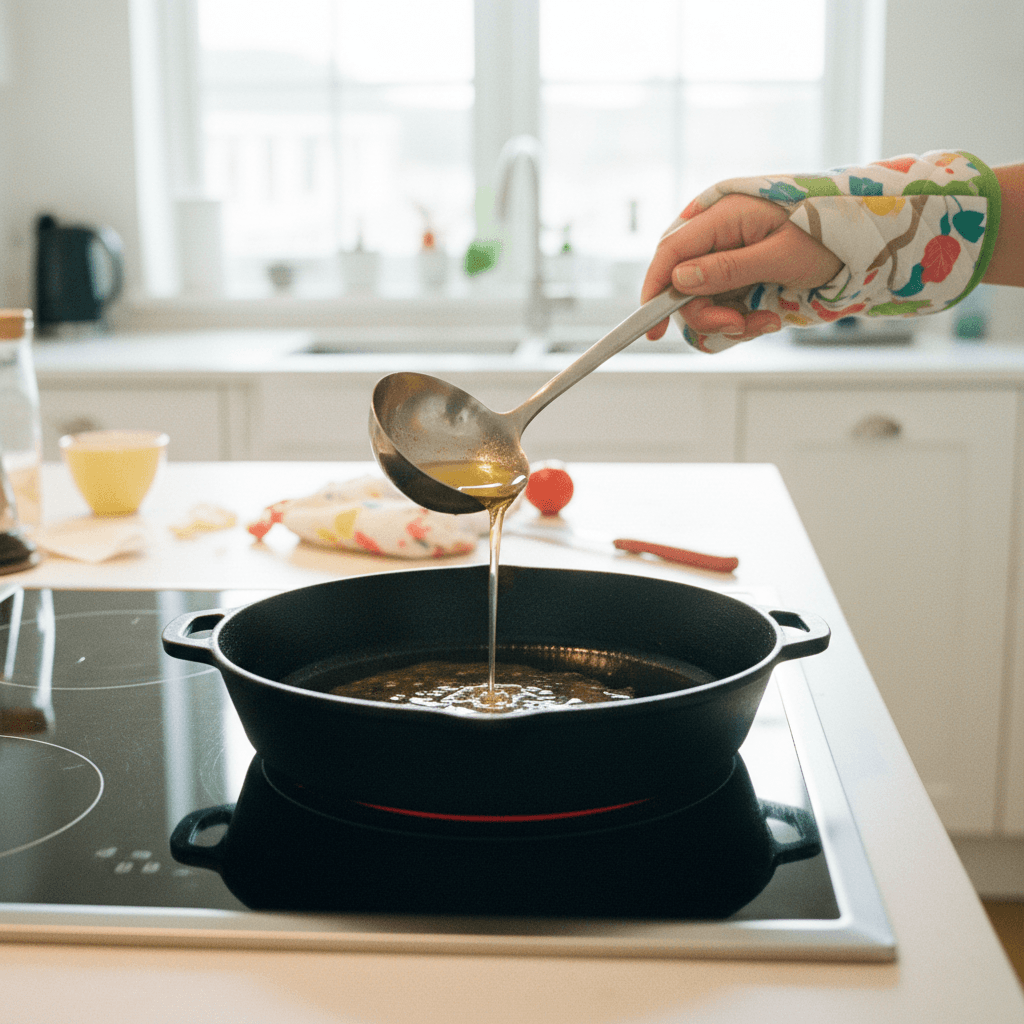
- 4
Carefully place a portion of the seasoned grated potato into the pan, forming a solid base and pushing it into the corners, leaving a slight well in the center. Add a pile of the seasoned, finely sliced white onion into the well and spread it out into a thin layer. Place another layer of seasoned grated potato on top of the onions.
⏱️ 3 min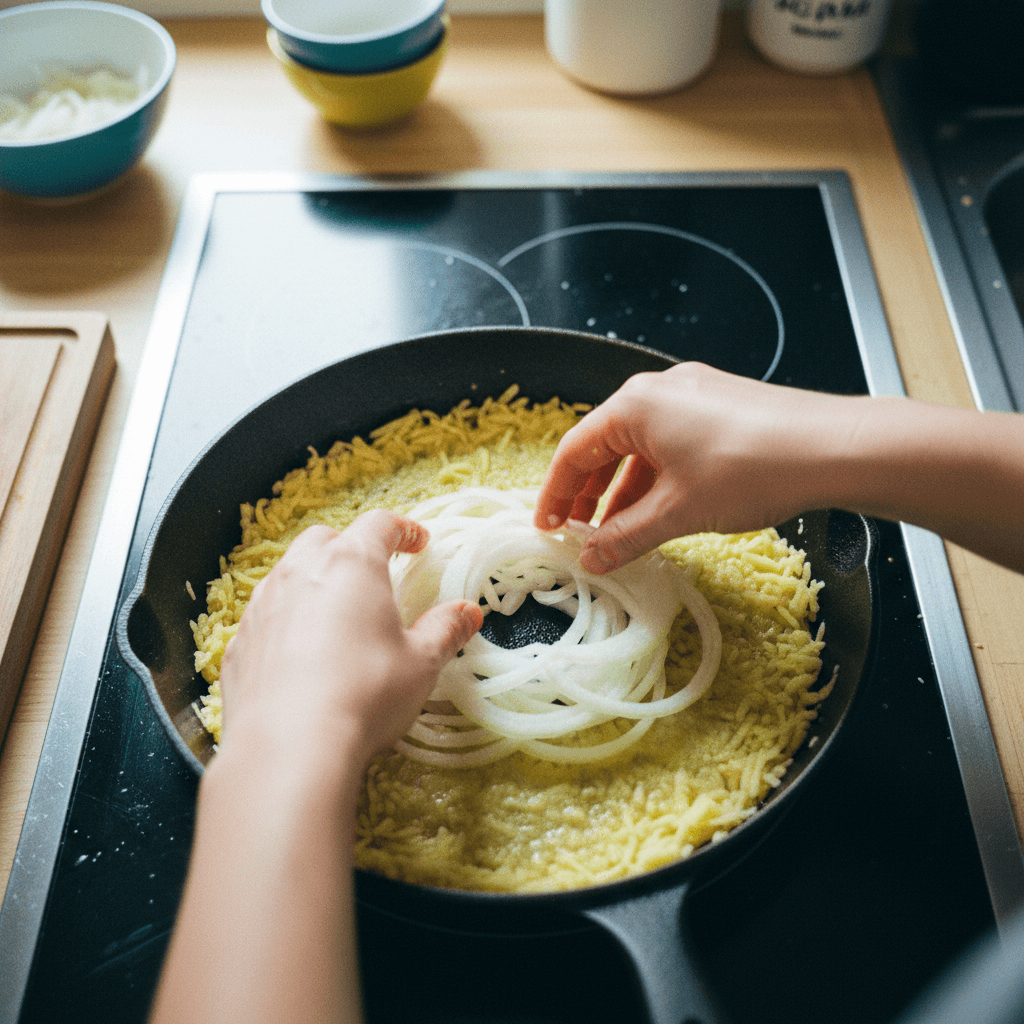
- 5
Allow the potato to set for a couple of minutes, letting steam from underneath slightly cook it. Once it begins to soften, use a fish slice (spatula) to gently tuck in all the potato trimmings around the edges, pushing them inwards to create a perfect circular shape. Continue this process, observing the caramelization developing on the sides. When a golden crust starts to appear, continue to push down and tuck in the edges. Hold the pan by the handle and rotate it to ensure even crisping and maintain the circular shape. Cook and shape the first side for about 12 to 15 minutes until a beautiful golden crust is formed.
⏱️ 15 min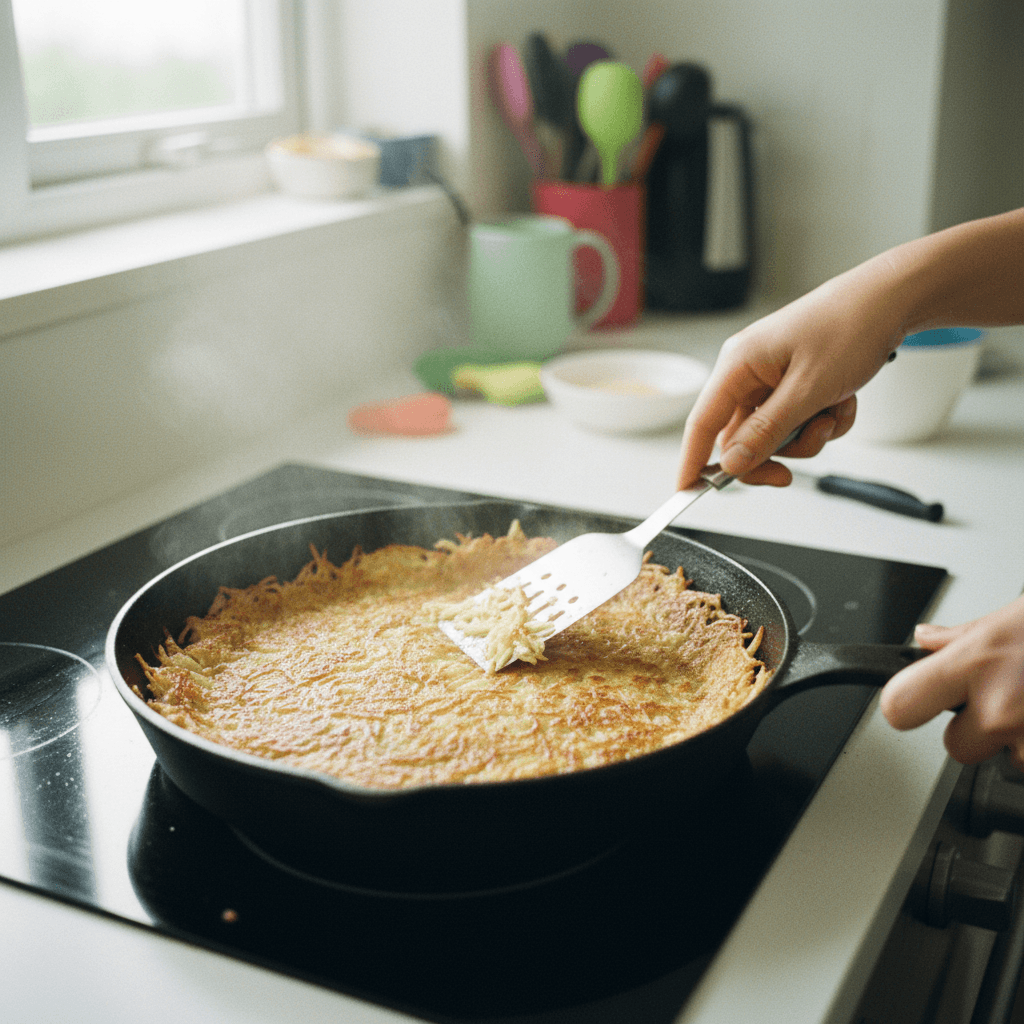
- 6
Once the first side is perfectly golden, perform a final tuck-in. Use the fish slice to get underneath the rosti, lift it, and skillfully flip it over in the pan to cook the second side. Repeat the process of tucking in the edges and rotating the pan until the second side is also crispy and golden. The rosti is ready when it rolls freely around in the pan, indicating a crispy bottom.
⏱️ 15 min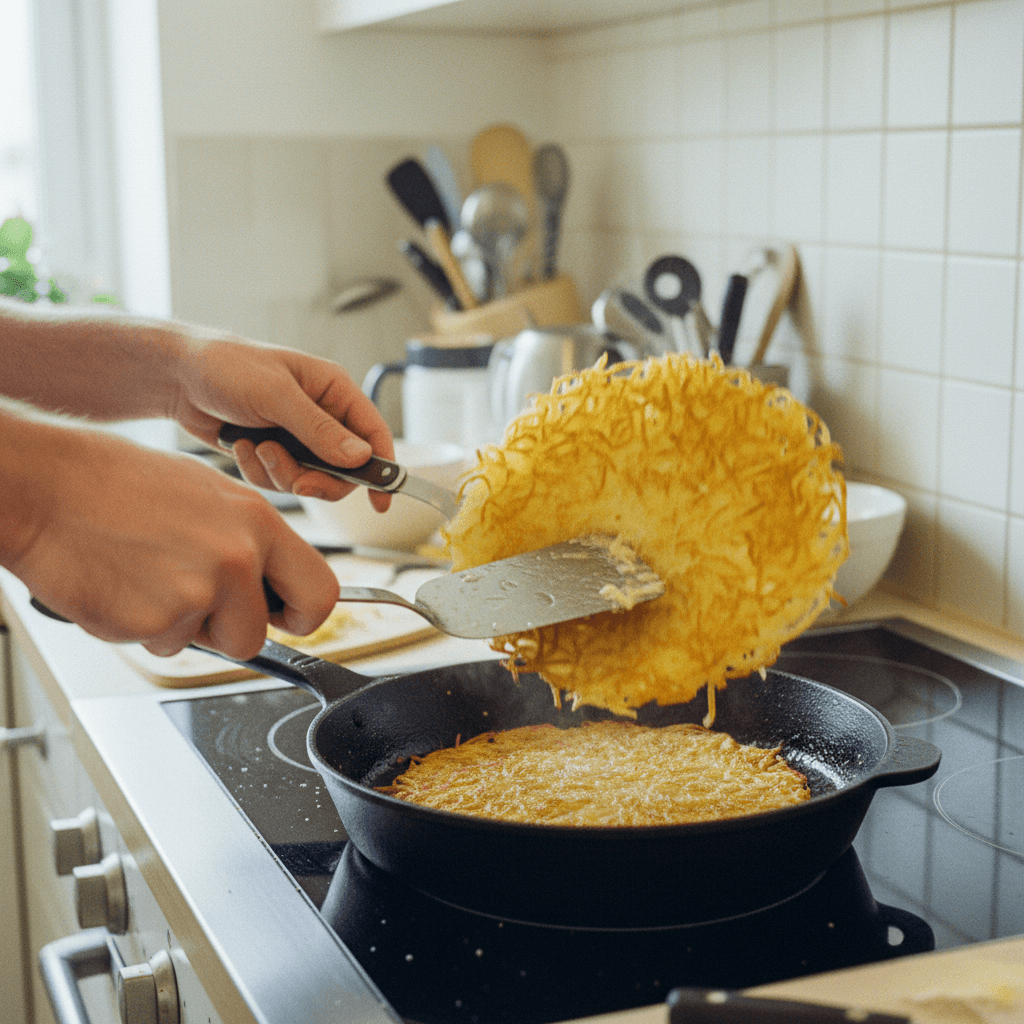
- 7
Lift the cooked potato rosti from the pan and transfer it onto a cooling rack to dry before serving.
⏱️ 2 min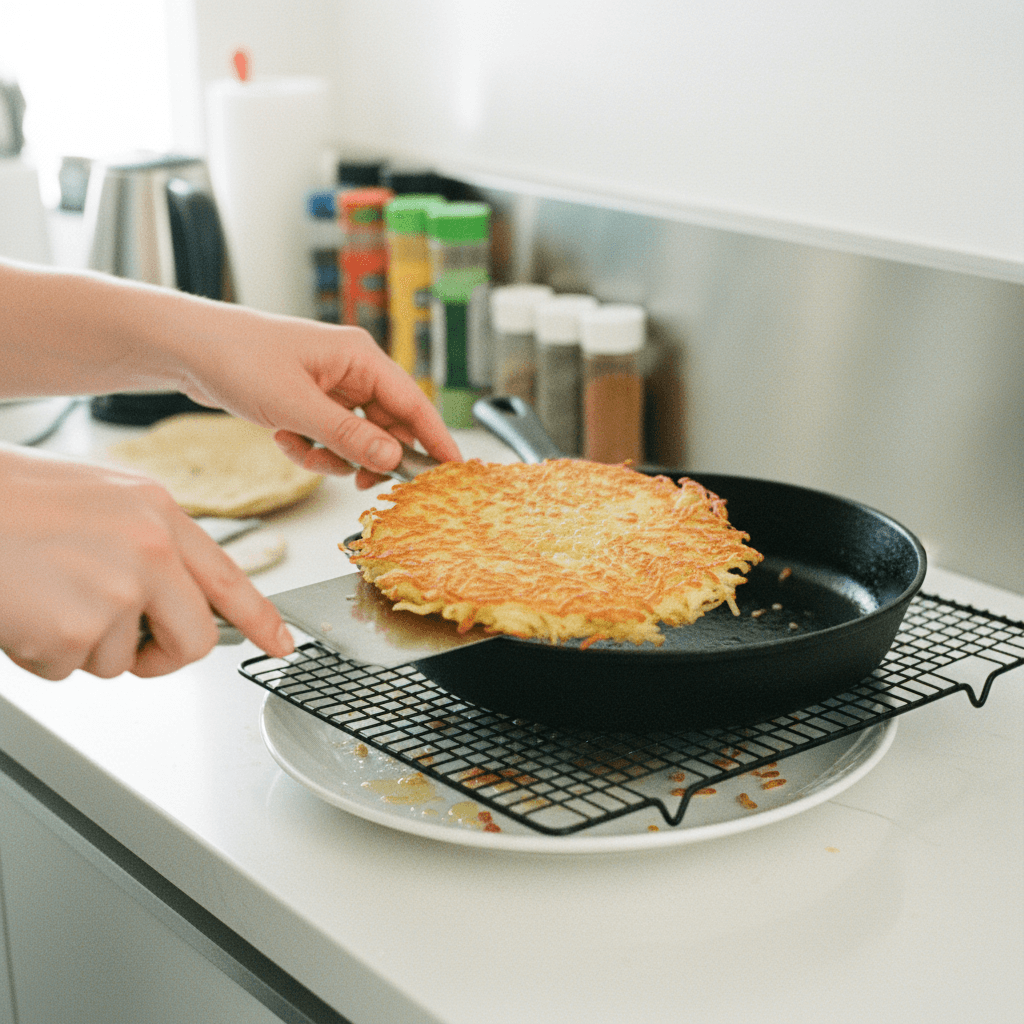
Kitchen Tools
Nutrition Facts (per serving)
Potato Rosti
Ingredients
- 4 Agria potatoes, large
- 1 white onion, large, thinly sliced
- 3 fluid ounces clarified butter, approximately 1 1/2 ladles
- 1 tablespoon fine salt, or more, to taste
Instructions
- 1
Grate the Agria potatoes using a coarse grater directly into a bowl. Ensure no water touches the grated potatoes. Gather the grated potatoes onto a clean kitchen cloth, wrap them into a ball, and twist firmly to squeeze out all excess water. This step is crucial for crispiness. Return the squeezed potatoes to a clean bowl.
⏱️ 5 min - 2
Season both the grated potatoes and the finely sliced white onions generously with fine salt. Potatoes generally require more salt than expected.
⏱️ 2 min - 3
Place a cast iron pan on a low heat induction hob. Add approximately 1 1/2 ladles (about 3 fluid ounces) of clarified butter to the pan.
⏱️ 1 min - 4
Carefully place a portion of the seasoned grated potato into the pan, forming a solid base and pushing it into the corners, leaving a slight well in the center. Add a pile of the seasoned, finely sliced white onion into the well and spread it out into a thin layer. Place another layer of seasoned grated potato on top of the onions.
⏱️ 3 min - 5
Allow the potato to set for a couple of minutes, letting steam from underneath slightly cook it. Once it begins to soften, use a fish slice (spatula) to gently tuck in all the potato trimmings around the edges, pushing them inwards to create a perfect circular shape. Continue this process, observing the caramelization developing on the sides. When a golden crust starts to appear, continue to push down and tuck in the edges. Hold the pan by the handle and rotate it to ensure even crisping and maintain the circular shape. Cook and shape the first side for about 12 to 15 minutes until a beautiful golden crust is formed.
⏱️ 15 min - 6
Once the first side is perfectly golden, perform a final tuck-in. Use the fish slice to get underneath the rosti, lift it, and skillfully flip it over in the pan to cook the second side. Repeat the process of tucking in the edges and rotating the pan until the second side is also crispy and golden. The rosti is ready when it rolls freely around in the pan, indicating a crispy bottom.
⏱️ 15 min - 7
Lift the cooked potato rosti from the pan and transfer it onto a cooling rack to dry before serving.
⏱️ 2 min