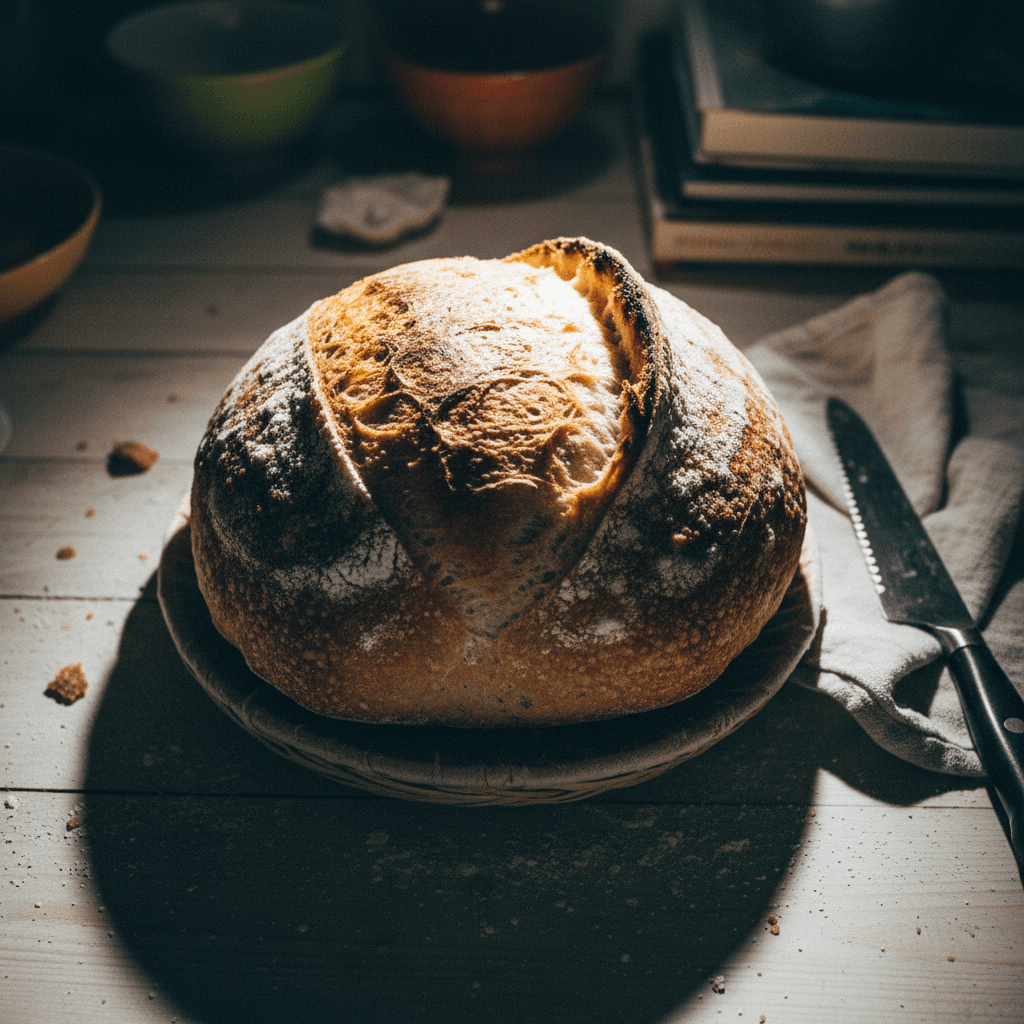
Artisan Sourdough Bread
Artisan Sourdough Bread
Ingredients
- 1/2 cup active sourdough starter
- 1 1/2 cups filtered water, warm or room temperature
- 1 3/4 teaspoons salt
- 4 cups bread flour
- rice flour, as needed, for dusting
Instructions
- 1
In a large bowl, add the active sourdough starter, filtered water, and salt. Using a bread whisk, mix these ingredients until frothy and well combined.
⏱️ 5 min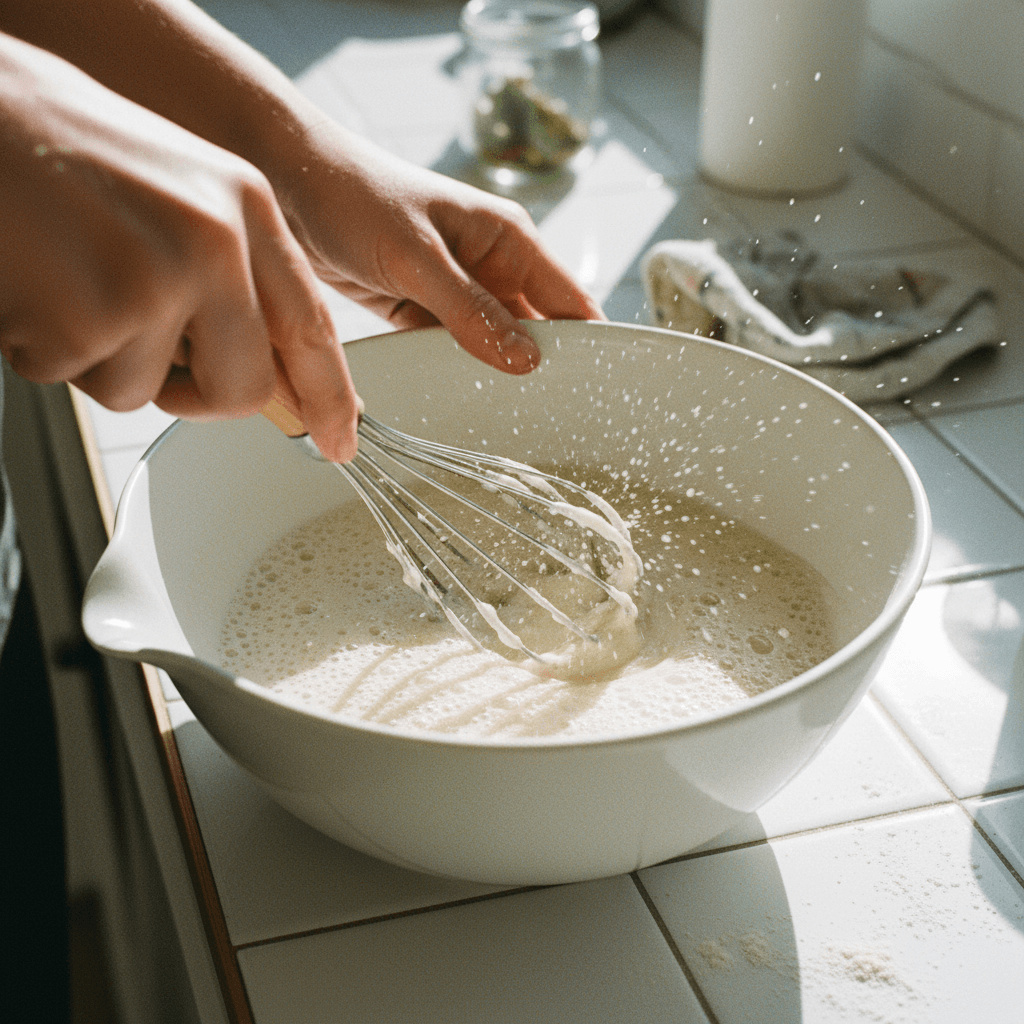
- 2
Add the bread flour to the wet mixture. Continue mixing with the bread whisk until all the flour is incorporated and the mixture has a 'shaggy' (stringy) texture. Ensure no dry flour remains.
⏱️ 5 min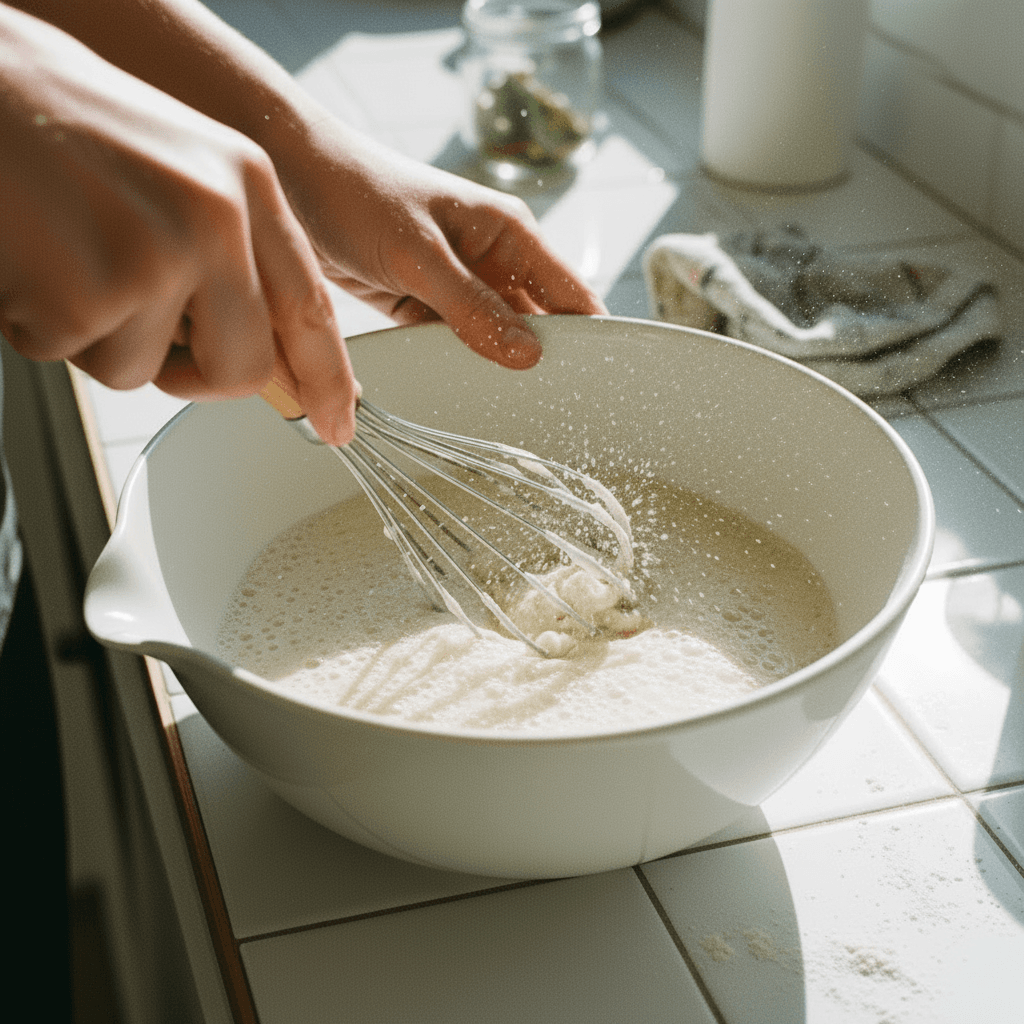
- 3
Cover the bowl with a plastic shower cap or plastic wrap and let the dough rest on the counter for 1 hour.
⏱️ 60 min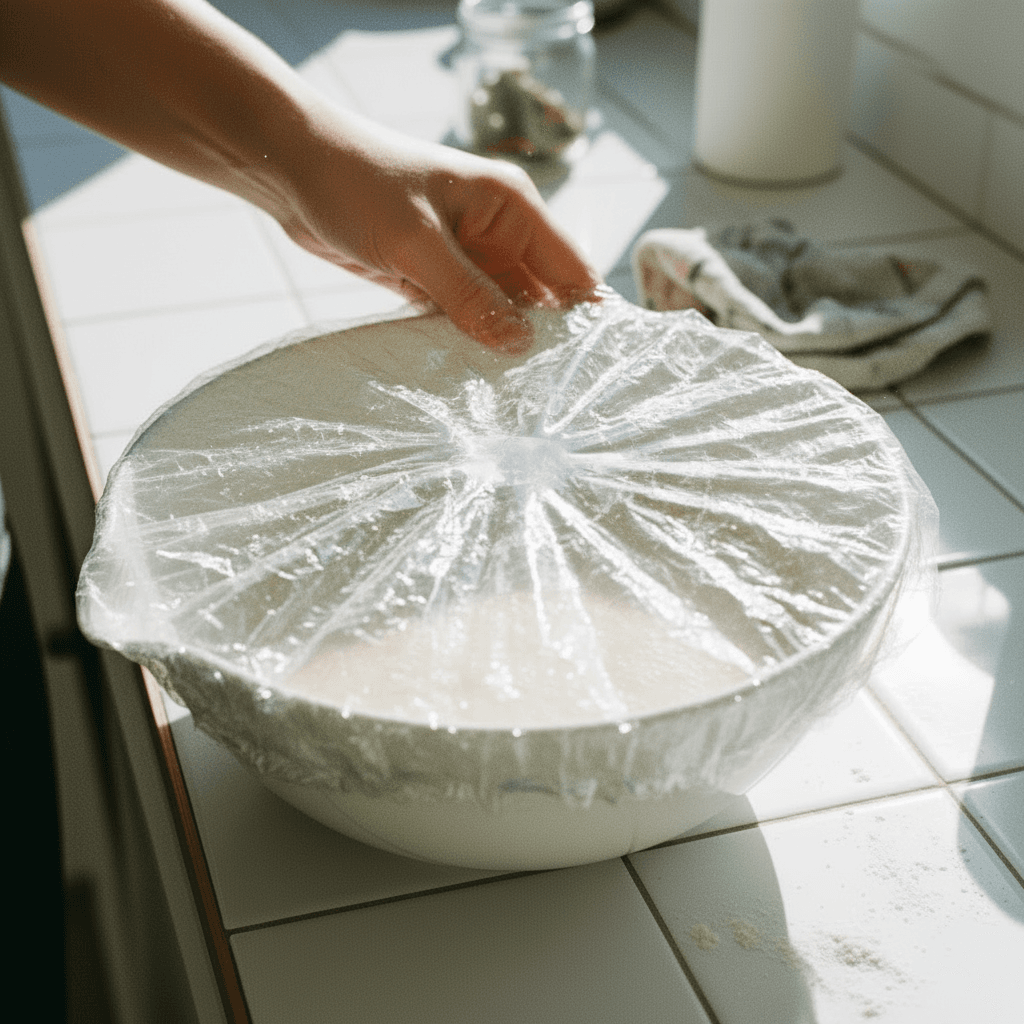
- 4
After the initial rest, perform 'stretch and folds' every 30 minutes for a total of 2 hours (four sets of stretch and folds). To do this, gently grab a portion of the dough, stretch it upwards, and fold it over itself. Rotate the bowl and repeat until you've stretched and folded the entire dough mass. This builds strength and gluten development.
⏱️ 120 min
- 5
After the stretch and folds, cover the dough again and let it sit overnight on the counter for 8 to 9 hours to proof. The dough should double in size, be bubbly, jiggly, and peel away from the sides of the bowl without sticking.
⏱️ 540 min
- 6
Lightly dust a clean counter surface with rice flour. Carefully scrape the proofed dough out of the bowl onto the floured surface. Dust the top of the dough with more rice flour.
⏱️ 5 min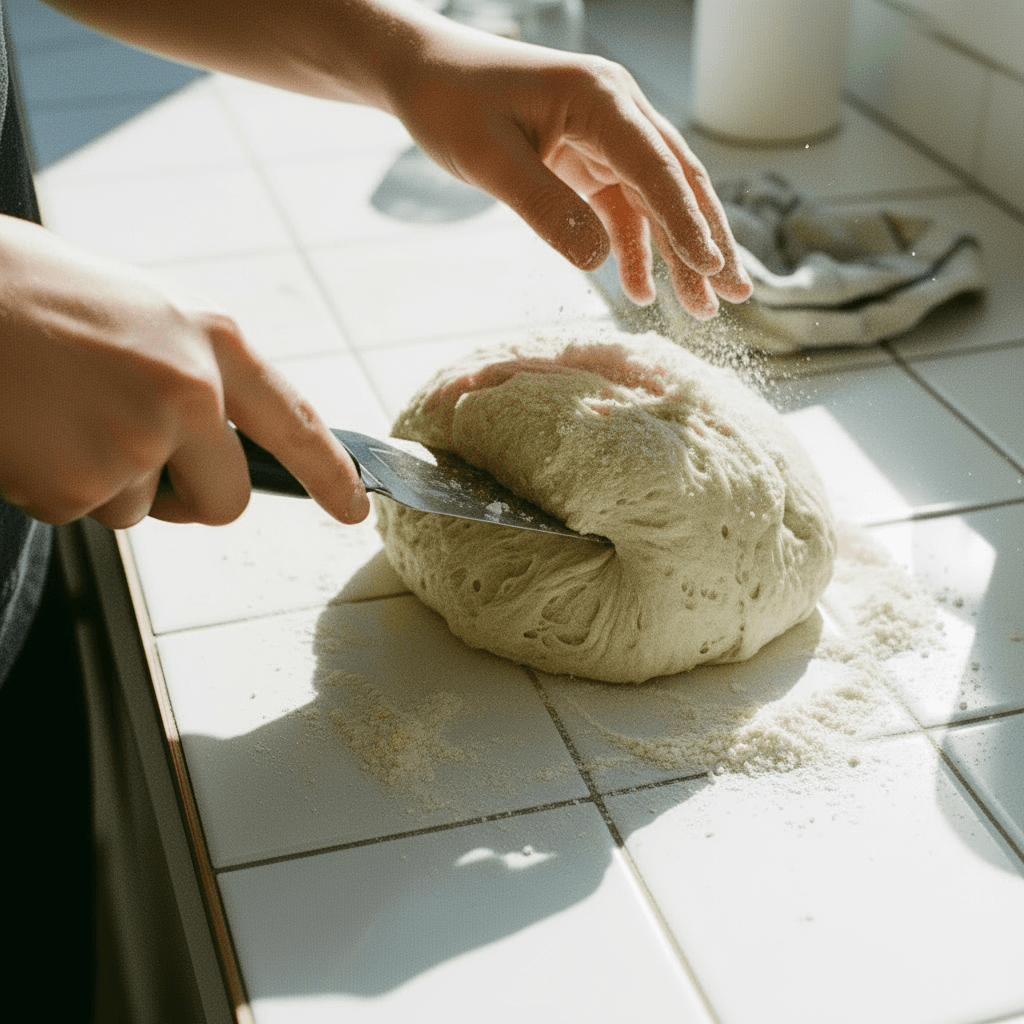
- 7
Gently pat and stretch the dough into a rectangular shape. Perform a 'trifold' by rolling the dough up from one end, pinching the sides as you go, to create tension. Then, cup your hands around the dough and use a 'hook formation' to further shape it into a tight ball, building surface tension.
⏱️ 10 min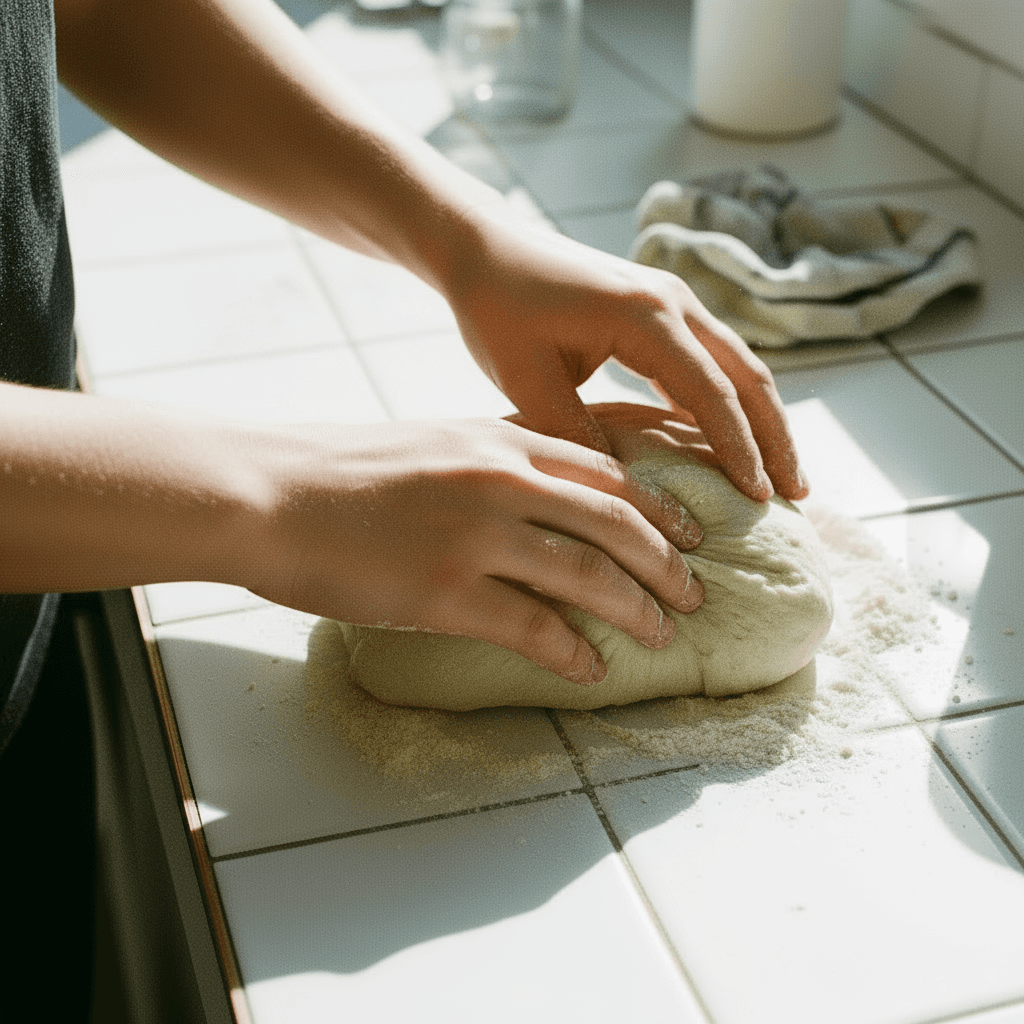
- 8
Place the shaped dough, with the smooth side facing down, into a seasoned banneton. Cover the banneton with plastic wrap and let it rest for about 5 minutes. Then, gently pull up the edges of the dough and tuck them into the center to create a very tight, well-rounded ball. This helps with the final rise and scoring.
⏱️ 10 min
- 9
Cover the banneton again and place it in the refrigerator for a cold proof until ready to bake (e.g., 12-24 hours).
⏱️ 720 min
- 10
When ready to bake, preheat your oven to 450°F with a Dutch oven inside for at least 30 minutes.
⏱️ 30 min•🌡️ 450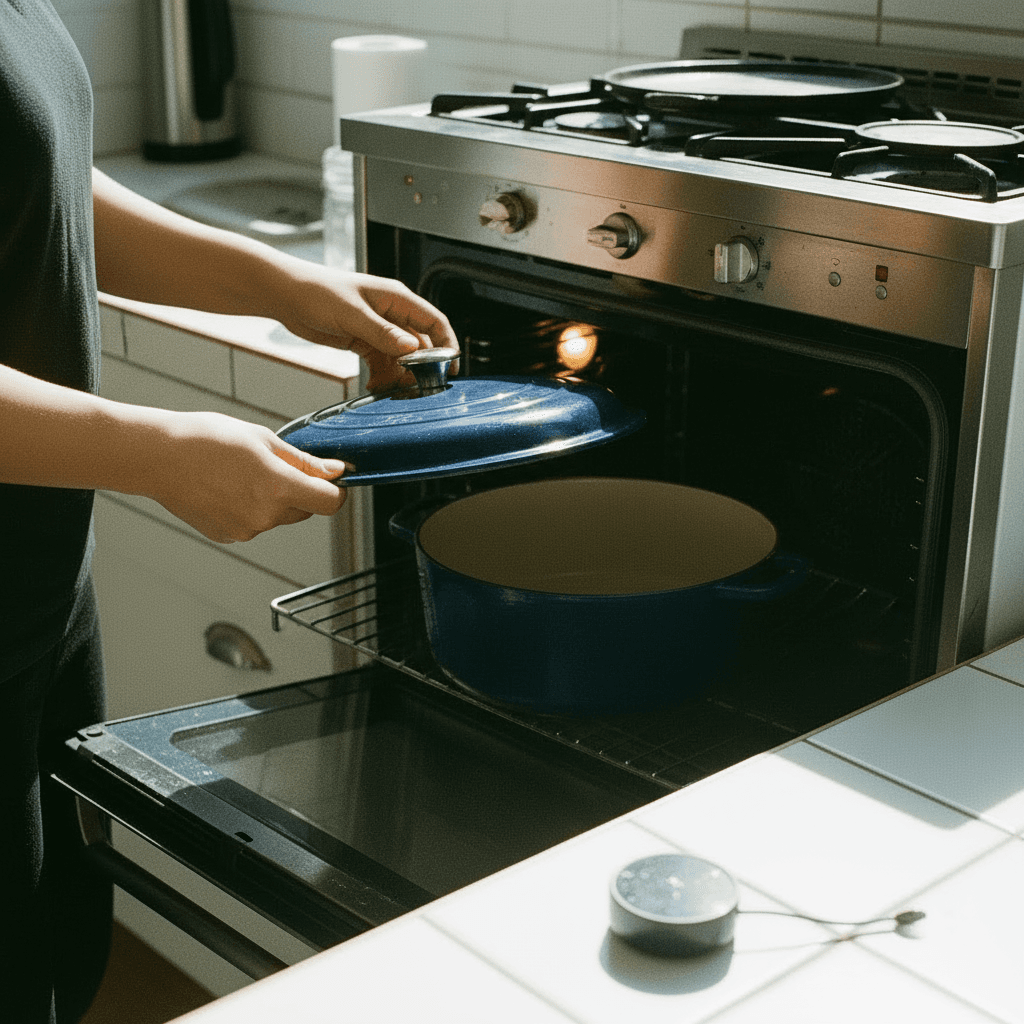
- 11
Carefully remove the hot Dutch oven from the oven. Gently invert the cold dough from the banneton into the hot Dutch oven. Score the top of the dough with a lame or sharp knife. Cover the Dutch oven and bake for 30 minutes.
⏱️ 30 min•🌡️ 450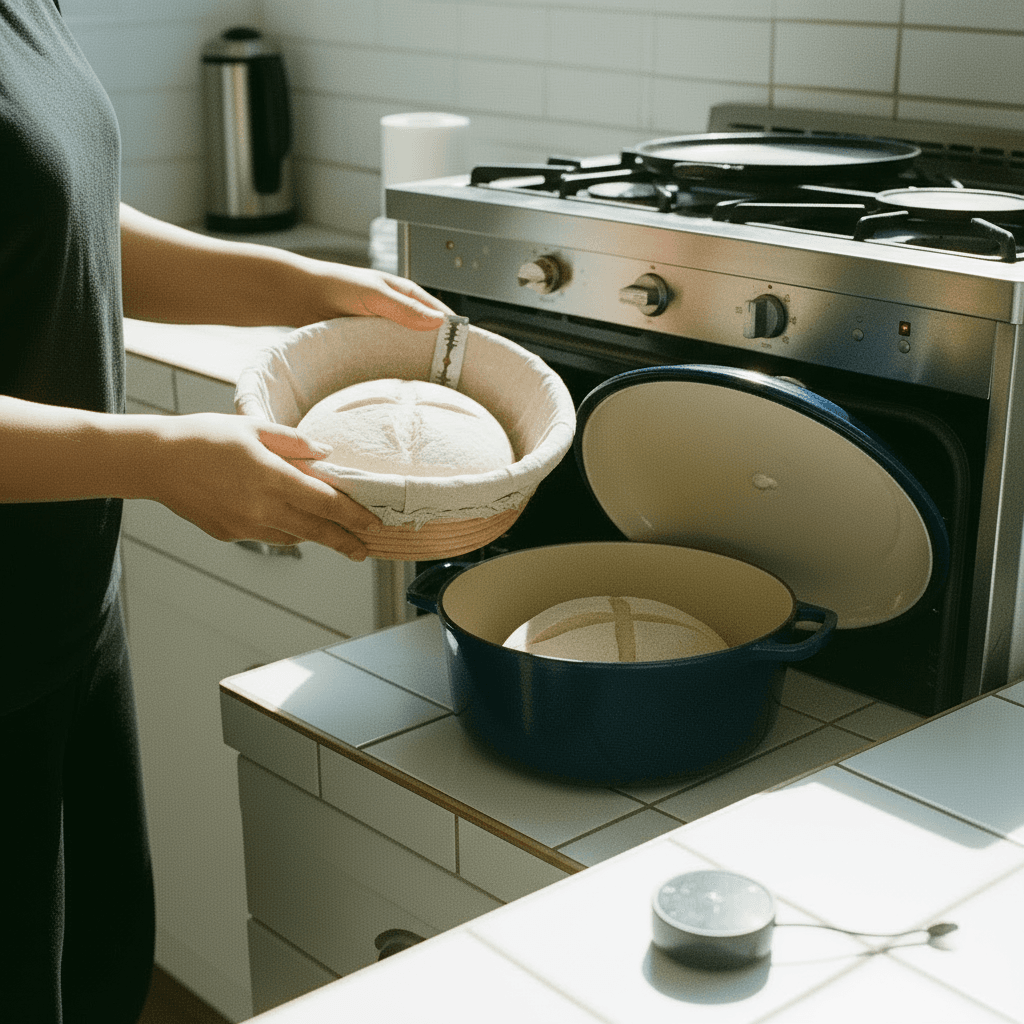
- 12
Remove the lid from the Dutch oven and continue baking for another 15 minutes, or until the crust is deeply golden brown and the internal temperature reaches 200-210°F.
⏱️ 15 min•🌡️ 450
- 13
Carefully remove the bread from the Dutch oven and transfer it to a wire rack to cool completely before slicing. This is crucial for the crumb structure to set.
⏱️ 120 min
Kitchen Tools
Nutrition Facts (per serving)
Artisan Sourdough Bread
Ingredients
- 1/2 cup active sourdough starter
- 1 1/2 cups filtered water, warm or room temperature
- 1 3/4 teaspoons salt
- 4 cups bread flour
- rice flour, as needed, for dusting
Instructions
- 1
In a large bowl, add the active sourdough starter, filtered water, and salt. Using a bread whisk, mix these ingredients until frothy and well combined.
⏱️ 5 min - 2
Add the bread flour to the wet mixture. Continue mixing with the bread whisk until all the flour is incorporated and the mixture has a 'shaggy' (stringy) texture. Ensure no dry flour remains.
⏱️ 5 min - 3
Cover the bowl with a plastic shower cap or plastic wrap and let the dough rest on the counter for 1 hour.
⏱️ 60 min - 4
After the initial rest, perform 'stretch and folds' every 30 minutes for a total of 2 hours (four sets of stretch and folds). To do this, gently grab a portion of the dough, stretch it upwards, and fold it over itself. Rotate the bowl and repeat until you've stretched and folded the entire dough mass. This builds strength and gluten development.
⏱️ 120 min - 5
After the stretch and folds, cover the dough again and let it sit overnight on the counter for 8 to 9 hours to proof. The dough should double in size, be bubbly, jiggly, and peel away from the sides of the bowl without sticking.
⏱️ 540 min - 6
Lightly dust a clean counter surface with rice flour. Carefully scrape the proofed dough out of the bowl onto the floured surface. Dust the top of the dough with more rice flour.
⏱️ 5 min - 7
Gently pat and stretch the dough into a rectangular shape. Perform a 'trifold' by rolling the dough up from one end, pinching the sides as you go, to create tension. Then, cup your hands around the dough and use a 'hook formation' to further shape it into a tight ball, building surface tension.
⏱️ 10 min - 8
Place the shaped dough, with the smooth side facing down, into a seasoned banneton. Cover the banneton with plastic wrap and let it rest for about 5 minutes. Then, gently pull up the edges of the dough and tuck them into the center to create a very tight, well-rounded ball. This helps with the final rise and scoring.
⏱️ 10 min - 9
Cover the banneton again and place it in the refrigerator for a cold proof until ready to bake (e.g., 12-24 hours).
⏱️ 720 min - 10
When ready to bake, preheat your oven to 450°F with a Dutch oven inside for at least 30 minutes.
⏱️ 30 min•🌡️ 450 - 11
Carefully remove the hot Dutch oven from the oven. Gently invert the cold dough from the banneton into the hot Dutch oven. Score the top of the dough with a lame or sharp knife. Cover the Dutch oven and bake for 30 minutes.
⏱️ 30 min•🌡️ 450 - 12
Remove the lid from the Dutch oven and continue baking for another 15 minutes, or until the crust is deeply golden brown and the internal temperature reaches 200-210°F.
⏱️ 15 min•🌡️ 450 - 13
Carefully remove the bread from the Dutch oven and transfer it to a wire rack to cool completely before slicing. This is crucial for the crumb structure to set.
⏱️ 120 min