Sourdough Bread
Sourdough Bread
Ingredients
- 100 g active sourdough starter
- 350 g water
- 12 g salt
- 450 g bread flour
Instructions
- 1
In a mixing bowl, add 100g of active sourdough starter. Pour in 350g of water. Mix thoroughly with a spatula until the starter is dissolved and well combined with the water.
⏱️ 3 min
- 2
Add 12g of salt to the mixture. Then, add 450g of bread flour to the bowl.
⏱️ 2 min
- 3
Mix all the ingredients with a spatula until a shaggy dough forms and no dry flour spots remain.
⏱️ 5 min
- 4
Cover the bowl (e.g., with a lid or plastic wrap) and let the dough rest for 30-60 minutes for autolyse.
⏱️ 60 min
- 5
After autolyse, perform the first set of stretch and folds. Gently stretch a portion of the dough from one side, pull it up, and fold it over to the center. Rotate the bowl and repeat this process three more times, completing four folds in total.
⏱️ 3 min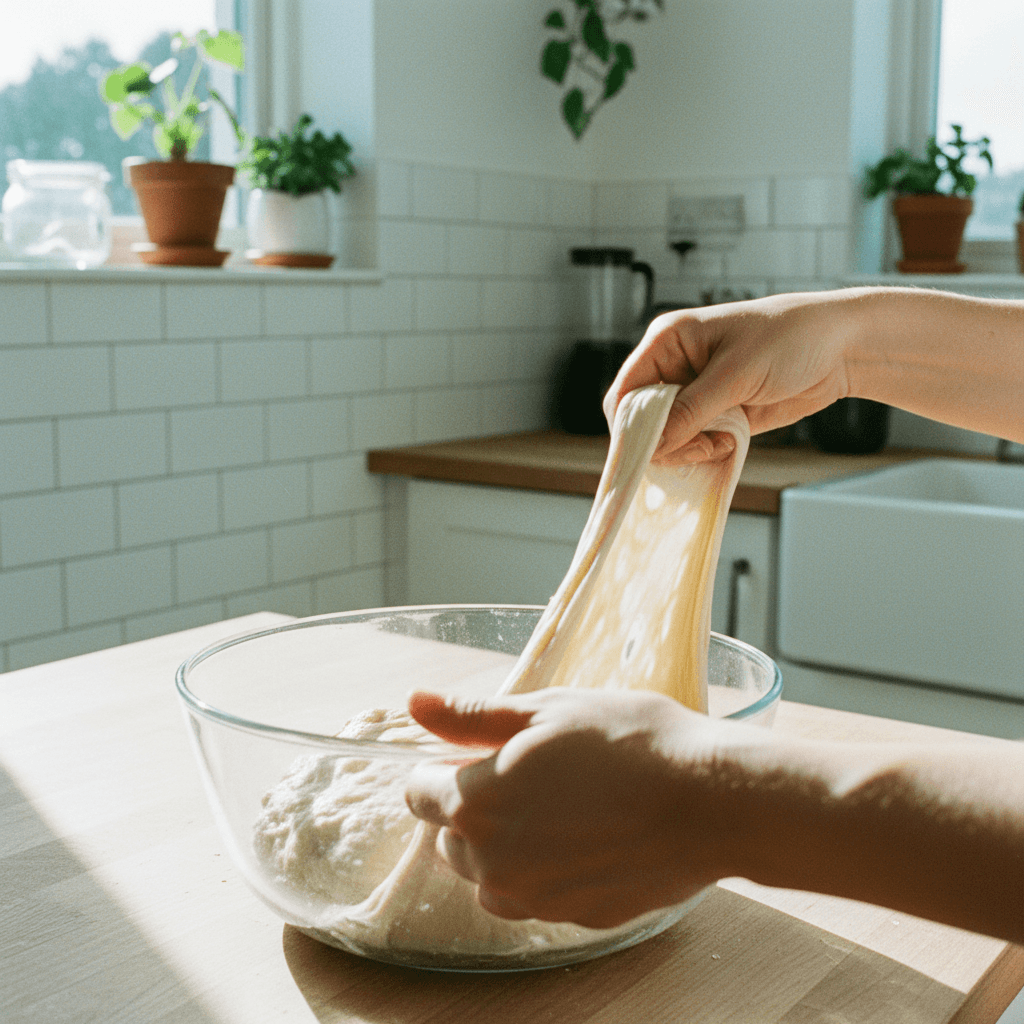
- 6
Cover the bowl and let the dough rest for 30 minutes.
⏱️ 30 min
- 7
Repeat the stretch and fold technique (four folds).
⏱️ 3 min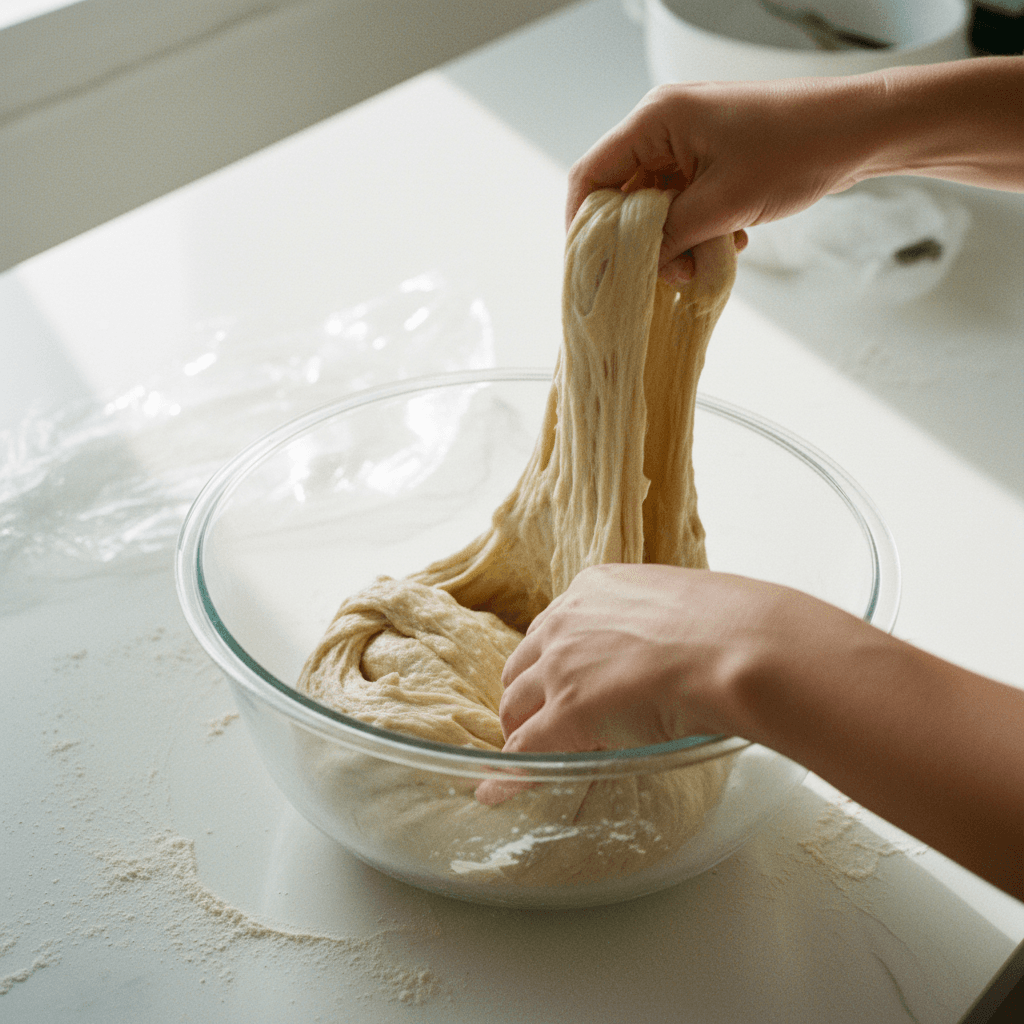
- 8
Cover the bowl and let the dough rest for another 30 minutes.
⏱️ 30 min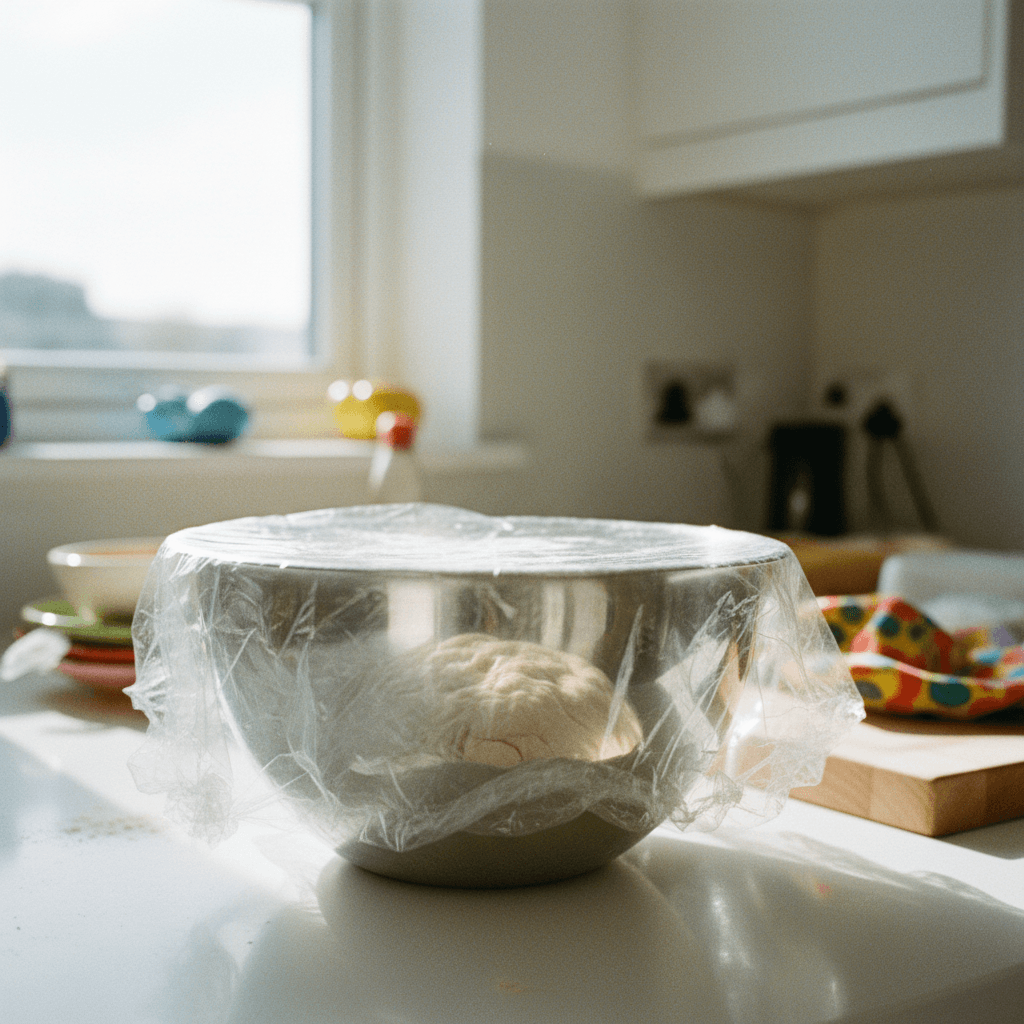
- 9
Repeat the stretch and fold technique (four folds).
⏱️ 3 min
- 10
Cover the bowl and let the dough rest for another 30 minutes.
⏱️ 30 min
- 11
Repeat the stretch and fold technique (four folds).
⏱️ 3 min
- 12
Cover the bowl and let the dough rest for another 30 minutes.
⏱️ 30 min
- 13
Allow the dough to bulk ferment until it has doubled in size. This typically takes 8-10 hours, depending on ambient temperature.
⏱️ 600 min
- 14
Gently release the risen dough from the bowl onto a lightly floured work surface using a spatula. Carefully pull and tuck the edges of the dough underneath to form a round shape, creating surface tension. This is the pre-shape.
⏱️ 5 min
- 15
Cover the pre-shaped dough with the mixing bowl and let it rest for 20 minutes.
⏱️ 20 min
- 16
Uncover the dough. Gently pat it into a rectangular shape. Fold the top third of the dough down to the center, then fold the bottom third up over the top. Roll the dough from the top down, tucking in the sides as you go, to form a tight log or batard shape.
⏱️ 5 min
- 17
Place the shaped dough seam-side up into a floured banneton. Cold proof the dough overnight for 12-16 hours in the refrigerator.
⏱️ 960 min
- 18
Preheat your oven to 230°C with a Dutch oven inside for at least 30 minutes.
⏱️ 30 min•🌡️ 230
- 19
Carefully remove the hot Dutch oven from the oven. Invert the cold-proofed dough from the banneton directly into the Dutch oven. Score the top of the dough with a lame or sharp knife. Cover the Dutch oven with its lid and place it back into the oven. Bake covered for 20 minutes.
⏱️ 20 min•🌡️ 230
- 20
Remove the lid from the Dutch oven. Continue to bake uncovered for another 25 minutes, or until the crust is golden brown and the internal temperature reaches around 98-100°C (208-210°F).
⏱️ 25 min•🌡️ 230
- 21
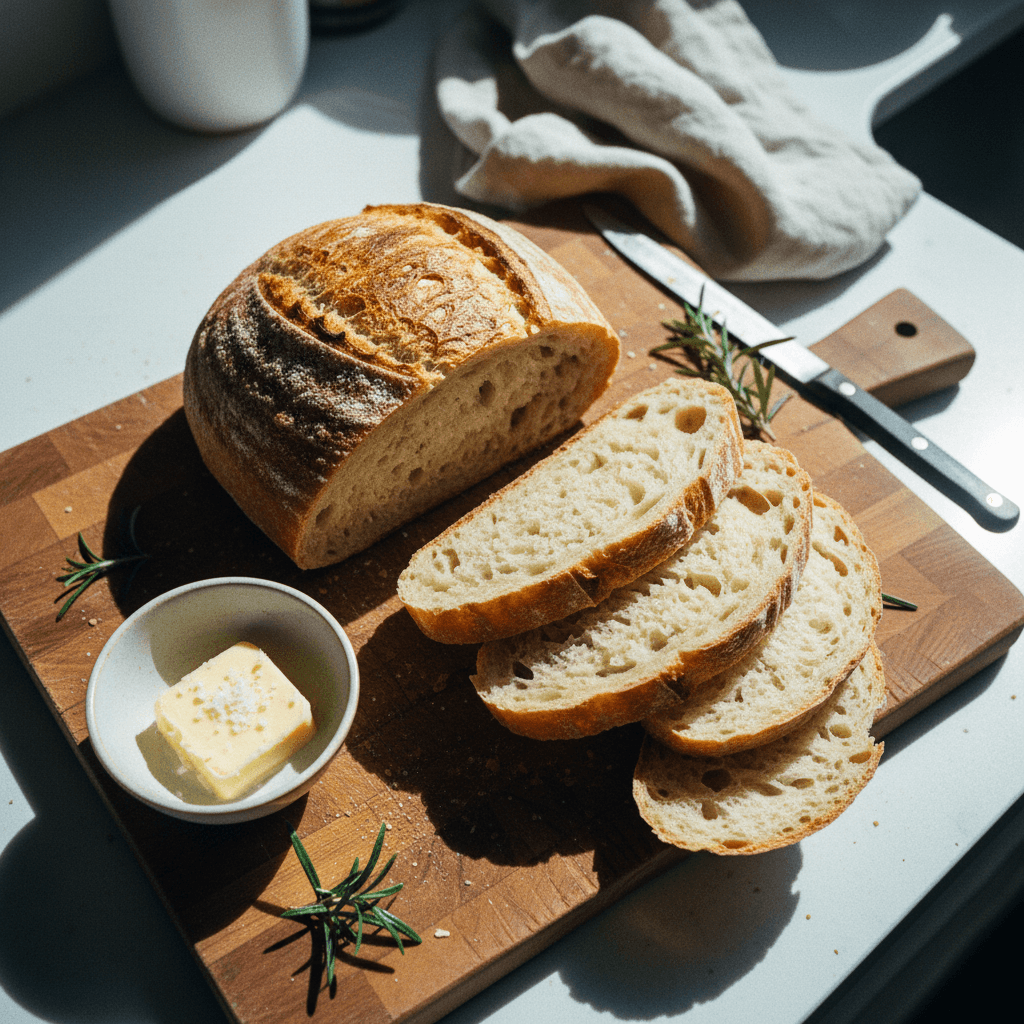
Carefully remove the baked bread from the Dutch oven and transfer it to a wire rack to cool completely before slicing and serving.
⏱️ 120 min
Kitchen Tools
Nutrition Facts (per serving)
Sourdough Bread
- 100 g active sourdough starter
- 350 g water
- 12 g salt
- 450 g bread flour
Instructions
- 1
In a mixing bowl, add 100g of active sourdough starter. Pour in 350g of water. Mix thoroughly with a spatula until the starter is dissolved and well combined with the water.
⏱️ 3 min - 2
Add 12g of salt to the mixture. Then, add 450g of bread flour to the bowl.
⏱️ 2 min - 3
Mix all the ingredients with a spatula until a shaggy dough forms and no dry flour spots remain.
⏱️ 5 min - 4
Cover the bowl (e.g., with a lid or plastic wrap) and let the dough rest for 30-60 minutes for autolyse.
⏱️ 60 min - 5
After autolyse, perform the first set of stretch and folds. Gently stretch a portion of the dough from one side, pull it up, and fold it over to the center. Rotate the bowl and repeat this process three more times, completing four folds in total.
⏱️ 3 min - 6
Cover the bowl and let the dough rest for 30 minutes.
⏱️ 30 min - 7
Repeat the stretch and fold technique (four folds).
⏱️ 3 min - 8
Cover the bowl and let the dough rest for another 30 minutes.
⏱️ 30 min - 9
Repeat the stretch and fold technique (four folds).
⏱️ 3 min - 10
Cover the bowl and let the dough rest for another 30 minutes.
⏱️ 30 min - 11
Repeat the stretch and fold technique (four folds).
⏱️ 3 min - 12
Cover the bowl and let the dough rest for another 30 minutes.
⏱️ 30 min - 13
Allow the dough to bulk ferment until it has doubled in size. This typically takes 8-10 hours, depending on ambient temperature.
⏱️ 600 min - 14
Gently release the risen dough from the bowl onto a lightly floured work surface using a spatula. Carefully pull and tuck the edges of the dough underneath to form a round shape, creating surface tension. This is the pre-shape.
⏱️ 5 min - 15
Cover the pre-shaped dough with the mixing bowl and let it rest for 20 minutes.
⏱️ 20 min - 16
Uncover the dough. Gently pat it into a rectangular shape. Fold the top third of the dough down to the center, then fold the bottom third up over the top. Roll the dough from the top down, tucking in the sides as you go, to form a tight log or batard shape.
⏱️ 5 min - 17
Place the shaped dough seam-side up into a floured banneton. Cold proof the dough overnight for 12-16 hours in the refrigerator.
⏱️ 960 min - 18
Preheat your oven to 230°C with a Dutch oven inside for at least 30 minutes.
⏱️ 30 min•🌡️ 230 - 19
Carefully remove the hot Dutch oven from the oven. Invert the cold-proofed dough from the banneton directly into the Dutch oven. Score the top of the dough with a lame or sharp knife. Cover the Dutch oven with its lid and place it back into the oven. Bake covered for 20 minutes.
⏱️ 20 min•🌡️ 230 - 20
Remove the lid from the Dutch oven. Continue to bake uncovered for another 25 minutes, or until the crust is golden brown and the internal temperature reaches around 98-100°C (208-210°F).
⏱️ 25 min•🌡️ 230 - 21
Carefully remove the baked bread from the Dutch oven and transfer it to a wire rack to cool completely before slicing and serving.
⏱️ 120 min