Spaghetti all'Assassina
Spaghetti all'Assassina
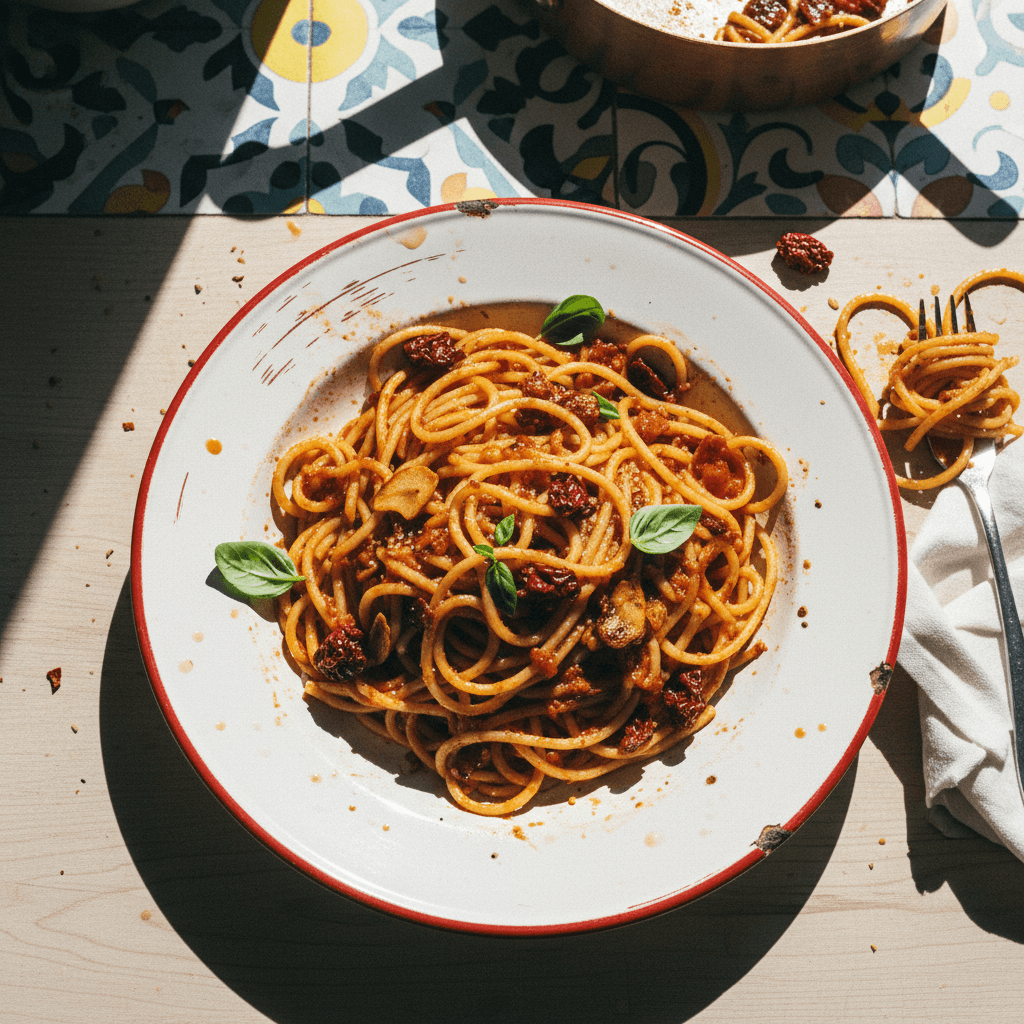
Ingredients
For the Tomato Broth
- 1 tablespoon tomato paste
- 4 cups water
- 1/4 teaspoon salt
For the Spaghetti
- 1 head garlic, approximately 3-4 cloves, smashed and sliced
- 1/4 cup olive oil, approximately, to cover the bottom of the pan
- 5-6 Calabrian chili peppers, small dried chilis
- 4-5 tablespoons tomato passata
- 1/4 teaspoon salt
- 1 bundle spaghetti
Instructions
- 1
Prepare the tomato paste broth: In a small pot, combine 1 tablespoon of tomato paste with 4 cups of water. Add 1/4 teaspoon of salt and stir until the tomato paste is fully dissolved. Place the pot on a burner over medium heat to warm, but do not bring to a rolling boil.
⏱️ 5 min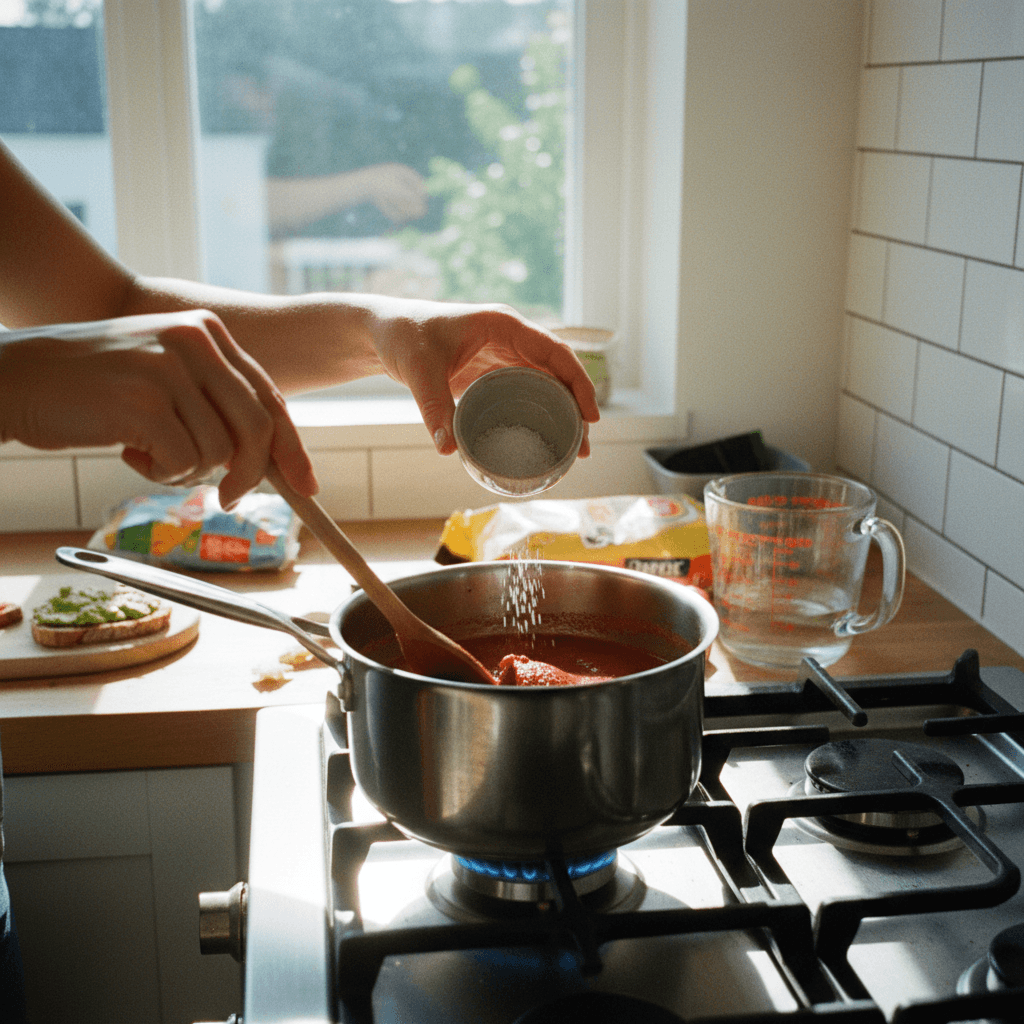
- 2
Prepare the garlic: Take a head of garlic, smash it with the palm of your hand to loosen the cloves. Peel and slice approximately 3-4 cloves.
⏱️ 3 min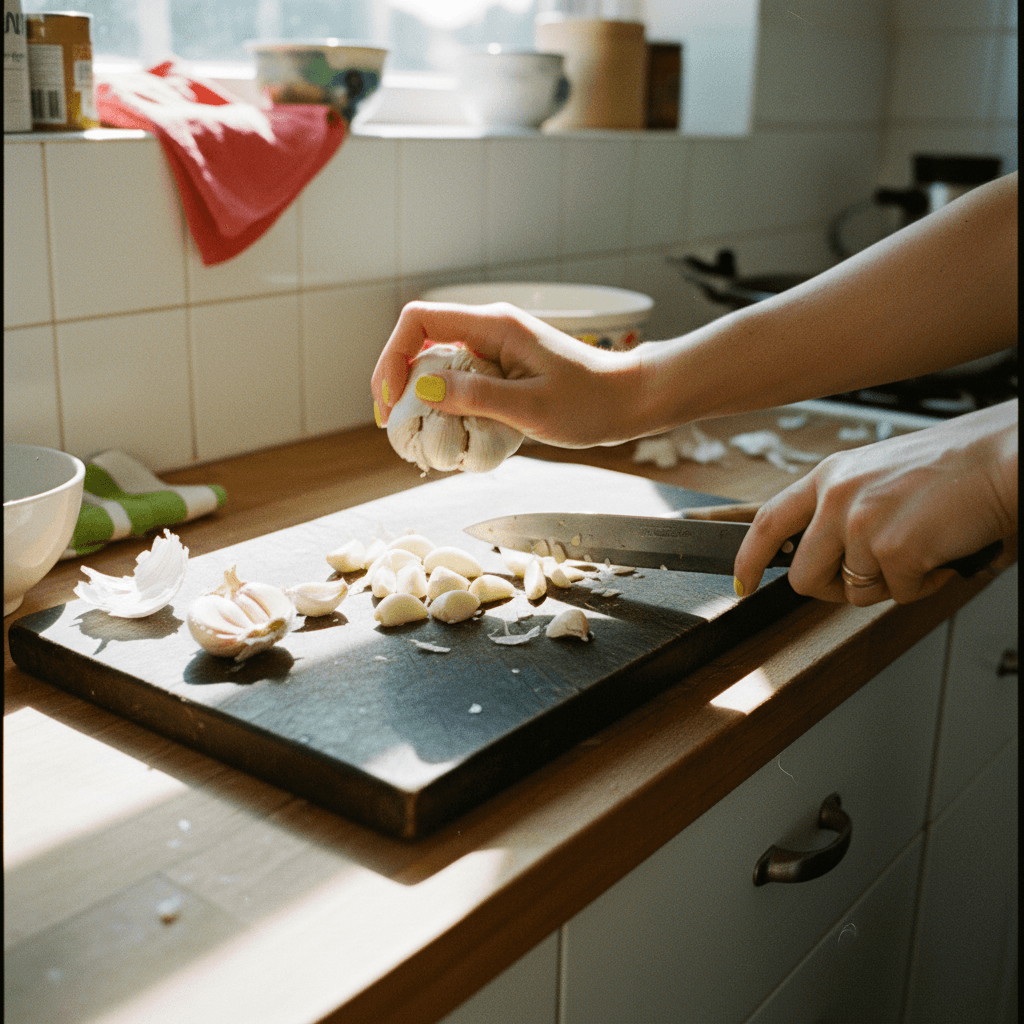
- 3
Heat the pan: Pour a generous amount of olive oil (approximately 1/4 cup) into a black cast iron pan, ensuring the bottom is well covered. Place the pan over medium-high heat.
⏱️ 2 min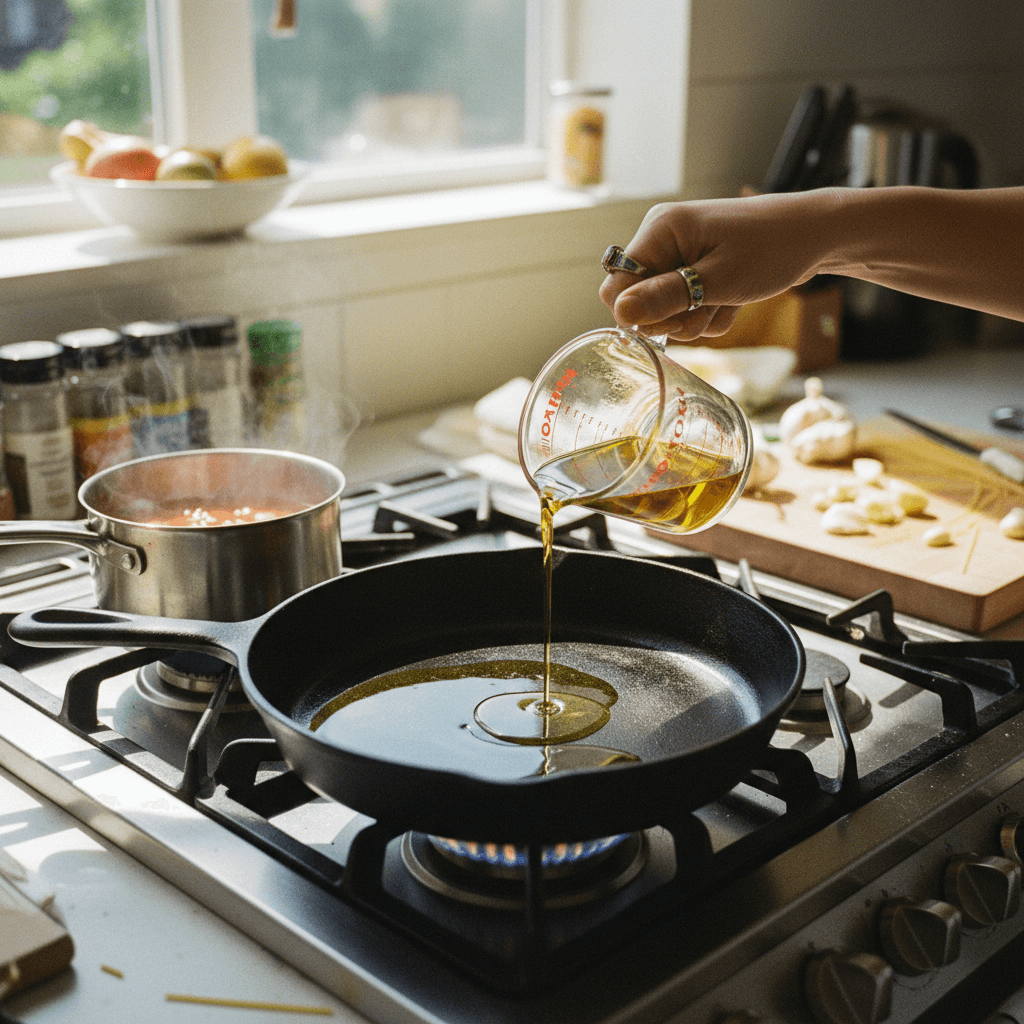
- 4
Sauté aromatics: Once the olive oil is hot, add the sliced garlic to the pan. Immediately follow with 5-6 small dried Calabrian chili peppers. Sauté for 1-2 minutes until fragrant, being careful not to burn the garlic.
⏱️ 2 min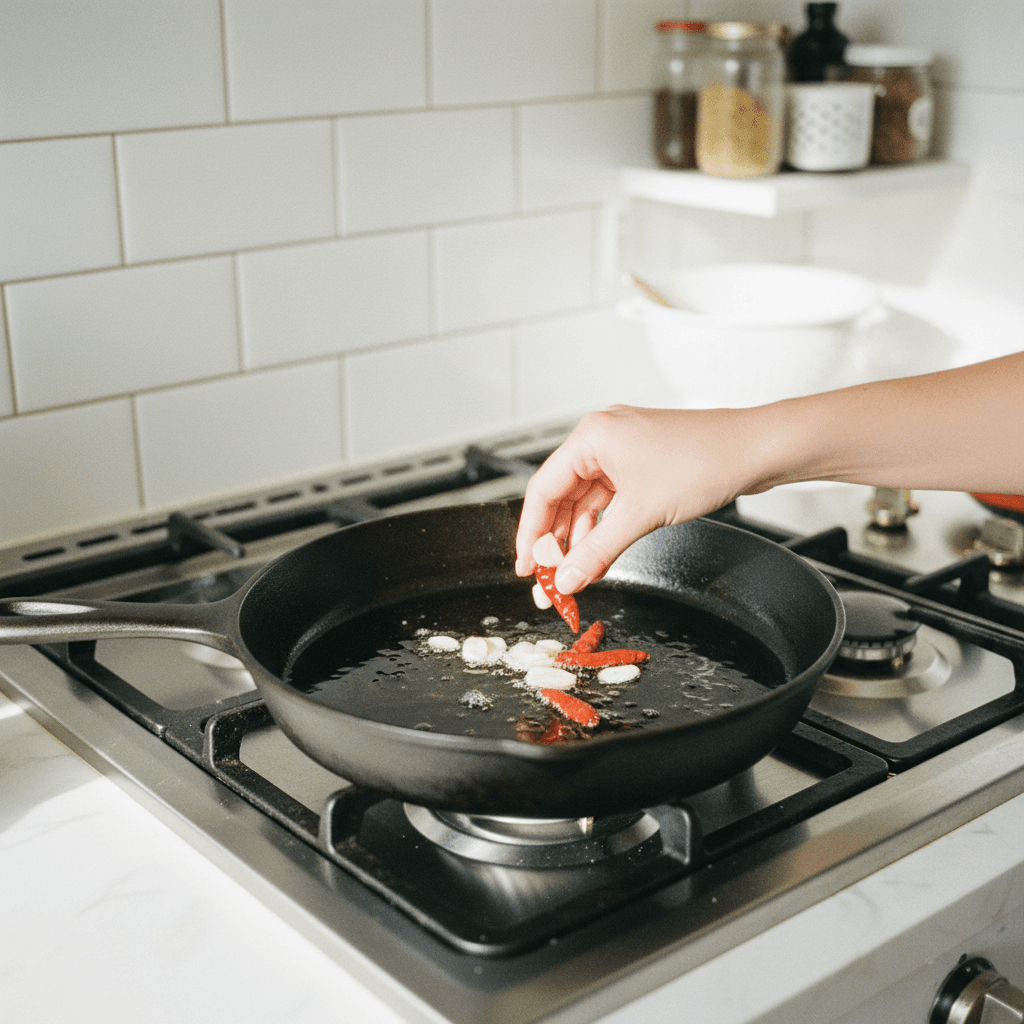
- 5
Add tomato passata: Stir in 4-5 tablespoons of tomato passata to the pan with the garlic and chili peppers. Cook for another 1-2 minutes, allowing the flavors to meld.
⏱️ 2 min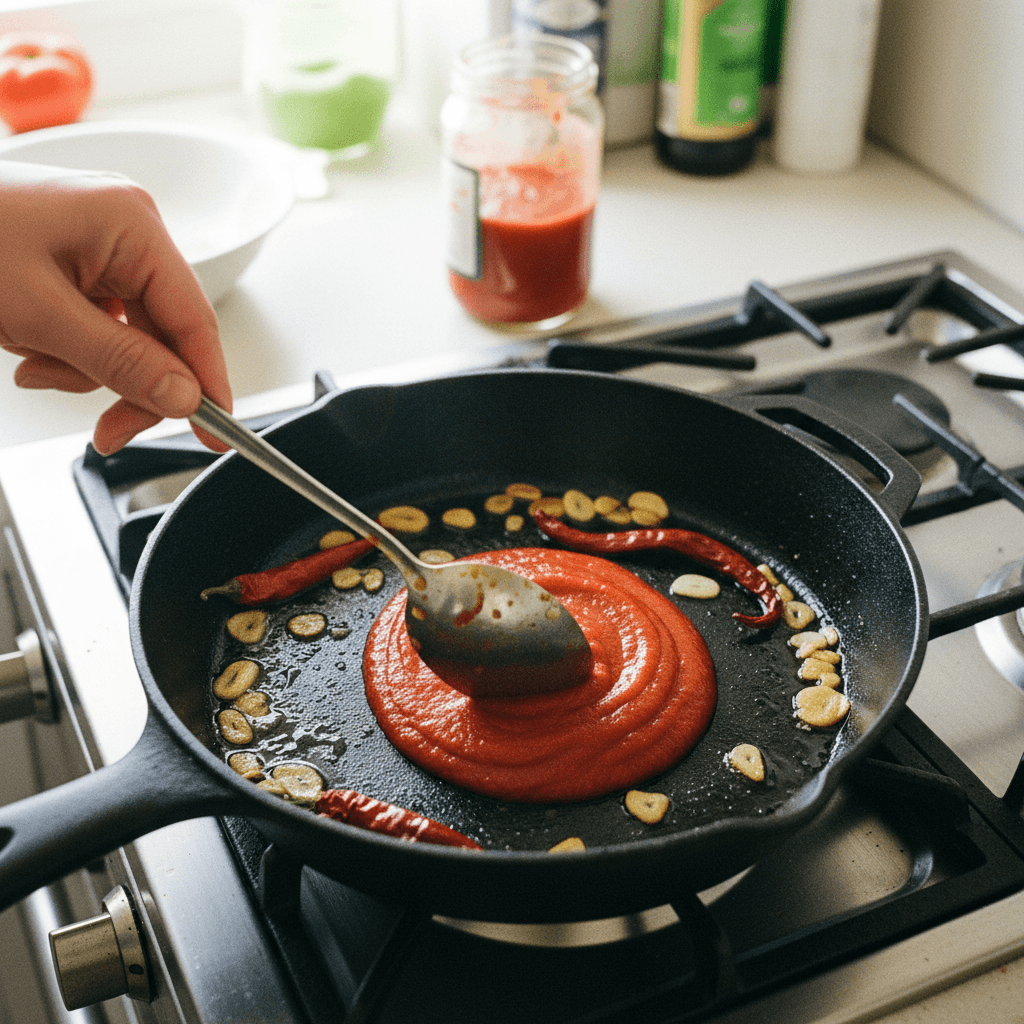
- 6
Season the sauce: Add 1/4 teaspoon of salt to the developing sauce in the pan and stir to combine.
⏱️ 1 min
- 7
Add spaghetti: Carefully place the bundle of uncooked spaghetti directly into the cast iron pan, laying it flat in the sauce. Try to spread it as evenly as possible.
⏱️ 1 min
- 8
Initiate cooking and crisping: Use a wooden spoon to gently press the spaghetti down, ensuring it makes contact with the bottom of the pan. Allow the spaghetti to sit undisturbed for several minutes to begin crisping and absorbing the sauce. Do not stir at this stage.
⏱️ 5 min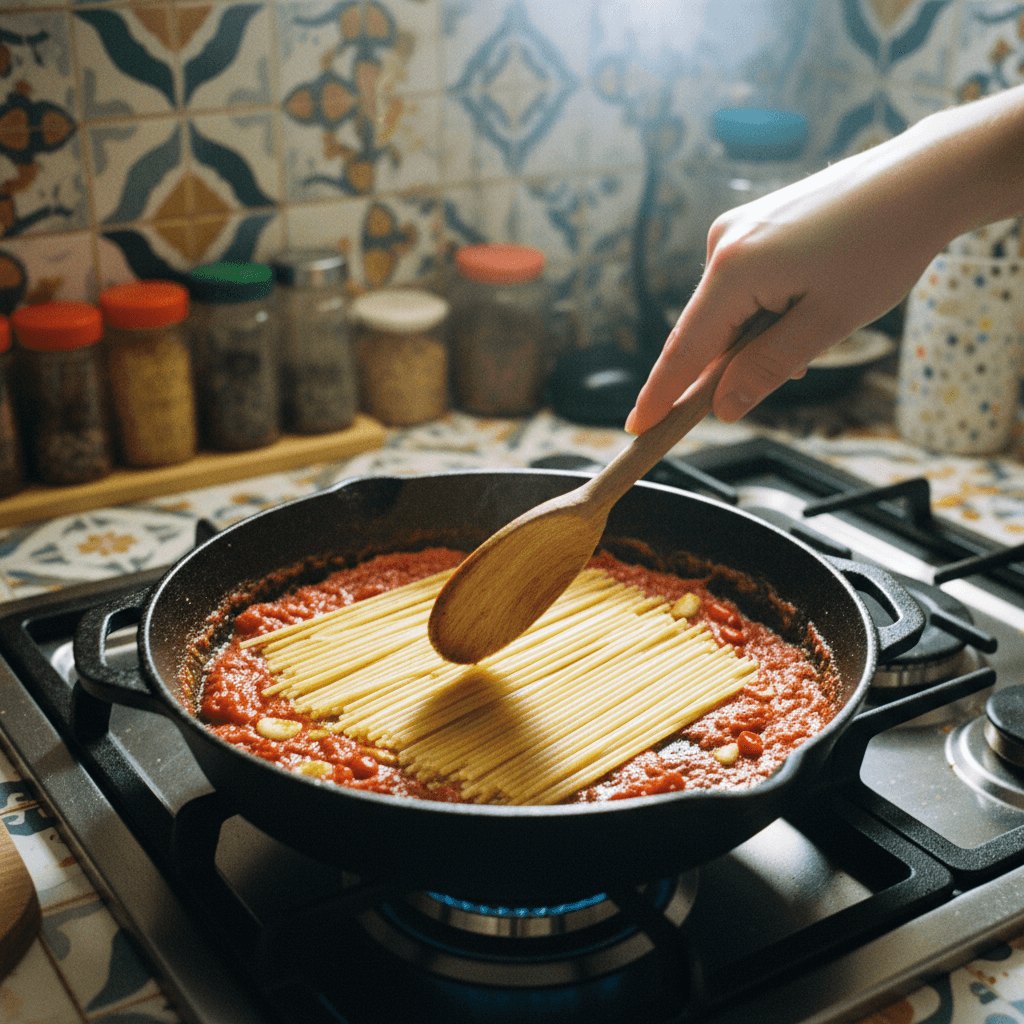
- 9
Cook with broth: As the spaghetti starts to soften and crisp at the bottom, begin adding the warm tomato paste broth, a ladleful at a time, using a wooden spoon to distribute it around the pan. Continue to cook, adding broth as needed, allowing the spaghetti to absorb the liquid and cook through.
⏱️ 5 min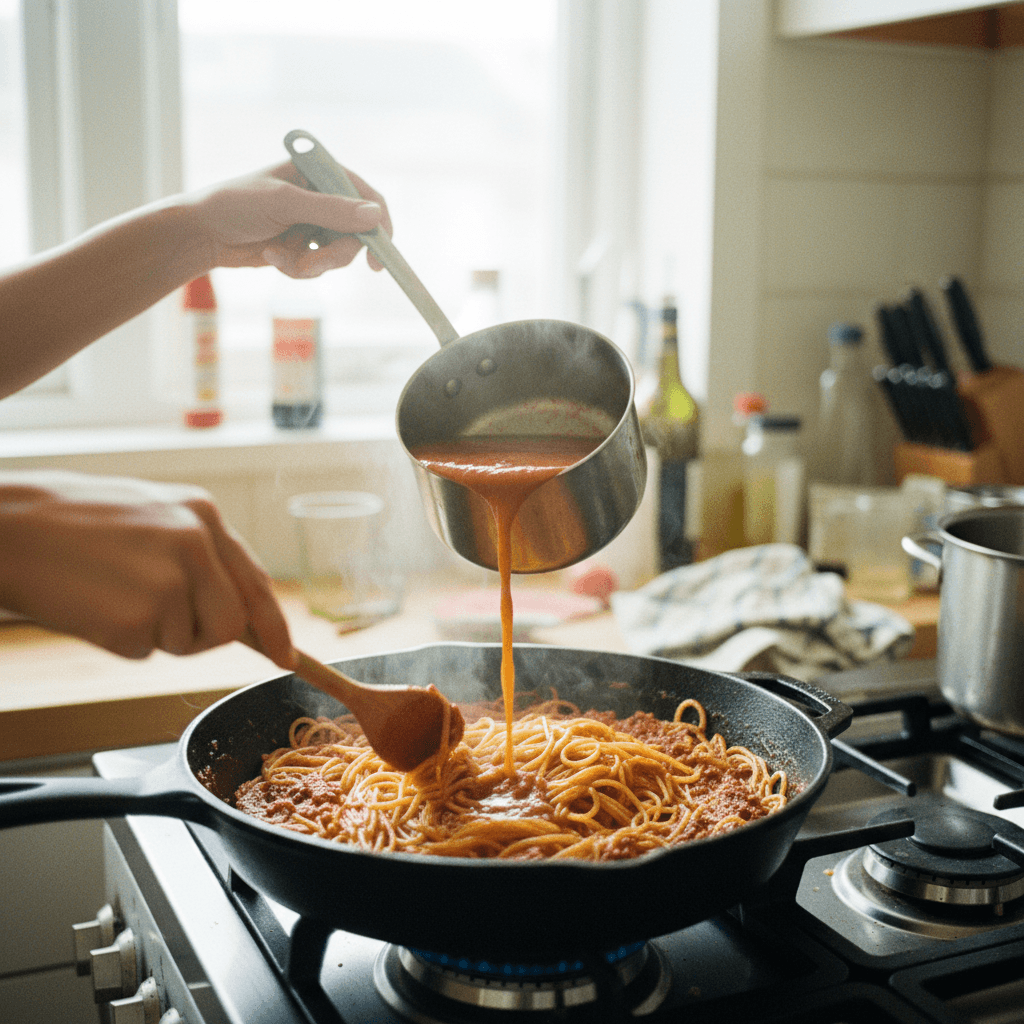
- 10
Flip and crisp further: Once the spaghetti has softened and developed a crispy, charred layer on the bottom, use a wooden spoon and tongs to carefully flip and mix the spaghetti. The goal is to create more crispy, burnt sections. Continue to cook, stirring occasionally to prevent sticking and promote even crisping.
⏱️ 3 min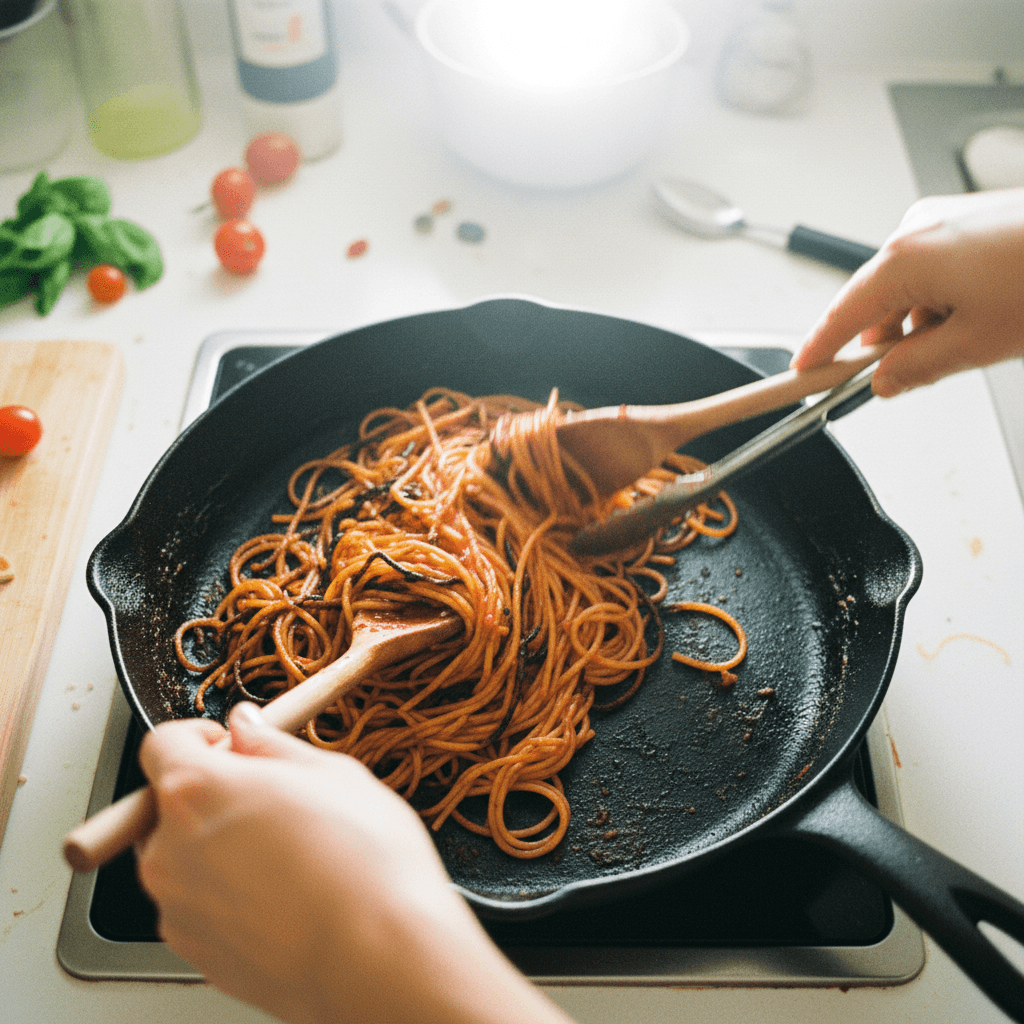
- 11
Add more broth: If the spaghetti appears dry or is sticking excessively, add another splash of the tomato paste broth. Continue cooking until the spaghetti is al dente and has achieved the desired burnt, crispy texture in various places.
⏱️ 3 min
- 12
Serve: Once the Spaghetti all'Assassina is fully cooked with a mix of tender and crispy strands, use tongs and a ladle to serve it onto white plates. Garnish as desired.
⏱️ 1 min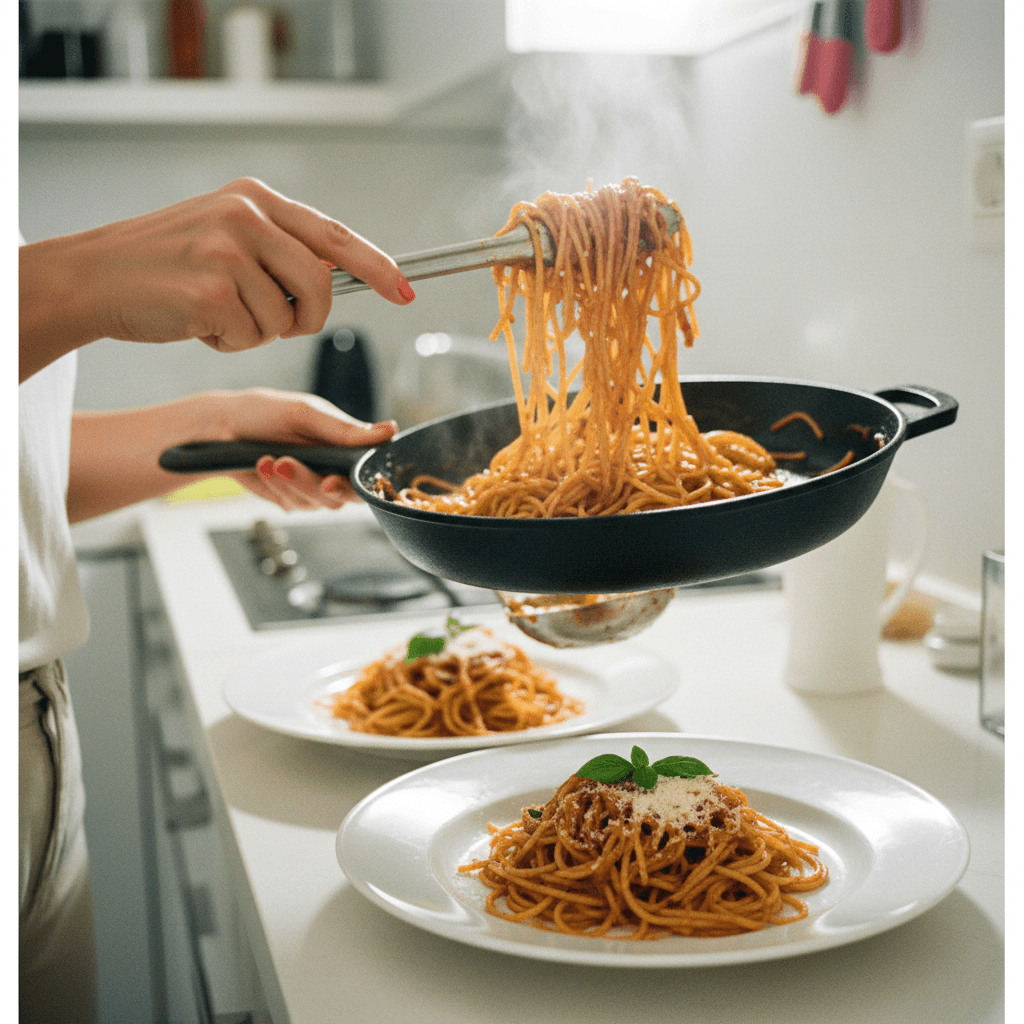
Kitchen Tools
Nutrition Facts (per serving)
Spaghetti all'Assassina
For the Tomato Broth
- 1 tablespoon tomato paste
- 4 cups water
- 1/4 teaspoon salt
For the Spaghetti
- 1 head garlic, approximately 3-4 cloves, smashed and sliced
- 1/4 cup olive oil, approximately, to cover the bottom of the pan
- 5-6 Calabrian chili peppers, small dried chilis
- 4-5 tablespoons tomato passata
- 1/4 teaspoon salt
- 1 bundle spaghetti
Instructions
- 1
Prepare the tomato paste broth: In a small pot, combine 1 tablespoon of tomato paste with 4 cups of water. Add 1/4 teaspoon of salt and stir until the tomato paste is fully dissolved. Place the pot on a burner over medium heat to warm, but do not bring to a rolling boil.
⏱️ 5 min - 2
Prepare the garlic: Take a head of garlic, smash it with the palm of your hand to loosen the cloves. Peel and slice approximately 3-4 cloves.
⏱️ 3 min - 3
Heat the pan: Pour a generous amount of olive oil (approximately 1/4 cup) into a black cast iron pan, ensuring the bottom is well covered. Place the pan over medium-high heat.
⏱️ 2 min - 4
Sauté aromatics: Once the olive oil is hot, add the sliced garlic to the pan. Immediately follow with 5-6 small dried Calabrian chili peppers. Sauté for 1-2 minutes until fragrant, being careful not to burn the garlic.
⏱️ 2 min - 5
Add tomato passata: Stir in 4-5 tablespoons of tomato passata to the pan with the garlic and chili peppers. Cook for another 1-2 minutes, allowing the flavors to meld.
⏱️ 2 min - 6
Season the sauce: Add 1/4 teaspoon of salt to the developing sauce in the pan and stir to combine.
⏱️ 1 min - 7
Add spaghetti: Carefully place the bundle of uncooked spaghetti directly into the cast iron pan, laying it flat in the sauce. Try to spread it as evenly as possible.
⏱️ 1 min - 8
Initiate cooking and crisping: Use a wooden spoon to gently press the spaghetti down, ensuring it makes contact with the bottom of the pan. Allow the spaghetti to sit undisturbed for several minutes to begin crisping and absorbing the sauce. Do not stir at this stage.
⏱️ 5 min - 9
Cook with broth: As the spaghetti starts to soften and crisp at the bottom, begin adding the warm tomato paste broth, a ladleful at a time, using a wooden spoon to distribute it around the pan. Continue to cook, adding broth as needed, allowing the spaghetti to absorb the liquid and cook through.
⏱️ 5 min - 10
Flip and crisp further: Once the spaghetti has softened and developed a crispy, charred layer on the bottom, use a wooden spoon and tongs to carefully flip and mix the spaghetti. The goal is to create more crispy, burnt sections. Continue to cook, stirring occasionally to prevent sticking and promote even crisping.
⏱️ 3 min - 11
Add more broth: If the spaghetti appears dry or is sticking excessively, add another splash of the tomato paste broth. Continue cooking until the spaghetti is al dente and has achieved the desired burnt, crispy texture in various places.
⏱️ 3 min - 12
Serve: Once the Spaghetti all'Assassina is fully cooked with a mix of tender and crispy strands, use tongs and a ladle to serve it onto white plates. Garnish as desired.
⏱️ 1 min