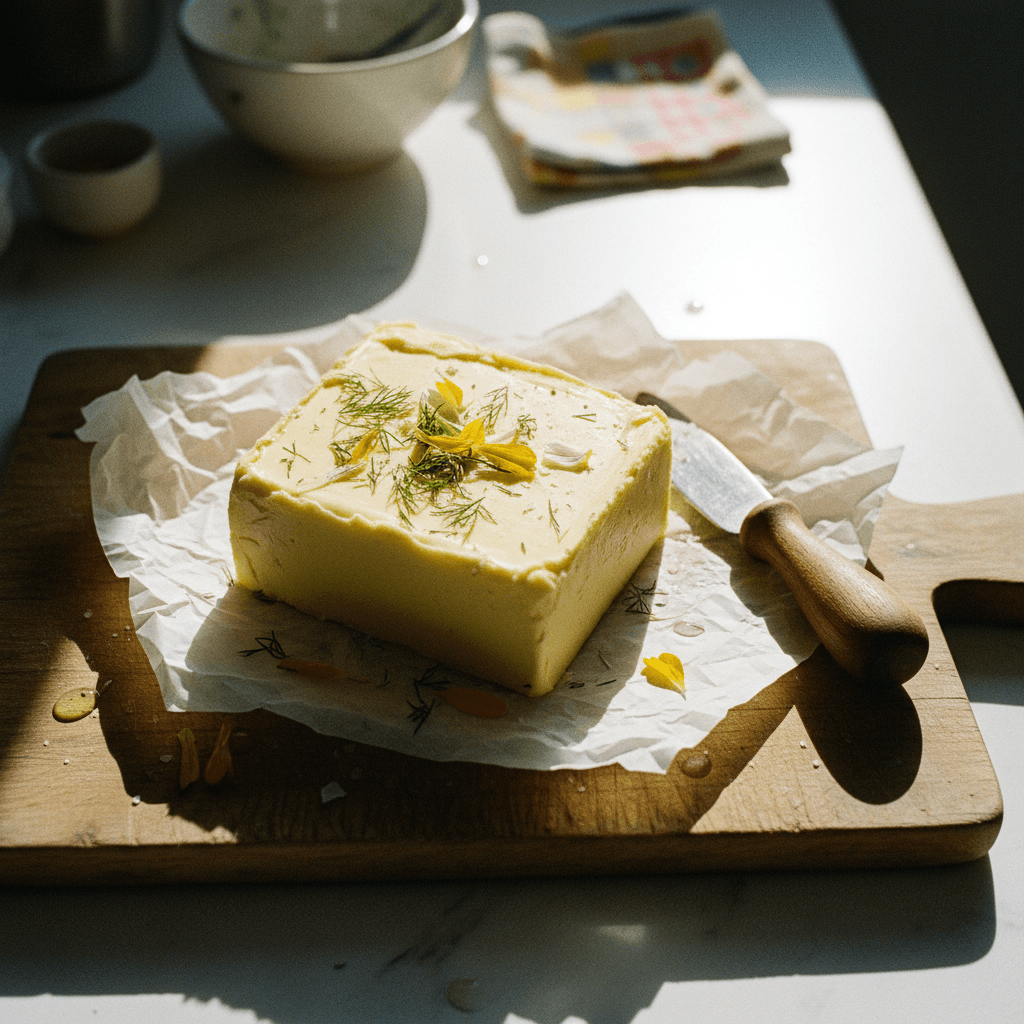
Cultured Butter
Cultured Butter
Ingredients
For the Cultured Cream
- 2 pint heavy whipping cream, (32 fluid ounces total)
- 2 tablespoons cultured yogurt or kefir, as your starter
For the Washing Process
- as needed ice
- as needed cold water
Instructions
- 1
In a clean glass jar, combine the heavy whipping cream and the cultured yogurt or kefir. Stir gently with a spoon to incorporate the starter.
⏱️ 2 min
- 2
Cover the jar with a breathable lid (such as a coffee filter secured with a rubber band, or a cheesecloth). Allow the cream to ferment at room temperature for 48 hours. The cream should become thick, tangy, and have a slightly nutty aroma.
⏱️ 2880 min
- 3
Once fermented, pour the thickened cream into the bowl of a stand mixer fitted with the whisk attachment.
⏱️ 1 min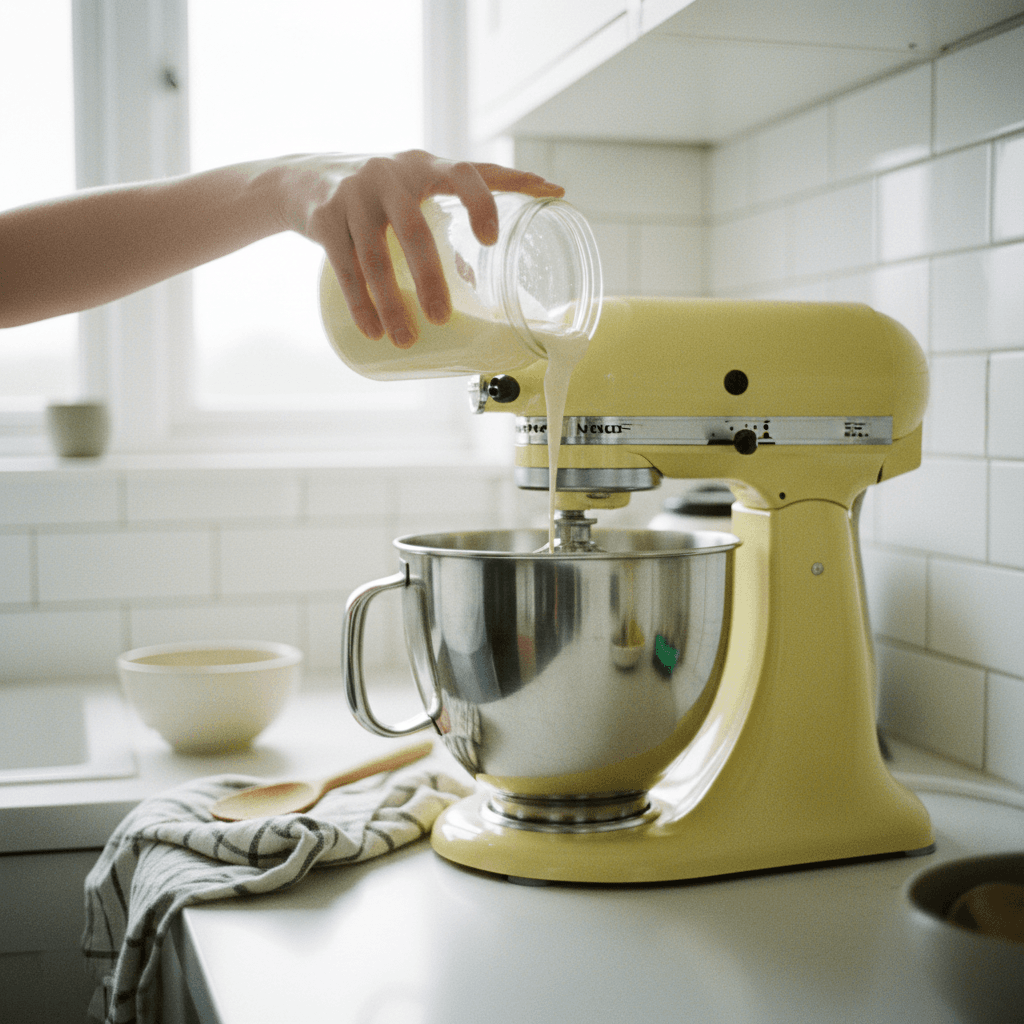
- 4
Whisk the cream on low to medium speed. Continue whisking until the cream separates into butter solids and buttermilk. This process typically takes about 5 to 8 minutes. You will observe butter solids collecting on the whisk and buttermilk pooling at the bottom of the bowl.
⏱️ 8 min
- 5
Carefully strain the buttermilk from the butter solids into a separate clean jar. Reserve the buttermilk for other uses.
⏱️ 2 min
- 6
Transfer the butter solids into a large bowl filled with ice water.
⏱️ 1 min
- 7
Using your hands or a spatula, knead the butter firmly through the ice water. The first rinse water will appear cloudy, indicating that buttermilk is still present within the butter.
⏱️ 2 min
- 8
Drain the cloudy water from the bowl. Add fresh ice water and repeat the kneading process. Continue this washing process, draining and refilling with fresh ice water, until the water runs completely clear. This usually takes about 3 rinses. Clear water signifies that the butter is clean and free of residual buttermilk, which is crucial for its shelf life.
⏱️ 5 min
- 9
Once the butter is thoroughly washed, squeeze out any remaining water. You can do this by pressing it against the side of the bowl or by gently squeezing it in your hands.
⏱️ 1 min
- 10
Shape the butter into your desired form on a piece of parchment paper.
⏱️ 1 min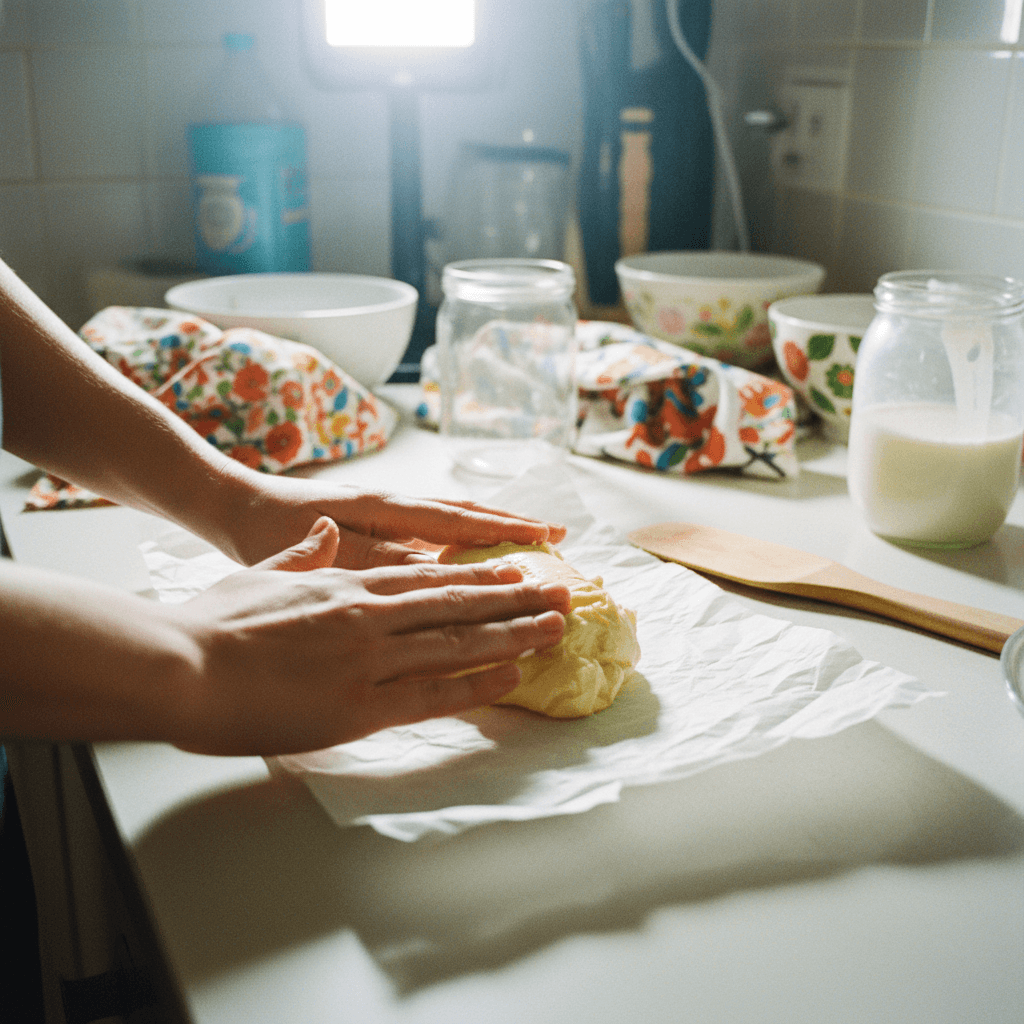
- 11
Wrap the shaped butter tightly in parchment paper or plastic wrap.
⏱️ 1 min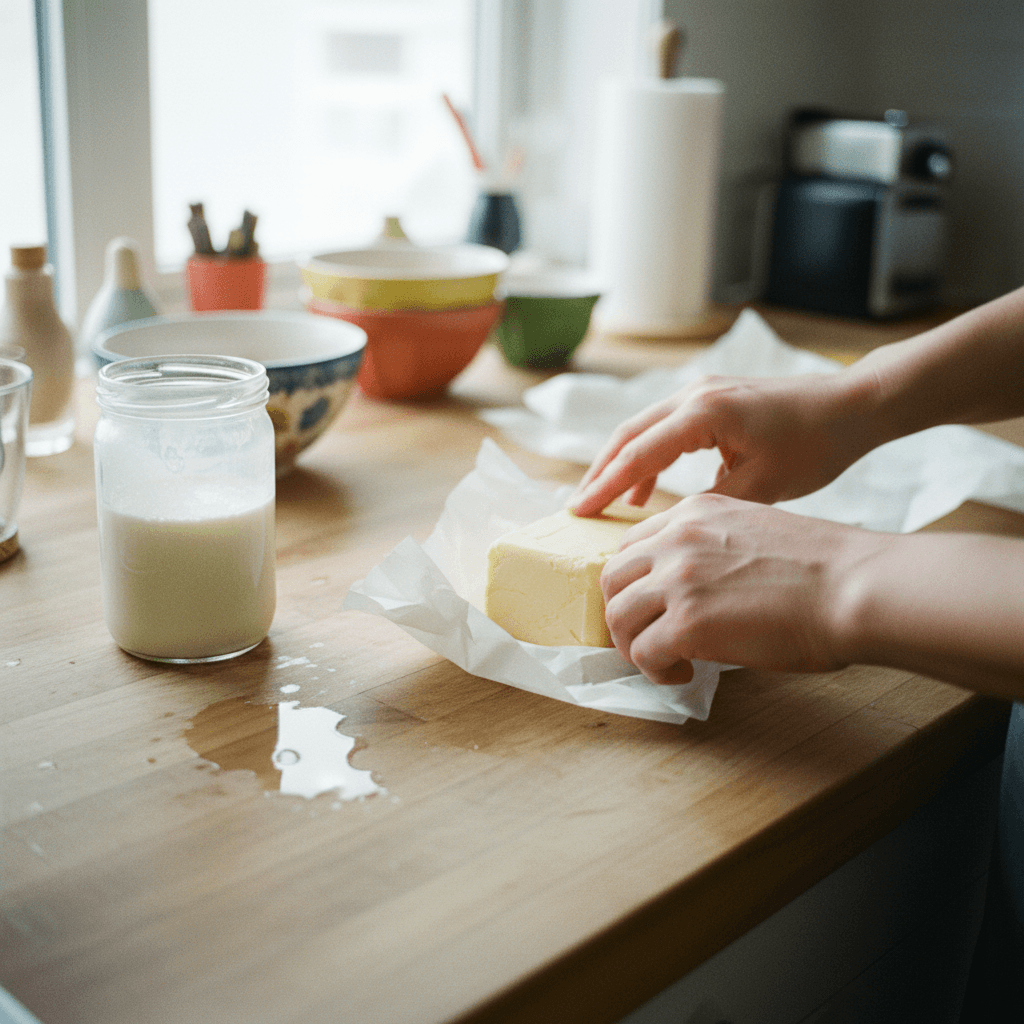
- 12
Refrigerate the cultured butter. Properly washed cultured butter will last 2 to 3 weeks in the refrigerator.
⏱️ 1 min
Kitchen Tools
Nutrition Facts (per serving)
Cultured Butter
For the Cultured Cream
- 2 pint heavy whipping cream, (32 fluid ounces total)
- 2 tablespoons cultured yogurt or kefir, as your starter
For the Washing Process
- as needed ice
- as needed cold water
Instructions
- 1
In a clean glass jar, combine the heavy whipping cream and the cultured yogurt or kefir. Stir gently with a spoon to incorporate the starter.
⏱️ 2 min - 2
Cover the jar with a breathable lid (such as a coffee filter secured with a rubber band, or a cheesecloth). Allow the cream to ferment at room temperature for 48 hours. The cream should become thick, tangy, and have a slightly nutty aroma.
⏱️ 2880 min - 3
Once fermented, pour the thickened cream into the bowl of a stand mixer fitted with the whisk attachment.
⏱️ 1 min - 4
Whisk the cream on low to medium speed. Continue whisking until the cream separates into butter solids and buttermilk. This process typically takes about 5 to 8 minutes. You will observe butter solids collecting on the whisk and buttermilk pooling at the bottom of the bowl.
⏱️ 8 min - 5
Carefully strain the buttermilk from the butter solids into a separate clean jar. Reserve the buttermilk for other uses.
⏱️ 2 min - 6
Transfer the butter solids into a large bowl filled with ice water.
⏱️ 1 min - 7
Using your hands or a spatula, knead the butter firmly through the ice water. The first rinse water will appear cloudy, indicating that buttermilk is still present within the butter.
⏱️ 2 min - 8
Drain the cloudy water from the bowl. Add fresh ice water and repeat the kneading process. Continue this washing process, draining and refilling with fresh ice water, until the water runs completely clear. This usually takes about 3 rinses. Clear water signifies that the butter is clean and free of residual buttermilk, which is crucial for its shelf life.
⏱️ 5 min - 9
Once the butter is thoroughly washed, squeeze out any remaining water. You can do this by pressing it against the side of the bowl or by gently squeezing it in your hands.
⏱️ 1 min - 10
Shape the butter into your desired form on a piece of parchment paper.
⏱️ 1 min - 11
Wrap the shaped butter tightly in parchment paper or plastic wrap.
⏱️ 1 min - 12
Refrigerate the cultured butter. Properly washed cultured butter will last 2 to 3 weeks in the refrigerator.
⏱️ 1 min