Biscoff Cheesecake
Biscoff Cheesecake
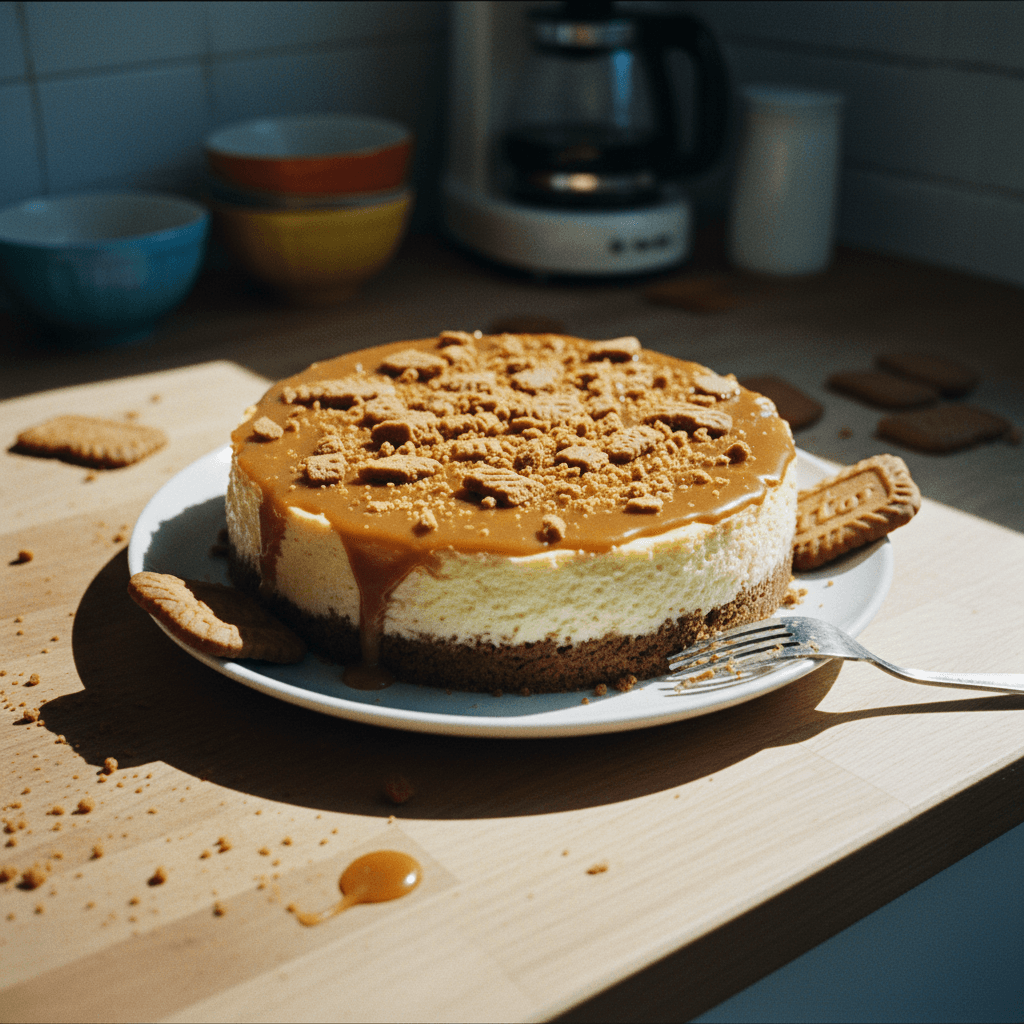
Ingredients
For the Biscoff Crust
- 8 ounces Biscoff cookies, finely crushed (about 2 cups)
- 1/2 cup unsalted butter, melted
- 2 tablespoons granulated sugar
For the Cheesecake Filling
- 24 ounces cream cheese, softened, full-fat
- 3/4 cup granulated sugar
- 1/2 cup sour cream, full-fat
- 1/2 cup Biscoff cookie butter, melted slightly
- 3 large eggs
- 1 teaspoon vanilla extract
- 1 tablespoon all-purpose flour
For the Biscoff Topping
- 1/2 cup Biscoff cookie butter
- 2 tablespoons heavy cream
- 4 Biscoff cookies, crushed for garnish
Instructions
- 1
Preheat your oven to 325°F (160°C). Lightly grease a 9-inch springform pan. Wrap the bottom and sides of the springform pan tightly with heavy-duty aluminum foil to prevent any water from seeping in during the water bath.
⏱️ 5 min•🌡️ 325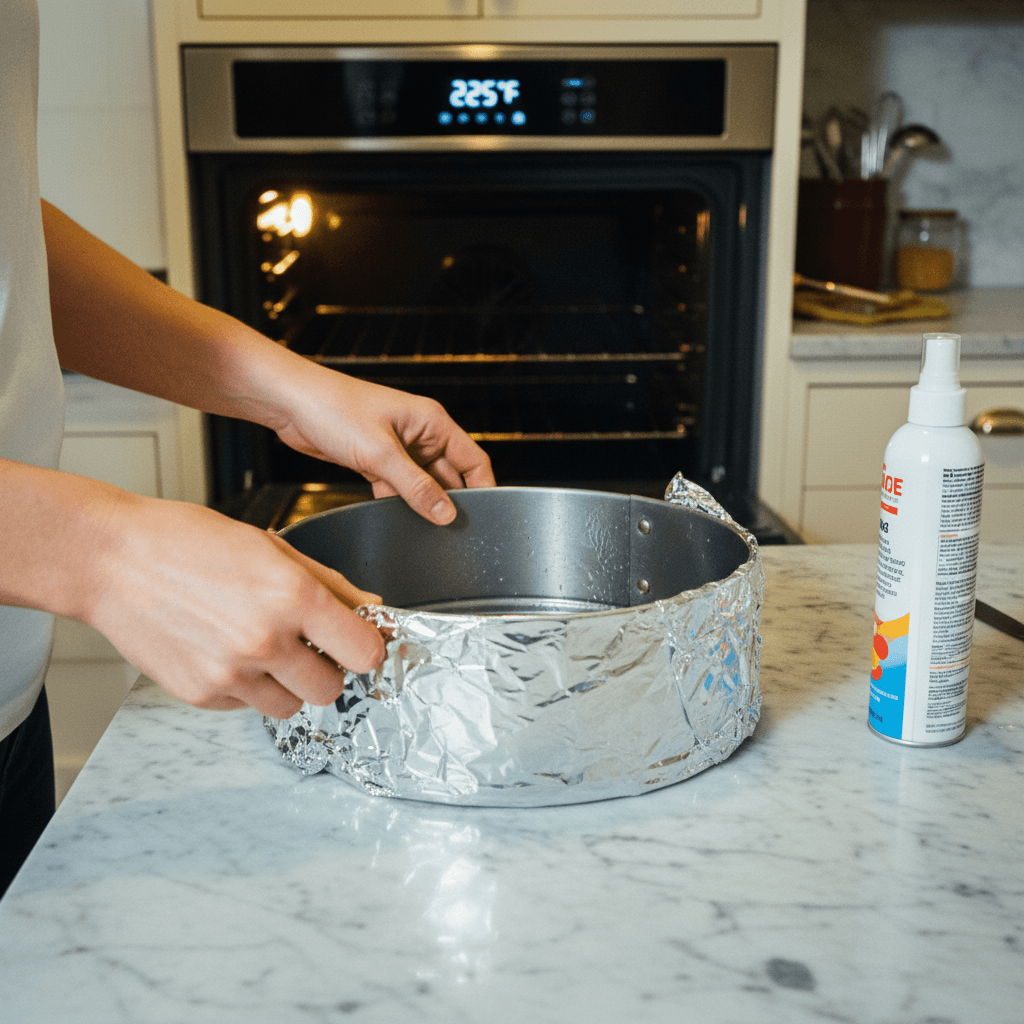
- 2
For the crust: In a medium bowl, combine the finely crushed Biscoff cookies, melted butter, and 2 tablespoons of granulated sugar. Mix until well combined and the crumbs are moistened.
⏱️ 5 min
- 3
Press the Biscoff crust mixture firmly and evenly into the bottom of the prepared springform pan. Bake for 10 minutes, then remove from the oven and let cool slightly while you prepare the filling.
⏱️ 15 min•🌡️ 325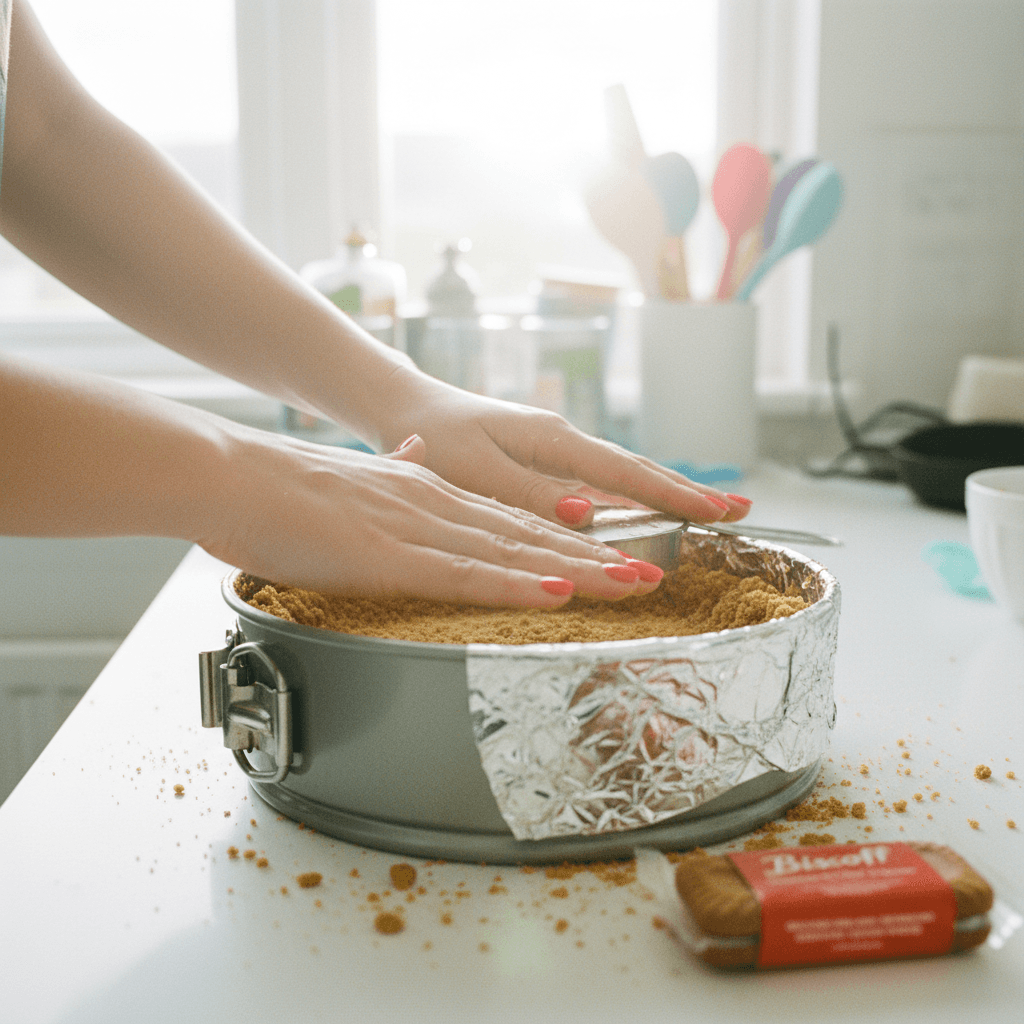
- 4
For the cheesecake filling: In a large bowl, using an electric mixer on medium speed, beat the softened cream cheese until smooth and creamy, about 2-3 minutes. Scrape down the sides of the bowl as needed.
⏱️ 3 min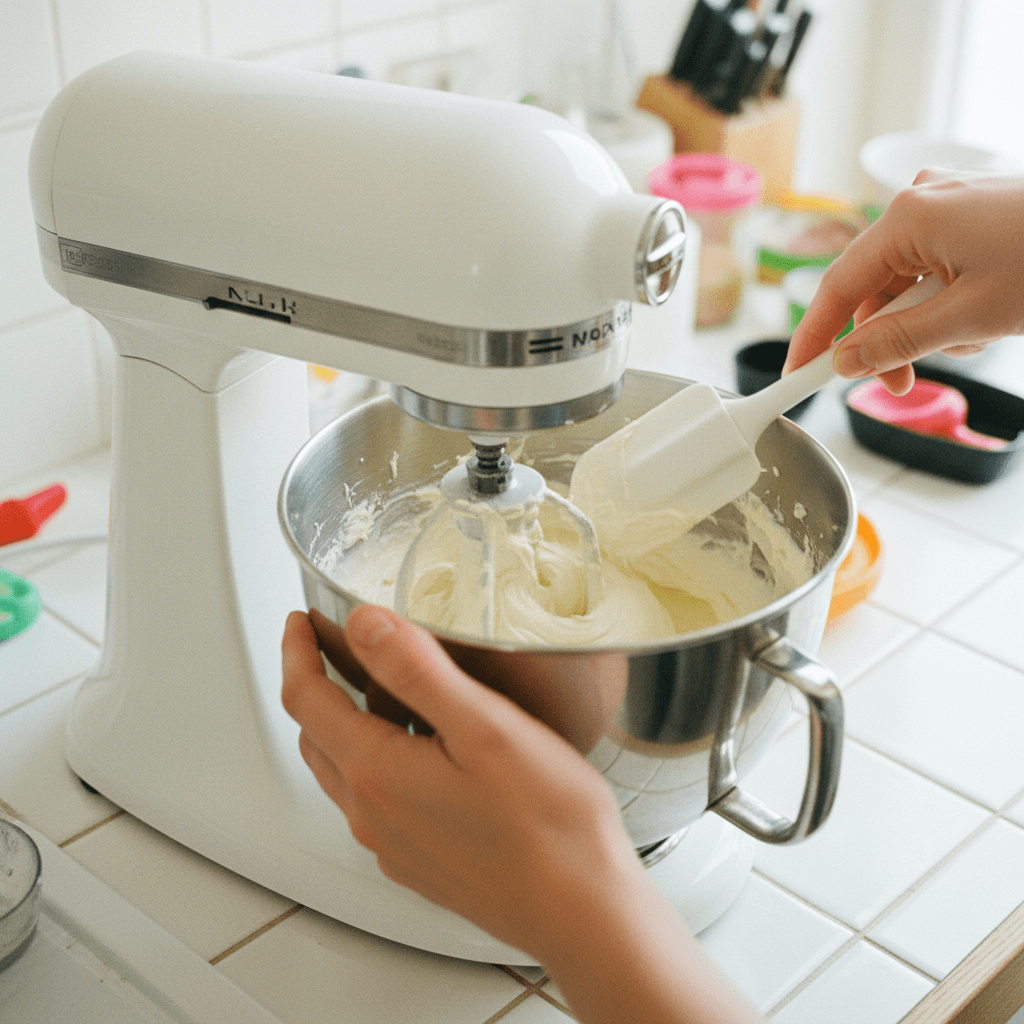
- 5
Gradually add the 3/4 cup of granulated sugar to the cream cheese, beating until just combined and smooth. Do not overmix.
⏱️ 2 min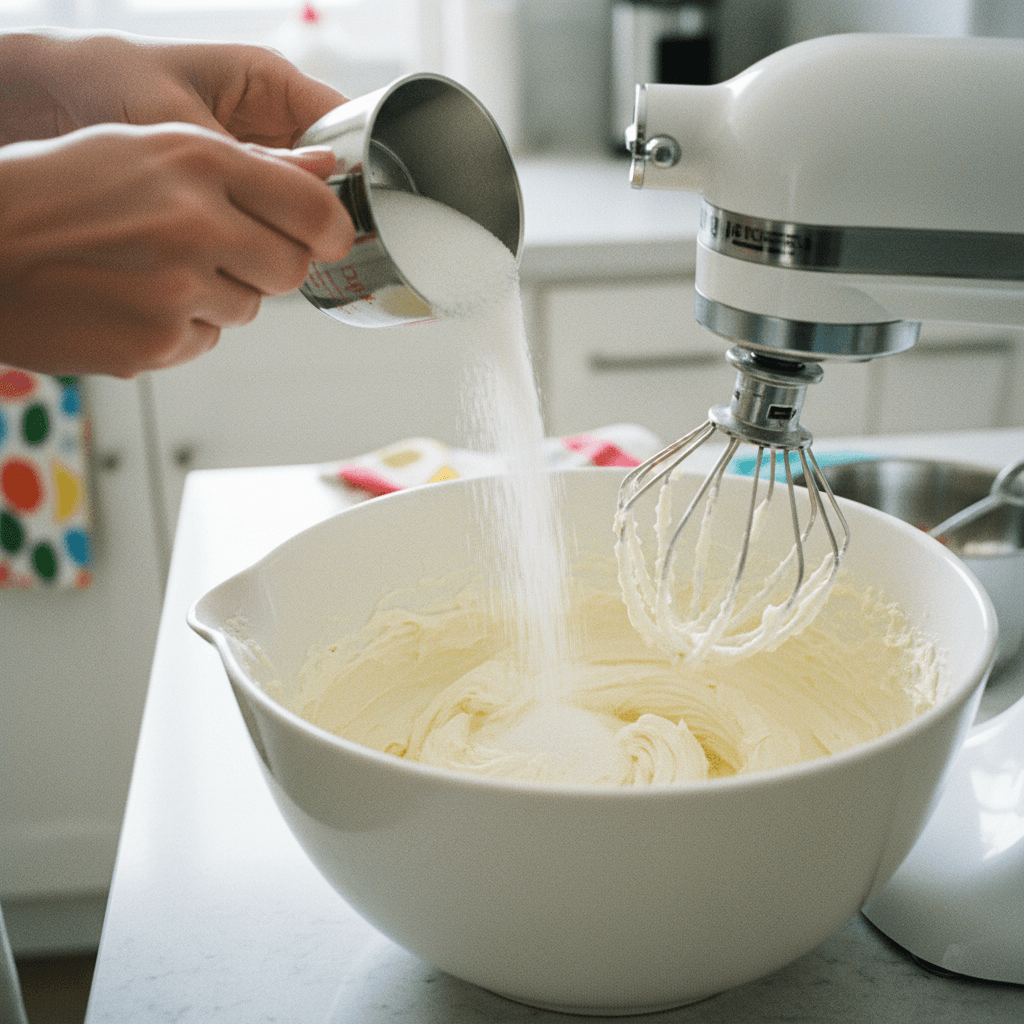
- 6
Beat in the sour cream, slightly melted Biscoff cookie butter, vanilla extract, and all-purpose flour until just incorporated. Again, avoid overmixing.
⏱️ 3 min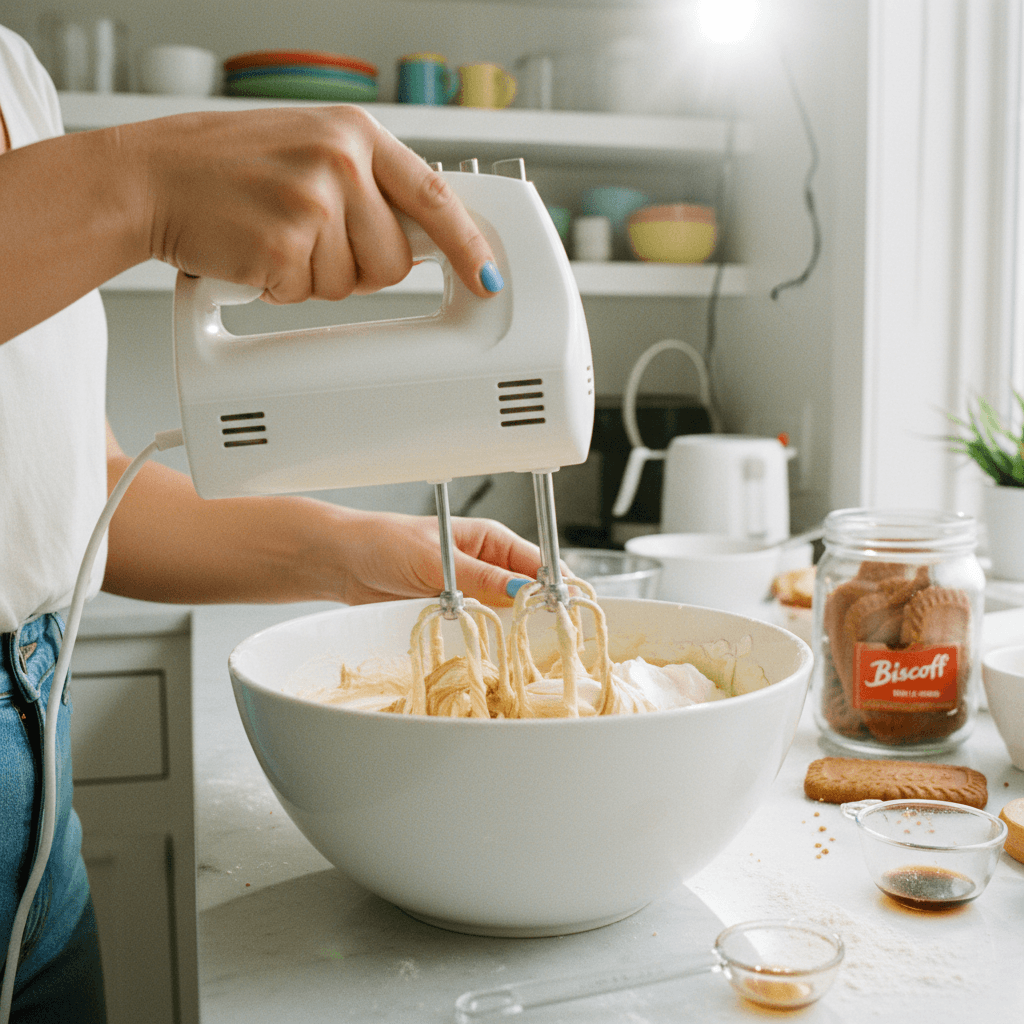
- 7
Add the eggs one at a time, beating on low speed after each addition just until the yolk disappears. Overmixing after adding the eggs can incorporate too much air, leading to cracks in the cheesecake.
⏱️ 3 min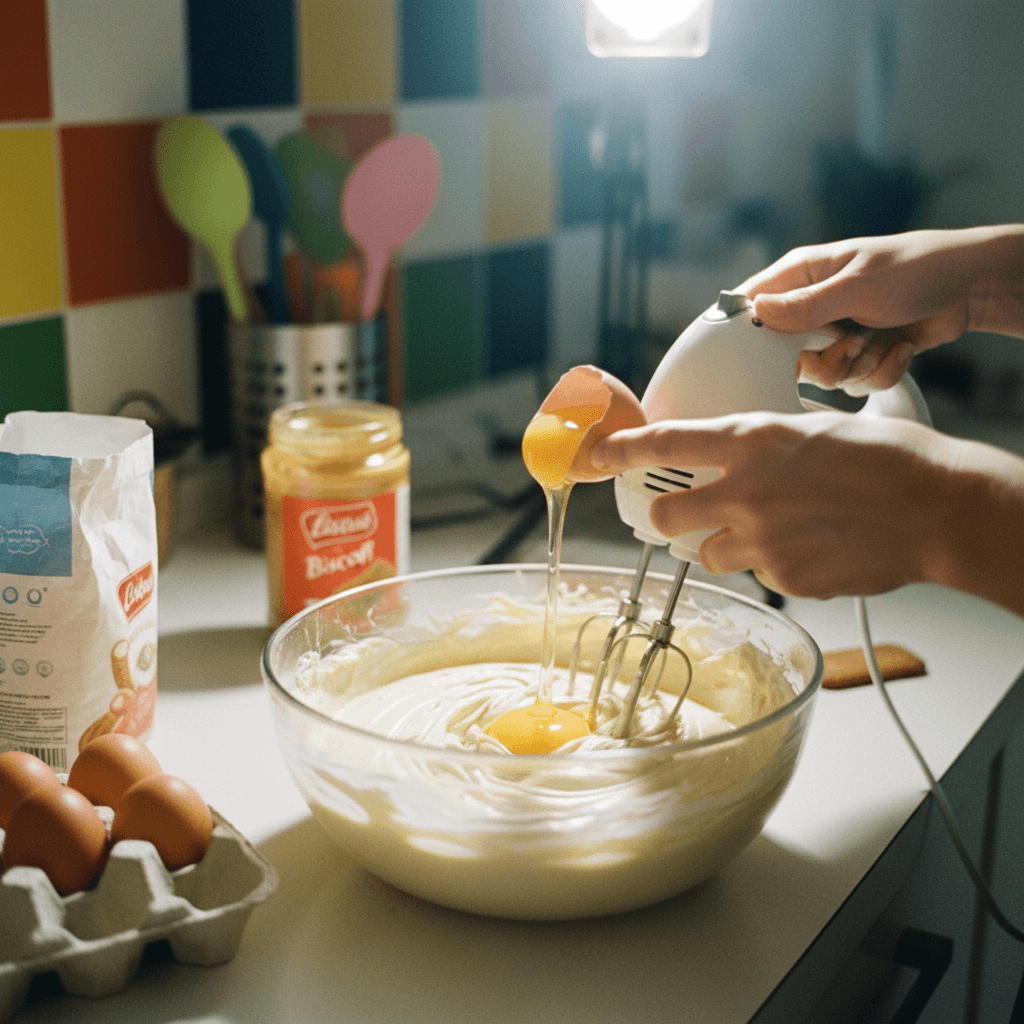
- 8
Pour the cheesecake filling over the cooled Biscoff crust in the springform pan. Place the springform pan into a larger roasting pan. Carefully pour hot water into the roasting pan until it comes about halfway up the sides of the springform pan.
⏱️ 5 min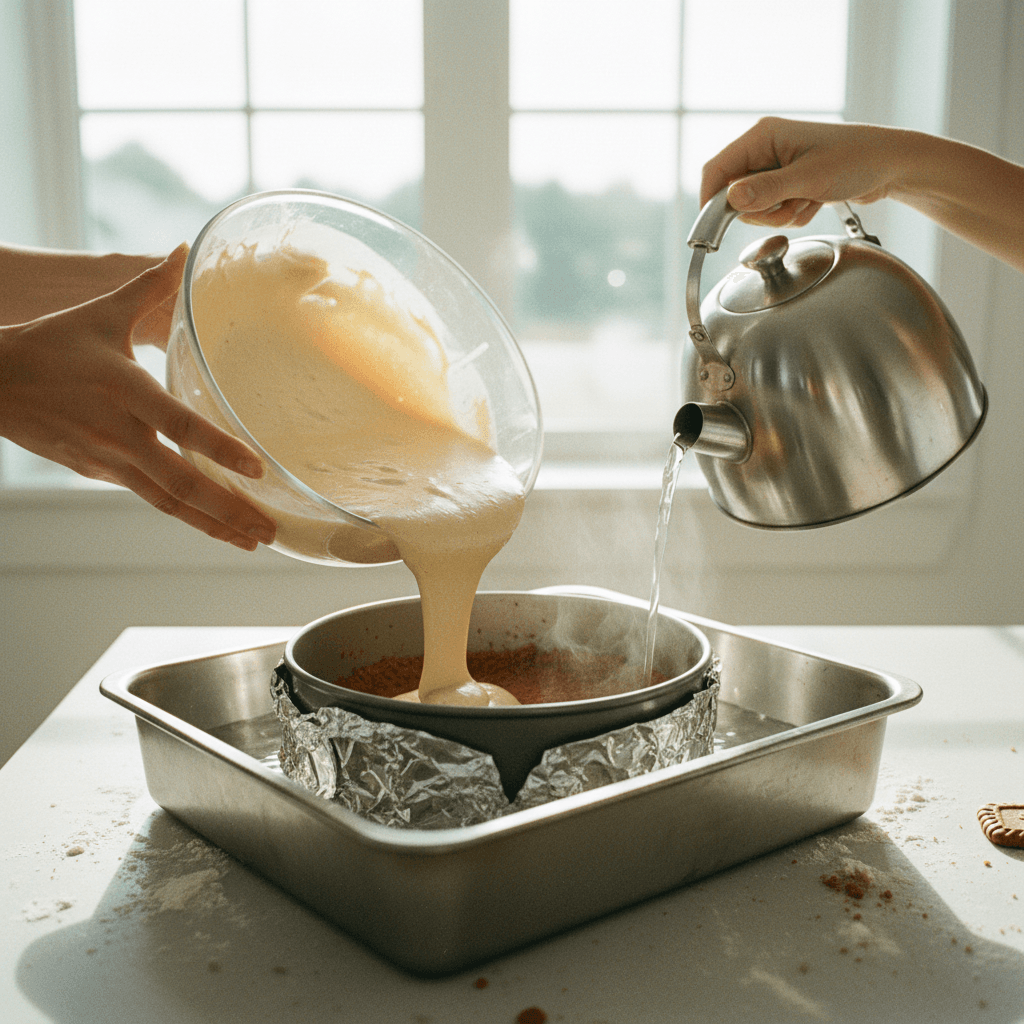
- 9
Bake the cheesecake in the preheated oven for 50-60 minutes, or until the edges are set but the center still jiggles slightly when gently shaken. The internal temperature should reach 150°F (65°C).
⏱️ 60 min•🌡️ 325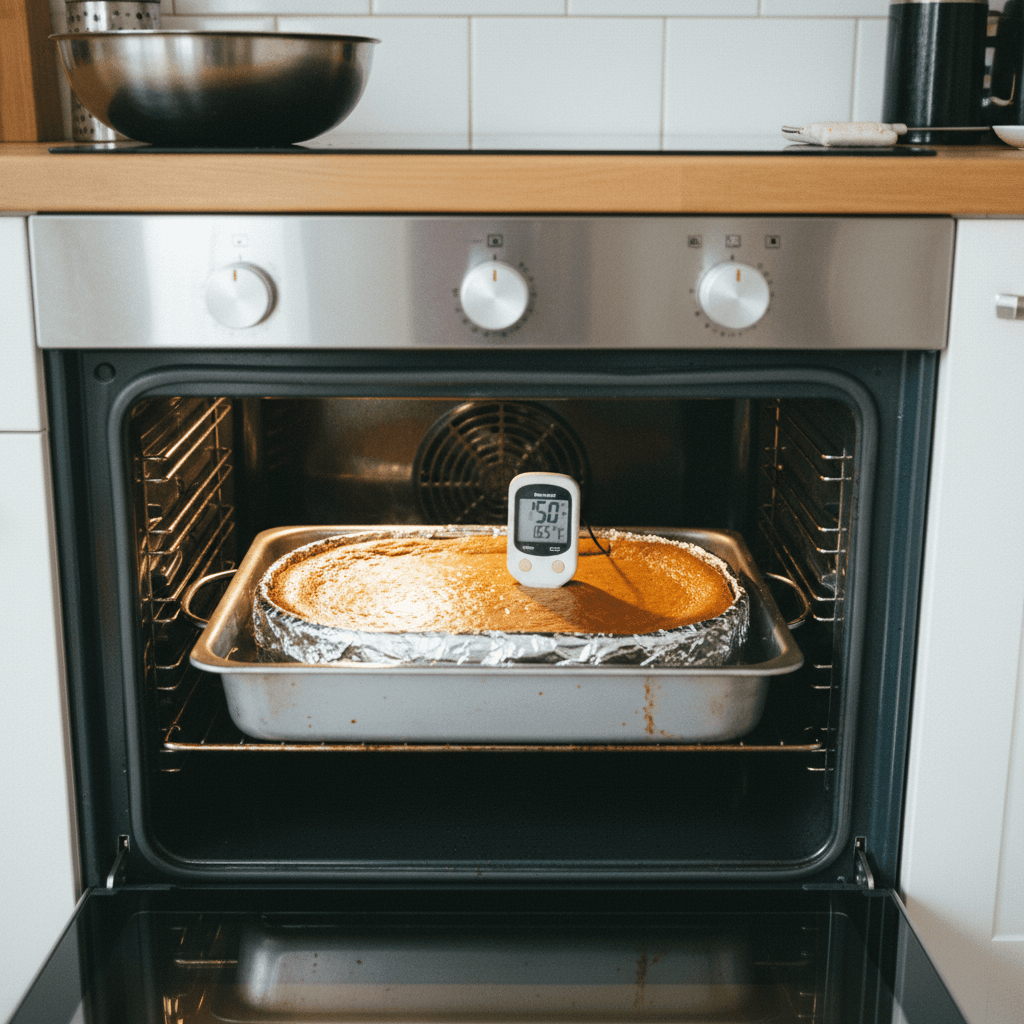
- 10
Turn off the oven, crack the oven door open slightly, and let the cheesecake cool in the water bath for 1 hour. This slow cooling helps prevent cracking.
⏱️ 60 min
- 11
Remove the cheesecake from the water bath and remove the foil. Let it cool completely on a wire rack at room temperature for another 1-2 hours.
⏱️ 90 min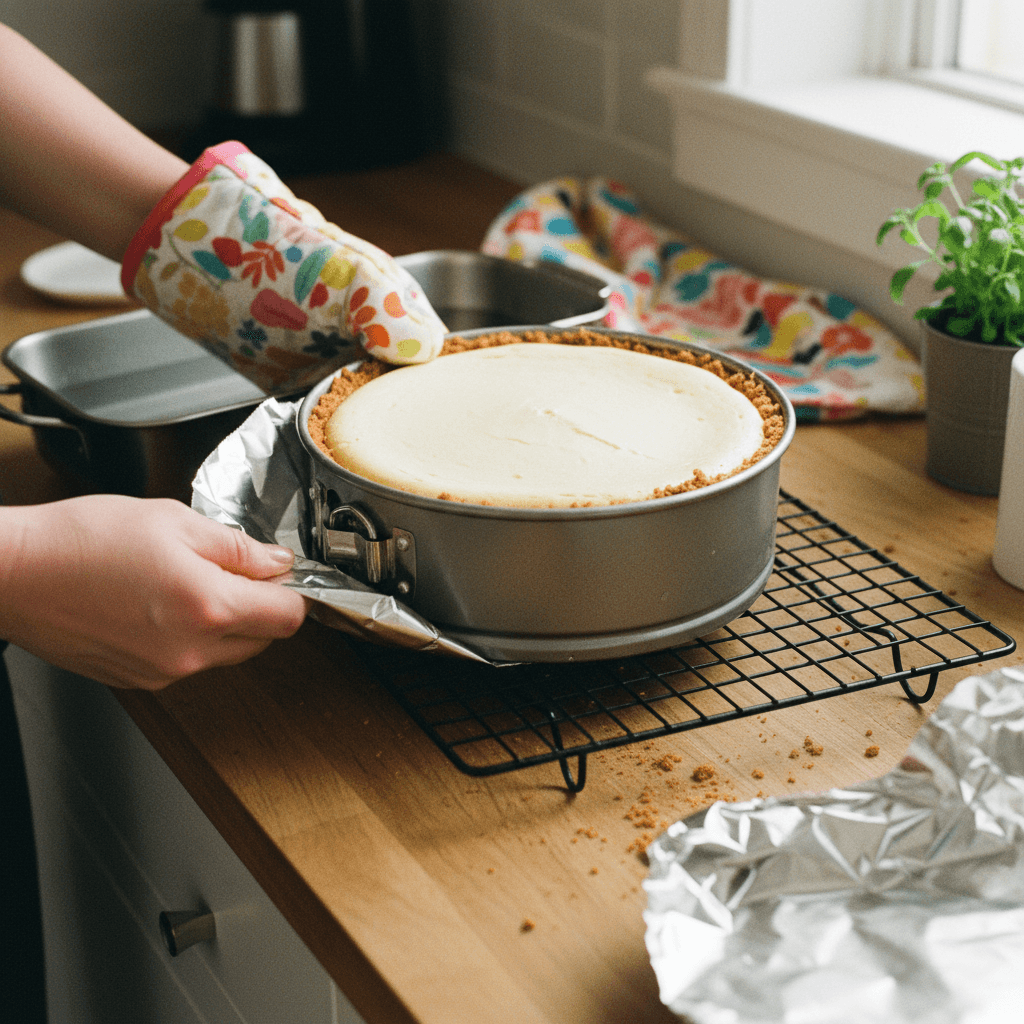
- 12
Once cooled, cover the cheesecake with plastic wrap and refrigerate for at least 4 hours, or preferably overnight, to allow it to set completely.
⏱️ 180 min
- 13
For the Biscoff topping: In a small microwave-safe bowl, combine the 1/2 cup Biscoff cookie butter and heavy cream. Microwave on low power for 30-60 seconds, stirring until smooth and pourable. Alternatively, melt in a small saucepan over low heat.
⏱️ 3 min
- 14
Once the cheesecake is thoroughly chilled, carefully remove it from the springform pan. Pour the warm Biscoff topping evenly over the top of the cheesecake, allowing some to drip down the sides if desired.
⏱️ 2 min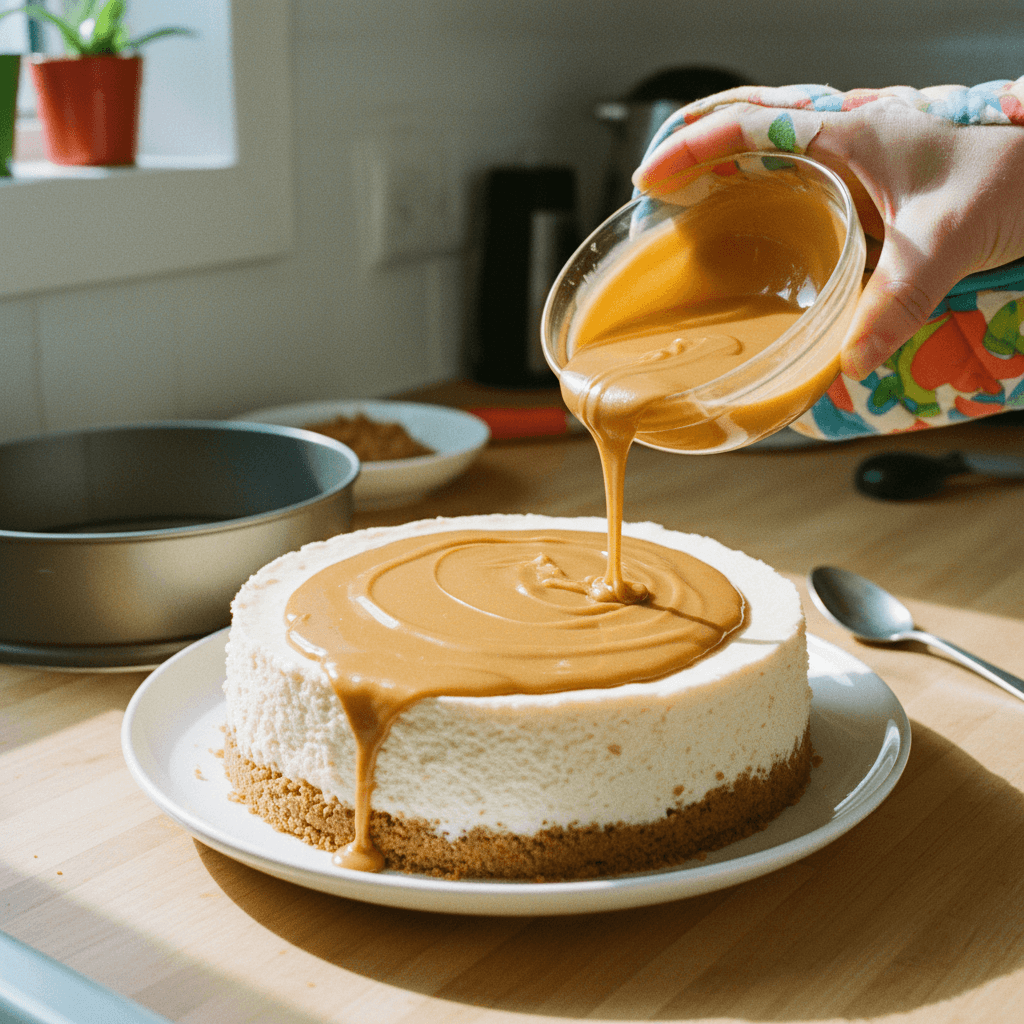
- 15
Garnish the top of the cheesecake with the crushed Biscoff cookies. Serve immediately or refrigerate until ready to serve.
⏱️ 2 min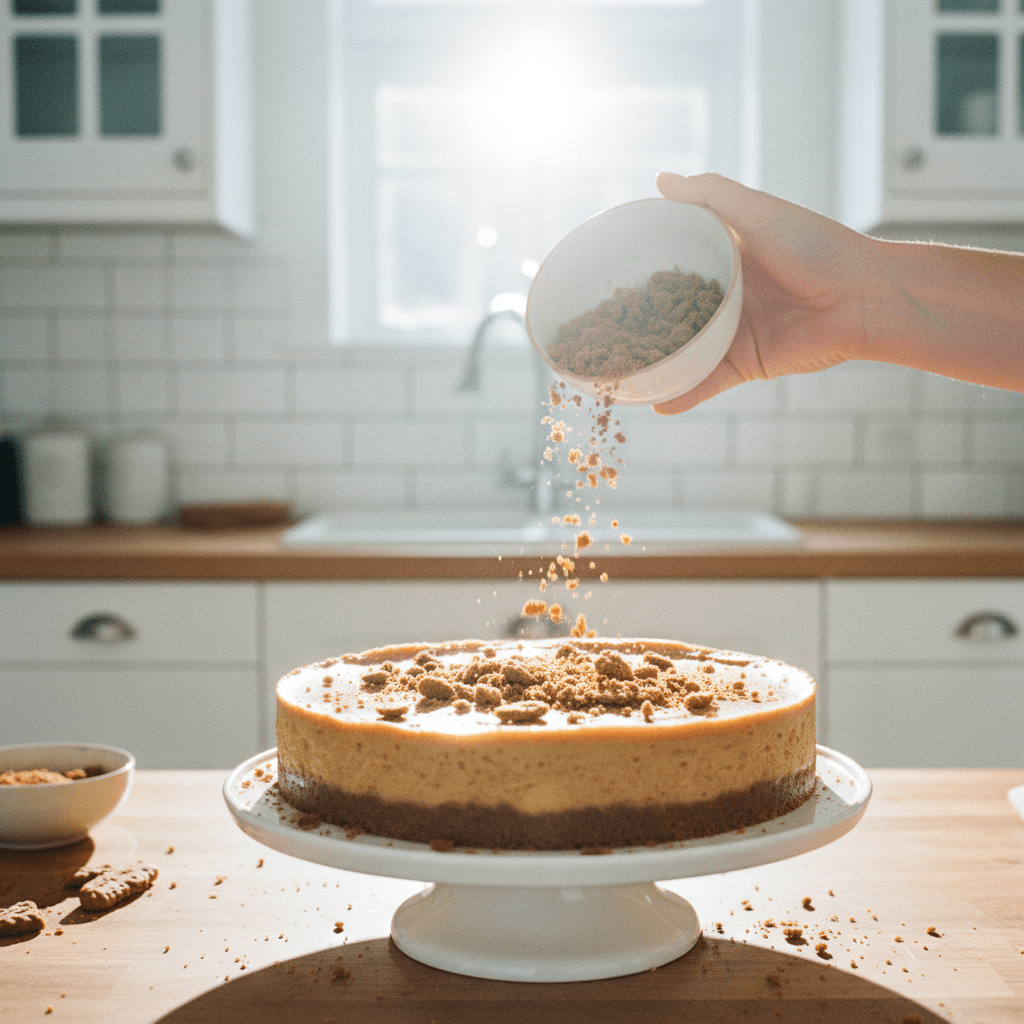
Kitchen Tools
Nutrition Facts (per serving)
Biscoff Cheesecake
For the Biscoff Crust
- 8 ounces Biscoff cookies, finely crushed (about 2 cups)
- 1/2 cup unsalted butter, melted
- 2 tablespoons granulated sugar
For the Cheesecake Filling
- 24 ounces cream cheese, softened, full-fat
- 3/4 cup granulated sugar
- 1/2 cup sour cream, full-fat
- 1/2 cup Biscoff cookie butter, melted slightly
- 3 large eggs
- 1 teaspoon vanilla extract
- 1 tablespoon all-purpose flour
For the Biscoff Topping
- 1/2 cup Biscoff cookie butter
- 2 tablespoons heavy cream
- 4 Biscoff cookies, crushed for garnish
Instructions
- 1
Preheat your oven to 325°F (160°C). Lightly grease a 9-inch springform pan. Wrap the bottom and sides of the springform pan tightly with heavy-duty aluminum foil to prevent any water from seeping in during the water bath.
⏱️ 5 min•🌡️ 325 - 2
For the crust: In a medium bowl, combine the finely crushed Biscoff cookies, melted butter, and 2 tablespoons of granulated sugar. Mix until well combined and the crumbs are moistened.
⏱️ 5 min - 3
Press the Biscoff crust mixture firmly and evenly into the bottom of the prepared springform pan. Bake for 10 minutes, then remove from the oven and let cool slightly while you prepare the filling.
⏱️ 15 min•🌡️ 325 - 4
For the cheesecake filling: In a large bowl, using an electric mixer on medium speed, beat the softened cream cheese until smooth and creamy, about 2-3 minutes. Scrape down the sides of the bowl as needed.
⏱️ 3 min - 5
Gradually add the 3/4 cup of granulated sugar to the cream cheese, beating until just combined and smooth. Do not overmix.
⏱️ 2 min - 6
Beat in the sour cream, slightly melted Biscoff cookie butter, vanilla extract, and all-purpose flour until just incorporated. Again, avoid overmixing.
⏱️ 3 min - 7
Add the eggs one at a time, beating on low speed after each addition just until the yolk disappears. Overmixing after adding the eggs can incorporate too much air, leading to cracks in the cheesecake.
⏱️ 3 min - 8
Pour the cheesecake filling over the cooled Biscoff crust in the springform pan. Place the springform pan into a larger roasting pan. Carefully pour hot water into the roasting pan until it comes about halfway up the sides of the springform pan.
⏱️ 5 min - 9
Bake the cheesecake in the preheated oven for 50-60 minutes, or until the edges are set but the center still jiggles slightly when gently shaken. The internal temperature should reach 150°F (65°C).
⏱️ 60 min•🌡️ 325 - 10
Turn off the oven, crack the oven door open slightly, and let the cheesecake cool in the water bath for 1 hour. This slow cooling helps prevent cracking.
⏱️ 60 min - 11
Remove the cheesecake from the water bath and remove the foil. Let it cool completely on a wire rack at room temperature for another 1-2 hours.
⏱️ 90 min - 12
Once cooled, cover the cheesecake with plastic wrap and refrigerate for at least 4 hours, or preferably overnight, to allow it to set completely.
⏱️ 180 min - 13
For the Biscoff topping: In a small microwave-safe bowl, combine the 1/2 cup Biscoff cookie butter and heavy cream. Microwave on low power for 30-60 seconds, stirring until smooth and pourable. Alternatively, melt in a small saucepan over low heat.
⏱️ 3 min - 14
Once the cheesecake is thoroughly chilled, carefully remove it from the springform pan. Pour the warm Biscoff topping evenly over the top of the cheesecake, allowing some to drip down the sides if desired.
⏱️ 2 min - 15
Garnish the top of the cheesecake with the crushed Biscoff cookies. Serve immediately or refrigerate until ready to serve.
⏱️ 2 min