Dad’s Focaccia (90% Hydration)
Dad’s Focaccia (90% Hydration)

Ingredients
- 500 g bread flour
- 450 g water
- 10 g salt
- 5 g active dry yeast
- 25 g olive oil, for dough
- 2 tablespoons olive oil, at least, for pan and topping
- as needed flaky salt, for topping
- as needed herbs, such as rosemary, for topping
- as needed garlic, minced or sliced, for topping
Instructions
- 1
In a large bowl, combine the 500g bread flour and 5g active dry yeast. Add the 450g water, and mix with a spoon or spatula until the flour is fully incorporated and a shaggy dough forms.
⏱️ 5 min
- 2
Add the 10g salt and 25g olive oil to the dough. Gently mix them in with a spatula until combined. The dough will be very goopy, which is the desired consistency. Cover the bowl with a damp towel and let it rest for about 15 minutes.
⏱️ 15 min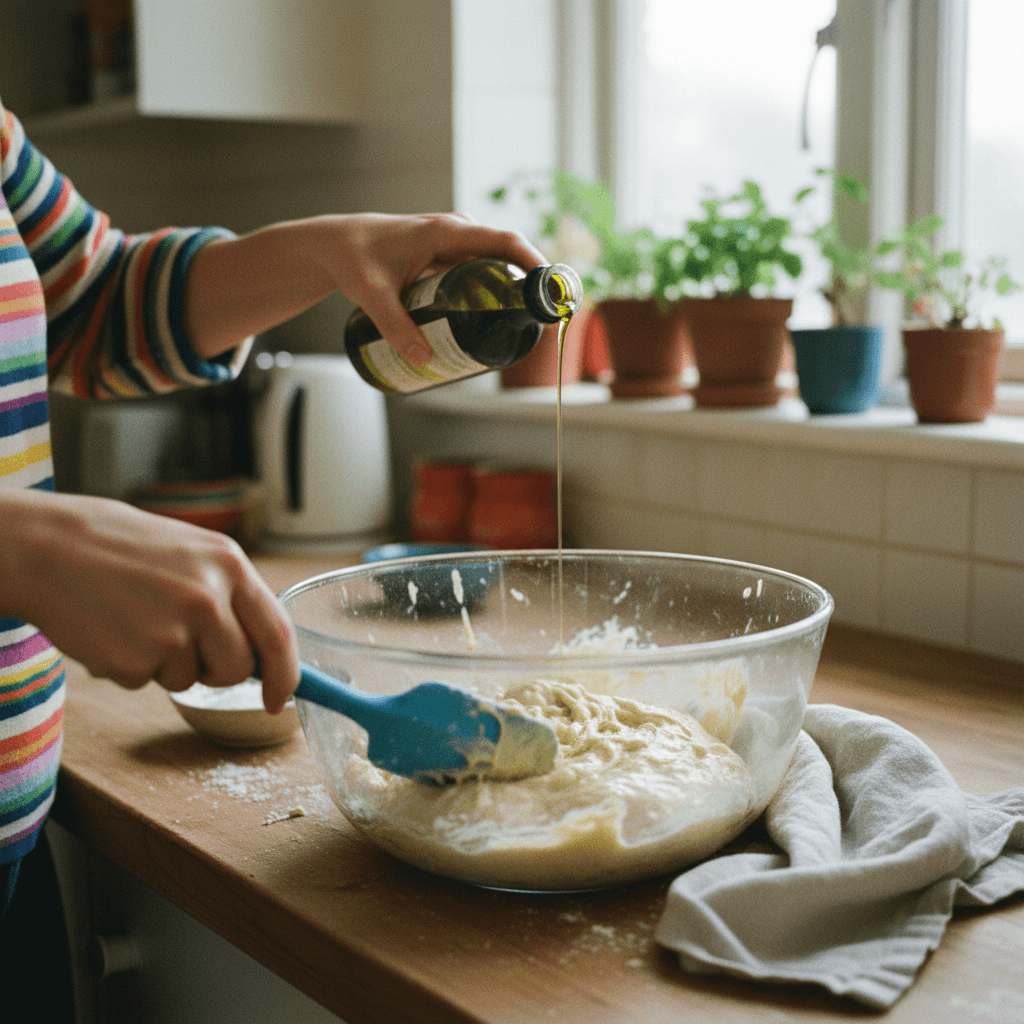
- 3
Perform 4 sets of coil folds. For each set, with wet hands, lift one side of the dough, let it stretch under its own weight, and then fold it under itself into the center of the bowl. Rotate the bowl and repeat this action on all sides of the dough. Cover the dough with a damp towel between each set. Allow 25 minutes of resting time between each set of coil folds.
⏱️ 100 min
- 4
After the coil folds are complete, cover the bowl tightly (e.g., with a lid or plastic wrap) and refrigerate the dough for 12 to 48 hours. A 24-hour cold ferment is recommended for optimal results. During this time, the dough should rise slightly and become full of bubbles.
⏱️ 1440 min
- 5
Generously oil your chosen pan(s) (either one 9x13 inch pan or two 7.5x9 inch pans). Do not skimp on the oil; use at least 2-3 tablespoons. Gently pour or scrape the cold dough into the oiled pan(s), being careful not to deflate it. Add a drizzle of olive oil on top of the dough in the pan(s).
⏱️ 5 min
- 6
Let the dough proof at room temperature for 4-5 hours, or until it looks visibly puffy and bubbly.
⏱️ 240 min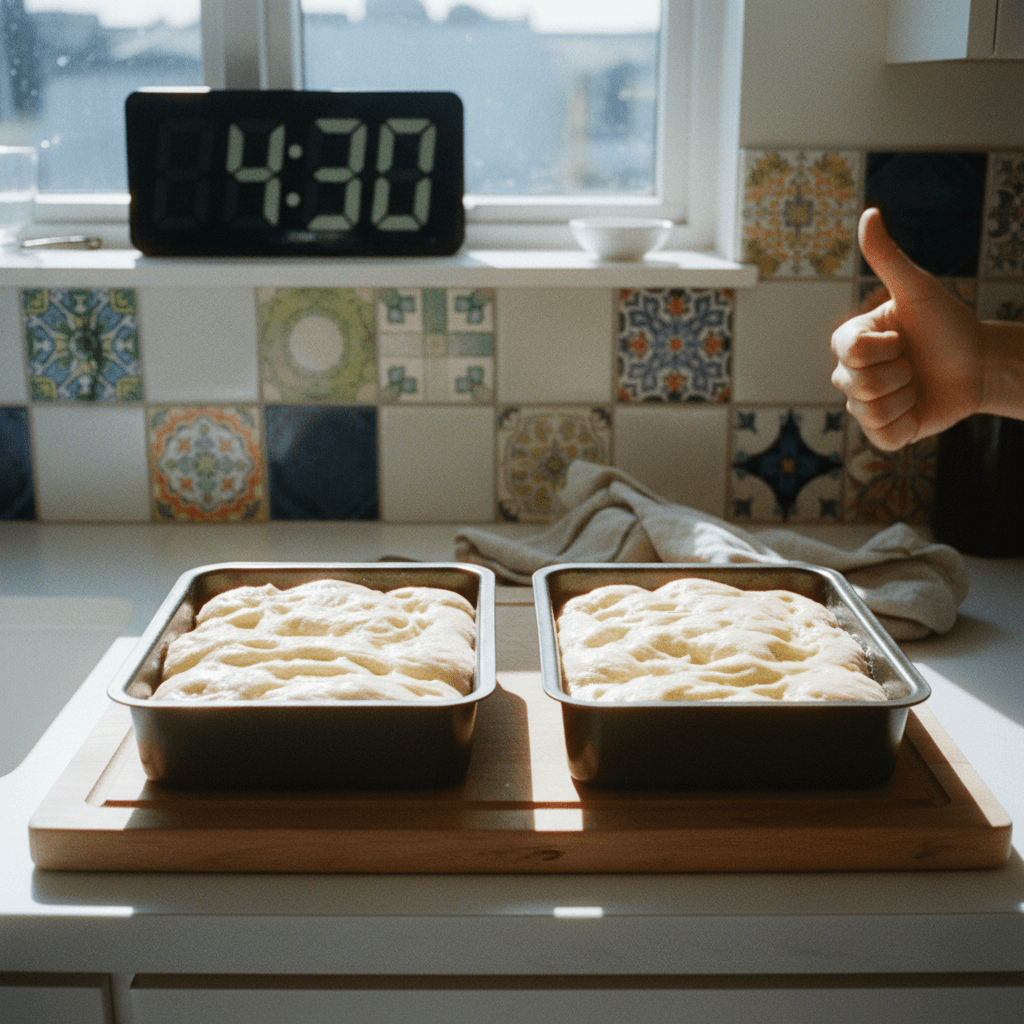
- 7
Preheat your oven to 450°F (232°C).
⏱️ 15 min•🌡️ 450
- 8
With oiled fingers, gently dimple the dough all over, creating indentations and allowing some of the large air bubbles to pop. Top the dimpled dough with flaky salt, and any other desired toppings such as rosemary or garlic. Drizzle more olive oil on top of the dough and toppings; this helps to crisp the surface during baking.
⏱️ 5 min
- 9
Bake the focaccia for 20-25 minutes, or until it is deeply golden brown and crisp on the outside. Once baked, cool the focaccia in the pan for at least 10 minutes before removing it.
⏱️ 25 min•🌡️ 450
Kitchen Tools
Nutrition Facts (per serving)
Dad’s Focaccia (90% Hydration)
- 500 g bread flour
- 450 g water
- 10 g salt
- 5 g active dry yeast
- 25 g olive oil, for dough
- 2 tablespoons olive oil, at least, for pan and topping
- as needed flaky salt, for topping
- as needed herbs, such as rosemary, for topping
- as needed garlic, minced or sliced, for topping
Instructions
- 1
In a large bowl, combine the 500g bread flour and 5g active dry yeast. Add the 450g water, and mix with a spoon or spatula until the flour is fully incorporated and a shaggy dough forms.
⏱️ 5 min - 2
Add the 10g salt and 25g olive oil to the dough. Gently mix them in with a spatula until combined. The dough will be very goopy, which is the desired consistency. Cover the bowl with a damp towel and let it rest for about 15 minutes.
⏱️ 15 min - 3
Perform 4 sets of coil folds. For each set, with wet hands, lift one side of the dough, let it stretch under its own weight, and then fold it under itself into the center of the bowl. Rotate the bowl and repeat this action on all sides of the dough. Cover the dough with a damp towel between each set. Allow 25 minutes of resting time between each set of coil folds.
⏱️ 100 min - 4
After the coil folds are complete, cover the bowl tightly (e.g., with a lid or plastic wrap) and refrigerate the dough for 12 to 48 hours. A 24-hour cold ferment is recommended for optimal results. During this time, the dough should rise slightly and become full of bubbles.
⏱️ 1440 min - 5
Generously oil your chosen pan(s) (either one 9x13 inch pan or two 7.5x9 inch pans). Do not skimp on the oil; use at least 2-3 tablespoons. Gently pour or scrape the cold dough into the oiled pan(s), being careful not to deflate it. Add a drizzle of olive oil on top of the dough in the pan(s).
⏱️ 5 min - 6
Let the dough proof at room temperature for 4-5 hours, or until it looks visibly puffy and bubbly.
⏱️ 240 min - 7
Preheat your oven to 450°F (232°C).
⏱️ 15 min•🌡️ 450 - 8
With oiled fingers, gently dimple the dough all over, creating indentations and allowing some of the large air bubbles to pop. Top the dimpled dough with flaky salt, and any other desired toppings such as rosemary or garlic. Drizzle more olive oil on top of the dough and toppings; this helps to crisp the surface during baking.
⏱️ 5 min - 9
Bake the focaccia for 20-25 minutes, or until it is deeply golden brown and crisp on the outside. Once baked, cool the focaccia in the pan for at least 10 minutes before removing it.
⏱️ 25 min•🌡️ 450