Bengali Shrimp Curry
Bengali Shrimp Curry

Ingredients
For the Shrimp
- 1 pound shrimp, peeled and deveined
- 1/2 lemon, juiced
- 1/2 teaspoon salt
For the Curry Base
- 1 pound eggplant, cut into 1-inch cubes
- 4 tablespoons mustard oil, divided
- 1 teaspoon mustard seeds
- 1/2 teaspoon fenugreek seeds
- 1/2 teaspoon nigella seeds (kalonji)
- 1/2 teaspoon fennel seeds
- 1 1/2 cups onions, thinly sliced
- 1 tablespoon garlic, minced
- 1 tablespoon ginger, grated
- 2 green chilies, sliced (adjust to taste)
- 10 curry leaves
- 1 teaspoon turmeric powder
- 1 teaspoon red chili powder, (adjust to taste)
- 1 1/2 teaspoons cumin powder
- 1 1/2 teaspoons coriander powder
- 1/4 cup water
- 1 1/2 cups tomatoes, diced
- 13.5 fluid ounces canned coconut milk
- 2 tablespoons mustard paste
- 1/4 cup fresh cilantro, chopped, for garnish
Instructions
- 1
In a medium bowl, season the peeled and deveined shrimp with the lemon juice and 1/2 teaspoon of salt. Toss to coat and set aside.
⏱️ 5 min
- 2
Heat 2 tablespoons of mustard oil in a large skillet or Dutch oven over medium-high heat. Add the cubed eggplant and roast, stirring occasionally, until it is beautifully caramelized and tender, about 8-10 minutes. Once roasted, remove the eggplant from the pan and set it aside.
⏱️ 10 min
- 3
Add the remaining 2 tablespoons of mustard oil to the same pan. Once hot, add the whole spices: mustard seeds, fenugreek seeds, nigella seeds, and fennel seeds. Allow them to splutter and become fragrant, about 30 seconds to 1 minute.
⏱️ 2 min
- 4
Add the sliced onions to the pan. Sauté until they turn translucent and slightly softened, about 5-7 minutes.
⏱️ 7 min
- 5
Incorporate the minced garlic, grated ginger, sliced green chilies, and curry leaves into the pan. Continue to sauté for 2-3 minutes until fragrant.
⏱️ 3 min
- 6
Add the turmeric powder, red chili powder, cumin powder, and coriander powder to the pan. Add 1/4 cup of water to prevent the spices from burning and help them form a paste. Cook for 1-2 minutes, stirring constantly.
⏱️ 2 min
- 7
Stir in the diced tomatoes and cook until they soften and break down, integrating into the spice mixture, about 5-7 minutes.
⏱️ 7 min
- 8
Pour the canned coconut milk into the pan and stir well to combine with the curry base. Bring to a gentle simmer.
⏱️ 3 min
- 9
Add the mustard paste to the curry and stir thoroughly to ensure it is fully incorporated, adding its characteristic Bengali flavor. Continue to simmer for 2-3 minutes.
⏱️ 3 min
- 10
Add the previously roasted eggplant back into the simmering curry.
⏱️ 1 min
- 11
Gently add the seasoned shrimp to the curry. Cook for 3-5 minutes until the shrimp turn pink and are cooked through. Be careful not to overcook the shrimp, as they can become rubbery.
⏱️ 5 min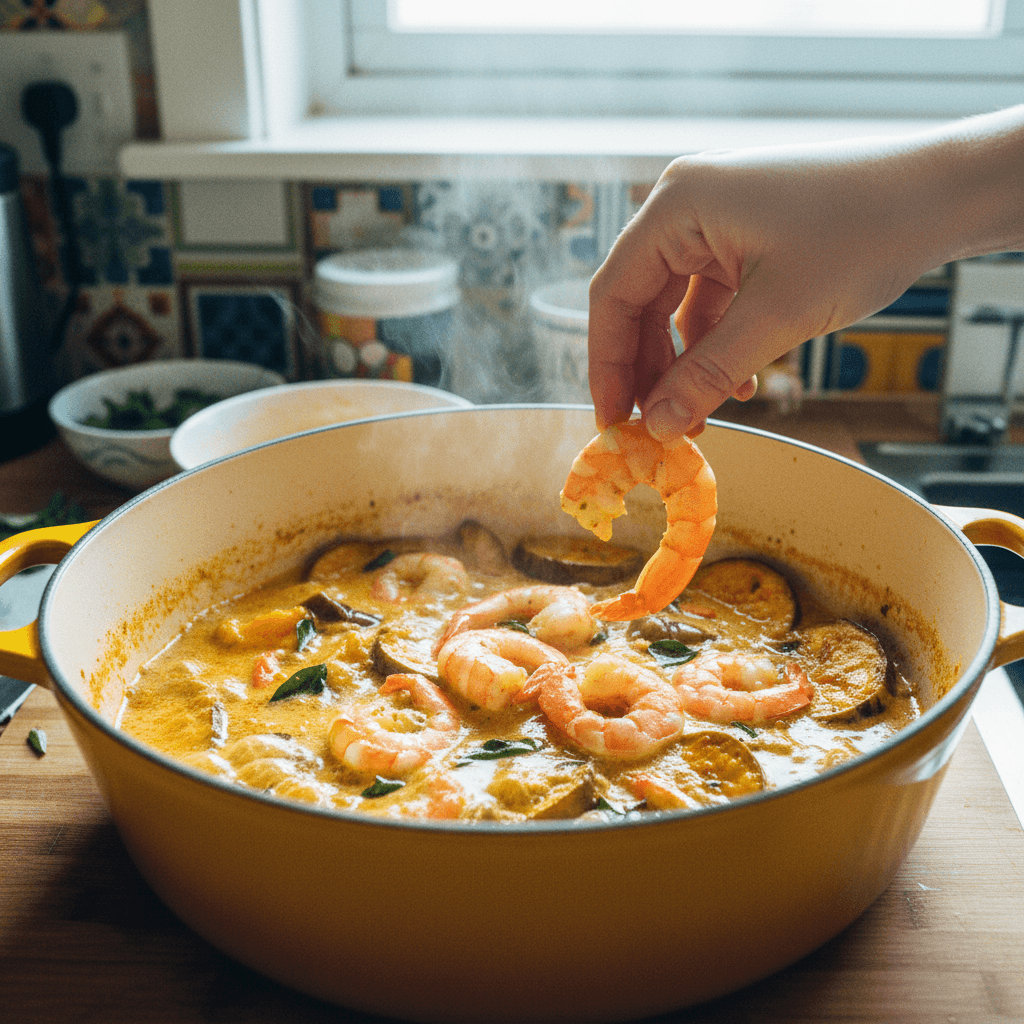
- 12
Garnish the Bengali Shrimp Curry with fresh chopped cilantro before serving. It is typically served with rice.
⏱️ 1 min
Kitchen Tools
Nutrition Facts (per serving)
Bengali Shrimp Curry
For the Shrimp
- 1 pound shrimp, peeled and deveined
- 1/2 lemon, juiced
- 1/2 teaspoon salt
For the Curry Base
- 1 pound eggplant, cut into 1-inch cubes
- 4 tablespoons mustard oil, divided
- 1 teaspoon mustard seeds
- 1/2 teaspoon fenugreek seeds
- 1/2 teaspoon nigella seeds (kalonji)
- 1/2 teaspoon fennel seeds
- 1 1/2 cups onions, thinly sliced
- 1 tablespoon garlic, minced
- 1 tablespoon ginger, grated
- 2 green chilies, sliced (adjust to taste)
- 10 curry leaves
- 1 teaspoon turmeric powder
- 1 teaspoon red chili powder, (adjust to taste)
- 1 1/2 teaspoons cumin powder
- 1 1/2 teaspoons coriander powder
- 1/4 cup water
- 1 1/2 cups tomatoes, diced
- 13.5 fluid ounces canned coconut milk
- 2 tablespoons mustard paste
- 1/4 cup fresh cilantro, chopped, for garnish
Instructions
- 1
In a medium bowl, season the peeled and deveined shrimp with the lemon juice and 1/2 teaspoon of salt. Toss to coat and set aside.
⏱️ 5 min - 2
Heat 2 tablespoons of mustard oil in a large skillet or Dutch oven over medium-high heat. Add the cubed eggplant and roast, stirring occasionally, until it is beautifully caramelized and tender, about 8-10 minutes. Once roasted, remove the eggplant from the pan and set it aside.
⏱️ 10 min - 3
Add the remaining 2 tablespoons of mustard oil to the same pan. Once hot, add the whole spices: mustard seeds, fenugreek seeds, nigella seeds, and fennel seeds. Allow them to splutter and become fragrant, about 30 seconds to 1 minute.
⏱️ 2 min - 4
Add the sliced onions to the pan. Sauté until they turn translucent and slightly softened, about 5-7 minutes.
⏱️ 7 min - 5
Incorporate the minced garlic, grated ginger, sliced green chilies, and curry leaves into the pan. Continue to sauté for 2-3 minutes until fragrant.
⏱️ 3 min - 6
Add the turmeric powder, red chili powder, cumin powder, and coriander powder to the pan. Add 1/4 cup of water to prevent the spices from burning and help them form a paste. Cook for 1-2 minutes, stirring constantly.
⏱️ 2 min - 7
Stir in the diced tomatoes and cook until they soften and break down, integrating into the spice mixture, about 5-7 minutes.
⏱️ 7 min - 8
Pour the canned coconut milk into the pan and stir well to combine with the curry base. Bring to a gentle simmer.
⏱️ 3 min - 9
Add the mustard paste to the curry and stir thoroughly to ensure it is fully incorporated, adding its characteristic Bengali flavor. Continue to simmer for 2-3 minutes.
⏱️ 3 min - 10
Add the previously roasted eggplant back into the simmering curry.
⏱️ 1 min - 11
Gently add the seasoned shrimp to the curry. Cook for 3-5 minutes until the shrimp turn pink and are cooked through. Be careful not to overcook the shrimp, as they can become rubbery.
⏱️ 5 min - 12
Garnish the Bengali Shrimp Curry with fresh chopped cilantro before serving. It is typically served with rice.
⏱️ 1 min