The Perfect Swiss Roll
The Perfect Swiss Roll
Ingredients
For the Egg Yolk Mixture
- 4 egg yolks
- 60 g caster sugar
- 1 lemon, zest of
- 1 teaspoon vanilla extract
For the French Meringue
- 180 g egg whites
- 120 g caster sugar
For the Dry Ingredients
- 120 g plain flour, sifted
For the Wet Ingredients
- 60 g vegetable oil
- 60 g milk
For the Filling
- as needed raspberry jam, or preferred jam
- as needed mascarpone cream, stabilized for structure
Instructions
- 1
In a large mixing bowl, combine the egg yolks, 60g caster sugar, the zest of 1 lemon, and 1 teaspoon of vanilla extract. Whisk this mixture using a stand mixer until it becomes thick and pale, which should take about 3 minutes. Set this mixture aside.
⏱️ 5 min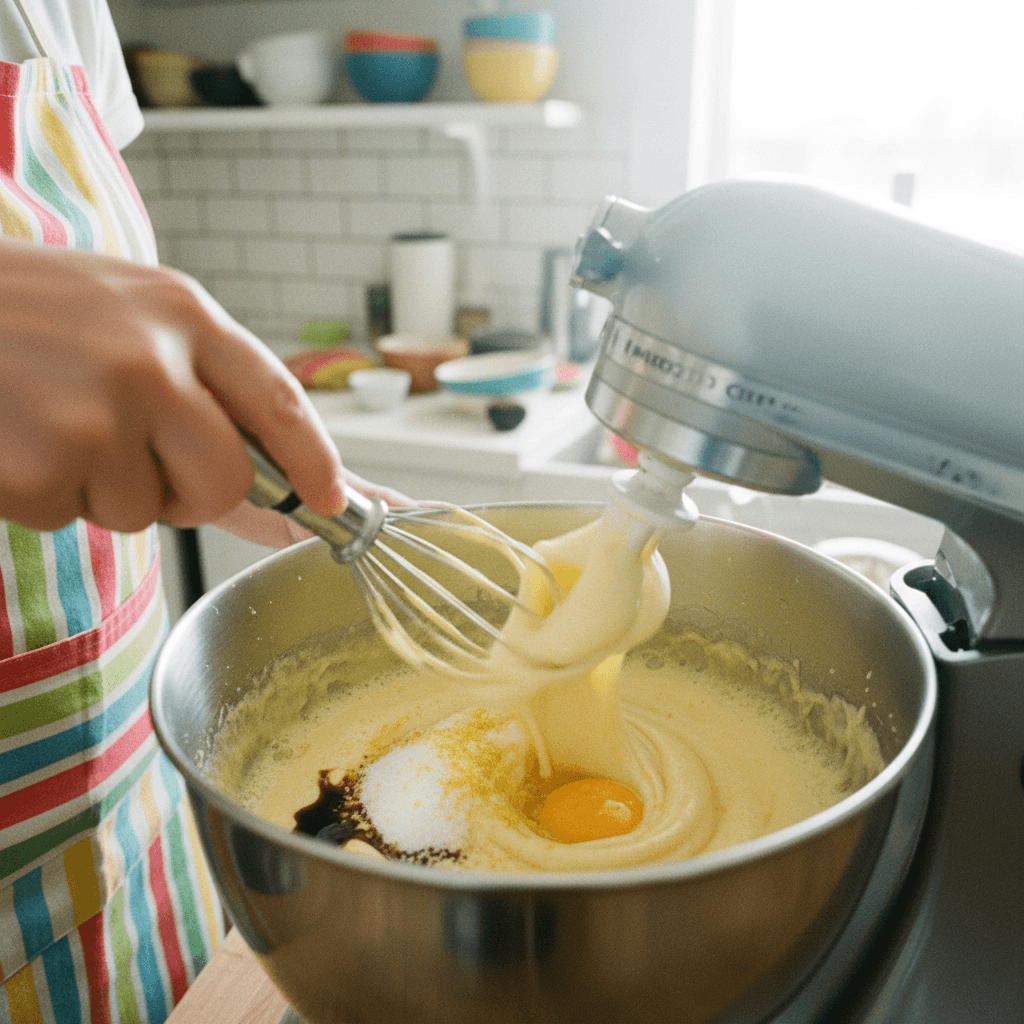
- 2
In a separate, clean stand mixer bowl, whisk the 180g egg whites until they become frothy. Slowly add the 120g caster sugar, about a tablespoon at a time, while continuing to whisk. Continue whisking until you achieve a stiff meringue, forming firm peaks.
⏱️ 10 min
- 3
Gently fold the prepared meringue into the egg yolk mixture in three separate additions using a spatula, being careful not to deflate the mixture. Sift the 120g plain flour over the mixture and gently fold it through until just combined. Finally, add the 60g vegetable oil and 60g milk, and fold these into the batter until fully incorporated.
⏱️ 15 min
- 4
Pour the finished batter into a baking tray that has been lined with baking paper. Use a palette knife or offset spatula to spread the batter evenly to all the edges of the tray. Gently shake or "shimmy" the tray a few times to help settle the batter and remove any air bubbles. Place the baking tray into the center of the oven and bake for 22 minutes at 170°C (340°F).
⏱️ 25 min•🌡️ 170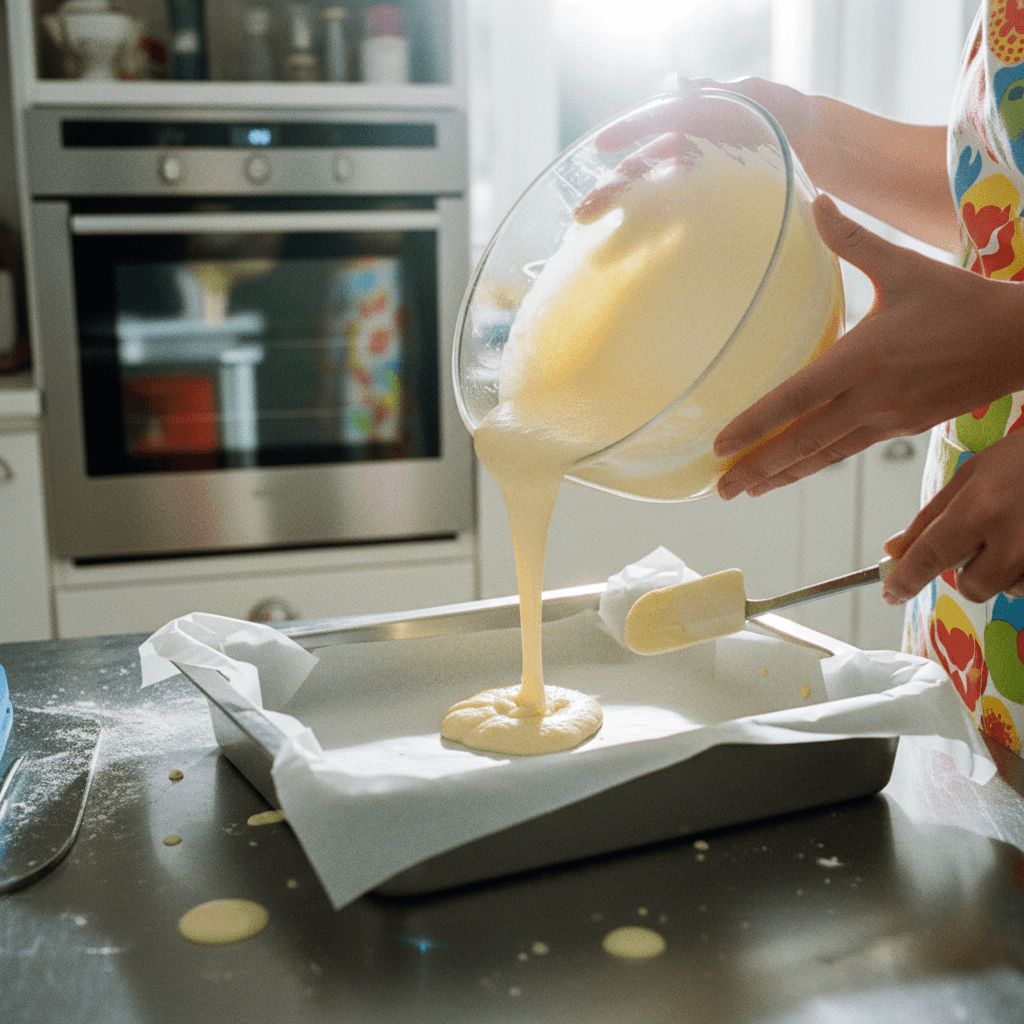
- 5
Once the sponge is baked, remove it from the oven and let it cool at room temperature for 30 minutes. After cooling, carefully flip the sponge out onto a larger, clean piece of baking paper. Using a serrated knife, cut a 45-degree angle off one of the long edges of the sponge. On the opposite long edge, trim off any shaggy or uneven edges. Then, score three lines into the sponge along this edge, making sure not to cut all the way through. This scoring creates an accordion-like effect that aids in flexible rolling.
⏱️ 40 min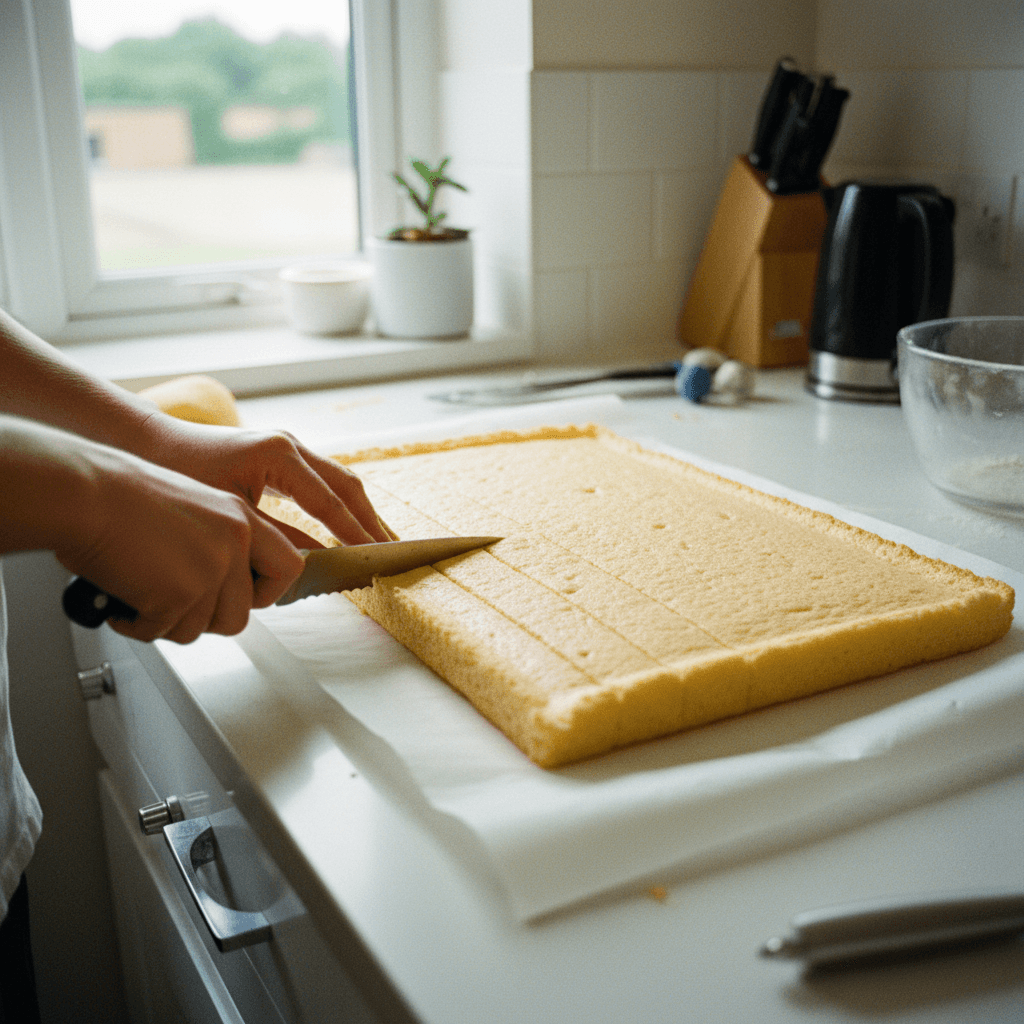
- 6
Spread a thin, even layer of raspberry jam over the entire surface of the sponge. Next, pipe even lines of stabilized mascarpone cream across the sponge. Then, use an offset spatula to gently spread the piped cream evenly over the jam layer.
⏱️ 10 min
- 7
Starting from the scored edge, carefully fold the edge tightly onto itself to begin the roll. Continue rolling the sponge into a tight log, using the parchment paper underneath to help guide and tighten the roll. Once rolled, wrap the parchment paper securely around the log. Place a ruler or a similar flat object along the outer edge of the rolled Swiss roll. Holding this flat object firmly in place, gently pull the parchment paper from the underside of the roll. This action will tighten the Swiss roll further, helping to create a neat cylinder shape. Secure the parchment paper with tape if necessary.
⏱️ 10 min
- 8
To ensure a perfectly round Swiss roll, carefully slide the rolled sponge (still wrapped in parchment paper) inside an 80mm pipe (approximately 3 inches in diameter). The pipe acts as a mold, compressing the Swiss roll into a perfect cylindrical shape. Place the pipe with the Swiss roll inside into the fridge or freezer to chill and set for at least 2 hours.
⏱️ 120 min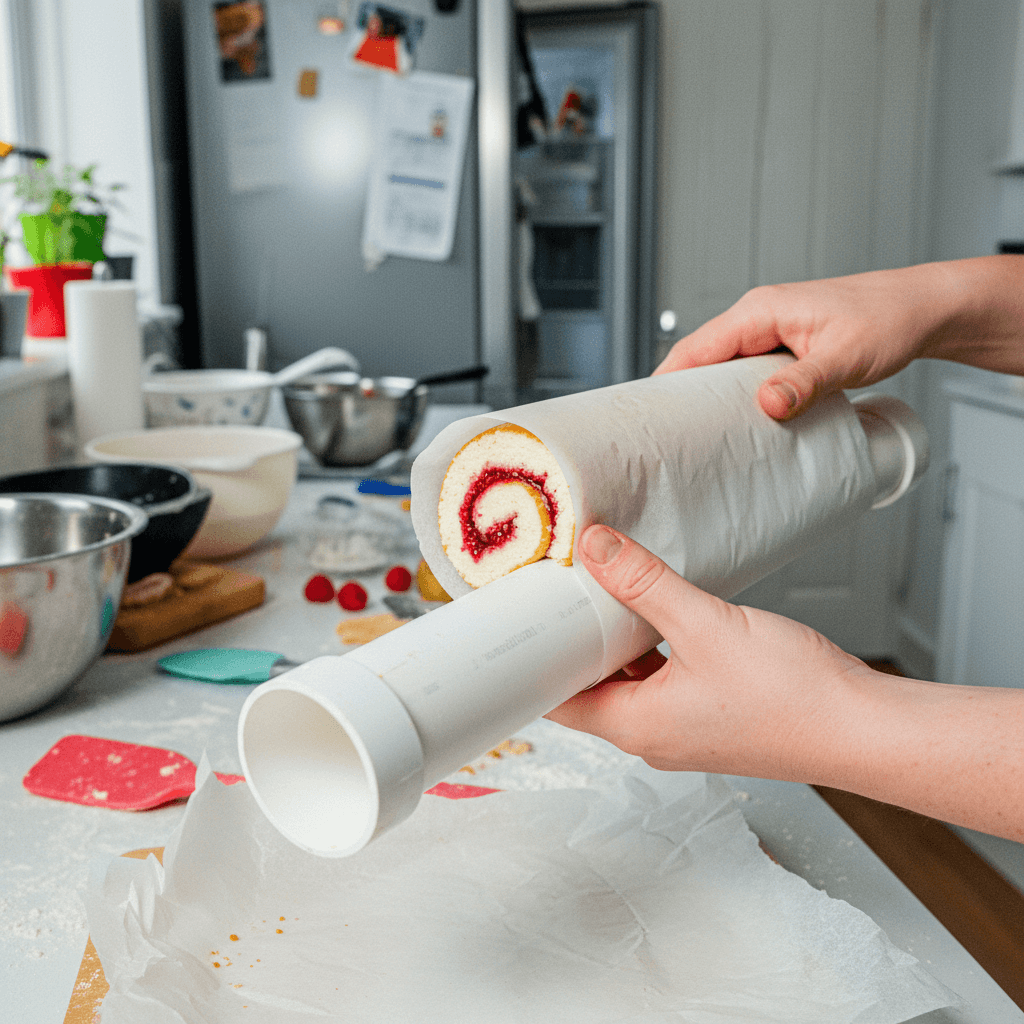
- 9
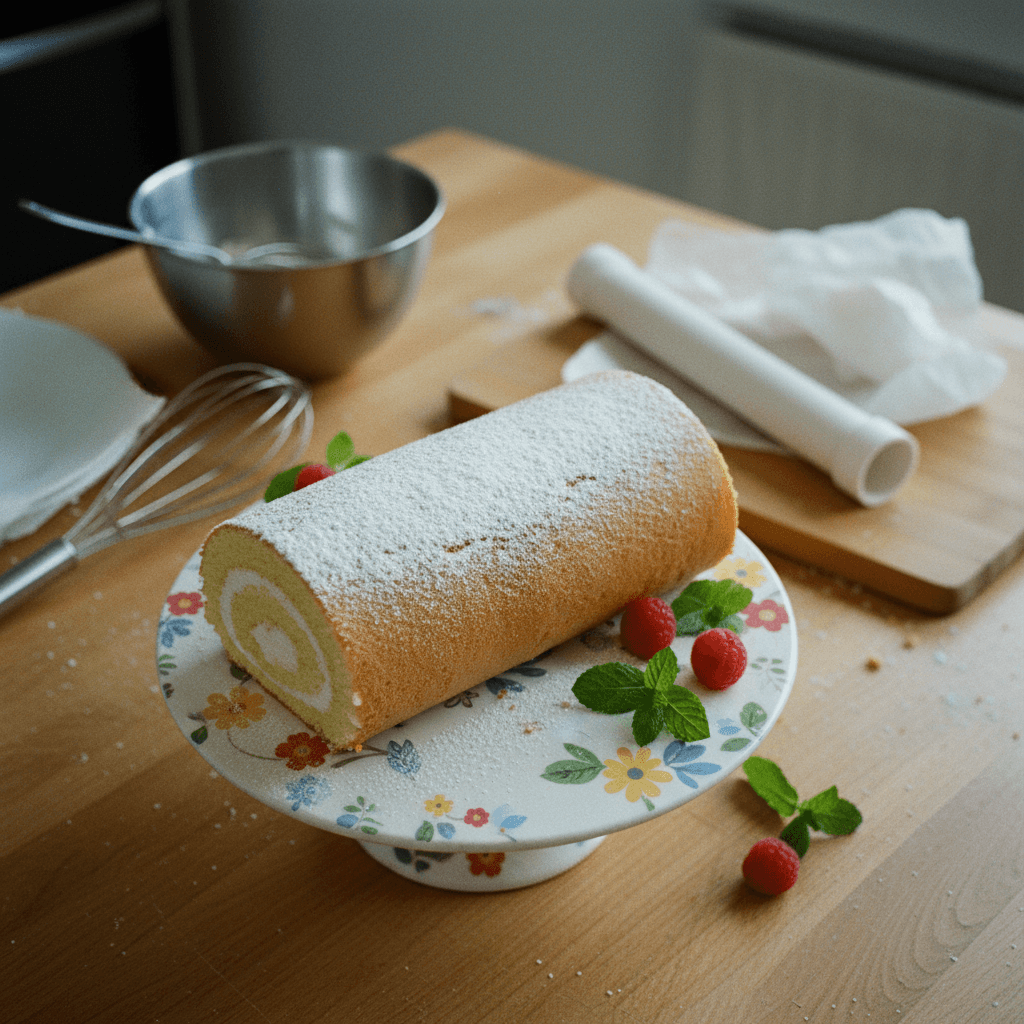
Once the Swiss roll has chilled and set, remove it from the pipe and unwrap the parchment paper. You can decorate it further if desired (e.g., with a dusting of icing sugar). Slice the Swiss roll using a hot knife for clean cuts and serve.
⏱️ 5 min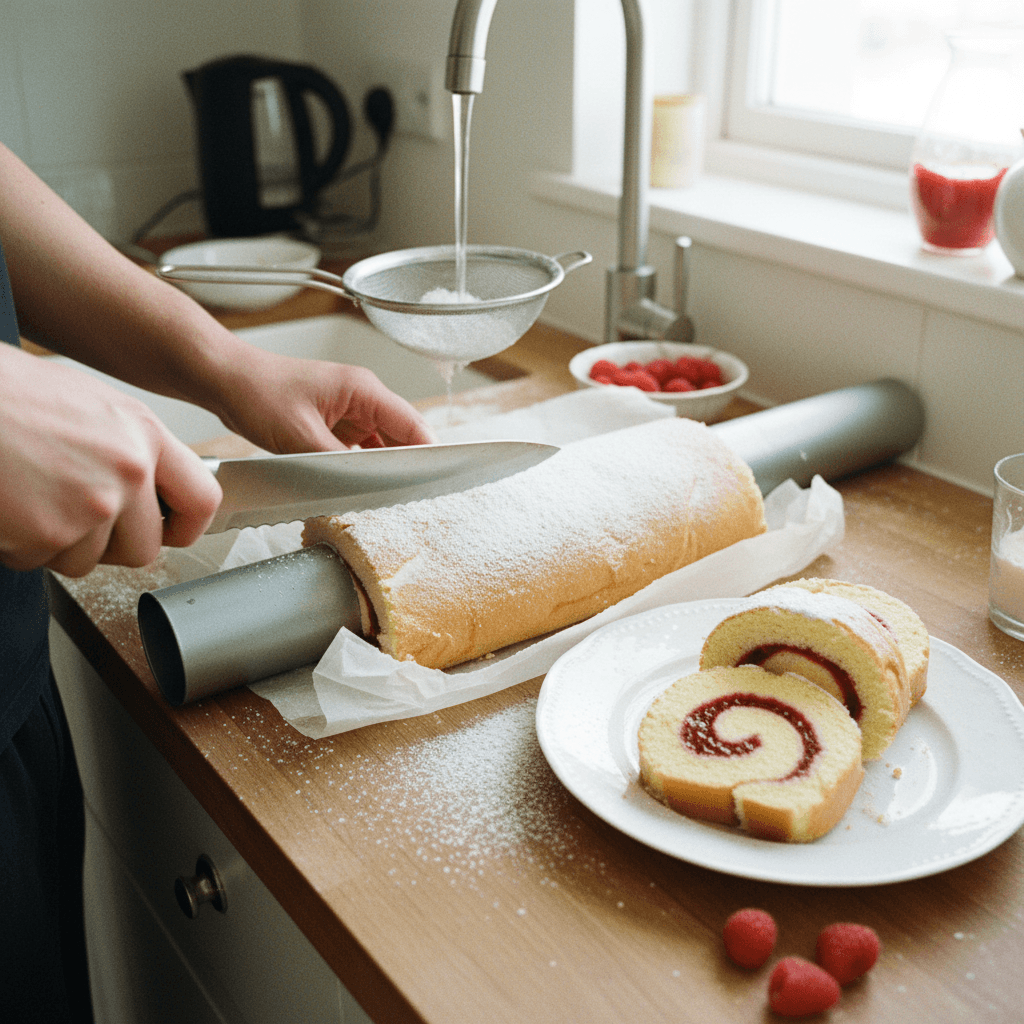
Kitchen Tools
The Perfect Swiss Roll
For the Egg Yolk Mixture
- 4 egg yolks
- 60 g caster sugar
- 1 lemon, zest of
- 1 teaspoon vanilla extract
For the French Meringue
- 180 g egg whites
- 120 g caster sugar
For the Dry Ingredients
- 120 g plain flour, sifted
For the Wet Ingredients
- 60 g vegetable oil
- 60 g milk
For the Filling
- as needed raspberry jam, or preferred jam
- as needed mascarpone cream, stabilized for structure
Instructions
- 1
In a large mixing bowl, combine the egg yolks, 60g caster sugar, the zest of 1 lemon, and 1 teaspoon of vanilla extract. Whisk this mixture using a stand mixer until it becomes thick and pale, which should take about 3 minutes. Set this mixture aside.
⏱️ 5 min - 2
In a separate, clean stand mixer bowl, whisk the 180g egg whites until they become frothy. Slowly add the 120g caster sugar, about a tablespoon at a time, while continuing to whisk. Continue whisking until you achieve a stiff meringue, forming firm peaks.
⏱️ 10 min - 3
Gently fold the prepared meringue into the egg yolk mixture in three separate additions using a spatula, being careful not to deflate the mixture. Sift the 120g plain flour over the mixture and gently fold it through until just combined. Finally, add the 60g vegetable oil and 60g milk, and fold these into the batter until fully incorporated.
⏱️ 15 min - 4
Pour the finished batter into a baking tray that has been lined with baking paper. Use a palette knife or offset spatula to spread the batter evenly to all the edges of the tray. Gently shake or "shimmy" the tray a few times to help settle the batter and remove any air bubbles. Place the baking tray into the center of the oven and bake for 22 minutes at 170°C (340°F).
⏱️ 25 min•🌡️ 170 - 5
Once the sponge is baked, remove it from the oven and let it cool at room temperature for 30 minutes. After cooling, carefully flip the sponge out onto a larger, clean piece of baking paper. Using a serrated knife, cut a 45-degree angle off one of the long edges of the sponge. On the opposite long edge, trim off any shaggy or uneven edges. Then, score three lines into the sponge along this edge, making sure not to cut all the way through. This scoring creates an accordion-like effect that aids in flexible rolling.
⏱️ 40 min - 6
Spread a thin, even layer of raspberry jam over the entire surface of the sponge. Next, pipe even lines of stabilized mascarpone cream across the sponge. Then, use an offset spatula to gently spread the piped cream evenly over the jam layer.
⏱️ 10 min - 7
Starting from the scored edge, carefully fold the edge tightly onto itself to begin the roll. Continue rolling the sponge into a tight log, using the parchment paper underneath to help guide and tighten the roll. Once rolled, wrap the parchment paper securely around the log. Place a ruler or a similar flat object along the outer edge of the rolled Swiss roll. Holding this flat object firmly in place, gently pull the parchment paper from the underside of the roll. This action will tighten the Swiss roll further, helping to create a neat cylinder shape. Secure the parchment paper with tape if necessary.
⏱️ 10 min - 8
To ensure a perfectly round Swiss roll, carefully slide the rolled sponge (still wrapped in parchment paper) inside an 80mm pipe (approximately 3 inches in diameter). The pipe acts as a mold, compressing the Swiss roll into a perfect cylindrical shape. Place the pipe with the Swiss roll inside into the fridge or freezer to chill and set for at least 2 hours.
⏱️ 120 min - 9
Once the Swiss roll has chilled and set, remove it from the pipe and unwrap the parchment paper. You can decorate it further if desired (e.g., with a dusting of icing sugar). Slice the Swiss roll using a hot knife for clean cuts and serve.
⏱️ 5 min