4-Ingredient Lemon Posset Brûlée
4-Ingredient Lemon Posset Brûlée
Ingredients
- 4 lemons, medium, organic if possible
- 2 cups heavy cream
- 2/3 cup granulated sugar
- 1/2 teaspoon vanilla extract
- 2 tablespoons granulated sugar, for brûlée topping
Instructions
- 1
Wash the lemons thoroughly. Slice each lemon in half lengthwise. Using a spoon, carefully scoop out all the pulp from each lemon half, creating hollowed lemon shells. Be gentle to avoid tearing the shells. Set the hollowed shells aside.
⏱️ 10 min
- 2
Place the scooped-out lemon pulp into a fine-mesh strainer set over a glass bowl. Press the pulp firmly with the back of a spoon to extract as much lemon juice as possible, collecting the juice in the bowl below. You should aim for about 1/2 cup of fresh lemon juice. Discard the remaining pulp. Zest 1 tablespoon of lemon peel directly into a stainless steel pan, avoiding the bitter white pith.
⏱️ 5 min
- 3
Pour the heavy cream into the stainless steel pan with the lemon zest. Add 2/3 cup of granulated sugar to the pan. Place the pan over medium heat and bring the mixture to a gentle simmer, stirring occasionally with a spatula to dissolve the sugar. Once simmering, reduce the heat to low and continue to simmer for 5 minutes, stirring constantly to prevent scorching and allow the mixture to thicken slightly.
⏱️ 8 min
- 4
Remove the pan from the heat. Stir in the 1/2 cup of strained lemon juice and the vanilla extract. Immediately pour the entire mixture from the pan through the fine-mesh strainer into a clean glass bowl. Use a spatula or spoon to press any remaining solids (like zest) through the strainer to ensure a perfectly smooth posset.
⏱️ 5 min
- 5
Carefully spoon the warm lemon posset mixture into each of the hollowed lemon shells. Arrange the filled lemon halves on a plate or in a shallow dish. Transfer to the refrigerator and chill for at least 3 hours, or until the posset is completely set and firm.
⏱️ 3 min
- 6
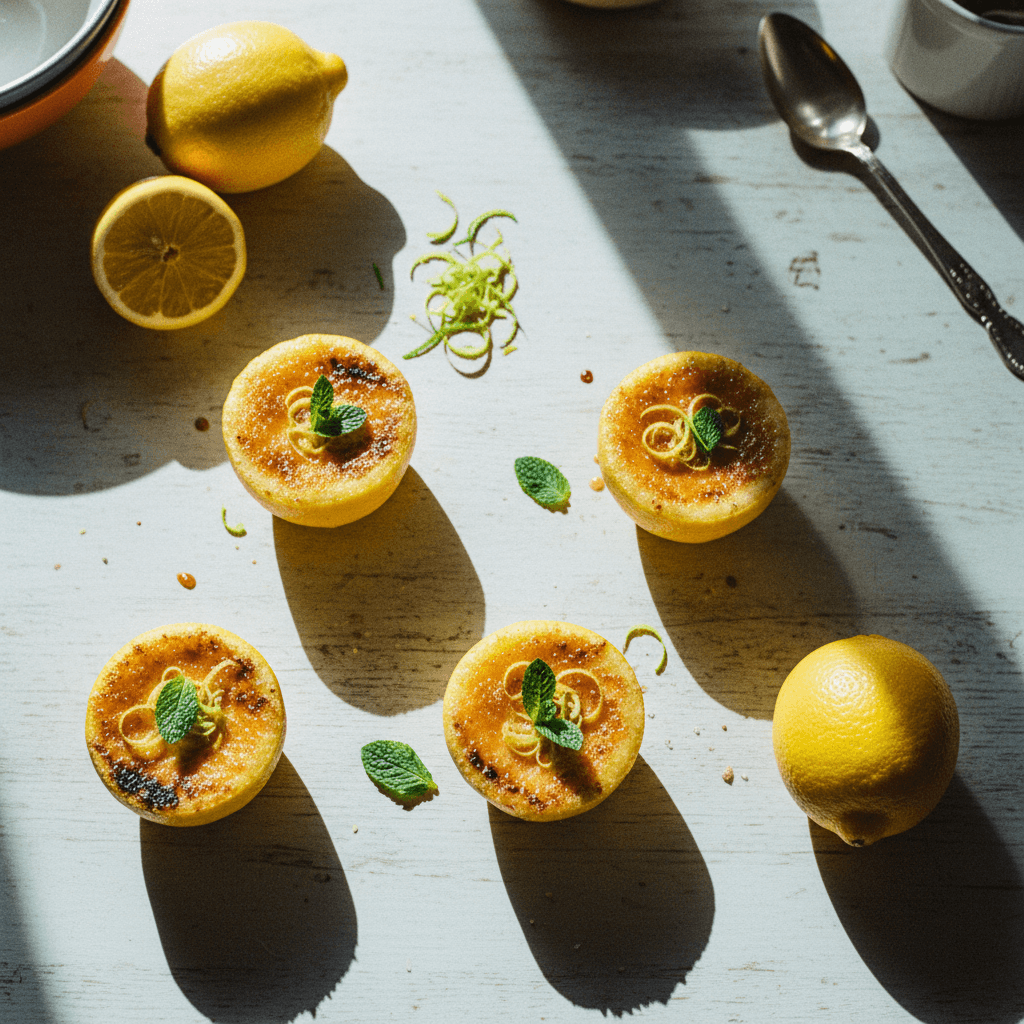
Once the posset is set, remove from the refrigerator. Sprinkle 1/2 teaspoon of granulated sugar evenly over the surface of each lemon posset. Using a kitchen torch, carefully brûlée the sugar topping until it caramelizes into a hard, golden-brown crust. Be careful not to burn the sugar or the lemon shell.
⏱️ 2 min
- 7
Serve the Lemon Posset Brûlée immediately. The caramelized sugar crust should crack satisfyingly when tapped with a spoon.
⏱️ 1 min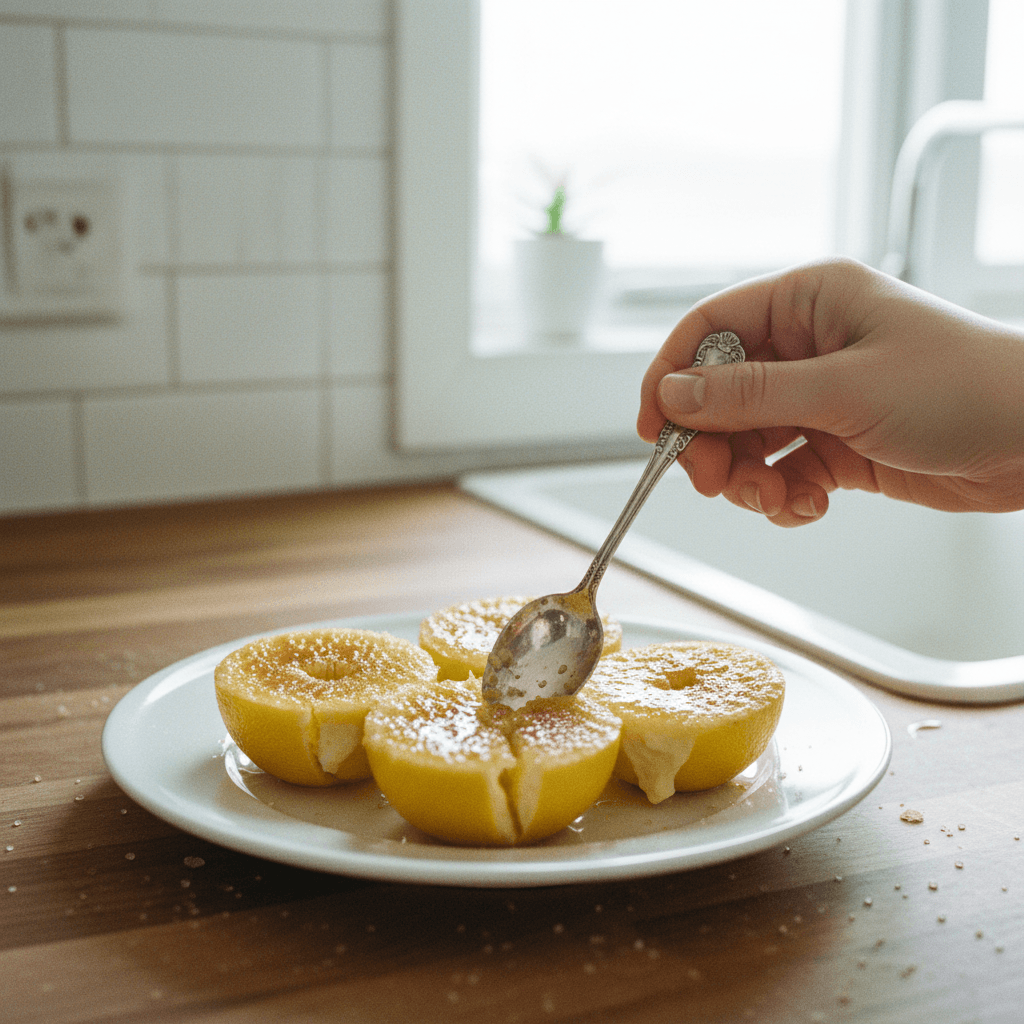
Kitchen Tools
Nutrition Facts (per serving)
4-Ingredient Lemon Posset Brûlée
- 4 lemons, medium, organic if possible
- 2 cups heavy cream
- 2/3 cup granulated sugar
- 1/2 teaspoon vanilla extract
- 2 tablespoons granulated sugar, for brûlée topping
Instructions
- 1
Wash the lemons thoroughly. Slice each lemon in half lengthwise. Using a spoon, carefully scoop out all the pulp from each lemon half, creating hollowed lemon shells. Be gentle to avoid tearing the shells. Set the hollowed shells aside.
⏱️ 10 min - 2
Place the scooped-out lemon pulp into a fine-mesh strainer set over a glass bowl. Press the pulp firmly with the back of a spoon to extract as much lemon juice as possible, collecting the juice in the bowl below. You should aim for about 1/2 cup of fresh lemon juice. Discard the remaining pulp. Zest 1 tablespoon of lemon peel directly into a stainless steel pan, avoiding the bitter white pith.
⏱️ 5 min - 3
Pour the heavy cream into the stainless steel pan with the lemon zest. Add 2/3 cup of granulated sugar to the pan. Place the pan over medium heat and bring the mixture to a gentle simmer, stirring occasionally with a spatula to dissolve the sugar. Once simmering, reduce the heat to low and continue to simmer for 5 minutes, stirring constantly to prevent scorching and allow the mixture to thicken slightly.
⏱️ 8 min - 4
Remove the pan from the heat. Stir in the 1/2 cup of strained lemon juice and the vanilla extract. Immediately pour the entire mixture from the pan through the fine-mesh strainer into a clean glass bowl. Use a spatula or spoon to press any remaining solids (like zest) through the strainer to ensure a perfectly smooth posset.
⏱️ 5 min - 5
Carefully spoon the warm lemon posset mixture into each of the hollowed lemon shells. Arrange the filled lemon halves on a plate or in a shallow dish. Transfer to the refrigerator and chill for at least 3 hours, or until the posset is completely set and firm.
⏱️ 3 min - 6
Once the posset is set, remove from the refrigerator. Sprinkle 1/2 teaspoon of granulated sugar evenly over the surface of each lemon posset. Using a kitchen torch, carefully brûlée the sugar topping until it caramelizes into a hard, golden-brown crust. Be careful not to burn the sugar or the lemon shell.
⏱️ 2 min - 7
Serve the Lemon Posset Brûlée immediately. The caramelized sugar crust should crack satisfyingly when tapped with a spoon.
⏱️ 1 min