Fresh Pasta (Tortelloni/Tortellini)
Fresh Pasta (Tortelloni/Tortellini)

Ingredients
For the Pasta Dough
- 2 cups 00 flour
- 4 large eggs
- as needed 00 flour, for dusting
For the Filling
- 1 cup ricotta cheese, or grated Parmesan cheese
Instructions
- 1
On a clean wooden surface, place 2 cups of 00 flour, forming it into a mound with a well in the center.
⏱️ 2 min
- 2
Crack 4 large eggs directly into the well of the flour.
⏱️ 1 min
- 3
Using a fork, gently whisk the eggs, gradually incorporating small amounts of flour from the inner edge of the well. Continue to mix until a shaggy dough forms, and most of the flour has been incorporated into the egg mixture.
⏱️ 5 min
- 4
Use a metal dough scraper to gather the dough pieces from the surface, pressing them together.
⏱️ 2 min
- 5
Knead the dough on the wooden surface with your hands, pressing and folding it repeatedly until it forms a smooth, elastic ball. This should take about 8-10 minutes.
⏱️ 10 min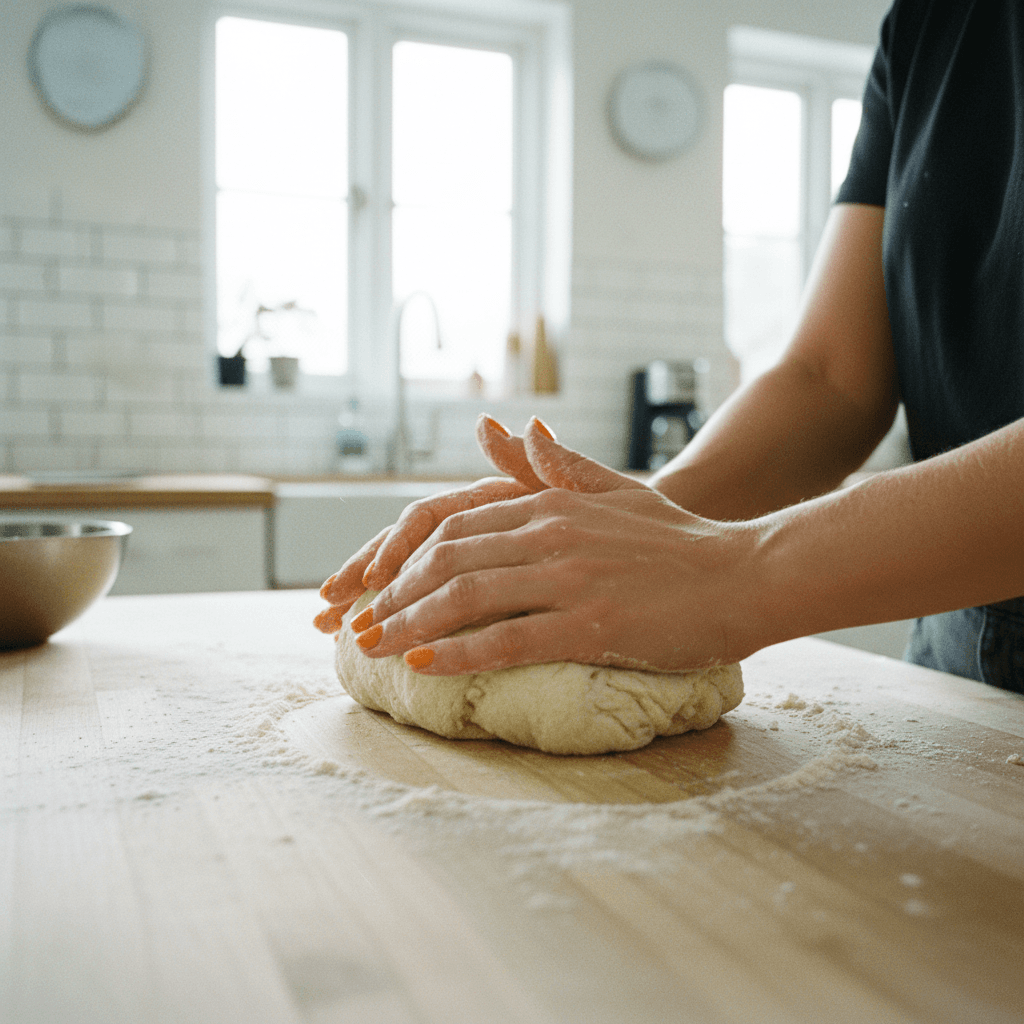
- 6
Lightly flour the wooden surface. Place the dough ball on it and use a wooden rolling pin to roll it out into a thin, large sheet.
⏱️ 5 min
- 7
Lightly sprinkle additional flour over the rolled-out dough sheet to prevent sticking.
⏱️ 1 min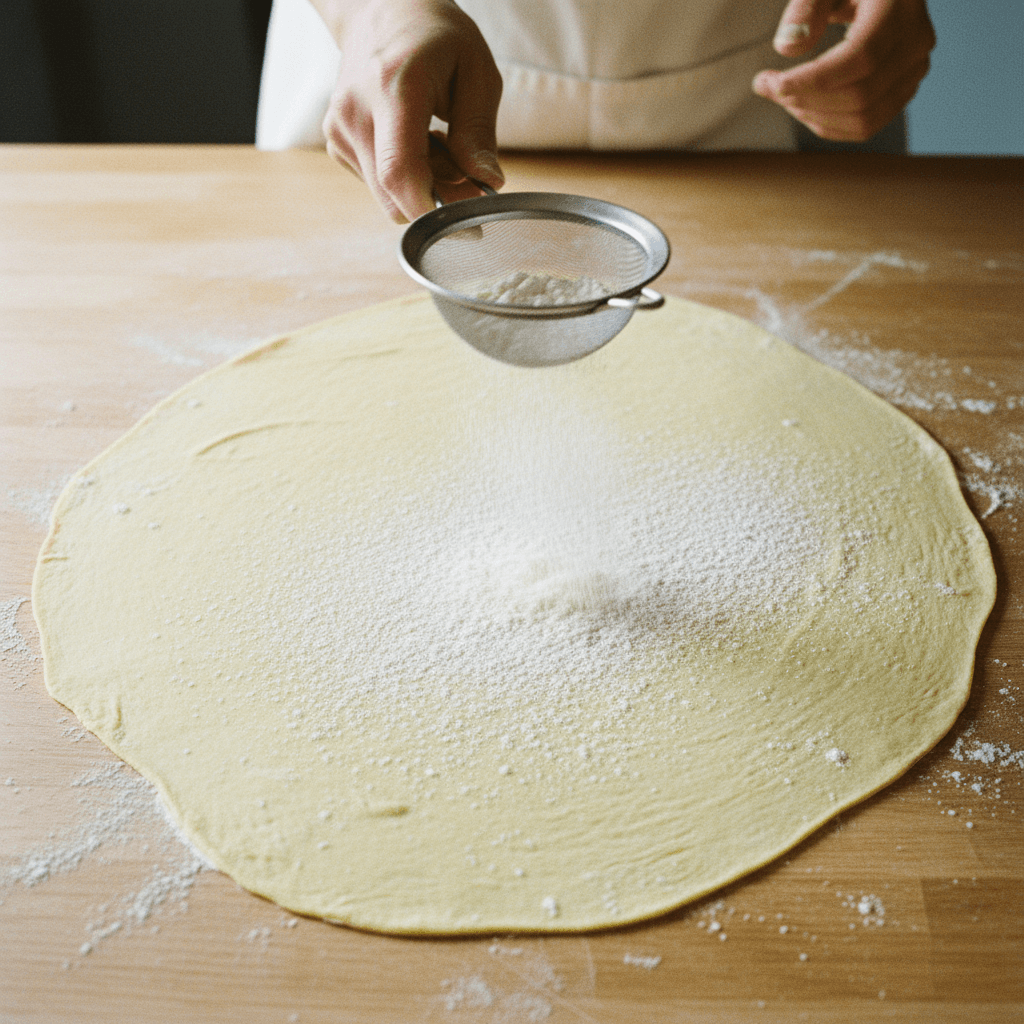
- 8
Continue rolling the dough with the rolling pin to achieve a very thin, even sheet, almost translucent.
⏱️ 5 min
- 9
Using a fluted pastry wheel, cut the large pasta sheet into long, even strips, approximately 1 1/2 inches wide.
⏱️ 2 min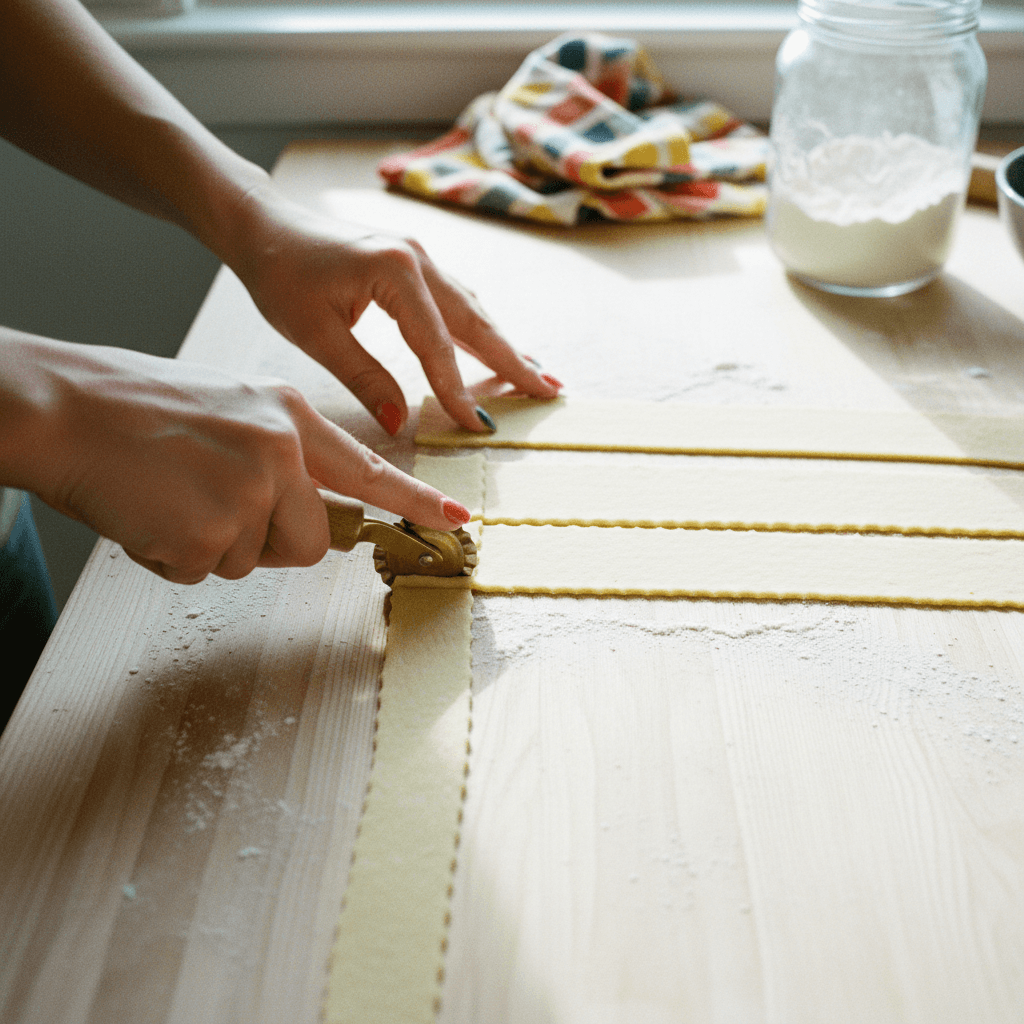
- 10
Then, cut across these strips with the fluted pastry wheel to create individual squares of pasta dough, approximately 1 1/2 inches by 1 1/2 inches.
⏱️ 3 min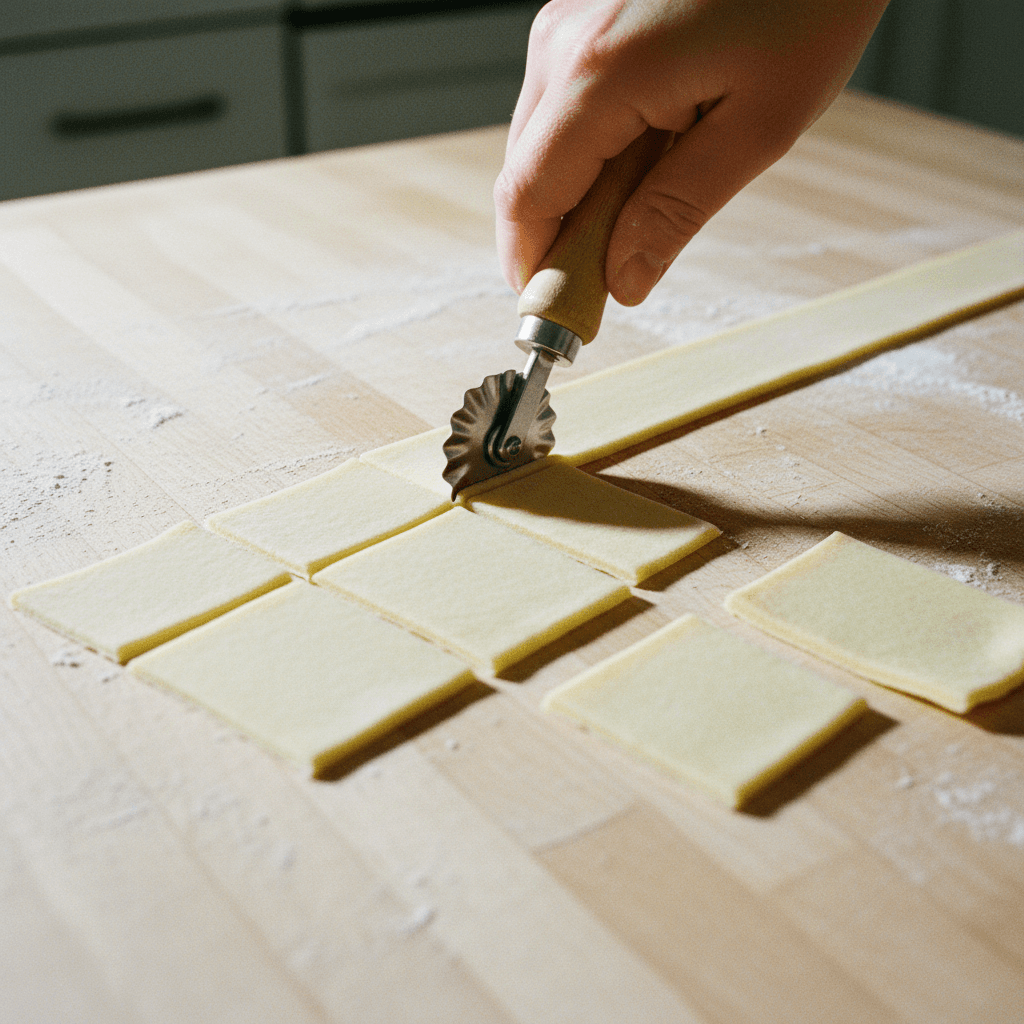
- 11
Using a piping bag (or a small spoon), pipe small mounds of the ricotta/Parmesan filling onto the center of each pasta square.
⏱️ 5 min
- 12
To shape the pasta: Pick up one square of dough with filling. Fold it diagonally to form a triangle, pressing the edges firmly to seal the filling inside. Then, bring the two acute corners of the triangle together and press them firmly to seal, forming a tortelloni or tortellini shape.
⏱️ 5 min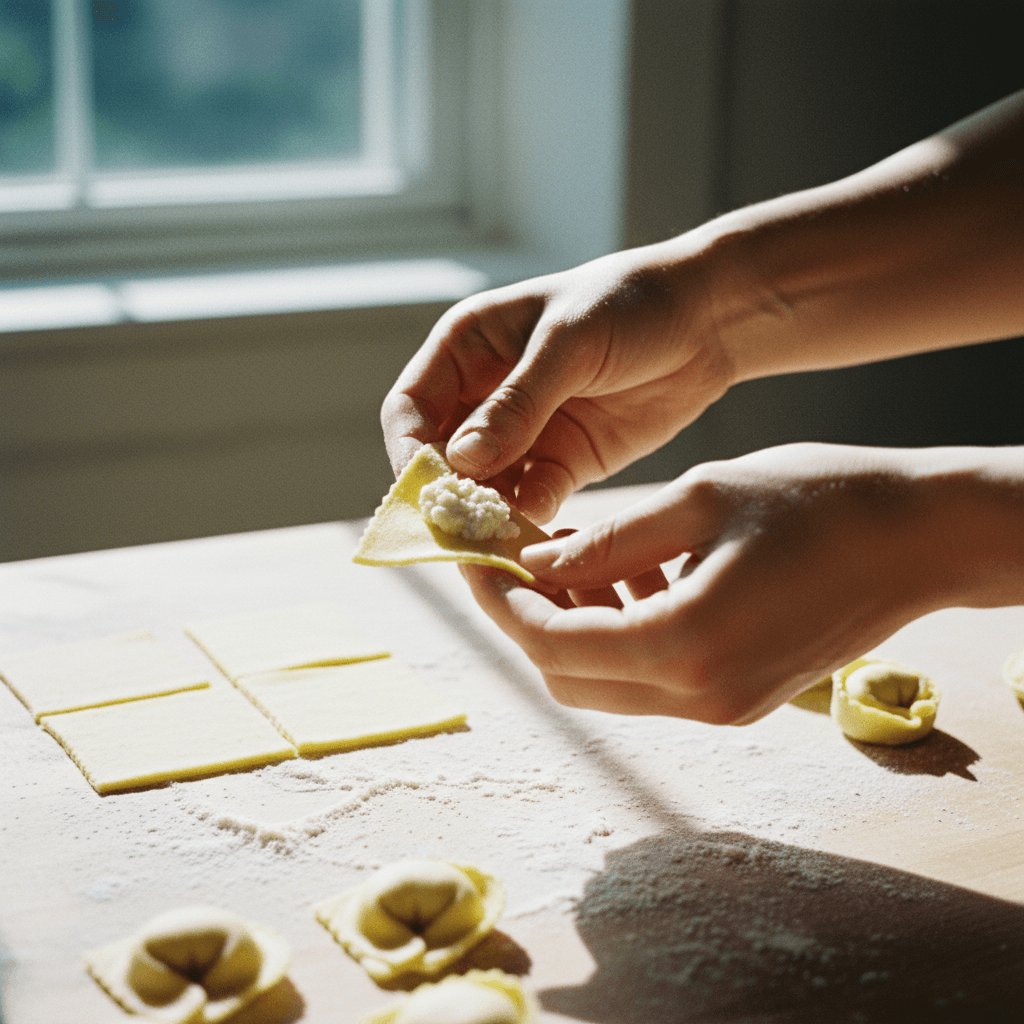
- 13
Repeat the shaping process for all remaining pasta squares and filling. Place the shaped pasta on a lightly floured baking sheet.
⏱️ 5 min
- 14
The finished fresh pasta shapes are ready for cooking immediately in boiling salted water for 3-5 minutes, or they can be stored. For storage, freeze them on a baking sheet until solid, then transfer to an airtight container.
⏱️ 5 min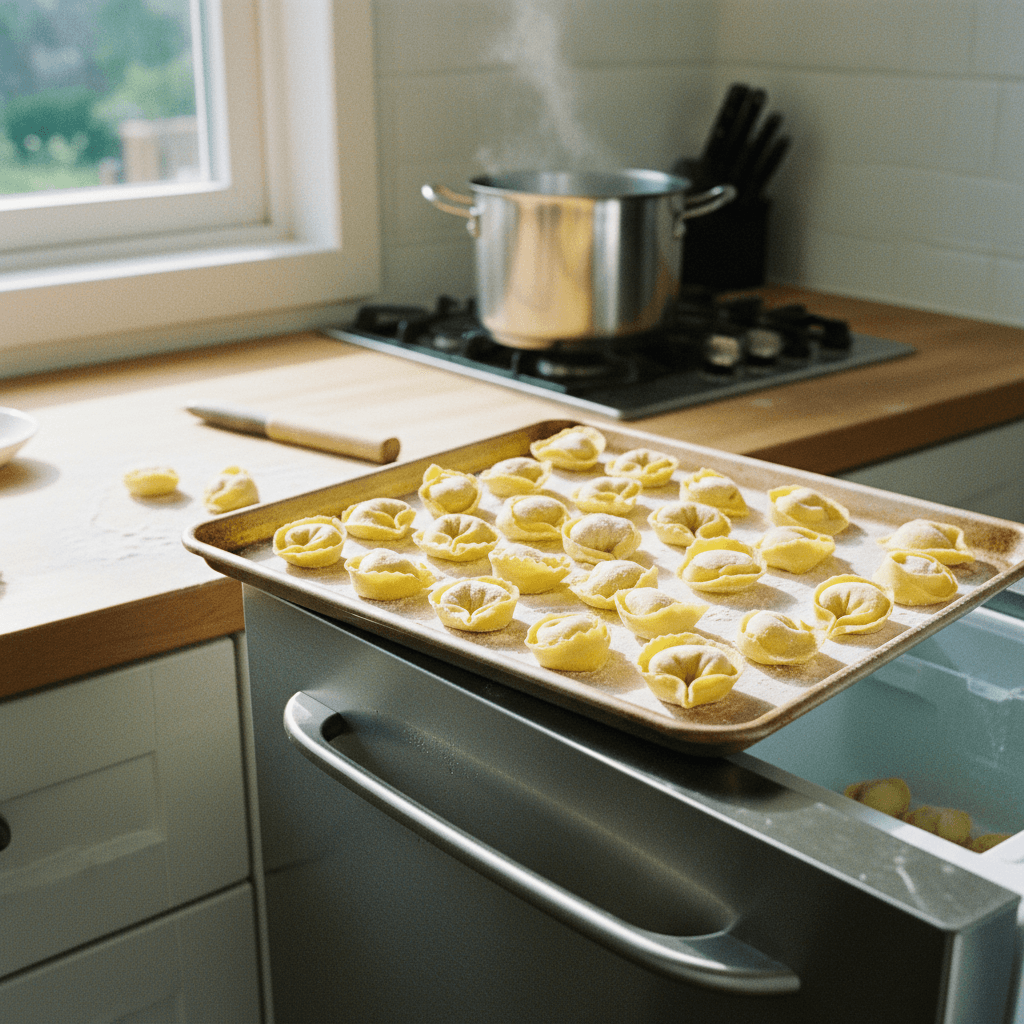
Kitchen Tools
Nutrition Facts (per serving)
Fresh Pasta (Tortelloni/Tortellini)
For the Pasta Dough
- 2 cups 00 flour
- 4 large eggs
- as needed 00 flour, for dusting
For the Filling
- 1 cup ricotta cheese, or grated Parmesan cheese
Instructions
- 1
On a clean wooden surface, place 2 cups of 00 flour, forming it into a mound with a well in the center.
⏱️ 2 min - 2
Crack 4 large eggs directly into the well of the flour.
⏱️ 1 min - 3
Using a fork, gently whisk the eggs, gradually incorporating small amounts of flour from the inner edge of the well. Continue to mix until a shaggy dough forms, and most of the flour has been incorporated into the egg mixture.
⏱️ 5 min - 4
Use a metal dough scraper to gather the dough pieces from the surface, pressing them together.
⏱️ 2 min - 5
Knead the dough on the wooden surface with your hands, pressing and folding it repeatedly until it forms a smooth, elastic ball. This should take about 8-10 minutes.
⏱️ 10 min - 6
Lightly flour the wooden surface. Place the dough ball on it and use a wooden rolling pin to roll it out into a thin, large sheet.
⏱️ 5 min - 7
Lightly sprinkle additional flour over the rolled-out dough sheet to prevent sticking.
⏱️ 1 min - 8
Continue rolling the dough with the rolling pin to achieve a very thin, even sheet, almost translucent.
⏱️ 5 min - 9
Using a fluted pastry wheel, cut the large pasta sheet into long, even strips, approximately 1 1/2 inches wide.
⏱️ 2 min - 10
Then, cut across these strips with the fluted pastry wheel to create individual squares of pasta dough, approximately 1 1/2 inches by 1 1/2 inches.
⏱️ 3 min - 11
Using a piping bag (or a small spoon), pipe small mounds of the ricotta/Parmesan filling onto the center of each pasta square.
⏱️ 5 min - 12
To shape the pasta: Pick up one square of dough with filling. Fold it diagonally to form a triangle, pressing the edges firmly to seal the filling inside. Then, bring the two acute corners of the triangle together and press them firmly to seal, forming a tortelloni or tortellini shape.
⏱️ 5 min - 13
Repeat the shaping process for all remaining pasta squares and filling. Place the shaped pasta on a lightly floured baking sheet.
⏱️ 5 min - 14
The finished fresh pasta shapes are ready for cooking immediately in boiling salted water for 3-5 minutes, or they can be stored. For storage, freeze them on a baking sheet until solid, then transfer to an airtight container.
⏱️ 5 min