Choux Pastry
Choux Pastry

Ingredients
- 140 g milk
- 140 g water
- 115 g butter
- 150 g flour
- 4 St ewe eggs
Instructions
- 1
Combine the milk, water, and butter in a robust pan (such as cast iron or Hestan). Bring the mixture to a rolling boil over medium-high heat, ensuring the butter is fully melted.
⏱️ 5 min
- 2
Once boiling, immediately add the flour to the pan. Reduce the heat to low and vigorously stir the mixture with a wooden spoon. Continue stirring constantly to cook out the flour, until the dough comes together as a single ball and cleanly separates from the sides of the pan. The dough should form an indentation when pressed.
⏱️ 7 min
- 3
Transfer the hot dough to a stand mixer fitted with a paddle attachment. With the mixer on a low speed, add the St ewe eggs one at a time, allowing each egg to be fully incorporated before adding the next. Continue mixing until the dough is smooth and reaches a 'V-shaped dropping consistency' – when lifted with a spatula, it should stretch and fall off in a V-shape, briefly holding its form.
⏱️ 8 min
- 4
Chill the choux pastry until it is completely cold. This will firm up the dough and make it easier to pipe.
⏱️ 30 min
- 5
Preheat your oven to 190°C. Load the chilled choux pastry into a piping bag fitted with a plain tip piping nozzle. Pipe the choux pastry onto a baking mat or parchment-lined baking sheet into desired shapes (e.g., 1 cm wide strips for éclairs, small rounds for gougères, or concentric circles for Paris-Brest). For round shapes, gently press down any peaks with a wet finger to ensure even cooking.
⏱️ 5 min•🌡️ 190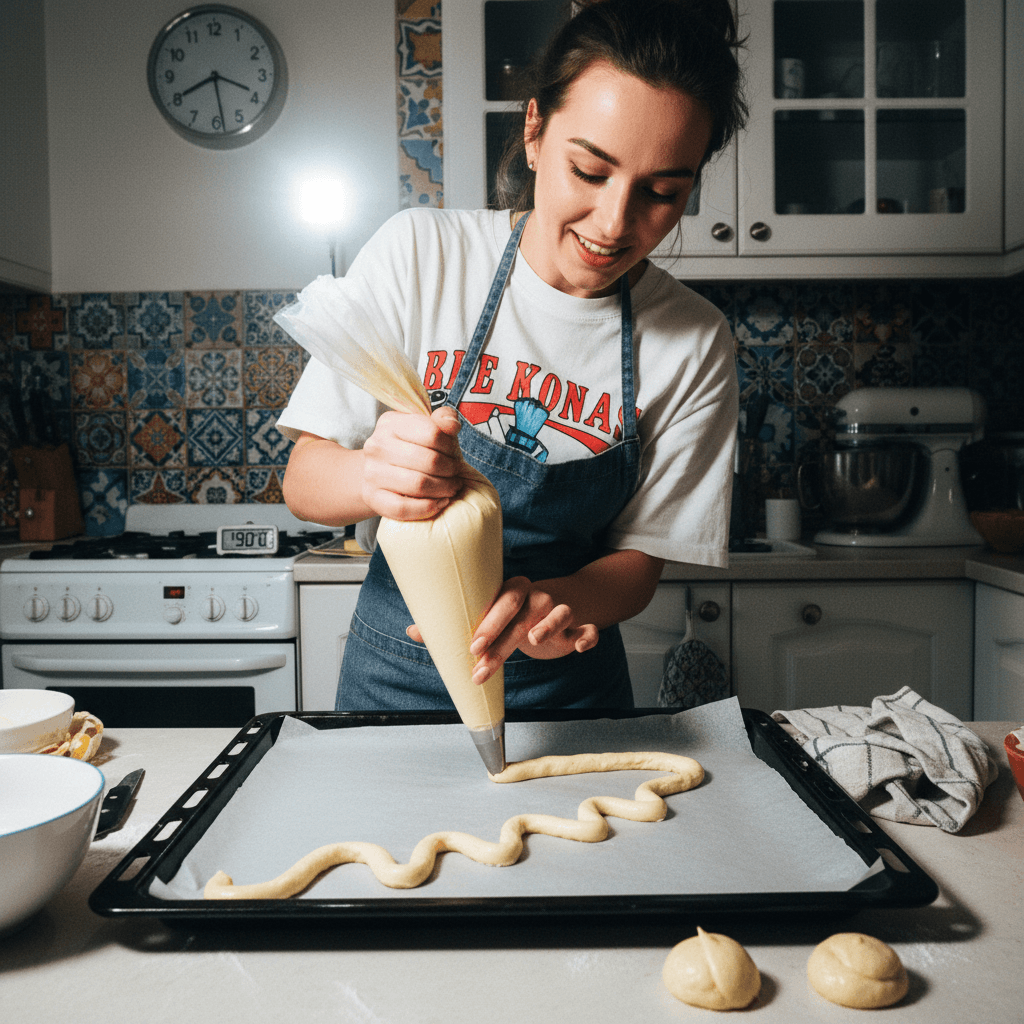
- 6
Bake the choux pastry at 190°C for 12 to 15 minutes, or until it is golden brown and appears half-cooked.
⏱️ 15 min•🌡️ 190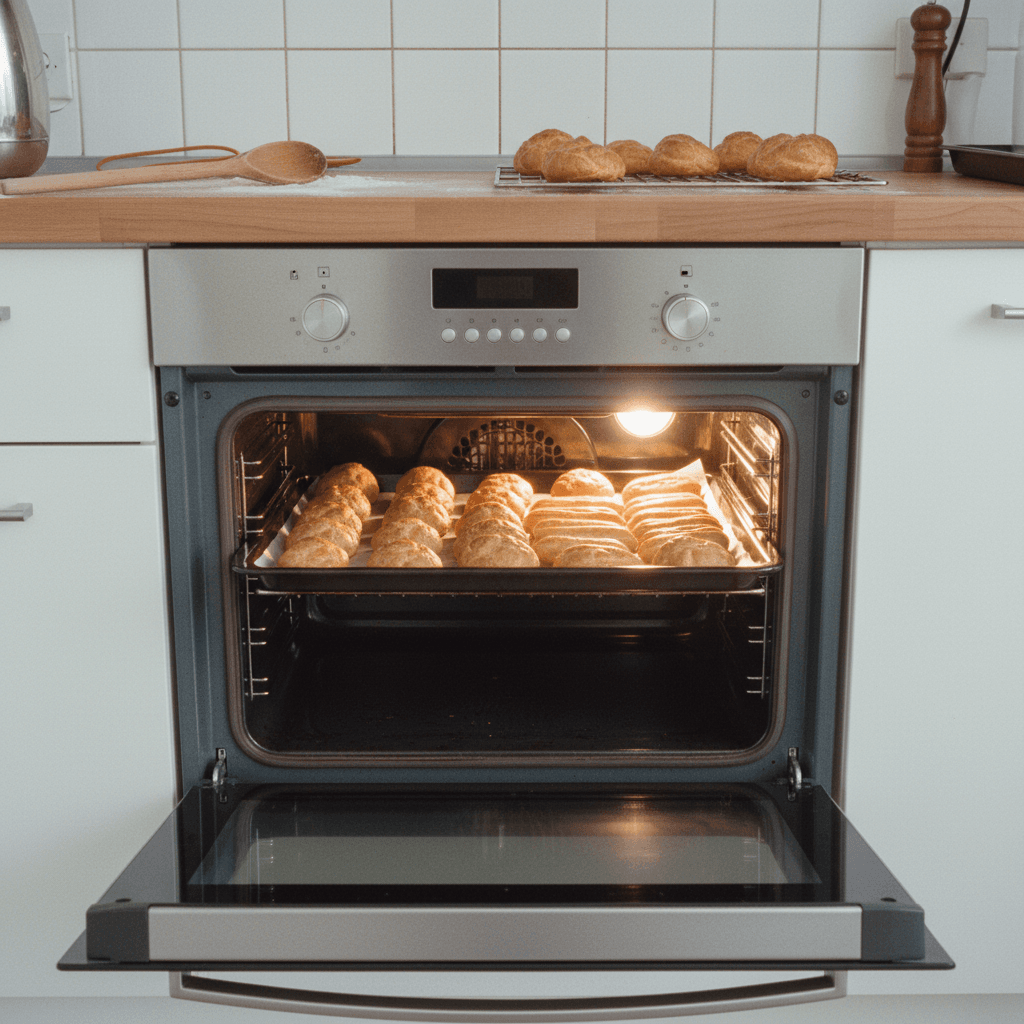
- 7
Reduce the oven temperature to 160°C and continue baking for another 8 to 10 minutes. The choux should be golden brown on the base, hollow, and light when fully cooked.
⏱️ 10 min•🌡️ 160
- 8
Once baked, remove the choux pastry from the oven and allow it to cool completely on a wire rack before filling.
⏱️ 20 min
Kitchen Tools
Nutrition Facts (per serving)
Choux Pastry
- 140 g milk
- 140 g water
- 115 g butter
- 150 g flour
- 4 St ewe eggs
Instructions
- 1
Combine the milk, water, and butter in a robust pan (such as cast iron or Hestan). Bring the mixture to a rolling boil over medium-high heat, ensuring the butter is fully melted.
⏱️ 5 min - 2
Once boiling, immediately add the flour to the pan. Reduce the heat to low and vigorously stir the mixture with a wooden spoon. Continue stirring constantly to cook out the flour, until the dough comes together as a single ball and cleanly separates from the sides of the pan. The dough should form an indentation when pressed.
⏱️ 7 min - 3
Transfer the hot dough to a stand mixer fitted with a paddle attachment. With the mixer on a low speed, add the St ewe eggs one at a time, allowing each egg to be fully incorporated before adding the next. Continue mixing until the dough is smooth and reaches a 'V-shaped dropping consistency' – when lifted with a spatula, it should stretch and fall off in a V-shape, briefly holding its form.
⏱️ 8 min - 4
Chill the choux pastry until it is completely cold. This will firm up the dough and make it easier to pipe.
⏱️ 30 min - 5
Preheat your oven to 190°C. Load the chilled choux pastry into a piping bag fitted with a plain tip piping nozzle. Pipe the choux pastry onto a baking mat or parchment-lined baking sheet into desired shapes (e.g., 1 cm wide strips for éclairs, small rounds for gougères, or concentric circles for Paris-Brest). For round shapes, gently press down any peaks with a wet finger to ensure even cooking.
⏱️ 5 min•🌡️ 190 - 6
Bake the choux pastry at 190°C for 12 to 15 minutes, or until it is golden brown and appears half-cooked.
⏱️ 15 min•🌡️ 190 - 7
Reduce the oven temperature to 160°C and continue baking for another 8 to 10 minutes. The choux should be golden brown on the base, hollow, and light when fully cooked.
⏱️ 10 min•🌡️ 160 - 8
Once baked, remove the choux pastry from the oven and allow it to cool completely on a wire rack before filling.
⏱️ 20 min