Easy Kimchi (김치)
Easy Kimchi (김치)

Ingredients
For the Cabbage
- 1 Napa cabbage
- 1 cup salt
- 1 cup water, plus additional for rinsing/soaking
For the Seasoning Paste
- 1 onion
- 200 grams garlic, adjustable
- 25 grams ginger, optional
- 100 grams water
- 50 grams sugar
- 1 tablespoon MSG
- 100 grams fish sauce, plus additional for adjusting taste
- 3 tablespoons flour, any type
- 200 grams water
- 200 grams gochugaru
- 2 green onions, optional
- 200 grams chive, optional
Instructions
- 1
To make the vegetable paste, combine 1 onion, 200 grams of garlic (adjustable), 25 grams of ginger (optional), 100 grams of water, 50 grams of sugar, 1 tablespoon of MSG, and 100 grams of fish sauce in a blender. Blend until completely smooth.
⏱️ 5 min
- 2
In a separate microwave-safe bowl, whisk together 3 tablespoons of flour and 200 grams of water until no lumps remain.
⏱️ 2 min
- 3
Microwave the flour mixture for 30 seconds. Remove, stir well, then microwave for another 30 seconds until it forms a thick paste. This is your flour paste.
⏱️ 1 min
- 4
If using, cut the green onions into 1 cm pieces and the chive into 3 cm pieces.
⏱️ 5 min
- 5
In a large bowl, combine 200 grams of gochugaru, the prepared vegetable paste, the prepared flour paste, the cut green onions, and the cut chive. Mix thoroughly until all ingredients are well incorporated.
⏱️ 5 min
- 6
Taste the seasoning paste. If it is not salty enough for your preference, add more fish sauce, 1 teaspoon at a time, until the desired saltiness is achieved.
⏱️ 2 min
- 7
Cut the Napa cabbage into approximately 3 cm x 3 cm pieces.
⏱️ 10 min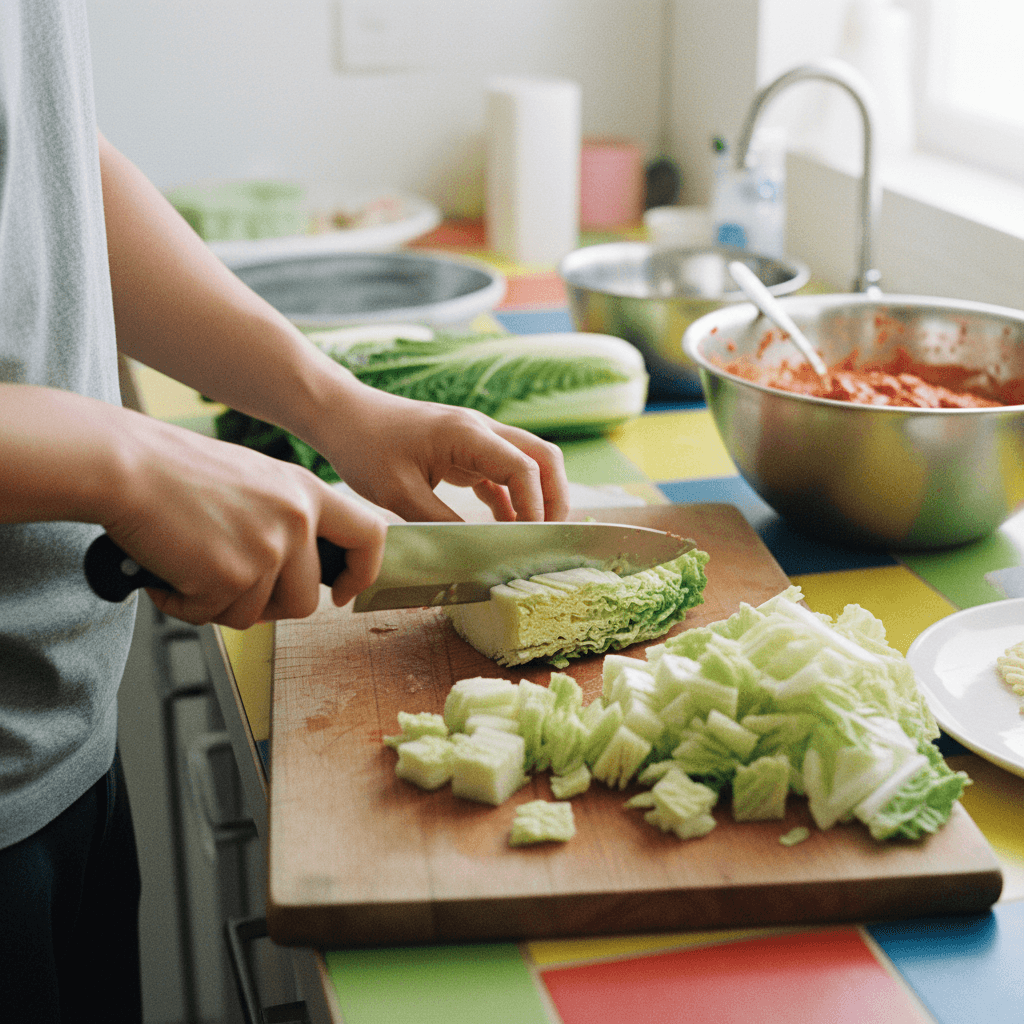
- 8
Place the cut cabbage in a very large bowl. In a separate bowl, mix 1 cup of salt with 1 cup of water until the salt is dissolved. Pour this salt water mixture over the cabbage.
⏱️ 2 min
- 9
Let the cabbage soak in the salt water for 1 hour, allowing it to soften and release moisture.
- 10
After 1 hour, drain the cabbage and rinse it thoroughly three times with fresh water to remove excess salt.
⏱️ 5 min
- 11
Taste a piece of the rinsed cabbage. If it is still too salty, soak it in a bowl of fresh water for about 30 minutes to further reduce the saltiness. Drain well after soaking.

- 12
Add the prepared seasoning paste to the soaked and rinsed Napa cabbage. Using your hands (wearing gloves is recommended), thoroughly mix the paste into the cabbage, ensuring every piece is evenly coated.
⏱️ 8 min
- 13
Pack the kimchi tightly into a clean, airtight container. Leave some headspace at the top. Allow the kimchi to ferment at room temperature for 3 to 4 days. The exact time will depend on the ambient temperature and your desired level of fermentation.

- 14
Once fermented to your liking, transfer the kimchi to the refrigerator for storage. It will continue to ferment slowly in the cold.

Kitchen Tools
Nutrition Facts (per serving)
Easy Kimchi (김치)
For the Cabbage
- 1 Napa cabbage
- 1 cup salt
- 1 cup water, plus additional for rinsing/soaking
For the Seasoning Paste
- 1 onion
- 200 grams garlic, adjustable
- 25 grams ginger, optional
- 100 grams water
- 50 grams sugar
- 1 tablespoon MSG
- 100 grams fish sauce, plus additional for adjusting taste
- 3 tablespoons flour, any type
- 200 grams water
- 200 grams gochugaru
- 2 green onions, optional
- 200 grams chive, optional
Instructions
- 1
To make the vegetable paste, combine 1 onion, 200 grams of garlic (adjustable), 25 grams of ginger (optional), 100 grams of water, 50 grams of sugar, 1 tablespoon of MSG, and 100 grams of fish sauce in a blender. Blend until completely smooth.
⏱️ 5 min - 2
In a separate microwave-safe bowl, whisk together 3 tablespoons of flour and 200 grams of water until no lumps remain.
⏱️ 2 min - 3
Microwave the flour mixture for 30 seconds. Remove, stir well, then microwave for another 30 seconds until it forms a thick paste. This is your flour paste.
⏱️ 1 min - 4
If using, cut the green onions into 1 cm pieces and the chive into 3 cm pieces.
⏱️ 5 min - 5
In a large bowl, combine 200 grams of gochugaru, the prepared vegetable paste, the prepared flour paste, the cut green onions, and the cut chive. Mix thoroughly until all ingredients are well incorporated.
⏱️ 5 min - 6
Taste the seasoning paste. If it is not salty enough for your preference, add more fish sauce, 1 teaspoon at a time, until the desired saltiness is achieved.
⏱️ 2 min - 7
Cut the Napa cabbage into approximately 3 cm x 3 cm pieces.
⏱️ 10 min - 8
Place the cut cabbage in a very large bowl. In a separate bowl, mix 1 cup of salt with 1 cup of water until the salt is dissolved. Pour this salt water mixture over the cabbage.
⏱️ 2 min - 9
Let the cabbage soak in the salt water for 1 hour, allowing it to soften and release moisture.
- 10
After 1 hour, drain the cabbage and rinse it thoroughly three times with fresh water to remove excess salt.
⏱️ 5 min - 11
Taste a piece of the rinsed cabbage. If it is still too salty, soak it in a bowl of fresh water for about 30 minutes to further reduce the saltiness. Drain well after soaking.
- 12
Add the prepared seasoning paste to the soaked and rinsed Napa cabbage. Using your hands (wearing gloves is recommended), thoroughly mix the paste into the cabbage, ensuring every piece is evenly coated.
⏱️ 8 min - 13
Pack the kimchi tightly into a clean, airtight container. Leave some headspace at the top. Allow the kimchi to ferment at room temperature for 3 to 4 days. The exact time will depend on the ambient temperature and your desired level of fermentation.
- 14
Once fermented to your liking, transfer the kimchi to the refrigerator for storage. It will continue to ferment slowly in the cold.