Pâte à Choux
Pâte à Choux
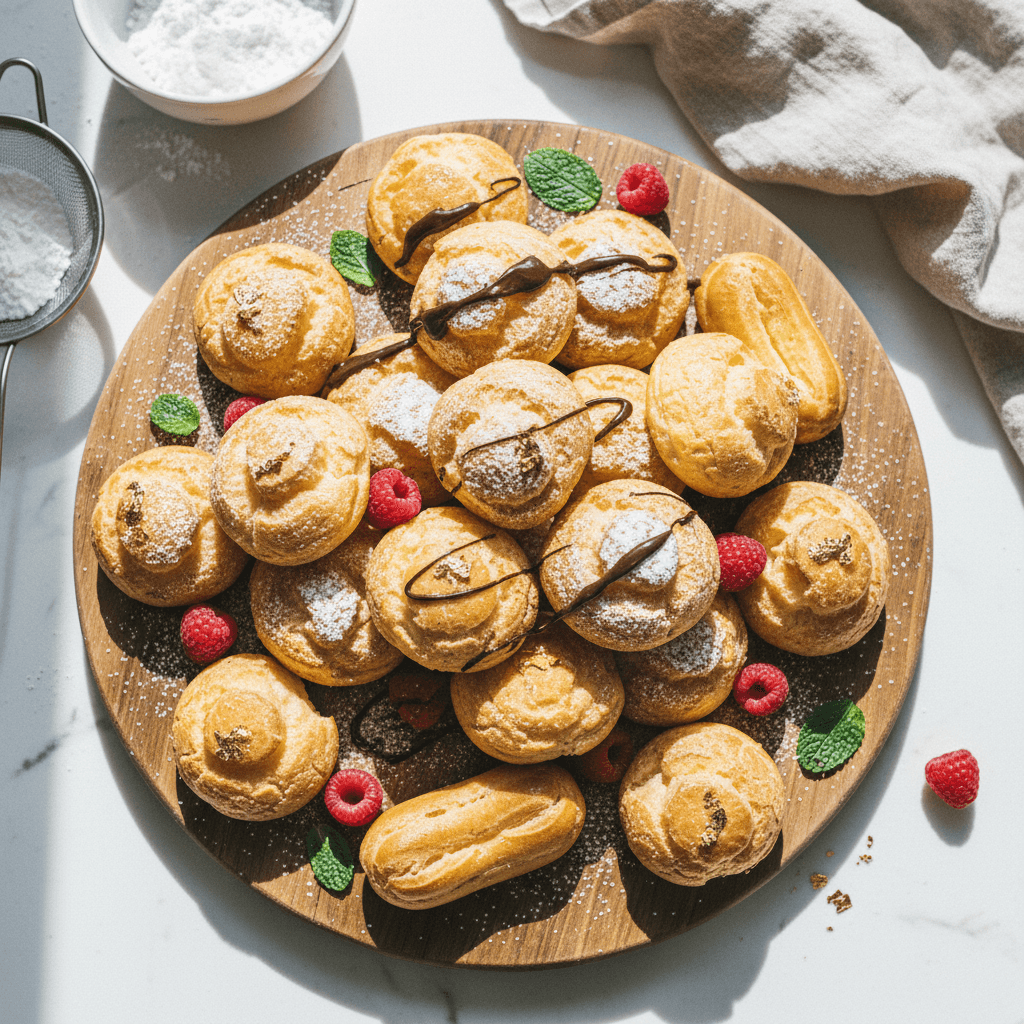
Ingredients
- 125 ml water
- 50 g unsalted butter, cubed
- 1/4 teaspoon salt
- 75 g all-purpose flour
- 2 large eggs, at room temperature
Instructions
- 1
In a saucepan, combine the water, cubed butter, and salt. Bring the mixture to a boil over medium heat.
⏱️ 5 min
- 2
Once boiling, remove the saucepan from the heat and add all the flour at once. Stir aggressively with a wooden spoon for 2 minutes. Continue stirring until a thin layer forms on the bottom of the pan and the mixture pulls away from the sides of the pot, forming a ball. This mixture is called Panade.
⏱️ 5 min
- 3
Transfer the hot Panade from the saucepan to the bowl of a stand mixer. Allow the Panade to cool down to below 60°C. You can spread it out in the bowl to speed up cooling, or mix on low speed for a few minutes.
⏱️ 10 min
- 4
With the stand mixer running on medium-low speed (using the paddle attachment), add the eggs gradually, one at a time, ensuring each egg is fully incorporated before adding the next. Continue mixing until the choux paste forms a 'V' shape when lifted with the paddle. The paste should be smooth, shiny, and have a flowing consistency when it falls off the spoon.
⏱️ 5 min
- 5
Transfer the choux paste into a clean bowl. Cover the surface of the choux paste directly with cling wrap to prevent it from drying out. Let the choux paste rest for an hour at room temperature.

- 6
Preheat the oven to 180°C (fan-forced). Line a baking sheet with parchment paper. Fit a piping bag with a round tip.
⏱️ 5 min•🌡️ 180
- 7
Pipe the choux paste onto the prepared baking sheet, forming individual mounds about 3-4 cm in diameter, leaving some space between them. If using, place a disc of craquelin (slightly bigger than or the same size as the choux) on top of each piped choux mound.
⏱️ 5 min
- 8
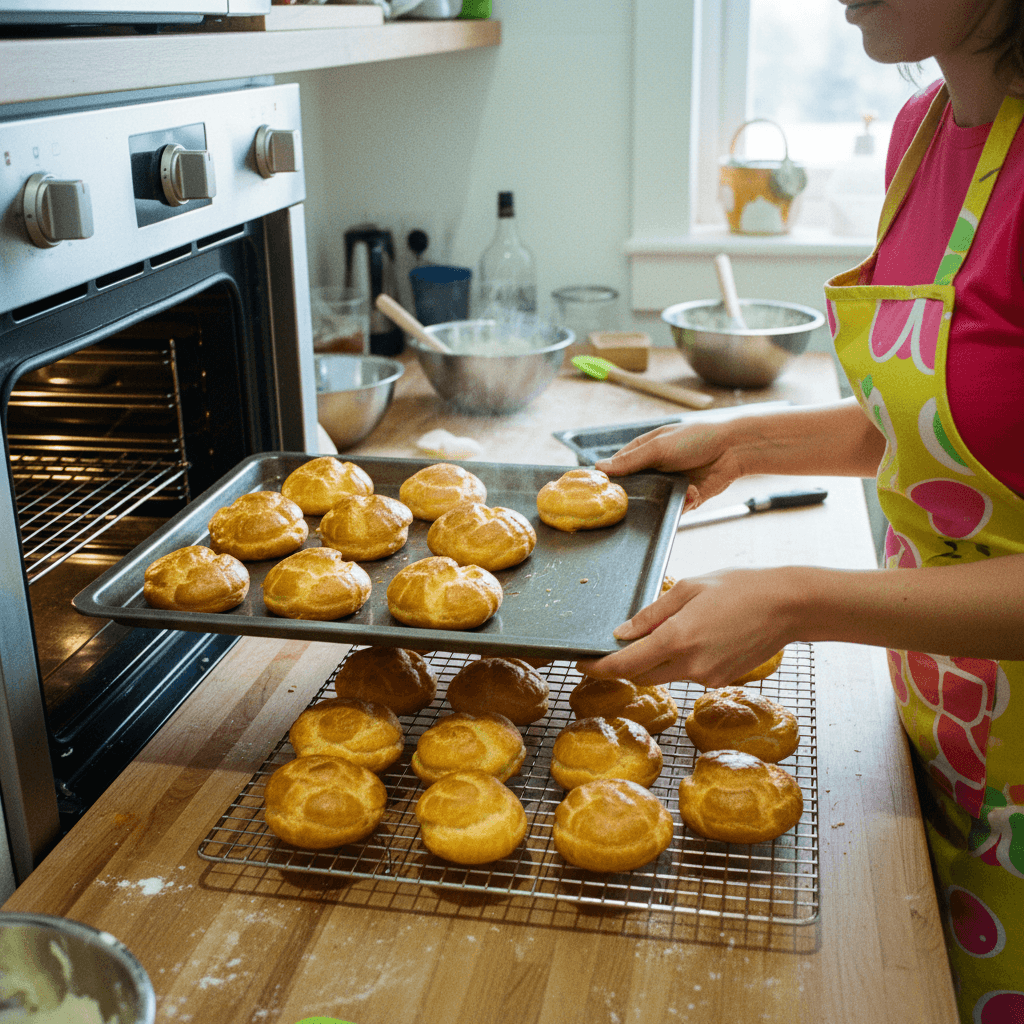
Bake the choux at 180°C (fan-forced) for 25-30 minutes, or until golden brown, puffed up, and firm. Do not open the oven door during the first 20 minutes of baking to prevent the choux from collapsing.
⏱️ 30 min•🌡️ 180
- 9
Once baked, remove the choux pastries from the oven. They will be golden brown and puffed up with a crackled top. Let them cool completely on a wire rack before filling or serving.
Kitchen Tools
Pâte à Choux
- 125 ml water
- 50 g unsalted butter, cubed
- 1/4 teaspoon salt
- 75 g all-purpose flour
- 2 large eggs, at room temperature
Instructions
- 1
In a saucepan, combine the water, cubed butter, and salt. Bring the mixture to a boil over medium heat.
⏱️ 5 min - 2
Once boiling, remove the saucepan from the heat and add all the flour at once. Stir aggressively with a wooden spoon for 2 minutes. Continue stirring until a thin layer forms on the bottom of the pan and the mixture pulls away from the sides of the pot, forming a ball. This mixture is called Panade.
⏱️ 5 min - 3
Transfer the hot Panade from the saucepan to the bowl of a stand mixer. Allow the Panade to cool down to below 60°C. You can spread it out in the bowl to speed up cooling, or mix on low speed for a few minutes.
⏱️ 10 min - 4
With the stand mixer running on medium-low speed (using the paddle attachment), add the eggs gradually, one at a time, ensuring each egg is fully incorporated before adding the next. Continue mixing until the choux paste forms a 'V' shape when lifted with the paddle. The paste should be smooth, shiny, and have a flowing consistency when it falls off the spoon.
⏱️ 5 min - 5
Transfer the choux paste into a clean bowl. Cover the surface of the choux paste directly with cling wrap to prevent it from drying out. Let the choux paste rest for an hour at room temperature.
- 6
Preheat the oven to 180°C (fan-forced). Line a baking sheet with parchment paper. Fit a piping bag with a round tip.
⏱️ 5 min•🌡️ 180 - 7
Pipe the choux paste onto the prepared baking sheet, forming individual mounds about 3-4 cm in diameter, leaving some space between them. If using, place a disc of craquelin (slightly bigger than or the same size as the choux) on top of each piped choux mound.
⏱️ 5 min - 8
Bake the choux at 180°C (fan-forced) for 25-30 minutes, or until golden brown, puffed up, and firm. Do not open the oven door during the first 20 minutes of baking to prevent the choux from collapsing.
⏱️ 30 min•🌡️ 180 - 9
Once baked, remove the choux pastries from the oven. They will be golden brown and puffed up with a crackled top. Let them cool completely on a wire rack before filling or serving.