Braised Beef Cheeks
Braised Beef Cheeks

Ingredients
For the Beef Cheek Braise
- 2 beef cheeks
- 1 onion, large, chopped
- 1/2 leek, chopped
- 1 carrot, chopped
- 4 cloves garlic
- 1 tablespoon tomato paste
- 2 cups red wine
- 3 cups beef stock
- 1 sprig rosemary
- 3 sprigs thyme
- 1 bay leaf
- 2 tablespoons butter, cubed
- as needed salt
- as needed black pepper
For the Parsnip Puree
- 250 g parsnips, thinly sliced
- 4 g salt
- 50 g neutral oil
- 80 g water
- 200 g cream
- 1 tablespoon white miso
For the Charred Scallion Gremolata
- 6 scallions
- 2 lemons, juiced and zested
- 2 cloves garlic, minced
- 2 tablespoons olive oil
- 4 tablespoons parsley, finely chopped
- as needed salt, to taste
Instructions
- 1
Preheat your oven to 300°F (150°C).
⏱️ 10 min•🌡️ 300
- 2
Trim any silver skin off the beef cheeks. Season them generously with salt and black pepper.
⏱️ 5 min
- 3
In a pot or Dutch oven over medium-high heat, sear the seasoned beef cheeks until deeply browned on all sides. Remove the beef cheeks from the pot and set aside.
⏱️ 10 min
- 4
Add the chopped onions, carrots, leeks, and garlic to the same pot. Cook, stirring occasionally, until the vegetables have softened and sweated down, about 8-10 minutes.
⏱️ 10 min
- 5
Stir in the tomato paste and cook for another 2-3 minutes until it darkens slightly, enhancing its flavor.
⏱️ 3 min
- 6
Pour in the red wine and bring to a simmer. Reduce the wine by half, scraping up any browned bits from the bottom of the pot.
⏱️ 8 min
- 7
Return the seared beef cheeks to the pot. Tie the rosemary, thyme, and bay leaf together with kitchen twine and add them to the pot. Pour in the beef stock, ensuring the beef cheeks are mostly covered.
⏱️ 2 min
- 8
Bring the liquid to a gentle simmer on the stovetop, then cover the pot with a lid or a cartouche (parchment paper lid).
⏱️ 5 min
- 9
Transfer the covered pot to the preheated oven and braise for 3-4 hours, or until the beef cheeks are incredibly tender and fall apart easily with a fork.
⏱️ 240 min•🌡️ 300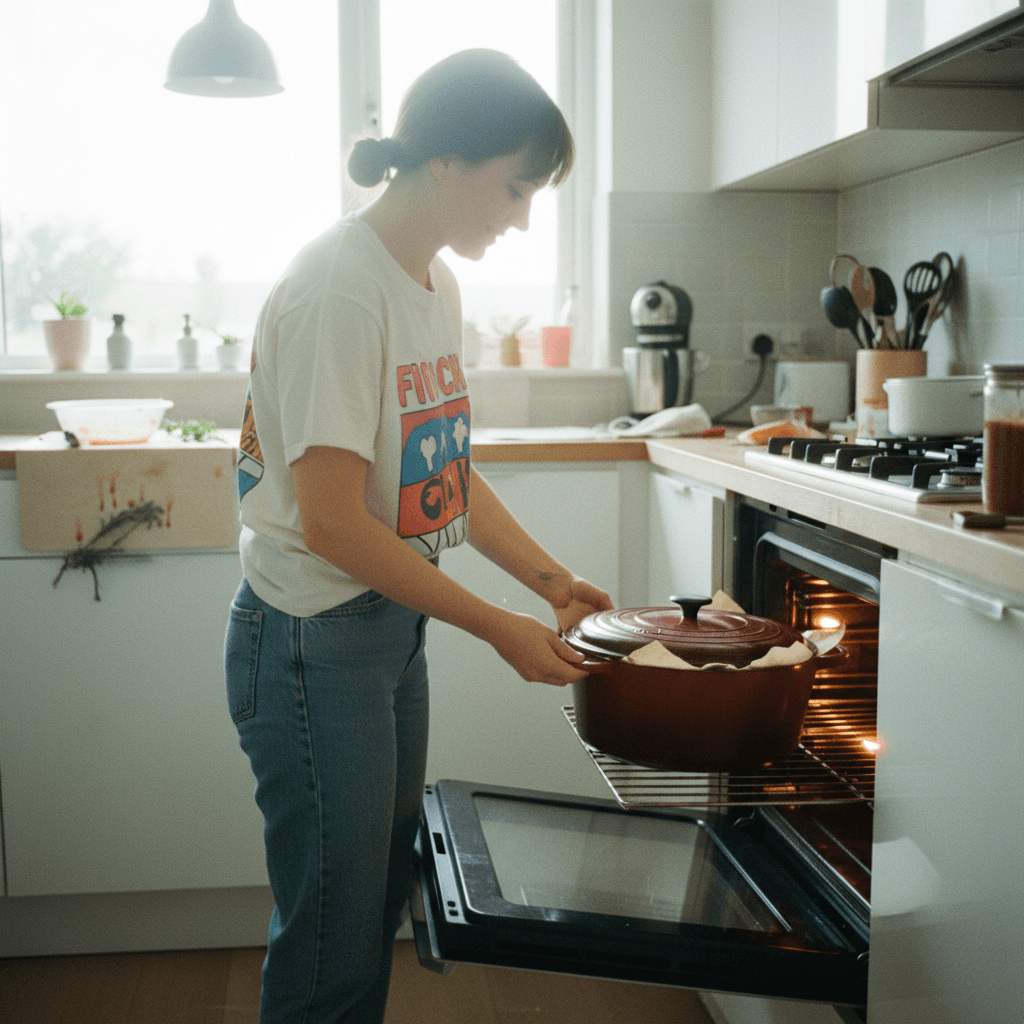
- 10
While the beef cheeks are braising, prepare the parsnip puree. Season the thinly sliced parsnips with 4 g of salt. In a separate pot, sweat the parsnips down over medium-low heat with 50 g of neutral oil until translucent.
⏱️ 10 min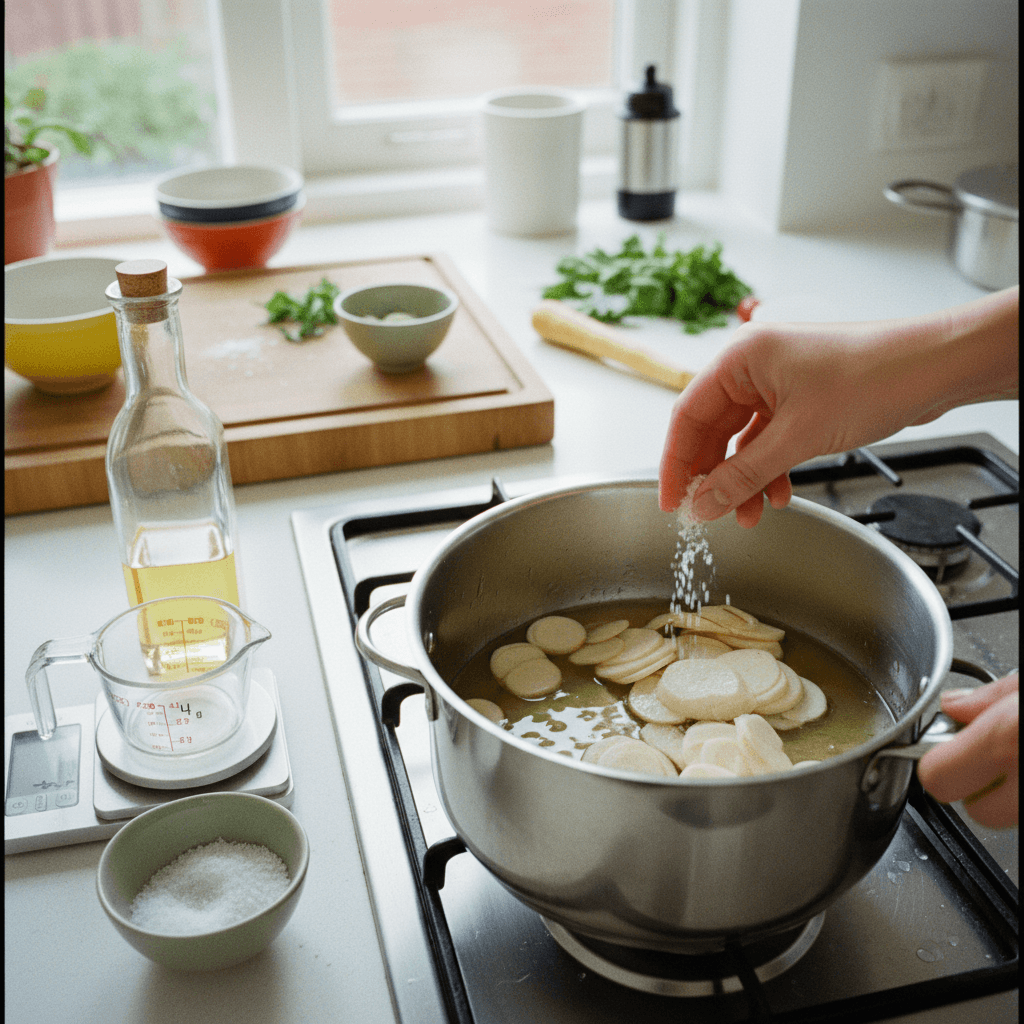
- 11
Once translucent, add 200 g of cream and 80 g of water to the parsnips. Cook until the parsnips are very soft, about 3-5 minutes.
⏱️ 5 min
- 12
Transfer the cooked parsnips and liquid to a blender. Add 1 tablespoon of white miso and puree until completely smooth. Taste and adjust seasoning as needed.
⏱️ 5 min
- 13
For the gremolata, cut the roots off the 6 scallions. Char them lightly in a dry pan over high heat until slightly softened and smoky.
⏱️ 5 min
- 14
Thinly slice the charred scallions. In a small bowl, combine the sliced scallions with 4 tablespoons of finely chopped parsley, 2 tablespoons of olive oil, the juice and zest from 2 lemons, and 2 minced cloves of garlic. Season with salt to taste.
⏱️ 10 min
- 15
Once the beef cheeks are tender, carefully remove them from the braising liquid and place them in a bowl with a small amount of the liquid to keep them moist. Cover with foil and let them rest for 10-15 minutes.
⏱️ 15 min
- 16
Strain the remaining braising liquid through a fine-mesh sieve into a clean pot, discarding the solids and herb bundle. Measure out about 2 cups of the strained liquid.
⏱️ 5 min
- 17
Simmer the strained braising liquid over medium heat until it reduces to a saucy consistency. Turn off the heat and whisk in the 2 tablespoons of cubed butter until melted and incorporated, creating a rich sauce.
⏱️ 10 min
- 18
To assemble, spoon a generous portion of parsnip puree onto each plate. Place the rested beef cheeks on top of the puree. Spoon the charred scallion gremolata over the beef cheeks and finish by drizzling the reduced braising liquid around the plate.
⏱️ 5 min
Kitchen Tools
Nutrition Facts (per serving)
Braised Beef Cheeks
For the Beef Cheek Braise
- 2 beef cheeks
- 1 onion, large, chopped
- 1/2 leek, chopped
- 1 carrot, chopped
- 4 cloves garlic
- 1 tablespoon tomato paste
- 2 cups red wine
- 3 cups beef stock
- 1 sprig rosemary
- 3 sprigs thyme
- 1 bay leaf
- 2 tablespoons butter, cubed
- as needed salt
- as needed black pepper
For the Parsnip Puree
- 250 g parsnips, thinly sliced
- 4 g salt
- 50 g neutral oil
- 80 g water
- 200 g cream
- 1 tablespoon white miso
For the Charred Scallion Gremolata
- 6 scallions
- 2 lemons, juiced and zested
- 2 cloves garlic, minced
- 2 tablespoons olive oil
- 4 tablespoons parsley, finely chopped
- as needed salt, to taste
Instructions
- 1
Preheat your oven to 300°F (150°C).
⏱️ 10 min•🌡️ 300 - 2
Trim any silver skin off the beef cheeks. Season them generously with salt and black pepper.
⏱️ 5 min - 3
In a pot or Dutch oven over medium-high heat, sear the seasoned beef cheeks until deeply browned on all sides. Remove the beef cheeks from the pot and set aside.
⏱️ 10 min - 4
Add the chopped onions, carrots, leeks, and garlic to the same pot. Cook, stirring occasionally, until the vegetables have softened and sweated down, about 8-10 minutes.
⏱️ 10 min - 5
Stir in the tomato paste and cook for another 2-3 minutes until it darkens slightly, enhancing its flavor.
⏱️ 3 min - 6
Pour in the red wine and bring to a simmer. Reduce the wine by half, scraping up any browned bits from the bottom of the pot.
⏱️ 8 min - 7
Return the seared beef cheeks to the pot. Tie the rosemary, thyme, and bay leaf together with kitchen twine and add them to the pot. Pour in the beef stock, ensuring the beef cheeks are mostly covered.
⏱️ 2 min - 8
Bring the liquid to a gentle simmer on the stovetop, then cover the pot with a lid or a cartouche (parchment paper lid).
⏱️ 5 min - 9
Transfer the covered pot to the preheated oven and braise for 3-4 hours, or until the beef cheeks are incredibly tender and fall apart easily with a fork.
⏱️ 240 min•🌡️ 300 - 10
While the beef cheeks are braising, prepare the parsnip puree. Season the thinly sliced parsnips with 4 g of salt. In a separate pot, sweat the parsnips down over medium-low heat with 50 g of neutral oil until translucent.
⏱️ 10 min - 11
Once translucent, add 200 g of cream and 80 g of water to the parsnips. Cook until the parsnips are very soft, about 3-5 minutes.
⏱️ 5 min - 12
Transfer the cooked parsnips and liquid to a blender. Add 1 tablespoon of white miso and puree until completely smooth. Taste and adjust seasoning as needed.
⏱️ 5 min - 13
For the gremolata, cut the roots off the 6 scallions. Char them lightly in a dry pan over high heat until slightly softened and smoky.
⏱️ 5 min - 14
Thinly slice the charred scallions. In a small bowl, combine the sliced scallions with 4 tablespoons of finely chopped parsley, 2 tablespoons of olive oil, the juice and zest from 2 lemons, and 2 minced cloves of garlic. Season with salt to taste.
⏱️ 10 min - 15
Once the beef cheeks are tender, carefully remove them from the braising liquid and place them in a bowl with a small amount of the liquid to keep them moist. Cover with foil and let them rest for 10-15 minutes.
⏱️ 15 min - 16
Strain the remaining braising liquid through a fine-mesh sieve into a clean pot, discarding the solids and herb bundle. Measure out about 2 cups of the strained liquid.
⏱️ 5 min - 17
Simmer the strained braising liquid over medium heat until it reduces to a saucy consistency. Turn off the heat and whisk in the 2 tablespoons of cubed butter until melted and incorporated, creating a rich sauce.
⏱️ 10 min - 18
To assemble, spoon a generous portion of parsnip puree onto each plate. Place the rested beef cheeks on top of the puree. Spoon the charred scallion gremolata over the beef cheeks and finish by drizzling the reduced braising liquid around the plate.
⏱️ 5 min