Fettuccine Alfredo (or pasta with butter and parmigiano)
Fettuccine Alfredo (or pasta with butter and parmigiano)

Ingredients
- 85 g fettuccine, fresh
- 6 tablespoons butter, cubed
- as needed Parmigiano, grated
- as needed salt
Instructions
- 1
Bring a large pot of well-salted water to a rolling boil. The water should be salty like the sea to properly season the pasta.
⏱️ 5 min
- 2
Add the fresh fettuccine to the boiling water and cook according to package directions until al dente. Reserve about 1 1/2 cups of the hot pasta water before draining the pasta.
⏱️ 5 min
- 3
While the pasta is cooking, place the cubed butter into a large, heat-proof bowl. This bowl will be used for emulsifying the sauce, so ensure it's large enough to toss the pasta comfortably.
⏱️ 2 min
- 4
Once the pasta is al dente, use tongs to transfer it directly from the pot into the bowl with the cubed butter. Do not drain the pasta completely, as the residual water clinging to the noodles is beneficial for the sauce.
⏱️ 1 min
- 5
Add a splash (about 1/4 cup) of the reserved hot pasta water to the bowl. Immediately begin to toss the pasta vigorously with tongs or a large spoon. The heat from the pasta and the pasta water will melt the butter, and the starch from the pasta water will help create a creamy emulsion.
⏱️ 2 min
- 6
Gradually add the grated Parmigiano cheese, a handful at a time, while continuously tossing the pasta. The cheese will melt into the butter and pasta water, further thickening the sauce.
⏱️ 2 min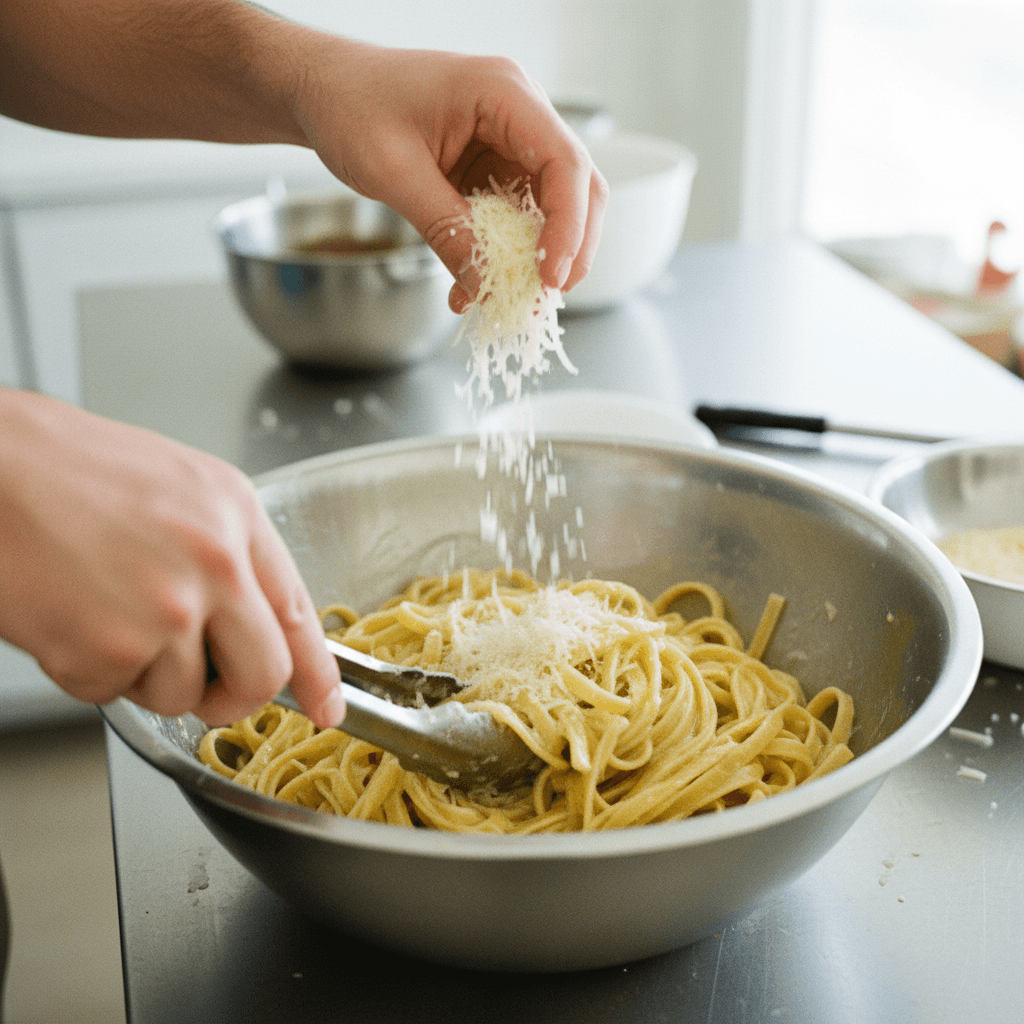
- 7
Continue adding small splashes of hot pasta water as needed, a little at a time, while tossing. The goal is to achieve a smooth, glossy, and creamy sauce that evenly coats every strand of fettuccine. The sauce should be silky and fluid, not thick or clumpy.
⏱️ 2 min
- 8
Taste and adjust seasoning with additional salt if necessary, though the salted pasta water and Parmigiano should provide ample flavor.
⏱️ 1 min
- 9
Serve the Fettuccine Alfredo immediately in warm bowls to enjoy its optimal creamy texture.
⏱️ 1 min
Kitchen Tools
Nutrition Facts (per serving)
Fettuccine Alfredo (or pasta with butter and parmigiano)
- 85 g fettuccine, fresh
- 6 tablespoons butter, cubed
- as needed Parmigiano, grated
- as needed salt
Instructions
- 1
Bring a large pot of well-salted water to a rolling boil. The water should be salty like the sea to properly season the pasta.
⏱️ 5 min - 2
Add the fresh fettuccine to the boiling water and cook according to package directions until al dente. Reserve about 1 1/2 cups of the hot pasta water before draining the pasta.
⏱️ 5 min - 3
While the pasta is cooking, place the cubed butter into a large, heat-proof bowl. This bowl will be used for emulsifying the sauce, so ensure it's large enough to toss the pasta comfortably.
⏱️ 2 min - 4
Once the pasta is al dente, use tongs to transfer it directly from the pot into the bowl with the cubed butter. Do not drain the pasta completely, as the residual water clinging to the noodles is beneficial for the sauce.
⏱️ 1 min - 5
Add a splash (about 1/4 cup) of the reserved hot pasta water to the bowl. Immediately begin to toss the pasta vigorously with tongs or a large spoon. The heat from the pasta and the pasta water will melt the butter, and the starch from the pasta water will help create a creamy emulsion.
⏱️ 2 min - 6
Gradually add the grated Parmigiano cheese, a handful at a time, while continuously tossing the pasta. The cheese will melt into the butter and pasta water, further thickening the sauce.
⏱️ 2 min - 7
Continue adding small splashes of hot pasta water as needed, a little at a time, while tossing. The goal is to achieve a smooth, glossy, and creamy sauce that evenly coats every strand of fettuccine. The sauce should be silky and fluid, not thick or clumpy.
⏱️ 2 min - 8
Taste and adjust seasoning with additional salt if necessary, though the salted pasta water and Parmigiano should provide ample flavor.
⏱️ 1 min - 9
Serve the Fettuccine Alfredo immediately in warm bowls to enjoy its optimal creamy texture.
⏱️ 1 min