Classic Beurre Blanc
Classic Beurre Blanc

Ingredients
- 1 teaspoon neutral oil, as needed
- 1 shallot, thinly sliced
- 1 pinch salt
- 1 pinch black pepper
- 1 tablespoon lemon juice, from about 1/2 lemon
- 1/2 cup dry white wine
- 1 tablespoon heavy cream, optional, for stability
- 2 sticks unsalted butter, cut into very cold 1-inch cubes
Instructions
- 1
Heat a small saucepan over medium heat. Add a small amount of neutral oil, just enough to coat the bottom of the pan.
⏱️ 1 min
- 2
Add the thinly sliced shallot to the saucepan along with a pinch of salt and black pepper. Sweat the shallots, stirring occasionally, until they are softened and translucent, about 3 to 5 minutes. Do not let them brown.
⏱️ 4 min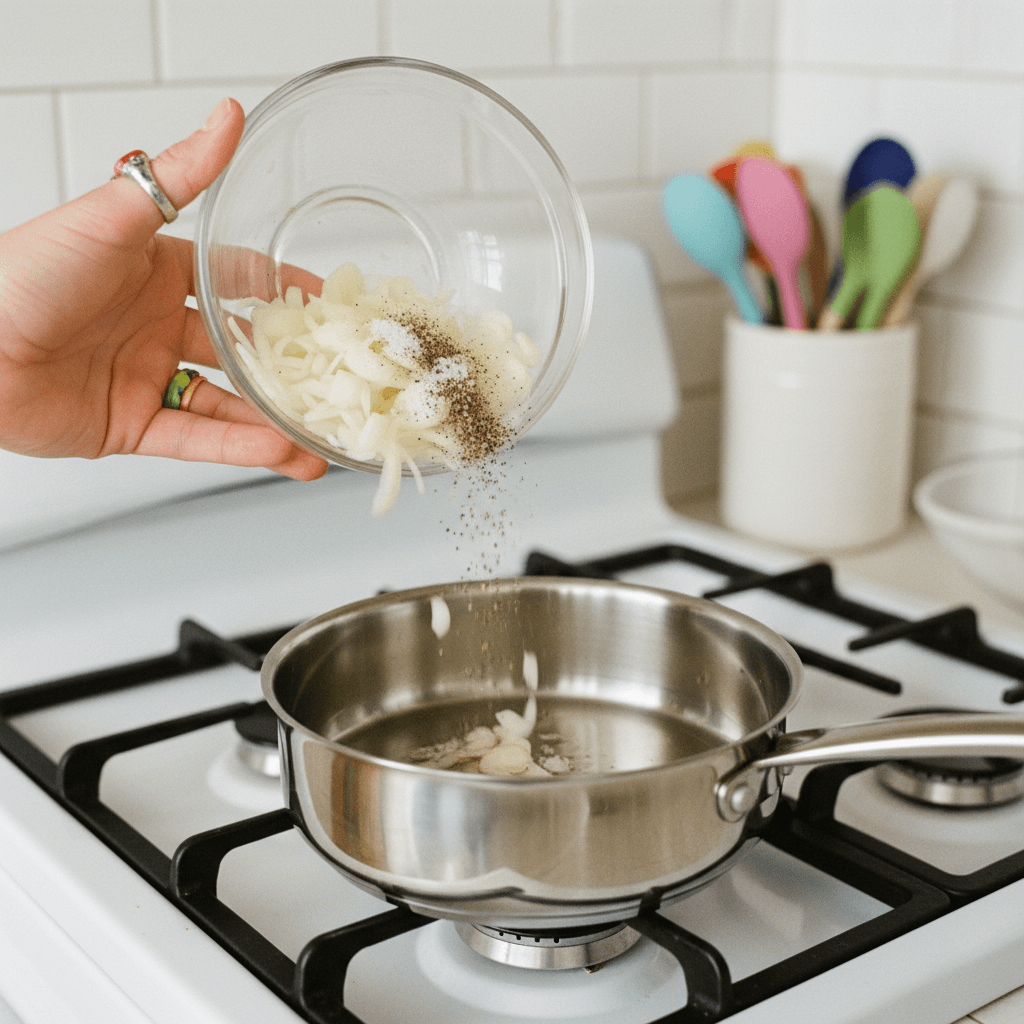
- 3
Stir in the lemon juice.
⏱️ 1 min
- 4
Pour in the dry white wine and bring to a simmer. Continue to simmer until the liquid has reduced by about half, which should take approximately 3 to 5 minutes.
⏱️ 4 min
- 5
Strain the liquid through a fine-mesh sieve into a clean bowl, pressing on the shallots to extract all the liquid. Discard the shallots. Return the strained liquid to the saucepan.
⏱️ 2 min
- 6
Reduce the heat to low. If using, whisk in the heavy cream. This step helps to stabilize the emulsion and makes the sauce less likely to break.
⏱️ 1 min
- 7
With the heat on very low (this is crucial for a stable emulsion), begin whisking in the very cold, cubed unsalted butter, a few cubes at a time. Whisk continuously until each addition of butter is fully incorporated and the sauce begins to thicken. If the pan gets too hot at any point, remove it from the heat briefly while continuing to whisk, then return it to low heat.
⏱️ 5 min
- 8
Continue whisking in the butter until the sauce is smooth, silky, and glossy, and thick enough to coat the back of a spoon. Stop adding butter once the sauce reaches your desired richness and balance, with the acidity mellowed.
⏱️ 5 min
- 9
Taste the beurre blanc and adjust the seasoning with additional salt, black pepper, or a squeeze of fresh lemon juice if needed.
⏱️ 1 min
- 10
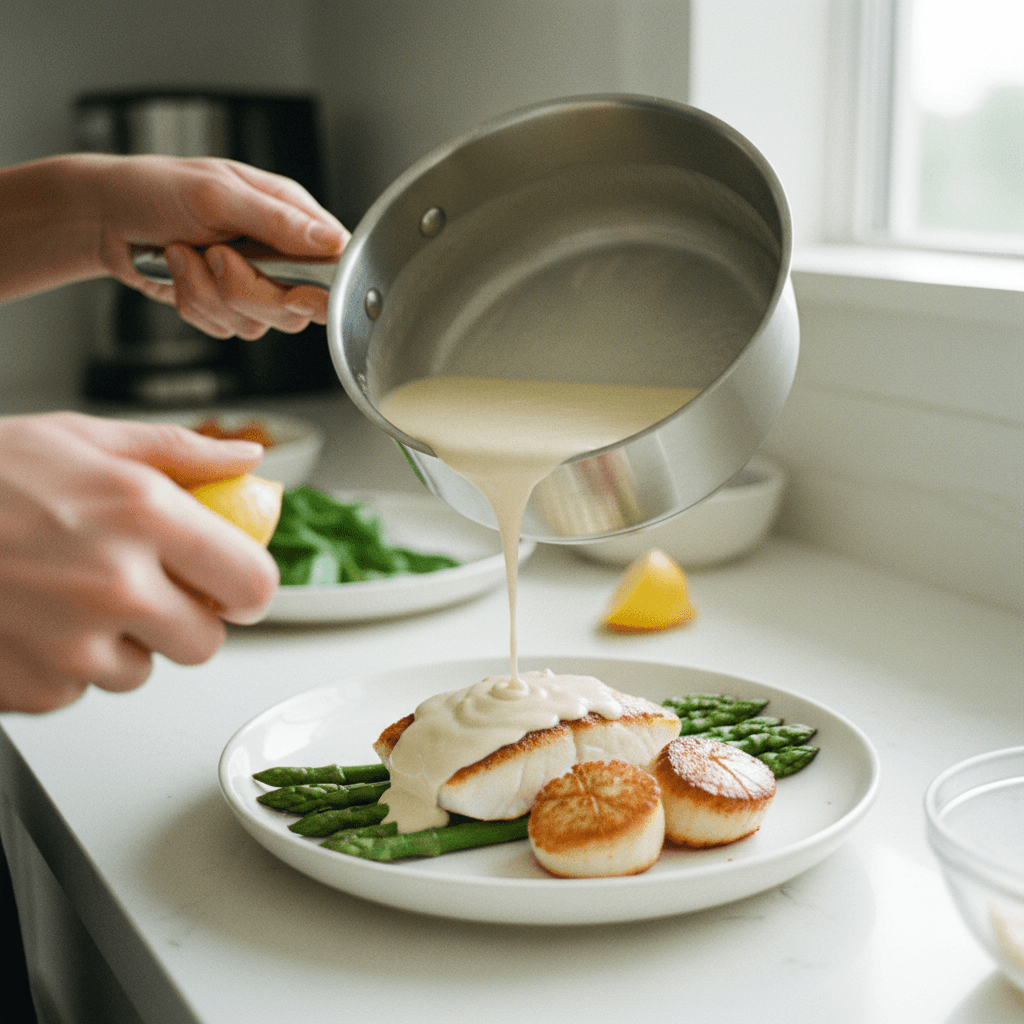
Serve the beurre blanc immediately. It pairs exceptionally well with fish, scallops, shrimp, asparagus, and other vegetables.
Kitchen Tools
Nutrition Facts (per serving)
Classic Beurre Blanc
- 1 teaspoon neutral oil, as needed
- 1 shallot, thinly sliced
- 1 pinch salt
- 1 pinch black pepper
- 1 tablespoon lemon juice, from about 1/2 lemon
- 1/2 cup dry white wine
- 1 tablespoon heavy cream, optional, for stability
- 2 sticks unsalted butter, cut into very cold 1-inch cubes
Instructions
- 1
Heat a small saucepan over medium heat. Add a small amount of neutral oil, just enough to coat the bottom of the pan.
⏱️ 1 min - 2
Add the thinly sliced shallot to the saucepan along with a pinch of salt and black pepper. Sweat the shallots, stirring occasionally, until they are softened and translucent, about 3 to 5 minutes. Do not let them brown.
⏱️ 4 min - 3
Stir in the lemon juice.
⏱️ 1 min - 4
Pour in the dry white wine and bring to a simmer. Continue to simmer until the liquid has reduced by about half, which should take approximately 3 to 5 minutes.
⏱️ 4 min - 5
Strain the liquid through a fine-mesh sieve into a clean bowl, pressing on the shallots to extract all the liquid. Discard the shallots. Return the strained liquid to the saucepan.
⏱️ 2 min - 6
Reduce the heat to low. If using, whisk in the heavy cream. This step helps to stabilize the emulsion and makes the sauce less likely to break.
⏱️ 1 min - 7
With the heat on very low (this is crucial for a stable emulsion), begin whisking in the very cold, cubed unsalted butter, a few cubes at a time. Whisk continuously until each addition of butter is fully incorporated and the sauce begins to thicken. If the pan gets too hot at any point, remove it from the heat briefly while continuing to whisk, then return it to low heat.
⏱️ 5 min - 8
Continue whisking in the butter until the sauce is smooth, silky, and glossy, and thick enough to coat the back of a spoon. Stop adding butter once the sauce reaches your desired richness and balance, with the acidity mellowed.
⏱️ 5 min - 9
Taste the beurre blanc and adjust the seasoning with additional salt, black pepper, or a squeeze of fresh lemon juice if needed.
⏱️ 1 min - 10
Serve the beurre blanc immediately. It pairs exceptionally well with fish, scallops, shrimp, asparagus, and other vegetables.