Crispy Sushi Rolls
Crispy Sushi Rolls

Ingredients
For the Crispy Rolls
- 2 cups sushi rice, cooked and seasoned
- 4 rice paper wrappers, 8 1/2-inch diameter
- 8 nori sheets, full-sized
- 1 cucumber, peeled, seeded, and cut into thin strips
- 1 avocado, pitted, peeled, and sliced
- 1/2 pound sushi-grade salmon, cut into 1/4-inch thick strips
For the Sauces
- 2 tablespoons sriracha sauce
- 1/4 cup mayonnaise, or spicy mayonnaise
For Coating and Cooking
- 2 tablespoons white sesame seeds
- 1 tablespoon black sesame seeds
- 2 tablespoons vegetable oil
For Serving
- 1/4 cup soy sauce
Instructions
- 1
Prepare all ingredients: Ensure your sushi rice is cooked and seasoned. Slice the cucumber into thin strips, pit, peel, and slice the avocado, and cut the sushi-grade salmon into 1/4-inch thick strips. Set aside.
⏱️ 10 min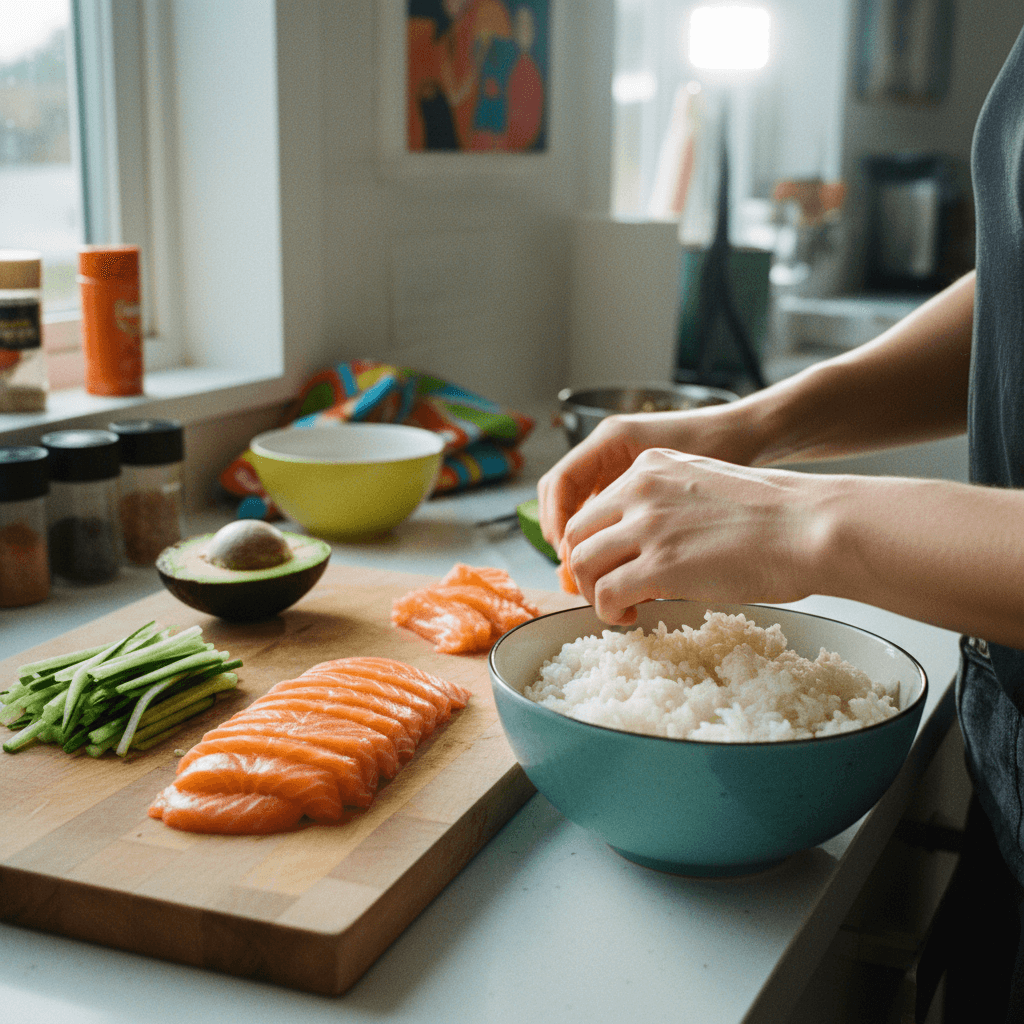
- 2
Set up your rolling station: Lightly dampen a rice paper wrapper by quickly dipping it in warm water. Place the moistened rice paper on a clean, flat surface or cutting board. Lay one nori sheet on top of the rice paper, then spread about 1/2 cup of cooked sushi rice evenly over the nori, leaving a small border at the edges.
⏱️ 5 min
- 3
Layer the fillings: Arrange a portion of the cucumber strips, avocado slices, and salmon strips neatly in the center of the rice-covered nori.
⏱️ 5 min
- 4
Add the sauces: Drizzle about 1/2 tablespoon of sriracha sauce and 1 tablespoon of mayonnaise (or spicy mayonnaise) over the fillings.
⏱️ 2 min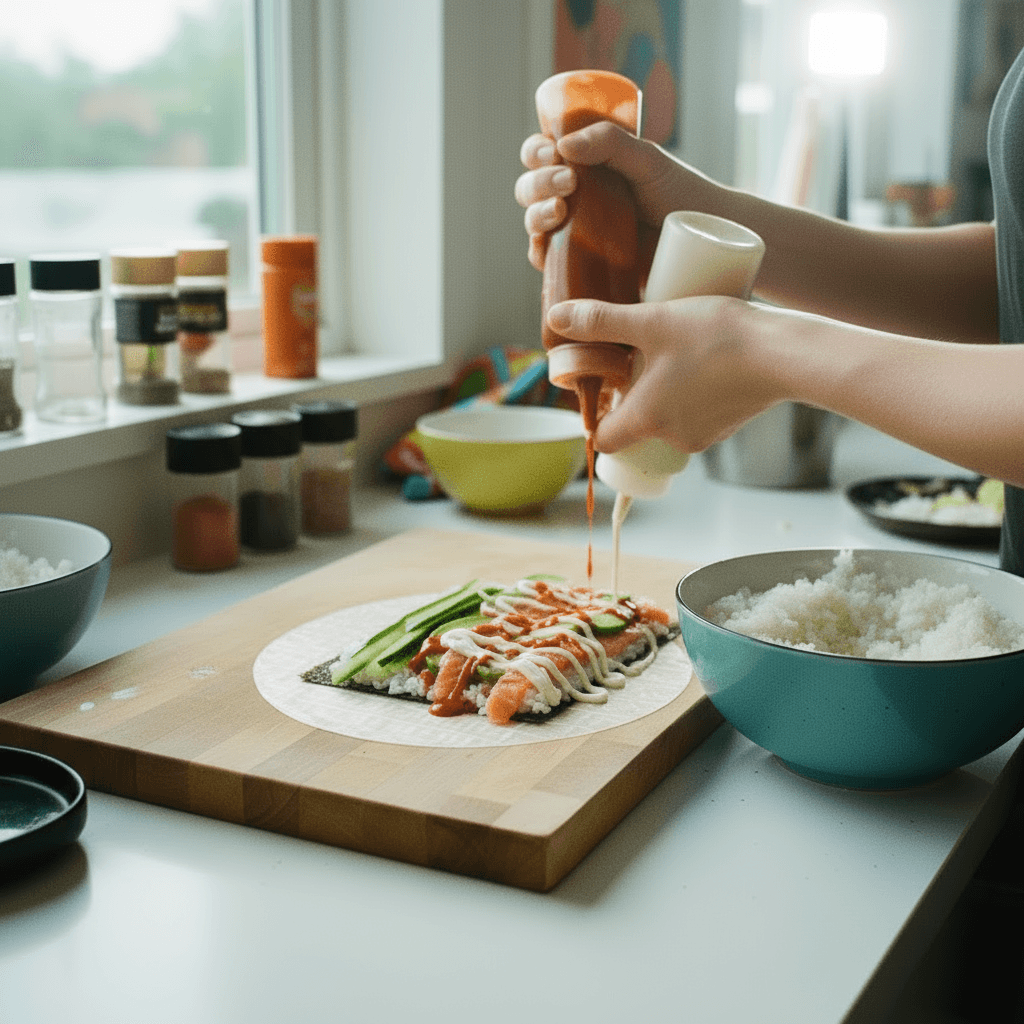
- 5
Top with nori: Place a second nori sheet directly on top of the layered fillings.
⏱️ 1 min
- 6
Roll the sushi: Carefully and tightly roll the entire assembly, starting from the edge closest to you. Ensure the rice paper wrapper fully encloses the roll. Use gentle pressure to create a firm, cylindrical shape.
⏱️ 5 min
- 7
Coat with sesame seeds: On a flat plate, combine the white and black sesame seeds. Roll the sushi log over the sesame seeds, pressing gently, until its exterior is thoroughly coated.
⏱️ 2 min
- 8
Repeat for remaining rolls: Repeat steps 2-7 for the remaining three rice paper wrappers and fillings.
⏱️ 5 min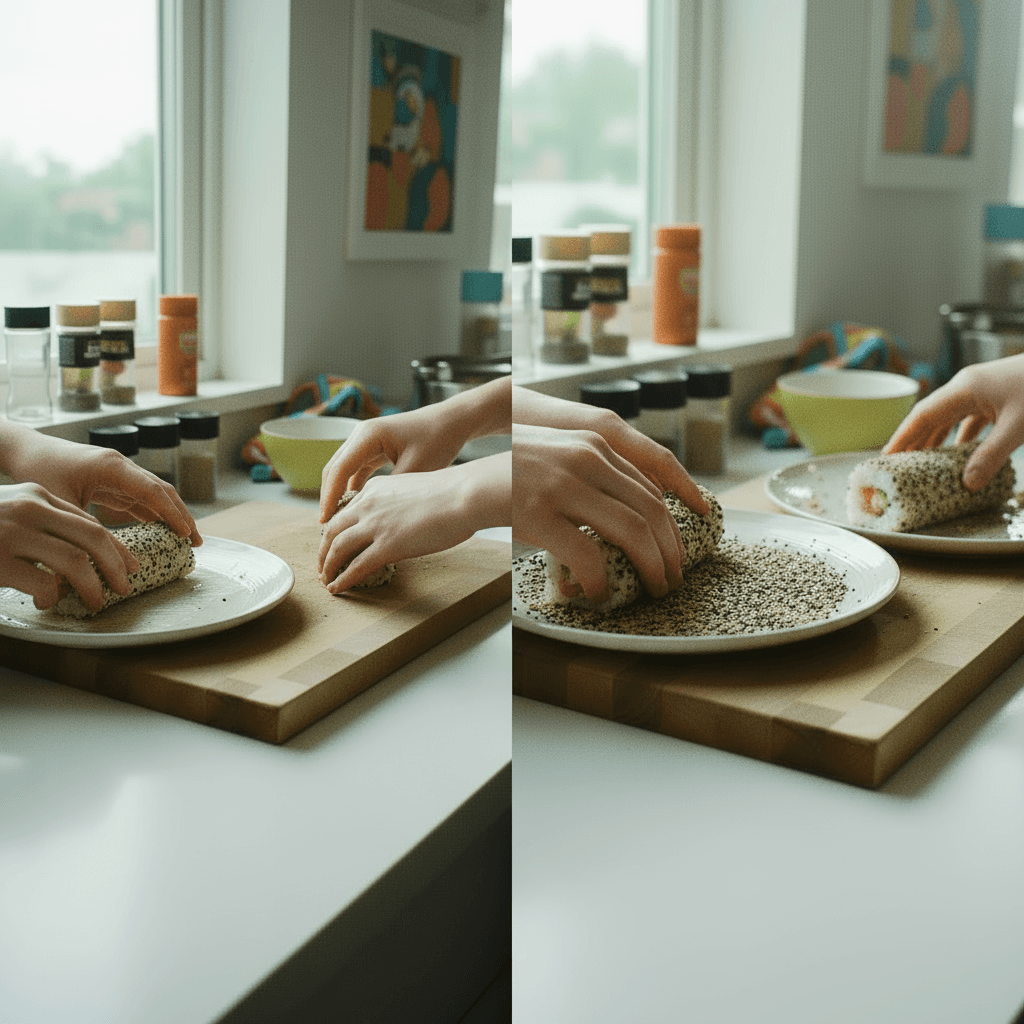
- 9
Pan-fry the rolls: Heat the vegetable oil in a large non-stick skillet over medium-high heat. Once hot, carefully place the sesame-coated sushi rolls in the pan. Sear each roll for 3-4 minutes per side, rotating until all sides are golden brown and crispy. The rice paper will become translucent and crunchy.
⏱️ 15 min•🌡️ 350
- 10
Slice and serve: Remove the crispy rolls from the pan and let them cool for a minute or two. Using a very sharp knife, carefully cut each roll in half or into 1-inch thick pieces. Serve immediately with soy sauce for dipping.
⏱️ 5 min
Kitchen Tools
Nutrition Facts (per serving)
Crispy Sushi Rolls
Ingredients
For the Crispy Rolls
- 2 cups sushi rice, cooked and seasoned
- 4 rice paper wrappers, 8 1/2-inch diameter
- 8 nori sheets, full-sized
- 1 cucumber, peeled, seeded, and cut into thin strips
- 1 avocado, pitted, peeled, and sliced
- 1/2 pound sushi-grade salmon, cut into 1/4-inch thick strips
For the Sauces
- 2 tablespoons sriracha sauce
- 1/4 cup mayonnaise, or spicy mayonnaise
For Coating and Cooking
- 2 tablespoons white sesame seeds
- 1 tablespoon black sesame seeds
- 2 tablespoons vegetable oil
For Serving
- 1/4 cup soy sauce
Instructions
- 1
Prepare all ingredients: Ensure your sushi rice is cooked and seasoned. Slice the cucumber into thin strips, pit, peel, and slice the avocado, and cut the sushi-grade salmon into 1/4-inch thick strips. Set aside.
⏱️ 10 min - 2
Set up your rolling station: Lightly dampen a rice paper wrapper by quickly dipping it in warm water. Place the moistened rice paper on a clean, flat surface or cutting board. Lay one nori sheet on top of the rice paper, then spread about 1/2 cup of cooked sushi rice evenly over the nori, leaving a small border at the edges.
⏱️ 5 min - 3
Layer the fillings: Arrange a portion of the cucumber strips, avocado slices, and salmon strips neatly in the center of the rice-covered nori.
⏱️ 5 min - 4
Add the sauces: Drizzle about 1/2 tablespoon of sriracha sauce and 1 tablespoon of mayonnaise (or spicy mayonnaise) over the fillings.
⏱️ 2 min - 5
Top with nori: Place a second nori sheet directly on top of the layered fillings.
⏱️ 1 min - 6
Roll the sushi: Carefully and tightly roll the entire assembly, starting from the edge closest to you. Ensure the rice paper wrapper fully encloses the roll. Use gentle pressure to create a firm, cylindrical shape.
⏱️ 5 min - 7
Coat with sesame seeds: On a flat plate, combine the white and black sesame seeds. Roll the sushi log over the sesame seeds, pressing gently, until its exterior is thoroughly coated.
⏱️ 2 min - 8
Repeat for remaining rolls: Repeat steps 2-7 for the remaining three rice paper wrappers and fillings.
⏱️ 5 min - 9
Pan-fry the rolls: Heat the vegetable oil in a large non-stick skillet over medium-high heat. Once hot, carefully place the sesame-coated sushi rolls in the pan. Sear each roll for 3-4 minutes per side, rotating until all sides are golden brown and crispy. The rice paper will become translucent and crunchy.
⏱️ 15 min•🌡️ 350 - 10
Slice and serve: Remove the crispy rolls from the pan and let them cool for a minute or two. Using a very sharp knife, carefully cut each roll in half or into 1-inch thick pieces. Serve immediately with soy sauce for dipping.
⏱️ 5 min