Spelt Caribbean Style Roti
Spelt Caribbean Style Roti

Ingredients
- 345 g spelt flour
- 2 teaspoons baking powder
- 1 teaspoon Celtic salt
- 2 tablespoons cane sugar
- 250 ml warm water
- 100 g unsalted butter, melted, plus more for cooking
- as needed macadamia nut oil, for oiling dough and bowl
Instructions
- 1
In a large bowl, combine the spelt flour, Celtic salt, cane sugar, and baking powder. Mix these dry ingredients thoroughly.
⏱️ 2 min
- 2
Gradually add the warm water to the dry ingredients, mixing until a sticky dough forms. Spelt flour requires more moisture, so a sticky consistency is desired.
⏱️ 3 min
- 3
Transfer the dough to a lightly floured surface and knead for 5 minutes until it becomes more elastic.
⏱️ 5 min
- 4
Lightly oil the dough and the inside of the bowl with macadamia nut oil. Cover the bowl and let the dough rest for 30 minutes.
⏱️ 1 min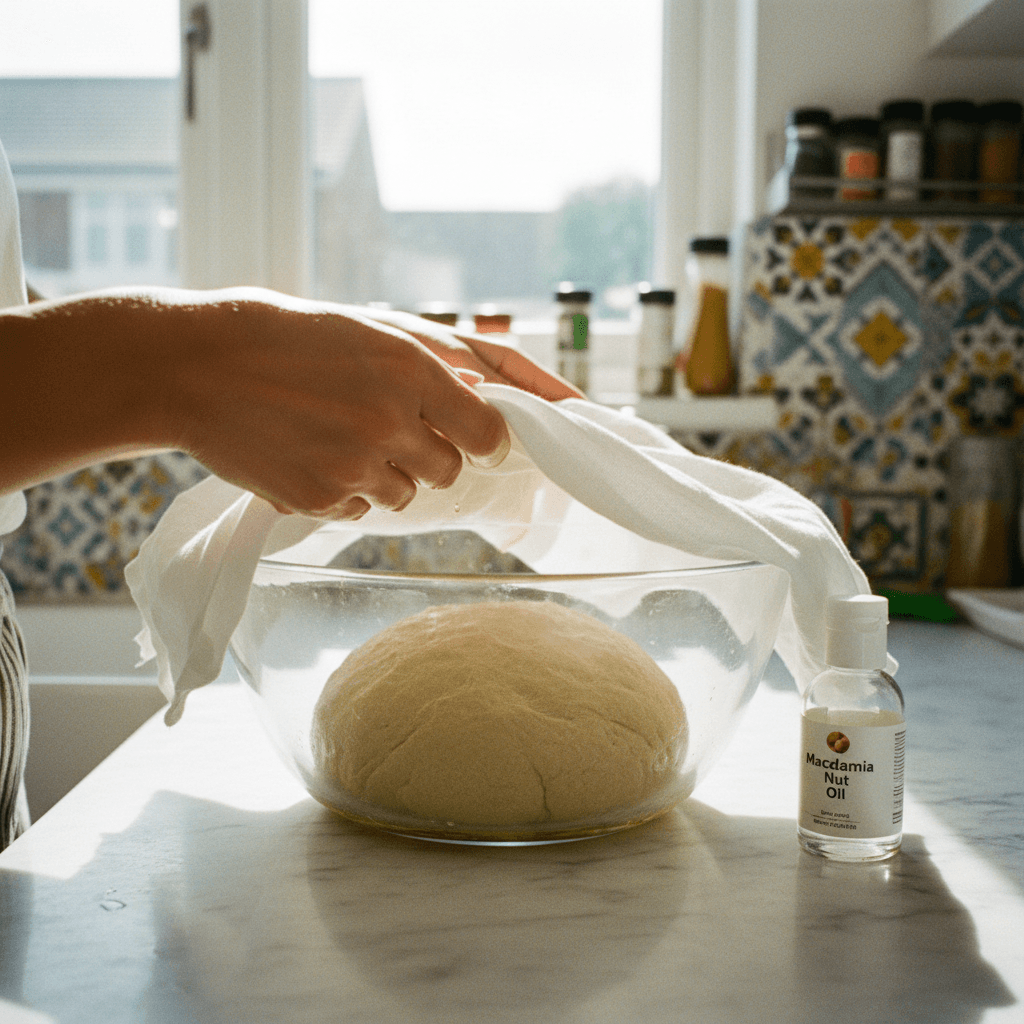
- 5
After resting, divide the dough into 6 equal balls.
⏱️ 2 min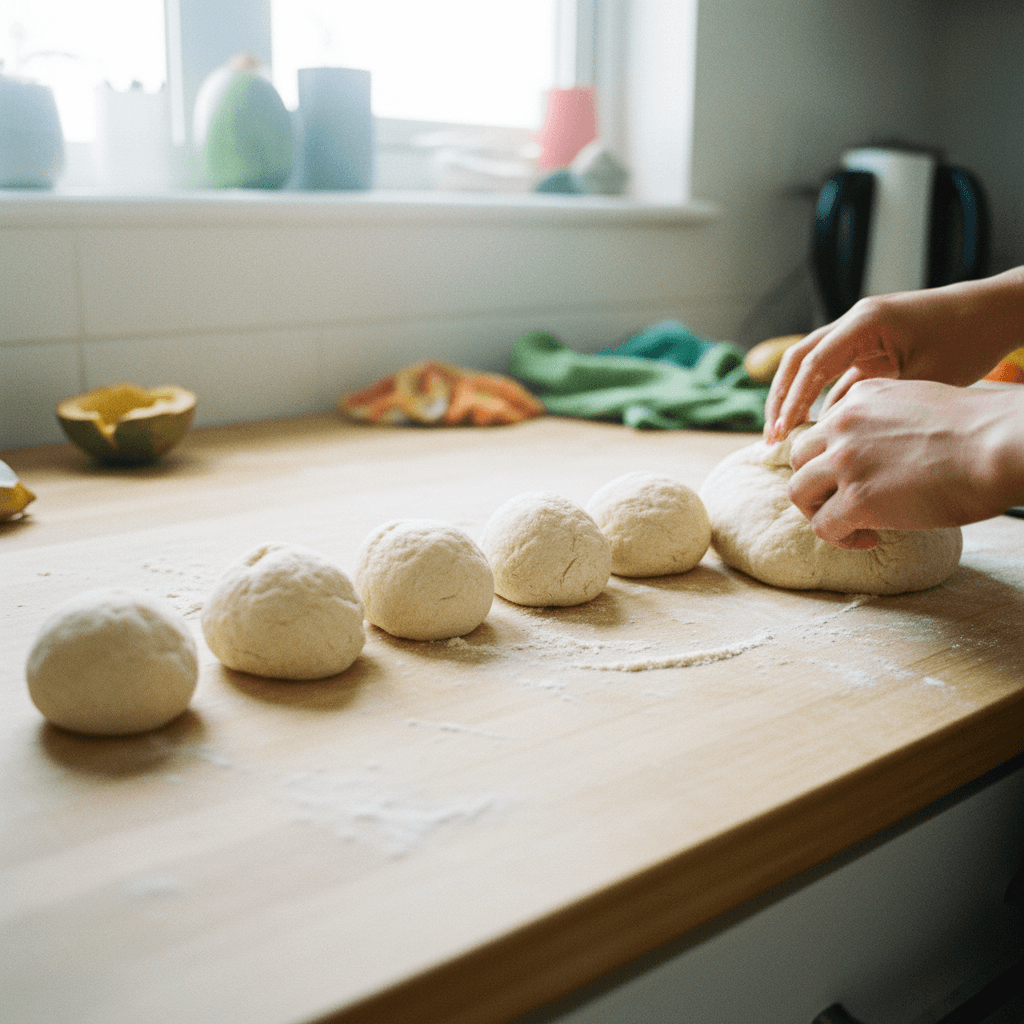
- 6
Lightly flour your work surface. Take one dough ball and roll it out as thinly as possible into a round shape.
⏱️ 2 min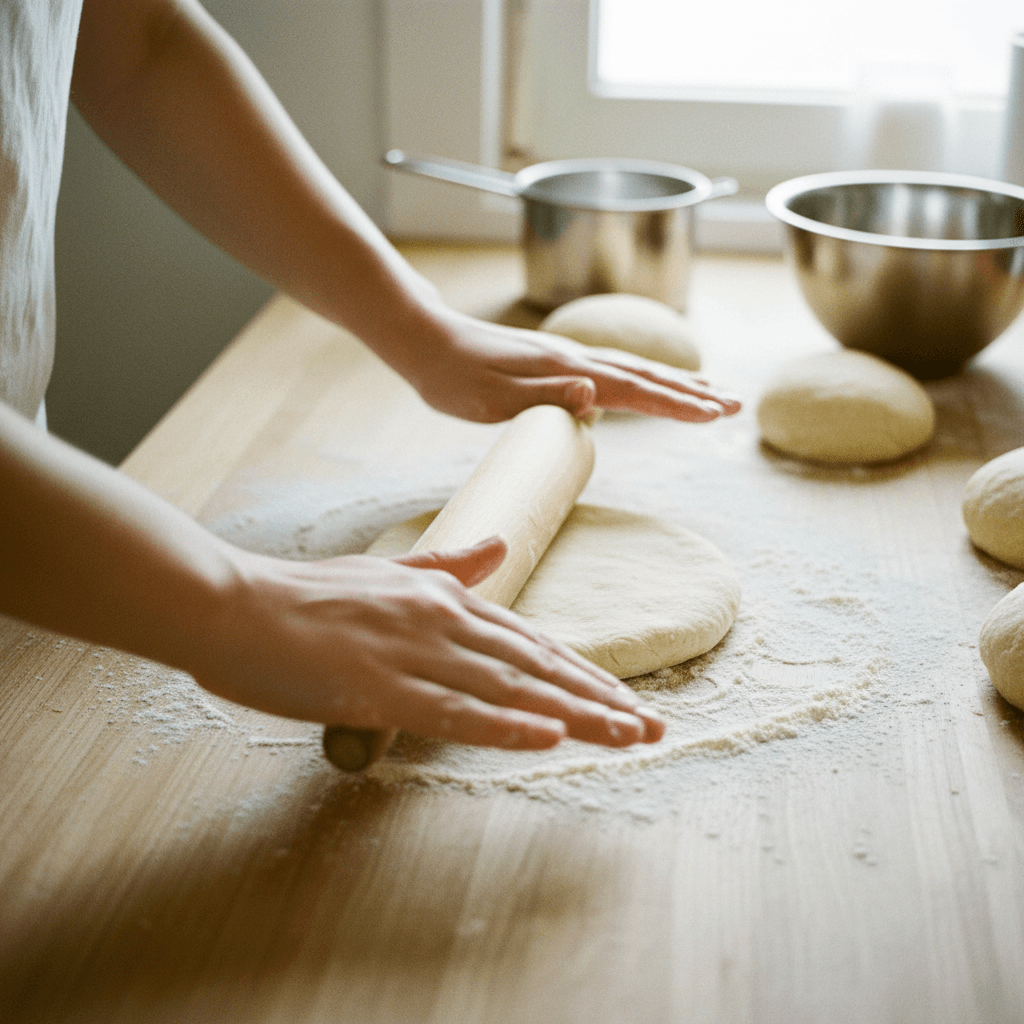
- 7
Generously baste the entire surface of the rolled-out dough with melted unsalted butter.
⏱️ 1 min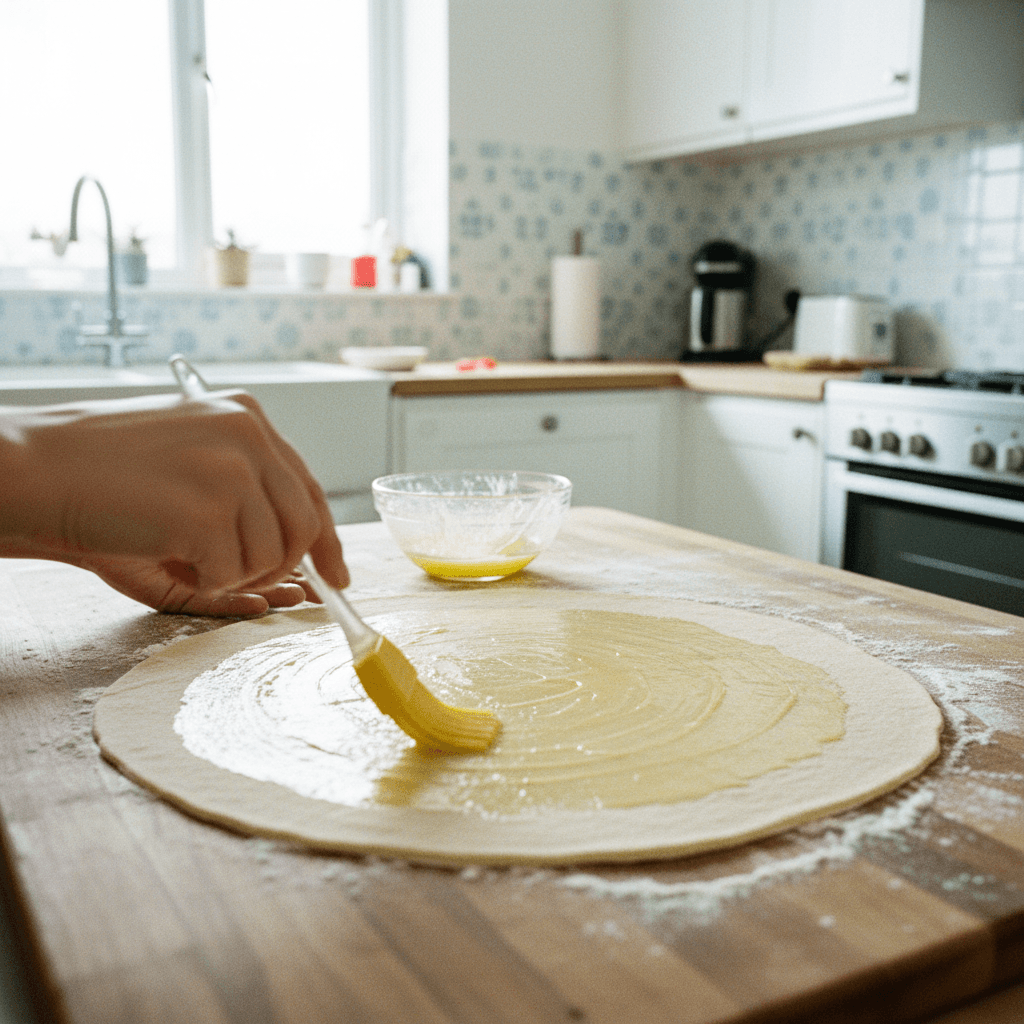
- 8
Make a cut halfway into the buttered dough, starting from the edge and going towards the center.
⏱️ 1 min
- 9
Starting from one side of the cut, roll the dough towards you, creating a cone shape.
⏱️ 1 min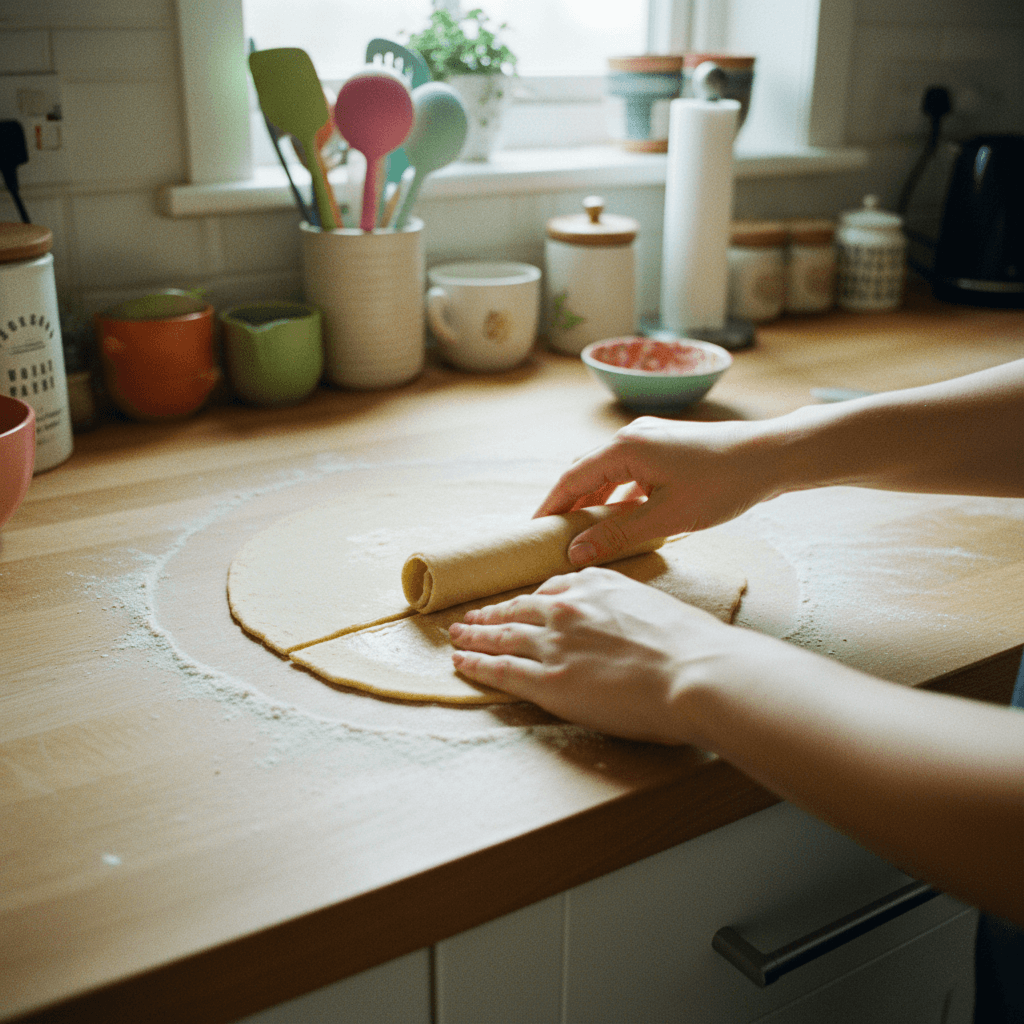
- 10
Pick up the dough cone. Fold the larger end of the cone into itself, then place that folded side down onto your board.
⏱️ 1 min
- 11
Using your thumb, push the top thinner piece of the dough cone down to the bottom of the dough ball. This creates a round, swirled dough ball.
⏱️ 1 min
- 12
Place the formed dough balls on a plate and allow them to rest for another 10 minutes. Repeat steps 6-11 for the remaining dough balls.
⏱️ 10 min
- 13
After the second rest, flour your work surface again. Take one rested dough ball and roll it out into a flat roti.
⏱️ 2 min
- 14
Heat a pan (such as a stainless steel pan) over medium heat and add a generous amount of butter to the hot pan.
⏱️ 1 min
- 15
Place each rolled roti into the hot buttered pan. Cook for a couple of minutes on each side, flipping every few minutes and generously basting each side with more melted butter until golden brown.
⏱️ 3 min
- 16
Once golden brown, remove the roti from the pan and place it on a cooling rack or plate. Repeat steps 13-15 for the remaining roti.
⏱️ 1 min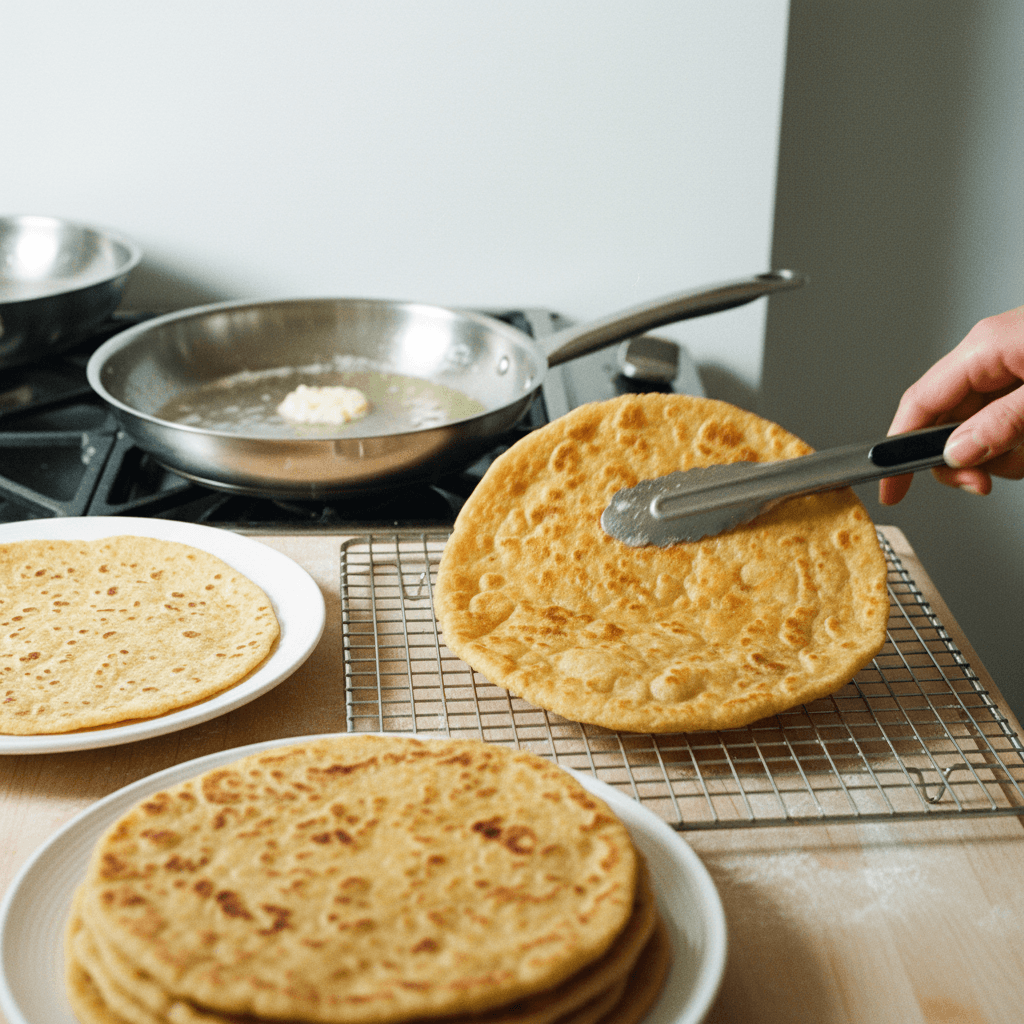
- 17
Allow the cooked roti to cool for about a minute. Then, squeeze and clap each roti in your hands to create the desired flakiness.
⏱️ 1 min
Kitchen Tools
Nutrition Facts (per serving)
Spelt Caribbean Style Roti
- 345 g spelt flour
- 2 teaspoons baking powder
- 1 teaspoon Celtic salt
- 2 tablespoons cane sugar
- 250 ml warm water
- 100 g unsalted butter, melted, plus more for cooking
- as needed macadamia nut oil, for oiling dough and bowl
Instructions
- 1
In a large bowl, combine the spelt flour, Celtic salt, cane sugar, and baking powder. Mix these dry ingredients thoroughly.
⏱️ 2 min - 2
Gradually add the warm water to the dry ingredients, mixing until a sticky dough forms. Spelt flour requires more moisture, so a sticky consistency is desired.
⏱️ 3 min - 3
Transfer the dough to a lightly floured surface and knead for 5 minutes until it becomes more elastic.
⏱️ 5 min - 4
Lightly oil the dough and the inside of the bowl with macadamia nut oil. Cover the bowl and let the dough rest for 30 minutes.
⏱️ 1 min - 5
After resting, divide the dough into 6 equal balls.
⏱️ 2 min - 6
Lightly flour your work surface. Take one dough ball and roll it out as thinly as possible into a round shape.
⏱️ 2 min - 7
Generously baste the entire surface of the rolled-out dough with melted unsalted butter.
⏱️ 1 min - 8
Make a cut halfway into the buttered dough, starting from the edge and going towards the center.
⏱️ 1 min - 9
Starting from one side of the cut, roll the dough towards you, creating a cone shape.
⏱️ 1 min - 10
Pick up the dough cone. Fold the larger end of the cone into itself, then place that folded side down onto your board.
⏱️ 1 min - 11
Using your thumb, push the top thinner piece of the dough cone down to the bottom of the dough ball. This creates a round, swirled dough ball.
⏱️ 1 min - 12
Place the formed dough balls on a plate and allow them to rest for another 10 minutes. Repeat steps 6-11 for the remaining dough balls.
⏱️ 10 min - 13
After the second rest, flour your work surface again. Take one rested dough ball and roll it out into a flat roti.
⏱️ 2 min - 14
Heat a pan (such as a stainless steel pan) over medium heat and add a generous amount of butter to the hot pan.
⏱️ 1 min - 15
Place each rolled roti into the hot buttered pan. Cook for a couple of minutes on each side, flipping every few minutes and generously basting each side with more melted butter until golden brown.
⏱️ 3 min - 16
Once golden brown, remove the roti from the pan and place it on a cooling rack or plate. Repeat steps 13-15 for the remaining roti.
⏱️ 1 min - 17
Allow the cooked roti to cool for about a minute. Then, squeeze and clap each roti in your hands to create the desired flakiness.
⏱️ 1 min