Green Tea Udon Noodles
Green Tea Udon Noodles

Ingredients
For the Udon Noodles
- 100 g all-purpose flour
- 3 g green tea powder
- 2 g salt
- 40 ml water
For Serving (Optional)
- as needed soy sauce
- as needed green onions, sliced
- as needed nori, shredded or cut into strips
Instructions
- 1
In a large mixing bowl, combine the all-purpose flour, green tea powder, and salt. Whisk or stir thoroughly to ensure all dry ingredients are evenly distributed.
⏱️ 2 min
- 2
Pour the water into the dry mixture. Mix with your hands or a sturdy spoon until the ingredients just come together to form a rough, shaggy dough. Do not overmix at this stage.
⏱️ 3 min
- 3
Transfer the rough dough into a strong, clean plastic bag (like a freezer bag). Seal the bag, removing as much air as possible.
⏱️ 1 min
- 4
Place the plastic-bagged dough on the floor, preferably on a clean towel or mat. Knead the dough by stepping on it with your feet. Apply even pressure and rotate the dough occasionally within the bag. Continue for about 5 minutes, or until the dough starts to become more cohesive.
⏱️ 5 min
- 5
Remove the dough from the plastic bag. Briefly reshape it into a ball, then place it back into the bag. Seal the bag and let the dough rest at room temperature for 30 minutes. This allows the gluten to relax.
⏱️ 1 min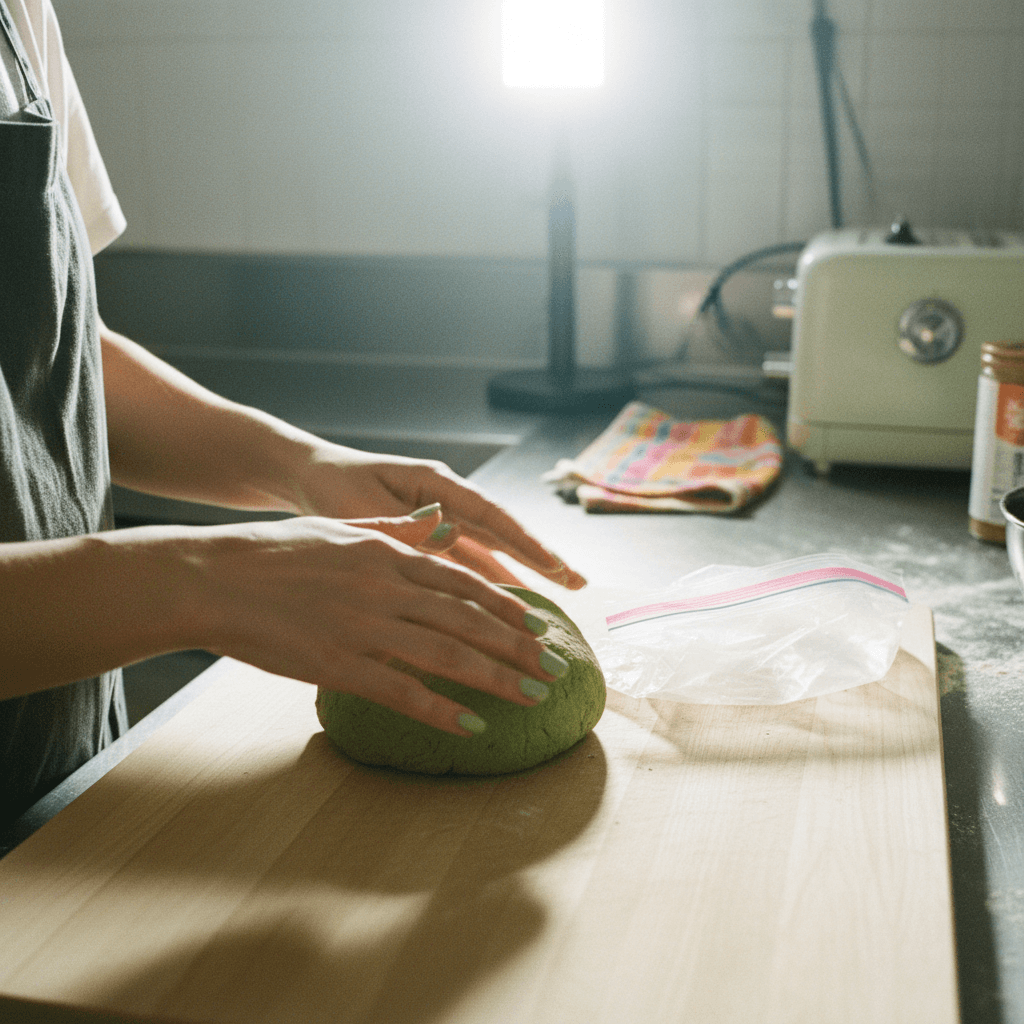
- 6
After the first rest, take the dough out of the bag, reshape it into a ball, and place it back into the bag. Seal the bag and knead it again by stepping on it for another 5 minutes. This second kneading will further develop the gluten and create a smoother dough.
⏱️ 5 min
- 7
Remove the dough from the bag, reshape it into a ball, and return it to the bag. Seal the bag and let it rest for another 30 minutes at room temperature.
⏱️ 1 min
- 8
Lightly flour a clean, dry work surface. Take the rested dough out of the bag and use a rolling pin to roll it out into a very thin sheet, about 2-3 mm thick. Try to maintain a somewhat rectangular shape.
⏱️ 5 min
- 9
Lightly dust the rolled-out dough with flour. Carefully fold the thin sheet of dough several times, creating a compact, layered rectangle. Ensure there's enough flour between the layers to prevent sticking.
⏱️ 2 min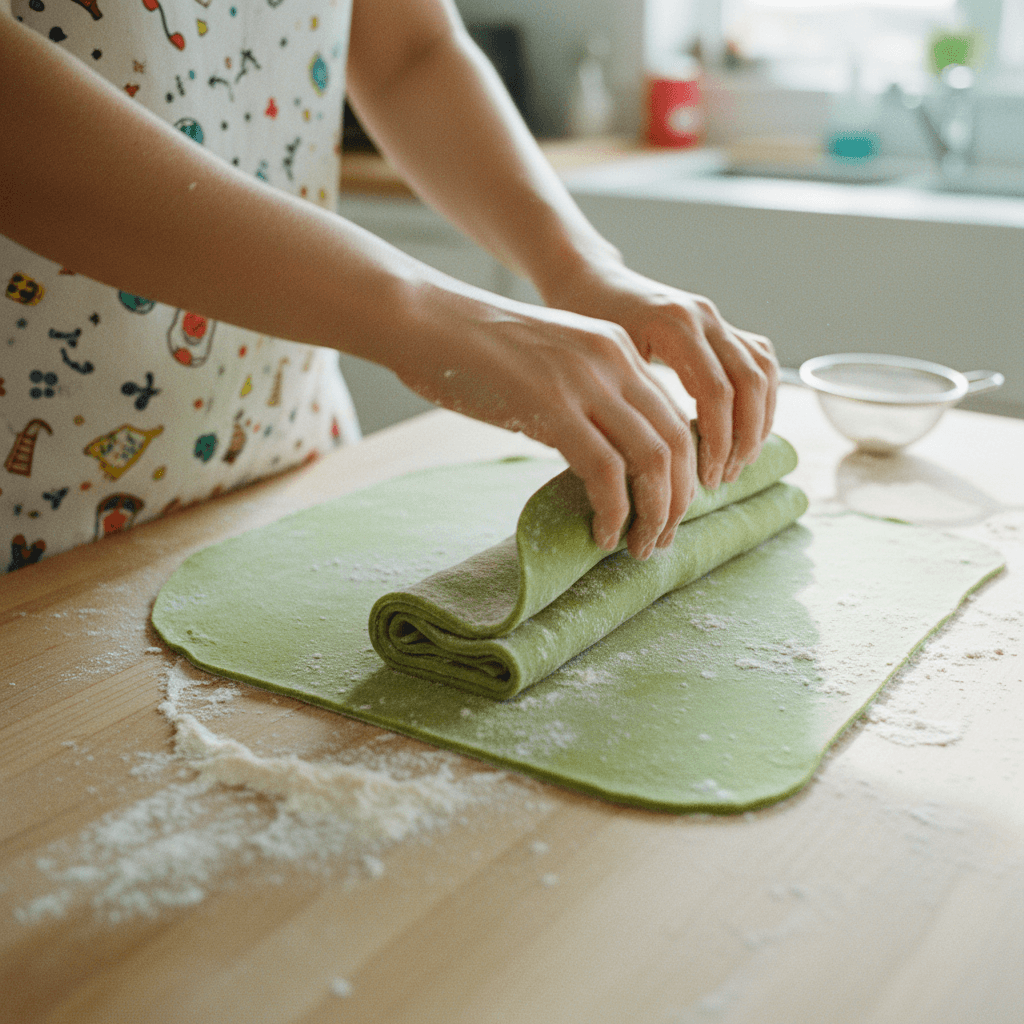
- 10
Using a sharp knife, cut the folded dough into thin, even strips to form the udon noodles. Aim for a width of about 3-5 mm. Gently separate the noodles and dust them lightly with flour to prevent them from sticking together.
⏱️ 5 min
- 11
Bring a large pot of water to a rolling boil over high heat.
⏱️ 5 min
- 12
Add the freshly made green tea udon noodles to the boiling water. Stir gently to prevent them from sticking. Cook the noodles for 10-12 minutes, or until they are tender but still have a slight chew (al dente).
⏱️ 12 min
- 13
Drain the cooked noodles thoroughly using a colander. Immediately rinse them under cold running water to stop the cooking process and remove any excess starch. This also helps to achieve a pleasant, firm texture.
⏱️ 2 min
- 14
Serve the green tea udon noodles immediately. They are delicious served with a soy sauce-based dressing, garnished with sliced green onions and shredded nori for an authentic touch.
⏱️ 1 min
Kitchen Tools
Green Tea Udon Noodles
For the Udon Noodles
- 100 g all-purpose flour
- 3 g green tea powder
- 2 g salt
- 40 ml water
For Serving (Optional)
- as needed soy sauce
- as needed green onions, sliced
- as needed nori, shredded or cut into strips
Instructions
- 1
In a large mixing bowl, combine the all-purpose flour, green tea powder, and salt. Whisk or stir thoroughly to ensure all dry ingredients are evenly distributed.
⏱️ 2 min - 2
Pour the water into the dry mixture. Mix with your hands or a sturdy spoon until the ingredients just come together to form a rough, shaggy dough. Do not overmix at this stage.
⏱️ 3 min - 3
Transfer the rough dough into a strong, clean plastic bag (like a freezer bag). Seal the bag, removing as much air as possible.
⏱️ 1 min - 4
Place the plastic-bagged dough on the floor, preferably on a clean towel or mat. Knead the dough by stepping on it with your feet. Apply even pressure and rotate the dough occasionally within the bag. Continue for about 5 minutes, or until the dough starts to become more cohesive.
⏱️ 5 min - 5
Remove the dough from the plastic bag. Briefly reshape it into a ball, then place it back into the bag. Seal the bag and let the dough rest at room temperature for 30 minutes. This allows the gluten to relax.
⏱️ 1 min - 6
After the first rest, take the dough out of the bag, reshape it into a ball, and place it back into the bag. Seal the bag and knead it again by stepping on it for another 5 minutes. This second kneading will further develop the gluten and create a smoother dough.
⏱️ 5 min - 7
Remove the dough from the bag, reshape it into a ball, and return it to the bag. Seal the bag and let it rest for another 30 minutes at room temperature.
⏱️ 1 min - 8
Lightly flour a clean, dry work surface. Take the rested dough out of the bag and use a rolling pin to roll it out into a very thin sheet, about 2-3 mm thick. Try to maintain a somewhat rectangular shape.
⏱️ 5 min - 9
Lightly dust the rolled-out dough with flour. Carefully fold the thin sheet of dough several times, creating a compact, layered rectangle. Ensure there's enough flour between the layers to prevent sticking.
⏱️ 2 min - 10
Using a sharp knife, cut the folded dough into thin, even strips to form the udon noodles. Aim for a width of about 3-5 mm. Gently separate the noodles and dust them lightly with flour to prevent them from sticking together.
⏱️ 5 min - 11
Bring a large pot of water to a rolling boil over high heat.
⏱️ 5 min - 12
Add the freshly made green tea udon noodles to the boiling water. Stir gently to prevent them from sticking. Cook the noodles for 10-12 minutes, or until they are tender but still have a slight chew (al dente).
⏱️ 12 min - 13
Drain the cooked noodles thoroughly using a colander. Immediately rinse them under cold running water to stop the cooking process and remove any excess starch. This also helps to achieve a pleasant, firm texture.
⏱️ 2 min - 14
Serve the green tea udon noodles immediately. They are delicious served with a soy sauce-based dressing, garnished with sliced green onions and shredded nori for an authentic touch.
⏱️ 1 min