Grandma's No-Fail Braised Pork Belly
Grandma's No-Fail Braised Pork Belly
Ingredients
For the Pork Belly
- 2 pounds pork belly, in large slabs
- 3 slices ginger, for blanching
- 2 stalks green onion, for blanching
For the Braising Base
- 1/2 cup rock sugar
- 3 stalks green onions, cut into 2-inch pieces
- 1 inch piece ginger, sliced
- 3 bay leaves
- 2 pods star anise
- 1 cinnamon stick
- 4 dried chilies
- 3 cups boiling water, or as needed to cover
For Seasoning and Simmering
- 1/4 cup light soy sauce
- 1 tablespoon dark soy sauce
- 1 tablespoon Chinese black vinegar, such as Zhenjiang vinegar
- 12 quail eggs, hard-boiled and peeled
For Garnish
- 2 tablespoons green onions, chopped
- 1/2 teaspoon dried osmanthus flowers
Instructions
- 1
Place the pork belly slabs in a large pot. Add cold water to cover, along with 3 slices of ginger and 2 green onion stalks. Bring to a rolling boil over high heat, skimming off any foam or impurities that rise to the surface. Continue to boil for 5 minutes.
⏱️ 10 min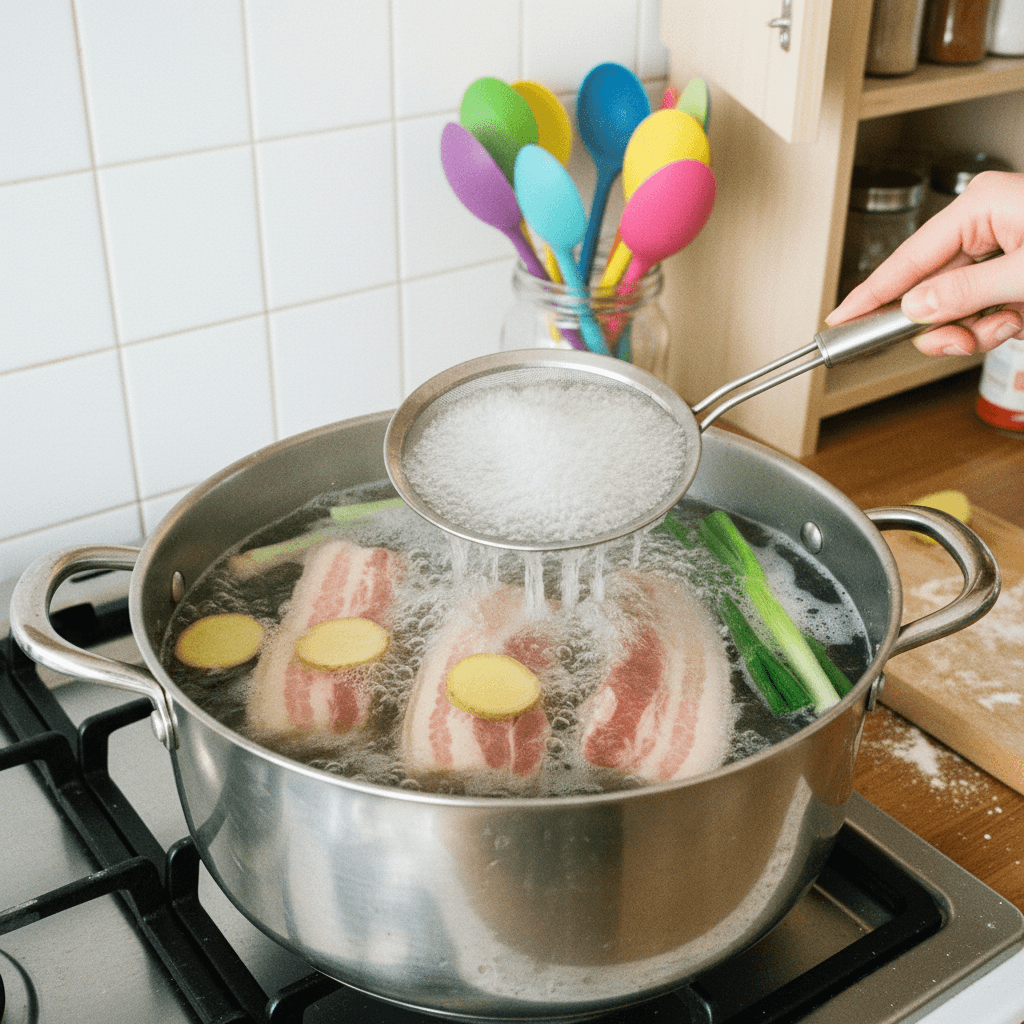
- 2
Remove the pork belly from the pot and rinse thoroughly under cold water to clean off any residue. Pat the pork belly dry with paper towels. Once cooled slightly, cut the pork belly into uniform 1 1/2-inch cubes.
⏱️ 10 min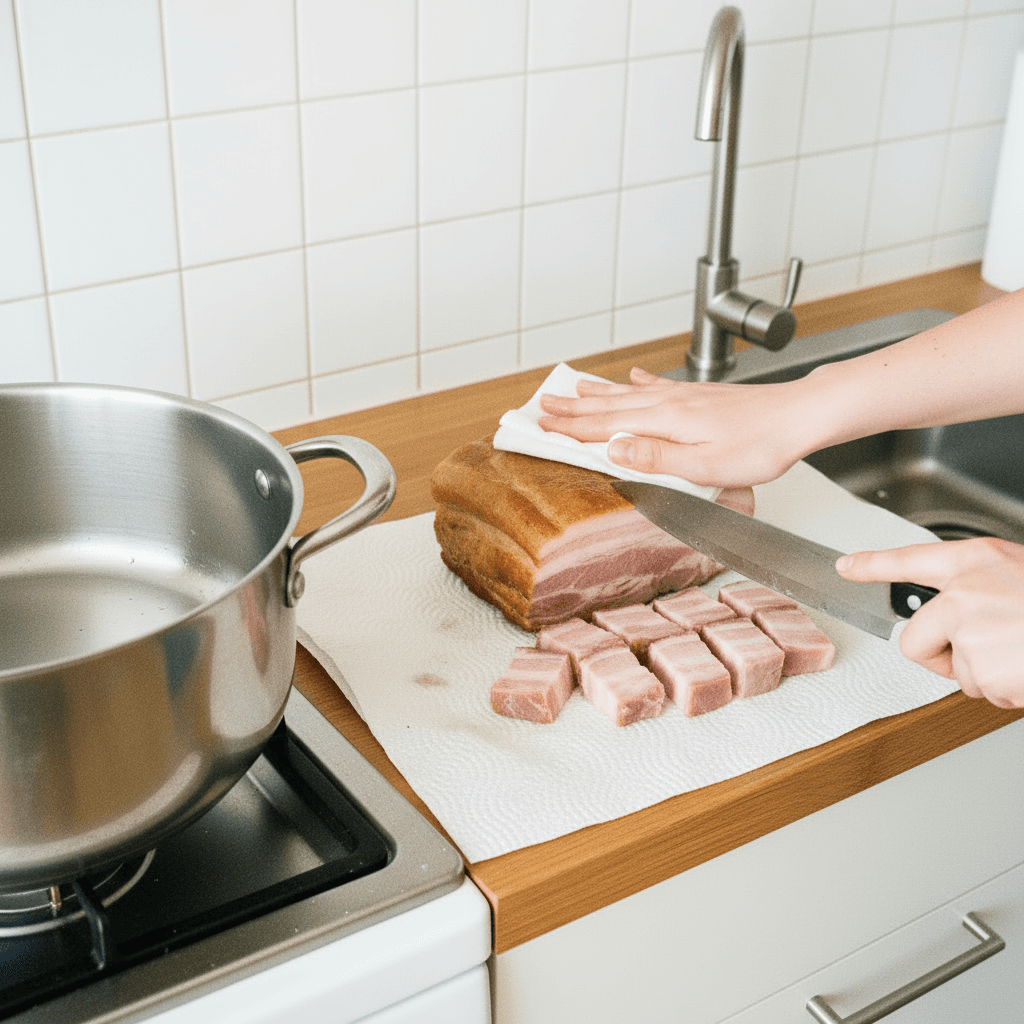
- 3
Heat a wok or large, heavy-bottomed pan over medium-high heat. Add the cut pork belly pieces, fat side down first. Pan-fry the pork belly, turning occasionally, until all sides are golden brown and a significant amount of fat has rendered out. This should take about 8-10 minutes. Remove the seared pork belly from the wok and set aside, leaving the rendered fat in the wok.
⏱️ 10 min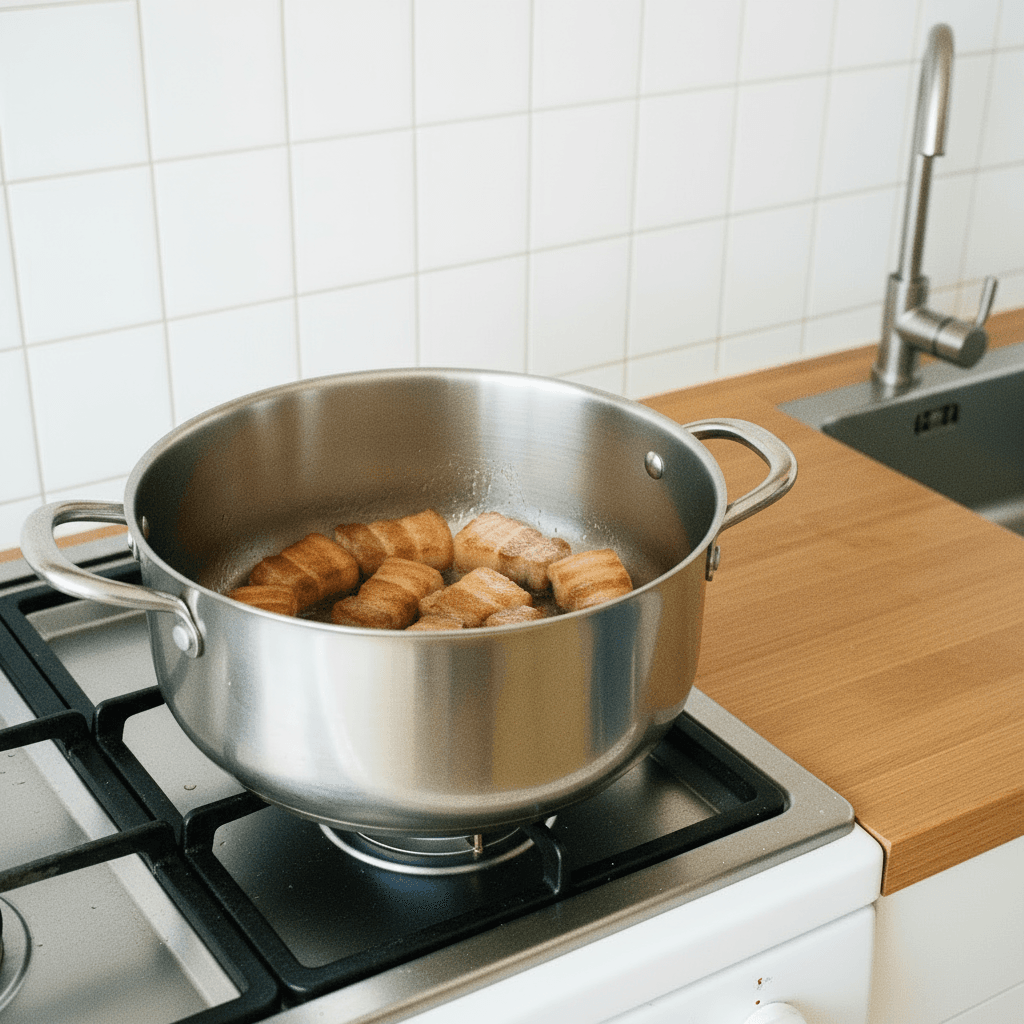
- 4
Reduce the heat to medium-low. Add the rock sugar to the rendered fat in the wok. Stir continuously until the sugar melts and caramelizes into a rich, amber-colored syrup. Be careful not to burn the sugar.
⏱️ 5 min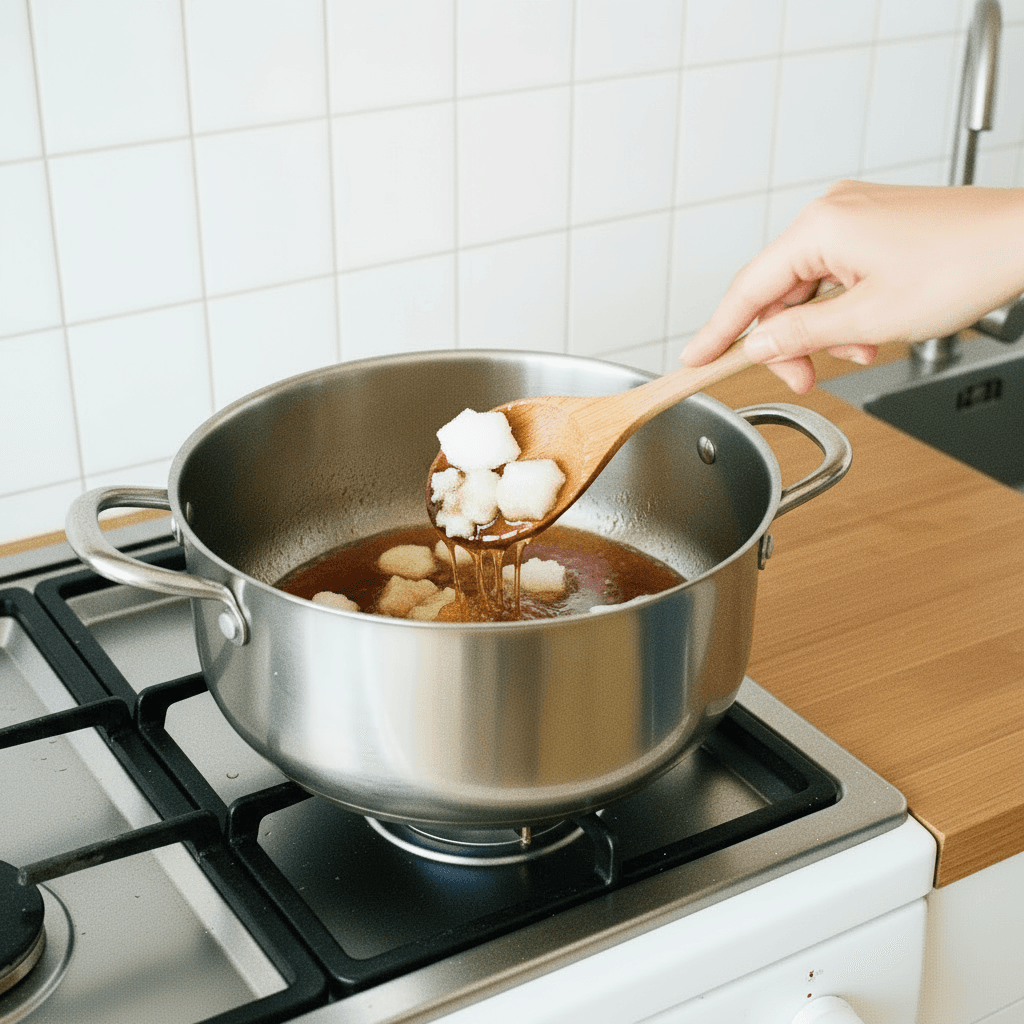
- 5
Immediately add the seared pork belly back into the wok with the caramel. Stir quickly to coat each piece evenly. Add the 2-inch green onion pieces, sliced ginger, bay leaves, star anise, cinnamon stick, and dried chilies. Stir-fry for 1-2 minutes until fragrant.
⏱️ 5 min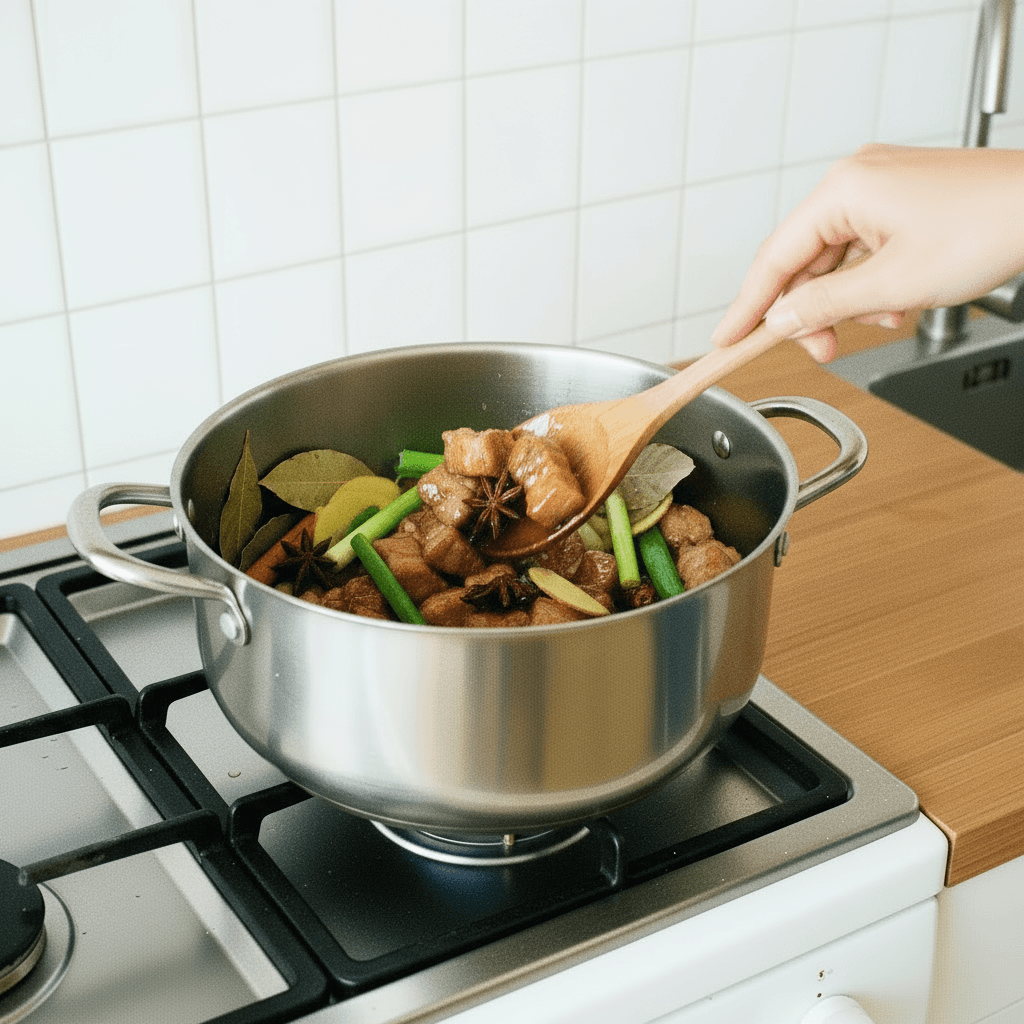
- 6
Pour 3 cups of boiling water over the ingredients in the wok, ensuring the pork belly is mostly submerged (add more boiling water if needed). Carefully transfer the entire contents of the wok to a Dutch oven or a heavy stewing pot.
⏱️ 5 min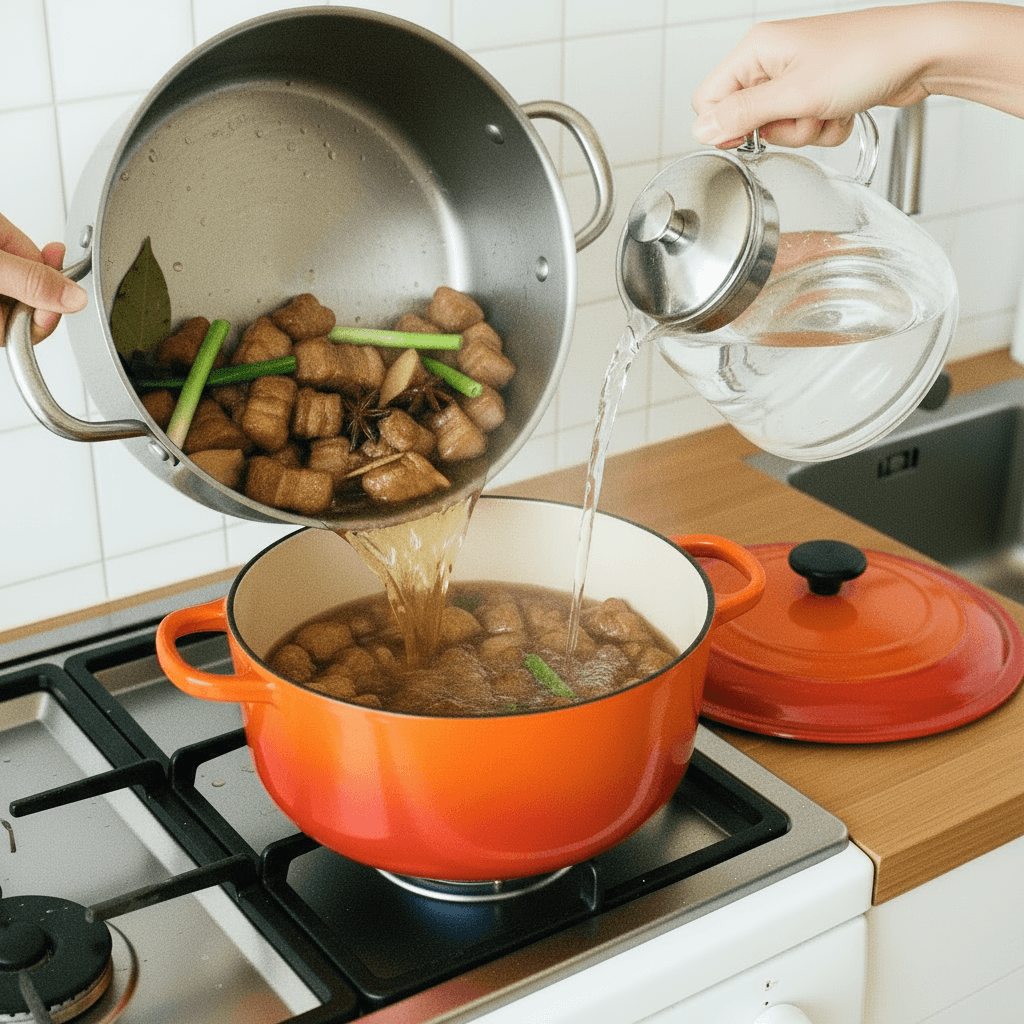
- 7
Add the light soy sauce, dark soy sauce, and Chinese black vinegar to the pot. Gently add the hard-boiled and peeled quail eggs. Bring the liquid to a boil over high heat.
⏱️ 5 min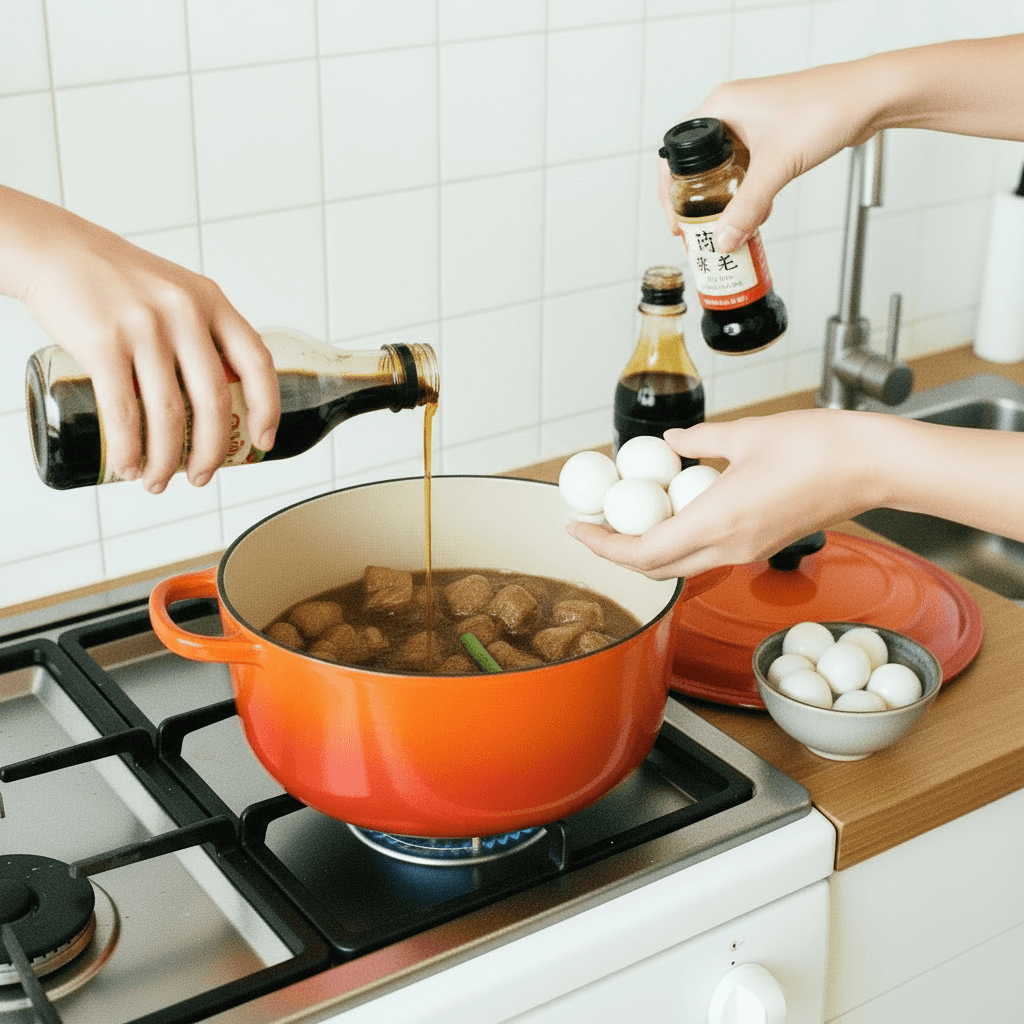
- 8
Once boiling, reduce the heat to low, cover the pot, and simmer for at least 45 minutes, or until the pork belly is fork-tender and gelatinous. The longer it simmers, the more tender it will become.
⏱️ 45 min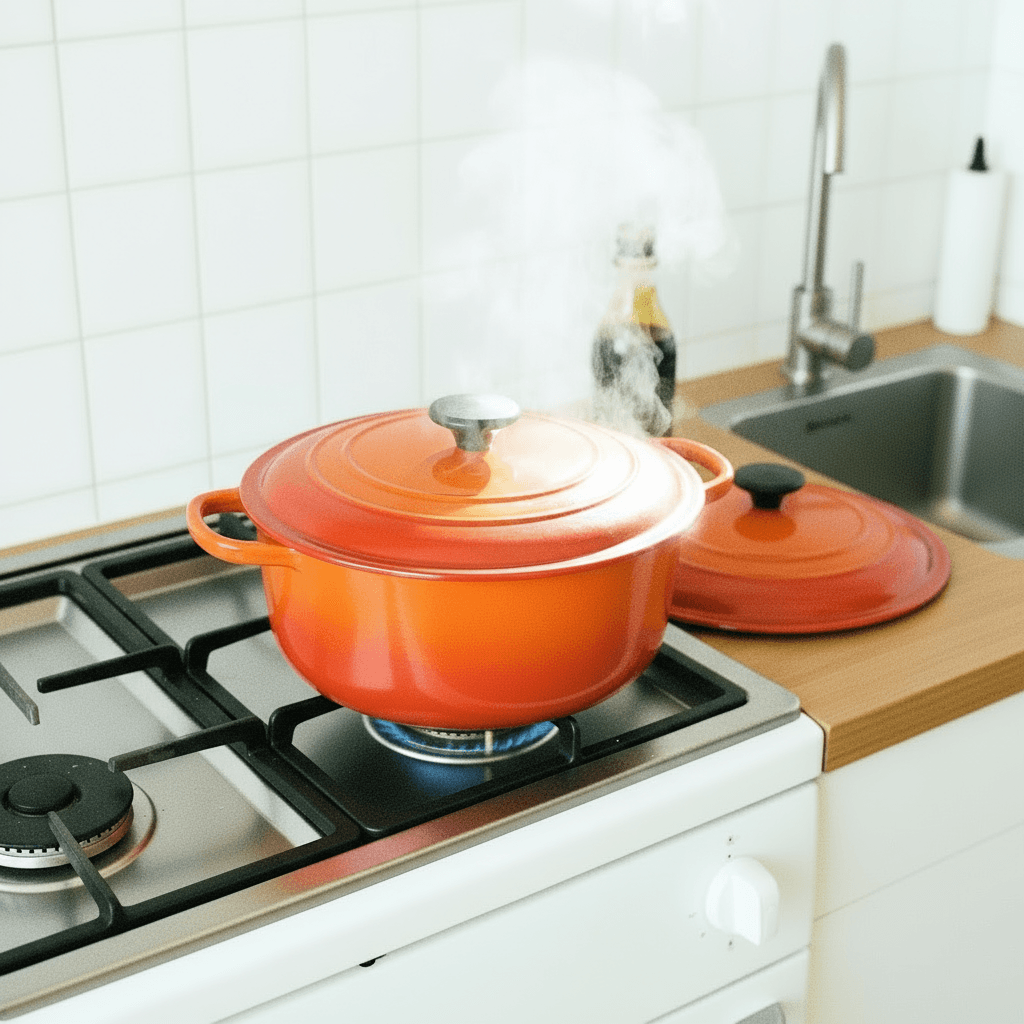
- 9
After simmering, carefully skim off any excess fat from the surface of the sauce using a ladle. Remove and discard the large aromatics: bay leaves, star anise, cinnamon stick, and dried chilies.
⏱️ 5 min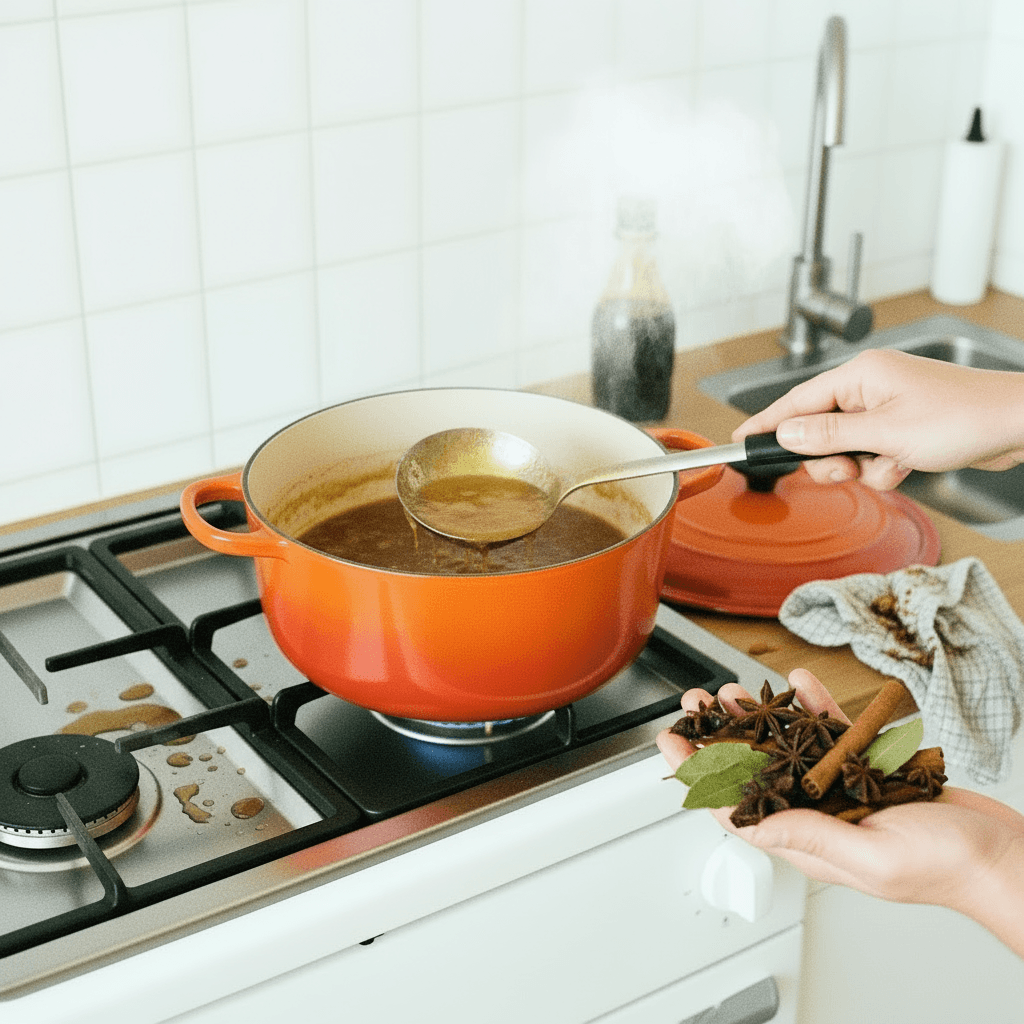
- 10
Increase the heat to medium-high. Continue to cook, uncovered, stirring occasionally, until the sauce reduces and thickens to a glossy consistency that beautifully coats the pork belly. The color of the pork should deepen to a rich, reddish-brown.
⏱️ 10 min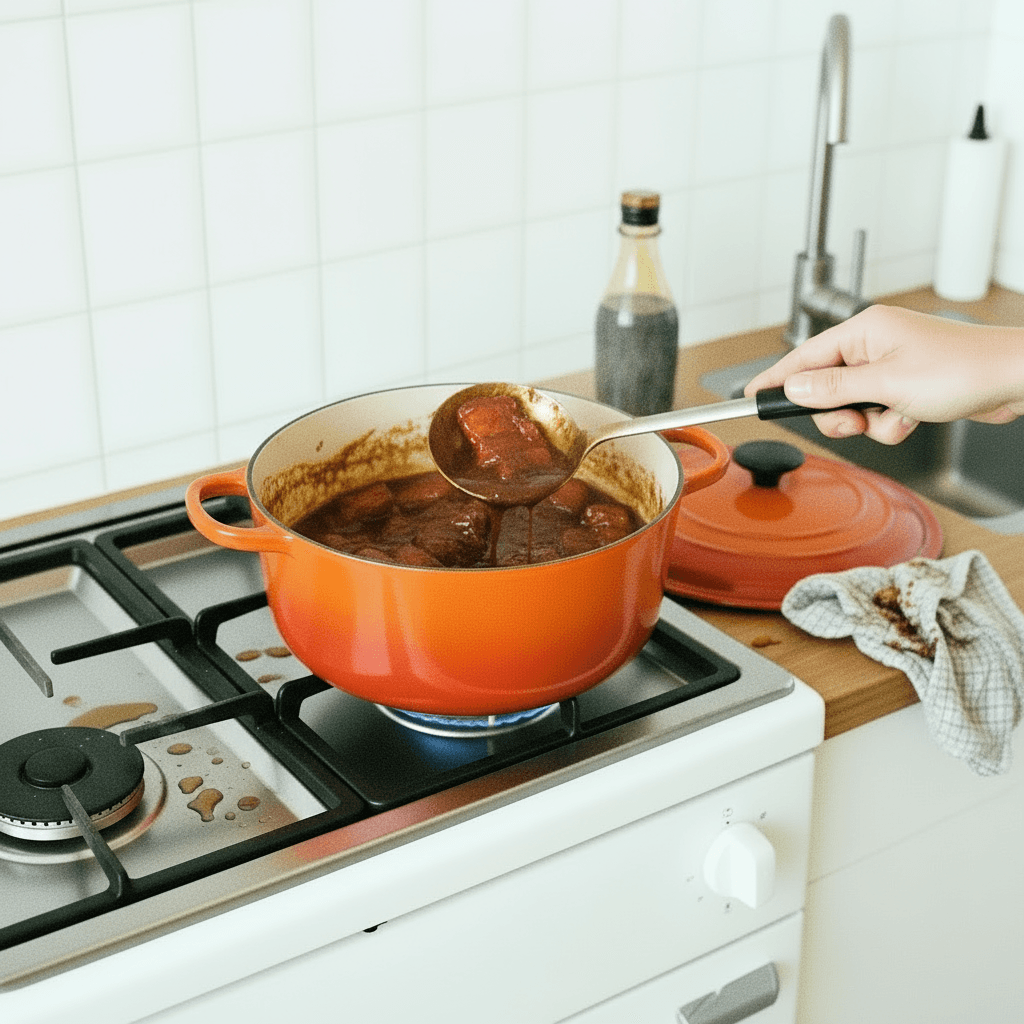
- 11
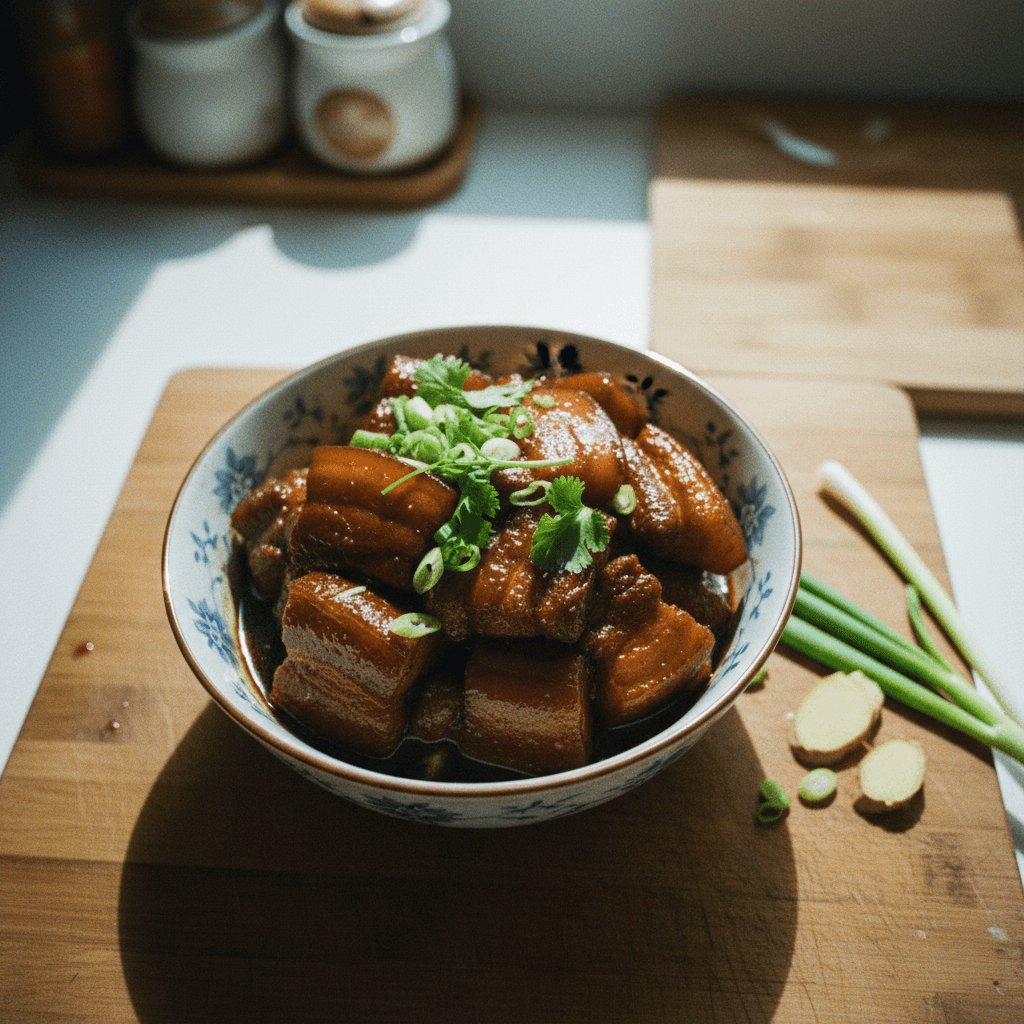
Transfer the braised pork belly and quail eggs to a serving bowl. Garnish generously with chopped green onions and a sprinkle of dried osmanthus flowers for fragrance and visual appeal. Serve hot, ideally over steamed jasmine rice.
⏱️ 5 min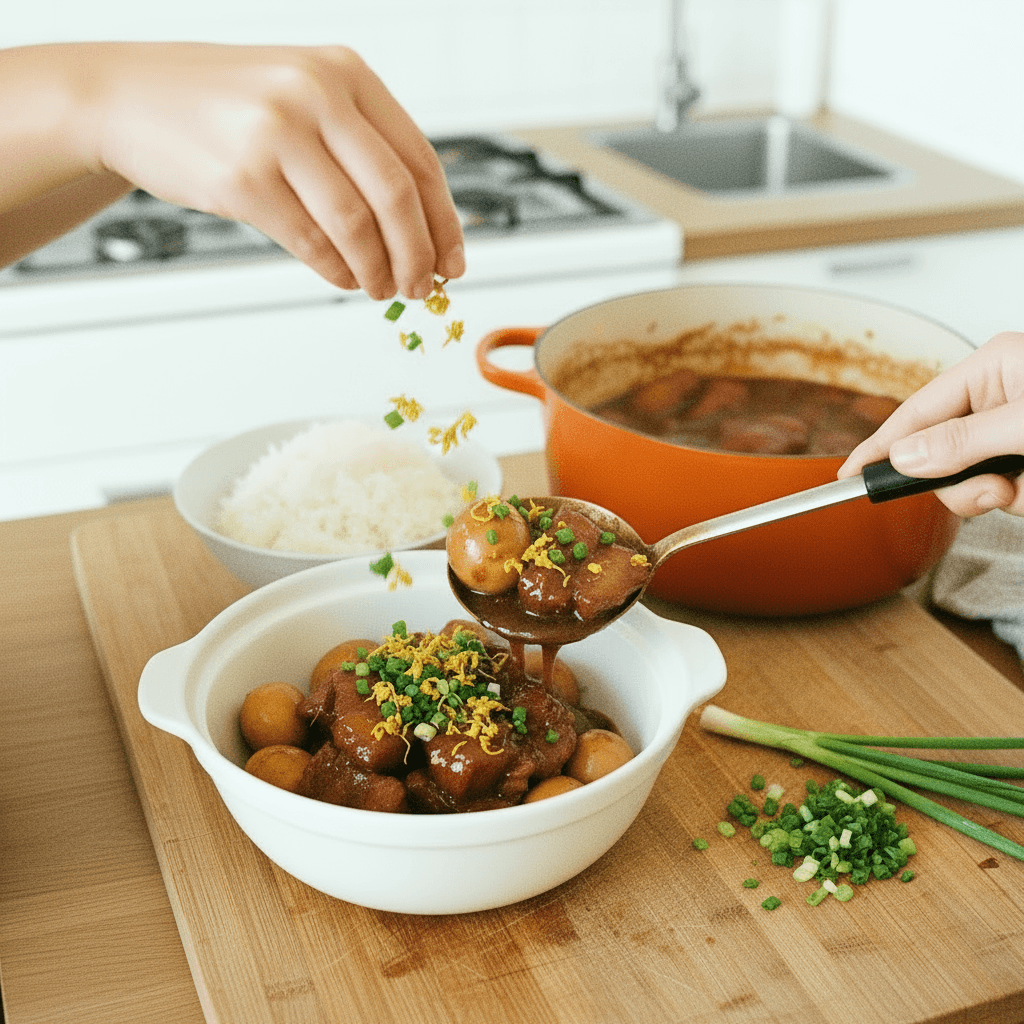
Kitchen Tools
Nutrition Facts (per serving)
Grandma's No-Fail Braised Pork Belly
Ingredients
For the Pork Belly
- 2 pounds pork belly, in large slabs
- 3 slices ginger, for blanching
- 2 stalks green onion, for blanching
For the Braising Base
- 1/2 cup rock sugar
- 3 stalks green onions, cut into 2-inch pieces
- 1 inch piece ginger, sliced
- 3 bay leaves
- 2 pods star anise
- 1 cinnamon stick
- 4 dried chilies
- 3 cups boiling water, or as needed to cover
For Seasoning and Simmering
- 1/4 cup light soy sauce
- 1 tablespoon dark soy sauce
- 1 tablespoon Chinese black vinegar, such as Zhenjiang vinegar
- 12 quail eggs, hard-boiled and peeled
For Garnish
- 2 tablespoons green onions, chopped
- 1/2 teaspoon dried osmanthus flowers
Instructions
- 1
Place the pork belly slabs in a large pot. Add cold water to cover, along with 3 slices of ginger and 2 green onion stalks. Bring to a rolling boil over high heat, skimming off any foam or impurities that rise to the surface. Continue to boil for 5 minutes.
⏱️ 10 min - 2
Remove the pork belly from the pot and rinse thoroughly under cold water to clean off any residue. Pat the pork belly dry with paper towels. Once cooled slightly, cut the pork belly into uniform 1 1/2-inch cubes.
⏱️ 10 min - 3
Heat a wok or large, heavy-bottomed pan over medium-high heat. Add the cut pork belly pieces, fat side down first. Pan-fry the pork belly, turning occasionally, until all sides are golden brown and a significant amount of fat has rendered out. This should take about 8-10 minutes. Remove the seared pork belly from the wok and set aside, leaving the rendered fat in the wok.
⏱️ 10 min - 4
Reduce the heat to medium-low. Add the rock sugar to the rendered fat in the wok. Stir continuously until the sugar melts and caramelizes into a rich, amber-colored syrup. Be careful not to burn the sugar.
⏱️ 5 min - 5
Immediately add the seared pork belly back into the wok with the caramel. Stir quickly to coat each piece evenly. Add the 2-inch green onion pieces, sliced ginger, bay leaves, star anise, cinnamon stick, and dried chilies. Stir-fry for 1-2 minutes until fragrant.
⏱️ 5 min - 6
Pour 3 cups of boiling water over the ingredients in the wok, ensuring the pork belly is mostly submerged (add more boiling water if needed). Carefully transfer the entire contents of the wok to a Dutch oven or a heavy stewing pot.
⏱️ 5 min - 7
Add the light soy sauce, dark soy sauce, and Chinese black vinegar to the pot. Gently add the hard-boiled and peeled quail eggs. Bring the liquid to a boil over high heat.
⏱️ 5 min - 8
Once boiling, reduce the heat to low, cover the pot, and simmer for at least 45 minutes, or until the pork belly is fork-tender and gelatinous. The longer it simmers, the more tender it will become.
⏱️ 45 min - 9
After simmering, carefully skim off any excess fat from the surface of the sauce using a ladle. Remove and discard the large aromatics: bay leaves, star anise, cinnamon stick, and dried chilies.
⏱️ 5 min - 10
Increase the heat to medium-high. Continue to cook, uncovered, stirring occasionally, until the sauce reduces and thickens to a glossy consistency that beautifully coats the pork belly. The color of the pork should deepen to a rich, reddish-brown.
⏱️ 10 min - 11
Transfer the braised pork belly and quail eggs to a serving bowl. Garnish generously with chopped green onions and a sprinkle of dried osmanthus flowers for fragrance and visual appeal. Serve hot, ideally over steamed jasmine rice.
⏱️ 5 min