Oden (Japanese Hot Pot)
Oden (Japanese Hot Pot)
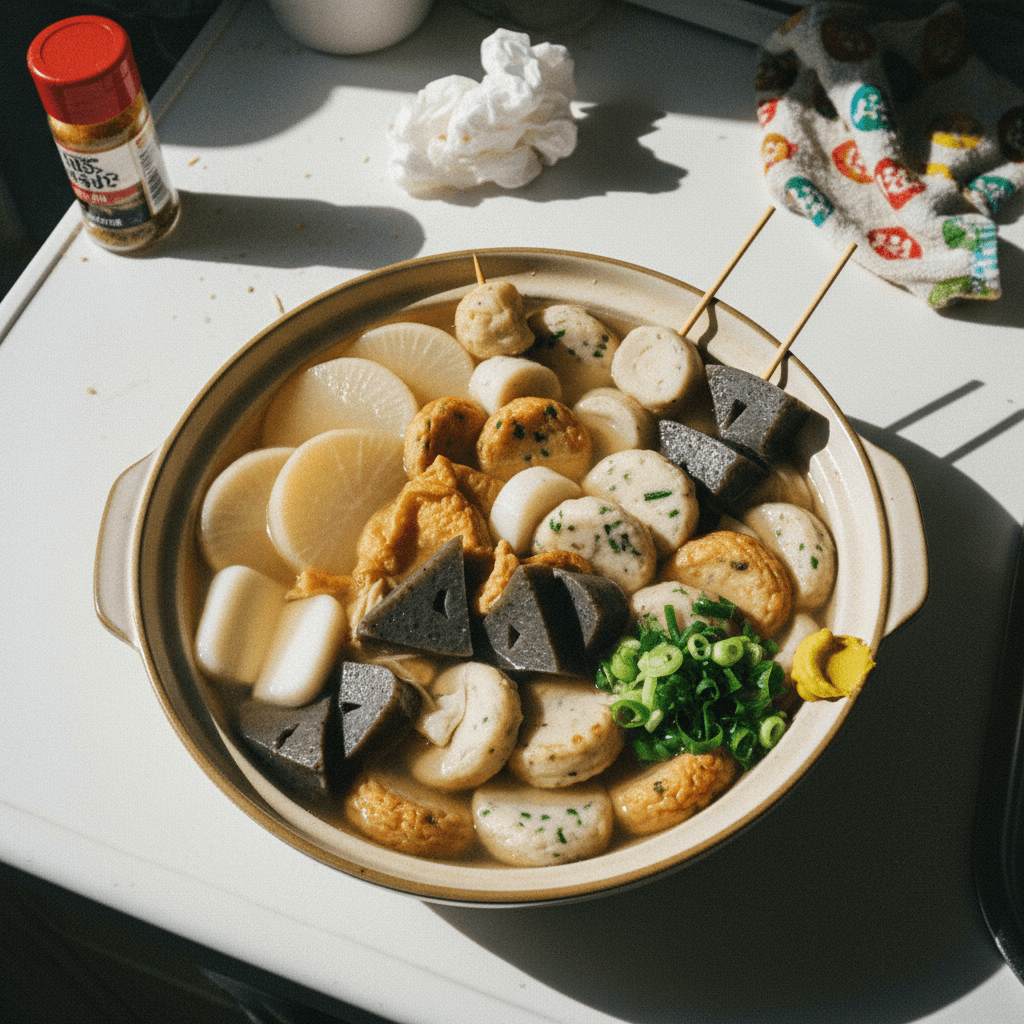
Ingredients
For the Oden Ingredients
- 1 pound daikon radish, peeled and sliced into 1 1/2-inch thick rounds
- 1 block konnyaku, about 9 ounces, cut into 1 1/2-inch triangles with a small slit in the center of each
- 2 strips kombu, about 4-inches long each
- 2 aburaage, fried tofu pouches, blanched and cut in half
- 2 kiri mochi, Japanese rice cakes
- 1 pack assorted fish cakes, about 12-16 ounces, including round, flat, elongated, and other shapes
For the Broth
- 6 cups water
- 1/4 cup soy sauce
- 1/4 cup mirin
- 1/4 cup sake
- 1 tablespoon dashi powder
- 2 tablespoons mentsuyu, concentrated noodle soup base
Instructions
- 1
Prepare the daikon radish: Peel the daikon and slice it into 1 1/2-inch thick rounds. For some pieces, you can cut them in half to create crescent shapes, or cut into smaller rectangular pieces for variety. Parboil the daikon in a pot of boiling water for 10-15 minutes until slightly tender but still firm. Drain and set aside.
⏱️ 20 min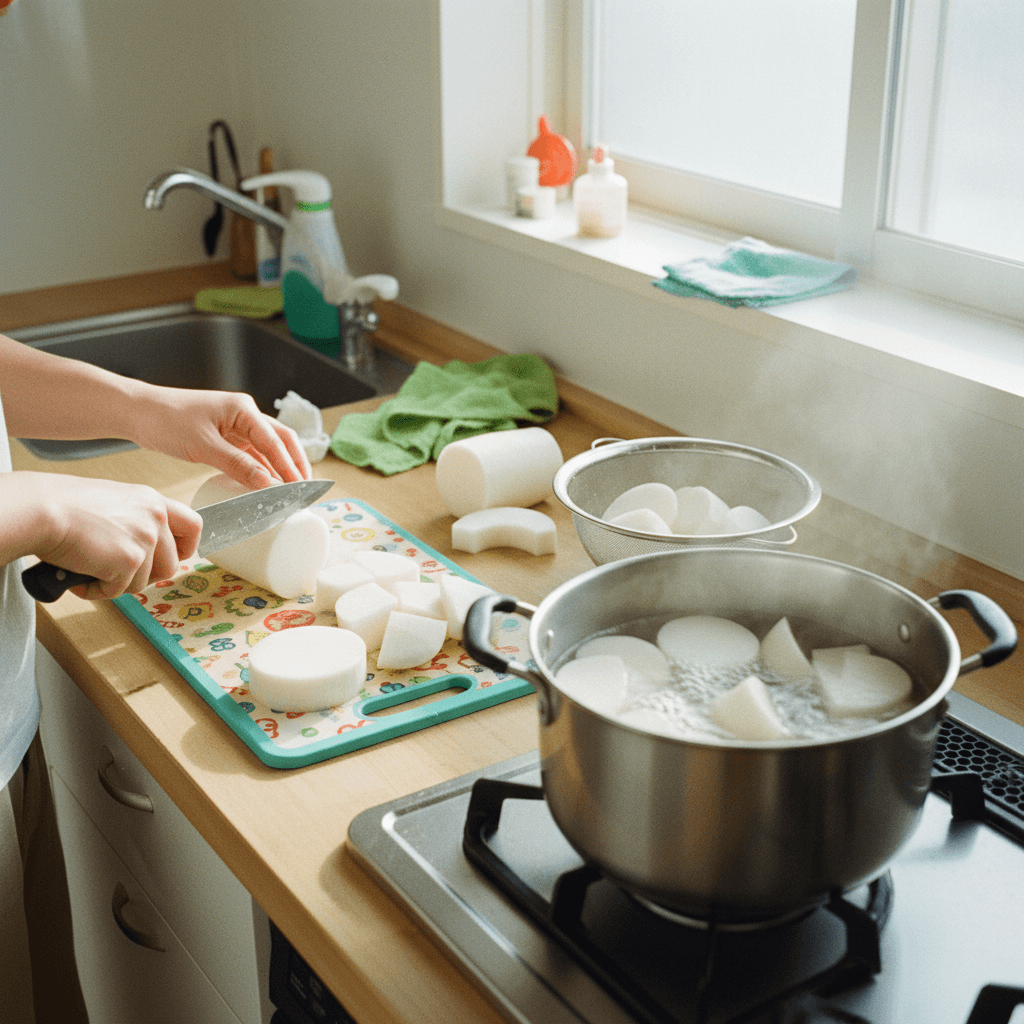
- 2
Prepare the konnyaku: Cut the block of konnyaku into 1 1/2-inch triangles. Make a small slit in the center of each triangle to help it absorb the broth flavor. Briefly blanch the konnyaku in boiling water for 2-3 minutes to remove any odor. Drain and set aside.
⏱️ 10 min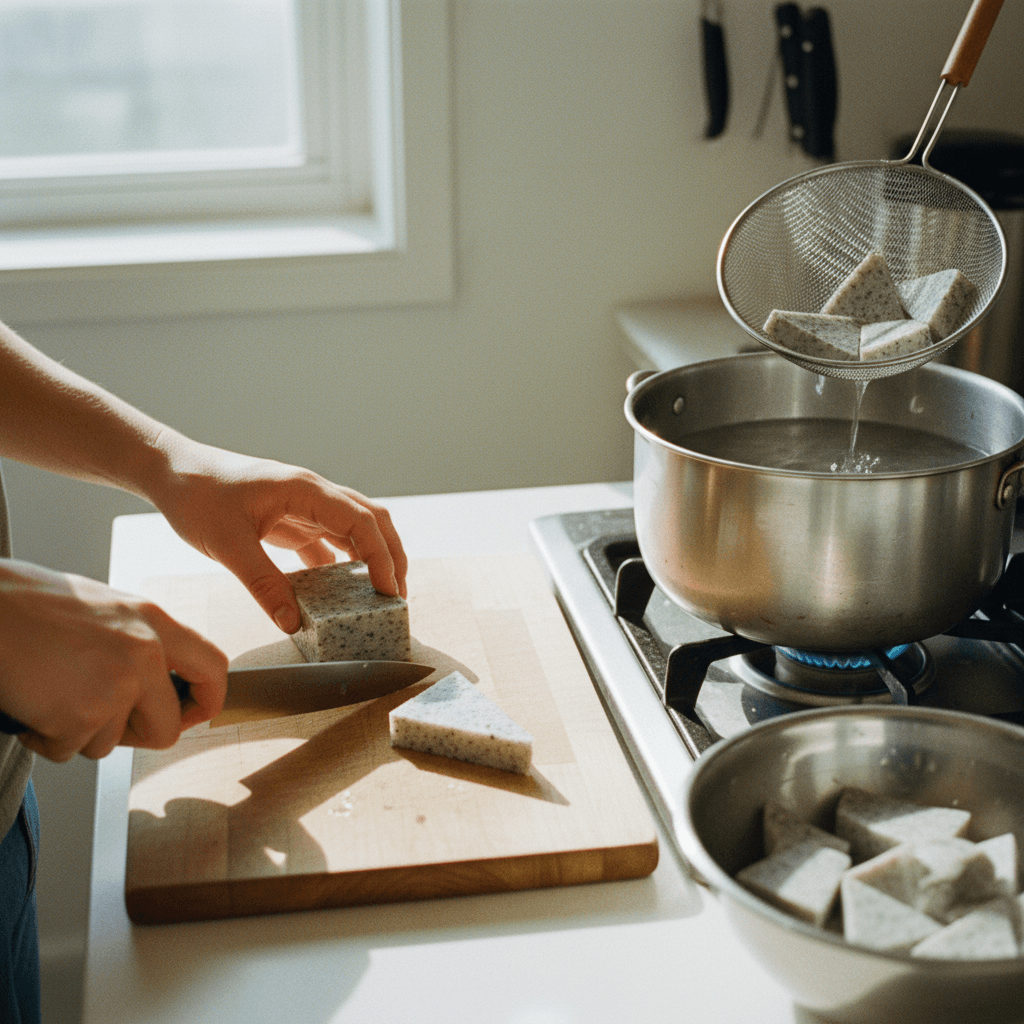
- 3
Prepare the aburaage: Blanch the aburaage in hot water for a few minutes to remove excess oil. Gently press out any remaining water, then cut each pouch in half.
⏱️ 5 min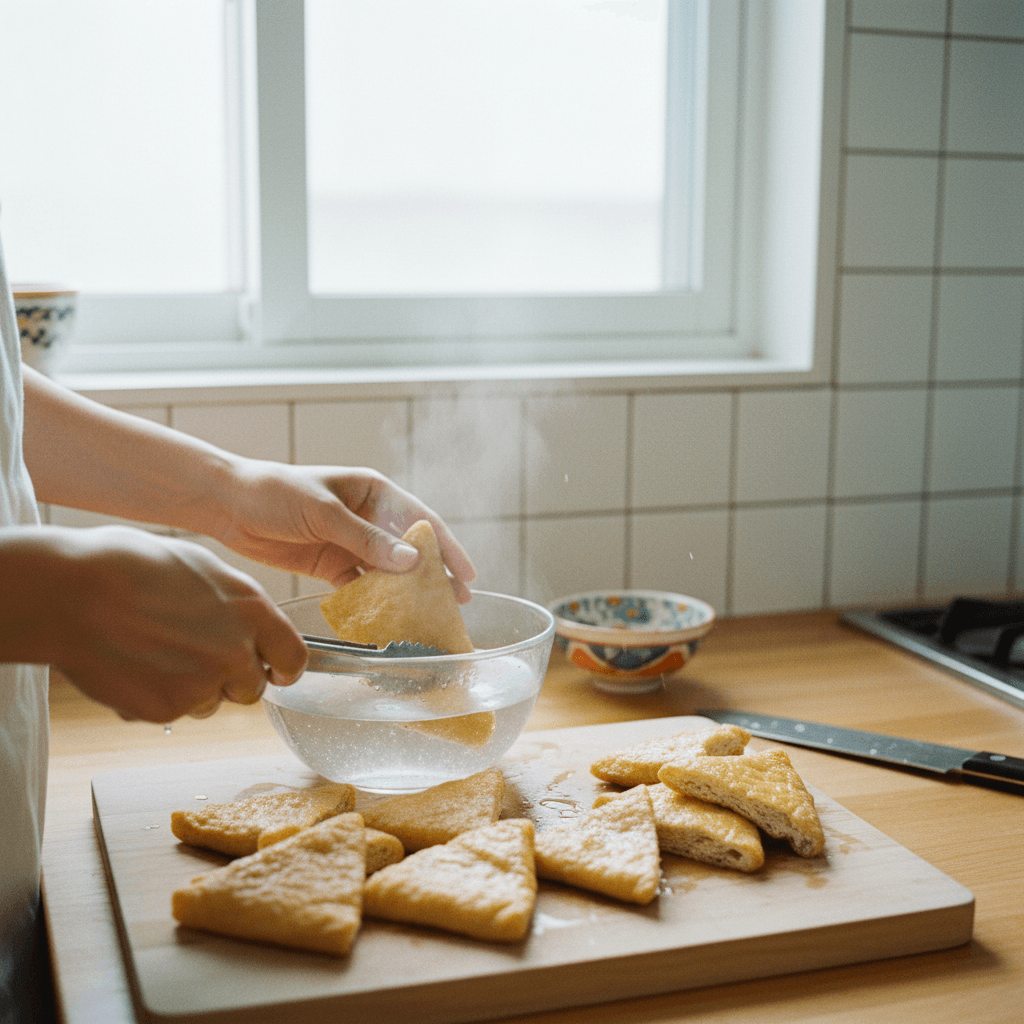
- 4
Prepare the fish cakes: If any fish cakes are large, cut them into smaller, bite-sized pieces. If using fish cakes on skewers, keep them as is. Arrange all prepared oden ingredients (daikon, konnyaku, aburaage, kiri mochi, and assorted fish cakes) near your cooking vessel.
⏱️ 10 min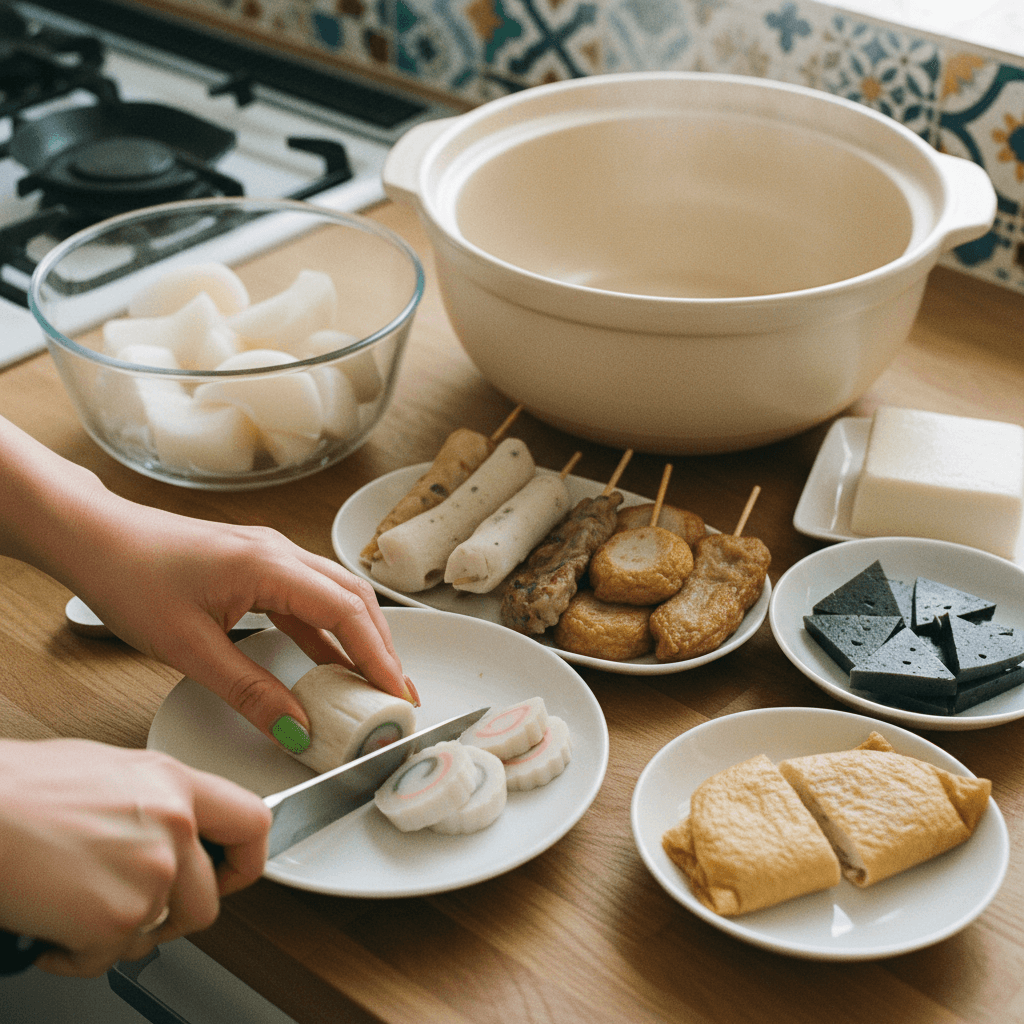
- 5
Prepare the broth: In a large multi-cooker, rice cooker, or large pot, combine the water, soy sauce, mirin, sake, dashi powder, and mentsuyu. Stir well to dissolve the dashi powder.
⏱️ 5 min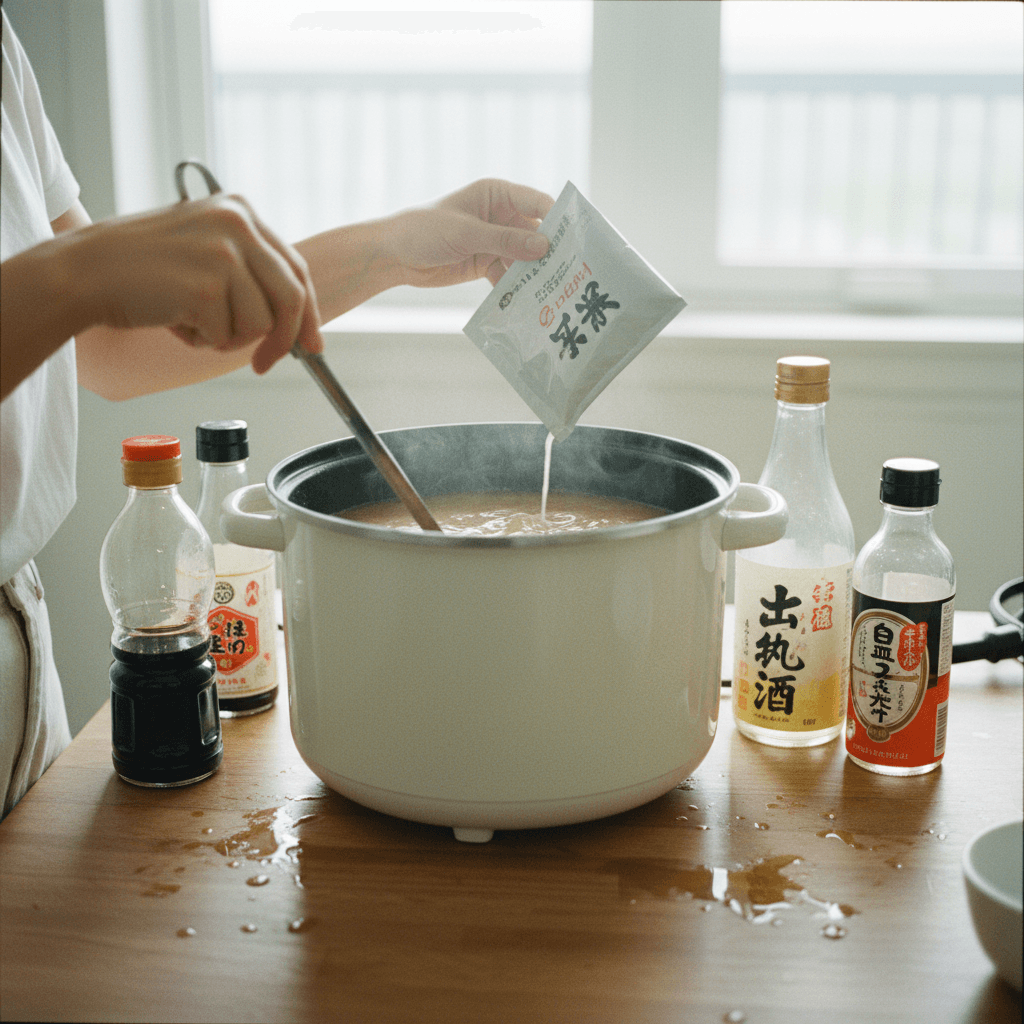
- 6
Assemble and cook the Oden: Add the prepared daikon, konnyaku, and kombu strips to the broth first. Bring the broth to a gentle simmer over medium heat. Reduce heat to low, cover, and let simmer for at least 30 minutes to allow the daikon and konnyaku to absorb flavor.
⏱️ 35 min
- 7
Add remaining ingredients: After 30 minutes, add the aburaage, kiri mochi, and assorted fish cakes to the pot. Ensure all ingredients are submerged in the broth. Continue to simmer gently for another 20-30 minutes, or until all ingredients are heated through and tender, and the flavors have melded. Do not boil vigorously.
⏱️ 30 min
- 8
Serve: Ladle the Oden and broth into individual serving bowls. Oden is traditionally served hot and can be enjoyed with karashi (Japanese mustard) on the side.
⏱️ 5 min
Kitchen Tools
Nutrition Facts (per serving)
Oden (Japanese Hot Pot)
For the Oden Ingredients
- 1 pound daikon radish, peeled and sliced into 1 1/2-inch thick rounds
- 1 block konnyaku, about 9 ounces, cut into 1 1/2-inch triangles with a small slit in the center of each
- 2 strips kombu, about 4-inches long each
- 2 aburaage, fried tofu pouches, blanched and cut in half
- 2 kiri mochi, Japanese rice cakes
- 1 pack assorted fish cakes, about 12-16 ounces, including round, flat, elongated, and other shapes
For the Broth
- 6 cups water
- 1/4 cup soy sauce
- 1/4 cup mirin
- 1/4 cup sake
- 1 tablespoon dashi powder
- 2 tablespoons mentsuyu, concentrated noodle soup base
Instructions
- 1
Prepare the daikon radish: Peel the daikon and slice it into 1 1/2-inch thick rounds. For some pieces, you can cut them in half to create crescent shapes, or cut into smaller rectangular pieces for variety. Parboil the daikon in a pot of boiling water for 10-15 minutes until slightly tender but still firm. Drain and set aside.
⏱️ 20 min - 2
Prepare the konnyaku: Cut the block of konnyaku into 1 1/2-inch triangles. Make a small slit in the center of each triangle to help it absorb the broth flavor. Briefly blanch the konnyaku in boiling water for 2-3 minutes to remove any odor. Drain and set aside.
⏱️ 10 min - 3
Prepare the aburaage: Blanch the aburaage in hot water for a few minutes to remove excess oil. Gently press out any remaining water, then cut each pouch in half.
⏱️ 5 min - 4
Prepare the fish cakes: If any fish cakes are large, cut them into smaller, bite-sized pieces. If using fish cakes on skewers, keep them as is. Arrange all prepared oden ingredients (daikon, konnyaku, aburaage, kiri mochi, and assorted fish cakes) near your cooking vessel.
⏱️ 10 min - 5
Prepare the broth: In a large multi-cooker, rice cooker, or large pot, combine the water, soy sauce, mirin, sake, dashi powder, and mentsuyu. Stir well to dissolve the dashi powder.
⏱️ 5 min - 6
Assemble and cook the Oden: Add the prepared daikon, konnyaku, and kombu strips to the broth first. Bring the broth to a gentle simmer over medium heat. Reduce heat to low, cover, and let simmer for at least 30 minutes to allow the daikon and konnyaku to absorb flavor.
⏱️ 35 min - 7
Add remaining ingredients: After 30 minutes, add the aburaage, kiri mochi, and assorted fish cakes to the pot. Ensure all ingredients are submerged in the broth. Continue to simmer gently for another 20-30 minutes, or until all ingredients are heated through and tender, and the flavors have melded. Do not boil vigorously.
⏱️ 30 min - 8
Serve: Ladle the Oden and broth into individual serving bowls. Oden is traditionally served hot and can be enjoyed with karashi (Japanese mustard) on the side.
⏱️ 5 min