Homemade Ciabatta
Homemade Ciabatta
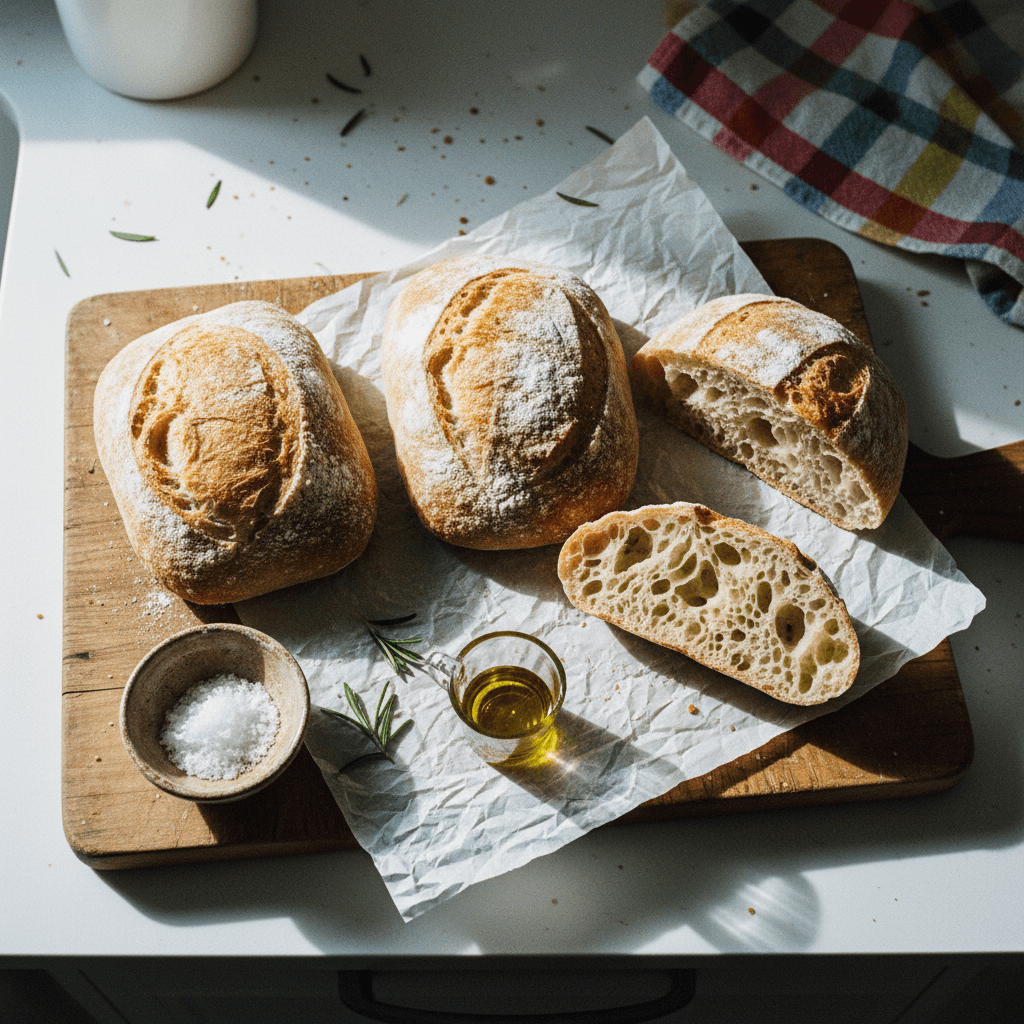
Ingredients
- 300 grams bread flour
- 240 grams water
- 3 grams instant yeast
- 6 grams salt
- 10 grams olive oil
Instructions
- 1
In a large bowl, mix the 240 grams of water and 3 grams of instant yeast until combined. Add 10 grams of olive oil.
⏱️ 2 min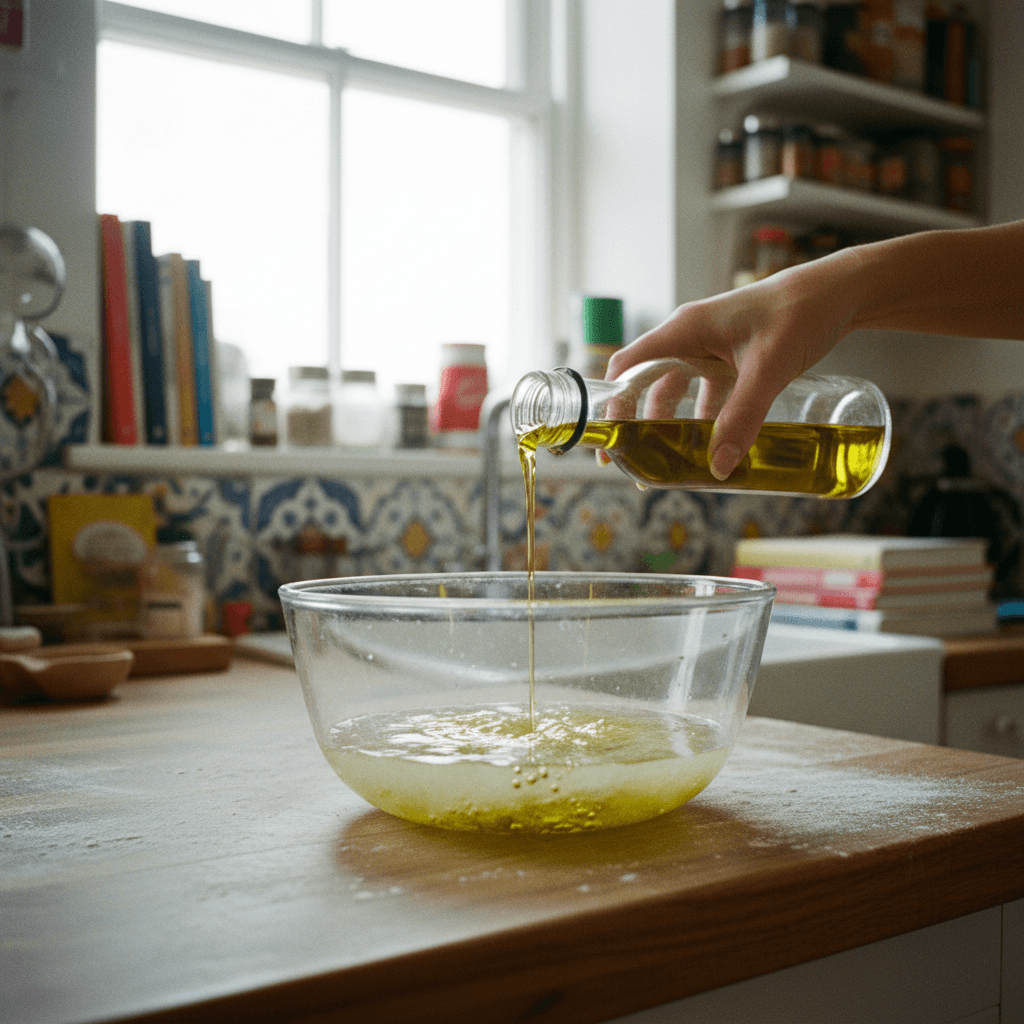
- 2
Add 300 grams of bread flour and 6 grams of salt to the bowl. Mix roughly with a spatula until all ingredients are just combined. The dough will be very sticky, which is normal for ciabatta.
⏱️ 3 min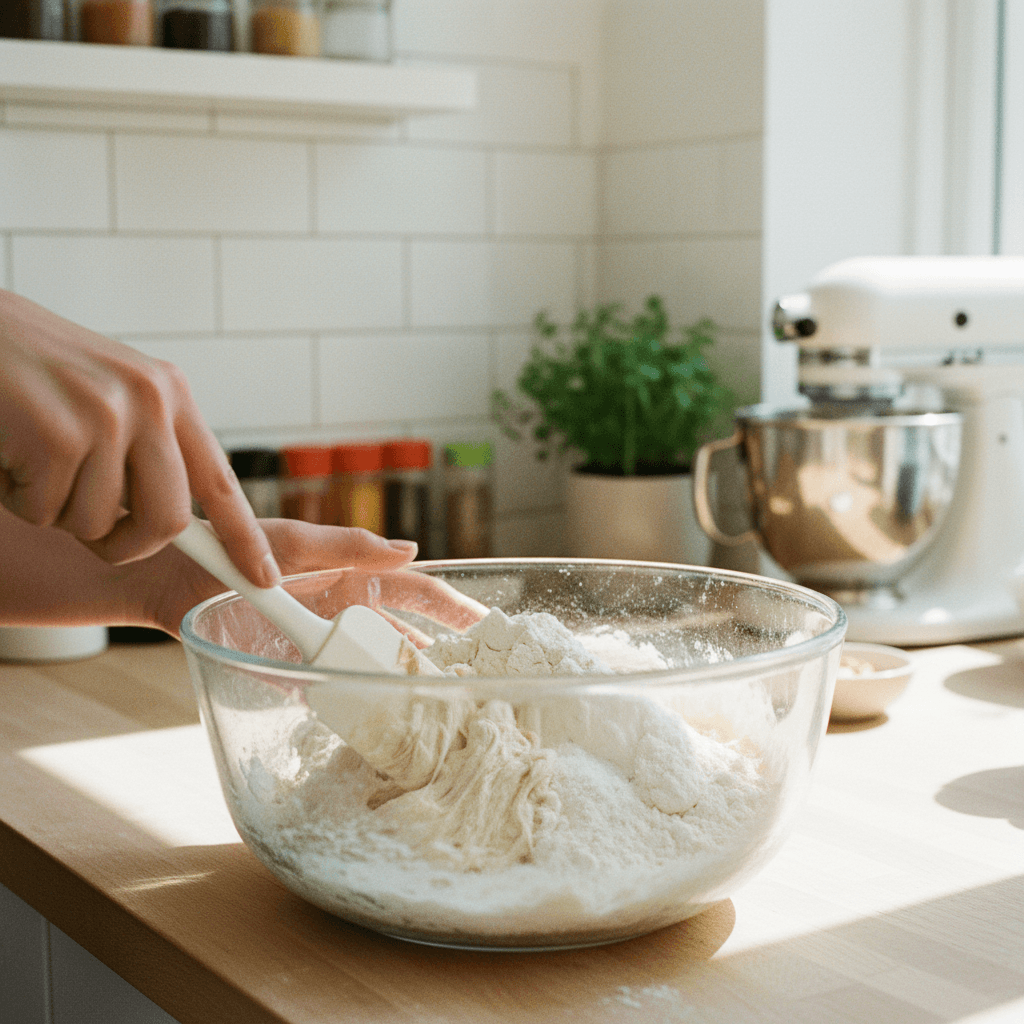
- 3
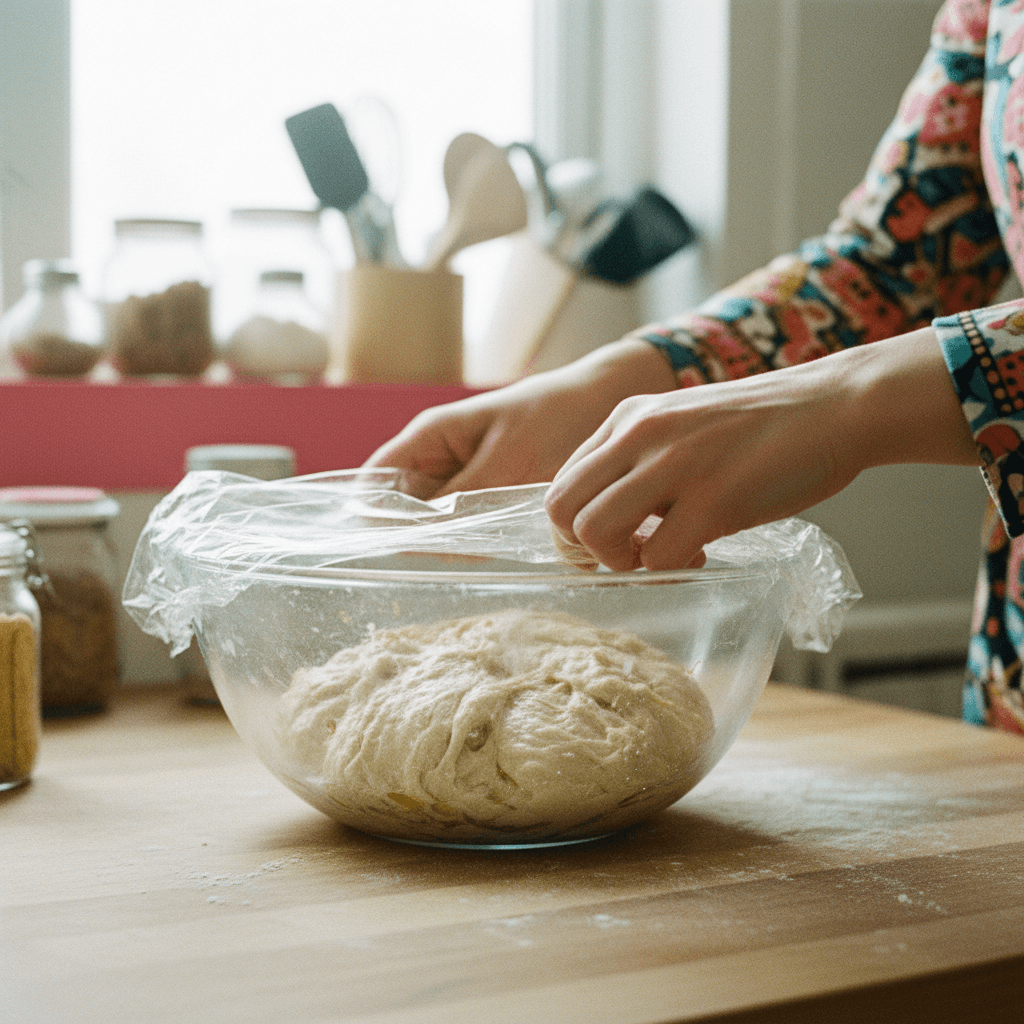
Cover the bowl with plastic wrap and let the dough rest for 30 minutes.
- 4
After 30 minutes, wet your hands. Perform a stretch and fold by grabbing one side of the dough, stretching it upwards, and folding it over to the center. Repeat this process from all four sides of the dough.
⏱️ 2 min
- 5
Cover the dough again and let it rest for another 30 minutes. Repeat the stretch and fold process (Step 4). Repeat this entire sequence (rest 30 minutes, then stretch and fold) one more time, for a total of 3 stretch and fold cycles over 1.5 hours.
⏱️ 6 min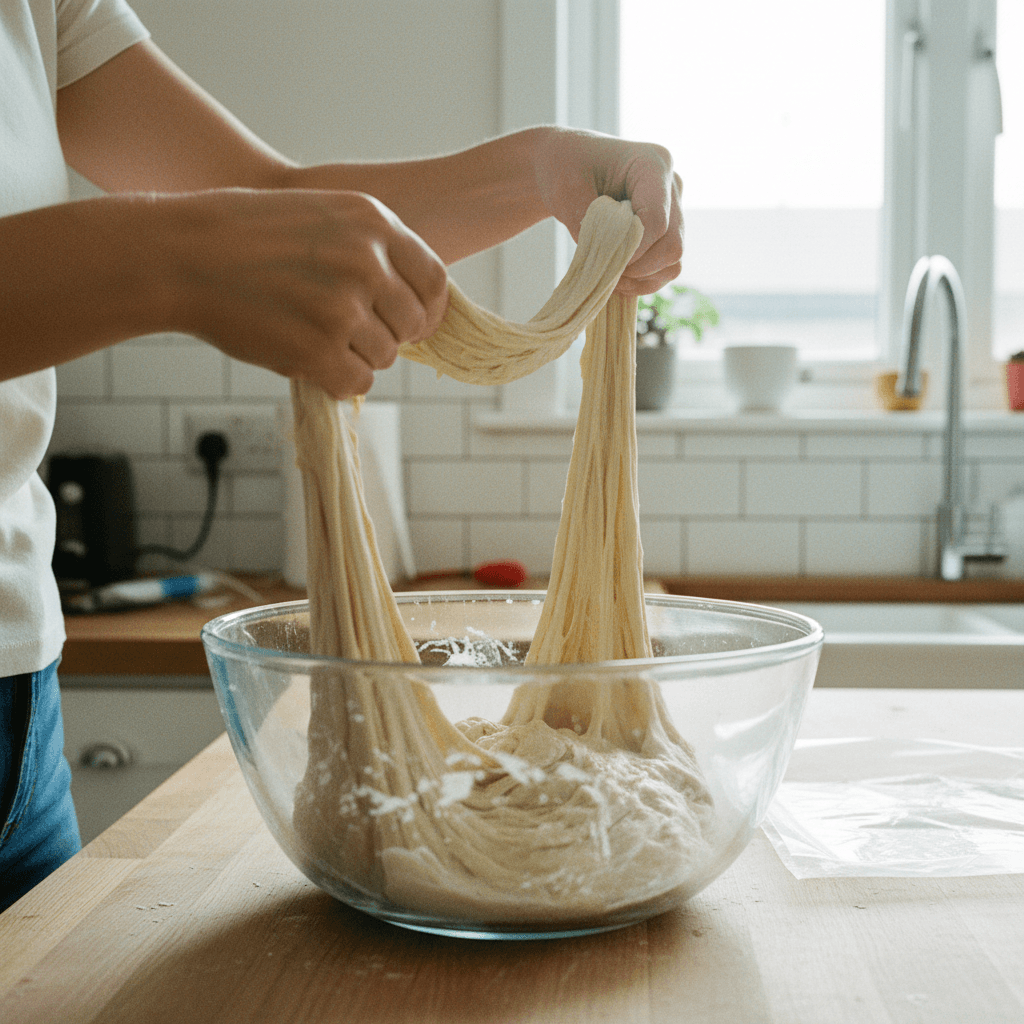
- 6
For optimal flavor, refrigerate the dough for 12 hours. Alternatively, if you're short on time, you can let it rest at room temperature for 1 hour.

- 7
Generously flour a clean work surface. Carefully transfer the dough onto the floured surface, taking care to preserve the air bubbles within the dough.
⏱️ 2 min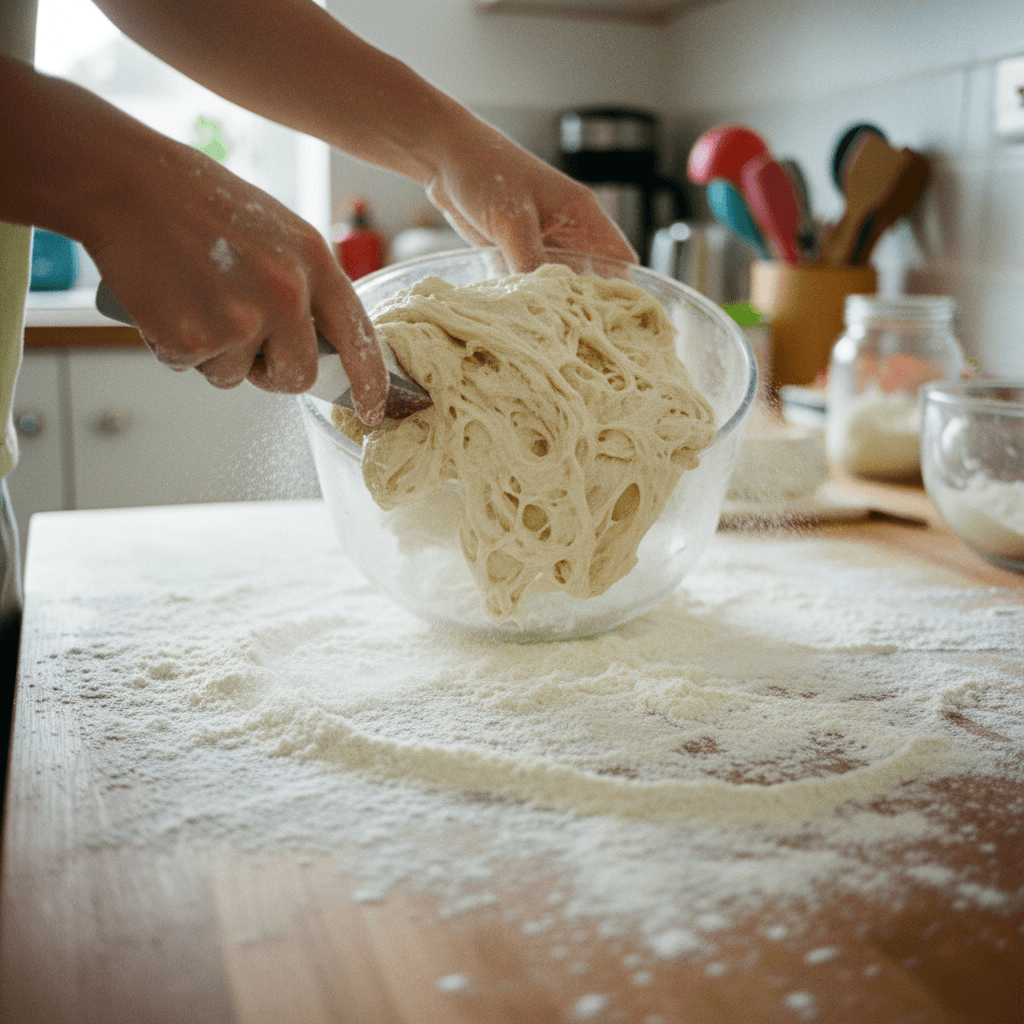
- 8
Using a dough scraper or sharp knife, divide the dough into 3 equal pieces. Gently shape each piece into a rectangular form. Do NOT knead the dough at this stage, as this will deflate the bubbles.
⏱️ 5 min
- 9
Carefully transfer the shaped dough pieces onto a baking sheet lined with parchment paper. Cover the dough loosely and let it proof for 30–40 minutes.

- 10
Preheat your oven to 450°F (230°C).
⏱️ 15 min•🌡️ 450
- 11
Once the oven is preheated and you place the ciabatta loaves inside, immediately reduce the oven temperature to 400°F (200°C). Add 1 cup of water to a heat-safe pan on the bottom rack of the oven to create steam, which helps with crust development.
⏱️ 1 min•🌡️ 400
- 12
Bake the ciabatta for 18–22 minutes, or until the loaves are deep golden brown and sound hollow when tapped on the bottom.
⏱️ 22 min•🌡️ 400
Kitchen Tools
Nutrition Facts (per serving)
Homemade Ciabatta
- 300 grams bread flour
- 240 grams water
- 3 grams instant yeast
- 6 grams salt
- 10 grams olive oil
Instructions
- 1
In a large bowl, mix the 240 grams of water and 3 grams of instant yeast until combined. Add 10 grams of olive oil.
⏱️ 2 min - 2
Add 300 grams of bread flour and 6 grams of salt to the bowl. Mix roughly with a spatula until all ingredients are just combined. The dough will be very sticky, which is normal for ciabatta.
⏱️ 3 min - 3
Cover the bowl with plastic wrap and let the dough rest for 30 minutes.
- 4
After 30 minutes, wet your hands. Perform a stretch and fold by grabbing one side of the dough, stretching it upwards, and folding it over to the center. Repeat this process from all four sides of the dough.
⏱️ 2 min - 5
Cover the dough again and let it rest for another 30 minutes. Repeat the stretch and fold process (Step 4). Repeat this entire sequence (rest 30 minutes, then stretch and fold) one more time, for a total of 3 stretch and fold cycles over 1.5 hours.
⏱️ 6 min - 6
For optimal flavor, refrigerate the dough for 12 hours. Alternatively, if you're short on time, you can let it rest at room temperature for 1 hour.
- 7
Generously flour a clean work surface. Carefully transfer the dough onto the floured surface, taking care to preserve the air bubbles within the dough.
⏱️ 2 min - 8
Using a dough scraper or sharp knife, divide the dough into 3 equal pieces. Gently shape each piece into a rectangular form. Do NOT knead the dough at this stage, as this will deflate the bubbles.
⏱️ 5 min - 9
Carefully transfer the shaped dough pieces onto a baking sheet lined with parchment paper. Cover the dough loosely and let it proof for 30–40 minutes.
- 10
Preheat your oven to 450°F (230°C).
⏱️ 15 min•🌡️ 450 - 11
Once the oven is preheated and you place the ciabatta loaves inside, immediately reduce the oven temperature to 400°F (200°C). Add 1 cup of water to a heat-safe pan on the bottom rack of the oven to create steam, which helps with crust development.
⏱️ 1 min•🌡️ 400 - 12
Bake the ciabatta for 18–22 minutes, or until the loaves are deep golden brown and sound hollow when tapped on the bottom.
⏱️ 22 min•🌡️ 400