Classic Focaccia Bread
Classic Focaccia Bread

Ingredients
For the Dough
- 2 1/4 cups warm water, (105-115°F / 40-46°C)
- 2 1/4 teaspoons active dry yeast
- 1 teaspoon granulated sugar
- 4 cups all-purpose flour
- 2 teaspoons fine sea salt
- 1/4 cup extra virgin olive oil, plus more for greasing and drizzling
For the Topping
- 2 tablespoons extra virgin olive oil
- 1 teaspoon flaky sea salt
- 1 tablespoon fresh rosemary, chopped, optional
Instructions
- 1
In a large bowl, combine the warm water, active dry yeast, and granulated sugar. Stir gently and let sit for 5-10 minutes, or until foamy. This indicates the yeast is active.
⏱️ 10 min
- 2
Add the flour and fine sea salt to the yeast mixture. Stir with a wooden spoon or your hands until a shaggy, sticky dough forms. Do not knead extensively; just ensure all ingredients are combined.
⏱️ 5 min
- 3
Pour 1/4 cup of extra virgin olive oil over the dough. Using your hands, fold the dough over itself a few times to incorporate the oil. The dough will still be very wet.
⏱️ 2 min
- 4
Cover the bowl tightly with plastic wrap and refrigerate for at least 12 hours, or up to 24 hours. This slow, cold fermentation develops flavor and texture.
⏱️ 720 min
- 5
The next day, generously grease a 9x13 inch baking pan with extra virgin olive oil. Transfer the dough to the prepared pan. Gently stretch the dough to fill the pan, being careful not to deflate it too much. If it resists, let it rest for 5-10 minutes and try again.
⏱️ 10 min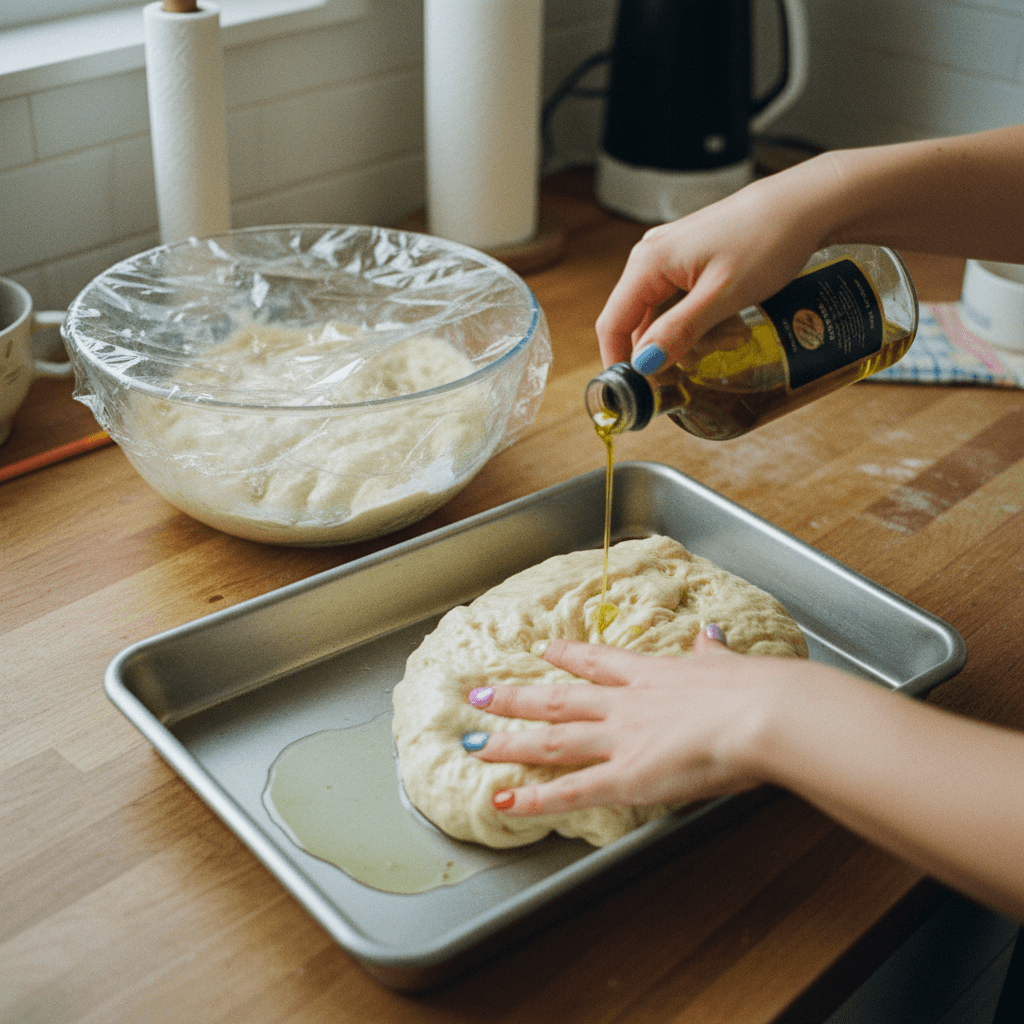
- 6
Cover the pan loosely with plastic wrap or a clean kitchen towel and let it rise in a warm place for 1-2 hours, or until visibly puffy and almost doubled in size.
⏱️ 90 min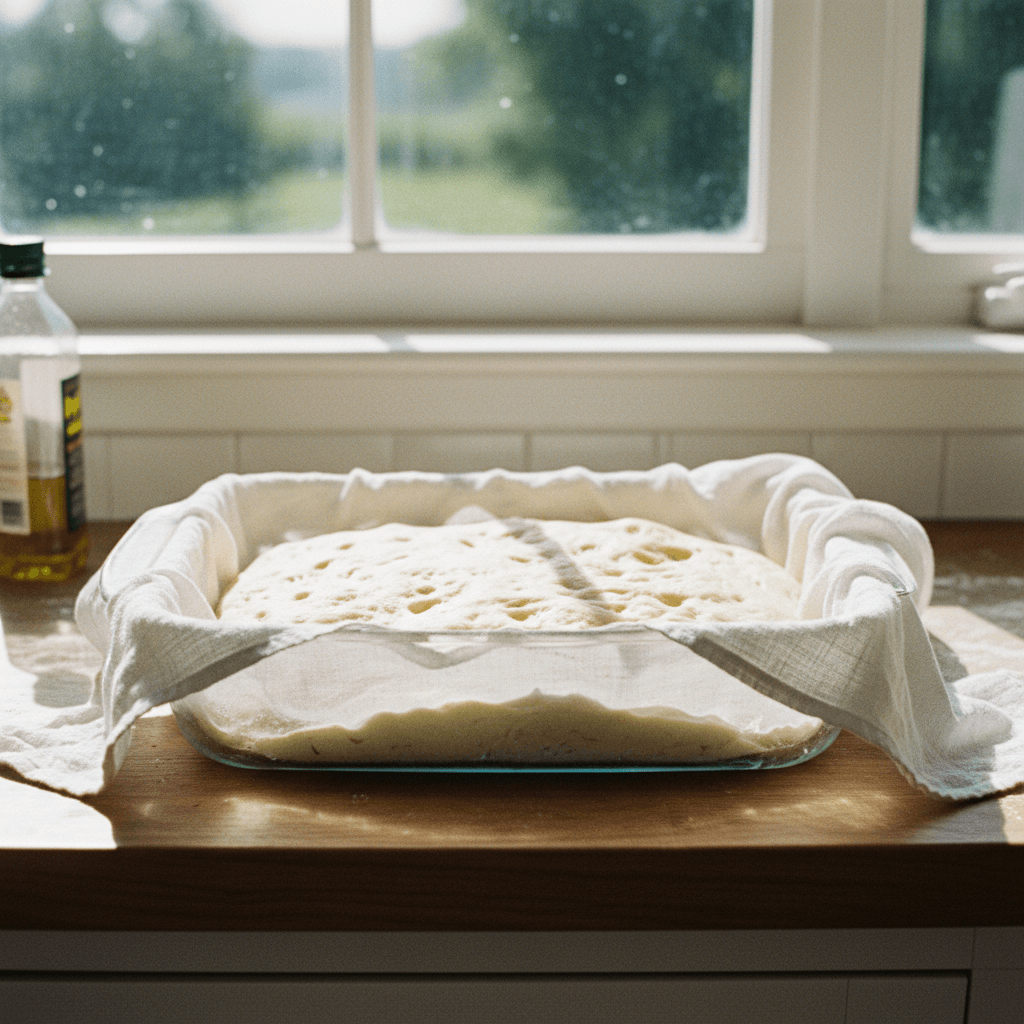
- 7
Preheat your oven to 425°F (220°C).
⏱️ 15 min•🌡️ 425
- 8
Once the dough has risen, uncover it. Drizzle generously with 2 tablespoons of extra virgin olive oil. Using your fingertips, gently press dimples all over the surface of the dough, being careful not to press all the way through.
⏱️ 3 min
- 9
Sprinkle the flaky sea salt and chopped rosemary (if using) evenly over the top of the focaccia.
⏱️ 1 min
- 10
Bake for 20-25 minutes, or until the focaccia is golden brown on top and cooked through. The internal temperature should be around 200-210°F (93-99°C).
⏱️ 25 min•🌡️ 425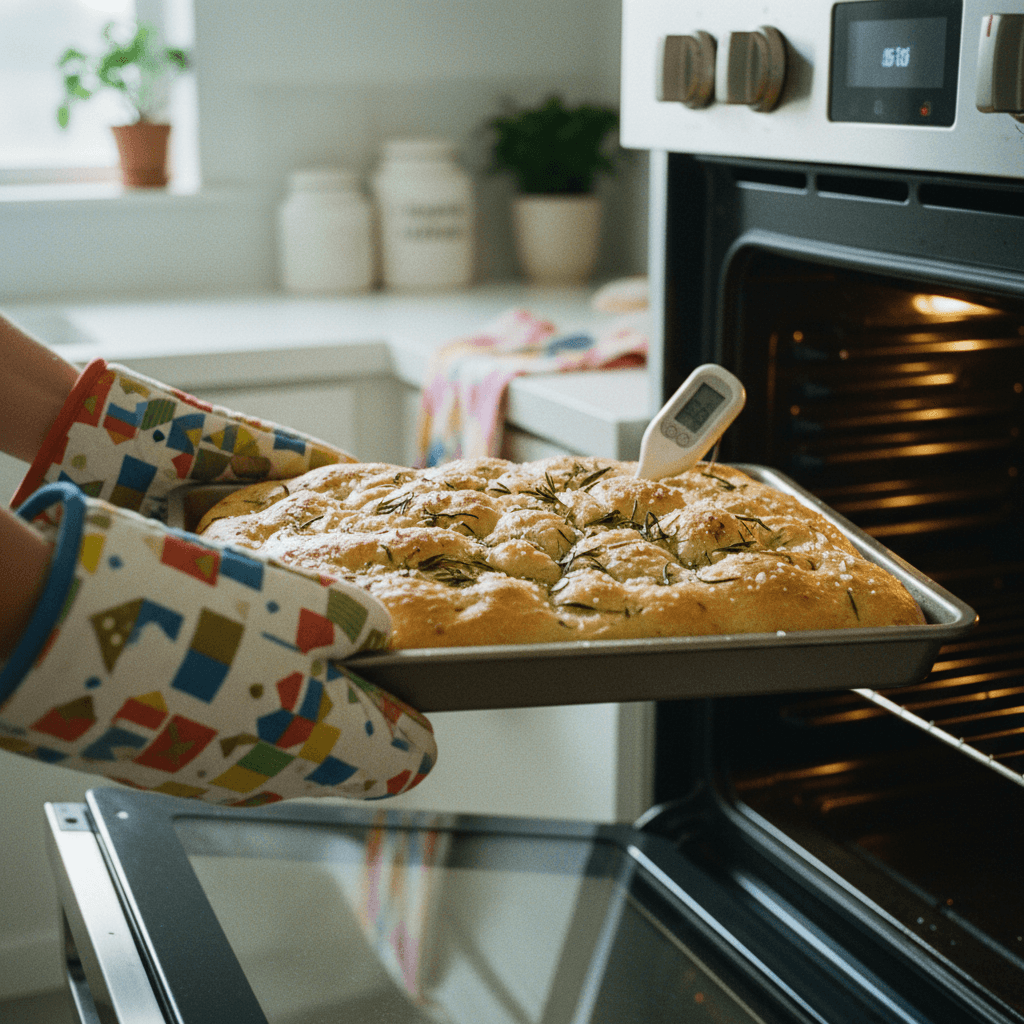
- 11
Remove from the oven and immediately transfer the focaccia to a wire rack to cool slightly. Drizzle with a little more olive oil if desired. Serve warm or at room temperature.
⏱️ 5 min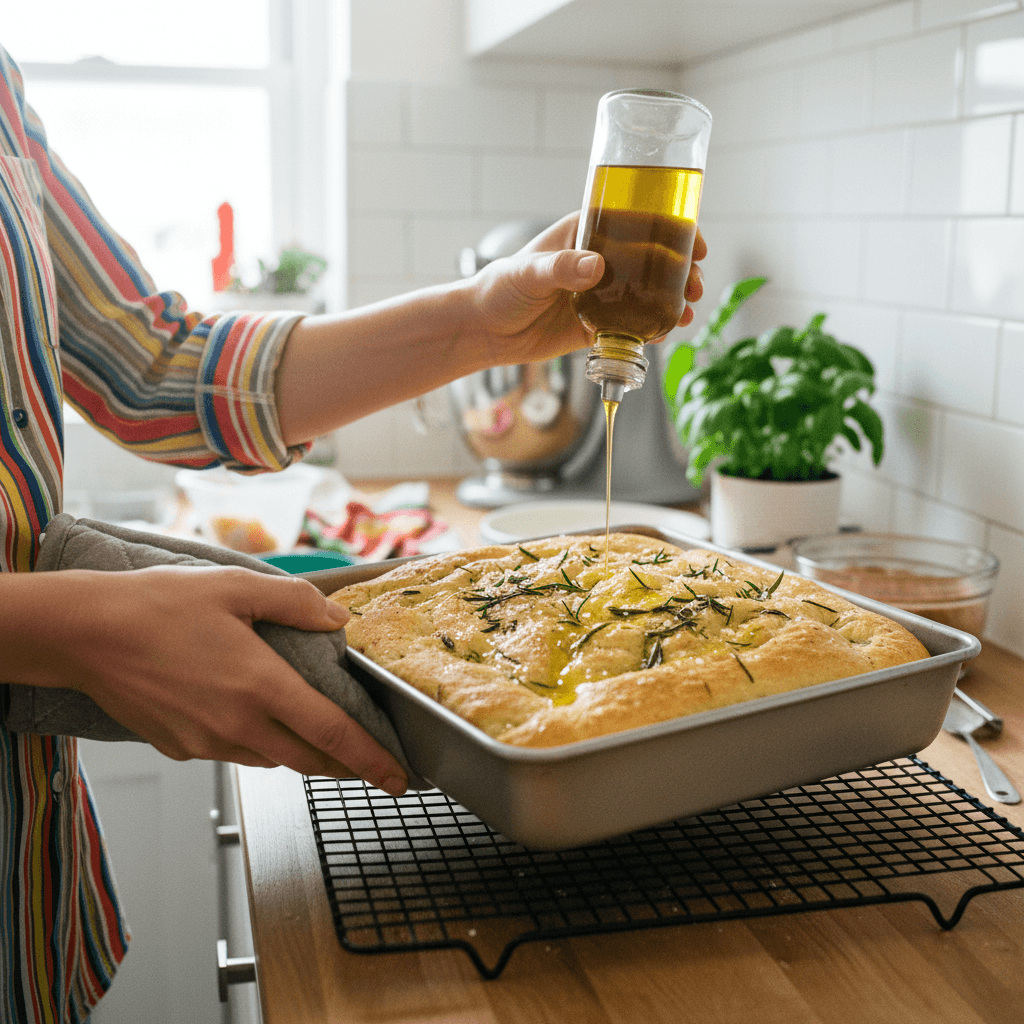
Kitchen Tools
Nutrition Facts (per serving)
Classic Focaccia Bread
For the Dough
- 2 1/4 cups warm water, (105-115°F / 40-46°C)
- 2 1/4 teaspoons active dry yeast
- 1 teaspoon granulated sugar
- 4 cups all-purpose flour
- 2 teaspoons fine sea salt
- 1/4 cup extra virgin olive oil, plus more for greasing and drizzling
For the Topping
- 2 tablespoons extra virgin olive oil
- 1 teaspoon flaky sea salt
- 1 tablespoon fresh rosemary, chopped, optional
Instructions
- 1
In a large bowl, combine the warm water, active dry yeast, and granulated sugar. Stir gently and let sit for 5-10 minutes, or until foamy. This indicates the yeast is active.
⏱️ 10 min - 2
Add the flour and fine sea salt to the yeast mixture. Stir with a wooden spoon or your hands until a shaggy, sticky dough forms. Do not knead extensively; just ensure all ingredients are combined.
⏱️ 5 min - 3
Pour 1/4 cup of extra virgin olive oil over the dough. Using your hands, fold the dough over itself a few times to incorporate the oil. The dough will still be very wet.
⏱️ 2 min - 4
Cover the bowl tightly with plastic wrap and refrigerate for at least 12 hours, or up to 24 hours. This slow, cold fermentation develops flavor and texture.
⏱️ 720 min - 5
The next day, generously grease a 9x13 inch baking pan with extra virgin olive oil. Transfer the dough to the prepared pan. Gently stretch the dough to fill the pan, being careful not to deflate it too much. If it resists, let it rest for 5-10 minutes and try again.
⏱️ 10 min - 6
Cover the pan loosely with plastic wrap or a clean kitchen towel and let it rise in a warm place for 1-2 hours, or until visibly puffy and almost doubled in size.
⏱️ 90 min - 7
Preheat your oven to 425°F (220°C).
⏱️ 15 min•🌡️ 425 - 8
Once the dough has risen, uncover it. Drizzle generously with 2 tablespoons of extra virgin olive oil. Using your fingertips, gently press dimples all over the surface of the dough, being careful not to press all the way through.
⏱️ 3 min - 9
Sprinkle the flaky sea salt and chopped rosemary (if using) evenly over the top of the focaccia.
⏱️ 1 min - 10
Bake for 20-25 minutes, or until the focaccia is golden brown on top and cooked through. The internal temperature should be around 200-210°F (93-99°C).
⏱️ 25 min•🌡️ 425 - 11
Remove from the oven and immediately transfer the focaccia to a wire rack to cool slightly. Drizzle with a little more olive oil if desired. Serve warm or at room temperature.
⏱️ 5 min