Salmon Nigiri with Pickled Ginger
Salmon Nigiri with Pickled Ginger

Ingredients
For the Sushi Rice
- 2 cups sushi rice, short-grain
- 2 cups water
- 1/4 cup rice vinegar
- 2 tablespoons granulated sugar
- 1 teaspoon salt
For the Salmon Nigiri
- 1 pound sushi-grade salmon fillet, skinless, boneless
- 1 teaspoon wasabi paste, for assembly
For Serving
- 1/2 cup pickled ginger, gari, for serving
- 1/2 cup soy sauce, for serving
Instructions
- 1
Rinse the sushi rice thoroughly under cold running water until the water runs clear. Drain well. Combine the rinsed rice and 2 cups of water in a medium saucepan or rice cooker. If using a saucepan, bring to a boil, then reduce heat to low, cover, and simmer for 15 minutes, or until all water is absorbed. If using a rice cooker, follow manufacturer's instructions. Once cooked, let the rice rest, covered, for 10 minutes.
⏱️ 25 min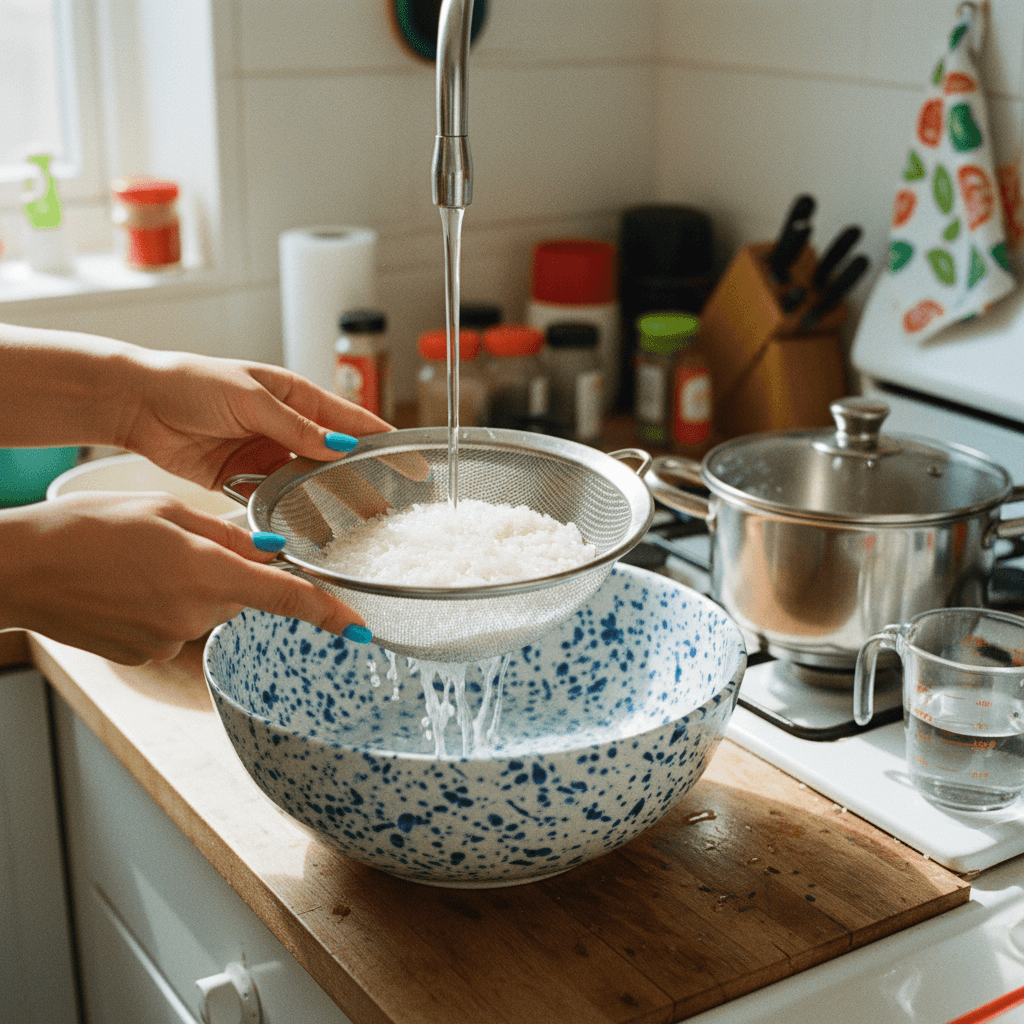
- 2
While the rice cooks, prepare the sushi vinegar. In a small saucepan, combine the rice vinegar, granulated sugar, and salt. Heat over low heat, stirring constantly, until the sugar and salt are completely dissolved. Do not boil. Remove from heat and let cool to room temperature.
⏱️ 5 min
- 3
Transfer the cooked rice to a large, wide, non-metallic bowl. Gradually pour the cooled sushi vinegar over the rice, folding gently with a rice paddle or wooden spoon to evenly coat the grains. Avoid mashing the rice. Fan the rice with a piece of cardboard or a fan while mixing to cool it down quickly and give it a glossy finish. Continue fanning and mixing until the rice is at body temperature.
⏱️ 10 min
- 4
Prepare the salmon. Lay the salmon fillet on a cutting board. Using a very sharp knife, slice the salmon against the grain into thin, uniform pieces, about 2 inches long, 1 inch wide, and 1/8 inch thick. You should aim for about 16-20 slices.
⏱️ 10 min
- 5
Form the nigiri. Have a small bowl of water nearby to keep your hands moist (this prevents rice from sticking). Take about 1 1/2 tablespoons of seasoned sushi rice and gently form it into an oval-shaped mound. Take a slice of salmon, spread a tiny dab of wasabi paste on one side, then place the salmon, wasabi-side down, over the rice mound. Gently press the salmon onto the rice with your fingers to secure it. Repeat with the remaining rice and salmon.
⏱️ 15 min
- 6
Arrange the salmon nigiri on a serving platter. Serve immediately with pickled ginger and soy sauce on the side.
⏱️ 1 min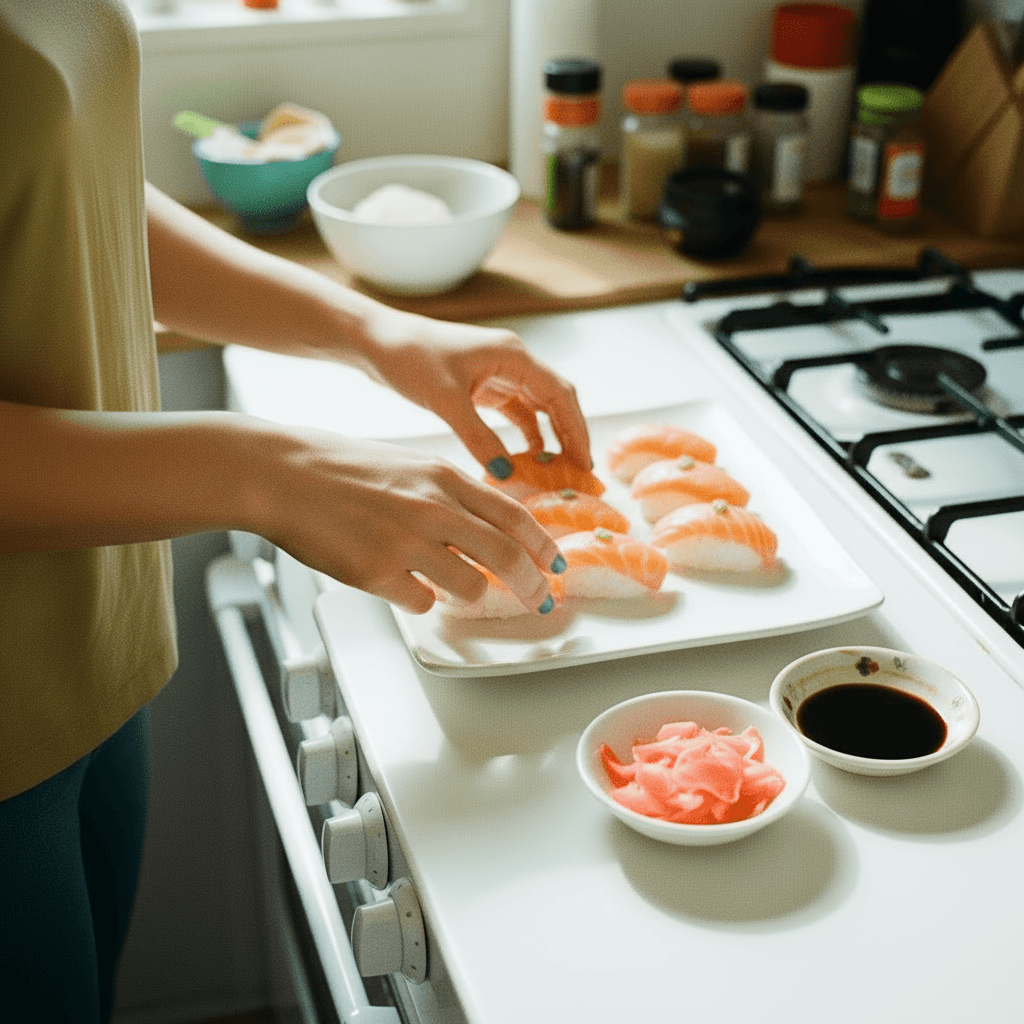
Kitchen Tools
Nutrition Facts (per serving)
Salmon Nigiri with Pickled Ginger
Ingredients
For the Sushi Rice
- 2 cups sushi rice, short-grain
- 2 cups water
- 1/4 cup rice vinegar
- 2 tablespoons granulated sugar
- 1 teaspoon salt
For the Salmon Nigiri
- 1 pound sushi-grade salmon fillet, skinless, boneless
- 1 teaspoon wasabi paste, for assembly
For Serving
- 1/2 cup pickled ginger, gari, for serving
- 1/2 cup soy sauce, for serving
Instructions
- 1
Rinse the sushi rice thoroughly under cold running water until the water runs clear. Drain well. Combine the rinsed rice and 2 cups of water in a medium saucepan or rice cooker. If using a saucepan, bring to a boil, then reduce heat to low, cover, and simmer for 15 minutes, or until all water is absorbed. If using a rice cooker, follow manufacturer's instructions. Once cooked, let the rice rest, covered, for 10 minutes.
⏱️ 25 min - 2
While the rice cooks, prepare the sushi vinegar. In a small saucepan, combine the rice vinegar, granulated sugar, and salt. Heat over low heat, stirring constantly, until the sugar and salt are completely dissolved. Do not boil. Remove from heat and let cool to room temperature.
⏱️ 5 min - 3
Transfer the cooked rice to a large, wide, non-metallic bowl. Gradually pour the cooled sushi vinegar over the rice, folding gently with a rice paddle or wooden spoon to evenly coat the grains. Avoid mashing the rice. Fan the rice with a piece of cardboard or a fan while mixing to cool it down quickly and give it a glossy finish. Continue fanning and mixing until the rice is at body temperature.
⏱️ 10 min - 4
Prepare the salmon. Lay the salmon fillet on a cutting board. Using a very sharp knife, slice the salmon against the grain into thin, uniform pieces, about 2 inches long, 1 inch wide, and 1/8 inch thick. You should aim for about 16-20 slices.
⏱️ 10 min - 5
Form the nigiri. Have a small bowl of water nearby to keep your hands moist (this prevents rice from sticking). Take about 1 1/2 tablespoons of seasoned sushi rice and gently form it into an oval-shaped mound. Take a slice of salmon, spread a tiny dab of wasabi paste on one side, then place the salmon, wasabi-side down, over the rice mound. Gently press the salmon onto the rice with your fingers to secure it. Repeat with the remaining rice and salmon.
⏱️ 15 min - 6
Arrange the salmon nigiri on a serving platter. Serve immediately with pickled ginger and soy sauce on the side.
⏱️ 1 min