Sous Vide Duck Breast with Cherry Reduction and Creamy Polenta
Sous Vide Duck Breast with Cherry Reduction and Creamy Polenta
Ingredients
For the Sous Vide Duck Breast
- 4 duck breasts, Pekin or Moulard, 6-8 ounces each, scored skin
- 1 1/2 teaspoons kosher salt
- 1/2 teaspoon freshly ground black pepper
- 4 fresh thyme sprigs
- 2 garlic cloves, smashed
For the Cherry Reduction
- 1 tablespoon unsalted butter
- 1 shallot, finely minced
- 1 1/2 cups fresh or frozen dark sweet cherries, pitted
- 2 tablespoons red wine vinegar
- 1/2 cup dry red wine, such as Pinot Noir
- 1/2 cup duck stock or rich chicken stock
- 1 tablespoon granulated sugar, or to taste
- 1/2 teaspoon fresh thyme leaves
- 1/4 teaspoon kosher salt, or to taste
- 1/8 teaspoon freshly ground black pepper, or to taste
For the Creamy Polenta
- 4 cups chicken stock or vegetable stock
- 1 cup whole milk
- 1 cup fine-ground cornmeal, not instant
- 4 tablespoons unsalted butter, cold, cut into cubes
- 1/2 cup Parmesan cheese, freshly grated
- 1 teaspoon kosher salt, or to taste
- 1/4 teaspoon freshly ground black pepper, or to taste
For Garnish
- 1 tablespoon fresh chives, finely chopped
- 1/4 cup microgreens
Instructions
- 1
Pre-heat a sous vide water bath to 135°F (57°C) for medium-rare duck breast. Pat the duck breasts dry thoroughly. Score the skin in a crosshatch pattern, being careful not to cut into the meat. Season generously with kosher salt and freshly ground black pepper. Place each duck breast in a separate vacuum-sealable bag with a sprig of fresh thyme and a smashed garlic clove. Vacuum seal the bags.
⏱️ 10 min•🌡️ 135
- 2
Submerge the sealed duck breasts in the preheated water bath. Cook for 2 hours. This extended time allows for rendering of the fat without overcooking the meat.
⏱️ 120 min•🌡️ 135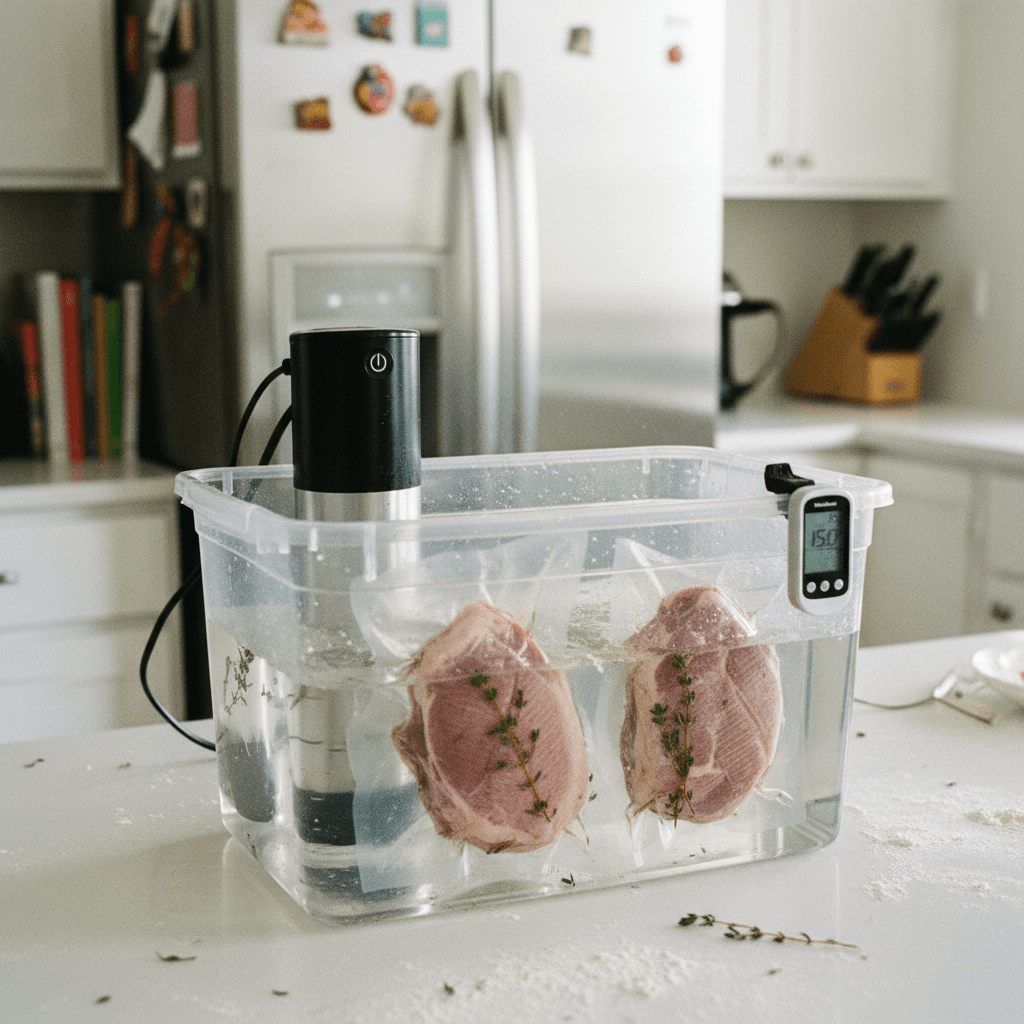
- 3
While the duck cooks, prepare the cherry reduction. In a medium saucepan over medium heat, melt the unsalted butter. Add the minced shallot and sauté until softened and translucent, about 2-3 minutes. Add the pitted cherries, red wine vinegar, dry red wine, duck stock, granulated sugar, and fresh thyme leaves. Bring to a simmer.
⏱️ 10 min
- 4
Reduce the heat to low and simmer the cherry mixture, stirring occasionally, until the sauce has thickened and reduced by about one-third, approximately 15-20 minutes. The cherries should be tender. Season with kosher salt and freshly ground black pepper to taste. Keep warm.
⏱️ 20 min
- 5
Prepare the creamy polenta. In a large heavy-bottomed saucepan, combine the chicken stock and whole milk. Bring to a gentle simmer over medium-high heat. Slowly whisk in the fine-ground cornmeal in a steady stream to prevent lumps. Reduce the heat to low and continue to whisk frequently for the first 5 minutes.
⏱️ 10 min
- 6
Cover the polenta and cook on low heat, stirring every 5-7 minutes, for 30-40 minutes, or until the cornmeal is tender and creamy. If the polenta becomes too thick, add a splash more warm stock or milk. Once tender, remove from heat and stir in the cold butter cubes until melted and fully incorporated. Stir in the freshly grated Parmesan cheese. Season with kosher salt and freshly ground black pepper to taste. Keep warm, covered.
⏱️ 40 min
- 7
Once the duck breasts are cooked sous vide, remove them from the bags and pat them very dry with paper towels. Reserve any rendered fat from the bags for other uses if desired. Heat a heavy-bottomed skillet (preferably cast iron) over medium-high heat until very hot. Place the duck breasts skin-side down in the dry hot skillet. Render the fat for 6-8 minutes, pressing gently with a spatula to ensure even contact, until the skin is deeply golden brown and crispy. Pour off excess fat as it renders.
⏱️ 8 min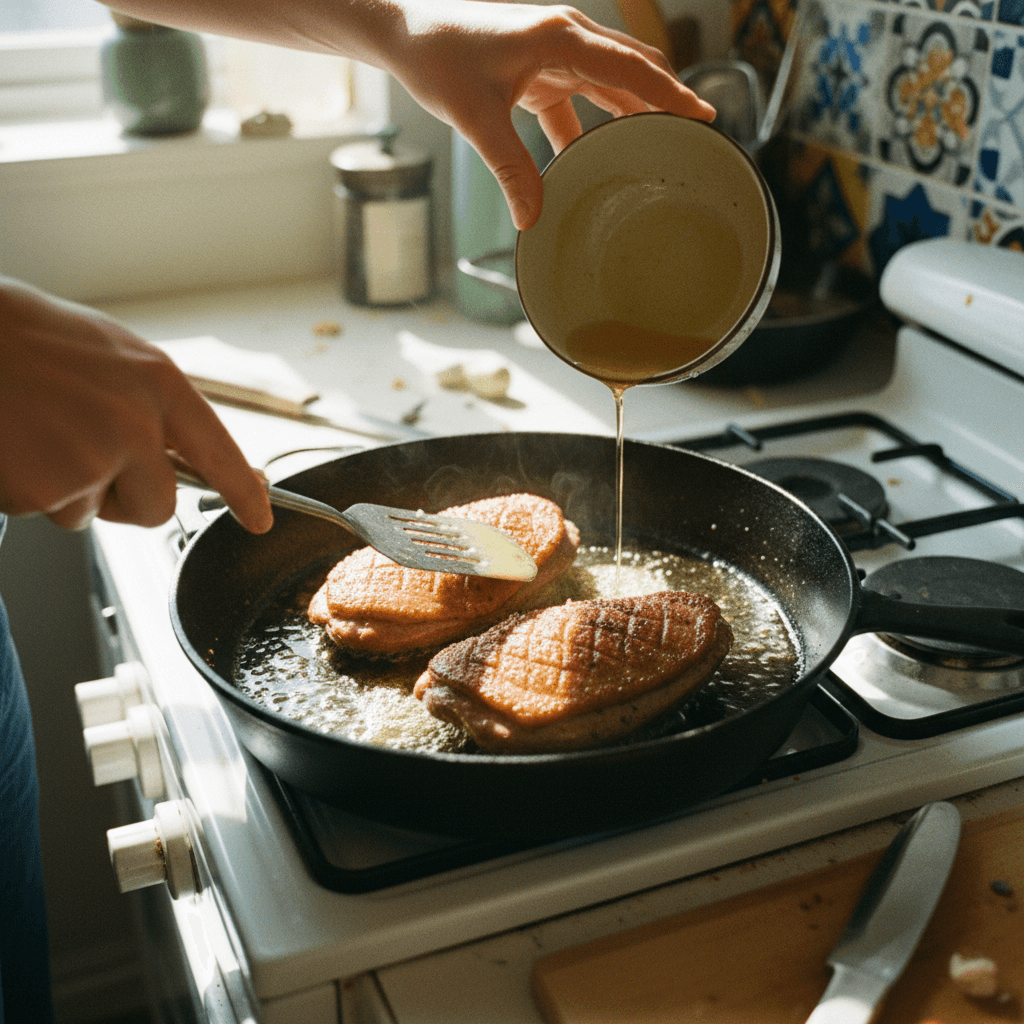
- 8
Flip the duck breasts and sear on the flesh side for 1-2 minutes to develop a slight crust. The internal temperature should be around 130-135°F (54-57°C). Remove the duck breasts from the skillet and let them rest on a cutting board for 5 minutes before slicing.
⏱️ 7 min
- 9
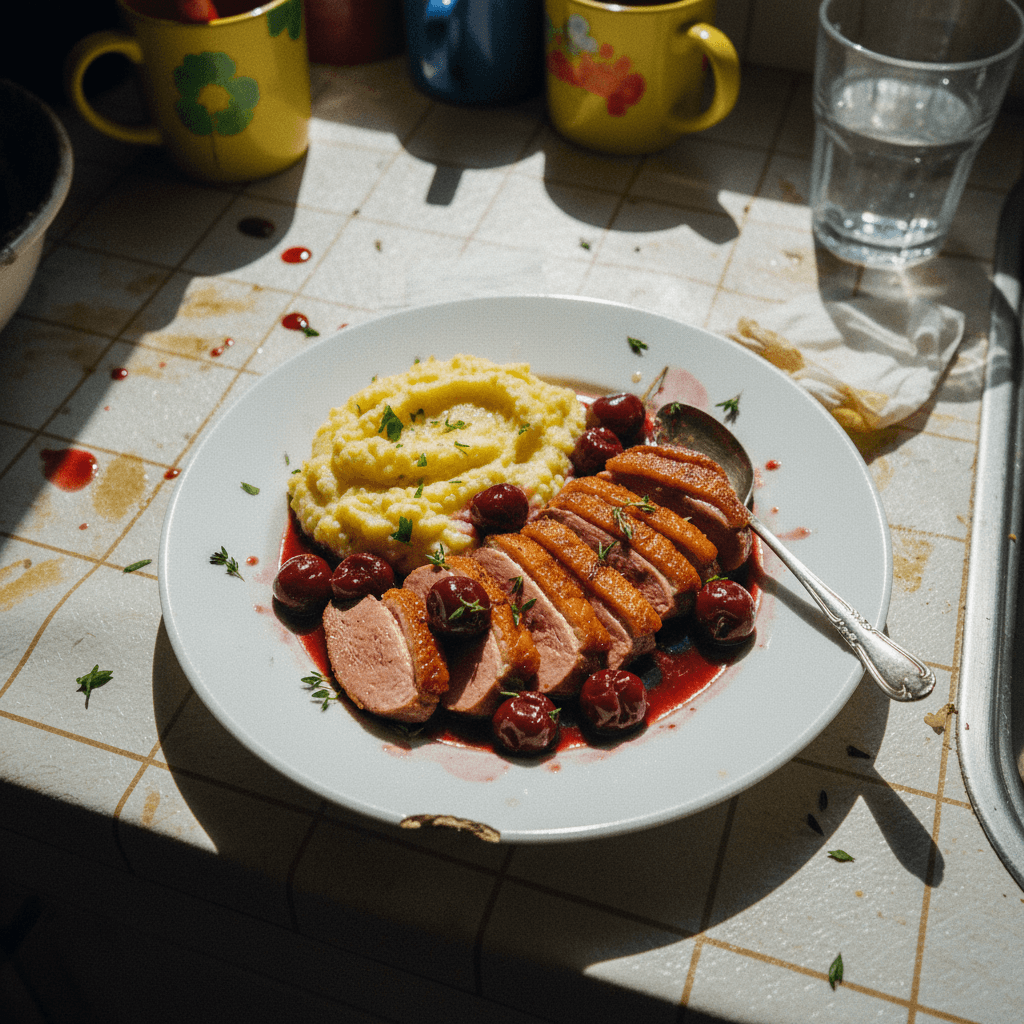
To plate, spoon a generous portion of creamy polenta onto the center of each plate. Slice the rested duck breasts against the grain into 1/2-inch thick pieces. Arrange the sliced duck breast fanned out over the polenta. Spoon the warm cherry reduction generously over the duck and around the plate. Garnish with chopped fresh chives and microgreens for color and freshness. Serve immediately.
⏱️ 5 min
Kitchen Tools
Nutrition Facts (per serving)
Sous Vide Duck Breast with Cherry Reduction and Creamy Polenta
For the Sous Vide Duck Breast
- 4 duck breasts, Pekin or Moulard, 6-8 ounces each, scored skin
- 1 1/2 teaspoons kosher salt
- 1/2 teaspoon freshly ground black pepper
- 4 fresh thyme sprigs
- 2 garlic cloves, smashed
For the Cherry Reduction
- 1 tablespoon unsalted butter
- 1 shallot, finely minced
- 1 1/2 cups fresh or frozen dark sweet cherries, pitted
- 2 tablespoons red wine vinegar
- 1/2 cup dry red wine, such as Pinot Noir
- 1/2 cup duck stock or rich chicken stock
- 1 tablespoon granulated sugar, or to taste
- 1/2 teaspoon fresh thyme leaves
- 1/4 teaspoon kosher salt, or to taste
- 1/8 teaspoon freshly ground black pepper, or to taste
For the Creamy Polenta
- 4 cups chicken stock or vegetable stock
- 1 cup whole milk
- 1 cup fine-ground cornmeal, not instant
- 4 tablespoons unsalted butter, cold, cut into cubes
- 1/2 cup Parmesan cheese, freshly grated
- 1 teaspoon kosher salt, or to taste
- 1/4 teaspoon freshly ground black pepper, or to taste
For Garnish
- 1 tablespoon fresh chives, finely chopped
- 1/4 cup microgreens
Instructions
- 1
Pre-heat a sous vide water bath to 135°F (57°C) for medium-rare duck breast. Pat the duck breasts dry thoroughly. Score the skin in a crosshatch pattern, being careful not to cut into the meat. Season generously with kosher salt and freshly ground black pepper. Place each duck breast in a separate vacuum-sealable bag with a sprig of fresh thyme and a smashed garlic clove. Vacuum seal the bags.
⏱️ 10 min•🌡️ 135 - 2
Submerge the sealed duck breasts in the preheated water bath. Cook for 2 hours. This extended time allows for rendering of the fat without overcooking the meat.
⏱️ 120 min•🌡️ 135 - 3
While the duck cooks, prepare the cherry reduction. In a medium saucepan over medium heat, melt the unsalted butter. Add the minced shallot and sauté until softened and translucent, about 2-3 minutes. Add the pitted cherries, red wine vinegar, dry red wine, duck stock, granulated sugar, and fresh thyme leaves. Bring to a simmer.
⏱️ 10 min - 4
Reduce the heat to low and simmer the cherry mixture, stirring occasionally, until the sauce has thickened and reduced by about one-third, approximately 15-20 minutes. The cherries should be tender. Season with kosher salt and freshly ground black pepper to taste. Keep warm.
⏱️ 20 min - 5
Prepare the creamy polenta. In a large heavy-bottomed saucepan, combine the chicken stock and whole milk. Bring to a gentle simmer over medium-high heat. Slowly whisk in the fine-ground cornmeal in a steady stream to prevent lumps. Reduce the heat to low and continue to whisk frequently for the first 5 minutes.
⏱️ 10 min - 6
Cover the polenta and cook on low heat, stirring every 5-7 minutes, for 30-40 minutes, or until the cornmeal is tender and creamy. If the polenta becomes too thick, add a splash more warm stock or milk. Once tender, remove from heat and stir in the cold butter cubes until melted and fully incorporated. Stir in the freshly grated Parmesan cheese. Season with kosher salt and freshly ground black pepper to taste. Keep warm, covered.
⏱️ 40 min - 7
Once the duck breasts are cooked sous vide, remove them from the bags and pat them very dry with paper towels. Reserve any rendered fat from the bags for other uses if desired. Heat a heavy-bottomed skillet (preferably cast iron) over medium-high heat until very hot. Place the duck breasts skin-side down in the dry hot skillet. Render the fat for 6-8 minutes, pressing gently with a spatula to ensure even contact, until the skin is deeply golden brown and crispy. Pour off excess fat as it renders.
⏱️ 8 min - 8
Flip the duck breasts and sear on the flesh side for 1-2 minutes to develop a slight crust. The internal temperature should be around 130-135°F (54-57°C). Remove the duck breasts from the skillet and let them rest on a cutting board for 5 minutes before slicing.
⏱️ 7 min - 9
To plate, spoon a generous portion of creamy polenta onto the center of each plate. Slice the rested duck breasts against the grain into 1/2-inch thick pieces. Arrange the sliced duck breast fanned out over the polenta. Spoon the warm cherry reduction generously over the duck and around the plate. Garnish with chopped fresh chives and microgreens for color and freshness. Serve immediately.
⏱️ 5 min