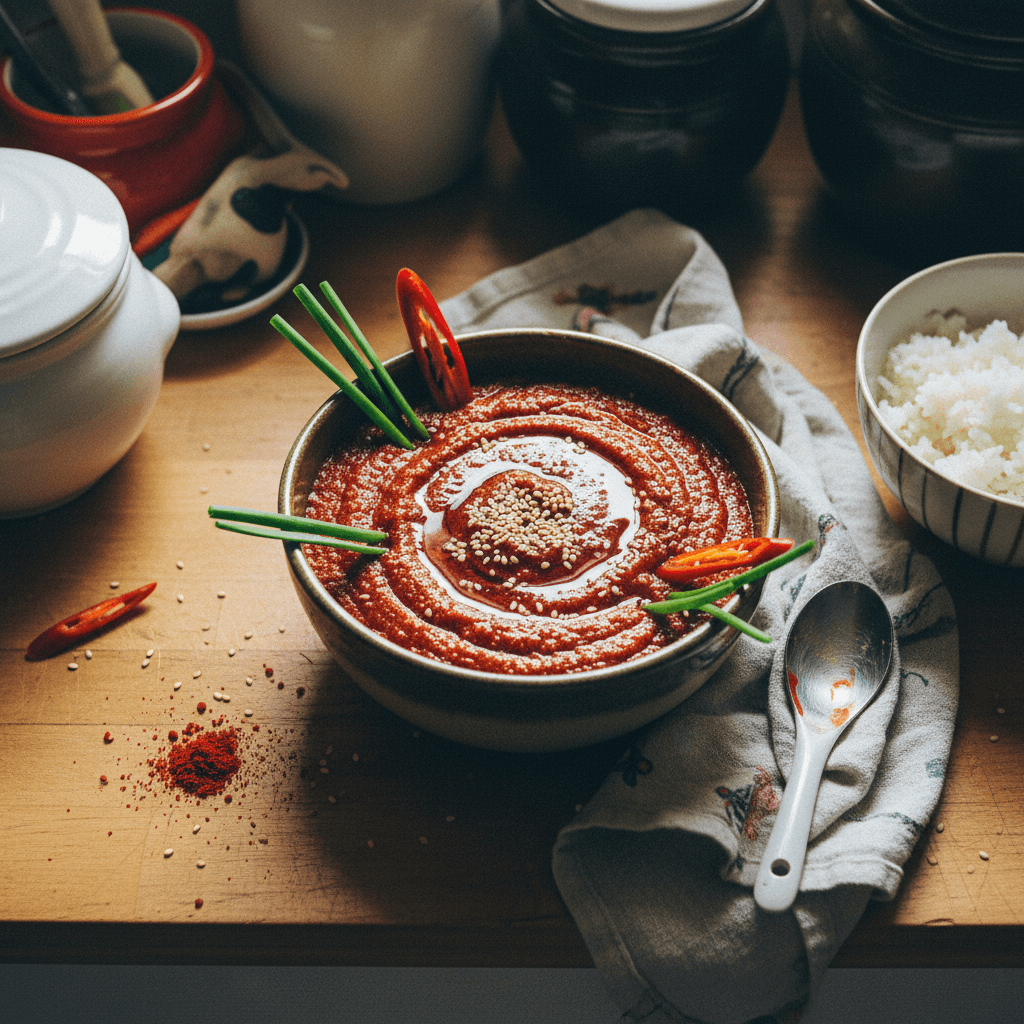
Traditional Gochujang
Traditional Gochujang
Ingredients
For the Fermented Rice Base (Fermentation Stage)
- 2 kg sweet rice
- 3 kg barley malt powder
- 150 g nuruk
- 10 kg water
For the Gochujang Paste
- 2 kg gochugaru
- 4 kg mejukaru
- 2 kg salt
- 1 kg rice syrup
- all fermented rice base, prepared in the first stage
Instructions
- 1
Wash 2 kg of sweet rice thoroughly until the water runs clear.
⏱️ 10 min
- 2
Soak the washed sweet rice in water for 12 hours.

- 3
Drain the soaked sweet rice completely.
⏱️ 5 min
- 4
Place the drained sweet rice in a steamer lined with cloth and steam until fully cooked.
⏱️ 60 min•🌡️ 100
- 5
Spread the cooked sweet rice thinly on a large mat to cool.
⏱️ 30 min
- 6
Put 3 kg of barley malt powder into a large container and pour in 10 kg of water.
⏱️ 5 min
- 7
Mix the barley malt powder and water well with your hands, squeezing the malt to extract the essence.
⏱️ 15 min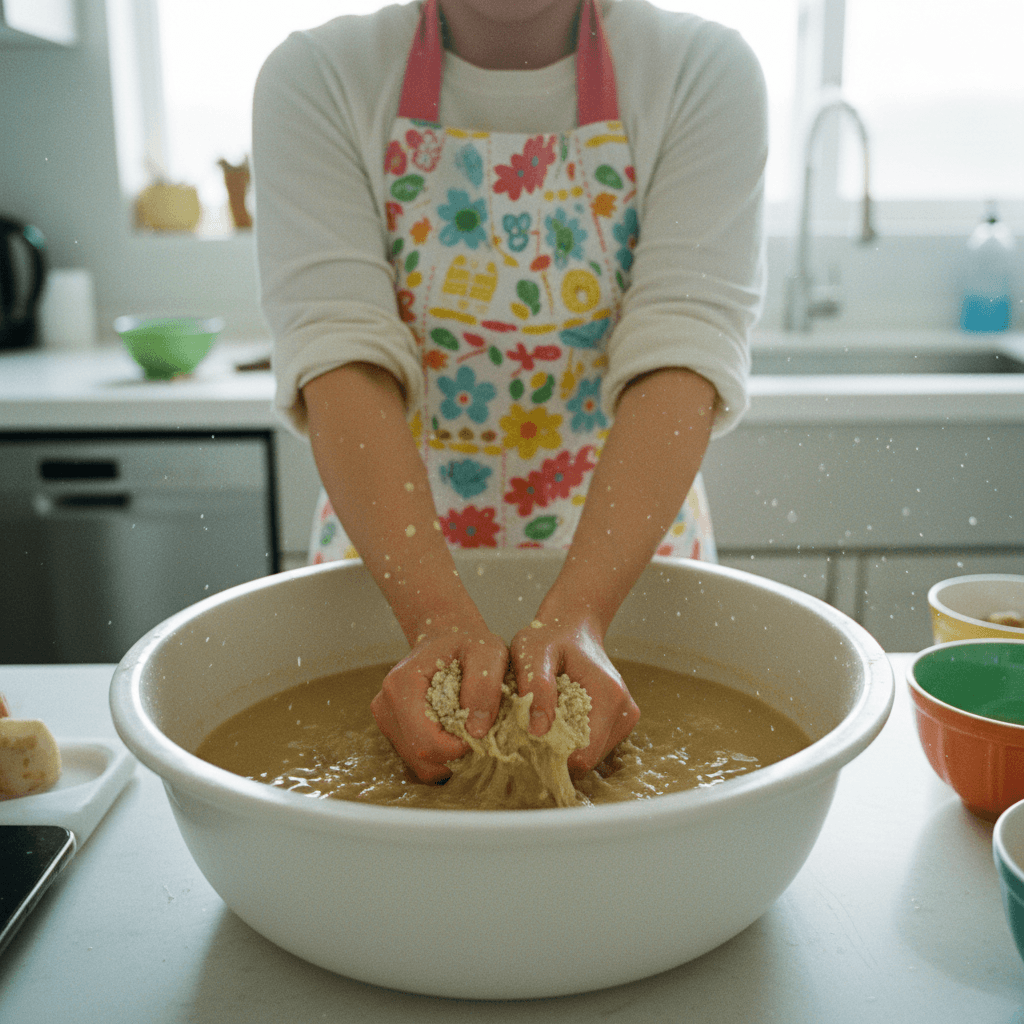
- 8
Strain the mixture to separate the liquid from the barley malt solids. Pour more water over the malt solids, squeeze again, and strain at least once more to extract as much essence as possible.
⏱️ 15 min
- 9
Let the strained barley malt liquid sit undisturbed to allow sediments to settle.
⏱️ 30 min
- 10
Carefully pour the clear barley malt liquid into a clean container, leaving the sediment behind.
⏱️ 5 min
- 11
Add the cooled sweet rice to the clear barley malt liquid and add 150 g of nuruk.
⏱️ 5 min
- 12
Mix all ingredients very well by hand.
⏱️ 15 min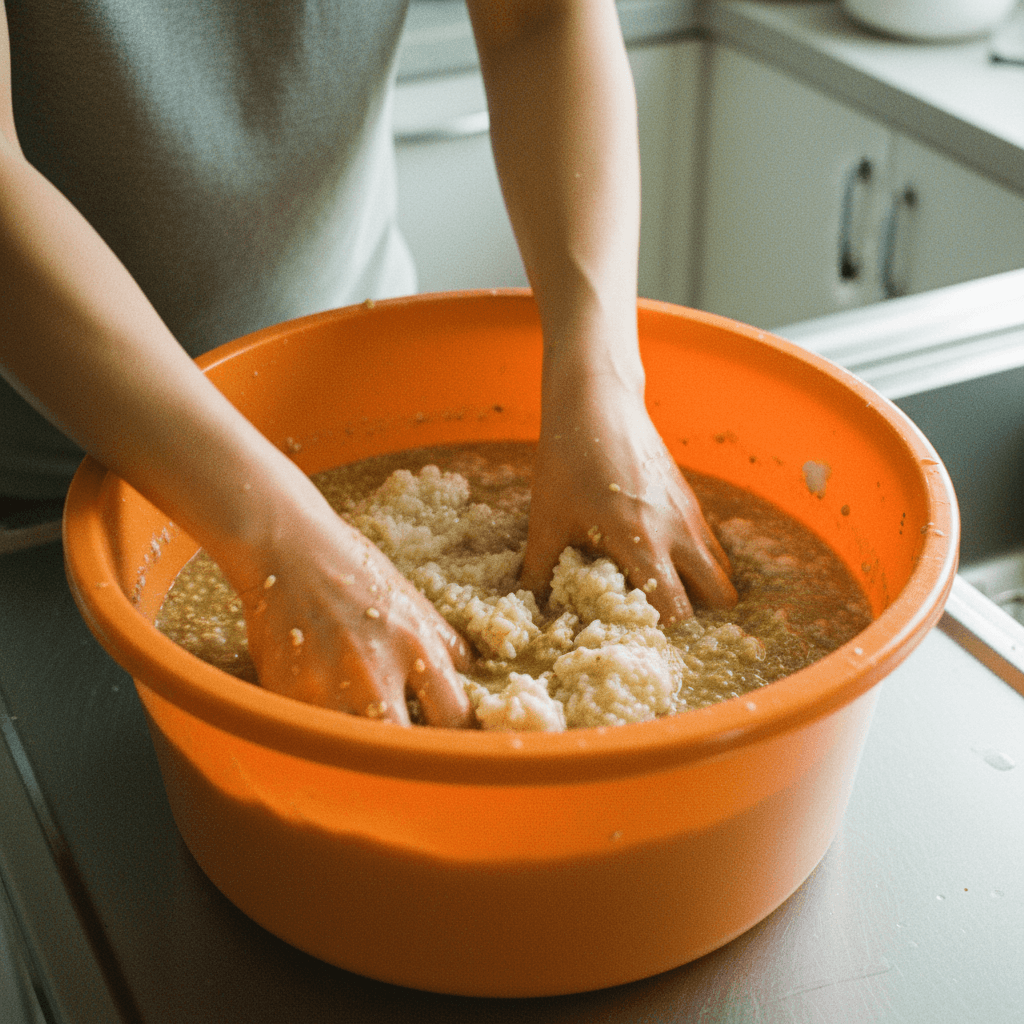
- 13
Transfer the mixture to a large traditional Korean fermentation crock.
⏱️ 5 min
- 14
Cover the crock and let it ferment for 10 days.

- 15
After 10 days, transfer the fermented rice base to a very large mixing bowl. At this point, the fermented base should have a distinct subtly sweet and alcoholic aroma.
⏱️ 5 min
- 16
Add 2 kg of gochugaru, 4 kg of mejukaru, 2 kg of salt, and 1 kg of rice syrup to the fermented rice base.
⏱️ 5 min
- 17
Vigorously mix and knead all ingredients with the fermented rice base by hand. Continue mixing until there are no lumps and all ingredients are completely uniform in color and texture. Significant effort is required to achieve a smooth consistency.
⏱️ 45 min
- 18
Transfer the freshly made gochujang paste into smaller, clean traditional Korean storage crocks.
⏱️ 10 min
- 19
Smooth the surface of the gochujang in each crock.
⏱️ 5 min
- 20
Place the crocks outdoors in a sunny spot. During the day, leave the lids open to allow sun-drying and further fermentation.

- 21
Age the gochujang for at least 3 months to develop deep flavor and color.

Kitchen Tools
Traditional Gochujang
For the Fermented Rice Base (Fermentation Stage)
- 2 kg sweet rice
- 3 kg barley malt powder
- 150 g nuruk
- 10 kg water
For the Gochujang Paste
- 2 kg gochugaru
- 4 kg mejukaru
- 2 kg salt
- 1 kg rice syrup
- all fermented rice base, prepared in the first stage
Instructions
- 1
Wash 2 kg of sweet rice thoroughly until the water runs clear.
⏱️ 10 min - 2
Soak the washed sweet rice in water for 12 hours.
- 3
Drain the soaked sweet rice completely.
⏱️ 5 min - 4
Place the drained sweet rice in a steamer lined with cloth and steam until fully cooked.
⏱️ 60 min•🌡️ 100 - 5
Spread the cooked sweet rice thinly on a large mat to cool.
⏱️ 30 min - 6
Put 3 kg of barley malt powder into a large container and pour in 10 kg of water.
⏱️ 5 min - 7
Mix the barley malt powder and water well with your hands, squeezing the malt to extract the essence.
⏱️ 15 min - 8
Strain the mixture to separate the liquid from the barley malt solids. Pour more water over the malt solids, squeeze again, and strain at least once more to extract as much essence as possible.
⏱️ 15 min - 9
Let the strained barley malt liquid sit undisturbed to allow sediments to settle.
⏱️ 30 min - 10
Carefully pour the clear barley malt liquid into a clean container, leaving the sediment behind.
⏱️ 5 min - 11
Add the cooled sweet rice to the clear barley malt liquid and add 150 g of nuruk.
⏱️ 5 min - 12
Mix all ingredients very well by hand.
⏱️ 15 min - 13
Transfer the mixture to a large traditional Korean fermentation crock.
⏱️ 5 min - 14
Cover the crock and let it ferment for 10 days.
- 15
After 10 days, transfer the fermented rice base to a very large mixing bowl. At this point, the fermented base should have a distinct subtly sweet and alcoholic aroma.
⏱️ 5 min - 16
Add 2 kg of gochugaru, 4 kg of mejukaru, 2 kg of salt, and 1 kg of rice syrup to the fermented rice base.
⏱️ 5 min - 17
Vigorously mix and knead all ingredients with the fermented rice base by hand. Continue mixing until there are no lumps and all ingredients are completely uniform in color and texture. Significant effort is required to achieve a smooth consistency.
⏱️ 45 min - 18
Transfer the freshly made gochujang paste into smaller, clean traditional Korean storage crocks.
⏱️ 10 min - 19
Smooth the surface of the gochujang in each crock.
⏱️ 5 min - 20
Place the crocks outdoors in a sunny spot. During the day, leave the lids open to allow sun-drying and further fermentation.
- 21
Age the gochujang for at least 3 months to develop deep flavor and color.