Ostrich Ragu over Creamy Polenta
Ostrich Ragu over Creamy Polenta

Ingredients
For the Ostrich Ragu
- 1 1/2 pounds ostrich stew meat, cut into 1-inch cubes
- 2 tablespoons olive oil
- 1 yellow onion, medium, diced
- 1 carrot, medium, diced
- 2 celery stalks, diced
- 4 cloves garlic, minced
- 1 cup dry red wine
- 28 ounces crushed tomatoes, canned
- 2 tablespoons tomato paste
- 1 1/2 cups beef broth
- 1 bay leaf
- 1 sprig fresh rosemary
- 3 sprigs fresh thyme
- 1 teaspoon kosher salt, plus more to taste
- 1/2 teaspoon black pepper, freshly ground, plus more to taste
For the Creamy Polenta
- 4 cups chicken broth
- 1 cup whole milk
- 1 cup fine or medium-ground cornmeal
- 4 tablespoons unsalted butter
- 1/2 cup Parmesan cheese, freshly grated
- 1/2 teaspoon kosher salt, plus more to taste
For Serving
- 2 tablespoons fresh parsley, chopped
- 1/4 cup Parmesan cheese, freshly grated, for garnish
Instructions
- 1
Pat the ostrich meat dry with paper towels and season generously with 1 teaspoon of kosher salt and 1/2 teaspoon of black pepper.
⏱️ 5 min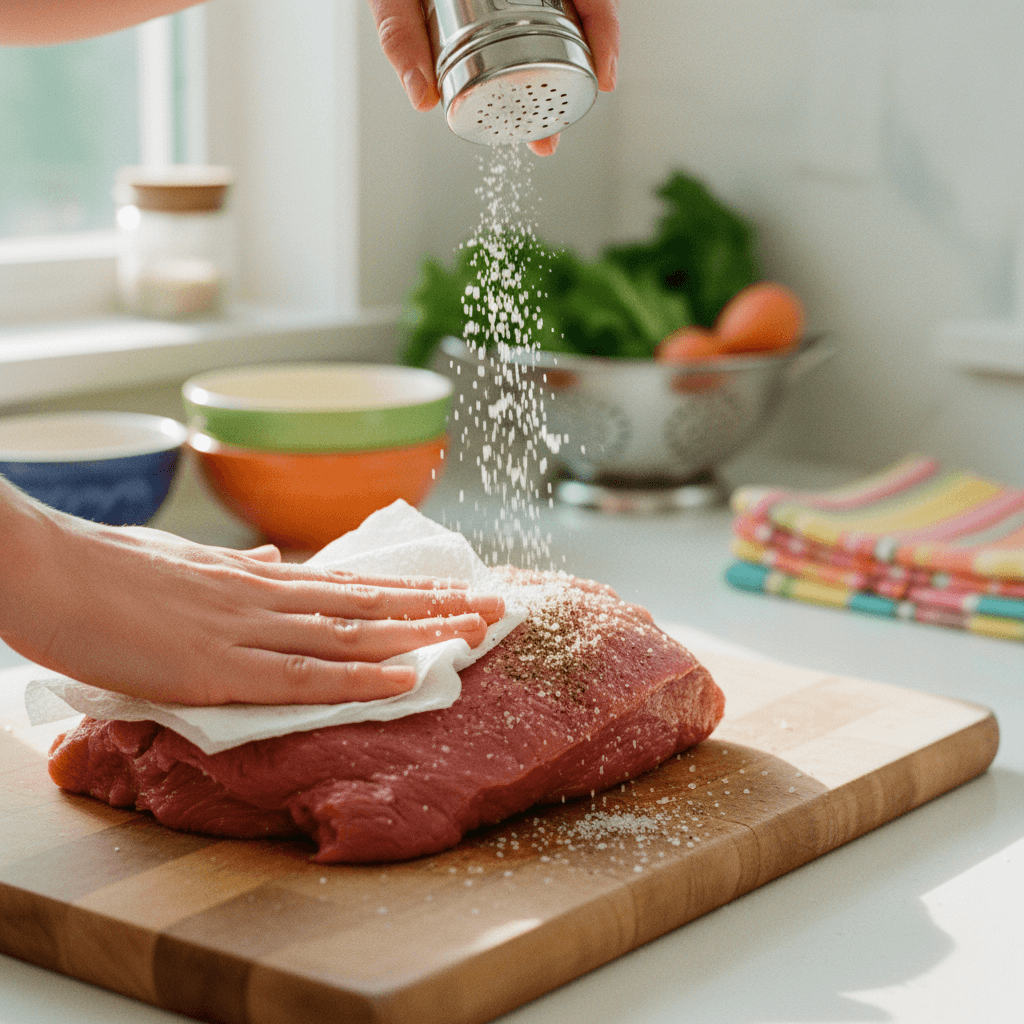
- 2
Heat 2 tablespoons of olive oil in a large Dutch oven or heavy-bottomed pot over medium-high heat. Working in batches if necessary, brown the ostrich meat on all sides until a deep crust forms, about 3-4 minutes per batch. Remove the browned meat and set aside.
⏱️ 10 min
- 3
Reduce the heat to medium. Add the diced onion, carrot, and celery to the pot. Sauté, stirring occasionally, until the vegetables soften, about 8-10 minutes. Add the minced garlic and tomato paste, cooking for another 1 minute until fragrant.
⏱️ 12 min
- 4
Pour in the red wine, scraping the bottom of the pot with a wooden spoon to deglaze and release any browned bits. Bring to a simmer and cook until the wine has reduced by about half, approximately 5 minutes.
⏱️ 5 min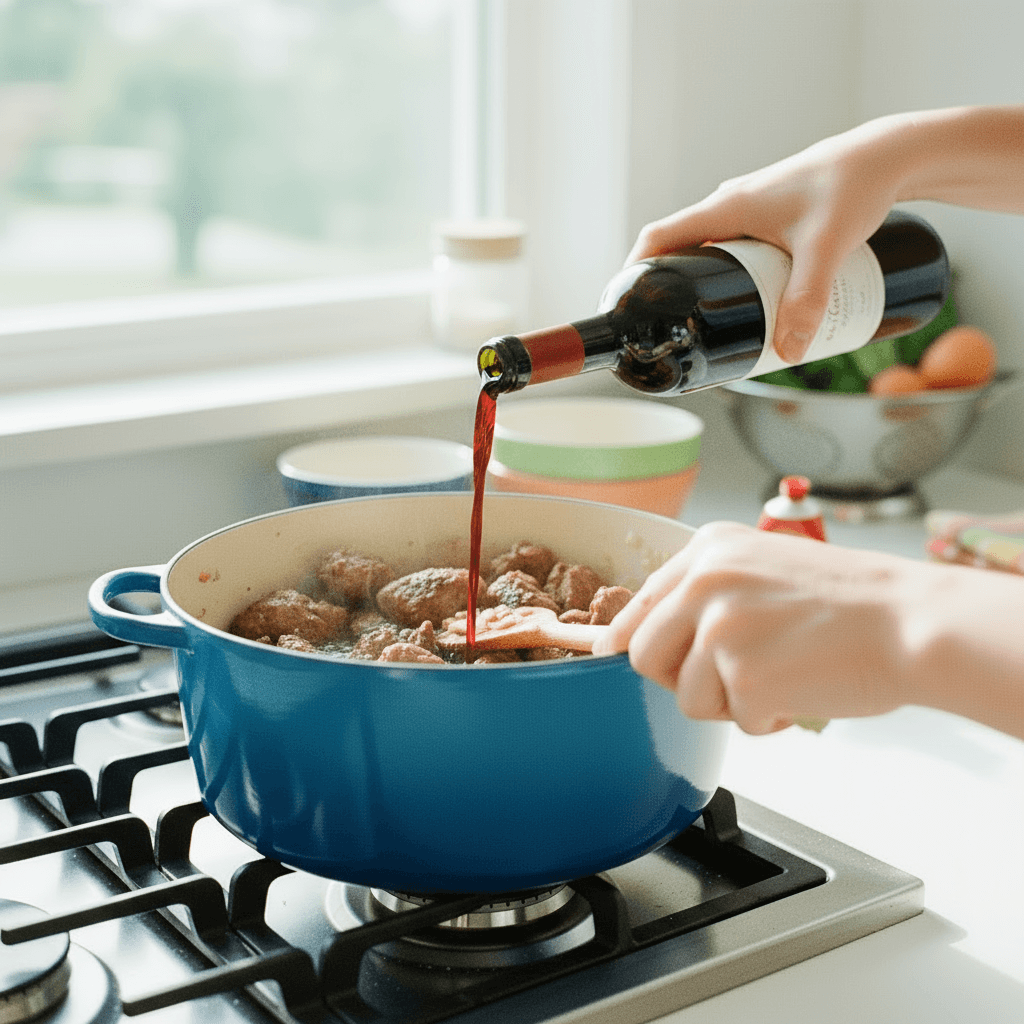
- 5
Return the browned ostrich meat to the pot. Stir in the crushed tomatoes, beef broth, bay leaf, rosemary sprig, and thyme sprigs. Bring the ragu to a gentle simmer, then reduce the heat to low, cover, and cook for at least 2 hours, or until the ostrich meat is fork-tender. Stir occasionally to prevent sticking. Remove the bay leaf and herb sprigs before serving.
⏱️ 120 min
- 6
About 20 minutes before the ragu is ready, prepare the polenta. In a medium saucepan, combine the chicken broth and whole milk. Bring the mixture to a gentle simmer over medium heat.
⏱️ 5 min
- 7
Slowly whisk in the cornmeal in a steady stream to prevent lumps. Reduce the heat to low and continue to whisk frequently for 15-20 minutes, or until the polenta is thick and creamy. Stir in the unsalted butter, 1/2 cup of grated Parmesan cheese, and 1/2 teaspoon of kosher salt. Taste and adjust seasoning as needed.
⏱️ 20 min
- 8
Ladle the creamy polenta into shallow bowls. Spoon a generous portion of the ostrich ragu over the polenta. Garnish with fresh chopped parsley and additional grated Parmesan cheese. Serve immediately.
⏱️ 3 min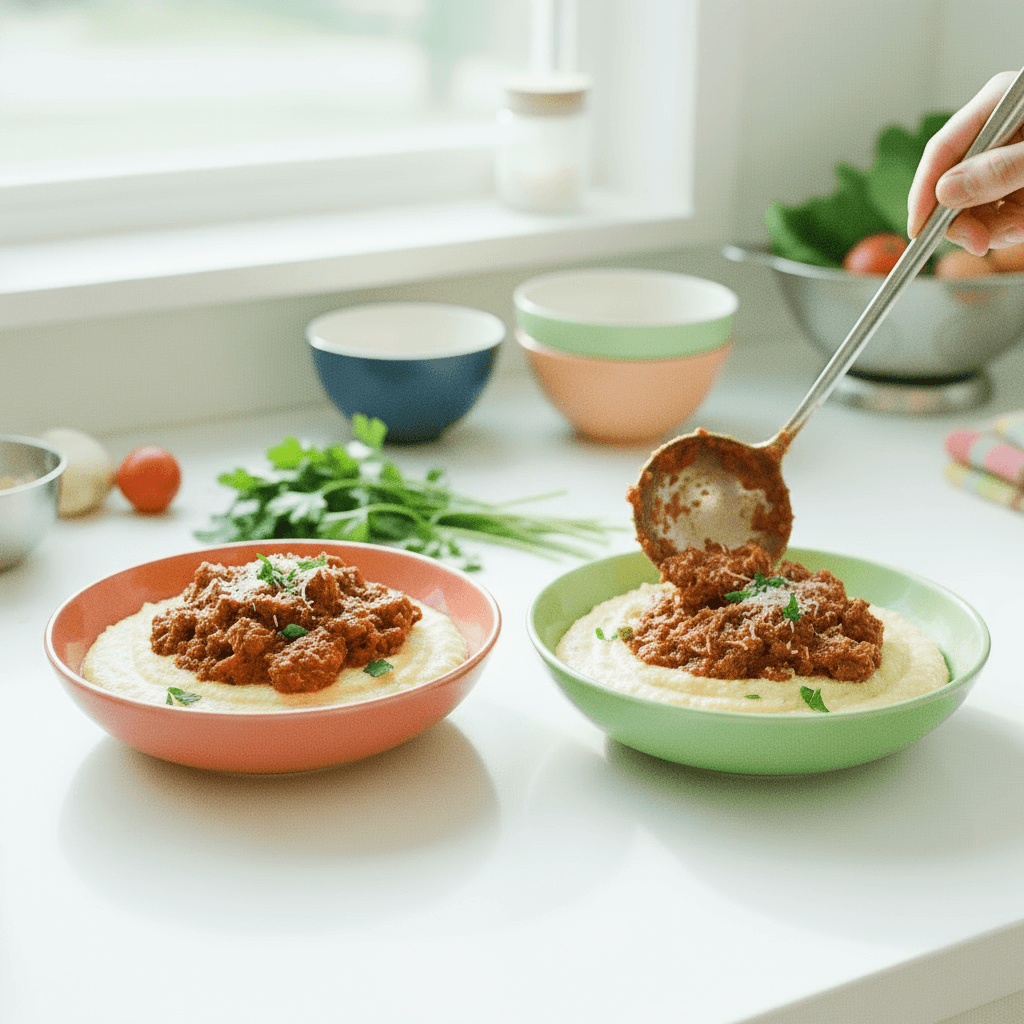
Kitchen Tools
Nutrition Facts (per serving)
Ostrich Ragu over Creamy Polenta
Ingredients
For the Ostrich Ragu
- 1 1/2 pounds ostrich stew meat, cut into 1-inch cubes
- 2 tablespoons olive oil
- 1 yellow onion, medium, diced
- 1 carrot, medium, diced
- 2 celery stalks, diced
- 4 cloves garlic, minced
- 1 cup dry red wine
- 28 ounces crushed tomatoes, canned
- 2 tablespoons tomato paste
- 1 1/2 cups beef broth
- 1 bay leaf
- 1 sprig fresh rosemary
- 3 sprigs fresh thyme
- 1 teaspoon kosher salt, plus more to taste
- 1/2 teaspoon black pepper, freshly ground, plus more to taste
For the Creamy Polenta
- 4 cups chicken broth
- 1 cup whole milk
- 1 cup fine or medium-ground cornmeal
- 4 tablespoons unsalted butter
- 1/2 cup Parmesan cheese, freshly grated
- 1/2 teaspoon kosher salt, plus more to taste
For Serving
- 2 tablespoons fresh parsley, chopped
- 1/4 cup Parmesan cheese, freshly grated, for garnish
Instructions
- 1
Pat the ostrich meat dry with paper towels and season generously with 1 teaspoon of kosher salt and 1/2 teaspoon of black pepper.
⏱️ 5 min - 2
Heat 2 tablespoons of olive oil in a large Dutch oven or heavy-bottomed pot over medium-high heat. Working in batches if necessary, brown the ostrich meat on all sides until a deep crust forms, about 3-4 minutes per batch. Remove the browned meat and set aside.
⏱️ 10 min - 3
Reduce the heat to medium. Add the diced onion, carrot, and celery to the pot. Sauté, stirring occasionally, until the vegetables soften, about 8-10 minutes. Add the minced garlic and tomato paste, cooking for another 1 minute until fragrant.
⏱️ 12 min - 4
Pour in the red wine, scraping the bottom of the pot with a wooden spoon to deglaze and release any browned bits. Bring to a simmer and cook until the wine has reduced by about half, approximately 5 minutes.
⏱️ 5 min - 5
Return the browned ostrich meat to the pot. Stir in the crushed tomatoes, beef broth, bay leaf, rosemary sprig, and thyme sprigs. Bring the ragu to a gentle simmer, then reduce the heat to low, cover, and cook for at least 2 hours, or until the ostrich meat is fork-tender. Stir occasionally to prevent sticking. Remove the bay leaf and herb sprigs before serving.
⏱️ 120 min - 6
About 20 minutes before the ragu is ready, prepare the polenta. In a medium saucepan, combine the chicken broth and whole milk. Bring the mixture to a gentle simmer over medium heat.
⏱️ 5 min - 7
Slowly whisk in the cornmeal in a steady stream to prevent lumps. Reduce the heat to low and continue to whisk frequently for 15-20 minutes, or until the polenta is thick and creamy. Stir in the unsalted butter, 1/2 cup of grated Parmesan cheese, and 1/2 teaspoon of kosher salt. Taste and adjust seasoning as needed.
⏱️ 20 min - 8
Ladle the creamy polenta into shallow bowls. Spoon a generous portion of the ostrich ragu over the polenta. Garnish with fresh chopped parsley and additional grated Parmesan cheese. Serve immediately.
⏱️ 3 min