Sourdough Bread Recipe for Beginners
Sourdough Bread Recipe for Beginners

Ingredients
For the Sourdough Bread
- 500 grams unbleached bread flour, (4 cups)
- 350 grams water, (1 1/2 cups)
- 100 grams active sourdough starter, (1/3 cup)
- 10 grams salt, (1 3/4 teaspoons)
For Feeding the Starter (Optional, as needed)
- 12 grams sourdough starter
- 60 grams flour
- 60 grams water
Instructions
- 1
Feed your sourdough starter and let it peak. This typically means feeding it the night before you plan to bake so it's active and ready in the morning. A common feeding ratio is 12 grams of starter, 60 grams of flour, and 60 grams of water, but you can use your preferred feeding method.
⏱️ 5 min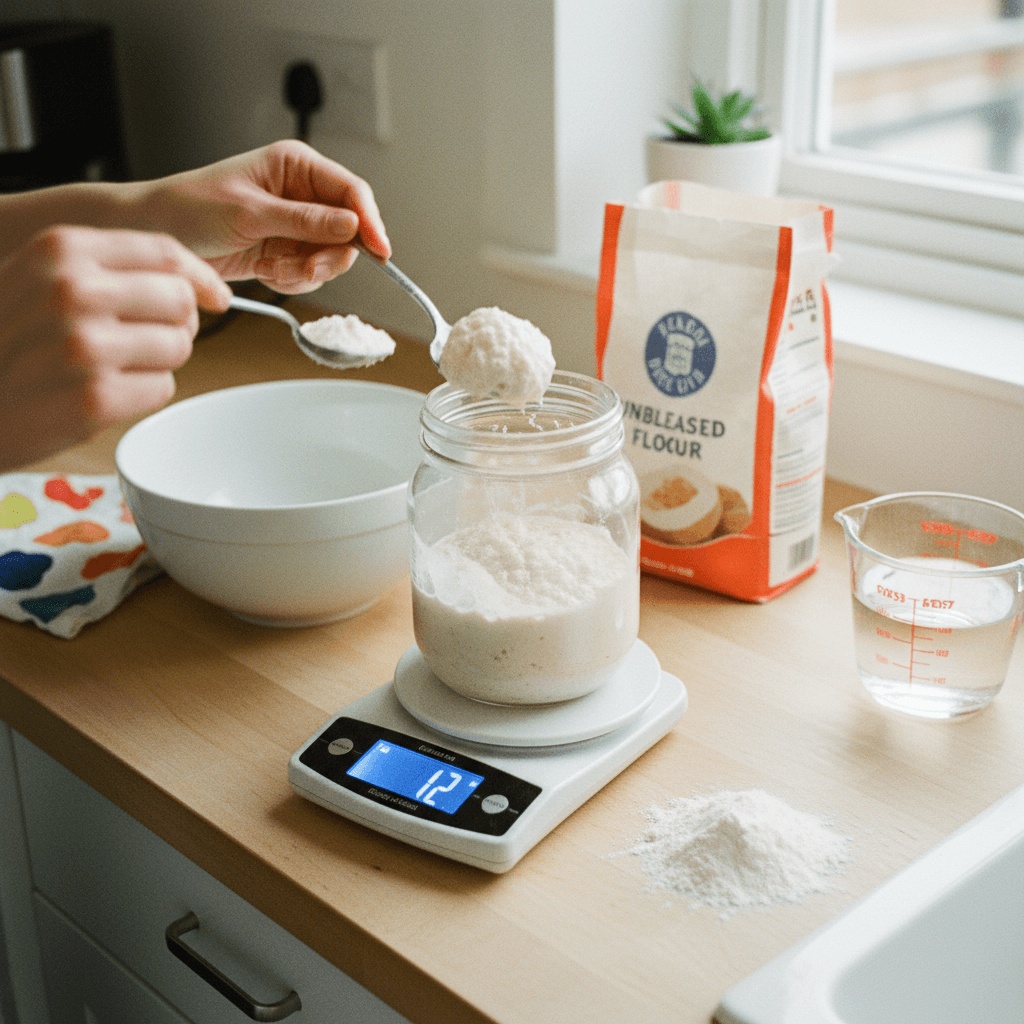
- 2
In a large mixing bowl, combine the 100 grams of active sourdough starter and 350 grams of water. Mix thoroughly until the mixture is foamy and well combined.
⏱️ 3 min
- 3
Add the 500 grams of unbleached bread flour and 10 grams of salt to the bowl. Mix the dough together until a shaggy dough forms and there are no dry pockets of flour. This may take a couple of minutes.
⏱️ 5 min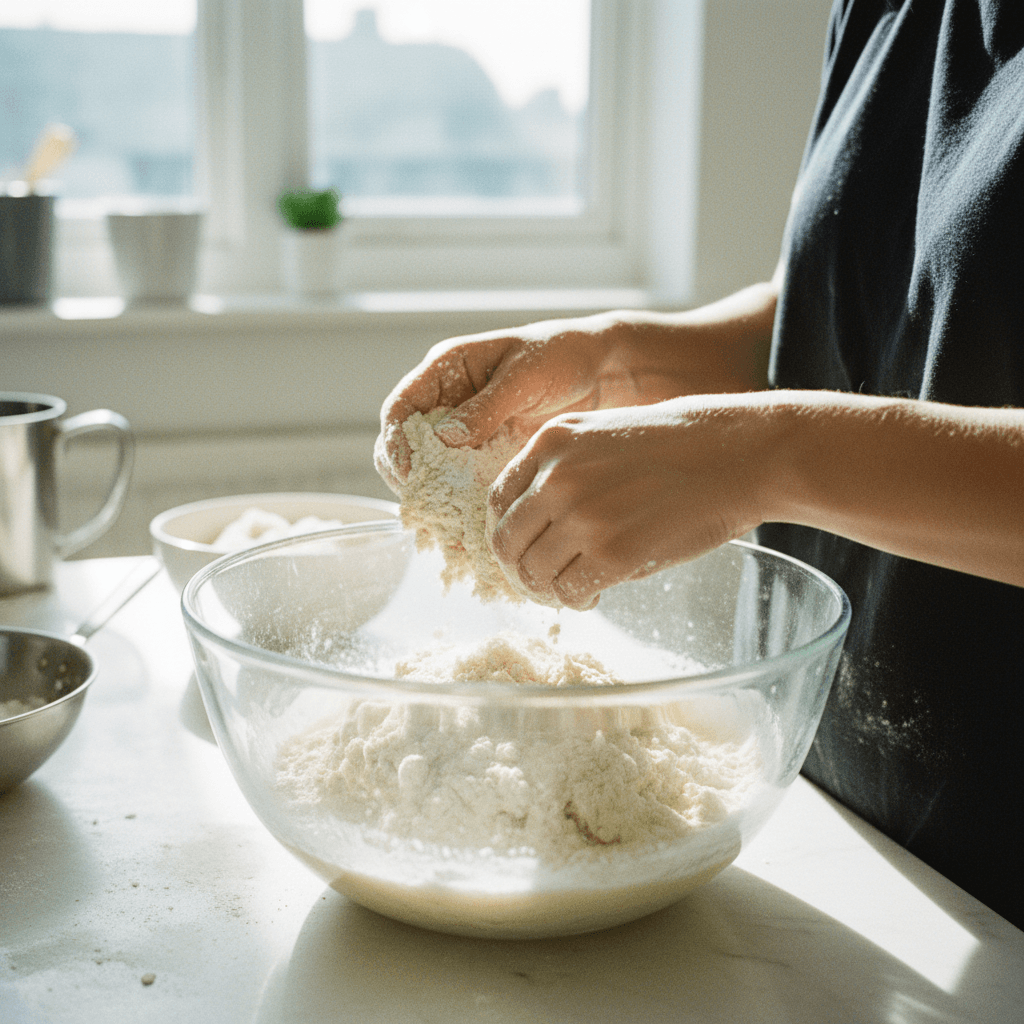
- 4
Cover the dough (e.g., with a fabric bowl cover or plastic wrap) and let it rest for 1 hour at room temperature. This marks the beginning of the bulk fermentation.

- 5
After the 1-hour rest, perform 4 sets of stretch and folds. For each set, grab a portion of the dough from the side, stretch it upwards as far as the dough will allow without ripping, and then fold it back down into the center. Turn the bowl and repeat this action several times around the bowl to complete one set. Perform each set 30 minutes apart, keeping the dough covered between each set.
⏱️ 10 min - 6
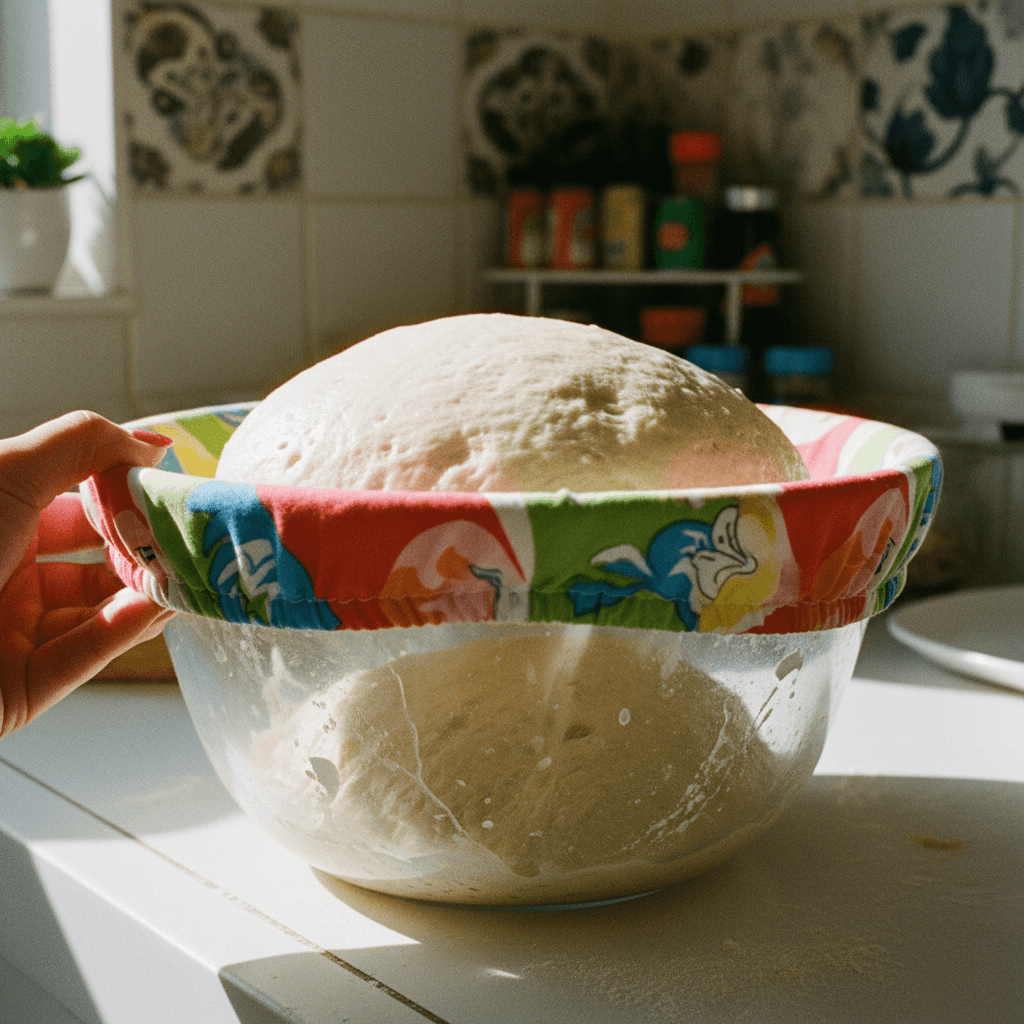
After completing the stretch and folds, cover the dough again and let it continue to rise at room temperature until bulk fermentation is complete. The timing will vary based on your environment. The dough is ready when it has a nice dome on top, lots of bubbles on the surface and in the dough, and a jiggly, airy texture.
- 7
Lightly flour a clean surface. Gently dump the dough out onto the floured surface. Gently stretch the dough into a rectangular shape using your hands. Fold each side of the dough towards the middle, then turn the dough around. Roll the dough up like a sleeping bag or a burrito, tucking the sides in as you go. Perform some gentle push and pulls to tuck everything underneath and create tension on the surface, shaping the dough into a round or oval.
⏱️ 10 min
- 8
Transfer the shaped dough to a banneton or proofing basket, with the seam side up. Cover the banneton.
⏱️ 2 min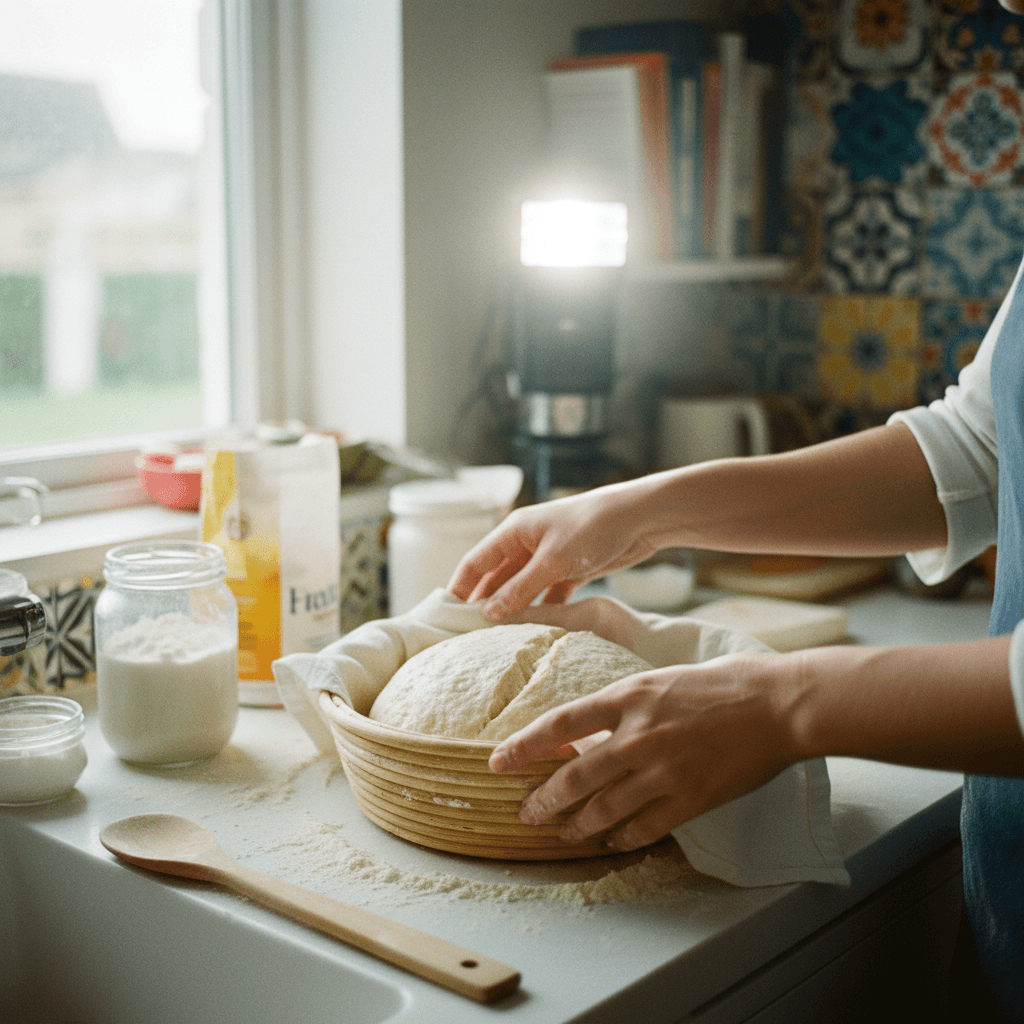
- 9
Refrigerate the covered dough for 12 to 48 hours for the cold proof.

- 10
When ready to bake, preheat your oven to 450°F (232°C). Place an empty Dutch oven with its lid inside the oven to preheat for 45 minutes.
⏱️ 45 min•🌡️ 450
- 11
Carefully remove the hot Dutch oven from the oven. Get the cold dough out of the banneton by inverting it onto a piece of parchment paper. Optionally, dust the top of the dough with a little rice flour. Score the dough with a lame or sharp knife. A simple score is one long cut, held at a 45-degree angle, with optional decorative scoring.
⏱️ 5 min
- 12
Carefully place the dough on the parchment paper into the hot Dutch oven. Cover the Dutch oven with its lid.
⏱️ 1 min
- 13
Bake at 450°F (232°C) for 30 minutes with the lid on.
⏱️ 30 min•🌡️ 450
- 14
After 30 minutes, remove the lid from the Dutch oven. Continue to bake for an additional 12-15 minutes, or until the bread is golden brown.
⏱️ 15 min•🌡️ 450
- 15
Remove the bread from the Dutch oven and transfer it directly onto a cooling rack. Let the bread cool for at least 1 hour (2 hours is best) before slicing to ensure the internal structure sets properly.

Kitchen Tools
Nutrition Facts (per serving)
Sourdough Bread Recipe for Beginners
For the Sourdough Bread
- 500 grams unbleached bread flour, (4 cups)
- 350 grams water, (1 1/2 cups)
- 100 grams active sourdough starter, (1/3 cup)
- 10 grams salt, (1 3/4 teaspoons)
For Feeding the Starter (Optional, as needed)
- 12 grams sourdough starter
- 60 grams flour
- 60 grams water
Instructions
- 1
Feed your sourdough starter and let it peak. This typically means feeding it the night before you plan to bake so it's active and ready in the morning. A common feeding ratio is 12 grams of starter, 60 grams of flour, and 60 grams of water, but you can use your preferred feeding method.
⏱️ 5 min - 2
In a large mixing bowl, combine the 100 grams of active sourdough starter and 350 grams of water. Mix thoroughly until the mixture is foamy and well combined.
⏱️ 3 min - 3
Add the 500 grams of unbleached bread flour and 10 grams of salt to the bowl. Mix the dough together until a shaggy dough forms and there are no dry pockets of flour. This may take a couple of minutes.
⏱️ 5 min - 4
Cover the dough (e.g., with a fabric bowl cover or plastic wrap) and let it rest for 1 hour at room temperature. This marks the beginning of the bulk fermentation.
- 5
After the 1-hour rest, perform 4 sets of stretch and folds. For each set, grab a portion of the dough from the side, stretch it upwards as far as the dough will allow without ripping, and then fold it back down into the center. Turn the bowl and repeat this action several times around the bowl to complete one set. Perform each set 30 minutes apart, keeping the dough covered between each set.
⏱️ 10 min - 6
After completing the stretch and folds, cover the dough again and let it continue to rise at room temperature until bulk fermentation is complete. The timing will vary based on your environment. The dough is ready when it has a nice dome on top, lots of bubbles on the surface and in the dough, and a jiggly, airy texture.
- 7
Lightly flour a clean surface. Gently dump the dough out onto the floured surface. Gently stretch the dough into a rectangular shape using your hands. Fold each side of the dough towards the middle, then turn the dough around. Roll the dough up like a sleeping bag or a burrito, tucking the sides in as you go. Perform some gentle push and pulls to tuck everything underneath and create tension on the surface, shaping the dough into a round or oval.
⏱️ 10 min - 8
Transfer the shaped dough to a banneton or proofing basket, with the seam side up. Cover the banneton.
⏱️ 2 min - 9
Refrigerate the covered dough for 12 to 48 hours for the cold proof.
- 10
When ready to bake, preheat your oven to 450°F (232°C). Place an empty Dutch oven with its lid inside the oven to preheat for 45 minutes.
⏱️ 45 min•🌡️ 450 - 11
Carefully remove the hot Dutch oven from the oven. Get the cold dough out of the banneton by inverting it onto a piece of parchment paper. Optionally, dust the top of the dough with a little rice flour. Score the dough with a lame or sharp knife. A simple score is one long cut, held at a 45-degree angle, with optional decorative scoring.
⏱️ 5 min - 12
Carefully place the dough on the parchment paper into the hot Dutch oven. Cover the Dutch oven with its lid.
⏱️ 1 min - 13
Bake at 450°F (232°C) for 30 minutes with the lid on.
⏱️ 30 min•🌡️ 450 - 14
After 30 minutes, remove the lid from the Dutch oven. Continue to bake for an additional 12-15 minutes, or until the bread is golden brown.
⏱️ 15 min•🌡️ 450 - 15
Remove the bread from the Dutch oven and transfer it directly onto a cooling rack. Let the bread cool for at least 1 hour (2 hours is best) before slicing to ensure the internal structure sets properly.