Pastrami Brisket
Pastrami Brisket

Ingredients
For the Brine (per gallon of water)
- 12 grams pink curing salt
- 226 grams salt
- 156 grams dark brown sugar
- 7 grams coriander seeds
- 8 grams red pepper flakes
- 13 grams mustard seeds
- 4 bay leaves
- 6 grams cloves
- 2 sprigs rosemary
- 5 cloves garlic
- 5 juniper berries
For the Brisket
- 1 beef brisket, whole, trimmed
- 3 gallons water
For the Seasoning
- 1/4 cup mustard, as needed for slathering
- 1/4 cup coarse ground black pepper, as needed for rub
- 2 tablespoons coriander seeds, crushed, as needed for rub
- 2 tablespoons mustard seeds, crushed, as needed for rub
Instructions
- 1
Prepare the brine: In a large pot, combine 3 gallons of water with 36 grams of pink curing salt, 678 grams of salt, 468 grams of dark brown sugar, 21 grams of coriander seeds, 24 grams of red pepper flakes, 39 grams of mustard seeds, 12 bay leaves, 18 grams of cloves, 6 sprigs of rosemary, 15 cloves of garlic (crushed), and 15 juniper berries. Bring the mixture to a simmer, stirring until the salts and sugar are fully dissolved. Remove from heat and allow the brine to cool completely to room temperature, then chill thoroughly in the refrigerator.
⏱️ 20 min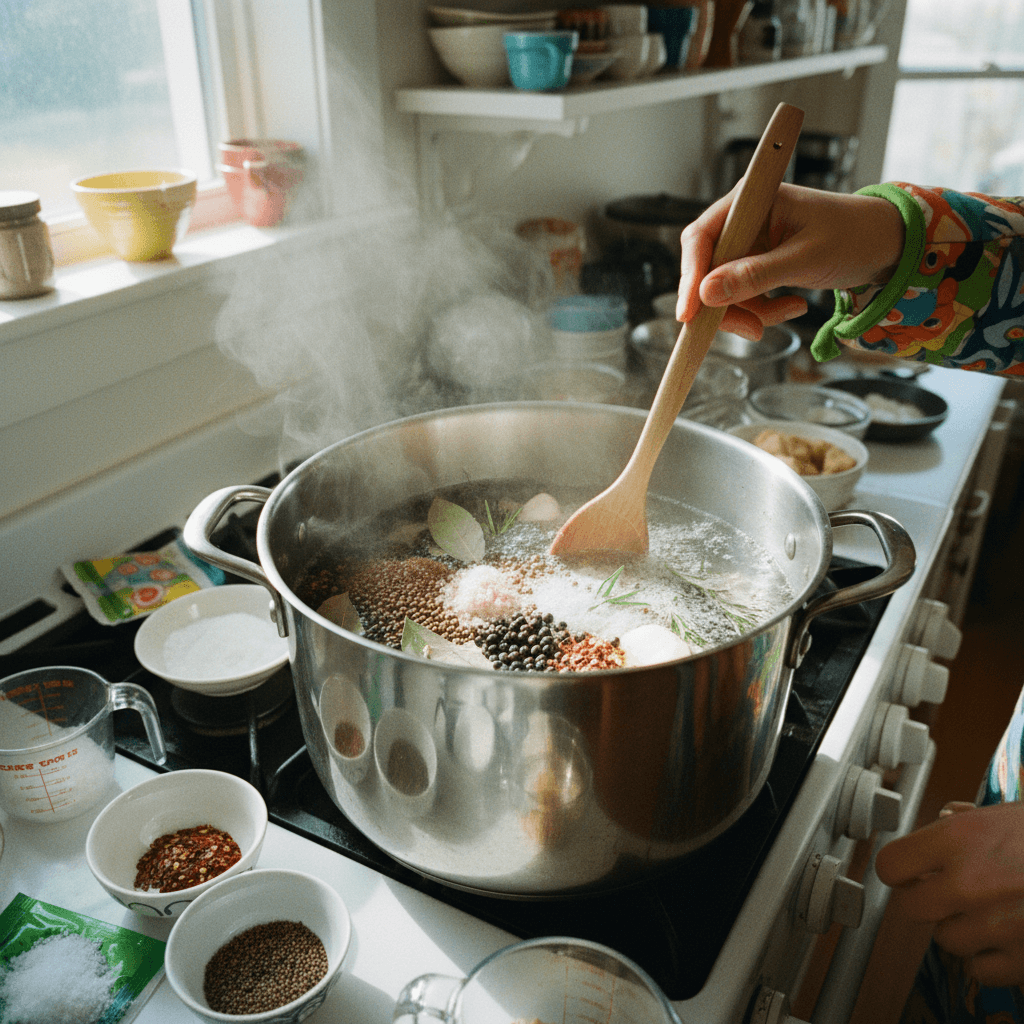
- 2
Submerge the trimmed beef brisket in the chilled brine. Ensure the brisket is fully immersed; use a plate or weight if necessary to keep it submerged. Place the brining brisket in the refrigerator and cure for 7 days.
⏱️ 10 min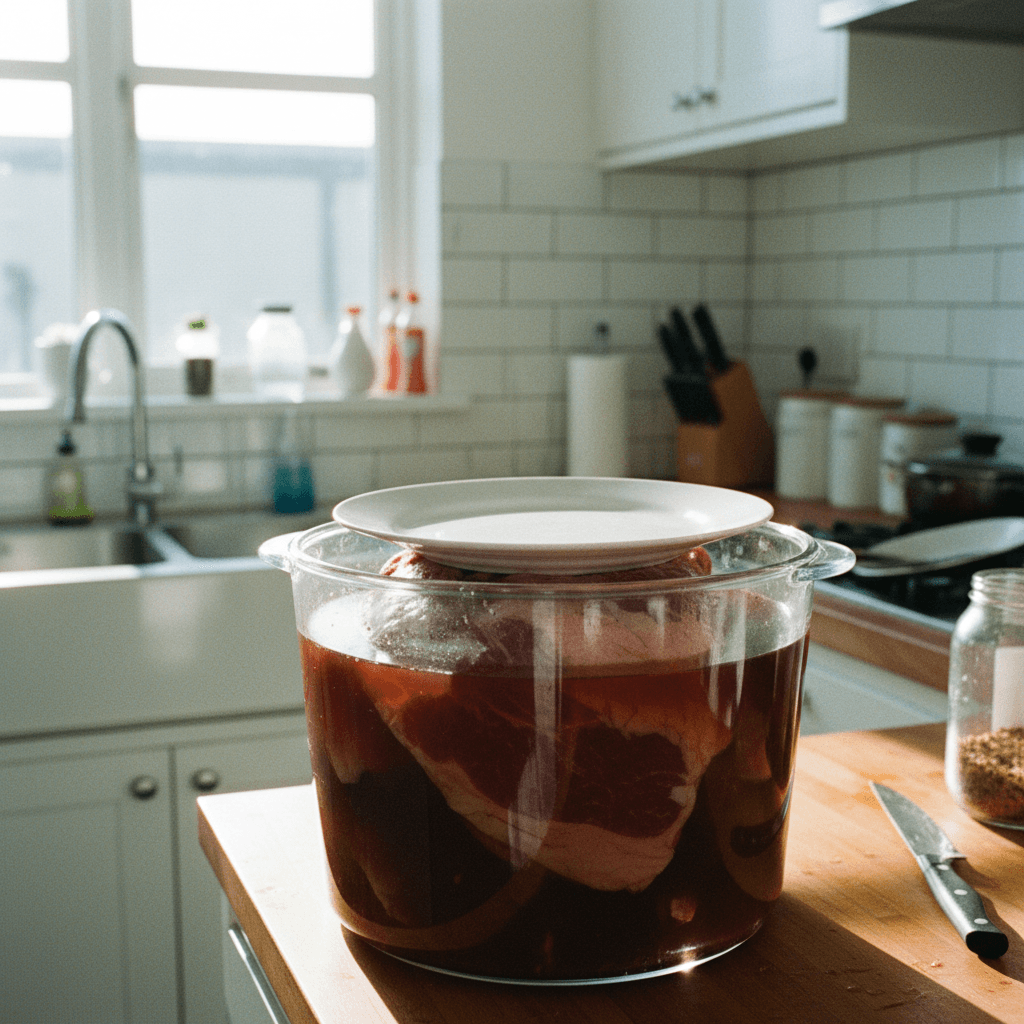
- 3
After 7 days, remove the brisket from the brine. Rinse the brisket thoroughly under cold running water to remove any excess brine and surface spices. Pat the brisket dry with paper towels.
⏱️ 5 min
- 4
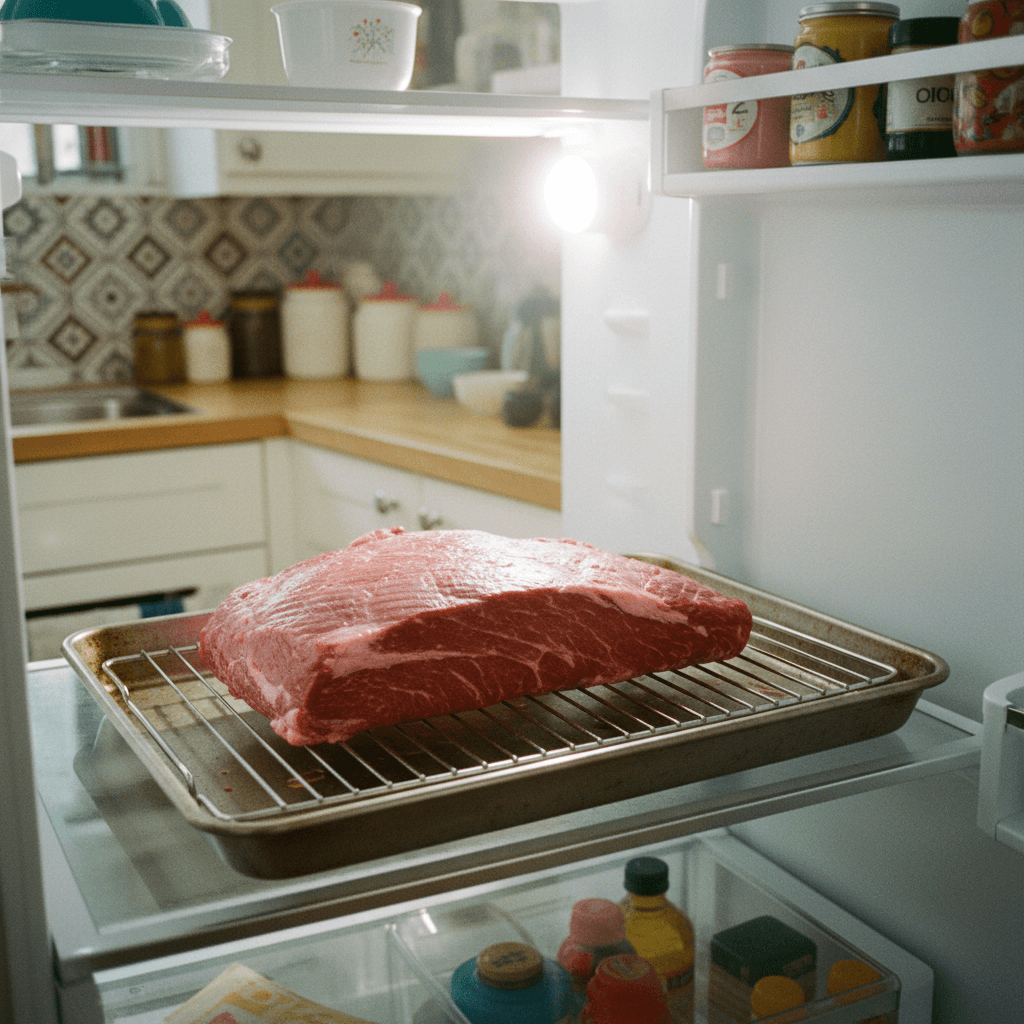
Place the rinsed brisket, uncovered, on a wire rack set over a baking sheet in the refrigerator. Allow it to air dry overnight (approximately 8-12 hours). This step helps create a good bark during smoking.
- 5
The next day, remove the brisket from the refrigerator. Slather the entire surface of the brisket generously with mustard. In a small bowl, combine the coarse ground black pepper, crushed coriander seeds, and crushed mustard seeds. Apply this rub liberally over the mustard-coated brisket, ensuring an even coating.
⏱️ 15 min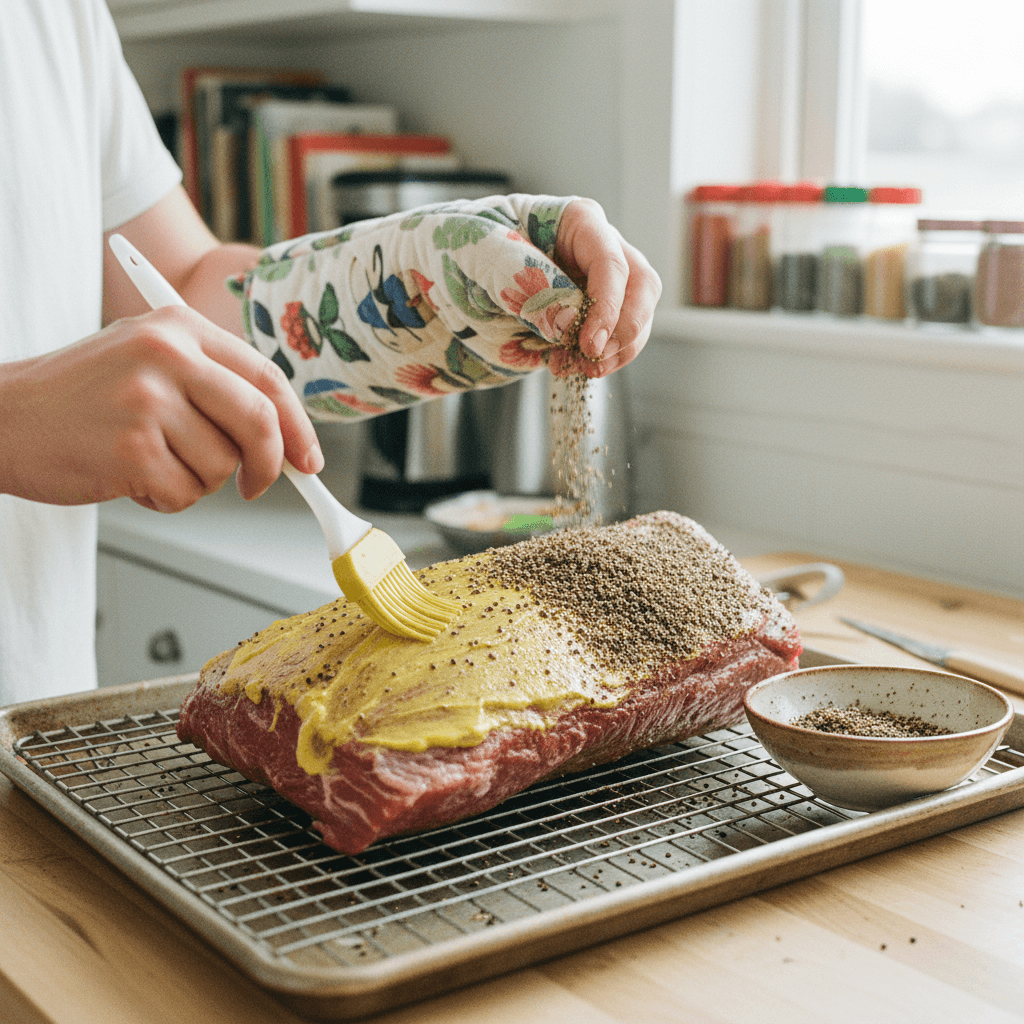
- 6
Preheat your smoker to 250°F. Once the smoker is at temperature, place the seasoned brisket inside. Smoke for 1 hour at 250°F.
⏱️ 60 min•🌡️ 250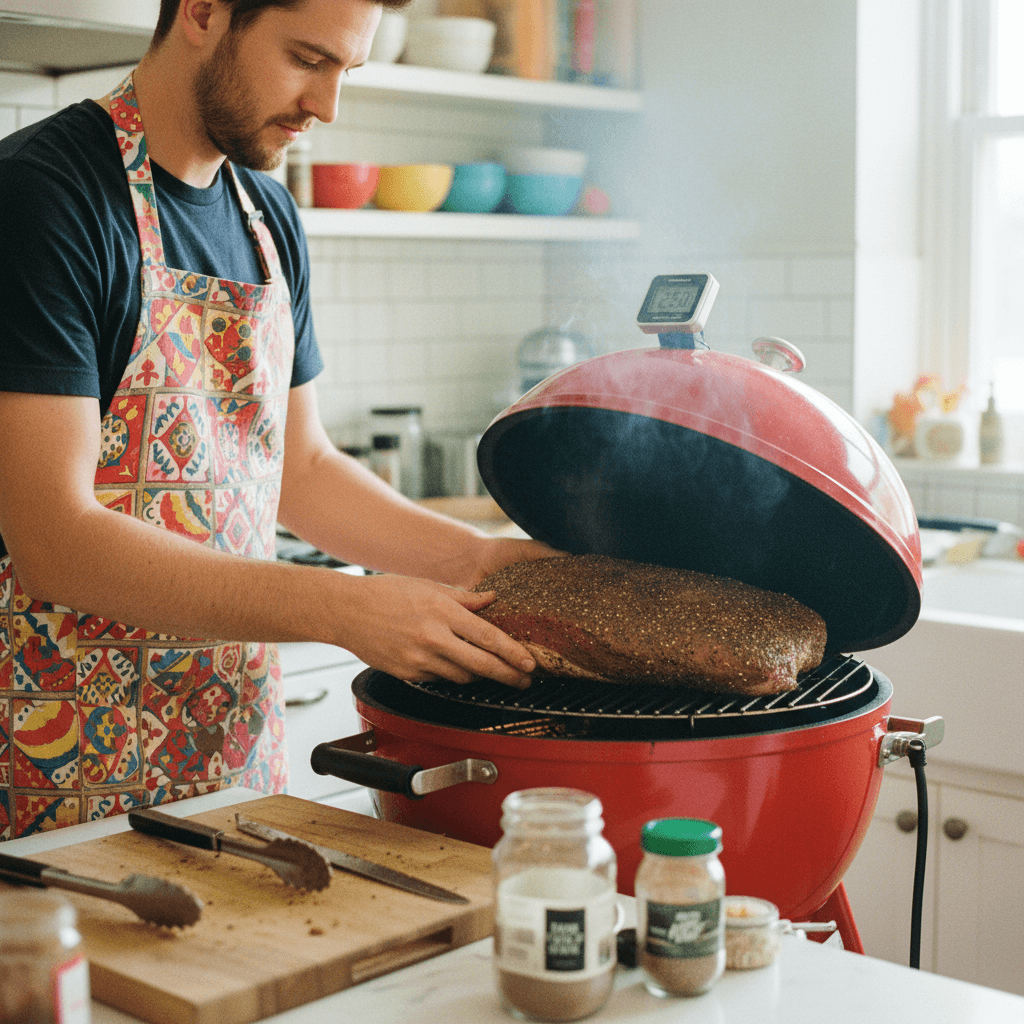
- 7
Increase the smoker temperature to 275°F and continue smoking for 2 hours.
⏱️ 120 min•🌡️ 275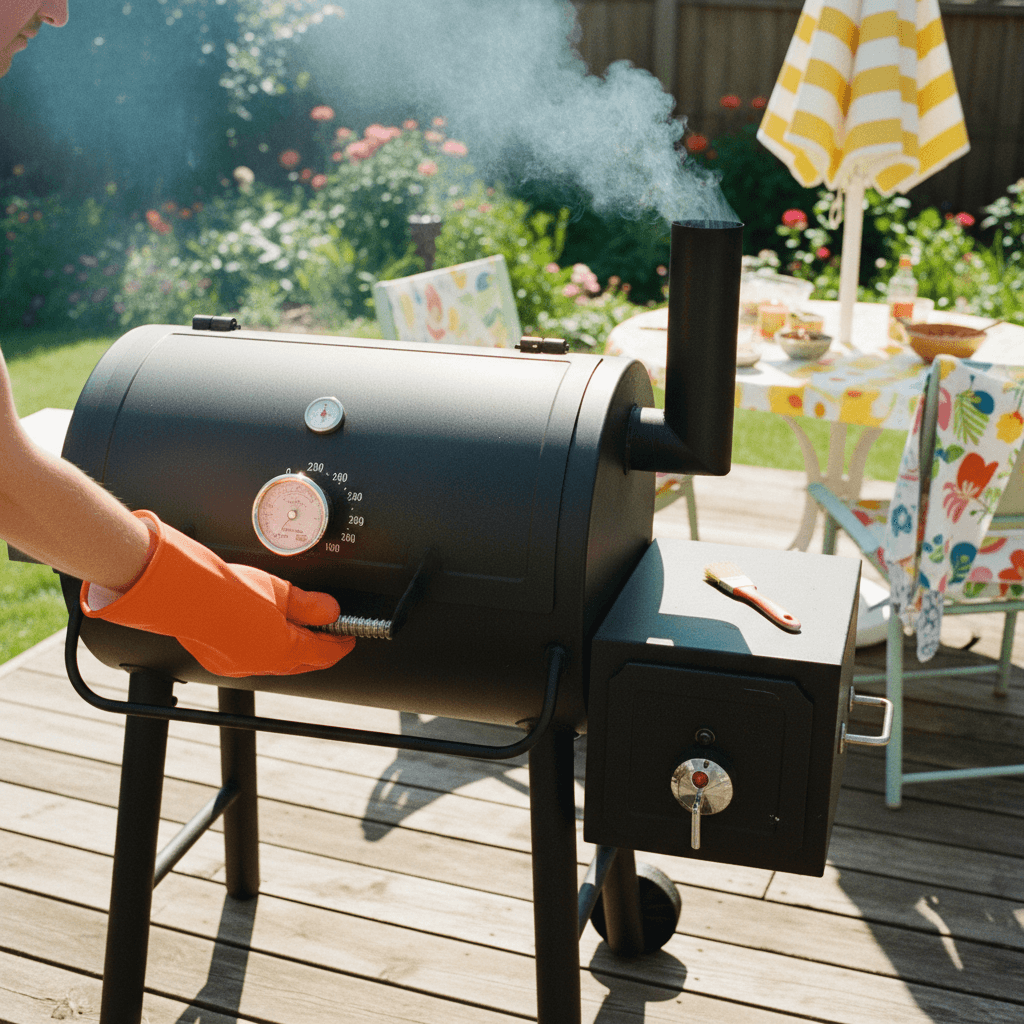
- 8
Increase the smoker temperature to 325°F and smoke for an additional 8 hours, or until the internal temperature of the brisket flat reaches 195°F. For best results, once the internal temperature of the flat reaches 175°F, you can carefully transfer the brisket to a foil boat (a large piece of heavy-duty aluminum foil folded up around the brisket to catch juices) to continue cooking.
⏱️ 480 min•🌡️ 325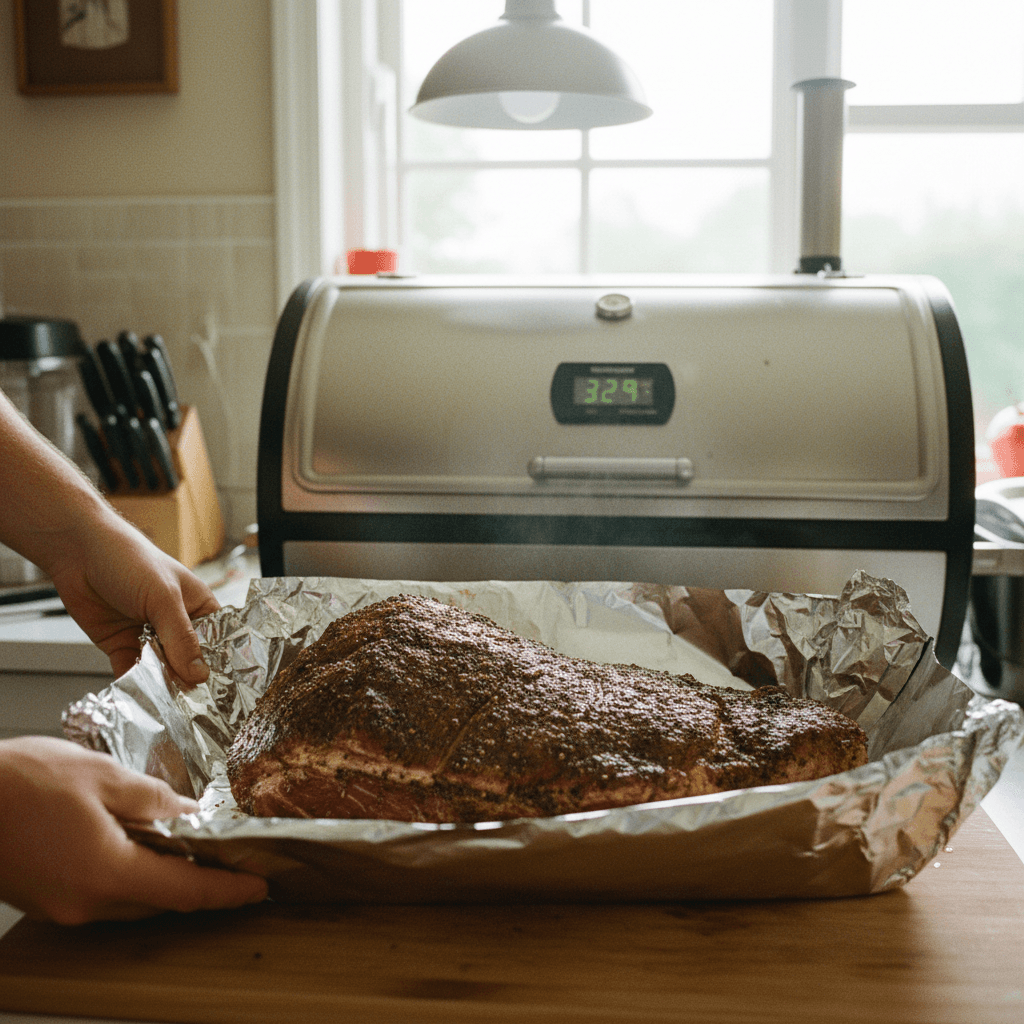
- 9
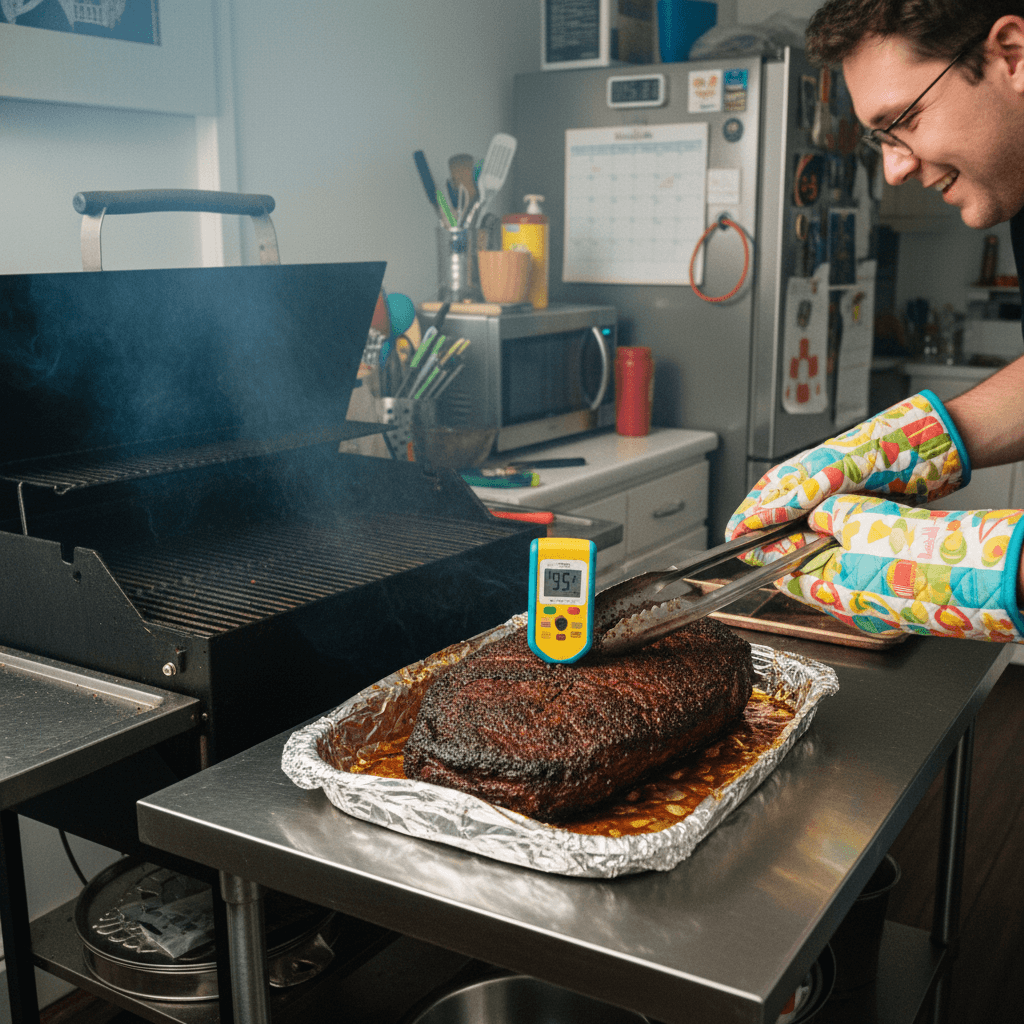
Once the brisket flat reaches an internal temperature of 195°F, remove it from the smoker. Allow the brisket to rest at room temperature until its internal temperature drops to 150°F. This can take several hours.
- 10
Preheat your oven to a temperature between 150-170°F. Once the brisket has rested to 150°F internal temperature, transfer it to the preheated oven to hold overnight. This long holding period further tenderizes the meat.
00🌡️ 150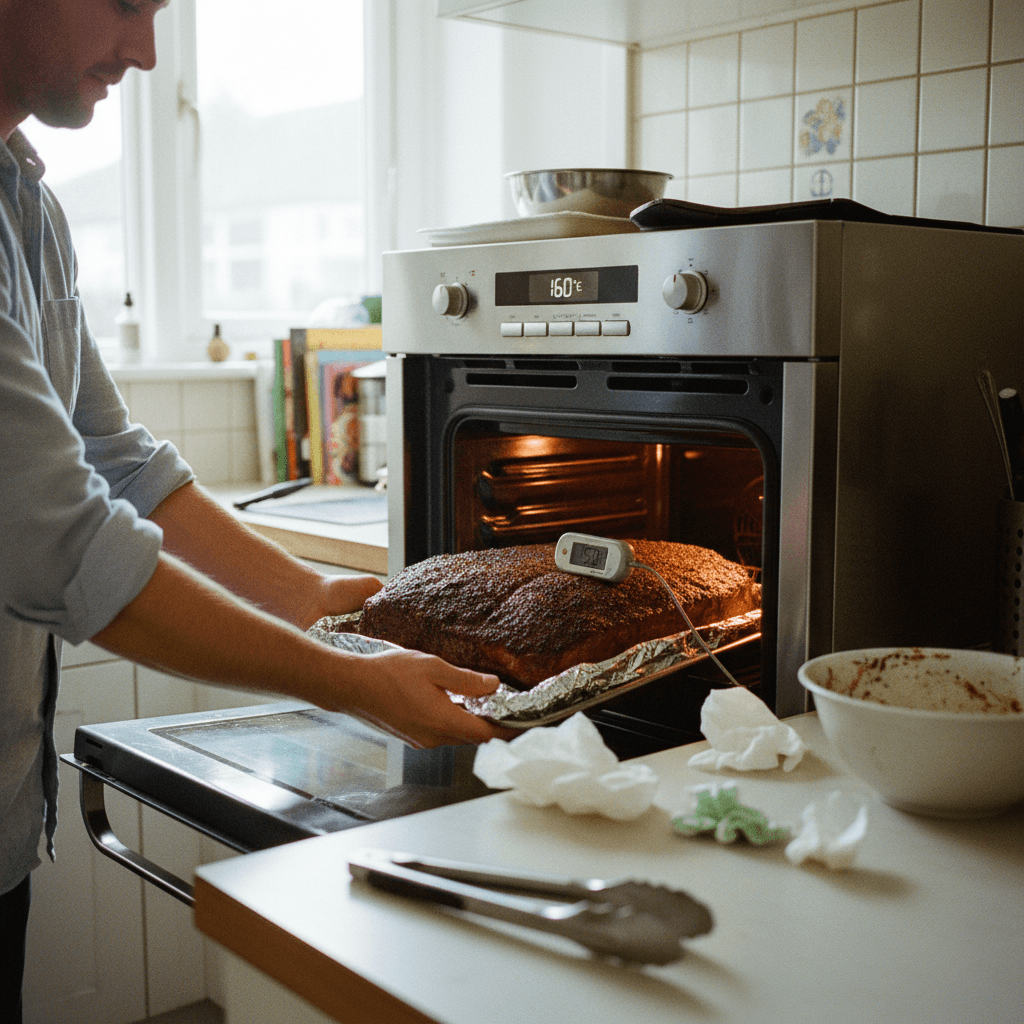
- 11
The next day, remove the pastrami brisket from the oven. Slice against the grain and serve immediately.
⏱️ 5 min
Kitchen Tools
Nutrition Facts (per serving)
Pastrami Brisket
For the Brine (per gallon of water)
- 12 grams pink curing salt
- 226 grams salt
- 156 grams dark brown sugar
- 7 grams coriander seeds
- 8 grams red pepper flakes
- 13 grams mustard seeds
- 4 bay leaves
- 6 grams cloves
- 2 sprigs rosemary
- 5 cloves garlic
- 5 juniper berries
For the Brisket
- 1 beef brisket, whole, trimmed
- 3 gallons water
For the Seasoning
- 1/4 cup mustard, as needed for slathering
- 1/4 cup coarse ground black pepper, as needed for rub
- 2 tablespoons coriander seeds, crushed, as needed for rub
- 2 tablespoons mustard seeds, crushed, as needed for rub
Instructions
- 1
Prepare the brine: In a large pot, combine 3 gallons of water with 36 grams of pink curing salt, 678 grams of salt, 468 grams of dark brown sugar, 21 grams of coriander seeds, 24 grams of red pepper flakes, 39 grams of mustard seeds, 12 bay leaves, 18 grams of cloves, 6 sprigs of rosemary, 15 cloves of garlic (crushed), and 15 juniper berries. Bring the mixture to a simmer, stirring until the salts and sugar are fully dissolved. Remove from heat and allow the brine to cool completely to room temperature, then chill thoroughly in the refrigerator.
⏱️ 20 min - 2
Submerge the trimmed beef brisket in the chilled brine. Ensure the brisket is fully immersed; use a plate or weight if necessary to keep it submerged. Place the brining brisket in the refrigerator and cure for 7 days.
⏱️ 10 min - 3
After 7 days, remove the brisket from the brine. Rinse the brisket thoroughly under cold running water to remove any excess brine and surface spices. Pat the brisket dry with paper towels.
⏱️ 5 min - 4
Place the rinsed brisket, uncovered, on a wire rack set over a baking sheet in the refrigerator. Allow it to air dry overnight (approximately 8-12 hours). This step helps create a good bark during smoking.
- 5
The next day, remove the brisket from the refrigerator. Slather the entire surface of the brisket generously with mustard. In a small bowl, combine the coarse ground black pepper, crushed coriander seeds, and crushed mustard seeds. Apply this rub liberally over the mustard-coated brisket, ensuring an even coating.
⏱️ 15 min - 6
Preheat your smoker to 250°F. Once the smoker is at temperature, place the seasoned brisket inside. Smoke for 1 hour at 250°F.
⏱️ 60 min•🌡️ 250 - 7
Increase the smoker temperature to 275°F and continue smoking for 2 hours.
⏱️ 120 min•🌡️ 275 - 8
Increase the smoker temperature to 325°F and smoke for an additional 8 hours, or until the internal temperature of the brisket flat reaches 195°F. For best results, once the internal temperature of the flat reaches 175°F, you can carefully transfer the brisket to a foil boat (a large piece of heavy-duty aluminum foil folded up around the brisket to catch juices) to continue cooking.
⏱️ 480 min•🌡️ 325 - 9
Once the brisket flat reaches an internal temperature of 195°F, remove it from the smoker. Allow the brisket to rest at room temperature until its internal temperature drops to 150°F. This can take several hours.
- 10
Preheat your oven to a temperature between 150-170°F. Once the brisket has rested to 150°F internal temperature, transfer it to the preheated oven to hold overnight. This long holding period further tenderizes the meat.
00🌡️ 150 - 11
The next day, remove the pastrami brisket from the oven. Slice against the grain and serve immediately.
⏱️ 5 min