Fresh Pasta (Handmade)
Fresh Pasta (Handmade)

Ingredients
- 2 cups all-purpose flour
- 3 large eggs
- as needed water
- as needed salt, for boiling water
Instructions
- 1
On a clean, dry wooden surface or a large countertop, pour the 2 cups of all-purpose flour into a mound.
⏱️ 1 min
- 2
Create a well in the center of the flour mound, making sure the sides are high enough to contain the eggs.
⏱️ 1 min
- 3
Crack the 3 large eggs directly into the well.
⏱️ 1 min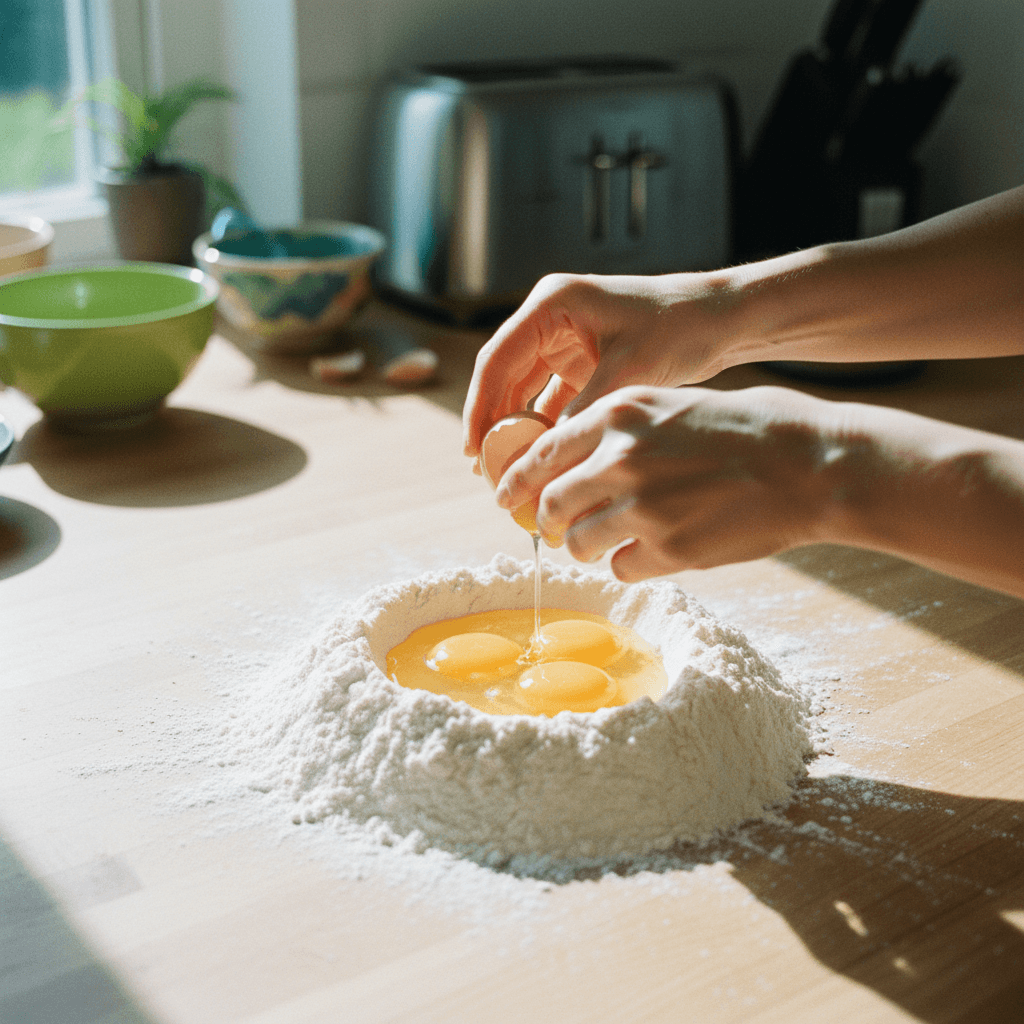
- 4
Using a fork, gently whisk the eggs in the well. Gradually incorporate small amounts of flour from the inner edges of the well into the egg mixture. Continue until the mixture becomes a thick, lumpy dough.
⏱️ 5 min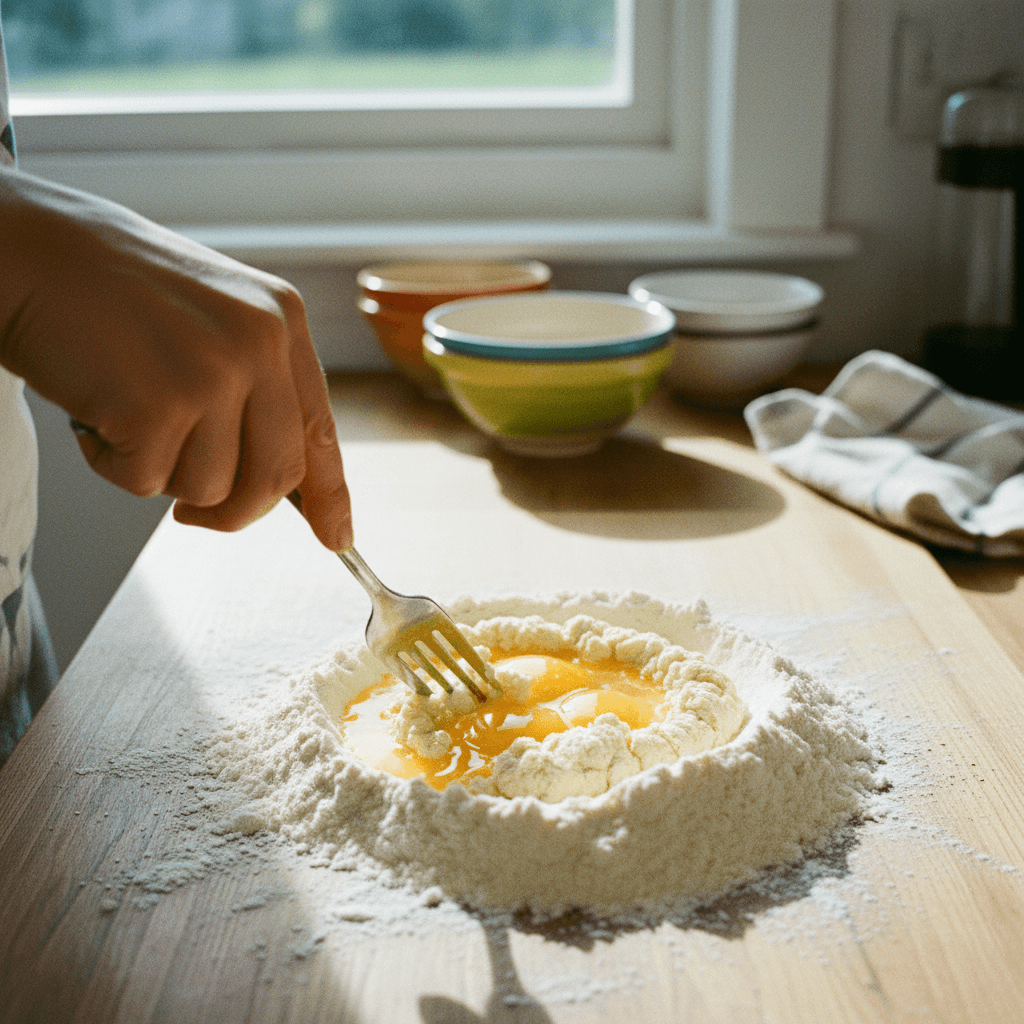
- 5
Use a bench scraper to gather the lumpy mixture, or use your hands to bring it together. Begin to knead the dough.
⏱️ 2 min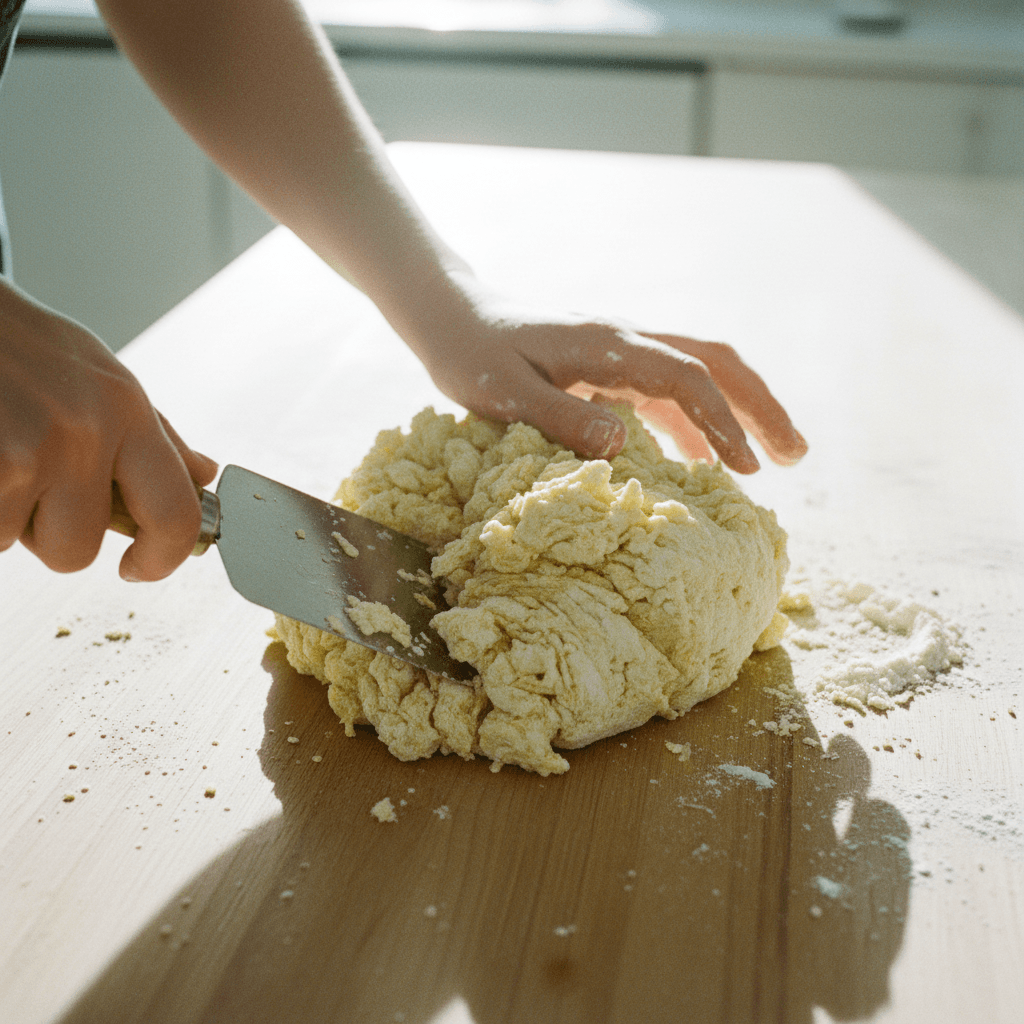
- 6
Continue kneading the dough for about 8-10 minutes. If the dough feels too dry and crumbly, add water, 1/2 teaspoon at a time, and continue kneading until a smooth, elastic, and cohesive dough ball forms. The dough should be firm but pliable.
⏱️ 10 min
- 7
Cut the dough ball in half with a knife or bench scraper.
⏱️ 1 min
- 8
Lightly dust one half of the dough with flour to prevent sticking.
⏱️ 1 min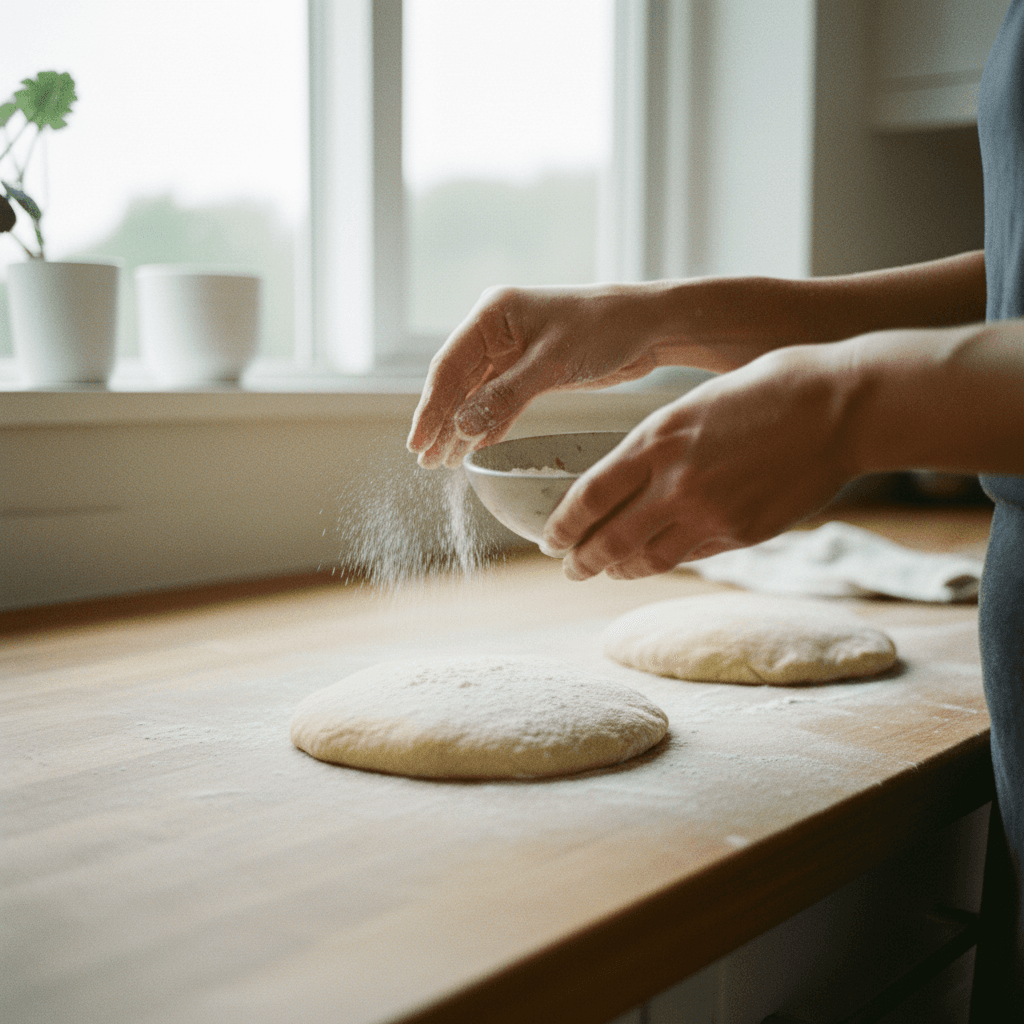
- 9
Using a rolling pin (or a clean, sturdy bottle), roll out the floured dough half. Apply even pressure and roll from the center outwards, rotating the dough frequently, until it is very thin and almost translucent. This thin sheet is called "La Sfoglia".
⏱️ 5 min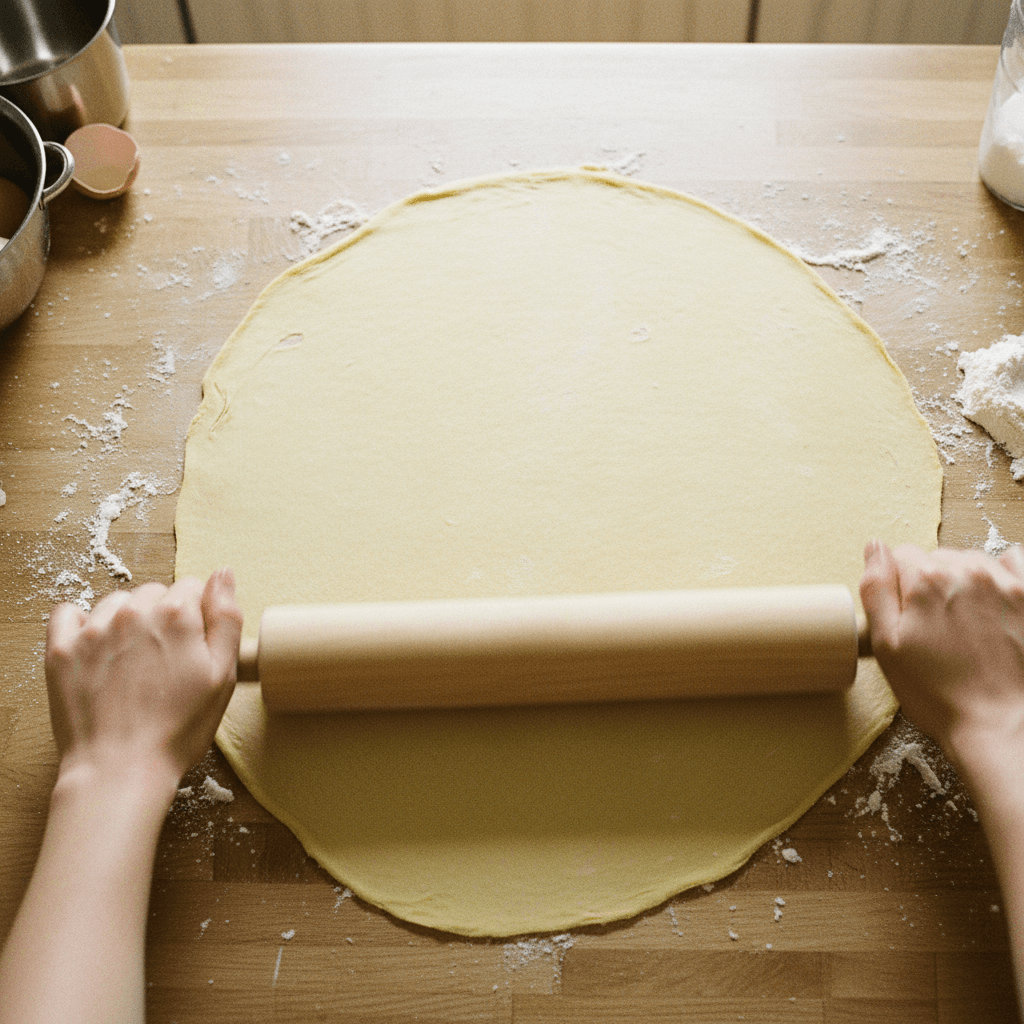
- 10
Once the pasta sheet is thin, lightly dust it with flour and fold it into a long, layered rectangle. This makes it easier to cut.
⏱️ 1 min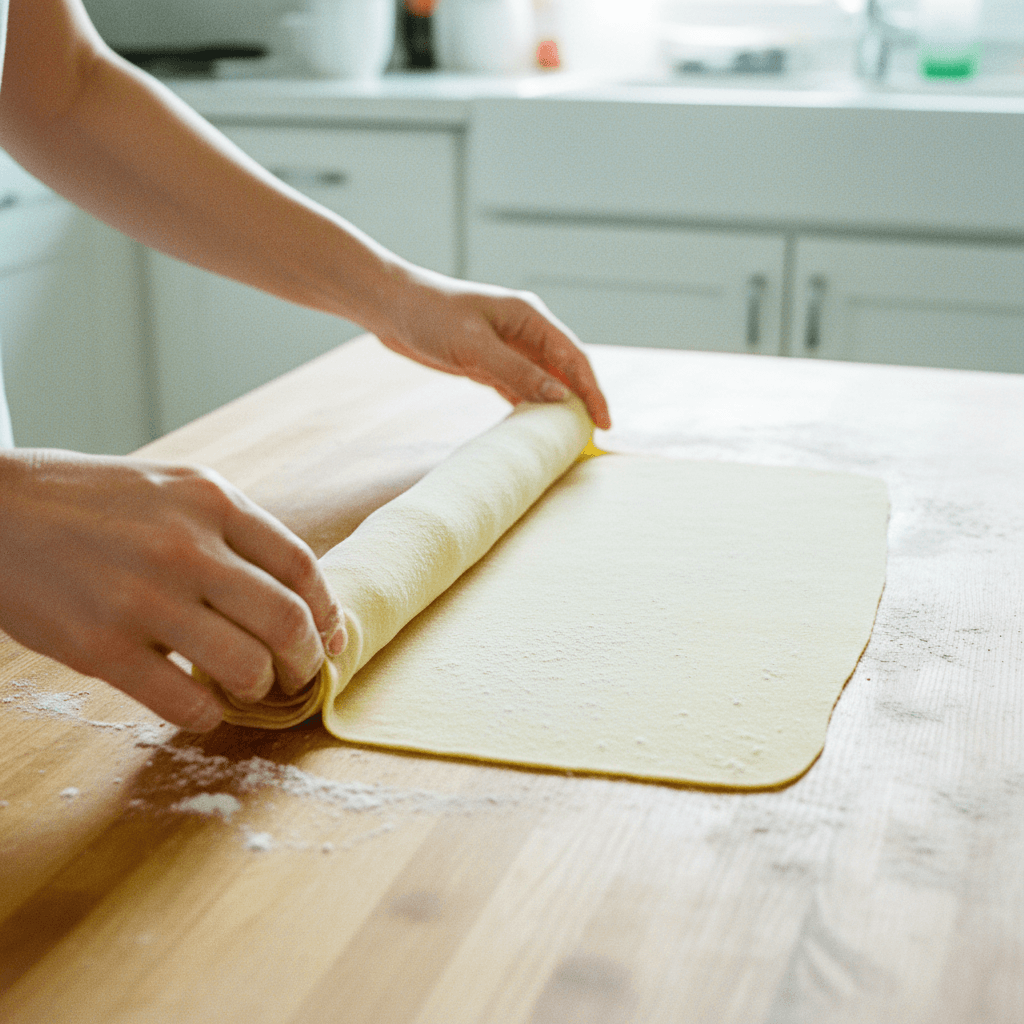
- 11
Using a sharp knife, cut the folded pasta sheet into strips of your desired width. For wide, flat pasta, cut strips about 1/2 inch wide. Carefully unfold the strips and set them aside on a lightly floured surface.
⏱️ 2 min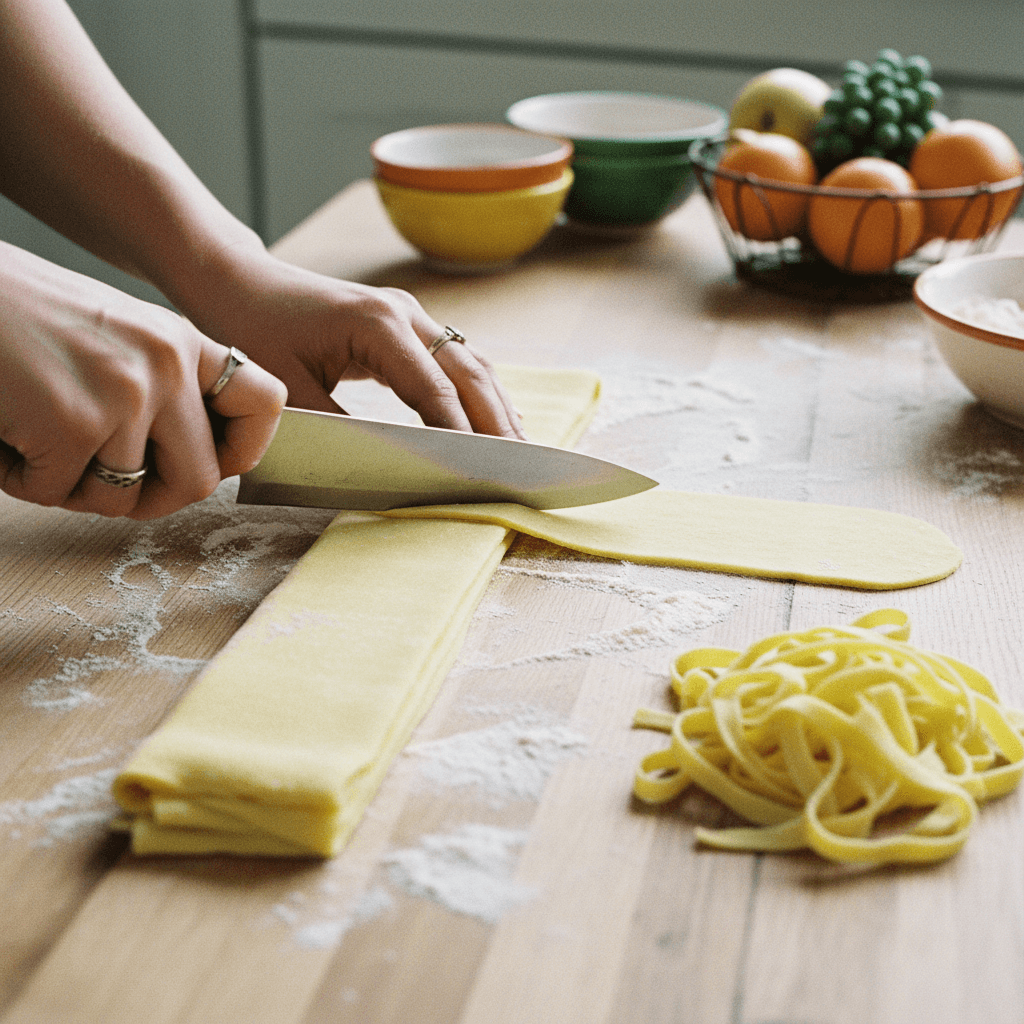
- 12
Repeat steps 8-11 with the second half of the dough.
⏱️ 7 min
- 13
Bring a large pot of water to a rolling boil. Add a generous amount of salt to the water until it tastes "extra salty" (like the ocean).
⏱️ 5 min
- 14
Carefully add the fresh pasta to the boiling water. Cook for 2-3 minutes, or until the pasta floats to the top and is al dente (tender but still firm to the bite). Fresh pasta cooks very quickly.
⏱️ 3 min
- 15
Drain the cooked pasta using a colander. Do not rinse.
⏱️ 1 min
- 16
Immediately transfer the drained pasta to a pan containing your preferred warm sauce. Toss the pasta with the sauce until it is well coated.
⏱️ 1 min
- 17
Serve the fresh pasta immediately with additional sauce or cheese, if desired.
⏱️ 1 min
Kitchen Tools
Nutrition Facts (per serving)
Fresh Pasta (Handmade)
- 2 cups all-purpose flour
- 3 large eggs
- as needed water
- as needed salt, for boiling water
Instructions
- 1
On a clean, dry wooden surface or a large countertop, pour the 2 cups of all-purpose flour into a mound.
⏱️ 1 min - 2
Create a well in the center of the flour mound, making sure the sides are high enough to contain the eggs.
⏱️ 1 min - 3
Crack the 3 large eggs directly into the well.
⏱️ 1 min - 4
Using a fork, gently whisk the eggs in the well. Gradually incorporate small amounts of flour from the inner edges of the well into the egg mixture. Continue until the mixture becomes a thick, lumpy dough.
⏱️ 5 min - 5
Use a bench scraper to gather the lumpy mixture, or use your hands to bring it together. Begin to knead the dough.
⏱️ 2 min - 6
Continue kneading the dough for about 8-10 minutes. If the dough feels too dry and crumbly, add water, 1/2 teaspoon at a time, and continue kneading until a smooth, elastic, and cohesive dough ball forms. The dough should be firm but pliable.
⏱️ 10 min - 7
Cut the dough ball in half with a knife or bench scraper.
⏱️ 1 min - 8
Lightly dust one half of the dough with flour to prevent sticking.
⏱️ 1 min - 9
Using a rolling pin (or a clean, sturdy bottle), roll out the floured dough half. Apply even pressure and roll from the center outwards, rotating the dough frequently, until it is very thin and almost translucent. This thin sheet is called "La Sfoglia".
⏱️ 5 min - 10
Once the pasta sheet is thin, lightly dust it with flour and fold it into a long, layered rectangle. This makes it easier to cut.
⏱️ 1 min - 11
Using a sharp knife, cut the folded pasta sheet into strips of your desired width. For wide, flat pasta, cut strips about 1/2 inch wide. Carefully unfold the strips and set them aside on a lightly floured surface.
⏱️ 2 min - 12
Repeat steps 8-11 with the second half of the dough.
⏱️ 7 min - 13
Bring a large pot of water to a rolling boil. Add a generous amount of salt to the water until it tastes "extra salty" (like the ocean).
⏱️ 5 min - 14
Carefully add the fresh pasta to the boiling water. Cook for 2-3 minutes, or until the pasta floats to the top and is al dente (tender but still firm to the bite). Fresh pasta cooks very quickly.
⏱️ 3 min - 15
Drain the cooked pasta using a colander. Do not rinse.
⏱️ 1 min - 16
Immediately transfer the drained pasta to a pan containing your preferred warm sauce. Toss the pasta with the sauce until it is well coated.
⏱️ 1 min - 17
Serve the fresh pasta immediately with additional sauce or cheese, if desired.
⏱️ 1 min