Easy No-Knead Loaf Bread
Easy No-Knead Loaf Bread

Ingredients
- 1/2 teaspoon active dry yeast
- 1 1/2 cups lukewarm water
- 3 cups all-purpose flour
- 1 1/2 teaspoons sea salt
Instructions
- 1
In a large mixing bowl, add the yeast, followed by the lukewarm water, then the all-purpose flour, and finally the sea salt. There's no need to pre-mix or bloom the yeast; just dump everything into the bowl.
⏱️ 2 min
- 2
Using a spatula, mix all the ingredients together until they form a cohesive, shaggy dough ball. Scrape down the sides of the bowl to ensure all flour is incorporated.
⏱️ 3 min
- 3
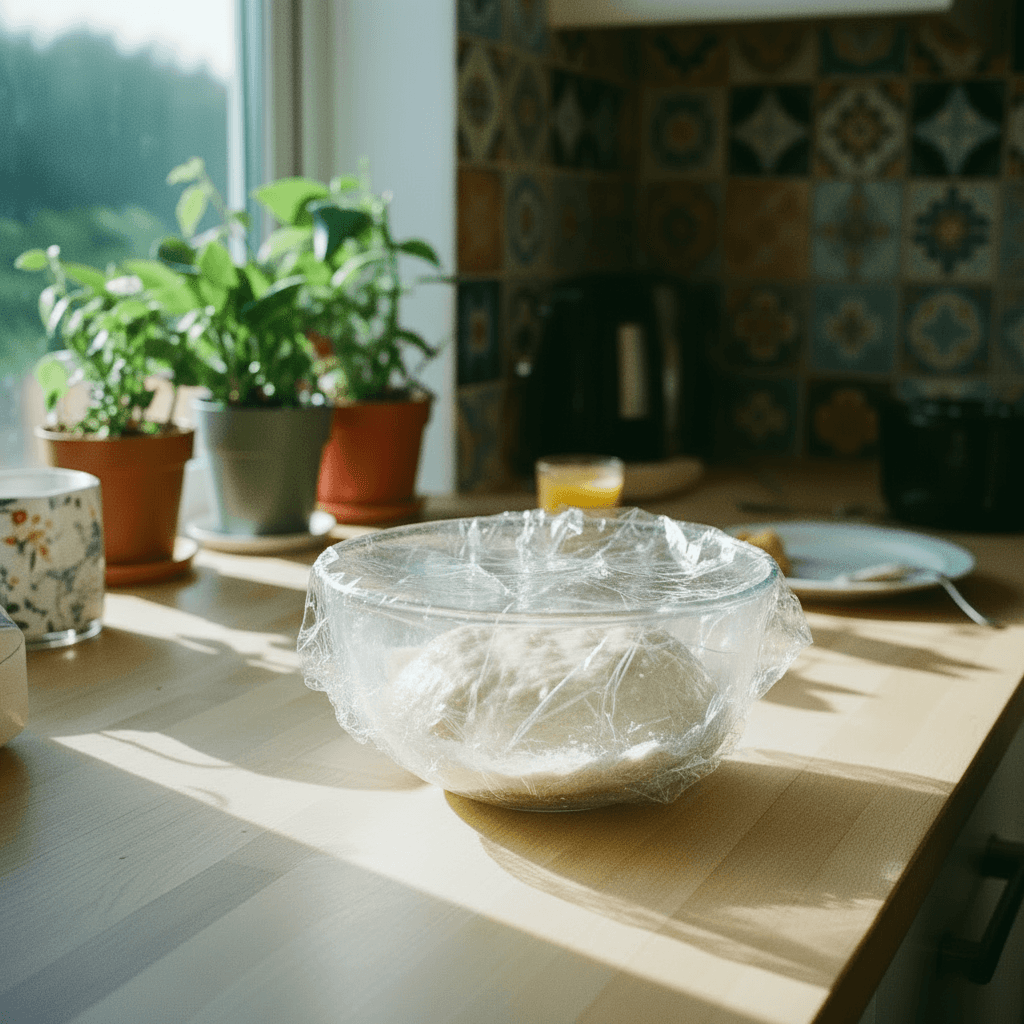
Cover the bowl with a plate or plastic wrap and let the dough rise at room temperature for its first rise (bulk fermentation). This can take anywhere from 8 to 18 hours, depending on the room temperature and desired flavor development. The dough should become bubbly, stretchy, and nearly doubled in size. This can be done overnight or during the day.
- 4
Lightly flour your countertop. Gently scrape the risen dough out of the bowl onto the floured surface. Fold the dough over itself a couple of times to create some tension, then gently shape it into a rustic loaf. Avoid excessive handling or kneading.
⏱️ 5 min
- 5
Lightly grease a glass loaf pan. Carefully transfer the shaped dough into the prepared loaf pan. Cover the pan loosely with a kitchen towel and let it rise for a second time (proofing) for 1 to 2 hours, or until visibly puffy.

- 6
Preheat your oven to 425°F. Once preheated and the dough has completed its second rise, place the loaf pan into the hot oven. Bake for 35 to 45 minutes, or until the crust is golden brown and the internal temperature reaches 200-210°F.
⏱️ 40 min•🌡️ 425
- 7
Once baked, carefully remove the loaf from the oven. Invert the loaf onto a wire rack to cool completely. Cooling is crucial for the bread's texture. Slice and serve with butter or your favorite spread.
⏱️ 5 min
Kitchen Tools
Nutrition Facts (per serving)
Easy No-Knead Loaf Bread
- 1/2 teaspoon active dry yeast
- 1 1/2 cups lukewarm water
- 3 cups all-purpose flour
- 1 1/2 teaspoons sea salt
Instructions
- 1
In a large mixing bowl, add the yeast, followed by the lukewarm water, then the all-purpose flour, and finally the sea salt. There's no need to pre-mix or bloom the yeast; just dump everything into the bowl.
⏱️ 2 min - 2
Using a spatula, mix all the ingredients together until they form a cohesive, shaggy dough ball. Scrape down the sides of the bowl to ensure all flour is incorporated.
⏱️ 3 min - 3
Cover the bowl with a plate or plastic wrap and let the dough rise at room temperature for its first rise (bulk fermentation). This can take anywhere from 8 to 18 hours, depending on the room temperature and desired flavor development. The dough should become bubbly, stretchy, and nearly doubled in size. This can be done overnight or during the day.
- 4
Lightly flour your countertop. Gently scrape the risen dough out of the bowl onto the floured surface. Fold the dough over itself a couple of times to create some tension, then gently shape it into a rustic loaf. Avoid excessive handling or kneading.
⏱️ 5 min - 5
Lightly grease a glass loaf pan. Carefully transfer the shaped dough into the prepared loaf pan. Cover the pan loosely with a kitchen towel and let it rise for a second time (proofing) for 1 to 2 hours, or until visibly puffy.
- 6
Preheat your oven to 425°F. Once preheated and the dough has completed its second rise, place the loaf pan into the hot oven. Bake for 35 to 45 minutes, or until the crust is golden brown and the internal temperature reaches 200-210°F.
⏱️ 40 min•🌡️ 425 - 7
Once baked, carefully remove the loaf from the oven. Invert the loaf onto a wire rack to cool completely. Cooling is crucial for the bread's texture. Slice and serve with butter or your favorite spread.
⏱️ 5 min