Turkish Ramadan Bread (Ramazan Pidesi)
Turkish Ramadan Bread (Ramazan Pidesi)
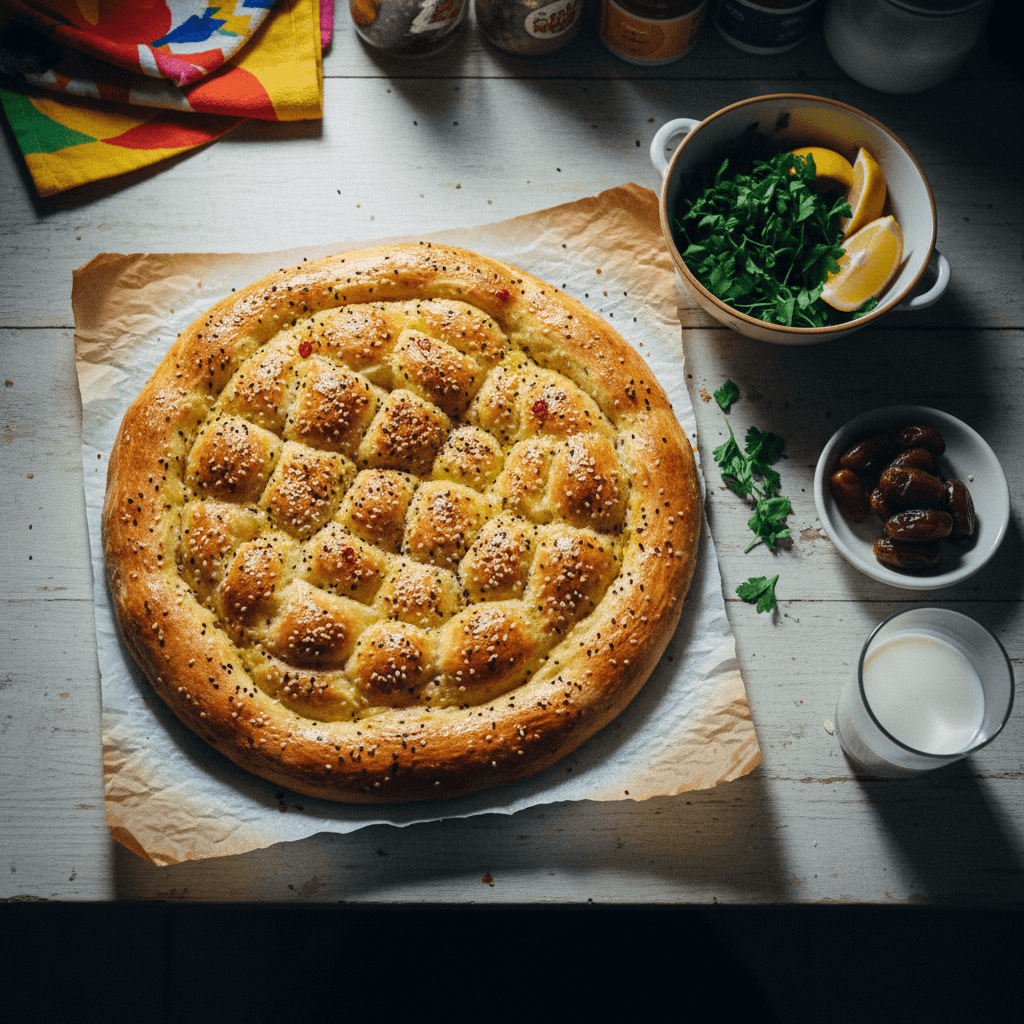
Ingredients
For the Dough
- 3 1/2 cups all-purpose flour, or bread flour with high protein content
- 1 tablespoon active dry yeast
- 1 tablespoon granulated sugar
- 1 pinch salt
- 1/2 cup neutral oil, such as vegetable, canola, or avocado oil
- 1 1/2 cups milk, warmed to 105-110°F
For the Topping
- 2 egg yolks
- 2 tablespoons milk
- 1 tablespoon sesame seeds, as needed
- 1 tablespoon nigella seeds, as needed
Instructions
- 1
In a large mixing bowl, combine the flour, active dry yeast, granulated sugar, and salt. Mix these dry ingredients thoroughly.
⏱️ 2 min
- 2
Add the neutral oil and warm milk to the dry ingredients. Ensure the milk is between 105°F and 110°F; milk that is too hot (over 115°F) will kill the yeast, preventing the dough from rising.
⏱️ 2 min
- 3
Mix all the ingredients together, either by hand or with a stand mixer fitted with a dough hook, until a smooth, cohesive dough forms. Knead for about 5-7 minutes until the dough is elastic.
⏱️ 7 min
- 4
Place the dough in a lightly oiled bowl, cover it with a clean kitchen towel or plastic wrap, and let it rise in a warm place for 1 hour, or until doubled in size.
⏱️ 60 min
- 5
Once the dough has risen, gently punch it down. You can either keep the dough as one large piece for a single large bread or divide it into two equal balls for two smaller breads. Line a baking tray with parchment paper.
⏱️ 3 min
- 6
Transfer the dough to the prepared baking tray. Gently spread it out into a round or oval shape, about 1/2 to 3/4 inch thick. Use your fingertips to make decorative indents across the surface of the dough, creating a traditional pattern.
⏱️ 3 min
- 7
In a small bowl, whisk together the 2 egg yolks and 2 tablespoons of milk to create an egg wash. Brush this mixture evenly over the surface of the dough.
⏱️ 2 min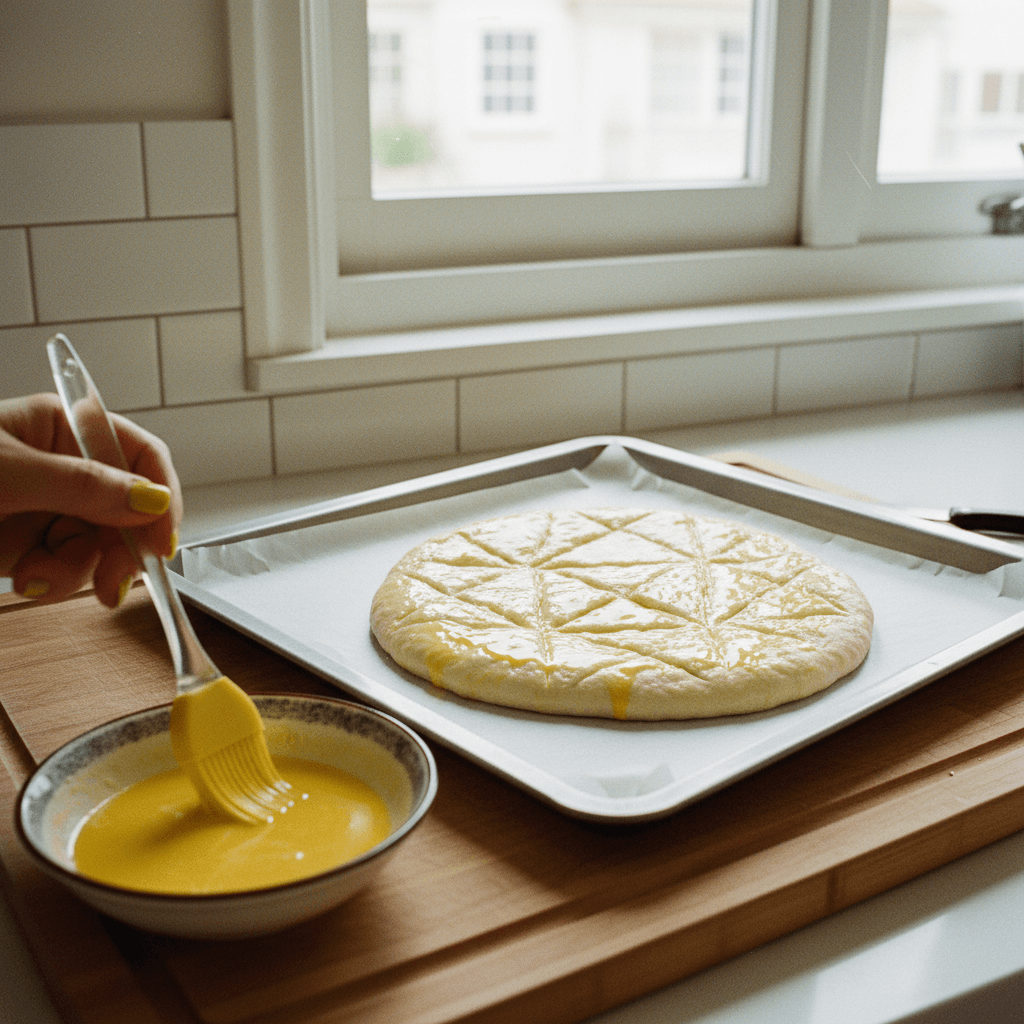
- 8
Sprinkle sesame seeds and nigella seeds generously over the egg-washed dough.
⏱️ 1 min
- 9
Preheat your oven to 350°F. Bake the bread for 15-20 minutes, or until it is golden brown and sounds hollow when tapped on the bottom.
⏱️ 20 min•🌡️ 350
- 10
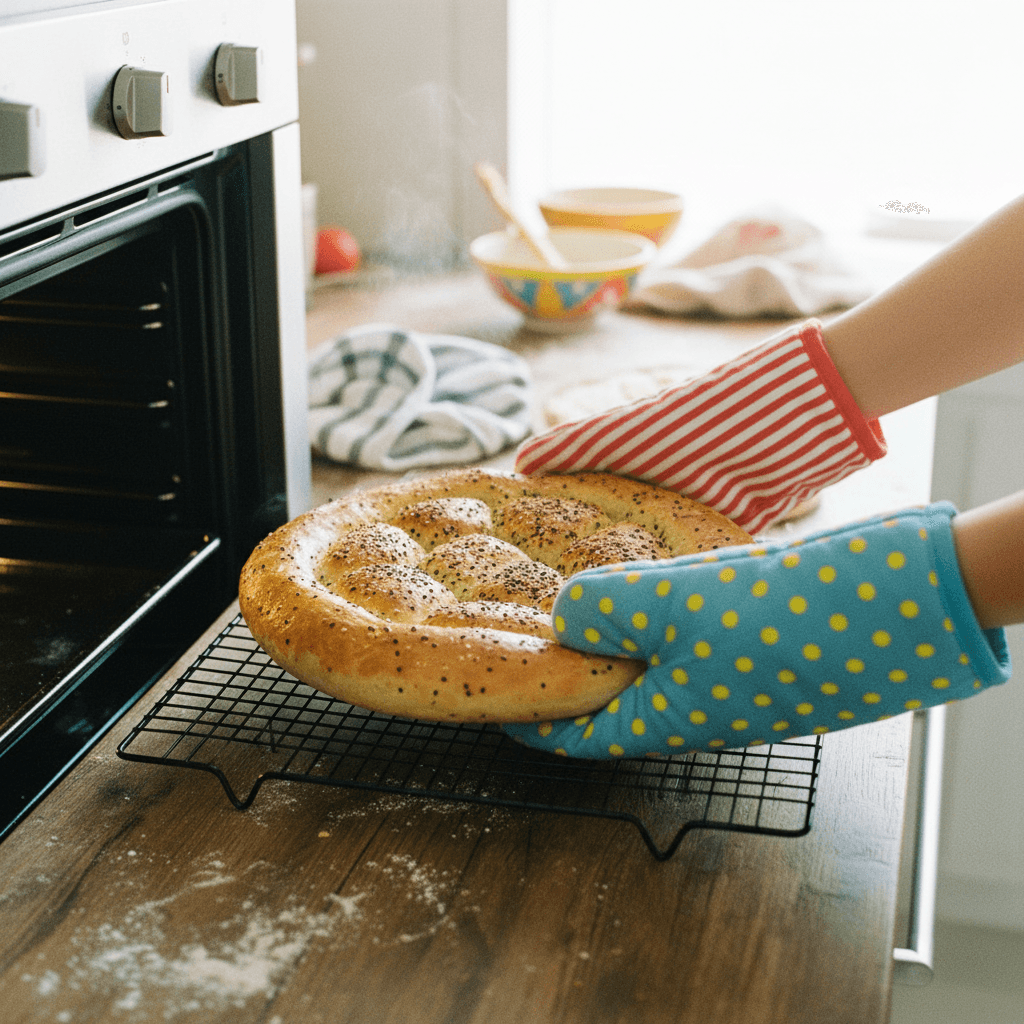
Remove the bread from the oven and let it cool slightly on a wire rack before serving. Enjoy your fresh Turkish Ramadan Bread!
- 11
For same-day consumption, cover the bread with a clean kitchen towel to keep it soft. For longer storage, wrap it tightly in plastic wrap or place it in an airtight bag to maintain freshness.

Kitchen Tools
Nutrition Facts (per serving)
Turkish Ramadan Bread (Ramazan Pidesi)
For the Dough
- 3 1/2 cups all-purpose flour, or bread flour with high protein content
- 1 tablespoon active dry yeast
- 1 tablespoon granulated sugar
- 1 pinch salt
- 1/2 cup neutral oil, such as vegetable, canola, or avocado oil
- 1 1/2 cups milk, warmed to 105-110°F
For the Topping
- 2 egg yolks
- 2 tablespoons milk
- 1 tablespoon sesame seeds, as needed
- 1 tablespoon nigella seeds, as needed
Instructions
- 1
In a large mixing bowl, combine the flour, active dry yeast, granulated sugar, and salt. Mix these dry ingredients thoroughly.
⏱️ 2 min - 2
Add the neutral oil and warm milk to the dry ingredients. Ensure the milk is between 105°F and 110°F; milk that is too hot (over 115°F) will kill the yeast, preventing the dough from rising.
⏱️ 2 min - 3
Mix all the ingredients together, either by hand or with a stand mixer fitted with a dough hook, until a smooth, cohesive dough forms. Knead for about 5-7 minutes until the dough is elastic.
⏱️ 7 min - 4
Place the dough in a lightly oiled bowl, cover it with a clean kitchen towel or plastic wrap, and let it rise in a warm place for 1 hour, or until doubled in size.
⏱️ 60 min - 5
Once the dough has risen, gently punch it down. You can either keep the dough as one large piece for a single large bread or divide it into two equal balls for two smaller breads. Line a baking tray with parchment paper.
⏱️ 3 min - 6
Transfer the dough to the prepared baking tray. Gently spread it out into a round or oval shape, about 1/2 to 3/4 inch thick. Use your fingertips to make decorative indents across the surface of the dough, creating a traditional pattern.
⏱️ 3 min - 7
In a small bowl, whisk together the 2 egg yolks and 2 tablespoons of milk to create an egg wash. Brush this mixture evenly over the surface of the dough.
⏱️ 2 min - 8
Sprinkle sesame seeds and nigella seeds generously over the egg-washed dough.
⏱️ 1 min - 9
Preheat your oven to 350°F. Bake the bread for 15-20 minutes, or until it is golden brown and sounds hollow when tapped on the bottom.
⏱️ 20 min•🌡️ 350 - 10
Remove the bread from the oven and let it cool slightly on a wire rack before serving. Enjoy your fresh Turkish Ramadan Bread!
- 11
For same-day consumption, cover the bread with a clean kitchen towel to keep it soft. For longer storage, wrap it tightly in plastic wrap or place it in an airtight bag to maintain freshness.