3 Ingredient Onion Pancakes
3 Ingredient Onion Pancakes

Ingredients
- 2 onions, sliced as thinly as possible
- 2 tablespoons all-purpose flour
- 1 teaspoon salt
- as needed cooking oil, for pan-frying
Instructions
- 1
Begin by slicing the 2 onions as thinly as possible. A mandoline can be very helpful for achieving uniform, thin slices.
⏱️ 5 min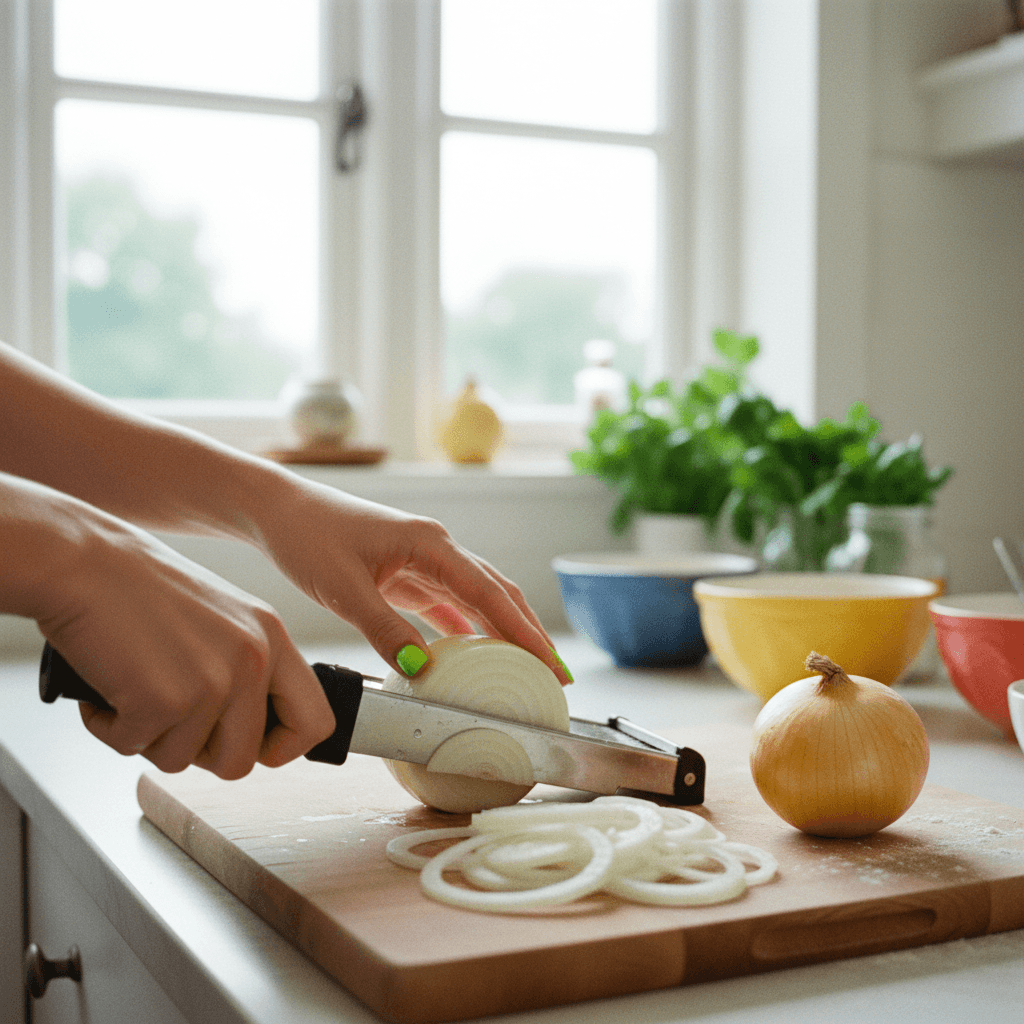
- 2
Rinse the thinly sliced onions thoroughly in cold water. This helps to remove some of their strong pungent flavor. Drain them very well, pressing out any excess water.
⏱️ 2 min
- 3
Transfer the rinsed and drained onions to a medium-sized bowl. Add the 1 teaspoon of salt and mix it in thoroughly. The salt will not only season the onions but also help to soften them and draw out moisture.
⏱️ 3 min
- 4
Cover the bowl and let the salted onions sit for 10 minutes. During this time, you will observe how much liquid the salt draws out from the onions.
⏱️ 10 min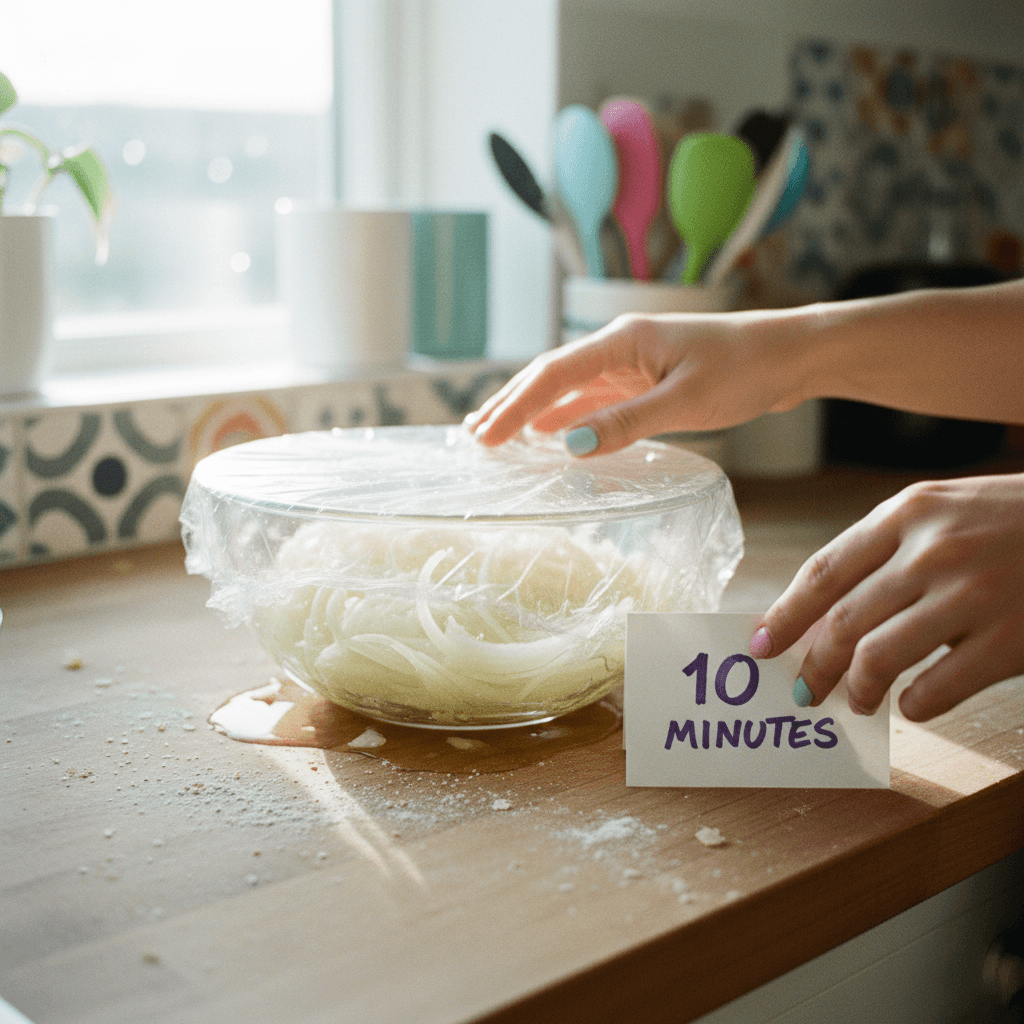
- 5
After 10 minutes, add the 2 tablespoons of all-purpose flour to the onions. Mix the flour into the onions until it forms a loose batter. The flour, combined with the onion juice, will act as a binder. If the mixture seems too loose, you can add a bit more flour, 1/2 teaspoon at a time, until the onions bind together. Be mindful that using too much flour can result in a denser, stodgier pancake.
⏱️ 5 min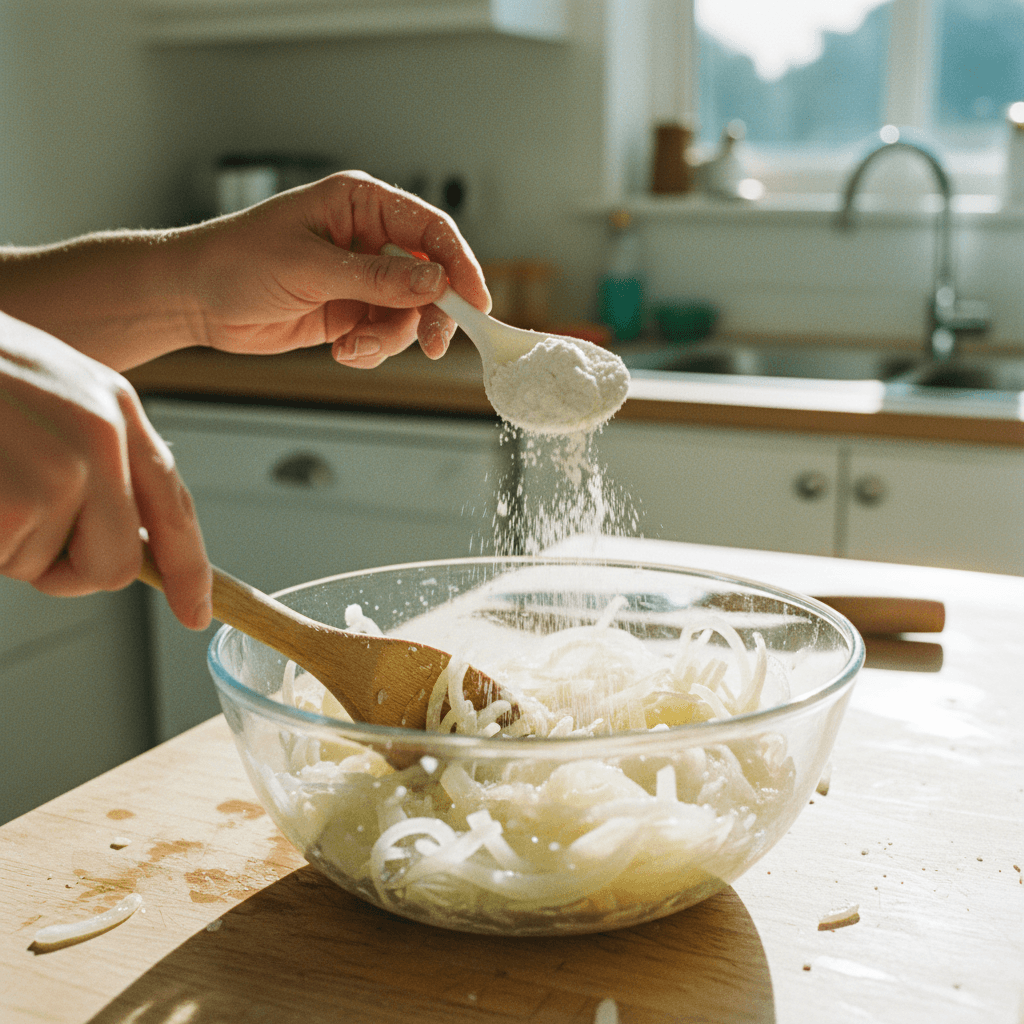
- 6
Heat a large skillet or non-stick pan over medium heat. Add a small amount of cooking oil, just enough to lightly coat the bottom of the pan.
⏱️ 1 min
- 7
Once the pan is hot, drop spoonfuls of the onion mixture into the pan, flattening them slightly to form pancakes. Do not overcrowd the pan.
⏱️ 1 min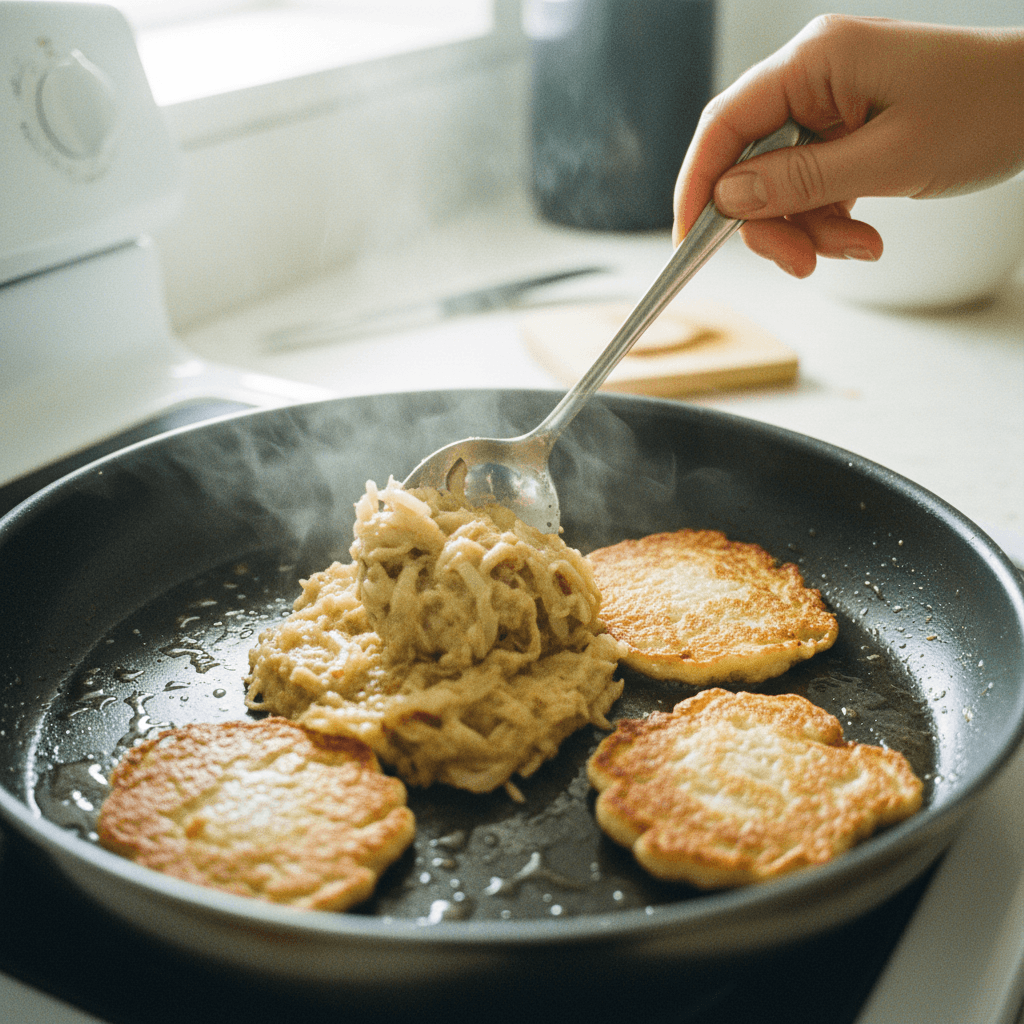
- 8
Cook the onion pancakes for approximately 5 minutes per side, or until they are golden brown and cooked through. Cooking on medium heat is crucial; higher heat can burn the sugars in the onions before the center of the pancake is fully cooked.
⏱️ 10 min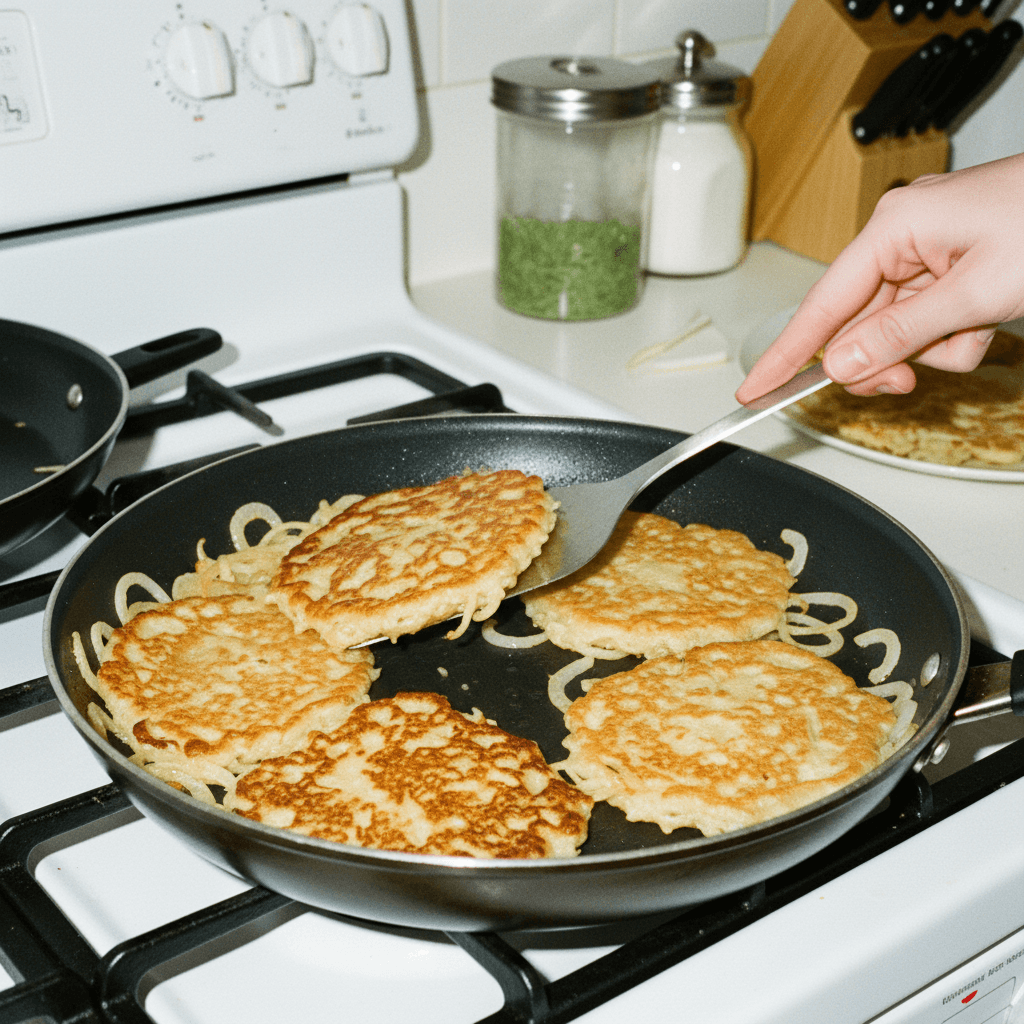
- 9
Once pan-fried, the pancakes will have caramelized onions on the outside and soft, gooey onions on the inside. Remove from the pan and serve immediately.
⏱️ 1 min
- 10
Serve the onion pancakes as is, or with your favorite dipping sauce.
⏱️ 1 min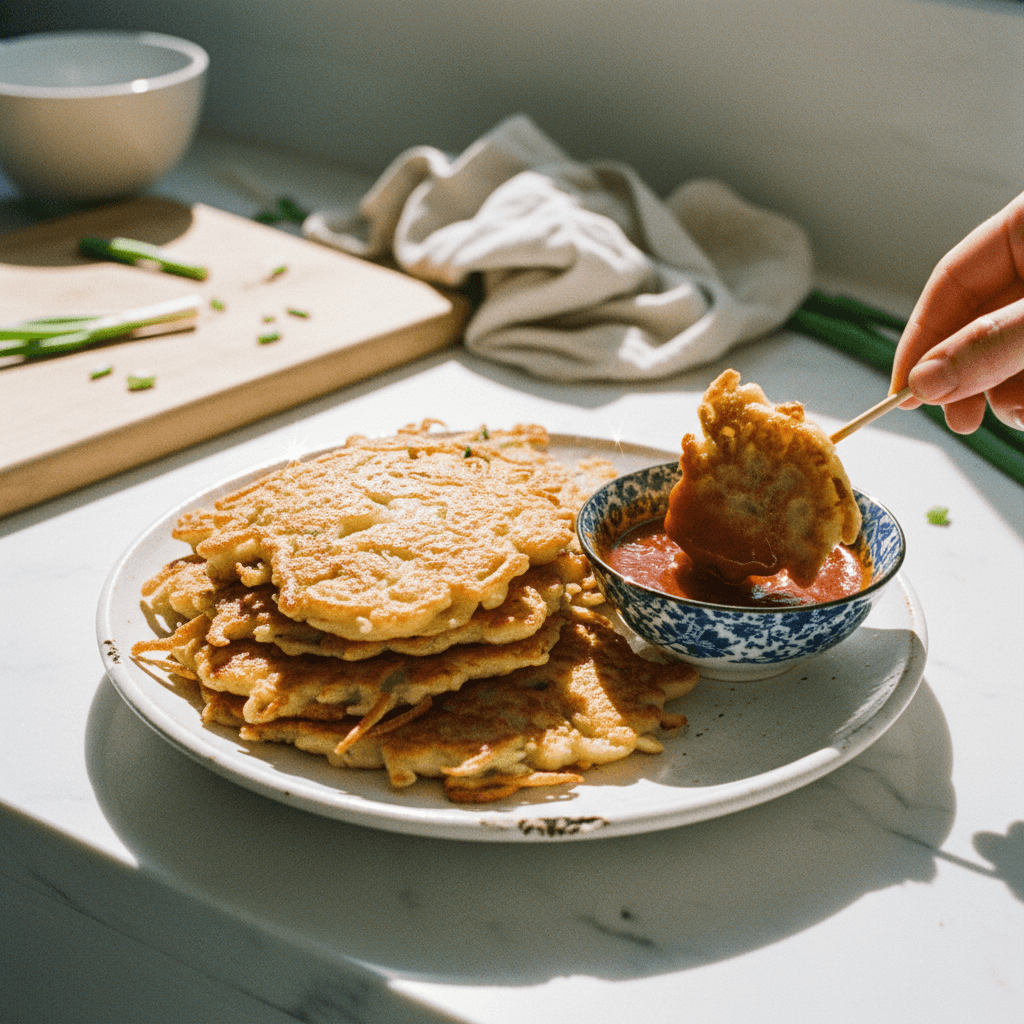
Kitchen Tools
Nutrition Facts (per serving)
3 Ingredient Onion Pancakes
- 2 onions, sliced as thinly as possible
- 2 tablespoons all-purpose flour
- 1 teaspoon salt
- as needed cooking oil, for pan-frying
Instructions
- 1
Begin by slicing the 2 onions as thinly as possible. A mandoline can be very helpful for achieving uniform, thin slices.
⏱️ 5 min - 2
Rinse the thinly sliced onions thoroughly in cold water. This helps to remove some of their strong pungent flavor. Drain them very well, pressing out any excess water.
⏱️ 2 min - 3
Transfer the rinsed and drained onions to a medium-sized bowl. Add the 1 teaspoon of salt and mix it in thoroughly. The salt will not only season the onions but also help to soften them and draw out moisture.
⏱️ 3 min - 4
Cover the bowl and let the salted onions sit for 10 minutes. During this time, you will observe how much liquid the salt draws out from the onions.
⏱️ 10 min - 5
After 10 minutes, add the 2 tablespoons of all-purpose flour to the onions. Mix the flour into the onions until it forms a loose batter. The flour, combined with the onion juice, will act as a binder. If the mixture seems too loose, you can add a bit more flour, 1/2 teaspoon at a time, until the onions bind together. Be mindful that using too much flour can result in a denser, stodgier pancake.
⏱️ 5 min - 6
Heat a large skillet or non-stick pan over medium heat. Add a small amount of cooking oil, just enough to lightly coat the bottom of the pan.
⏱️ 1 min - 7
Once the pan is hot, drop spoonfuls of the onion mixture into the pan, flattening them slightly to form pancakes. Do not overcrowd the pan.
⏱️ 1 min - 8
Cook the onion pancakes for approximately 5 minutes per side, or until they are golden brown and cooked through. Cooking on medium heat is crucial; higher heat can burn the sugars in the onions before the center of the pancake is fully cooked.
⏱️ 10 min - 9
Once pan-fried, the pancakes will have caramelized onions on the outside and soft, gooey onions on the inside. Remove from the pan and serve immediately.
⏱️ 1 min - 10
Serve the onion pancakes as is, or with your favorite dipping sauce.
⏱️ 1 min