Pandan Coconut Nian Gao (年糕)
Pandan Coconut Nian Gao (年糕)

Ingredients
For the Pandan Ginger Coconut Syrup
- 200 g Chinese slab sugar
- 400 ml water
- 2-3 pandan leaves
- 3-4 ginger, slices
- 1/2 teaspoon salt
- 200 ml coconut milk
- 1 splash oil
For the Nian Gao Batter
- 100 g glutinous rice flour
- 50 g wheat starch
For Steaming and Pan-Frying
- as needed oil, for greasing the steaming container
- as needed cooking oil, for pan-frying
Instructions
- 1
In a pot, combine the Chinese slab sugar, water, pandan leaves, ginger slices, and salt. Bring the mixture to a boil over medium heat, stirring until the sugar completely dissolves.
⏱️ 10 min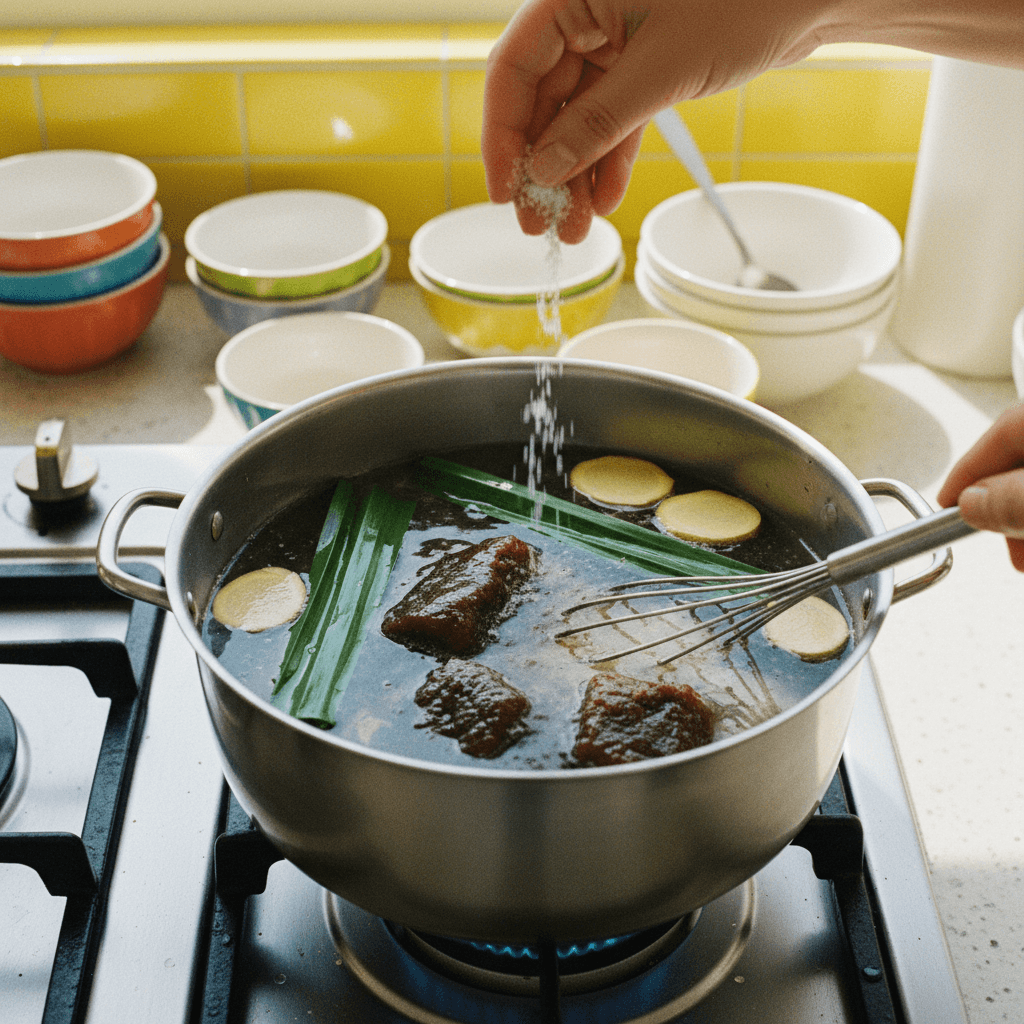
- 2
Once the sugar has dissolved and the syrup has boiled, remove the pandan leaves and ginger slices from the pot. Add the coconut milk to the hot syrup and stir well. Add a splash of oil to the syrup mixture and stir again.
⏱️ 5 min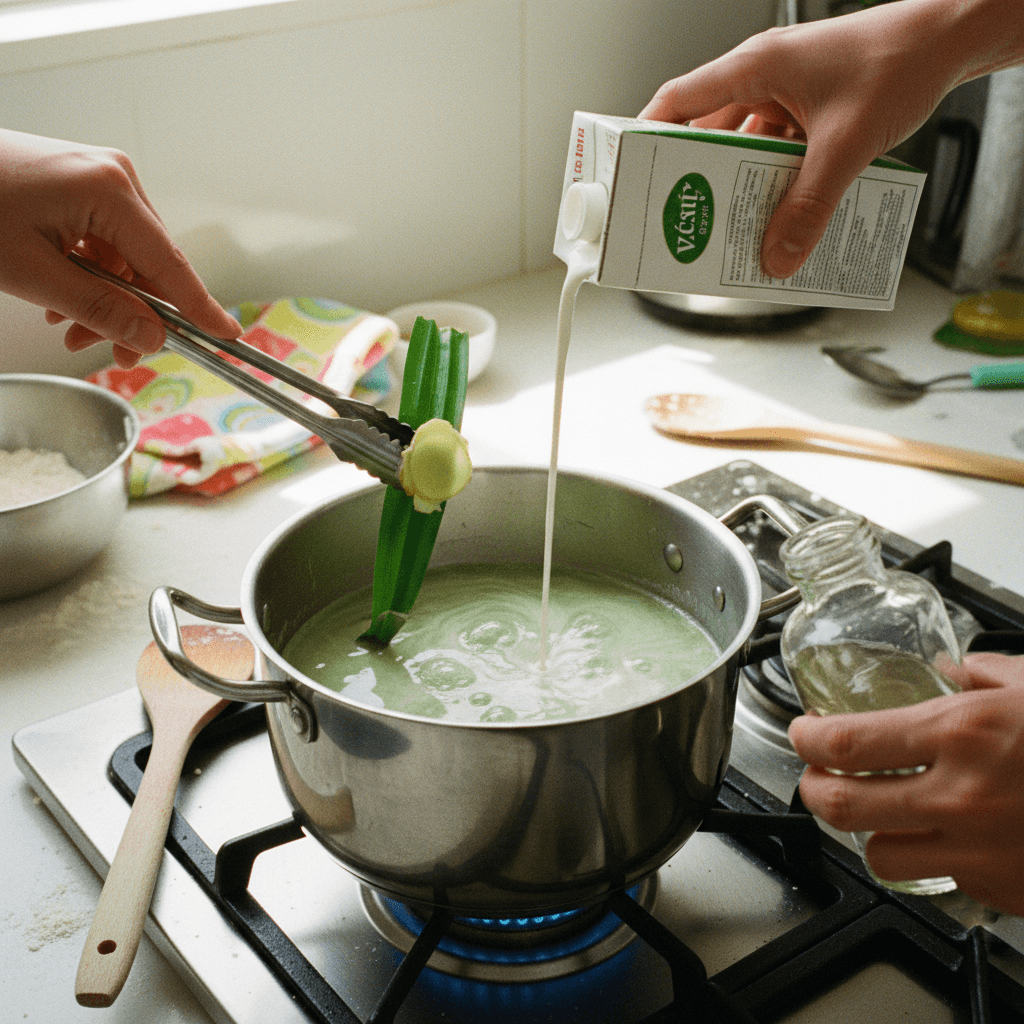
- 3
In a large mixing bowl, combine the glutinous rice flour and wheat starch. Pour the hot pandan ginger coconut syrup mixture into the bowl with the flours. Stir vigorously with a spatula or whisk until a smooth batter forms, ensuring no lumps remain.
⏱️ 5 min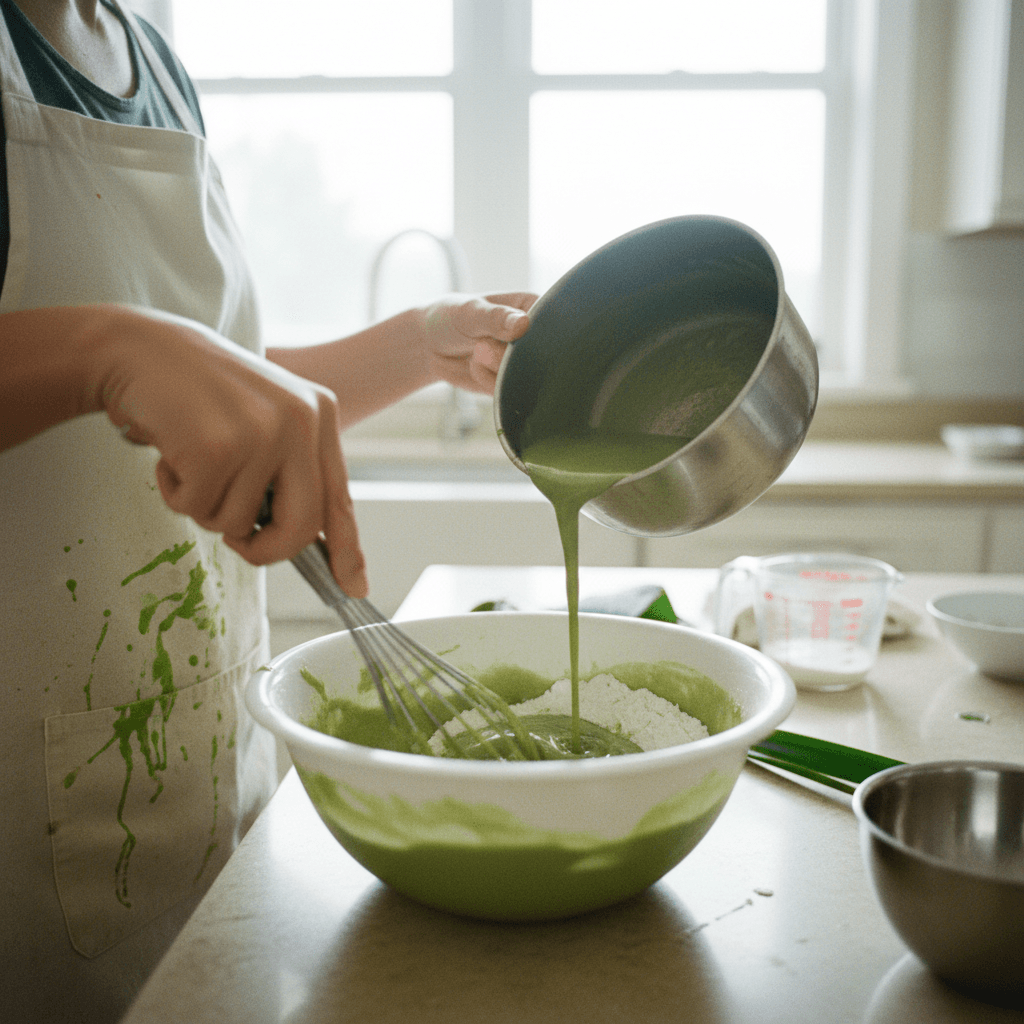
- 4
Lightly grease your chosen steaming container (such as a glass baking dish) with oil using a brush. Strain the batter through a fine-mesh sieve directly into the greased container to achieve a perfect texture.
⏱️ 5 min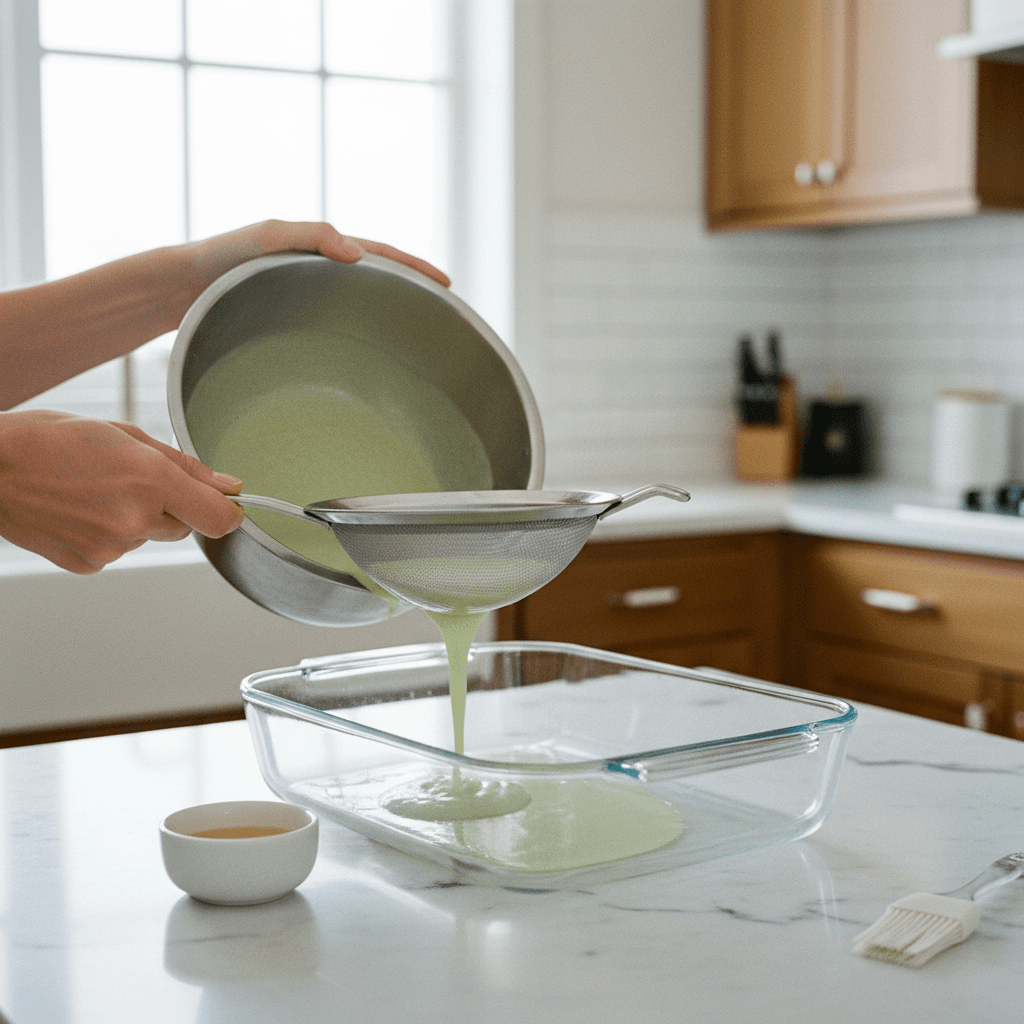
- 5
Cover the container tightly with aluminum foil to prevent water from dripping in during steaming. Place a steaming rack in a large pot or wok and add enough water for steaming. Carefully place the covered container on the steaming rack.
⏱️ 5 min
- 6
Steam the Nian Gao over medium heat for approximately 1 hour. To check for doneness, insert a chopstick into the center of the Nian Gao; if it comes out clean, it is cooked. If there is batter residue, continue steaming for a bit longer.
⏱️ 60 min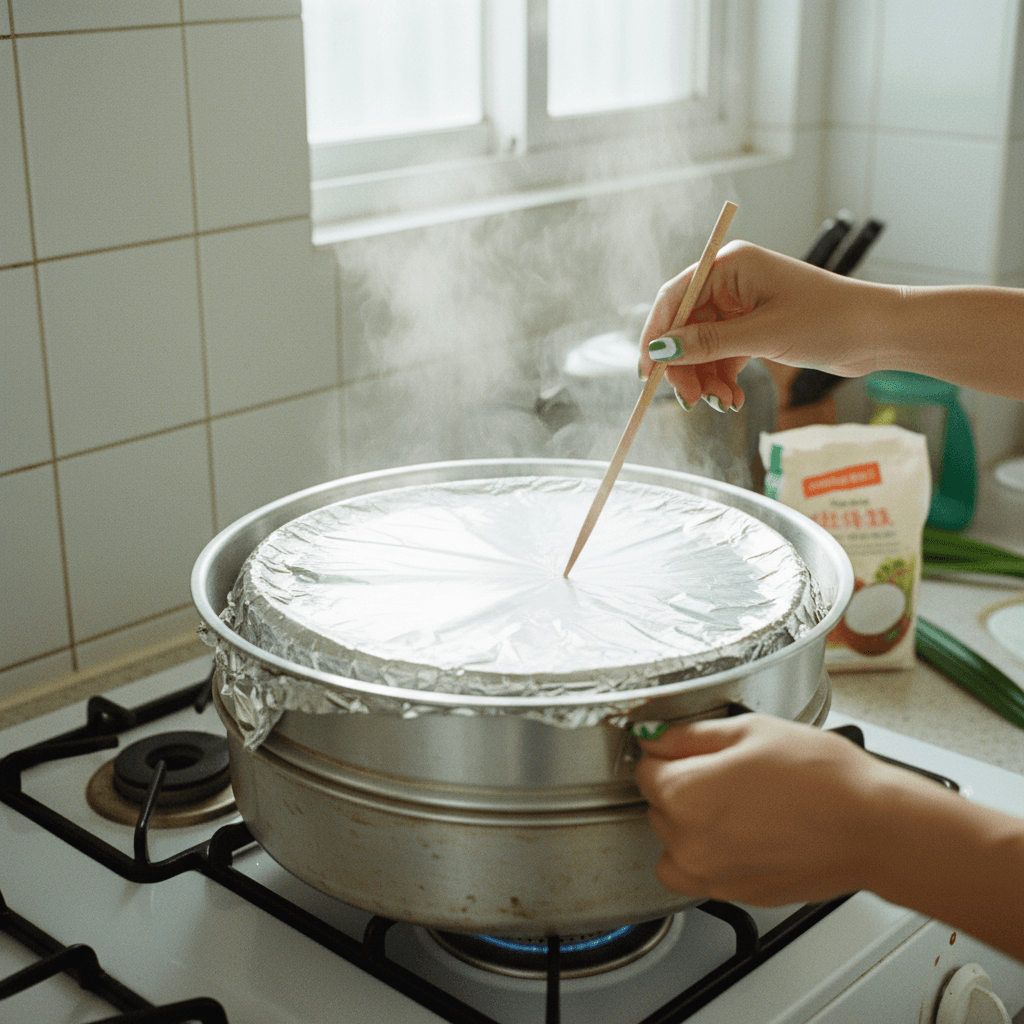
- 7
Once steamed and cooked through, remove the Nian Gao from the steamer. Allow it to cool completely at room temperature. For easier removal from the container and precise slicing, refrigerate the Nian Gao overnight (at least 12 hours).
⏱️ 720 min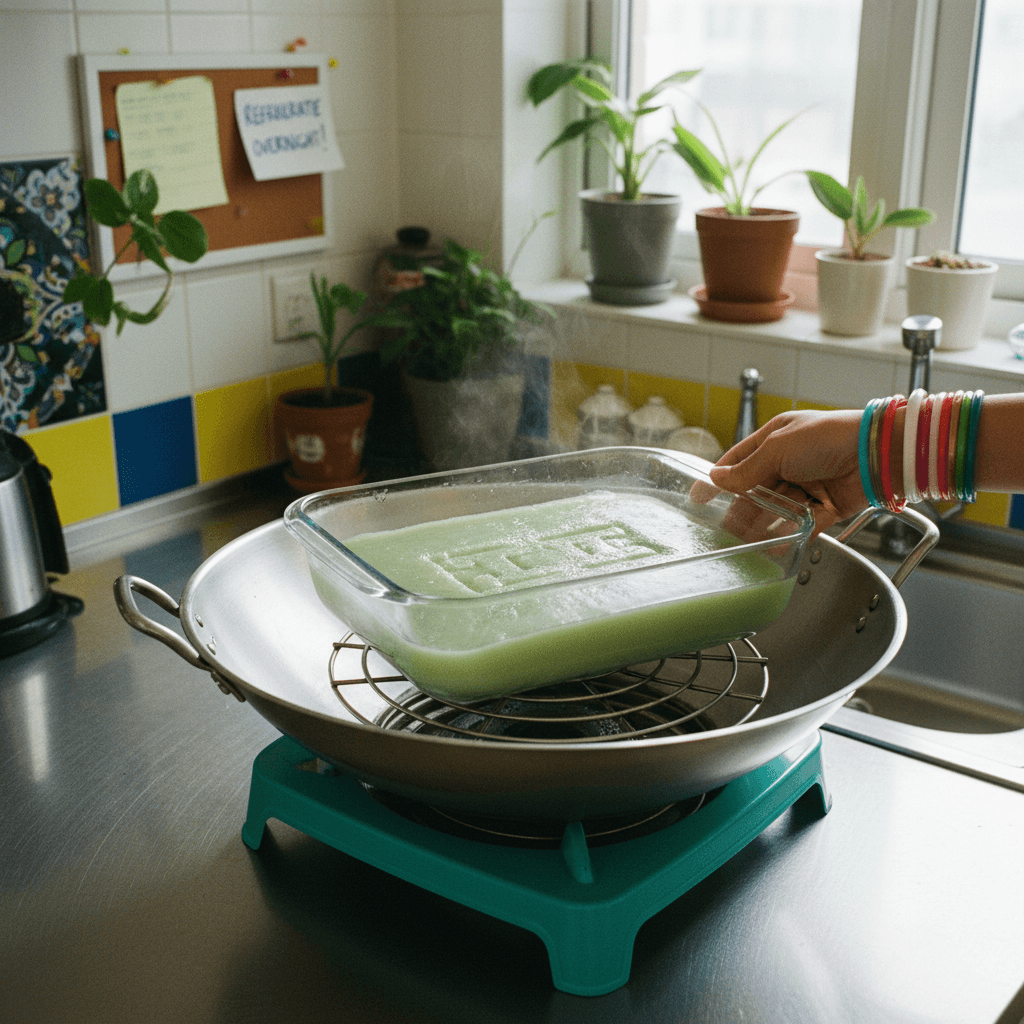
- 8
Once firm, remove the Nian Gao from the container and slice it into desired shapes (rectangular pieces are common).
⏱️ 5 min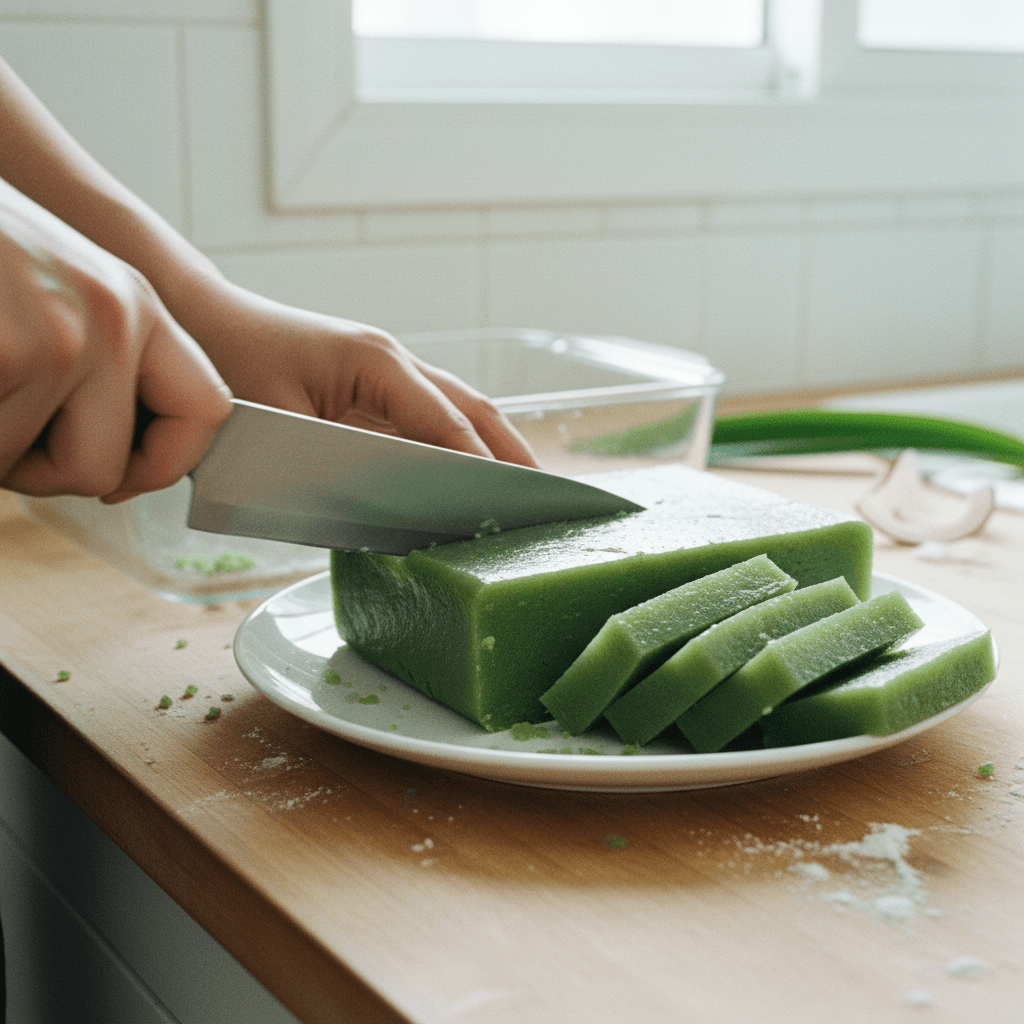
- 9
Heat a pan over medium heat with a small amount of cooking oil. Place the sliced Nian Gao pieces in the hot pan. Pan-fry the Nian Gao until both sides are crispy and caramelized, achieving a golden-brown color. Serve warm and enjoy the chewy, sticky texture.
⏱️ 10 min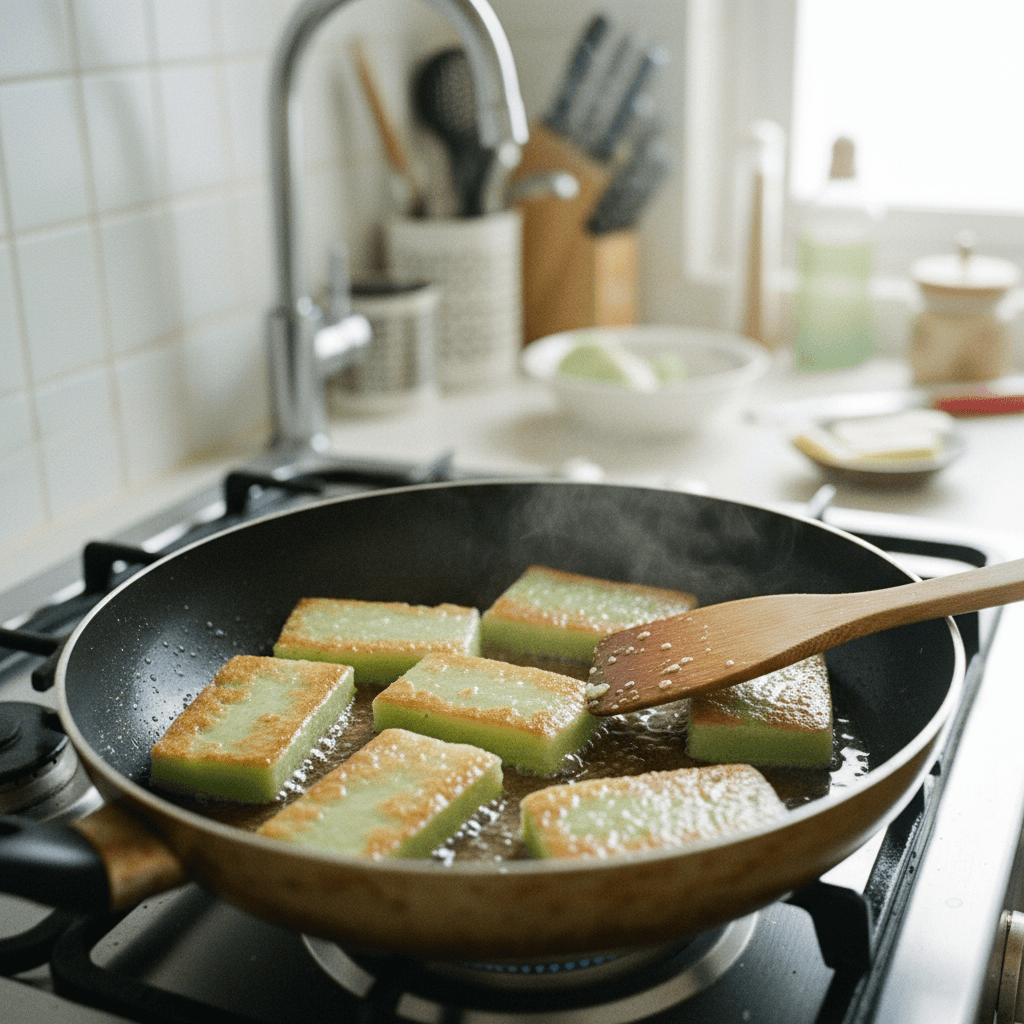
Kitchen Tools
Pandan Coconut Nian Gao (年糕)
For the Pandan Ginger Coconut Syrup
- 200 g Chinese slab sugar
- 400 ml water
- 2-3 pandan leaves
- 3-4 ginger, slices
- 1/2 teaspoon salt
- 200 ml coconut milk
- 1 splash oil
For the Nian Gao Batter
- 100 g glutinous rice flour
- 50 g wheat starch
For Steaming and Pan-Frying
- as needed oil, for greasing the steaming container
- as needed cooking oil, for pan-frying
Instructions
- 1
In a pot, combine the Chinese slab sugar, water, pandan leaves, ginger slices, and salt. Bring the mixture to a boil over medium heat, stirring until the sugar completely dissolves.
⏱️ 10 min - 2
Once the sugar has dissolved and the syrup has boiled, remove the pandan leaves and ginger slices from the pot. Add the coconut milk to the hot syrup and stir well. Add a splash of oil to the syrup mixture and stir again.
⏱️ 5 min - 3
In a large mixing bowl, combine the glutinous rice flour and wheat starch. Pour the hot pandan ginger coconut syrup mixture into the bowl with the flours. Stir vigorously with a spatula or whisk until a smooth batter forms, ensuring no lumps remain.
⏱️ 5 min - 4
Lightly grease your chosen steaming container (such as a glass baking dish) with oil using a brush. Strain the batter through a fine-mesh sieve directly into the greased container to achieve a perfect texture.
⏱️ 5 min - 5
Cover the container tightly with aluminum foil to prevent water from dripping in during steaming. Place a steaming rack in a large pot or wok and add enough water for steaming. Carefully place the covered container on the steaming rack.
⏱️ 5 min - 6
Steam the Nian Gao over medium heat for approximately 1 hour. To check for doneness, insert a chopstick into the center of the Nian Gao; if it comes out clean, it is cooked. If there is batter residue, continue steaming for a bit longer.
⏱️ 60 min - 7
Once steamed and cooked through, remove the Nian Gao from the steamer. Allow it to cool completely at room temperature. For easier removal from the container and precise slicing, refrigerate the Nian Gao overnight (at least 12 hours).
⏱️ 720 min - 8
Once firm, remove the Nian Gao from the container and slice it into desired shapes (rectangular pieces are common).
⏱️ 5 min - 9
Heat a pan over medium heat with a small amount of cooking oil. Place the sliced Nian Gao pieces in the hot pan. Pan-fry the Nian Gao until both sides are crispy and caramelized, achieving a golden-brown color. Serve warm and enjoy the chewy, sticky texture.
⏱️ 10 min