Hearty Beef Ragu with Pappardelle Pasta
Hearty Beef Ragu with Pappardelle Pasta

Ingredients
For the Beef Ragu
- 2 pounds boneless beef chuck roast, cut into 1 1/2-inch cubes
- 1 1/2 teaspoons kosher salt
- 1/2 teaspoon black pepper, freshly ground
- 2 tablespoons olive oil
- 4 ounces pancetta, diced (or thick-cut bacon)
- 1 yellow onion, chopped
- 2 carrots, peeled and finely diced
- 2 celery stalks, finely diced
- 4 garlic cloves, minced
- 3 tablespoons tomato paste
- 1 1/2 cups dry red wine, such as Chianti or Merlot
- 28 ounces crushed tomatoes, can
- 2 cups beef broth
- 2 fresh rosemary sprigs
- 3 fresh thyme sprigs
- 2 bay leaves
For Serving
- 1 pound pappardelle pasta
- 1/2 cup Parmesan cheese, freshly grated, plus more for serving
- 1/4 cup fresh parsley, chopped, for garnish
Instructions
- 1
Pat the beef cubes dry with paper towels. Season generously with kosher salt and freshly ground black pepper.
⏱️ 5 min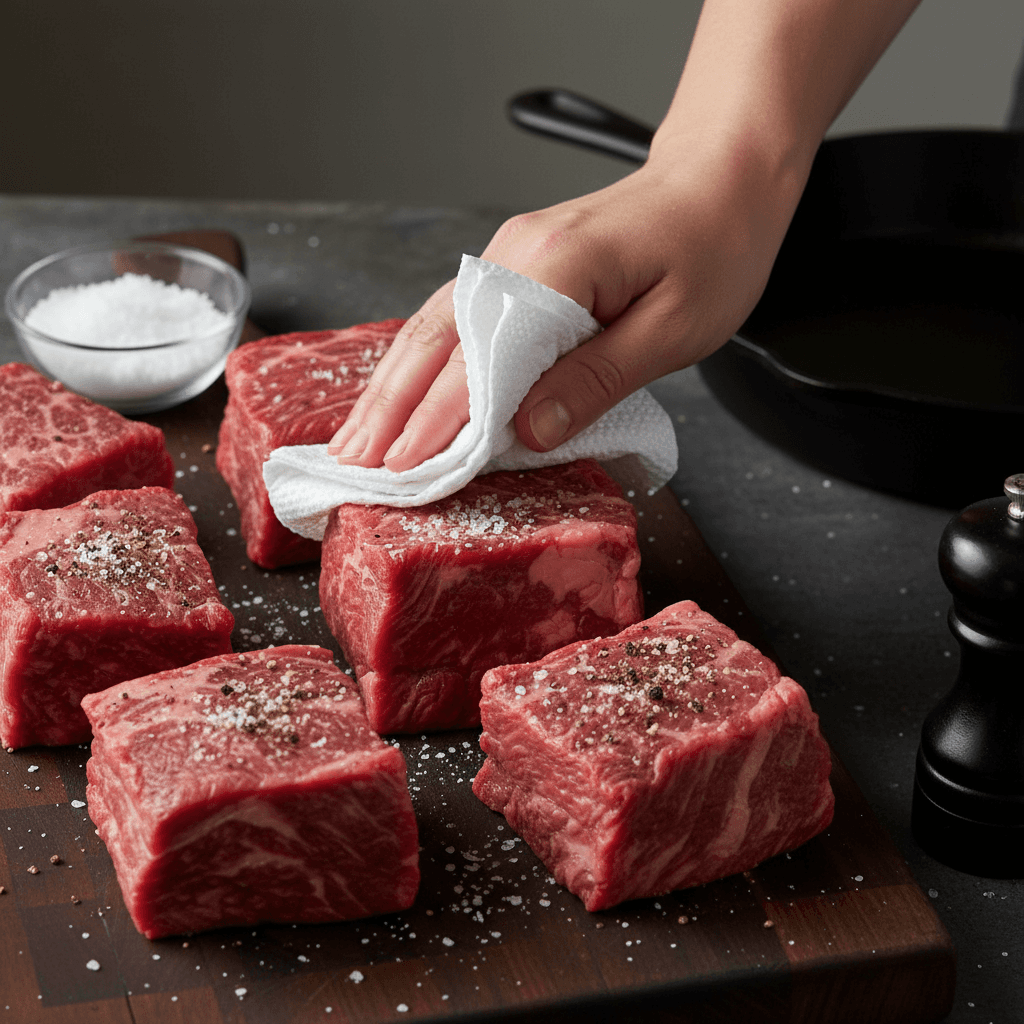
- 2
Heat olive oil in a large Dutch oven or heavy-bottomed pot over medium-high heat. Working in batches, sear the beef on all sides until deeply browned, about 3-4 minutes per batch. Do not overcrowd the pot. Remove seared beef to a plate and set aside.
⏱️ 10 min
- 3
Add the diced pancetta to the same pot and cook over medium heat until crispy, about 5-7 minutes. Remove the pancetta with a slotted spoon and add it to the plate with the beef, leaving the rendered fat in the pot.
⏱️ 7 min
- 4
Reduce heat to medium-low. Add the chopped yellow onion, diced carrots, and diced celery to the pot. Cook, stirring occasionally, until softened and translucent, about 8-10 minutes.
⏱️ 10 min
- 5
Stir in the minced garlic and tomato paste. Cook for 2-3 minutes, stirring constantly, until the tomato paste darkens slightly and becomes fragrant.
⏱️ 3 min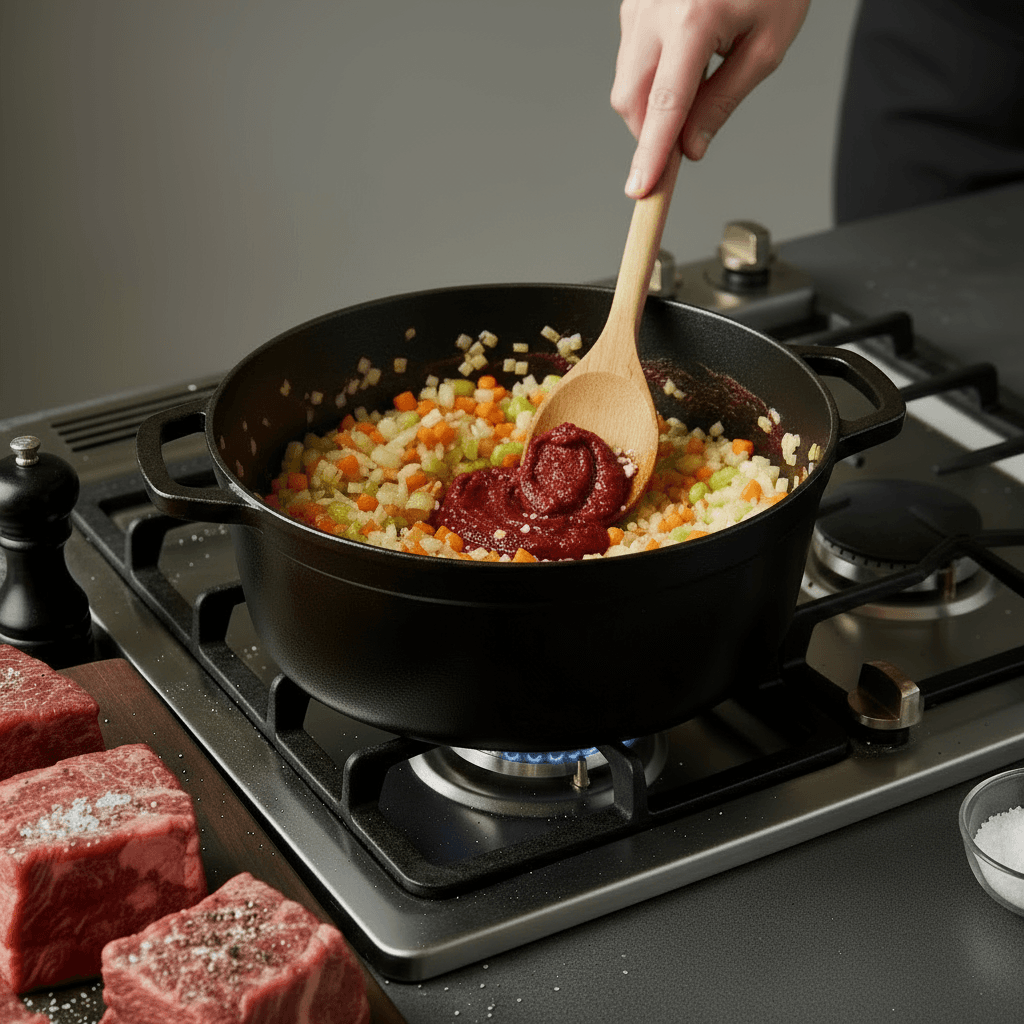
- 6
Pour in the dry red wine, scraping up any browned bits from the bottom of the pot with a wooden spoon. Bring to a simmer and cook until the wine has reduced by about half, approximately 5-7 minutes.
⏱️ 7 min
- 7
Return the seared beef and cooked pancetta to the pot. Add the crushed tomatoes, beef broth, fresh rosemary sprigs, fresh thyme sprigs, and bay leaves. Stir to combine.
⏱️ 3 min
- 8
Bring the ragu to a gentle simmer, then reduce the heat to low, cover the pot, and cook for at least 2 hours, or up to 3 hours, stirring occasionally, until the beef is fork-tender and easily shreds. If the sauce becomes too thick, add a splash more beef broth.
⏱️ 120 min
- 9
Remove the rosemary, thyme, and bay leaves from the ragu. Using two forks, shred the beef directly in the pot. Stir to incorporate the shredded beef into the sauce. Taste and adjust seasoning as needed.
⏱️ 5 min
- 10
While the ragu finishes, bring a large pot of salted water to a rolling boil. Add the pappardelle pasta and cook according to package directions until al dente.
⏱️ 10 min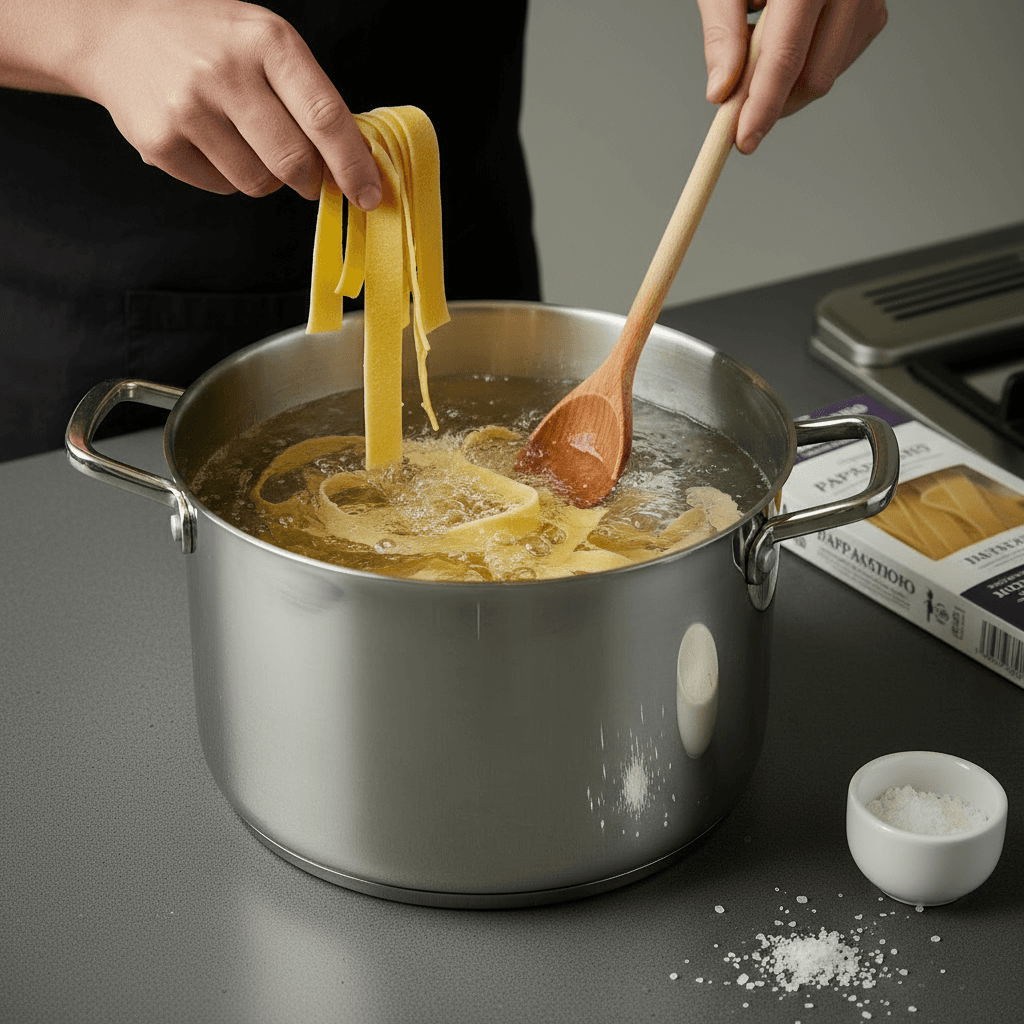
- 11
Drain the pasta, reserving about 1 cup of the pasta water. Add the drained pappardelle directly to the ragu in the Dutch oven. Toss to coat the pasta thoroughly with the sauce, adding a splash of reserved pasta water if needed to achieve a desired consistency.
⏱️ 5 min
- 12
Serve immediately in shallow bowls, garnished with freshly grated Parmesan cheese and chopped fresh parsley.
⏱️ 2 min
Kitchen Tools
Nutrition Facts (per serving)
Hearty Beef Ragu with Pappardelle Pasta
Ingredients
For the Beef Ragu
- 2 pounds boneless beef chuck roast, cut into 1 1/2-inch cubes
- 1 1/2 teaspoons kosher salt
- 1/2 teaspoon black pepper, freshly ground
- 2 tablespoons olive oil
- 4 ounces pancetta, diced (or thick-cut bacon)
- 1 yellow onion, chopped
- 2 carrots, peeled and finely diced
- 2 celery stalks, finely diced
- 4 garlic cloves, minced
- 3 tablespoons tomato paste
- 1 1/2 cups dry red wine, such as Chianti or Merlot
- 28 ounces crushed tomatoes, can
- 2 cups beef broth
- 2 fresh rosemary sprigs
- 3 fresh thyme sprigs
- 2 bay leaves
For Serving
- 1 pound pappardelle pasta
- 1/2 cup Parmesan cheese, freshly grated, plus more for serving
- 1/4 cup fresh parsley, chopped, for garnish
Instructions
- 1
Pat the beef cubes dry with paper towels. Season generously with kosher salt and freshly ground black pepper.
⏱️ 5 min - 2
Heat olive oil in a large Dutch oven or heavy-bottomed pot over medium-high heat. Working in batches, sear the beef on all sides until deeply browned, about 3-4 minutes per batch. Do not overcrowd the pot. Remove seared beef to a plate and set aside.
⏱️ 10 min - 3
Add the diced pancetta to the same pot and cook over medium heat until crispy, about 5-7 minutes. Remove the pancetta with a slotted spoon and add it to the plate with the beef, leaving the rendered fat in the pot.
⏱️ 7 min - 4
Reduce heat to medium-low. Add the chopped yellow onion, diced carrots, and diced celery to the pot. Cook, stirring occasionally, until softened and translucent, about 8-10 minutes.
⏱️ 10 min - 5
Stir in the minced garlic and tomato paste. Cook for 2-3 minutes, stirring constantly, until the tomato paste darkens slightly and becomes fragrant.
⏱️ 3 min - 6
Pour in the dry red wine, scraping up any browned bits from the bottom of the pot with a wooden spoon. Bring to a simmer and cook until the wine has reduced by about half, approximately 5-7 minutes.
⏱️ 7 min - 7
Return the seared beef and cooked pancetta to the pot. Add the crushed tomatoes, beef broth, fresh rosemary sprigs, fresh thyme sprigs, and bay leaves. Stir to combine.
⏱️ 3 min - 8
Bring the ragu to a gentle simmer, then reduce the heat to low, cover the pot, and cook for at least 2 hours, or up to 3 hours, stirring occasionally, until the beef is fork-tender and easily shreds. If the sauce becomes too thick, add a splash more beef broth.
⏱️ 120 min - 9
Remove the rosemary, thyme, and bay leaves from the ragu. Using two forks, shred the beef directly in the pot. Stir to incorporate the shredded beef into the sauce. Taste and adjust seasoning as needed.
⏱️ 5 min - 10
While the ragu finishes, bring a large pot of salted water to a rolling boil. Add the pappardelle pasta and cook according to package directions until al dente.
⏱️ 10 min - 11
Drain the pasta, reserving about 1 cup of the pasta water. Add the drained pappardelle directly to the ragu in the Dutch oven. Toss to coat the pasta thoroughly with the sauce, adding a splash of reserved pasta water if needed to achieve a desired consistency.
⏱️ 5 min - 12
Serve immediately in shallow bowls, garnished with freshly grated Parmesan cheese and chopped fresh parsley.
⏱️ 2 min